Sep 21, 20268 min read
A Guide to Valle de Guadalupe, MexicoAug 11, 2026
13 MIN READ
Contributors
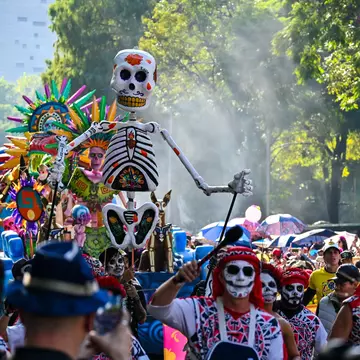
A parade of skeletons for Día de Muertos in Mexico City. Eve Orea/Shutterstock

Contributors


Jennifer Fernández Solano, Liza Prado
Highlights
Writers Jennifer Fernández Solano and Liza Prado guide Mexico's Día de Muertos festival.
Ofrendas – home altars with photos, food and marigolds – invite spirits back to the living.
Try pan de muerto and join the processions dressed as La Catrina.
Head to Mexico City's parade, or Oaxaca and Michoacán's Janitzio for intimate traditions.
Lonely Planet may earn a commission from affiliate links on our site. All recommendations and reviews reflect our own independent opinions.
Mexico is famous for its unique approach to death – and, by extension, to life – and nowhere is this more apparent than during Día de Muertos, the Day of the Dead. During this ancient, complex and deeply heartfelt celebration, people throughout Mexico remember and pay homage to loved ones who have passed, on a day when the barrier between life and death is believed to dissolve.
Often misunderstood and oversimplified, Día de Muertos is, at its core, a reminder that life – whether that of a deceased loved one or your own – is fleeting and should be celebrated. It combines mourning and remembrance with joy. It’s a quintessential Mexican celebration, filled with family time, food, and music, where all are welcome, and none are forgotten.
While the celebrations have changed over the centuries, the Day of the Dead dates back more than a thousand years to the indigenous peoples of central Mexico, the Toltecs and Aztecs, who believed the spirits of the dead return to their communities once a year. When Spanish colonizers arrived, the celebration evolved to include Catholic traditions and rituals.
Attending the Día de Muertos celebrations is one of the top things to do in Mexico. Indeed, the festival is seen as such a core part of the Mexican experience that it was recognized by UNESCO as part of the Intangible Cultural Heritage of Humanity in 2008.
While common themes run throughout the country, each region of Mexico celebrates Día de Muertos in slightly different ways. If you are thinking about visiting Mexico to participate in the Día de Muertos festivities, here is what you need to know.
While preparations for the festival – and some regional celebrations –begin in mid to late October, Día de Muertos takes place on two specific days: November 1 and 2.
The first day focuses on children who have died and is called Día de los Inocentes (Day of the Innocent Ones) – not to be confused with Mexico’s version of April Fool’s Day, which is also called Día de los Inocentes, on December 28. You'll also hear the name Día de los Angelitos (Day of the Little Angels).
The second day is centered around adults and is called either Día de los Muertos or Día de los Difuntos (Day of the Departed). Originally celebrated in August in pre-Columbian times, the festival was moved to coincide with the respective Catholic holidays of All Saints’ Day and All Souls’ Day, two days dedicated to prayer and remembering the departed.
Beginning in mid-October, many Mexicans set up ofrendas (altars) in their homes and businesses to honor loved ones who have passed. These can be simple displays or elaborate multi-level structures, but all share the same elements: photos of the deceased, food and drinks they enjoyed in life, and small items they loved (like a toy, a bottle of nail polish, or a book).
These improvised home shrines are often adorned with flowers, crucifixes and colorful images of saints. For many, the ofrenda represents a family’s memories of someone they loved. For others, it represents a homecoming – a place where their family’s spirits can return to check in on the living at this special time of year.
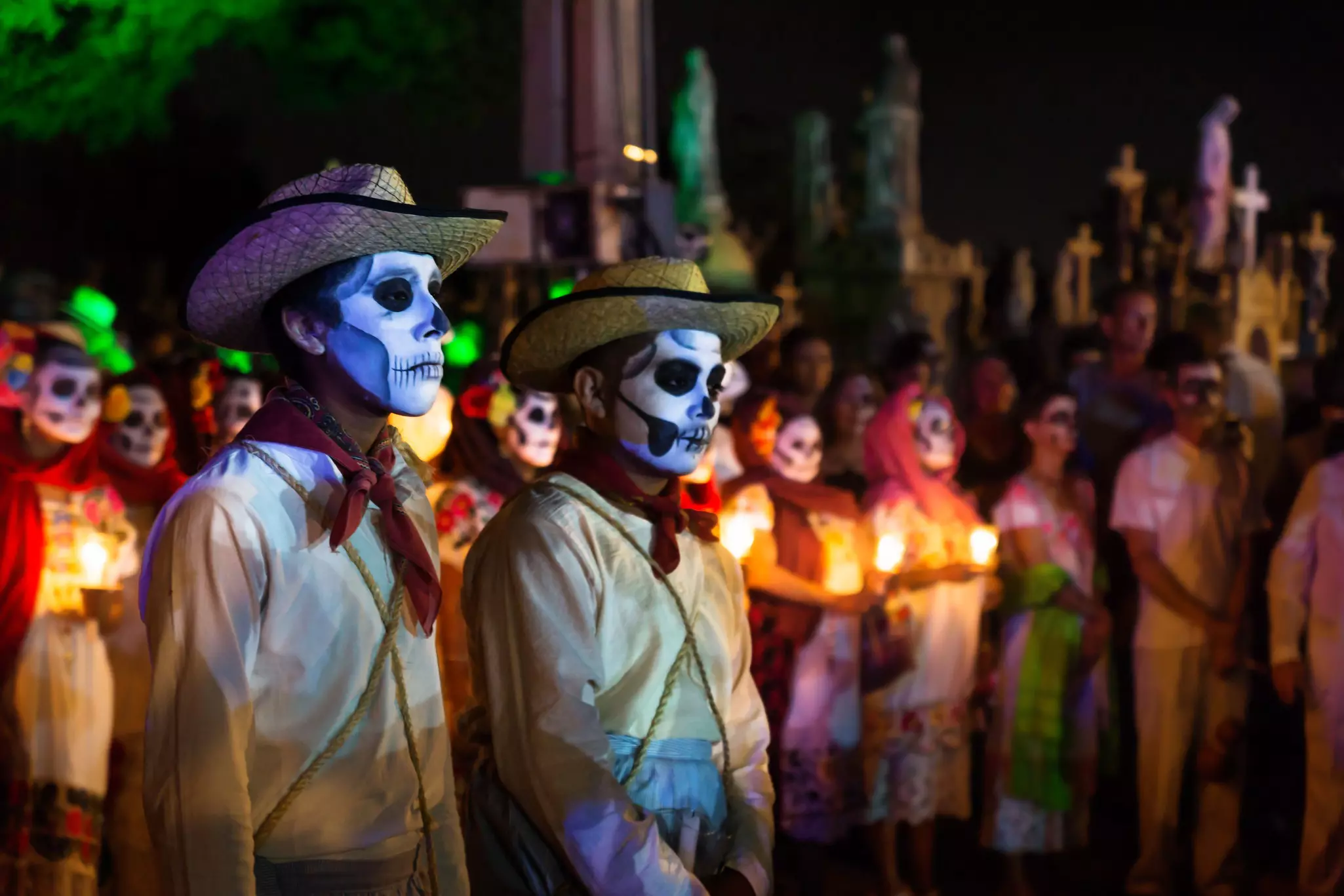
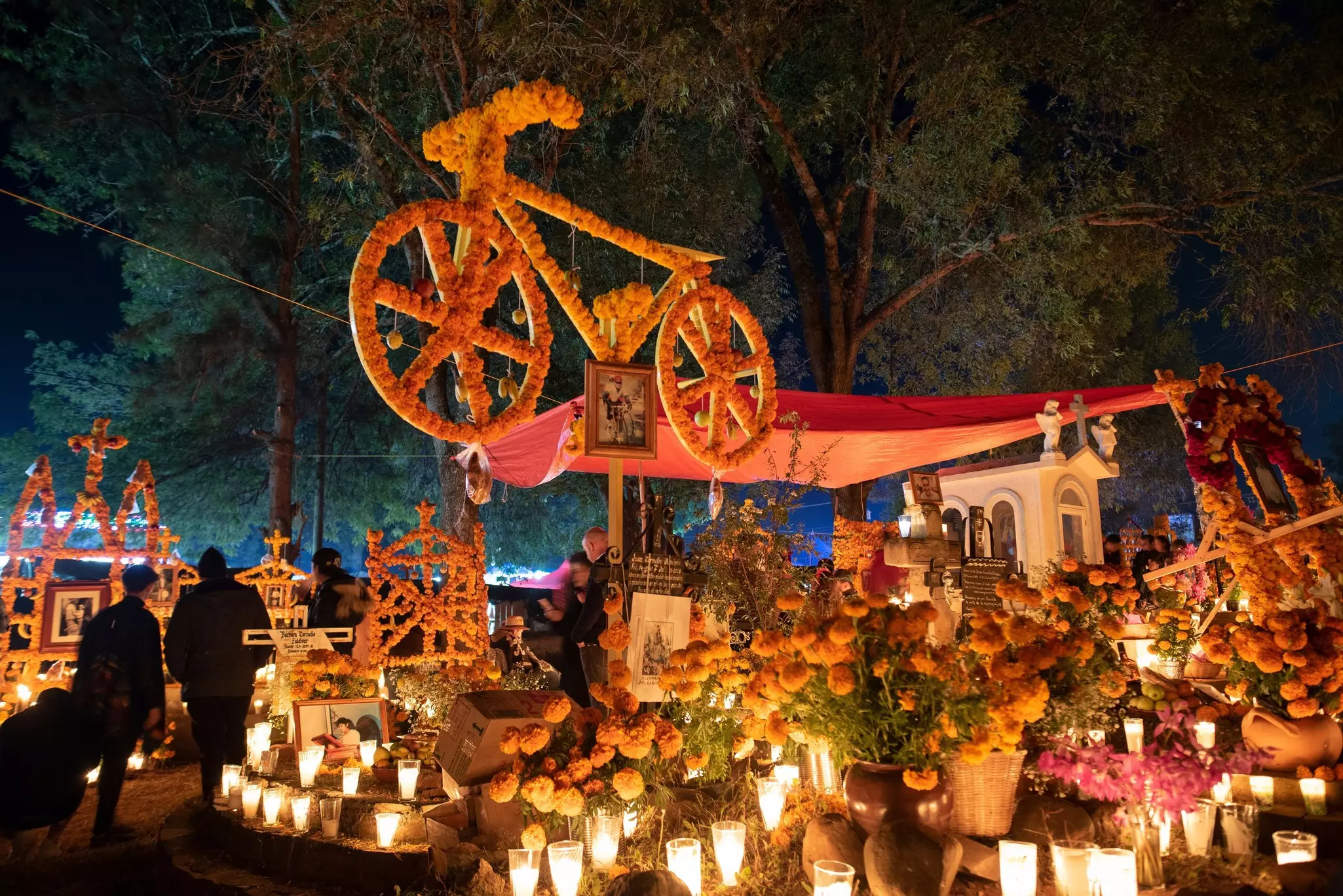
Regardless of regional variations, Día de Muertos is a time when Mexicans visit cemeteries to clean their loved ones' graves and decorate them with flowers and candles. If you visit a cemetery at this time – respectfully, without intruding on family gatherings – you'll find a unique atmosphere that mixes celebrations of life with respect for the dead.
Many families bring folding chairs and blankets, and settle in by the graves of their loved ones for a day and even a night of food, drinks and storytelling. Live music is common, and musicians wind their way through the cemeteries, stopping at gravesite after gravesite to play the favorite tunes of the deceased.
Cemeteries hosting major gatherings include Mexico City's Panteón Civil de Dolores, the Mixquic cemetery in San Andrés Mixquic, and the Panteón General cemetery in Oaxaca.
Although all sorts of flowers are used to create decorations and adorn costumes during Día de Muertos, the bright orange cempasúchil (marigold) is considered the official flower of the dead in Mexico. Native to the central part of the country, it has been used in celebrations since ancient times, as people believed its vivid hue and musky fragrance helped lead spirits back to their homes.
Marigolds remain popular for decorating ofrendas and gravesites, especially in the central and southern parts of Mexico, where cemeteries transform into seas of orange, and marigold petals are strewn before altars in a nod to ancient beliefs.
Other cultures have absorbed the marigold into their own rituals – marigolds were transported to India in the 16th century by Spanish and Portuguese traders, quickly becoming the favored flower for garlands at Hindu shrines.
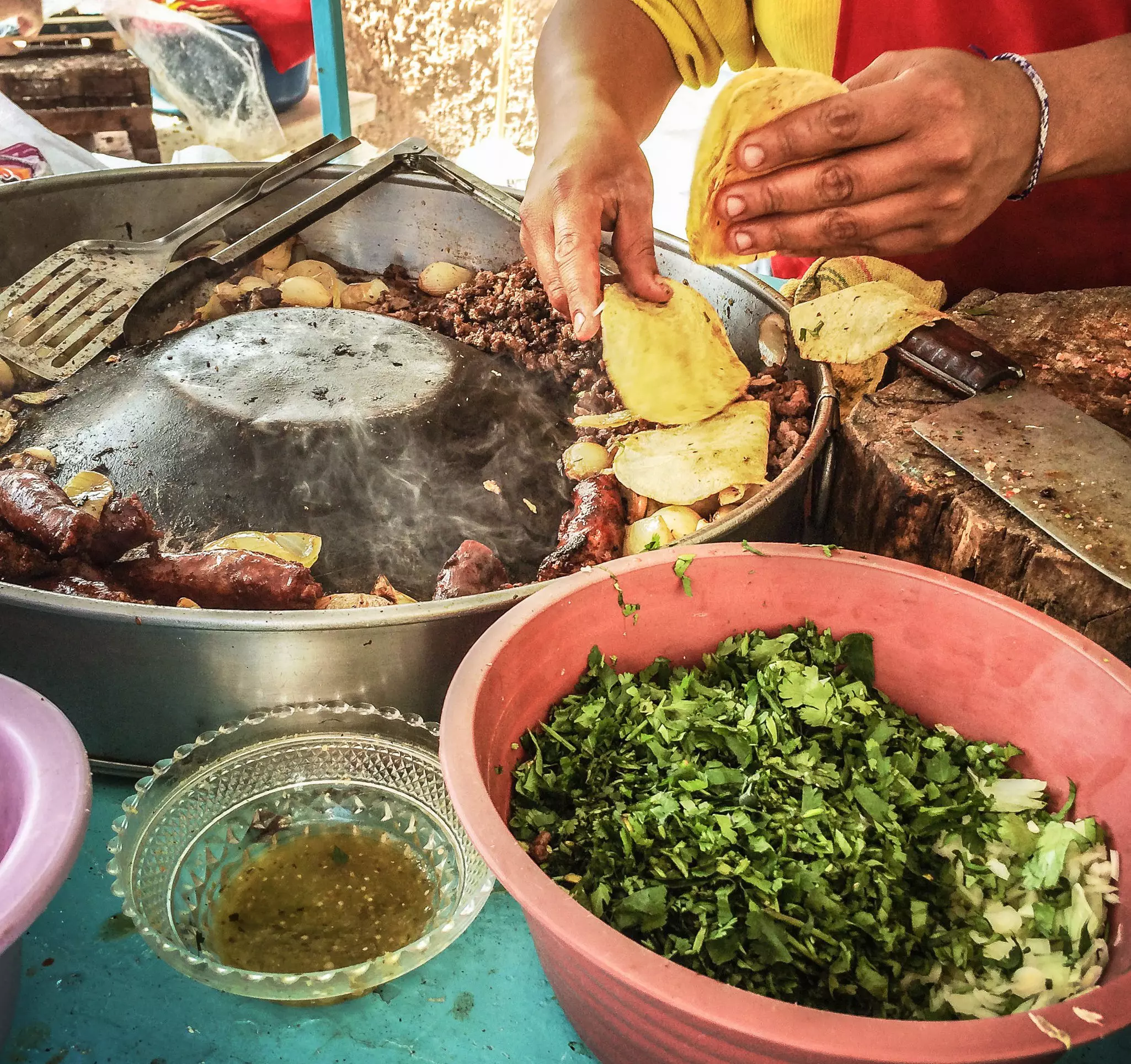
Food is an integral part of Día de Muertos. Ofrendas will feature the favorite foods of the deceased, representing not just their preferences but also different regional cuisines like mole negro (a slow-cooked sauce made with hoja santa chili, chocolate, onions and garlic, often served with chicken) in Oaxaca.
In Mexico City, look out for pozole, a traditional Mexican stew with meat, shredded cabbage, chili peppers, onion, garlic, radishes, avocado, salsa and lime. If you celebrate on the Yucatán Peninsula, try calabaza en tacha (candied pumpkin cooked in sugar cane syrup).
One food that's almost universally present is pan de muerto ("bread of the dead"). This spongy, egg-based bread sprinkled with sugar comes as a round loaf with bone-shaped decorations – a representation of the cycle of life and death.
Bakeries start selling pan de muerto a week or two beforeDía de Muertos, both for use on ofrendas and as a sweet treat to enjoy with coffee, hot cocoa or atole (a sweet, corn-based hot drink). You'll also find untold calaveras de azúcar – brightly colored candy skulls, primarily intended as decorations, rather than for eating.
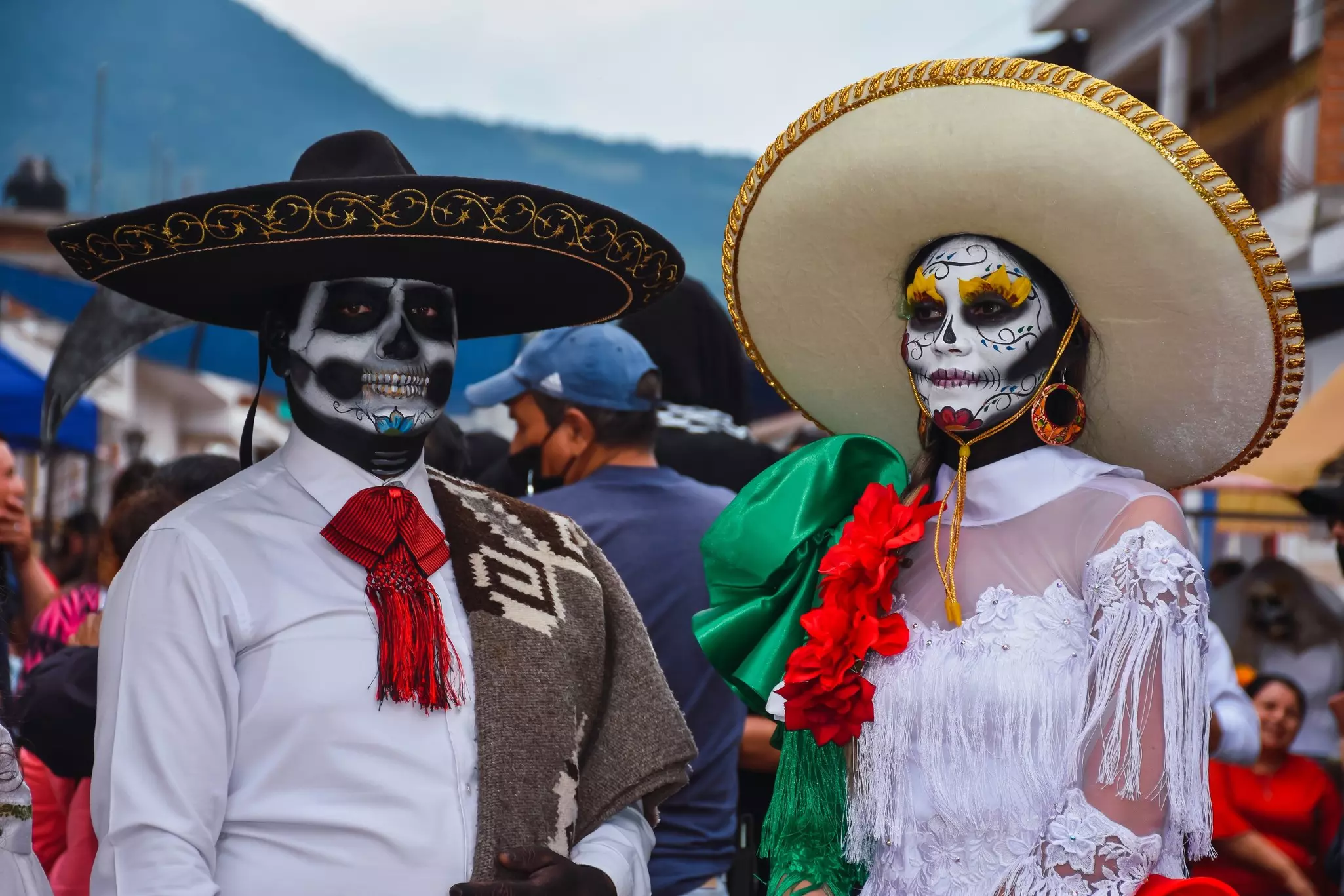
It's important to remember that Día de Muertos is notHalloween, but a more thoughtful, personal celebration where families remember loved ones. Scary Halloween costumes of zombies, werewolves and other horror movie characters are definitely not appropriate, so if you want to join the celebrations, take your cues from the outfits worn by local people.
Many Mexicans dress up for Día de Muertos as skeletons. On parade or procession days, thousands of people paint their faces to resemble skulls and dress in colorful regional costumes or Victorian-era finery. Face painters often line the streets, ready to transform faces into skulls for passersby. Local people are generally open to visitors joining in, so long as it is done respectfully.
The popularity of skeleton imagery at Día de Muertos celebrations can largely be traced to the arrival of La Catrina, a high-society skeleton sporting a feather boa and an oversized Victorian-era hat. Created in the early 1900s by the satirical cartoonist José Guadalupe Posada, La Catrina embodies the reality that death spares no one, rich or poor.
The image was later adopted into the national psyche through the art of Mexican muralist Diego Rivera, among others. Today, at celebrations around Mexico, you'll see this celebrity skeleton depicted in costumes, papier-mâché sculptures, candy skulls for ofrendas and the papel picado (colorful, perforated banners) that flutter across streets.
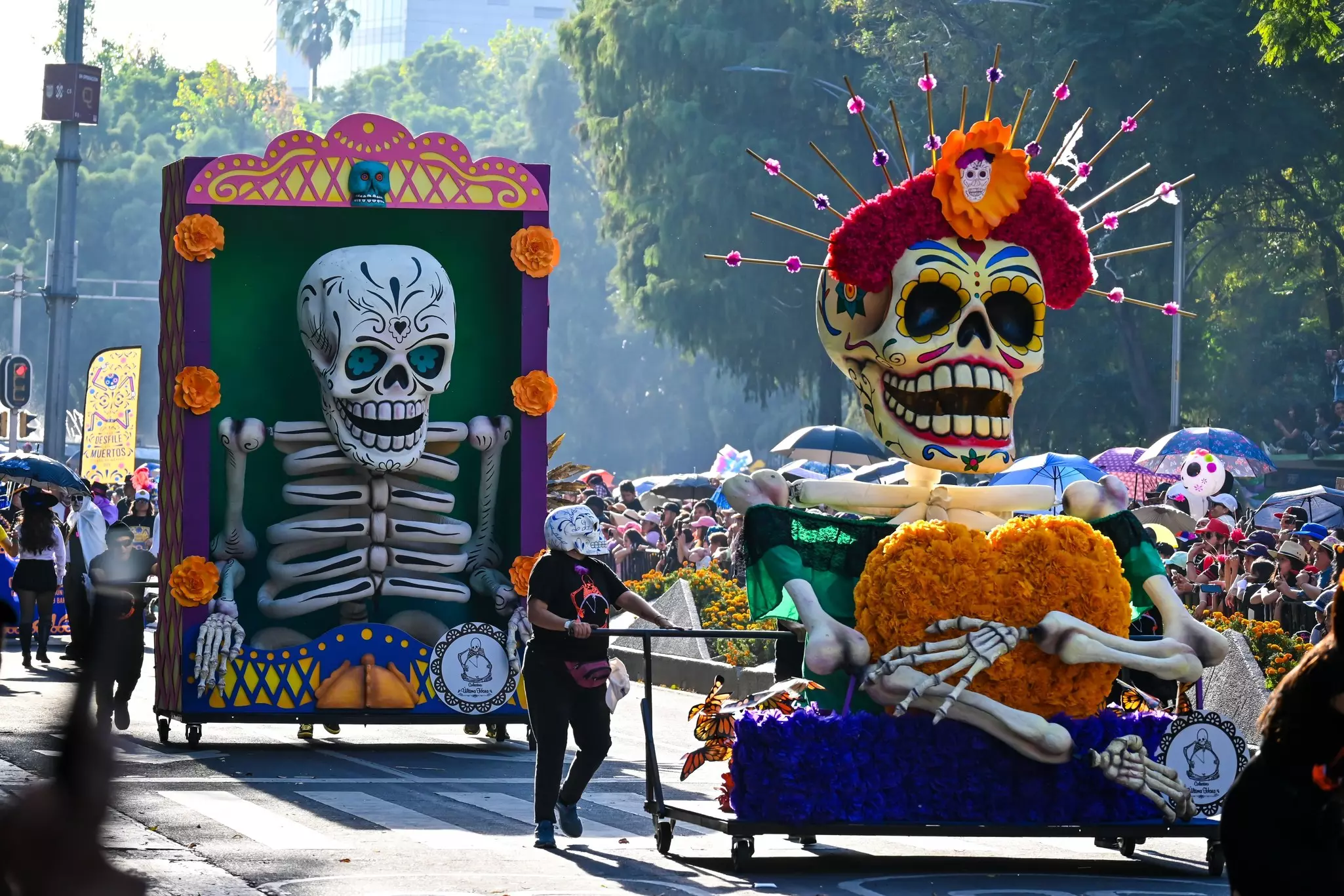
Traditionally, Día de Muertos is a family-oriented celebration, but large-scale festivities, ranging from cemetery processions and city-wide parades to street fairs with food vendors and neon-lit rides, are now found all over the country.
A relatively recent addition to the capital’s cultural events calendar, the Day of the Dead Parade in Mexico City is spectacular year after year. Invented for the 2015 James Bond film Spectre, the parade was transformed into an annual event by the city authorities, and if you find yourself in CDMX in early November, you won’t be sorry to follow in the locals’ footsteps.
Dazzling floats, dancing Catrinas and enormous puppets resembling Frida Kahlo and other famous figures from Mexico’s historical and cultural past march past crowds of wide-eyed spectators along Avenida Reforma in the heart of the city.
This is an event that definitely draws in a crowd, so make sure you arrive a couple of hours before the parade is due to start to grab a spot at the front and actually see the parade go by – as opposed to just seeing the backs of endless rows of people standing in front of you.
Also in Mexico City, the Desfile de Alebrijes (Parade of Spirit Guides) kicks off in Zócalo, the city's main public square, and winds through the capital’s streets. You can expect to see sculptures of fantastical creatures, elaborate floats and a crowd of thousands decked out in skeleton costumes.
Make it happen: The main parade takes place on November 2nd, kicking off in the afternoon or early evening. It starts at the Estela de Luz monument and ends at the Zócalo, where a formidable Day of the Dead altar is set up from late October to early November.
If you find yourself in the area on October 26, you can also attend the Catrina parade to see hundreds of people – performers and revelers alike – dressed up as graceful skeletons in opulent costumes. The city's Panteón Civil de Dolores Cemetery, the final resting place of La Catrina-creator José Guadalupe Posada and Diego Rivera, is another hub for Día de Muertos events, with floral displays and candles adorning many of the graves.
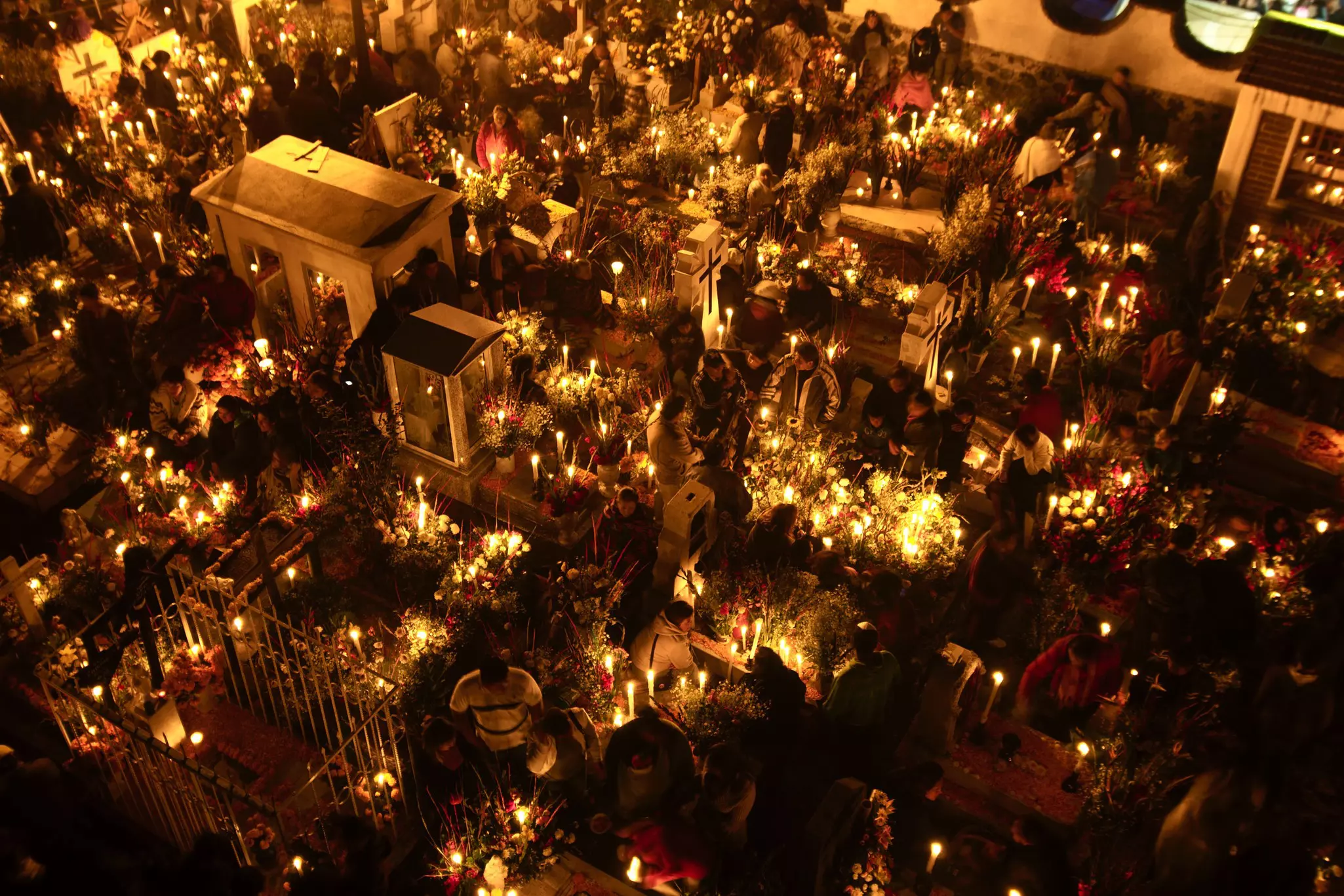
San Andrés Mixquic, an outlying part of Mexico City listed as a Barrio Mágico ("Magical Neighborhood") by the Secretary of Tourism, offers visitors the opportunity to get a glimpse of traditional celebrations for the Day of the Dead without roaming too far from the capital.
The highlight of your visit will be going to the neighborhood's cemetery late at night to see elaborately adorned tombstones covered in orange marigold petals, flower arrangements and candles. Families go to great lengths when decorating the tombs of their loved ones, and some gravesites are true works of art.
While you wait for the main event, you can wander the streets of the barrio itself, which is dressed for the occasion with striking graffiti along its walls. People open their homes for visitors to admire the ofrendas they set up to guide the spirits of their departed family members back home for the night, so follow the crowds and see where the night takes you.
People come from near and far for the occasion of La Alumbrada – three nights when the whole town goes dark except for the cemetery, where thousands of candles light up the intricately adorned gravesites.
Make it happen: Visiting Mixquic will take about half your day, and the best way to get here is by renting a car. Buy yourself a local SIM card, download the Waze app (everyone in Mexico relies on Waze for directions and traffic updates) and head southeast of the center to Mixquic.
Start your journey in the afternoon to ensure you find parking once you get here. There’s no accommodation in the barrio, so you’ll have to drive back to CDMX at night after visiting the cemetery. Allow about 2 hours for the drive in each direction.
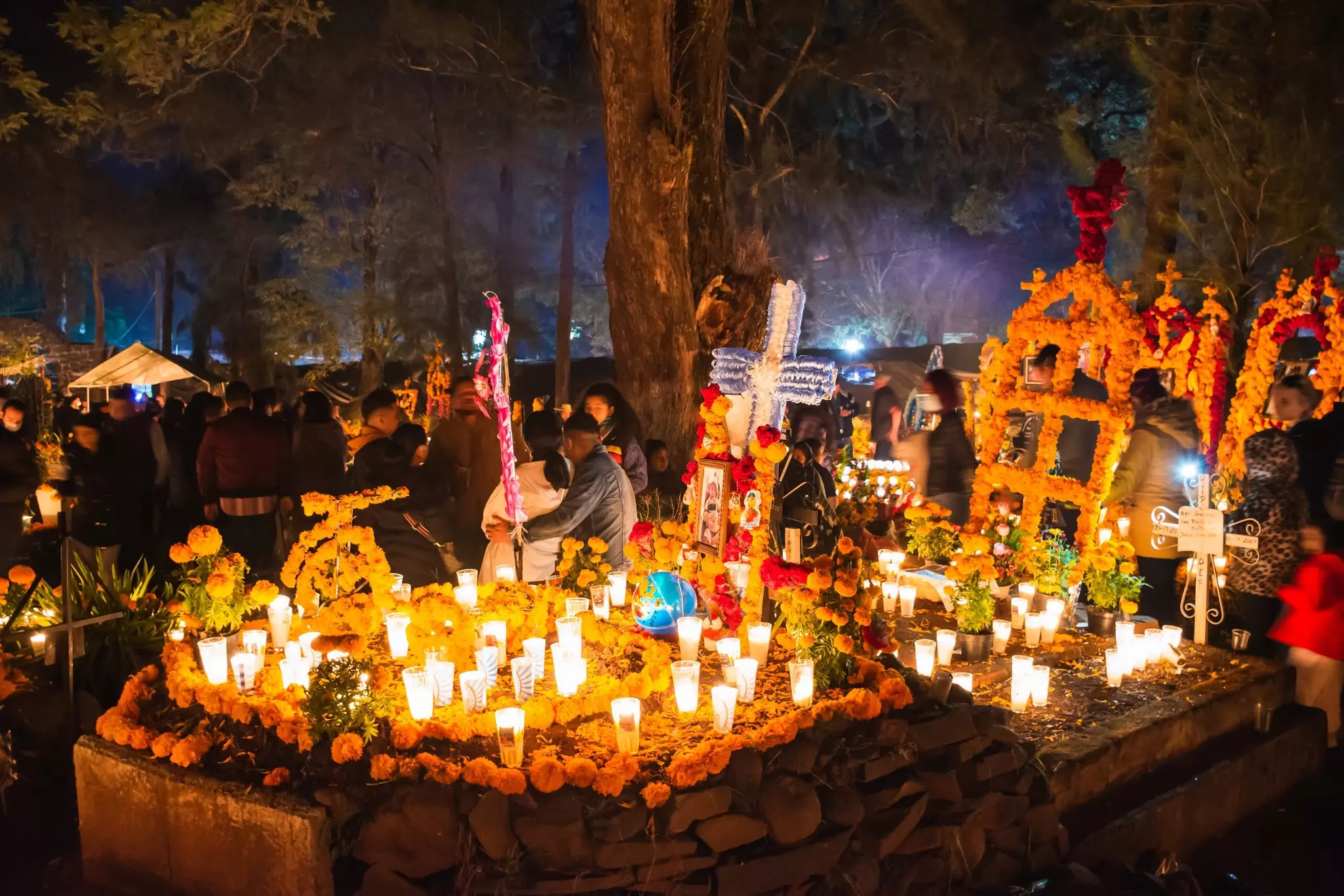
Experiencing Día de Muertos in Michoacán is on everyone’s bucket list. One of the main celebrations takes place on the island of Janitzio, on the shores of Lago de Pátzcuaro. The view at night is spectacular, as the town is lit up by candles and covered in flowers. Visitors can either stay in Janitzio for the night or return to the mainland after visiting the town and the cemetery; boats run all night during the festival.
Make it happen: Finding accommodation in the state’s Pueblos Mágicos is not always easy. If you didn’t book a room well in advance, you can still experience one of the most striking Day of the Dead celebrations in the country by going on a long day trip by bus from Mexico City.
Aztec Explorers organize a tour that will allow you to visit the towns of Pátzcuaro, Tzintzuntzán and the island of Janitzio all in one day before returning to Mexico City. The distance covered is not insignificant, but they take care of all the details, so you’ll be comfortable and well looked after.
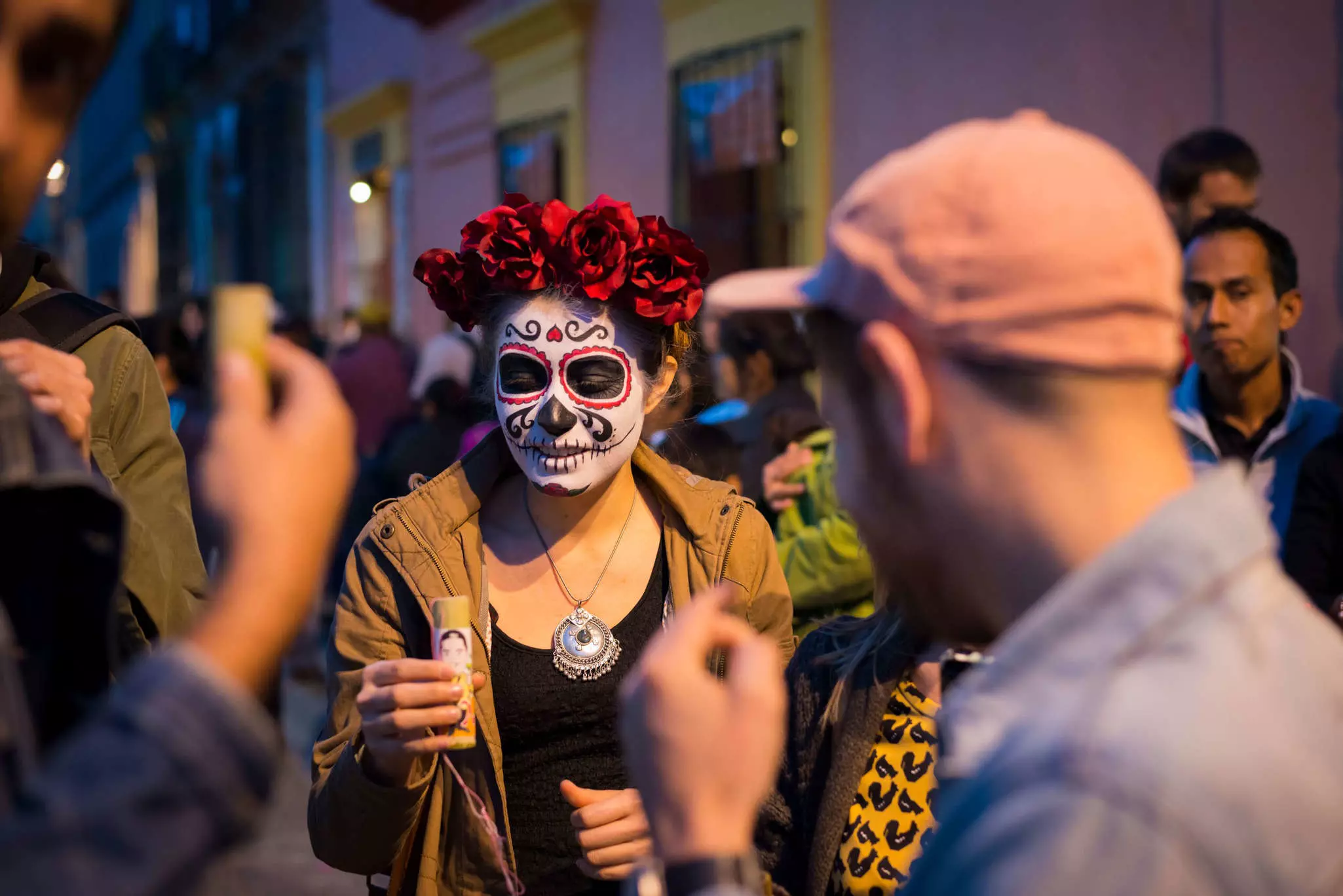
Oaxaca is one of the best places in the country to experience Day of the Dead. With one of the country's highest indigenous populations, the city and the surrounding state follow many traditional customs, and Día de Muertos celebrations extend over the course of several days.
Visitors can see decorated altars and illuminated niches at the Panteón General cemetery on the nights of November 1 and 2, or you can visit the cemeteries in the villages surrounding the city, such as Xoxocotlán. During the day, browse colorful markets such as Mercado 20 de Noviembre and watch families buy the treats that they’ll set up for their dearly departed at family ofrendas.
Make sure you try some pan de muerto or some local pan de yema ("yolk bread"), which tastes great dunked in traditional Oaxacan hot chocolate.
Make it happen: You can get to Oaxaca from Mexico City either by flying or by bus or rental car, but keep in mind that the drive will take 6 hours or longer, and part of the route follows winding mountain roads. Given that this is a very popular time to visit Oaxaca, make sure you book your accommodation well in advance. La Betulia Bed & Breakfast is a charming bed and breakfast with a central courtyard in a quiet part of town, and it serves delicious cooked-to-order breakfasts.
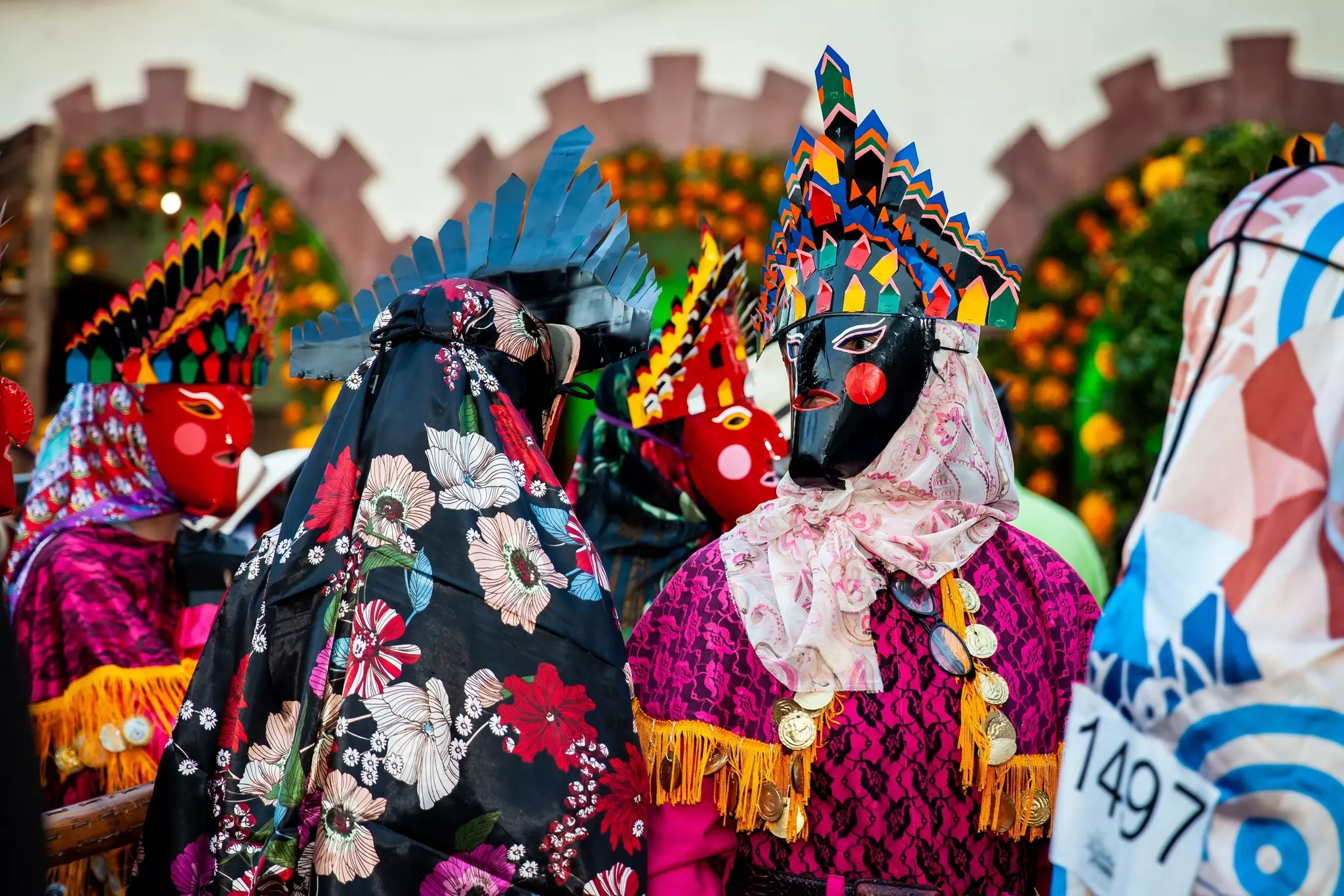
Oaxaca and Michoacán are perhaps the most widely known places to celebrate Day of the Dead, but the celebrations in La Huasteca Potosina are unlike anywhere else in the country. Away from the gaze of tourists, Día de Muertos here has more of a regional and authentically Mexican feel.
While the traditions of setting up an ofrenda and visiting cemeteries definitely endure, local towns commemorate their dead through the Xantolo, a dynamic and traditional celebration where people take to the streets in costume to perform dances in groups called comparsas, creating something of a carnival mood.
The main square and surrounding streets of towns such as Xilitla, Aquismón and Axtla de Terrazas come alive with performers of all ages and, as a visitor, you’ll feel like you’re witnessing something few others have seen.
Make it happen: We recommend flying into the city of San Luis Potosí to start your journey; alternatively, Aquismón and Ciudad Valles have simple and clean accommodation that you can use as a base for exploring the region. To enjoy Xantolo to the max, it's helpful to hire a local guide who can help you figure out when each town is holding its celebrations. Guides at Auténtico San Luis know the ins and outs of all the local performances, and they can drive you from one town to the next.
Book your Mexico trip with Lonely Planet Journeys
See Mexico how it's meant to be seen
Planned by local experts and tailored to you, Lonely Planet Journeys handles the logistics so you can just enjoy the trip. Tell us what you want and we'll build your Mexico itinerary from scratch, or browse our bookable trips to get inspired.

Explore related stories