Mar 26, 202615 min read
15 Best Things to Do in Geneva Mar 26, 2026
15 MIN READ

Writer
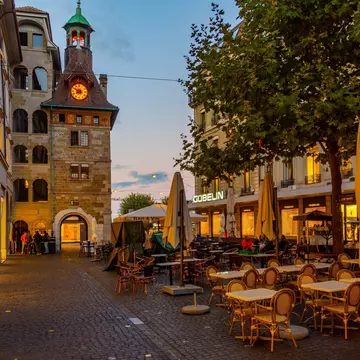
Evening in a square in Geneva’s old town. trabantos/Shutterstock

Writer
Highlights
Editors round up 15 things to do in Geneva, from old town to CERN.
Climb the towers of Cathédrale St-Pierre, then follow a DIY walking trail through old Geneva.
Visit CERN for science shows, then tour the Patek Philippe Museum for watchmaking mastery.
Artsy Carouge buzzes with markets, boutiques and late-night music at Chat Noir.
Lonely Planet may earn a commission from affiliate links on our site. All recommendations and reviews reflect our own independent opinions.
In the far west of Switzerland, French-speaking Geneva is a rare breed of city. With a vibe of wealth and prestige emanating from its luxury jewelers, chocolate shops and investment banks, Geneva’s flawless, glossy veneer can feel impenetrable. But meander away from the hilltop old town and manicured lakeshore – into grungier Pâquis, village-like Carouge or along the post-industrial banks of the Rhône River – and a different Geneva emerges, quietly humming with attitude and buzzing with artists, activists and other cool types.
Geneva (Genève) has been a place of diplomacy since the 16th century, and it seems that every language under the sun is spoken here. The famously international city has a handsome historic core, renowned museums, vibrant nightlife and an impressive array of attractions that draw visitors from around the world.
On glittering Lake Geneva, pristine steamers from the 1900s cross the invisible French-Swiss border across this crescent-shaped pool of freshwater, Europe’s largest lake. Then there’s 4806m Mont Blanc, Western Europe’s highest peak, keeping sentry over the French Alps across the water.
As you map out all you want to do in around this alluring city, consider our list of best things to do in Geneva.
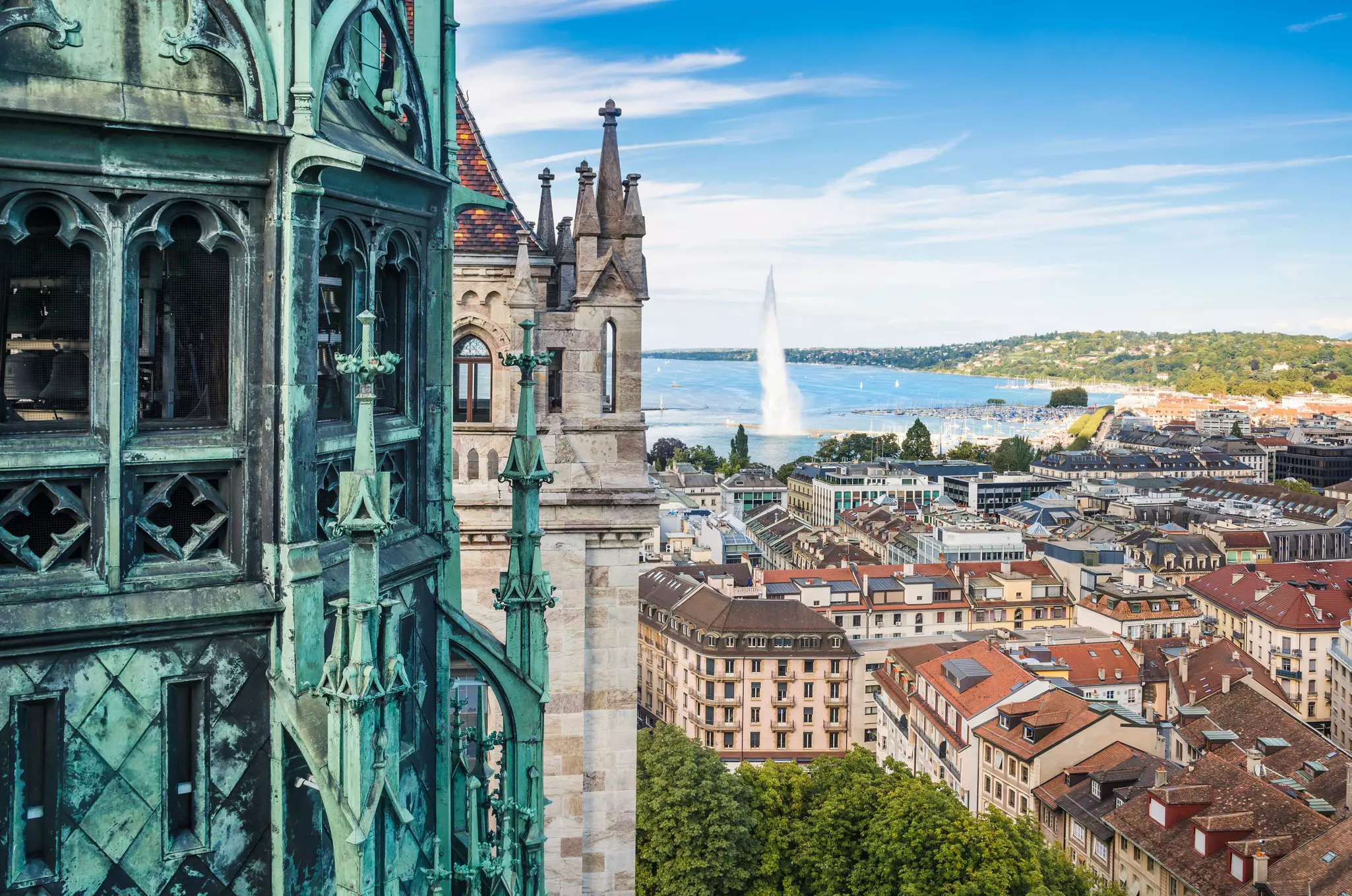
Old Geneva’s antique heartbeat resonates in its hilltop Vieille Ville, once occupied by the Romans and later the site of a 5th-century bishopric. Unearth the city’s Celtic and Roman origins at the archaeological site beneath Cathédrale St-Pierre.
A bonfire is lit in the cathedral square during December’s L’Escalade festival, which celebrates Geneva’s defeat of Savoy troops in 1602. (Memories are long here.) Legend hails a Genevan housewife as the hero who tipped a pot of boiling soup over a trooper’s head from the city walls, whacked him with her cauldron, and raised the alarm.
During the 16th-century Reformation, French theologian Jean Calvin (1509–64) preached fiery sermons inside the Gothic cathedral, which features an 18th-century neoclassical portico. Spiral up 157 steps in the north or south tower for bird’s-eye views of the old town.
Planning tip: The cathedral towers are open late on select nights for panoramic views of the city by moonlight. While the south tower has an open balcony, the north tower is enclosed and is a better option during inclement weather. For more rooftop views, head to Terrasse Agrippa d’Aubigné, a tree-shaded park behind the cathedral.
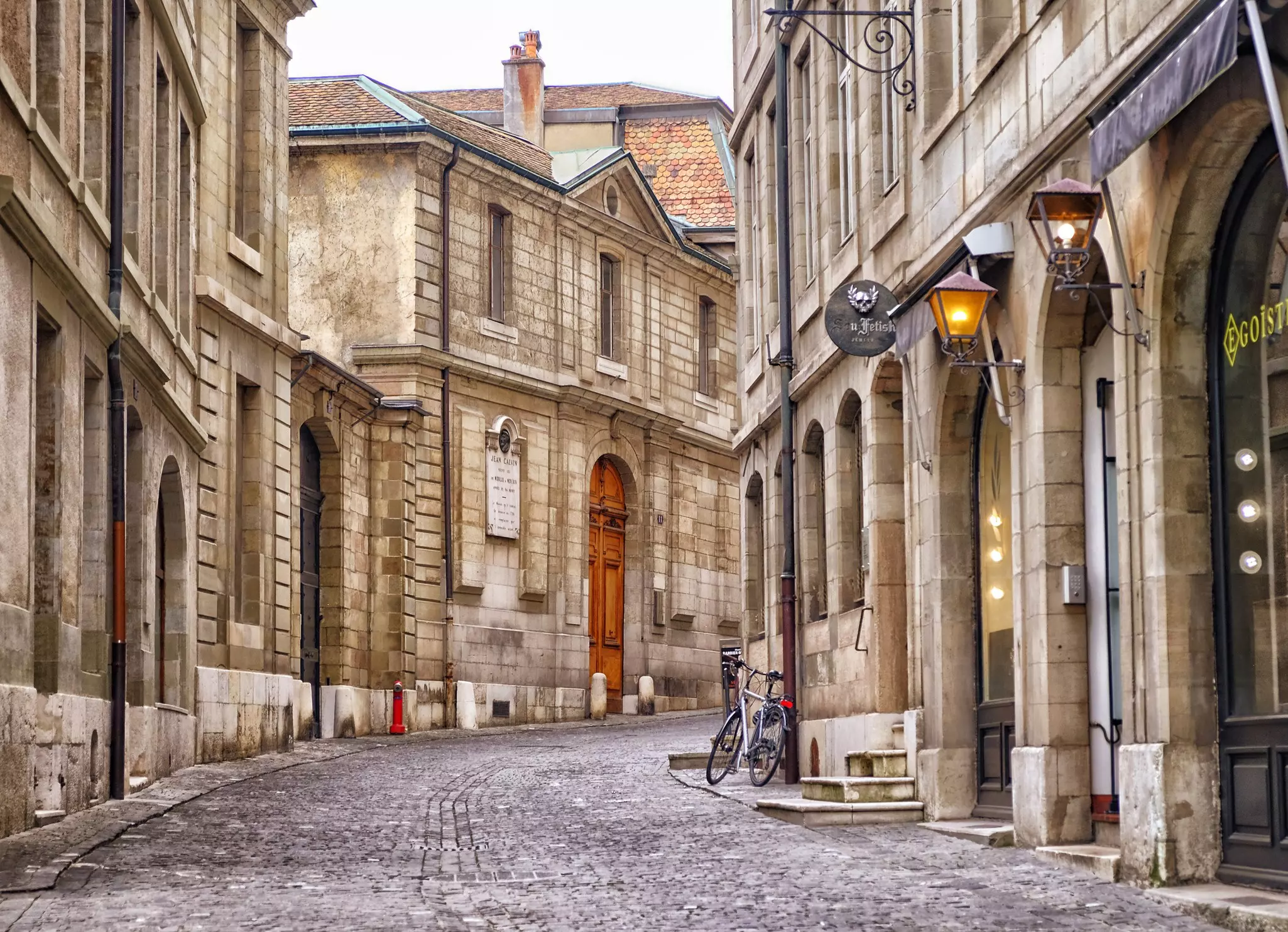
The Geneva tourist office maps out superb, themed DIY walking trails in the city, highlighting Geneva’s best districts and attractions, along with some of the city’s most beautiful scenery. Old Geneva is home to more than 67 museums and galleries exploring the area’s rich history and culture.
After ascending the towers of Cathédrale St-Pierre, continue to the Musée International de la Réforme to learn how Calvin’s Geneva became a safe haven for Protestant refugees persecuted for their faith.
Follow Rue Otto Barblan past the 17th-century townhouse known as Les Armures, today a luxurious hotel. Then continue uphill to the city’s oldest surviving residential building, the 14th-century Maison Tavel, and the Arsenal, showcasing cannons once aimed squarely at Savoy.
On the old town’s main thoroughfare, Grand-Rue, 18th-century philosopher Jean-Jacques Rousseau (1712–78) was born at no 40 – today the Maison de Rousseau et de la Littérature. End your walk on Place du Bourg-de-Four: once the site of a Roman forum and the setting for wildly popular medieval fairs in the 13th century, it’s abuzz with cafe terraces today.
Lap up urban life at Marché de Rive (also called Marché Helvétique) on Saturday and Wednesday mornings. Open-air stalls piled high with seasonal produce grown by maraîchers (market gardeners) in surrounding villages spill along Bd Helvétique.
On nearby Rue Louis Duchosal, Genevans pop caviar on the sleek pavement terrace of Planet Caviar, while fridge mechanic turned fisherman Julien Monney sells his catch – perch, whitefish, arctic char or crayfish, depending on the season – caught from his fishing boat in Hermance, about 14.5km north.
Sit down to taste wine from Domaine de la Devinière at the organic winery’s market stall, and buy urban honey from Genevabeez. For cheese, charcuterie and pre-prepared dishes, dive into the indoor food market known as Halle de Rive on Bd Helvétique.
Planning tip: After perusing the market, walk 5 minutes north to the staircase beside the Musée d’Arts et d’Histoire. In the Légumes en Ville vegetable garden, information panels explain the crops by season, and tree-shaded sofas and armchairs crafted from wooden pallets are a perfect picnic spot.
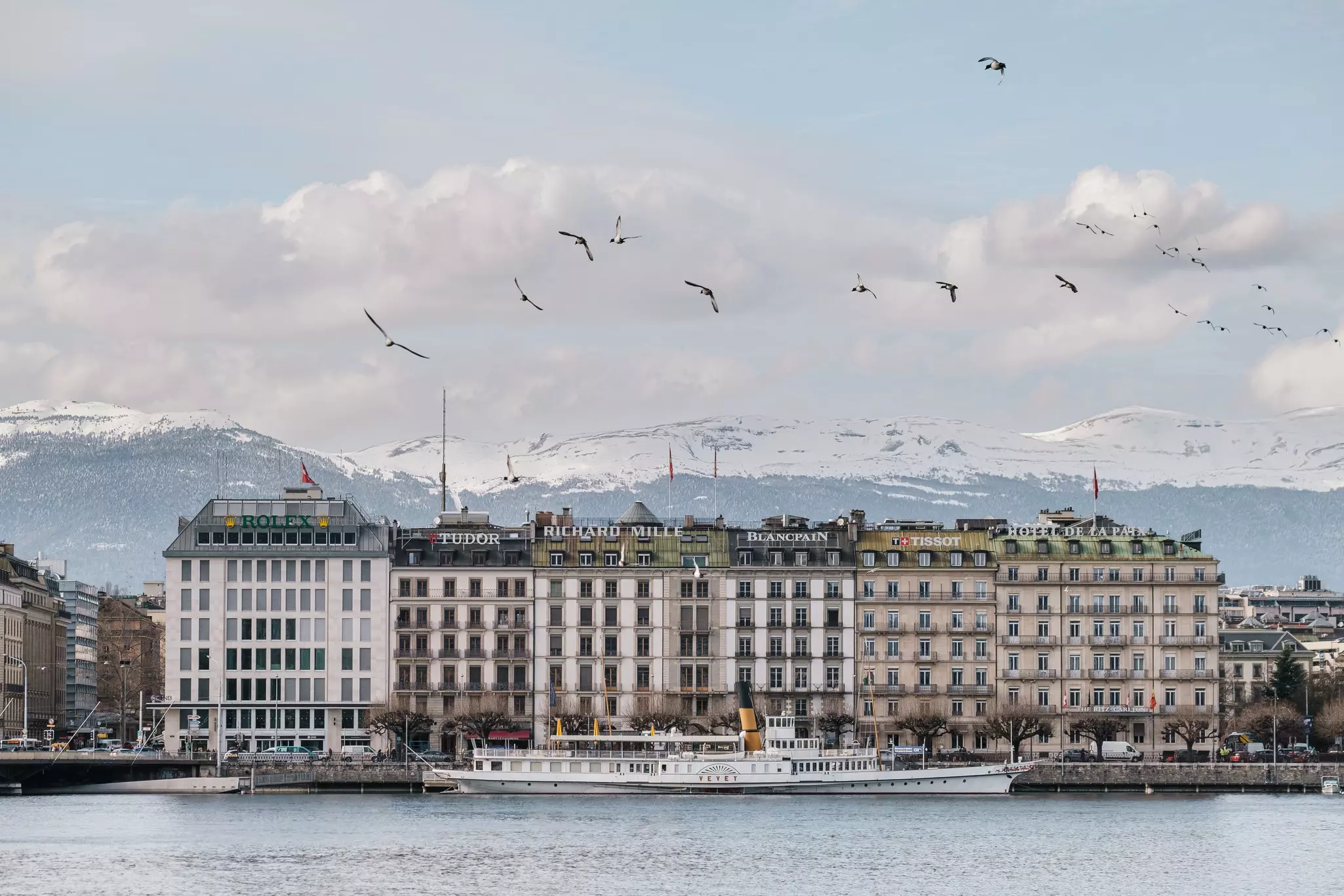
Flowers, statues, alfresco photography exhibitions and (on clear days) superlative views of Mont Blanc lure visitors to the aptly named Quai du Mont Blanc. Geneva’s picturesque northern lakeshore promenade leads past the Bains des Pâquis, vintage public baths where Genevans have frolicked in the sun since 1872.
Continue to Parc de la Perle du Lac, a city park where the Romans built ornate thermal baths. Further north, the peacock-studded lawns of Parc de l’Ariana surround the UN’s headquarters and abut the Conservatoire et Jardin Botaniques, botanical gardens planted with 12,000 species from around the world.
Evening is a marvelous time to admire Geneva’s eye-catching public art, an ephemeral feast of contemporary sculptures and installations that extends well beyond the illumination of the Jet d’Eau fountain.
The soft glow of summer evenings lends added atmosphere to the industrial architecture of the Modern and Contemporary Art Museum (MAMCO), a cutting-edge setting for youth-oriented, international and cross-media exhibitions. End on Plaine de Plainpalais, a massive diamond-shaped plaza illuminated by several thought-provoking neon and LED light artworks on the rooftops. Just be sure to look up.
Planning tip: On many evenings in July or August, MAMCO stays open late (from 5pm to 10pm, with free admission), and live music, DJs and festive soirees spill across its courtyard.
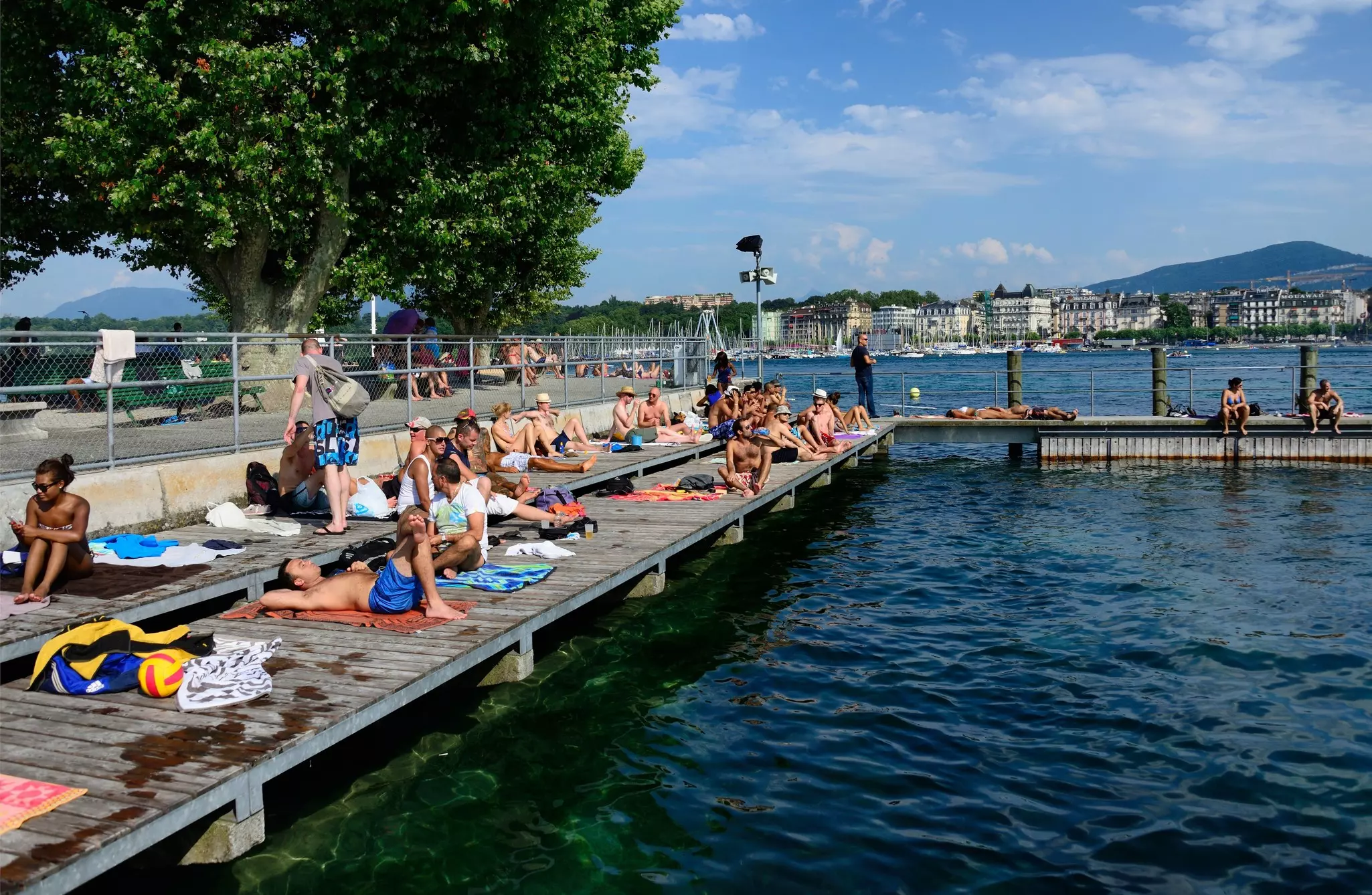
Open year-round, Geneva’s city baths, the Bains des Pâquis, are much more than just a joyously retro place to swim. First built in the late 19th century, the baths opened to the public in 1890, then were rebuilt in 1932, when the original wooden structures were reinforced with concrete.
A favorite summer retreat, the baths seamlessly integrate into the landscape, with manmade beaches that open onto the lake. During the warmer months, the baths host sunrise concerts. After a winter swim, bathers can thaw in a sauna or hammam (Turkish bath). The baths also host author lectures, sports recreation, yoga classes and cultural exhibitions.
Planning tip: When visiting the baths, call ahead to reserve a space at Buvette des Bains des Paquis, famed for its fluffy fondue. The secret ingredient is a splash of Crémant de Dardagny, a sparkling white chardonnay from the vineyards west of Geneva.
In a city synonymous with luxury timepieces, precision is key. After all, this is where the humble wristwatch was first embellished with a wind-up crown, perpetual calendar and sky charts blazing 400 stars in the night sky.
With the austerity of the Reformation, Genevan goldsmiths and jewelers turned their hand to watchmaking; by 1760, the city was home to 600 masters. Today, the 700 watchmaking companies with headquarters in Switzerland include Geneva-based Rolex, Richemont and Patek Philippe.
Geneva’s Patek Philippe Museum is as much a study in social etiquette as a watch museum. Here, you’ll learn about a family firm from 1839 whose limited-edition timepieces cost upward of 20,000 Swiss francs and command a waiting list of years.
From Tuesday to Friday, you can watch highly skilled watchmakers at work in restoration workshops and take a self-guided digital audio tour around the museum. The elegant space is styled like a sumptuous jewelry shop, with plush carpets, wood paneling and glass cabinets displaying some 2500 timepieces from the 16th century to the present day.
Planning tip: Appropriately, punctuality is essential to secure one of 20 spots on the 2-hour Saturday-afternoon guided tours. Arrive no later than 2:30pm to register for that day’s tours, which begin at 3:30pm (in French) and 4pm (English). No advance reservations are taken.
Geneva exudes luxury, and its food is no exception. From seasonal produce and artisanal delights at the Marché de Rive to premier offerings from coffee shops, historic chocolatiers and restaurants with a lakefront view, there’s no shortage of fine cuisine to enjoy here.
Tranquil little cafes such as Birdie and the Barista Lab delight with quick, high-quality bites and coffees to start the day. For unforgettable fine dining, choose from multiple Michelin-starred restaurants such as the theatrical L’Atelier Robuchon or the intimate L’Aparté.
A true chocolate destination, Geneva’s reputation for premium confectionery is well known around the world. You’ll find dozens of chocolate shops here, including the iconic pioneer of Swiss chocolate, Favarger, and one of the city’s oldest manufacturers, Chocolaterie Arn, located in the old town’s Place du Bourg-de-Four.
Auer in downtown Geneva is one of the city’s most popular confectioners thanks to signature creations such as amandes princesses, pavés glacés de Genève and a dizzying selection of expertly crafted truffles. Round out your tour of Geneva’s culinary riches by sipping Champagne aboard La Buvette du Bateau (summer only). Moored by the Jet d’Eau fountain, this retired 1896 paddle steamer has lake views that are unparalleled.
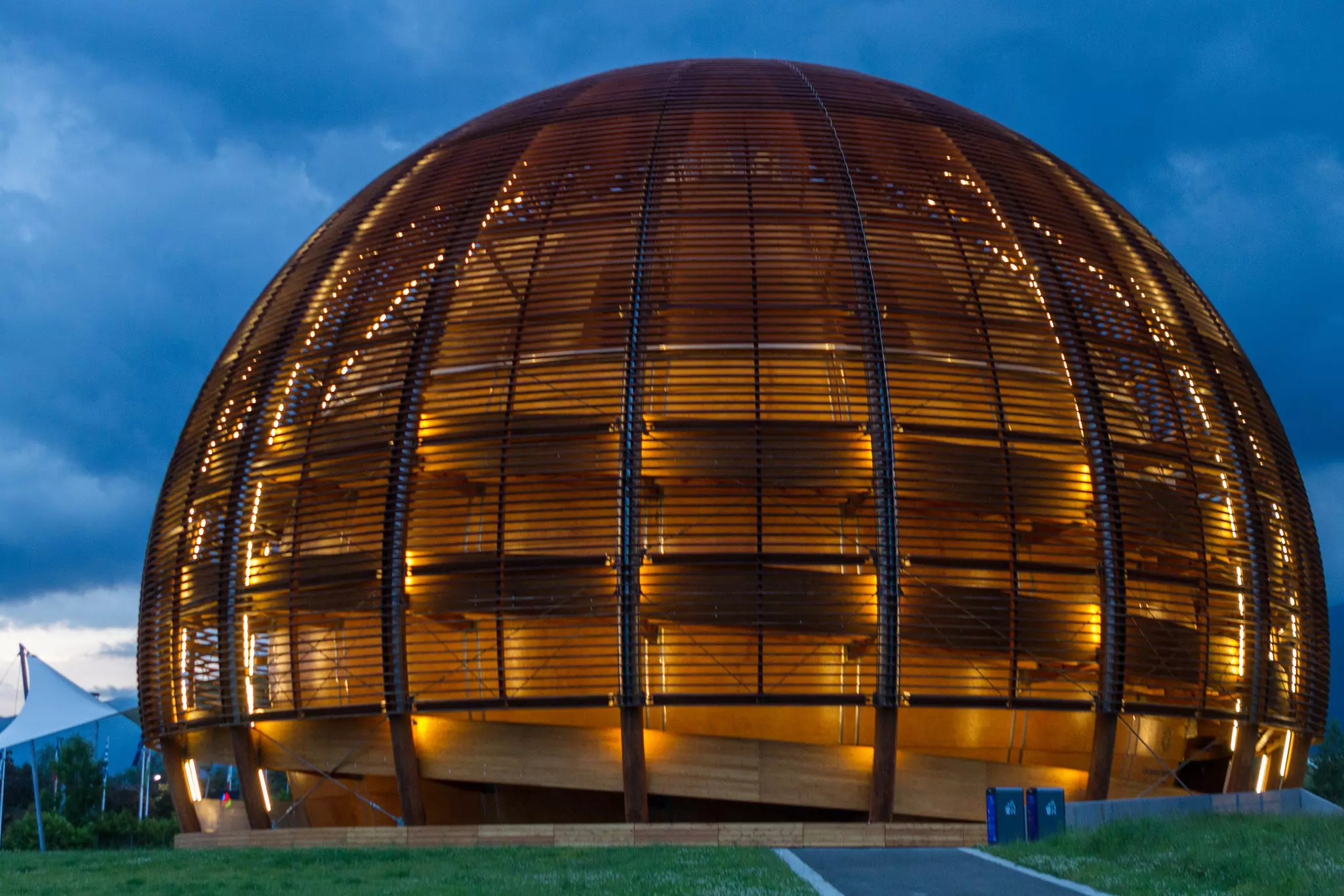
Searching for the particles that make up matter is the job of the top-drawer physicists at the European Organization for Nuclear Research, or CERN. This is where British scientist Tim Berners-Lee invented the World Wide Web in 1989, and where protons are pushed down a 26km tube inside the Large Hadron Collider at close to the speed of light to collide and create new matter.
Spots on 90-minute guided tours around the vast research center and underground laboratory in Meyrin are like gold dust – download CERN’s app to register and check availability 1 to 2 hours ahead. Early mornings and Sundays are your best bet.
Even if you can’t get a space on a tour, the state-of-the-art Science Gateway, designed in 2023 by Italian architect Renzo Piano, shines brilliant new light on CERN’s work, with science shows, interactive exhibitions and films. Get here on tram 18, leaving from Geneva train station.
Planning tip: To learn more about ugly quarks and beautiful antiquarks, rent a mountain bike from Meyrinroule near the entrance to CERN and embark on an imaginary mission to restart its particle accelerator. On the free “Passport to the Big Bang” cycling route, you’ll cycle around 10 stations, collecting activation codes as you go. The circular route covers 54km but can be tackled in segments.
Leave the crowds behind at Cimetière des Rois (Cemetery of Kings), a serene and eclectic urban cemetery in the neighborhood of Plainpalais. It was built outside the city walls in the 15th century to bury plague victims; during the Reformation, it became the final resting place of many Genevans – notably without tombstones, as per the ecclesiastical custom of this austere “Protestant Rome.”
The simple stone engraved with the initials “JC,” marking the grave of zealous Protestant preacher Jean Calvin (1509–64), was added later, in the 19th century. Other Genevan statesmen, politicians, doctors, bankers and academics are also buried here.
The graves in the cemetery are marked by a whimsical mix of rocks, sculptures and headstones randomly peppering lush lawns in the shade of centurion trees strung with bird boxes.
Planning tip: Keep an eye out for rogue contemporary artworks disguised as tombstones, including Gianni Motti’s provocative 2016 work, Je vous avais dit que je n’allais pas très bien (“I told you I wasn’t very well”).
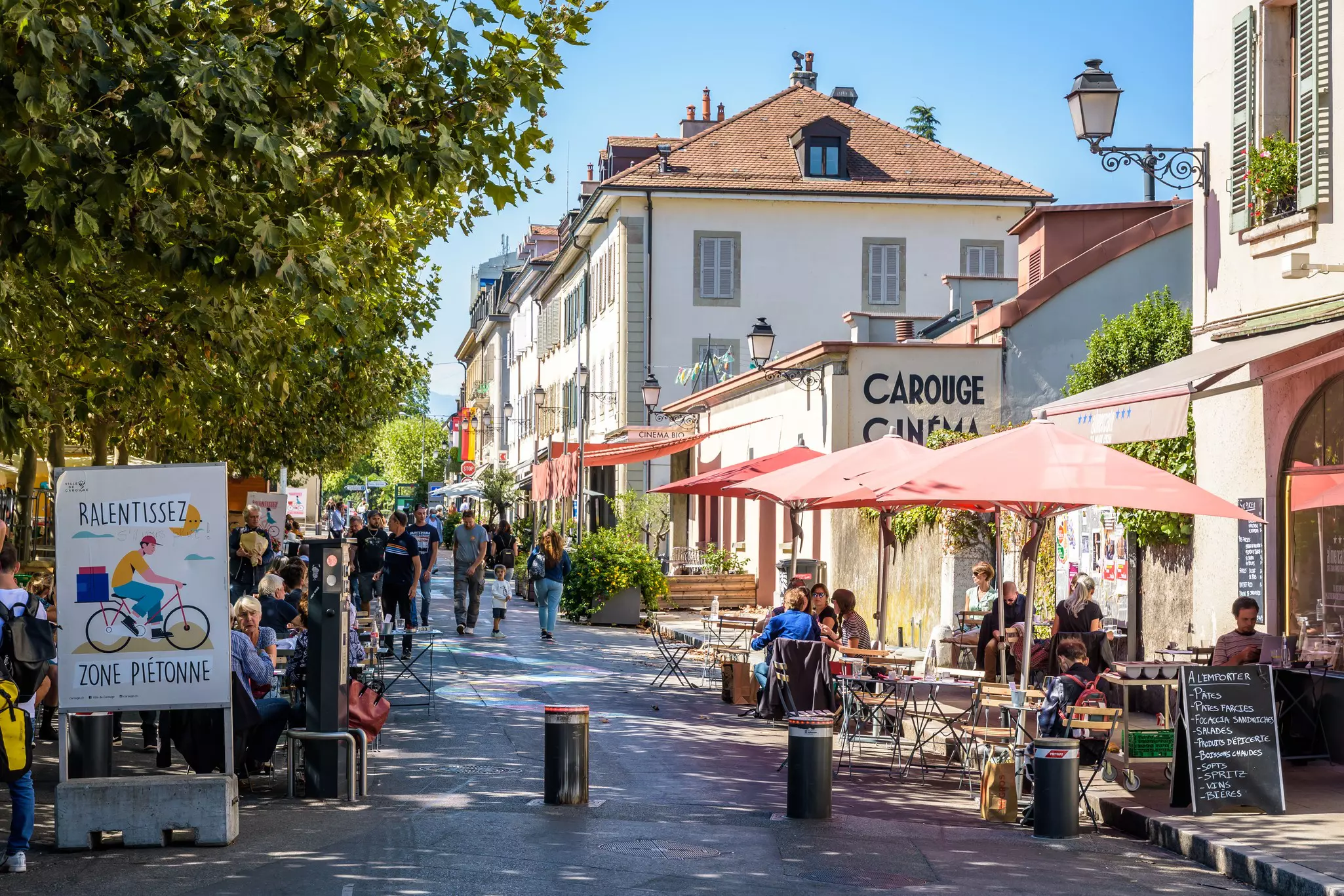
In the artsy satellite city of Carouge, 18th-century houses open onto courtyard gardens and cafes spill out into streets. Yesteryear rival to Geneva, this once-powerful settlement was refashioned in the 18th century by Vittorio Amedeo III, king of Sardinia and Duke of Savoy, in a bid to outdo Geneva as a center of commerce.
In 1816, the Treaty of Turin handed Carouge to Geneva. Today, narrow streets lined with cafe terraces, boutiques, artists’ workshops and late-night music bars such as Chat Noir create a village vibe. At the tiny Musée de Carouge, ceramics conjure up 19th-century history.
A market unfurls beneath the plane trees on Place du Marché on Wednesday and Saturday mornings. Have lunch afterward at Café du Marché (try the feather-light Grand Marnier soufflé). The Thursday market, held from 2pm to 9pm, is an after-work “drinks and tapas” institution.
Planning tip: In December, horse-drawn carriages line up on Place de l’Octroi to take Christmas shoppers for a festive ride. Tram 18 links the train station and Place du Marché in about 20 minutes.
It was lucky for the world that Genevan businessman Henry Dunant happened to pass through Solferino, Italy, in 1859. The horrors he encountered – thousands of wounded Italian, French and Austrian soldiers, left to die where they fell during the Battle of Solferino – inspired him to round up volunteers to provide first aid.
Back home, he campaigned for the creation of national bodies trained to provide neutral medical assistance in times of war. This led to the creation of the international Red Cross movement in 1863. A year later, the Geneva Convention granted neutrality and protection to medical personnel and the wounded on battlefields.
In 1901, Dunant won the first Nobel Peace Prize for his humanitarian efforts. Geneva’s Musée International de la Croix-Rouge et du Croissant-Rouge provides a compelling overview of the world-changing movement Dunant kicked off.
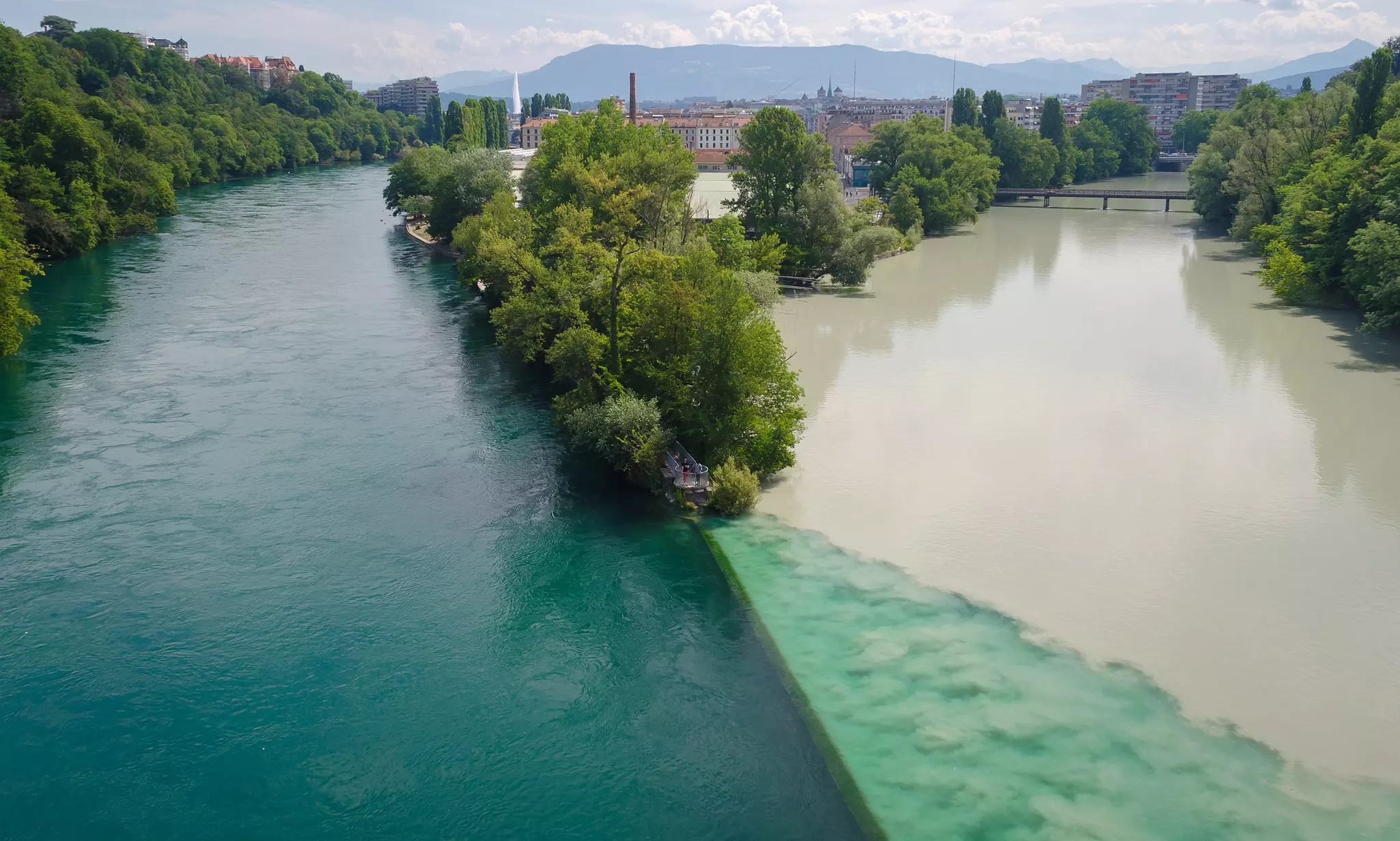
The mighty Rhône has been a source of mystery, fascination and terror ever since the ancients settled its fertile banks, inspiring legends of mythical dragons and headless martyrs.
On Geneva’s green fringes, rent a paddleboard or kayak at Pointe de la Jonction to observe the river’s most memorable display. No TikTok video will prepare you for the psychedelic color of the waters where the Rhône meets the Arve River at the end of its short journey down from the Mont Blanc massif.
Paddling off from Rafting Loisirs on the Rhône’s left bank, it takes just a few minutes to reach the point where the two rivers meet: one (the Arve) milky with glacial sediment, the other (the Rhône) clear and green. Paddle to the distinct line in the water to observe the contrast in flow as well as hue.
Count on 3 hours for the 8km paddle downstream from La Jonction to Pont de Peney in Peney-Dessous – otherwise a 45-minute bus journey from central Geneva. Wild swans, herons and tufted ducks are common along the route, which passes under six rail, road and foot bridges, past cliffs, forests and reed beds.
Planning tip: For a magical evening on the water, guided kayaking trips by moonlight provide a rare chance to hear the song of tawny owls and cuckoos.
Geneva has an ample selection of cocktail bars and live-music venues. Kick off the night mingling with a hip crowd on the trendy barge Bateau Lavoir, moored between Pont de la Coulouvrenière and the old market hall, then head to the glam Le Baroque, a swank club and staple of the city’s nightlife scene.
In Carouge, Chat Noir embodies a bohemian vibe with diverse entertainment, from slam evenings and improv to stand-up and concerts. The venue is open late into the night, serving gourmet dishes and creative cocktails.
Planning tip: Order early at Chat Noir as drinks are slightly more expensive from 2am to closing time.
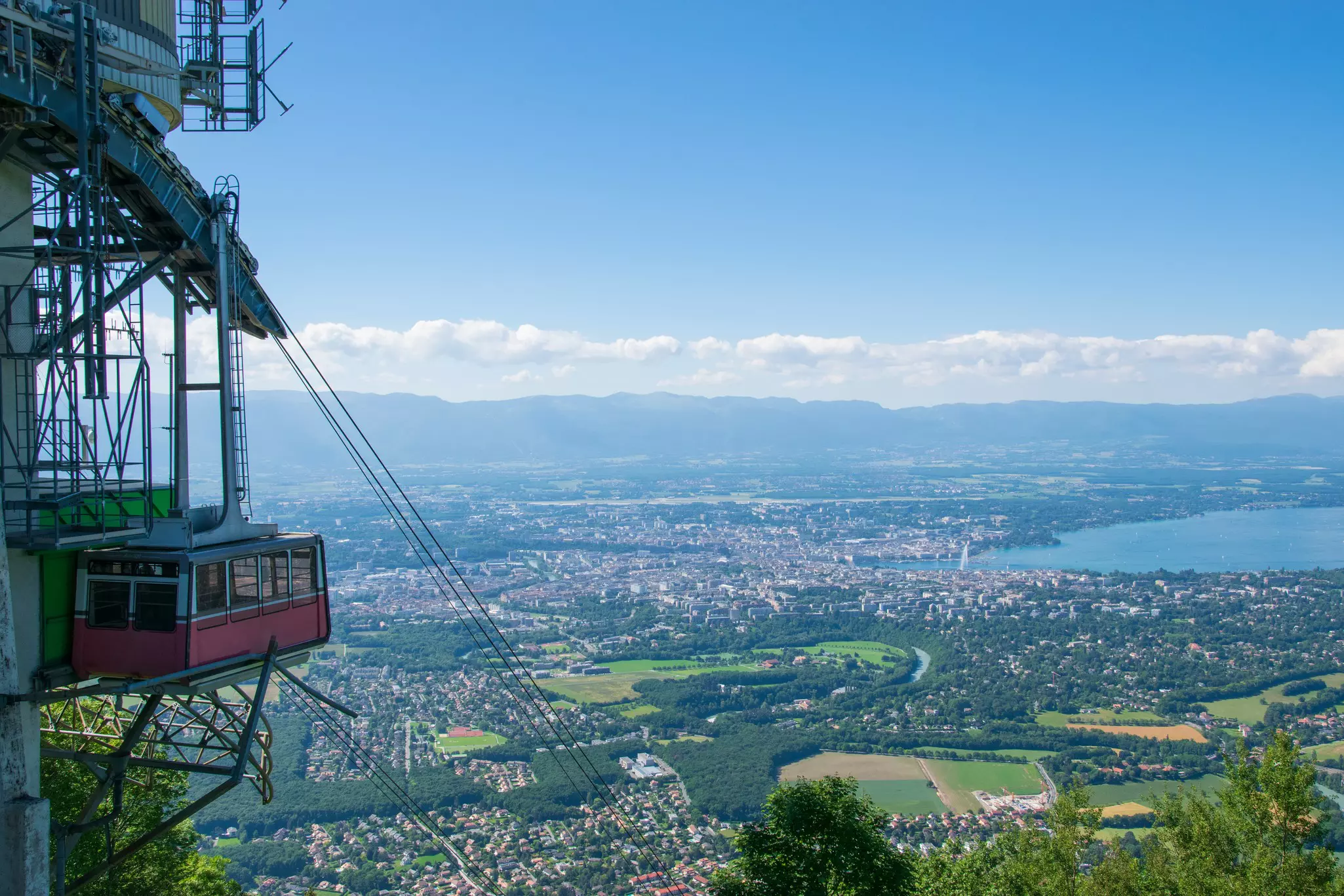
Venture out of this cosmopolitan city for outdoor adventures in the surrounding countryside. Whichever direction you head, you can’t go wrong. Stick to the waterfront and you’ll soon be surrounded by medieval villages, delightful pleasure ports and grassy “beaches” cascading down to pebbly shores.
Head away from the water, and breathtaking views of Lake Geneva, the Jura Mountains, Alps and snow-white Mont Blanc will dazzle. Try heading south by cable car to the summit of 1379m Mont Salève, or north on foot to bulbous La Dôle (1677m).
There’s no right way to explore Geneva’s gorgeous surroundings. Take your pick from bikes, hiking, boats, paddleboards, cable cars, snowshoes or a rental car, using Geneva as a springboard to easily reach villages and pristine nature.
Planning tip: The Mont Salève cable car runs at night on select evenings through the summer, but it closes annually in November as well as during extreme weather. Check ahead for access times, and don’t forget your passport or ID card since you’ll be crossing the French border.
This article was adapted from Lonely Planet's Switzerland guidebook, published in June 2024.
Explore related stories