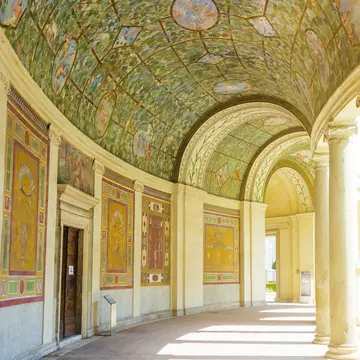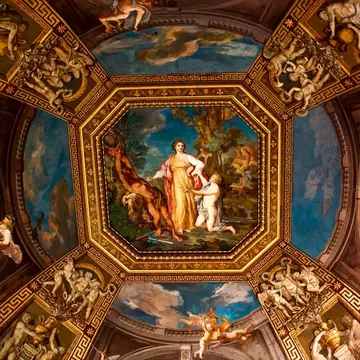
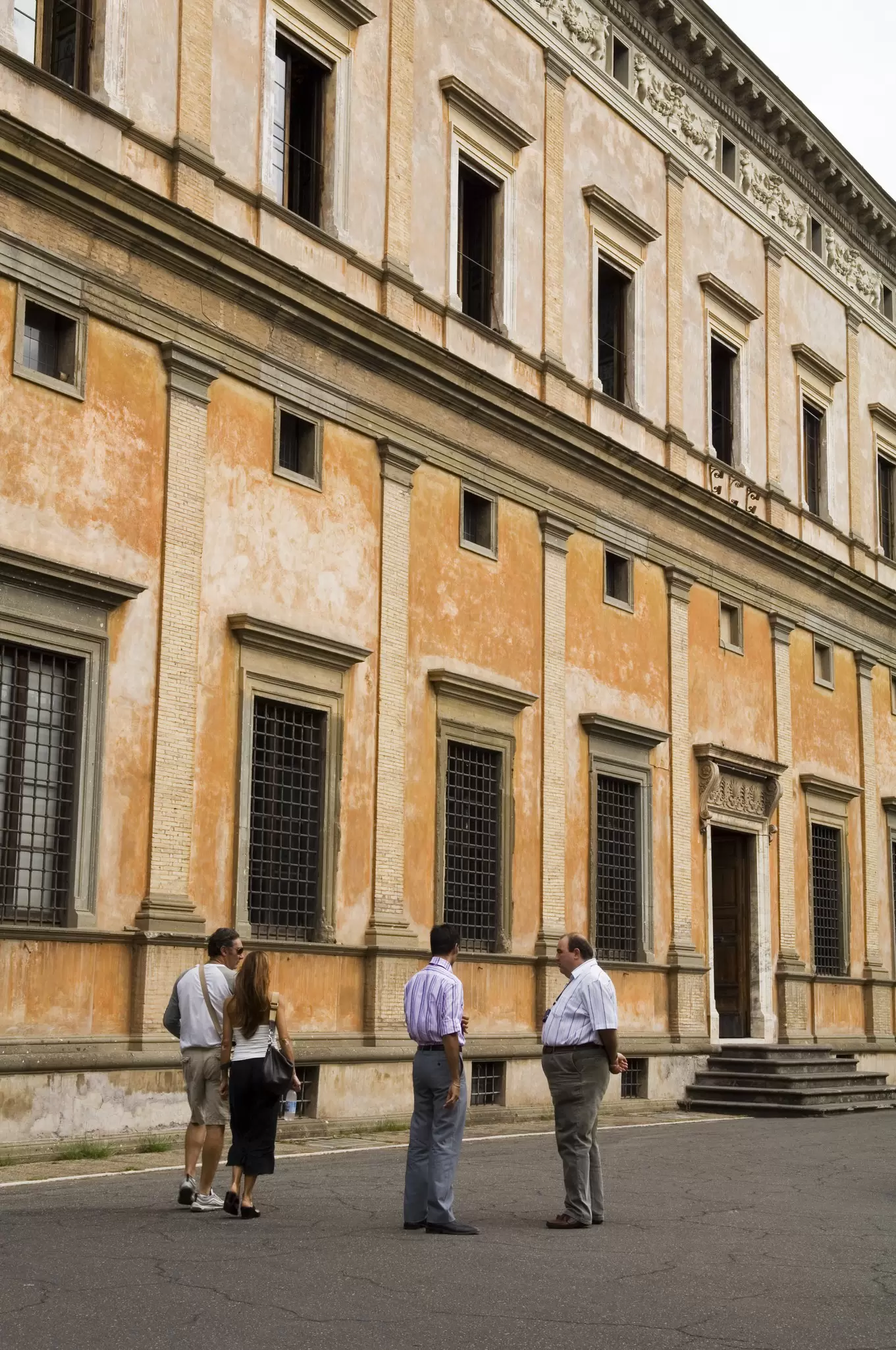
The Villa Farnesina is a textbook Renaissance-style villa, beautifully symmetrical inside and out, surrounded by gorgeous gardens and decorated with impressive frescoes – painted by Raphael and his pupils, among others – of scenes from mythology and ancient history. This 16th-century standard was something that all Roman families were quick to follow when commissioning their own residences.
A Peculiar Owner
Villa Farnesina was built at the beginning of the 16th century – between 1506 and 1512 – for Agostino Chigi, a banker hailing from Siena who, as you might suspect, was fabulously rich. So much so that he once famously awed all the guests at one of his banquets by joyfully telling them to throw the solid gold plates they had just dined on out the window. Of course, a shrewd banker like Chigi was not really going to let some perfectly good gold go to waste, and so he had stationed his servants carrying wide nets below so that they could catch the plates as they were falling.
Chigi was one of the greatest patrons of the arts, known as far as the Ottoman Empire, and he also enjoyed the favor of not one but two popes, Julius II and then Leo X. You can see why he would commission such a Renaissance jewel for himself. After being the theater of so much excess, the villa fell into disrepair after Chigi’s death in 1520 and was one of the many places looted during the sack of Rome in 1527. It was then bought by Cardinal Alessandro Farnese in 1580, which is where its current name comes from. It has belonged to the Italian State since 1927 and it’s currently the headquarters of the Academia dei Lincei, one of the oldest scientific institutions in Europe.
Ground Floor
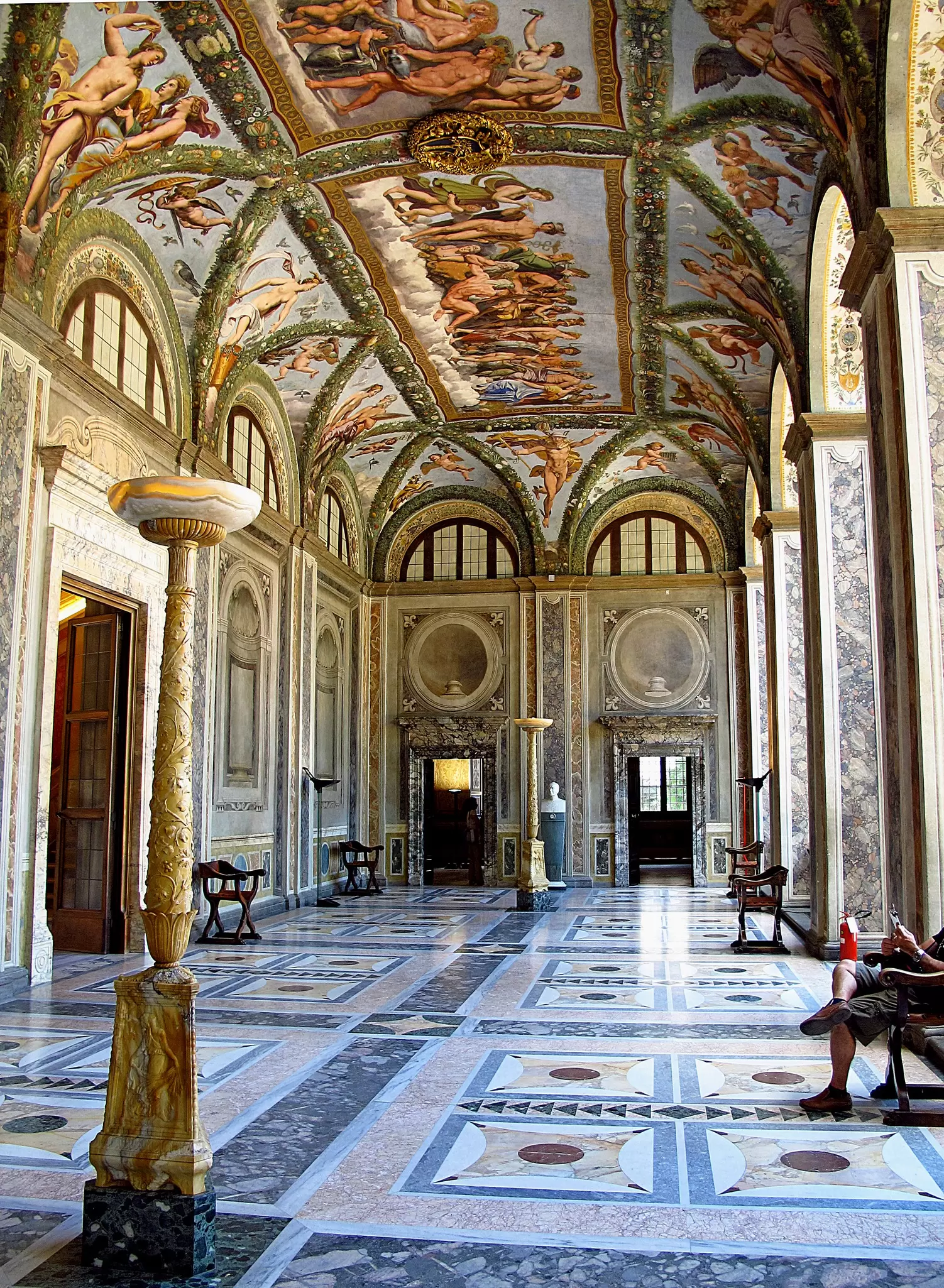
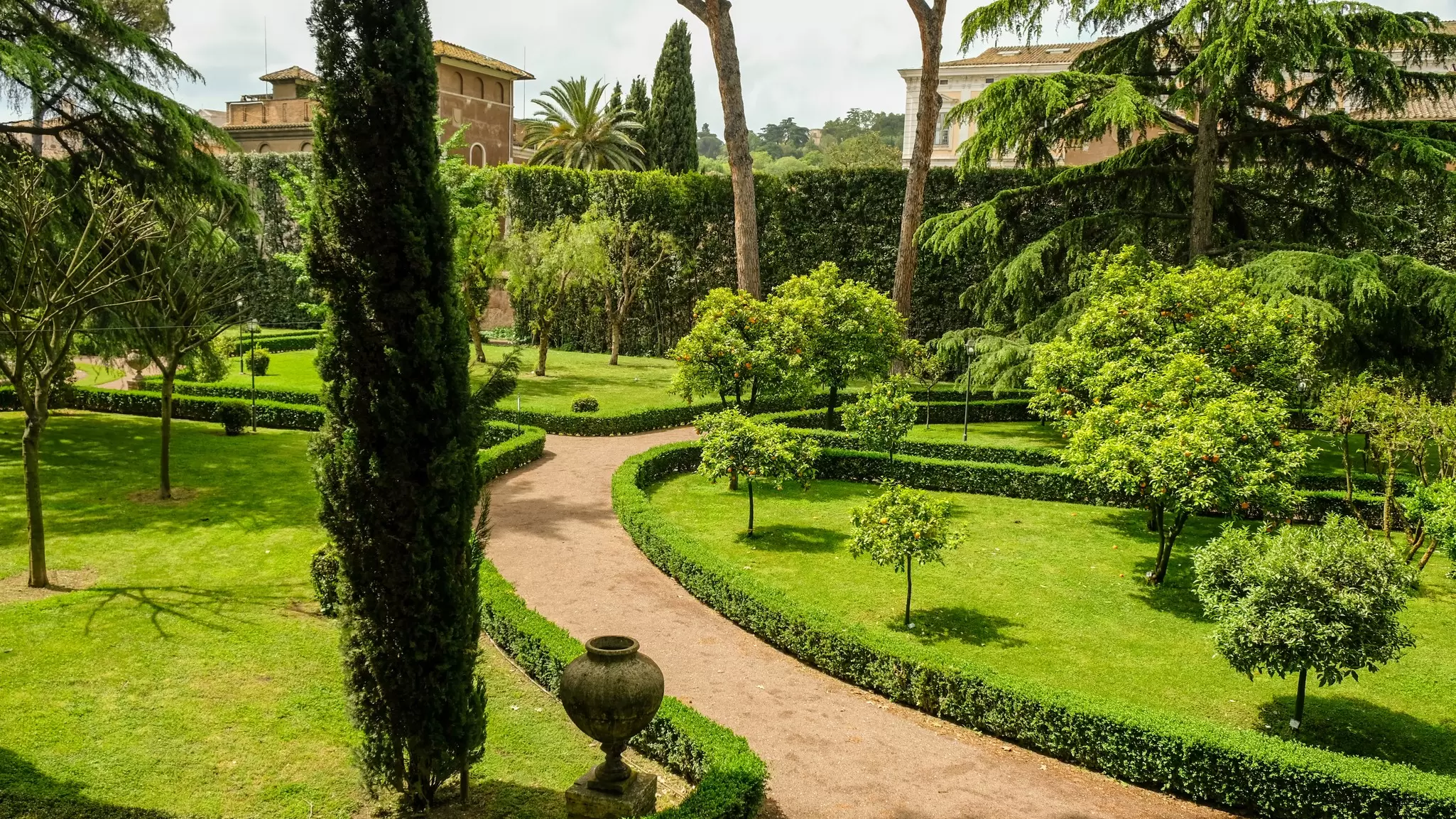
The project for the villa’s construction was entrusted to Baldassarre Peruzzi, who had studied under Bramante and who also completed the decorations of the Villa's Sala del Fregio. It features two horseshoe-shaped floors that open up on an Italian-style garden, which has gone through several changes throughout the centuries. The real stunners of the villa, though, are the frescoes that decorate almost every surface. On the ground floor, you can admire the Loggia di Galatea and the Loggia di Psiche, both painted by none other than Raphael and his pupils.
The Loggia di Galatea’s most famous fresco is undoubtedly the Triumph of Galatea (1512), where the nymph rides on a seashell chariot pulled by dolphins and is surrounded by all sorts of water nymphs and tritons. The face of Galatea is said to be that of Raphael’s lover Margherita Lute, the same who is depicted in his famous painting La Fornarina (Portrait of a Young Woman, 1518–19), displayed in Palazzo Barberini. As for the Loggia di Psiche, the decorations follow her trials and culminate in the central fresco, which depicts her wedding to Cupid.
First Floor
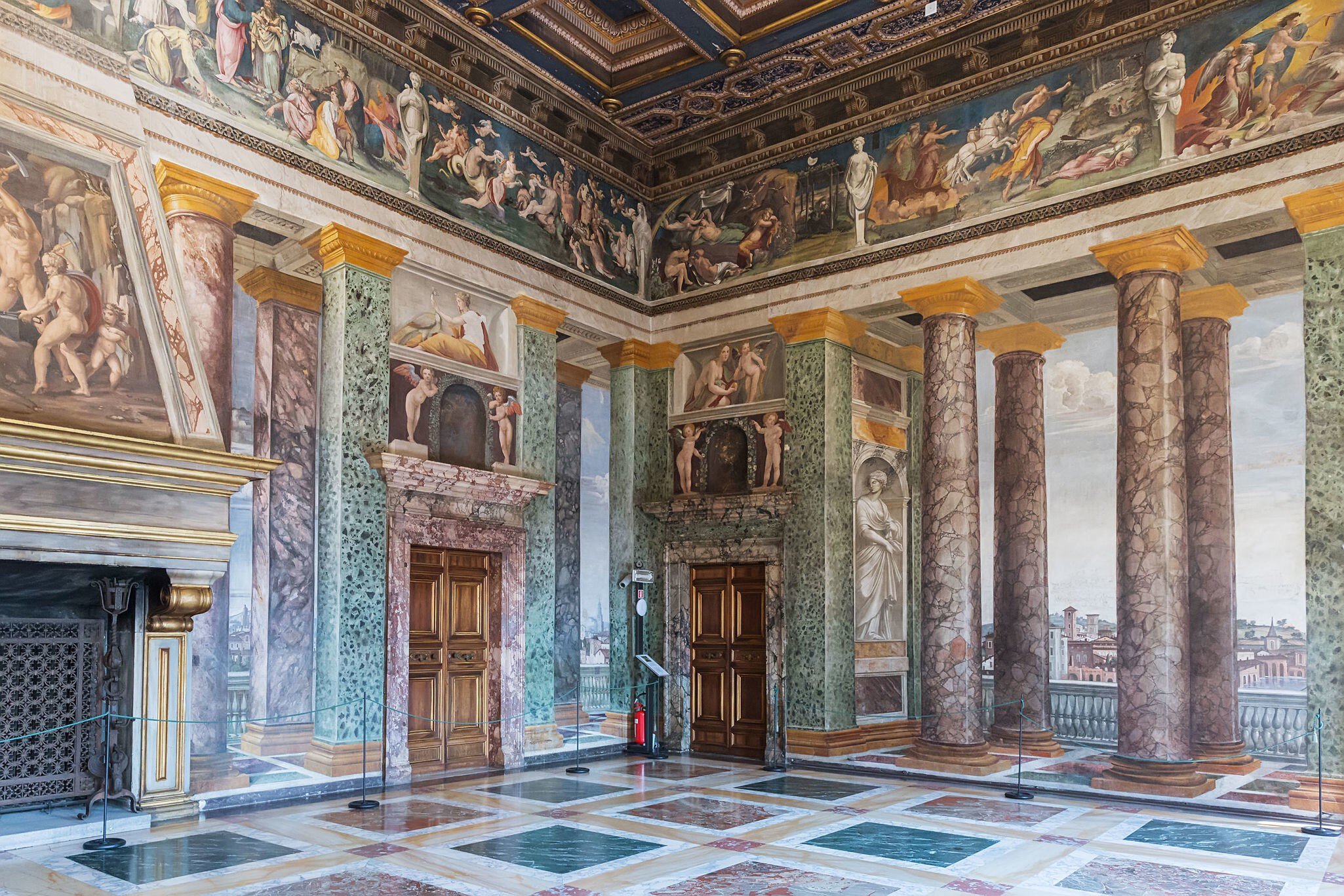
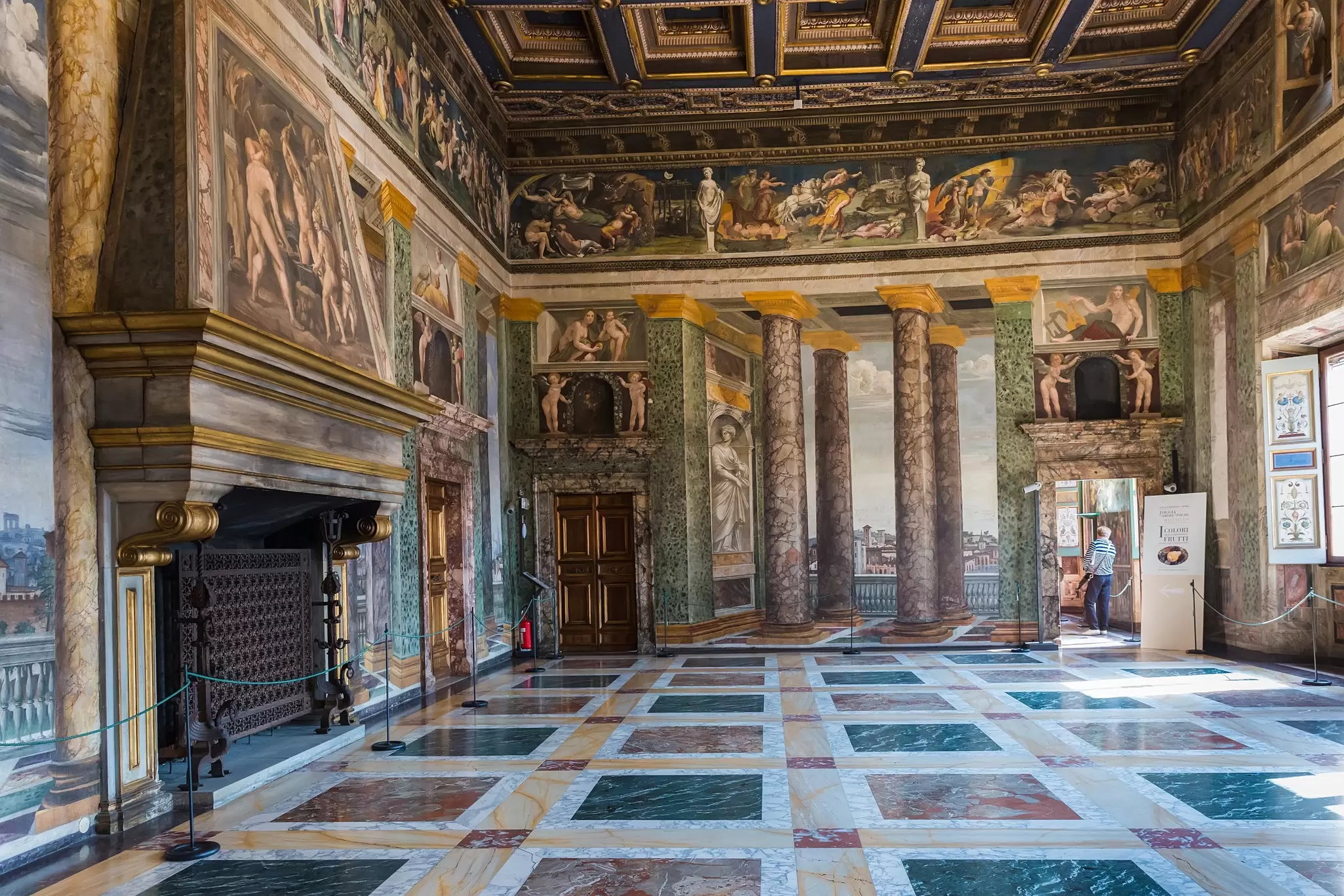
On the 1st floor, you can find the Sala delle Prospettive, frescoed by Peruzzi himself and filled with optical illusions that were all the rage back in the Renaissance. If you pay attention, you can even see some of the graffiti that was left here by the troops who made the villa their camp during the sack of 1527.
Adjoining the Sala delle Prospettive is the bedroom that was used by Agostino Chigi and his consort, decorated with stories from Alexander the Great’s life – the most famous of which is undoubtedly the scene representing his wedding to the Bactrian princess Roxana.