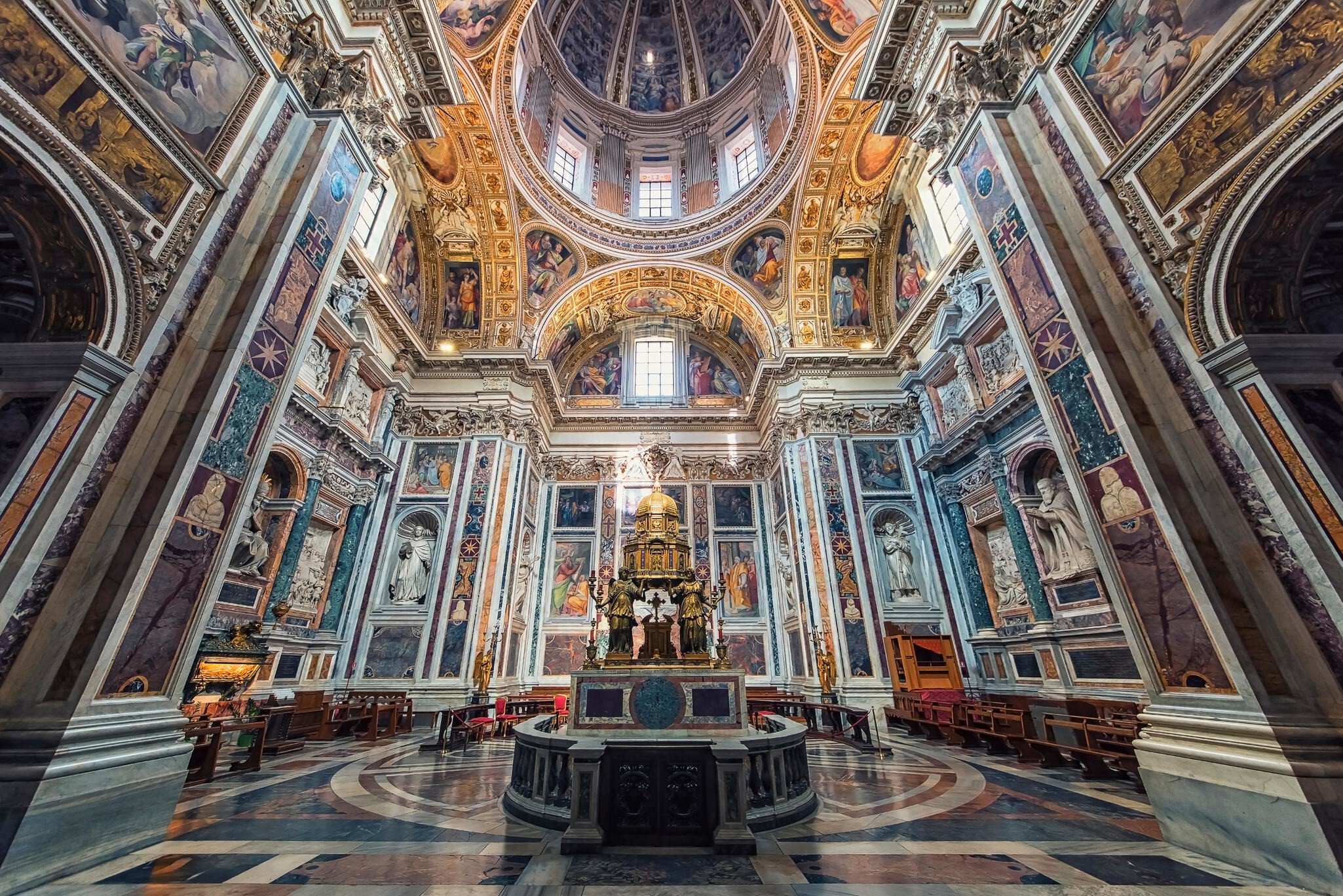
One of Rome's four patriarchal basilicas, the majestic Santa Maria Maggiore stands on Esquilino Hill's summit, where snow is said to have miraculously fallen in the summer of 358 CE.
A church was first established here in the 5th century, but the centuries saw it get ever more splendid. The 18th-century baroque loggia protects the medieval facade, which is decorated by beautiful mosaics.
The Pope's Favorite Church
Santa Maria Maggiore is the largest church devoted to the Virgin Mary in the city. It was a favorite of Pope Francis, who had requested to be buried there rather than in St Peter’s. He was laid to rest at the Santa Maria Maggiore on 26 April, 2025.
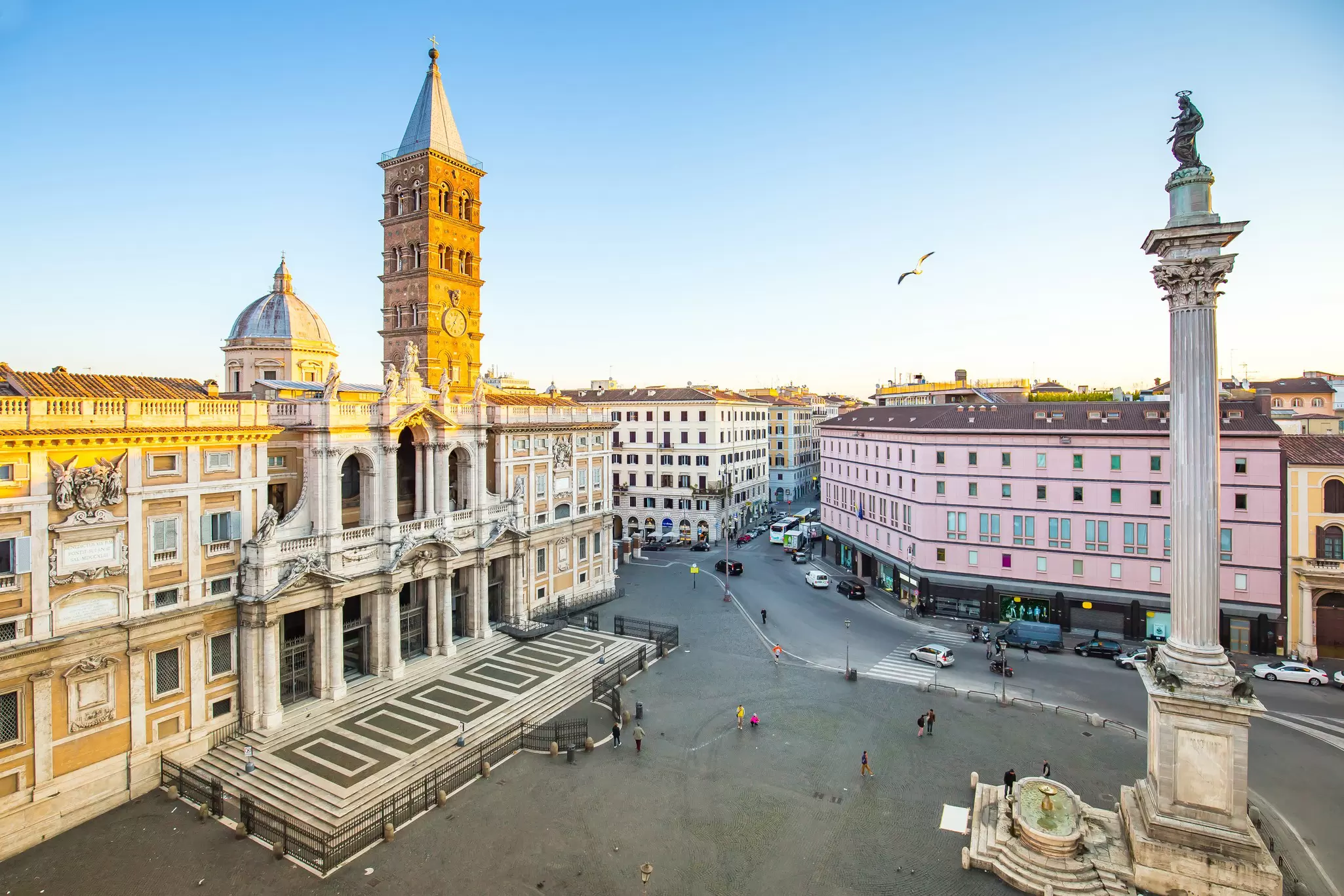
You can see his point. It's an awe-inspiring interior, and the church is a wonderful place to come for celebratory mass, such as at Easter. Rising behind the church, the campanile – Rome's tallest – tops out at 75m. In the piazza outside, the founding of the church is commemorated every 5 August with a light show. According to legend, in the 4th century, Pope Liberius had a vision of Mary, who told him to build a church where snow fell, even though it was the height of summer. This is also celebrated within the church, with white flower petals snowing from above the altar.
Exterior Mosaics & Tower
You can't help but gaze upwards at the glimmering mosaics of the magnificent Santa Maria Maggiore, half hidden behind the church’s loggia. These were the work of Filippo Rusuti in 1300, and depict the legend behind the founding of the church. In 1741, the loggia – a kind of balcony – was designed by Ferdinand Fuga, which not only protects the mosaics, but allows you to get up close to them. There's a desk just to the right of the church entrance underneath the portico: book a tour to access the loggia and see the mosaics up close, as well as to visit the excavations beneath the church.
Nave & Apse
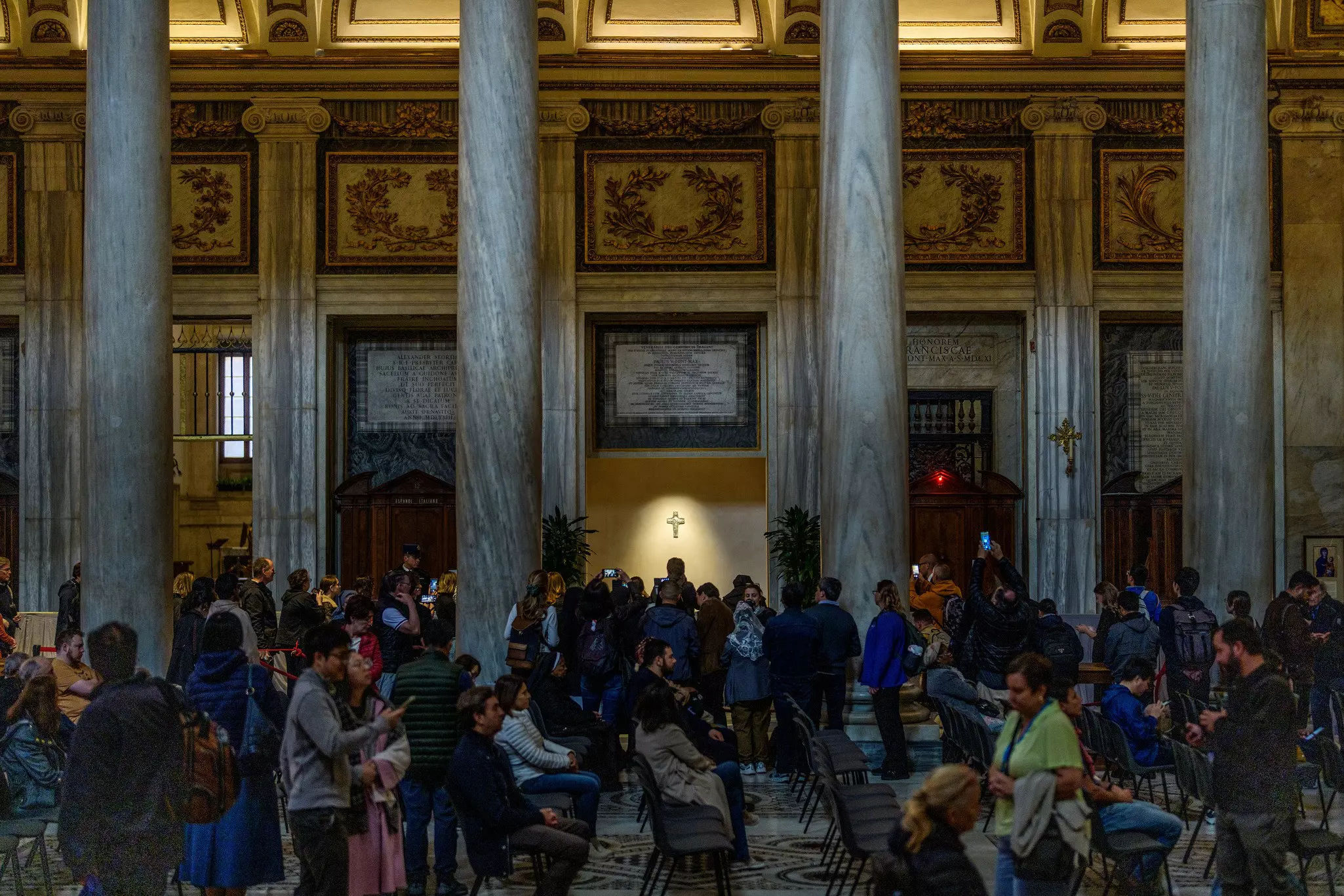
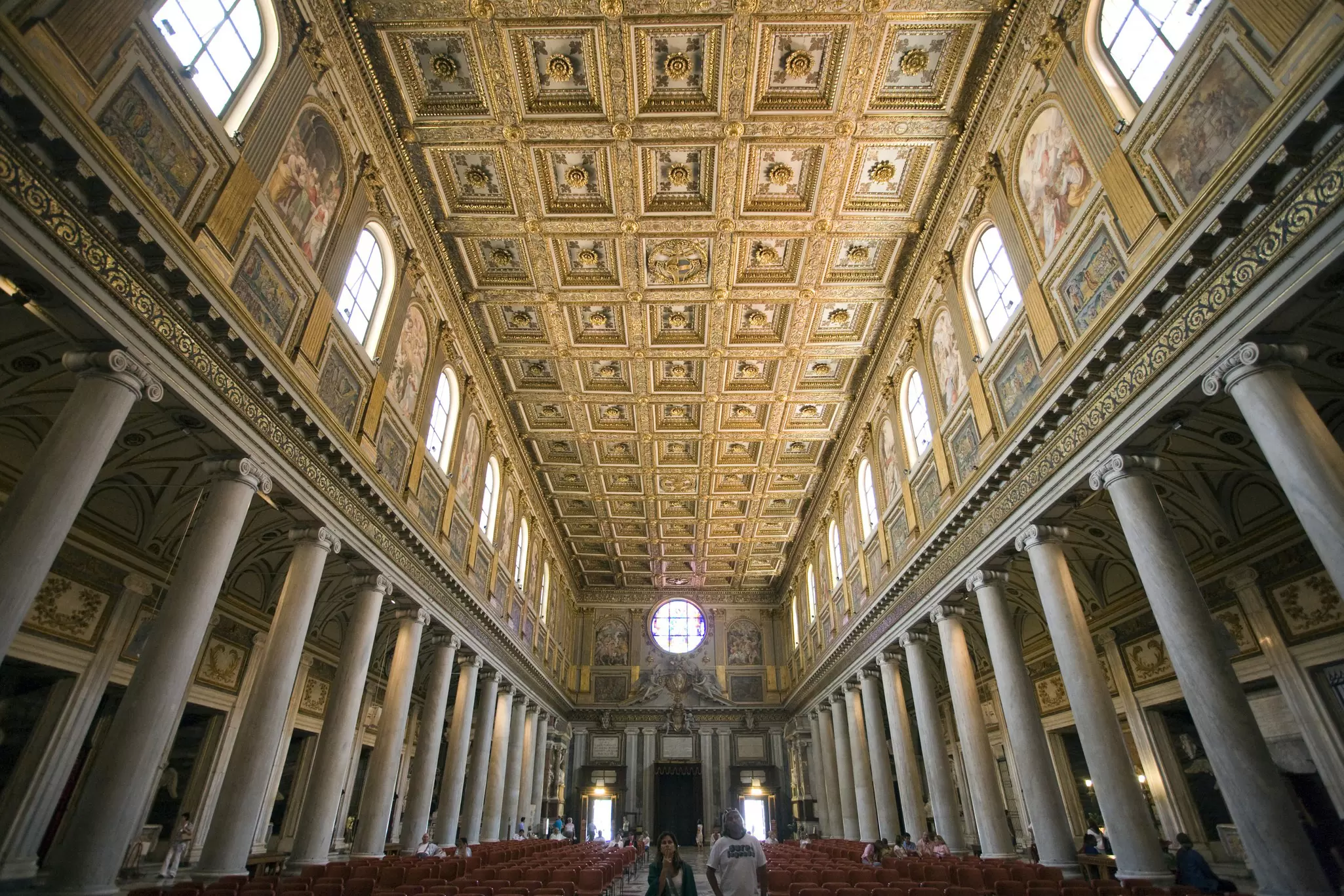
The nave feels football-pitch vast, empty of pews, under a coffered, gilded ceiling contributed by Pope Alessandro VI, one of the Borgia family: note the family crest at the center, featuring a bull. The space is edged by multilingual confession boxes and smaller chapels – although there's a steady stream of visitors, this is very much a working basilica, and there's usually a service going on in one of the chapels. The columns that line the nave are an example of Roman recycling, taken from Roman temples.
Particularly spectacular are the glittering 5th-century mosaics in the triumphal arch, showing Jesus as a child, and in the nave, depicting Old Testament scenes. The central image in the apse, signed by Jacopo Torriti, dates from the 13th century and represents the coronation of the Virgin Mary. Beneath your feet is 12th-century Cosmati paving, an early example of this work, named after a Roman family who specialized in this type of inlay for generations.
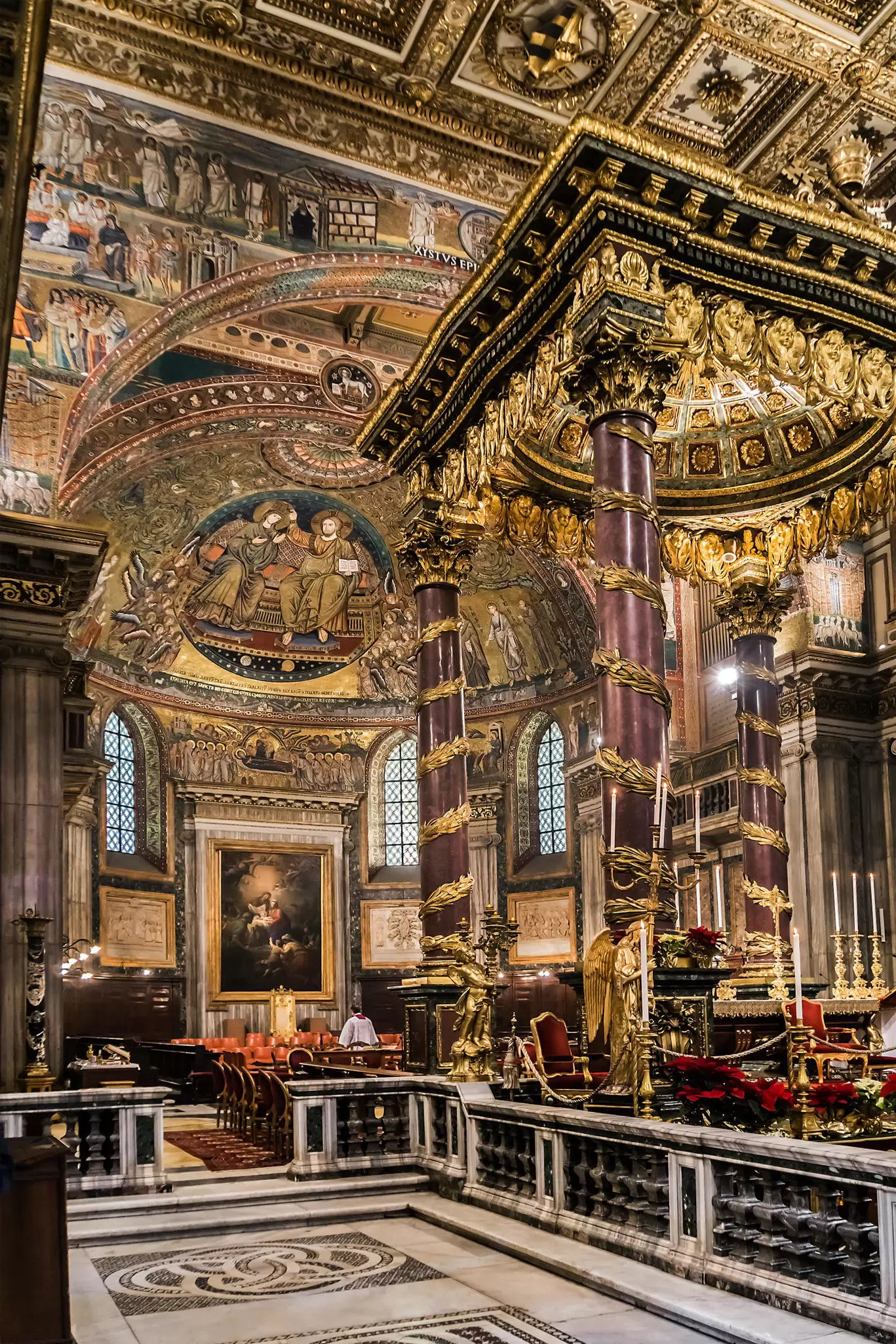
Nativity & Michelangelo Chapel
To the left of the entrance as you enter is a beautiful stone-carved nativity, sculpted by Arnolfo di Cambio. About halfway along the Nave, on the left, Cappella Sforza contains the tombs of cardinal brothers Guido Ascanio Sforza di Santa Fiora and Alessandro Sforza. They asked Michelangelo, then aged 87, to design their chapel, and he sketched out this space, but died before it was finished. The work was completed by Tiberio Calcagni and Giacomo della Porta, who designed the tombs. The chapel is sometimes off-limits to visitors, but you can peer through the gate.
Pauline Chapel & Salus Populi Romani
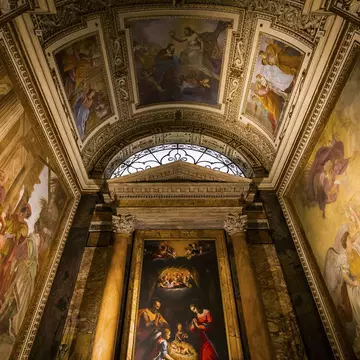
The Pauline Chapel is the furthest on the left, and contains one of the church’s most precious icons, a Byzantine painting of the Virgin Mary with infant Jesus. The chapel was built by Pope Paul V, and is busily baroque, with smoky marble columns, a gilded altar centered on the icon, and frescoes depicting scenes from the life of the Virgin, by artists including Guido Reni. The painting was given the title Salus Populi Romani (Salvation of the Roman People), as it was believed to have kept the plague at bay in Rome during the 6th century. It’s said to have been painted by St Luke, and is one of the precious items that St Helena, Emperor Constantine's mother, brought back with her from Jerusalem, taking it to Constantinople in the 4th century. The chapel also contains the tombs of popes Paul V and Clement VIII.
Relics & Berninis
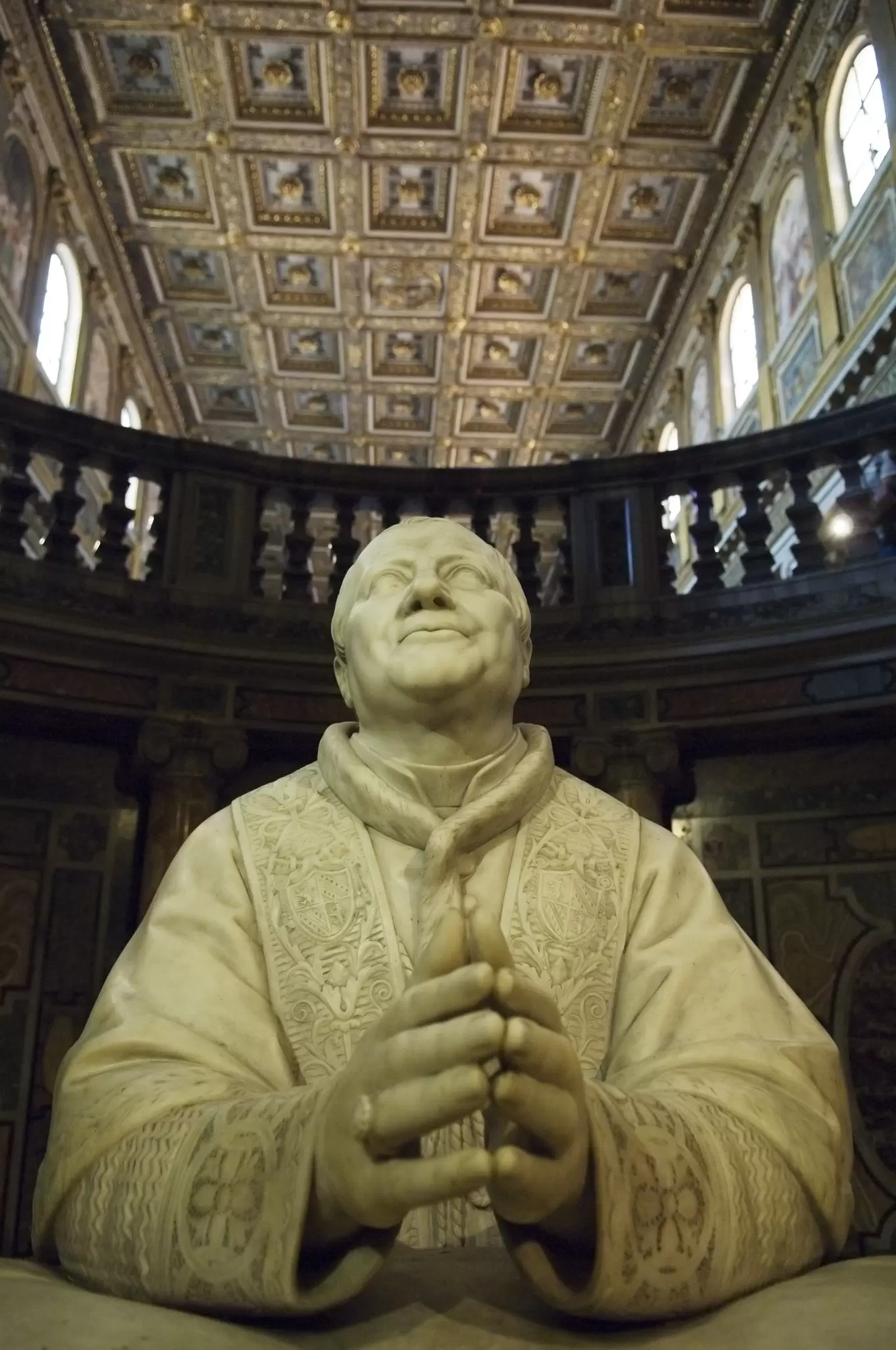
The 18th-century baldachin over the high altar is heavy with gilt cherubs; the altar itself is a porphyry sarcophagus, which is said to contain the relics of St Matthew and other martyrs. A modest plaque embedded in the floor to the right of the altar marks the spot where the great architect and sculptor Gian Lorenzo Bernini and his father, Pietro, are buried. They had their workshop nearby and worked on the church – Gian is believed to have contributed the beautiful spiral staircase connecting the Hall of Popes to the sacristy (you can only view this on the guided tour). Steps lead down to the confessio (a crypt in which relics are placed), where a statue of Pope Pius IX kneels before a reliquary that is claimed to contain a fragment of Jesus' manger. It’s kept in the crib-shaped crystal reliquary. Other relics housed in the church include the remains of St Matthew and St Jerome.
Sistine Chapel
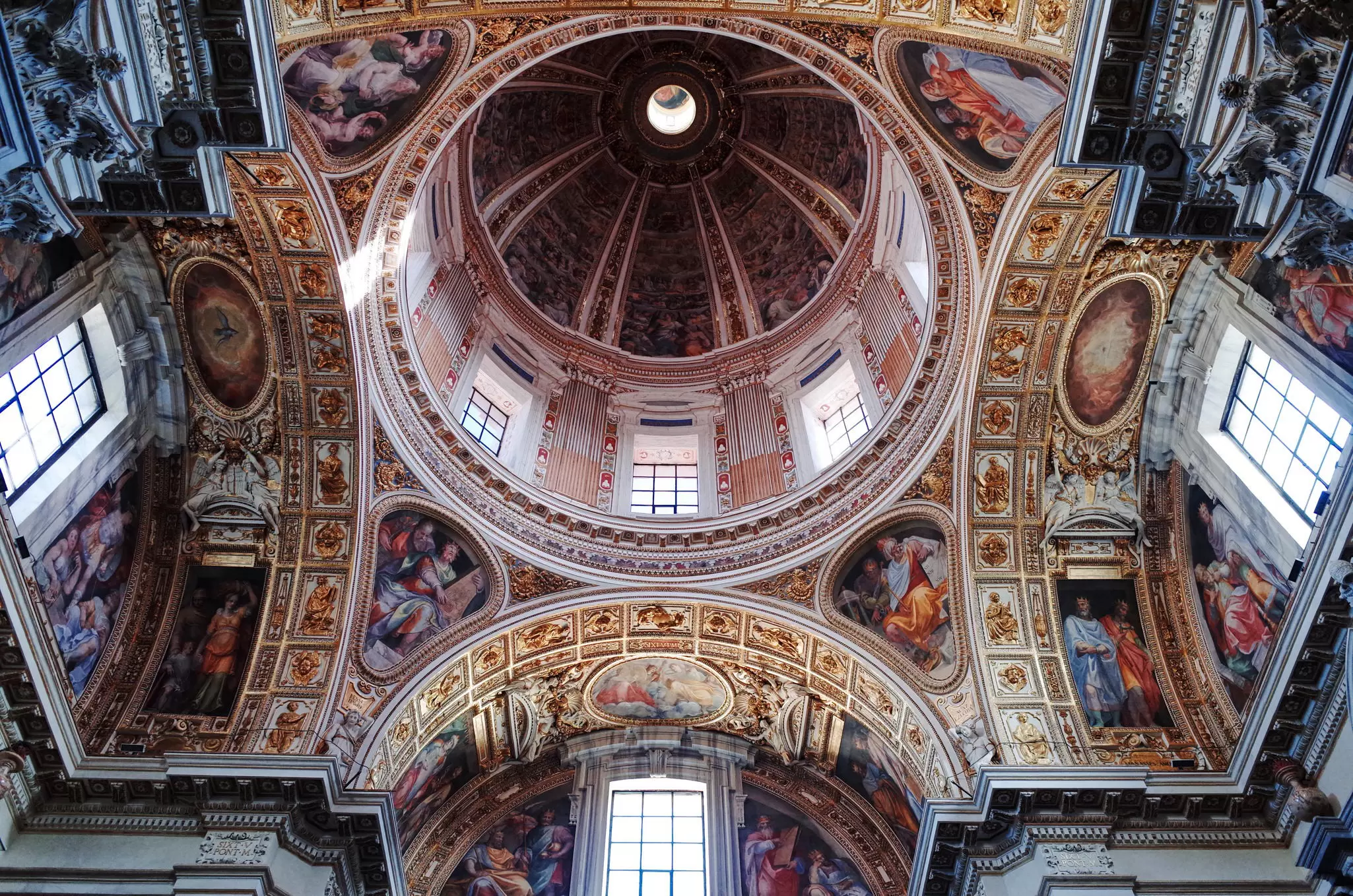
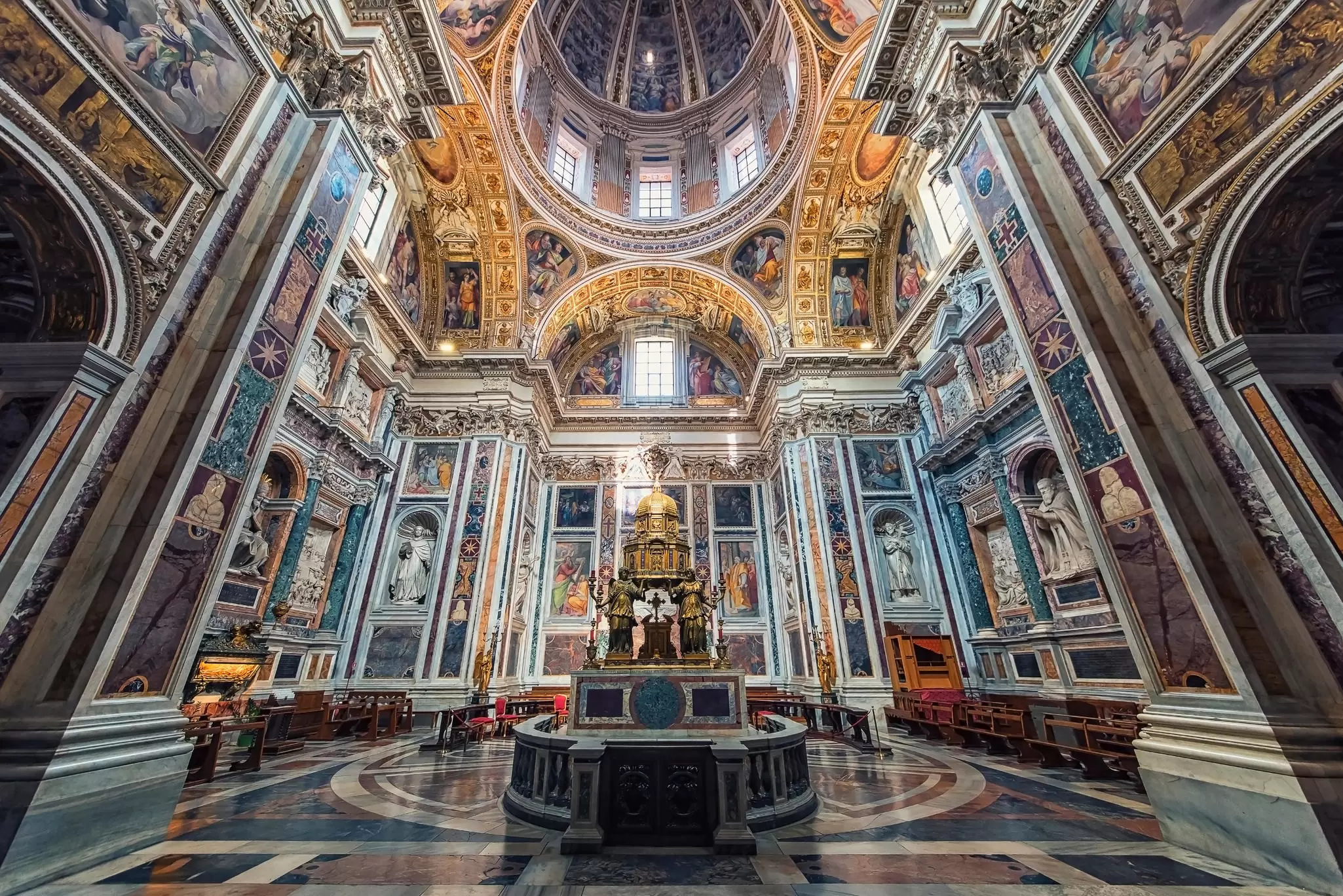
Across the nave from the Pauline Chapel is the sumptuously decorated Cappella Sistina (Sistine Chapel). This heavily decorated chapel was built in the form of a Greek cross by Domenico Fontana in the 16th century for Pope Sixtus V, who began his life as a swineherd. It contains the tombs of popes Sixtus V and Pius V, as well as an altarpiece by Arnolfo di Cambio. In the center of the chapel is a gilded bronze tabernacle, dating to 1590, the work of Lodovico del Duca.
Chapels of San Michele Arcangelo & San Pietro in Vincoli
Around halfway along the right of the nave from the Sistine Chapel is a Gothic chapel dedicated to San Michele Arcangelo (St Michael the Archangel) and San Pietro in Vincoli (St Peter in Chains). The 15th-century frescoes on the ceiling are not in great condition, but are believed to be the sole wall paintings in Rome by the masterful Renaissance artist Piero della Francesca, of Tuscan origin and famous for his work in Florence.