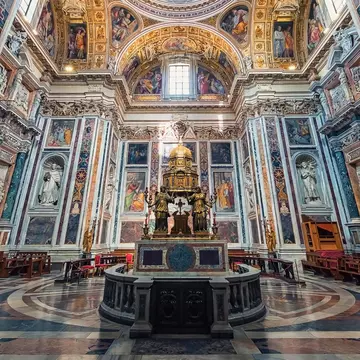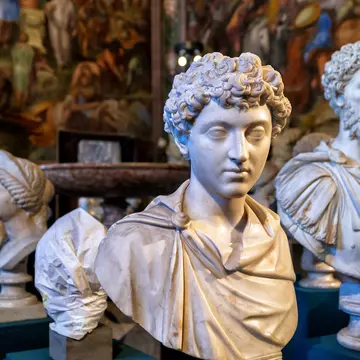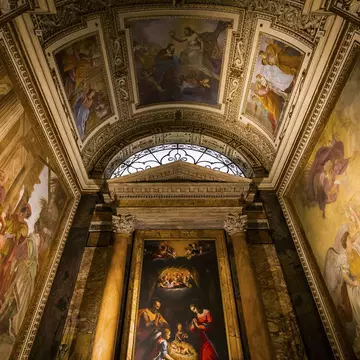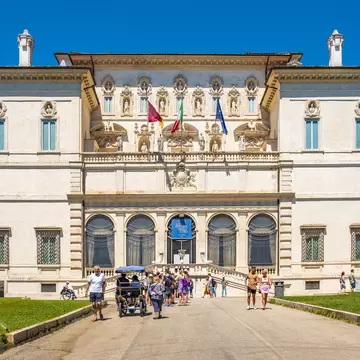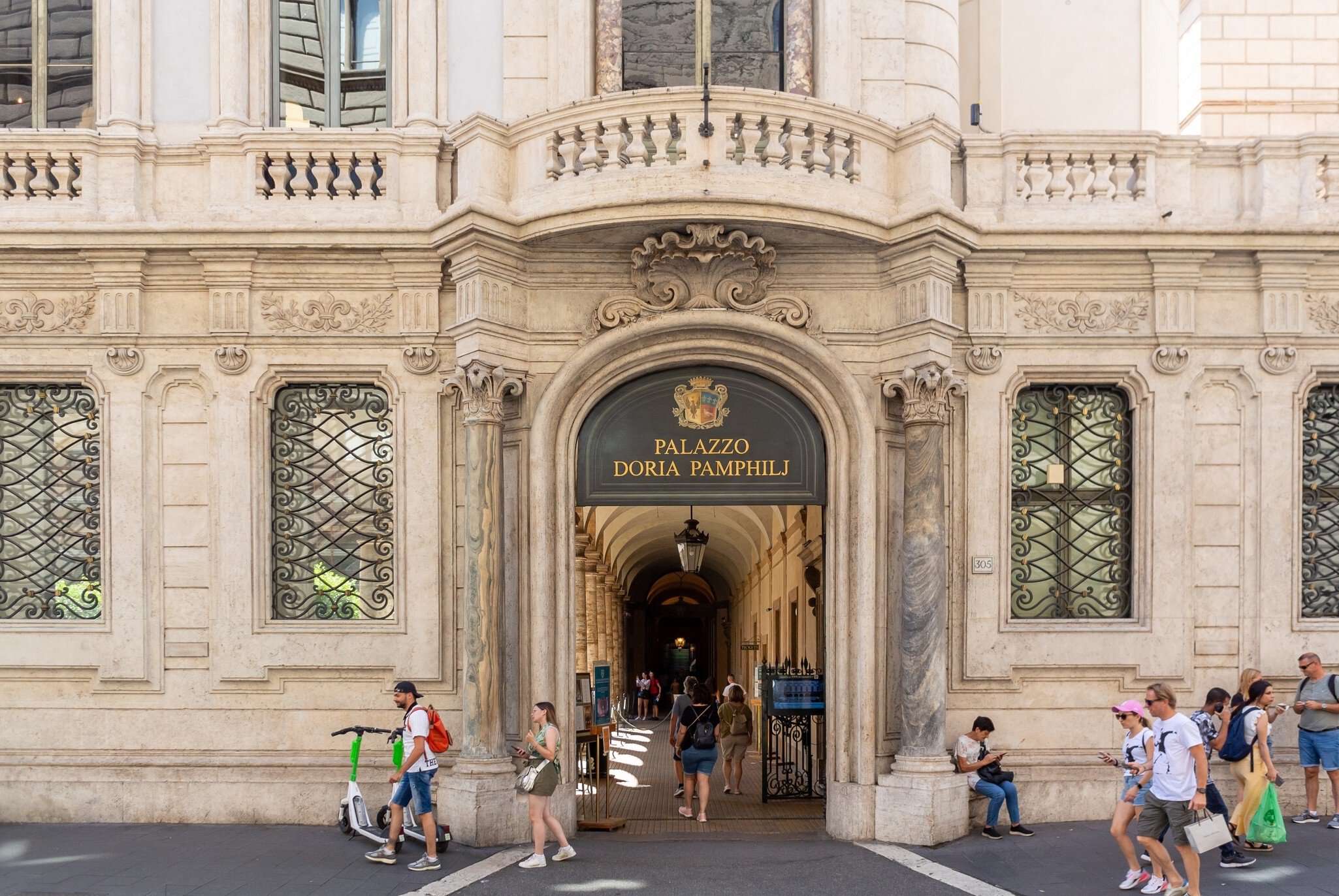
Hidden behind the gray facade of a 15th-century palazzo on Via del Corso, the Galleria Doria Pamphilj houses one of Rome’s richest private art collections with works by Raphael, Titian, Caravaggio and Velázquez, as well as several Flemish masters. But what really sets the gallery apart is the free audio guide narrated by Jonathan Pamphilj, a Roman aristocrat who grew up in the palazzo.
The Palace
Set around a grand Renaissance courtyard, Palazzo Doria Pamphilj is the result of five centuries of architectural endeavor. It started life as a cardinal's residence in the 15th century, but major rebuilds in the 16th and 18th centuries saw it totally transformed as it passed between Rome's powerful aristocratic families.
Its present look was largely the work of its current owners, the Doria Pamphilj family, who acquired it in the 18th century. The Pamphilj’s golden age, during which the family collection was started, came during the papacy of one of its own, Innocent X (r 1644–55).
The Art Collection
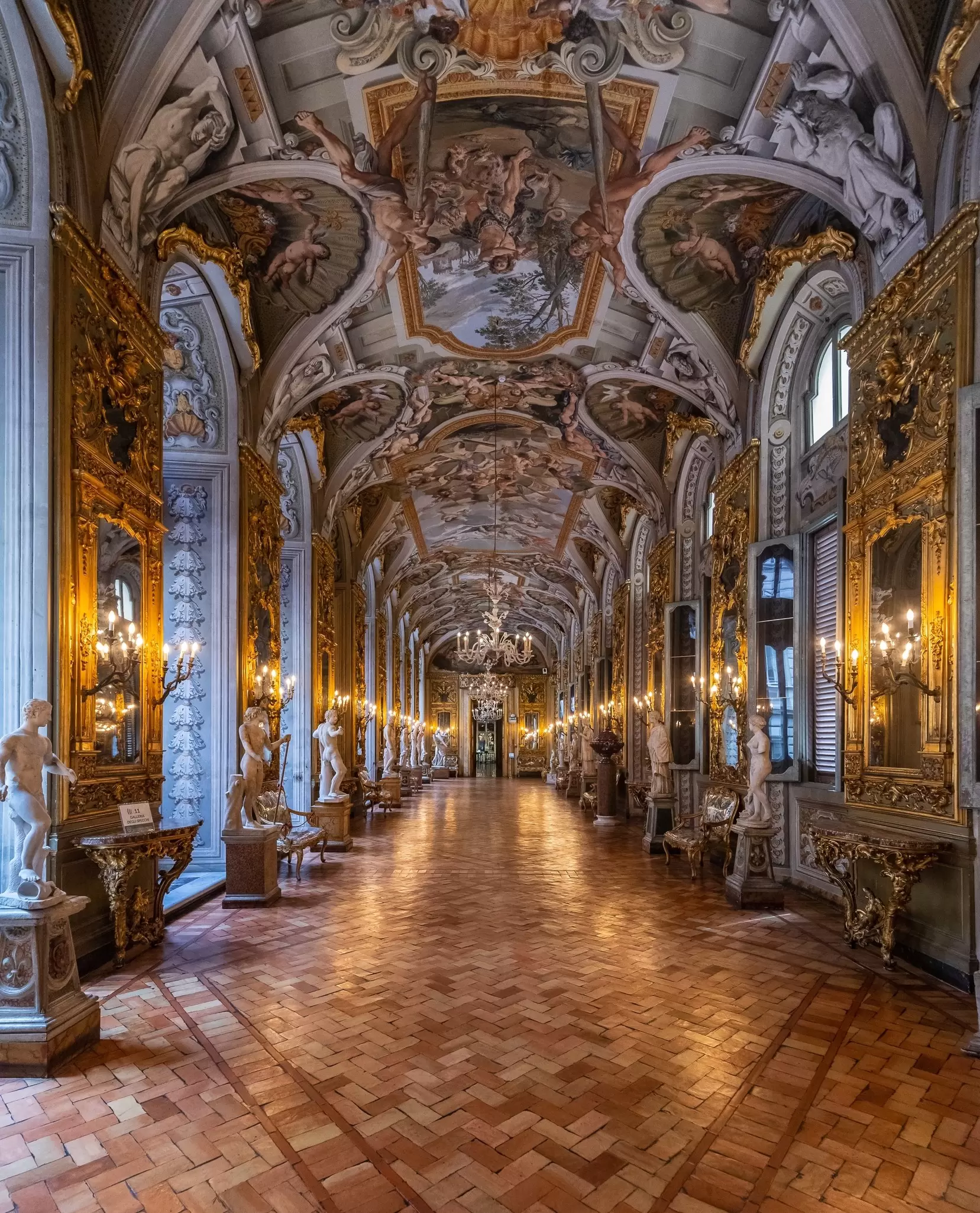
The picture galleries, centered on four lavishly decorated wings, are hung with floor-to-ceiling paintings in the 18th-century style.
You’ll start your visit in the Sala Aldobrandini, a light-filled hall packed with sarcophagi and marble statues. Notable among the paintings are Raphael’s Doppio Ritratto (Double Portrait; 1516) and Titian’s Salomè con la testa del Battista (Salome with the Head of John the Baptist; 1515) – the severed head is possibly Titian's self-portrait and Salome a lover who spurned the artist.
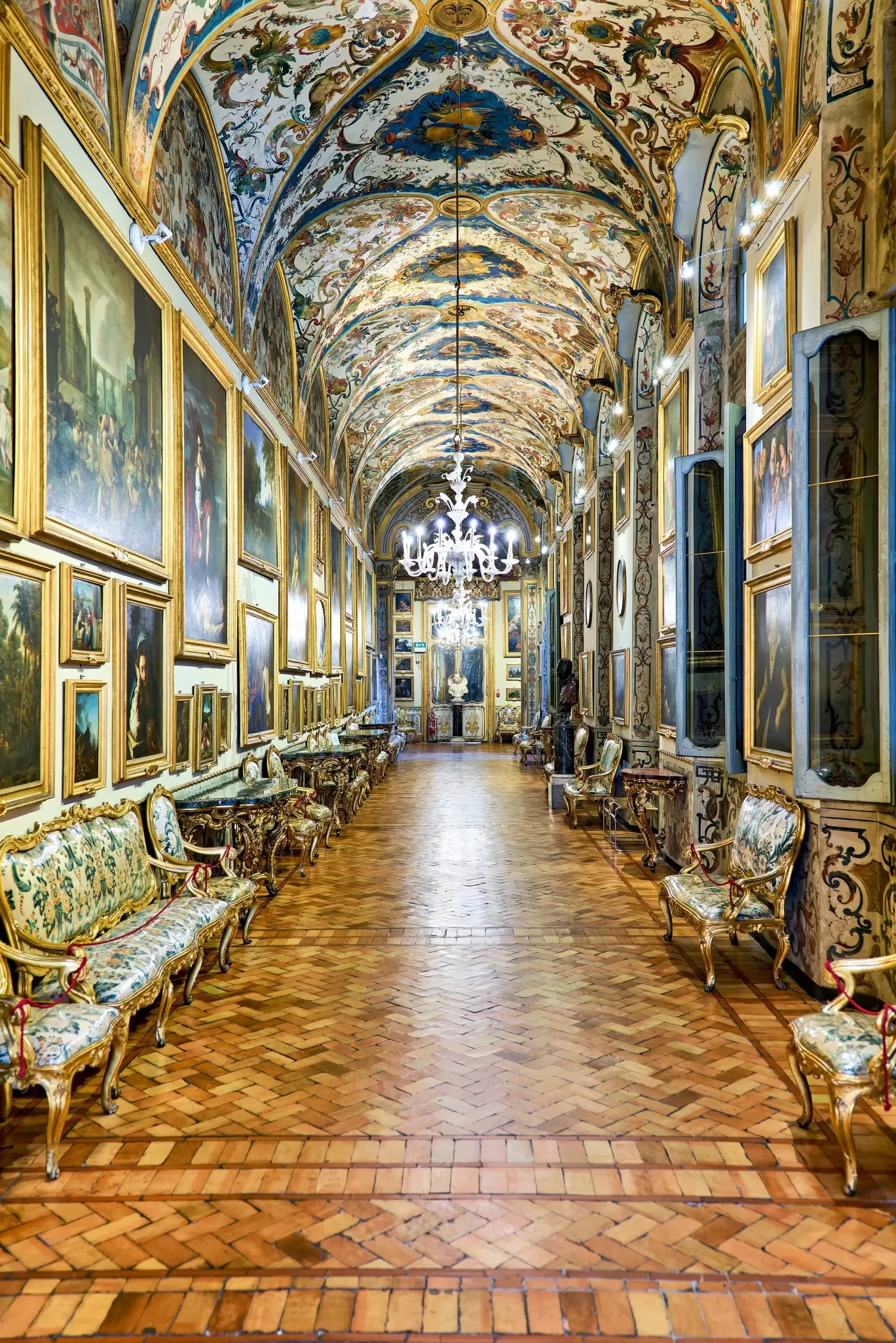
From here, you can make a quick detour into the Salone Verde to see Filippo Lippi’s luminous Annunciazione (The Annunciation; 1445–50) before starting on the core of the collection. An early highlight is Alessandro Algardi’s bust of Donna Olimpia, the formidable woman who supposedly called the shots during Innocent X's papacy.
As you work your way around the lavishly decorated corridors, look out for Jan Brueghel the Elder’s Paradiso Terrestre con il Peccato Originale (Earthly Paradise with Original Sin; 1612), Guido Reni’s Lotta di Putti (Fighting Putti; c 1625) and Battaglia nel porto di Napoli (Battle in the Bay of Naples; c 1556), one of the few paintings in Rome by Pieter Bruegel the Elder.
Velázquez & Caravaggio
At the head of the glittering Galleria degli Specchi (Hall of Mirrors), itself a Versailles-like confection of Venetian gilt-framed mirrors and marble statues, is the Gabinetto del Velázquez. This tiny room holds the collection's greatest masterpiece: Velázquez's celebrated Ritratto di papa Innocenzo X (Portrait of Pope Innocent X). Completed in early 1650, the painting exerts a powerful hold, but it didn’t go down well with Innocent, who apparently grumbled that it was "too true."
Intriguingly, you can compare the portrayal with Gian Lorenzo Bernini’s marble bust of the same subject, which is also in the Gabinetto.
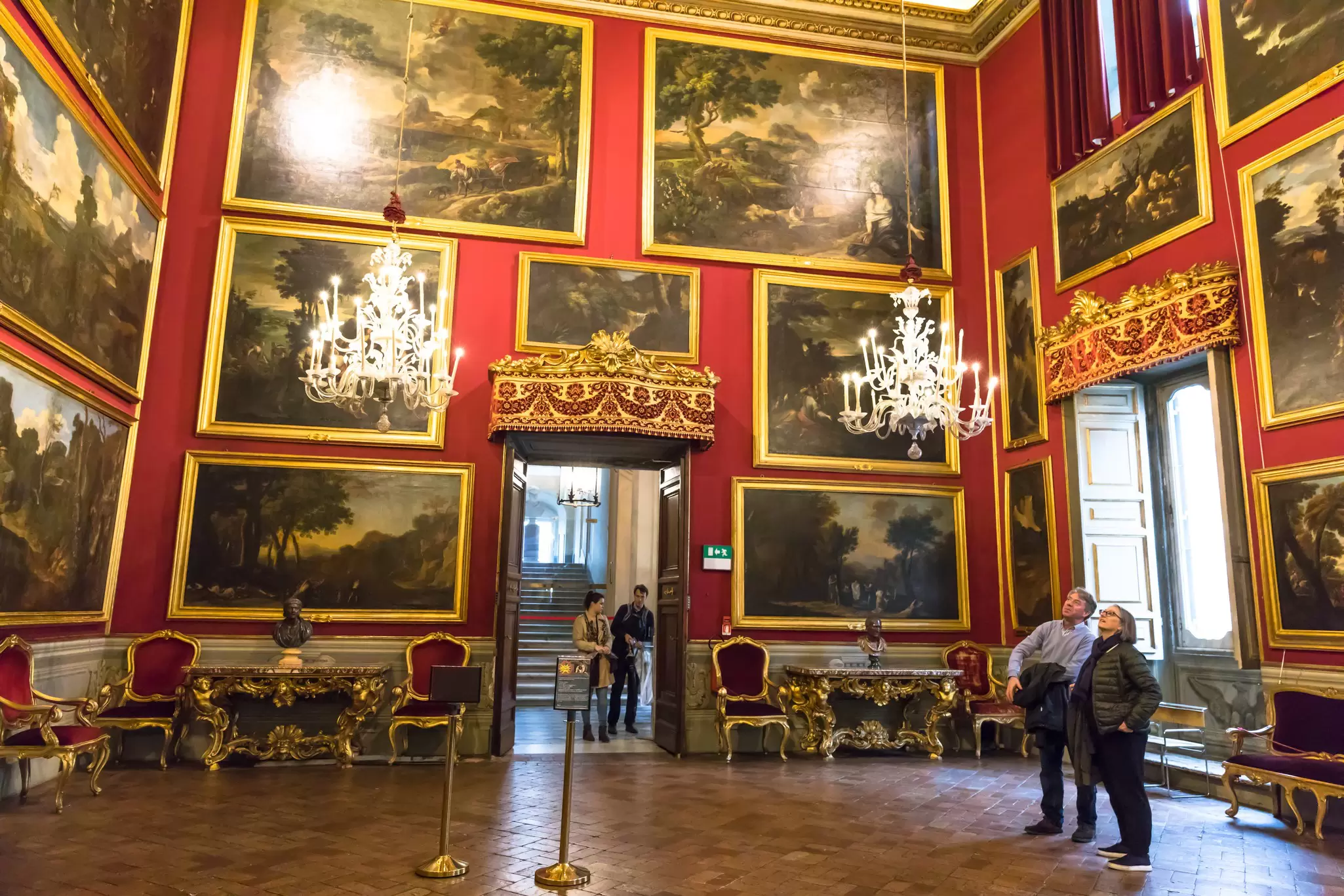
Moving down to the other end of the Galleria, you’ll come to a room showcasing three Caravaggio masterpieces: Riposo durante la fuga in Egitto (Rest During the Flight into Egypt; 1597), Maddalena penitente (The Penitent Mary Magdalene; 1594–95) and San Giovanni Battista (St John the Baptist; 1602), all dating to his early period in Rome.
The Reception Rooms
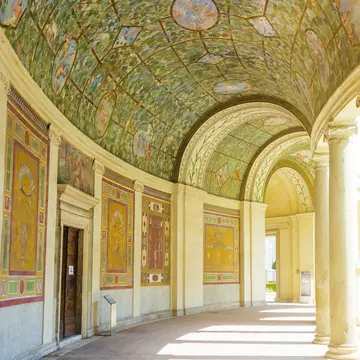
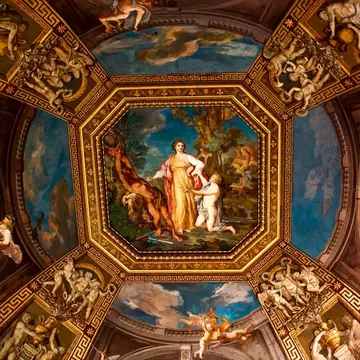
Off the main picture galleries are a series of lavish salons and reception rooms. These include the grand Salone del Poussin, covered with 17th-century landscapes of the Roman countryside, the Sala da Ballo (Ballroom) and the Salone del Trono (Throne Room) with yet another portrait of Pope Innocent X.