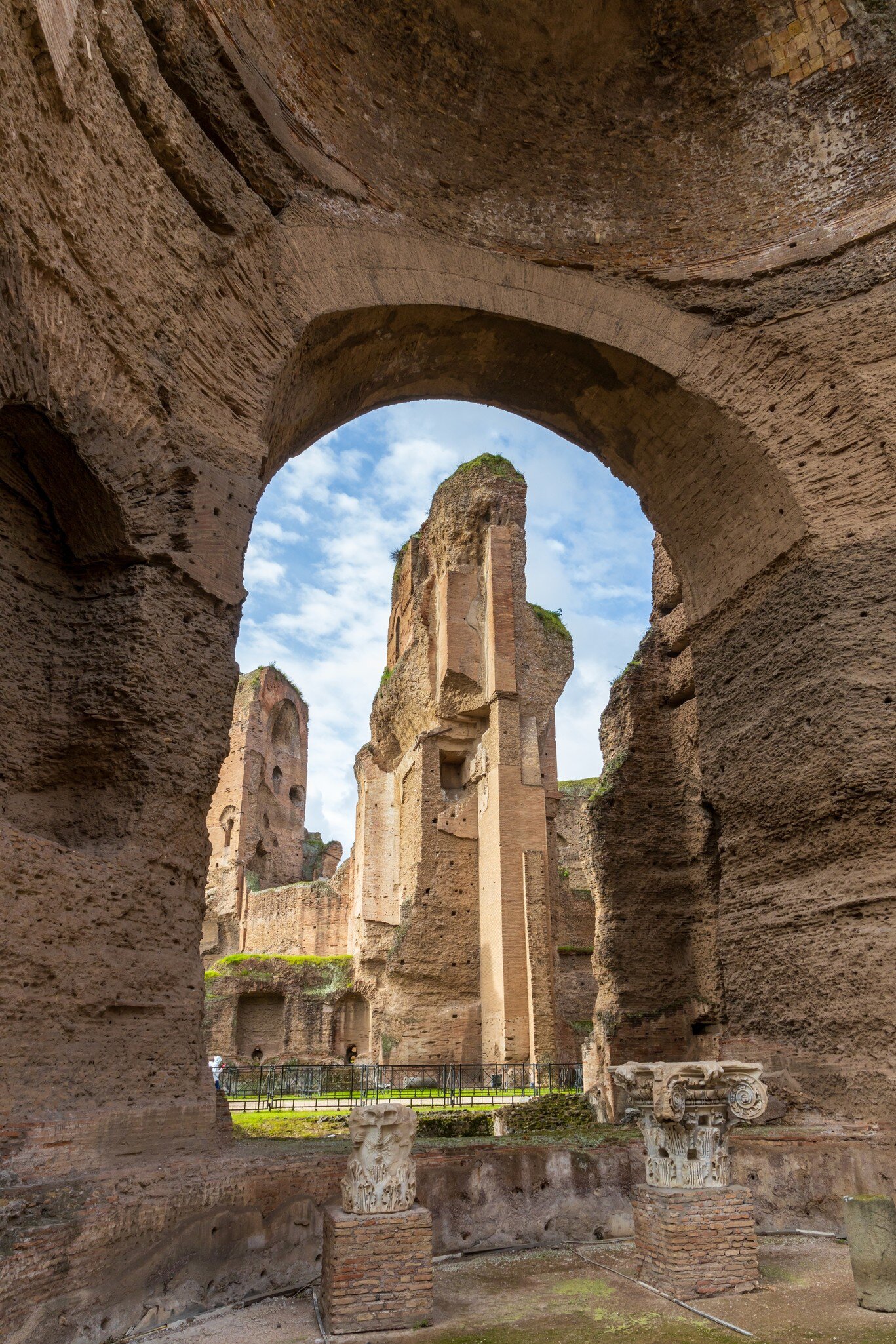
At the foot of the Aventino, the Terme di Caracalla is one of Rome’s most breathtaking ancient sites.
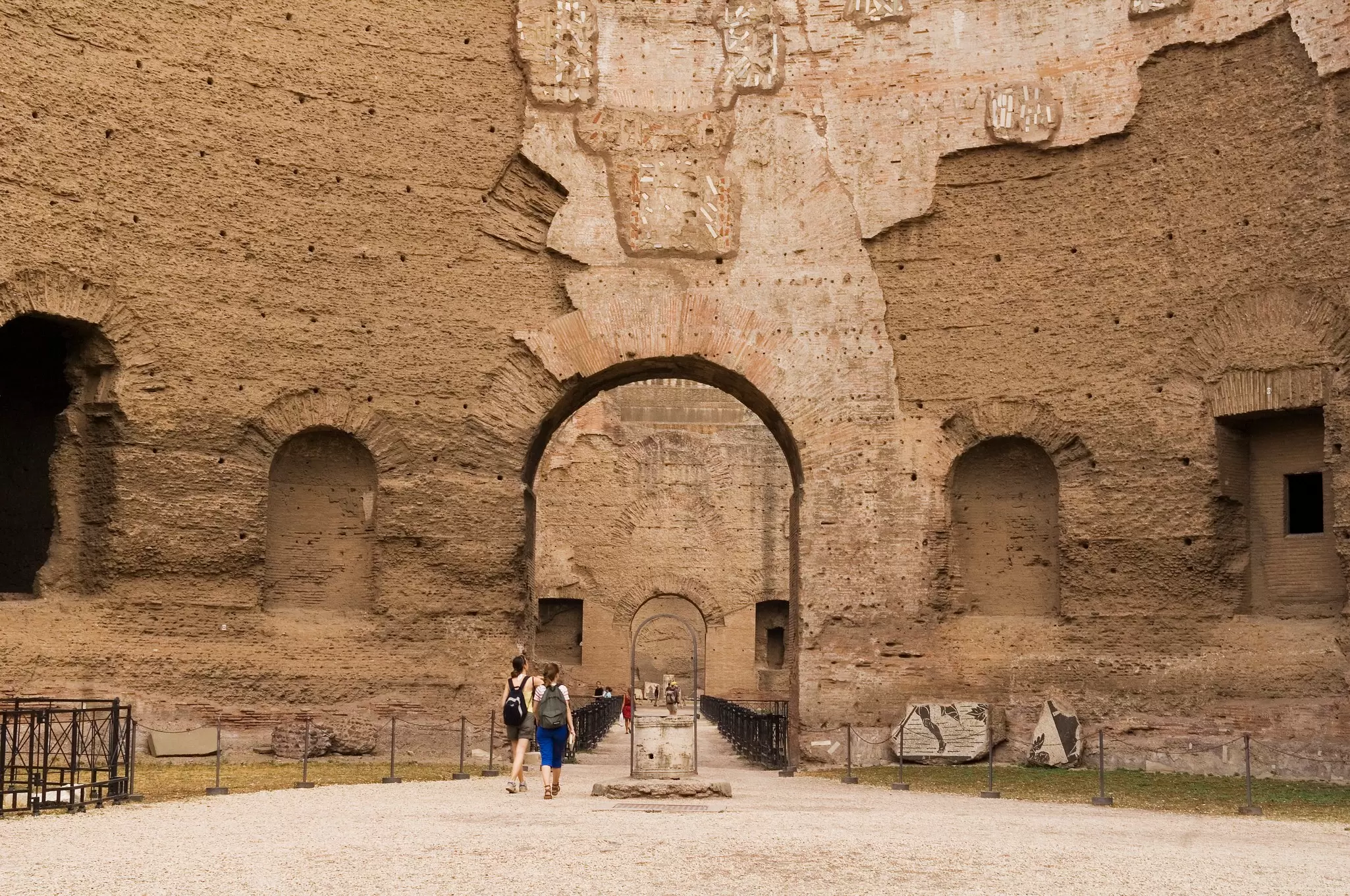
The mighty ruins of the emperor Caracalla’s 2nd-century baths complex highlight the sophistication of Roman engineering while also hinting at the monumental scale of the ancient city. They are well signposted and rarely busy, making a visit a wonderfully enthralling experience.
The Original Complex
The Thermae Antonianae, inaugurated in 216 CE, originally covered 10 hectares and comprised baths, gyms, libraries, shops and gardens. Up to 8000 people passed through daily, while below ground hundreds of slaves sweated in a 9.5km tunnel network, tending to the complex plumbing systems. Each day, about 10 tonnes of wood was burned to heat the water, which was piped in through a specially-built aqueduct.
The baths were used until 537, when invading Visigoths cut off Rome's water supply. Over successive centuries, they were plundered for building materials and frequently excavated. Most notably, digs during the 16th-century papacy of Pope Paul III unearthed a number of important sculptures, many of which later found their way into the Farnese family's art collection and are now on display in the Vatican Museums and the Museo Archeologico Nazionale in Naples.
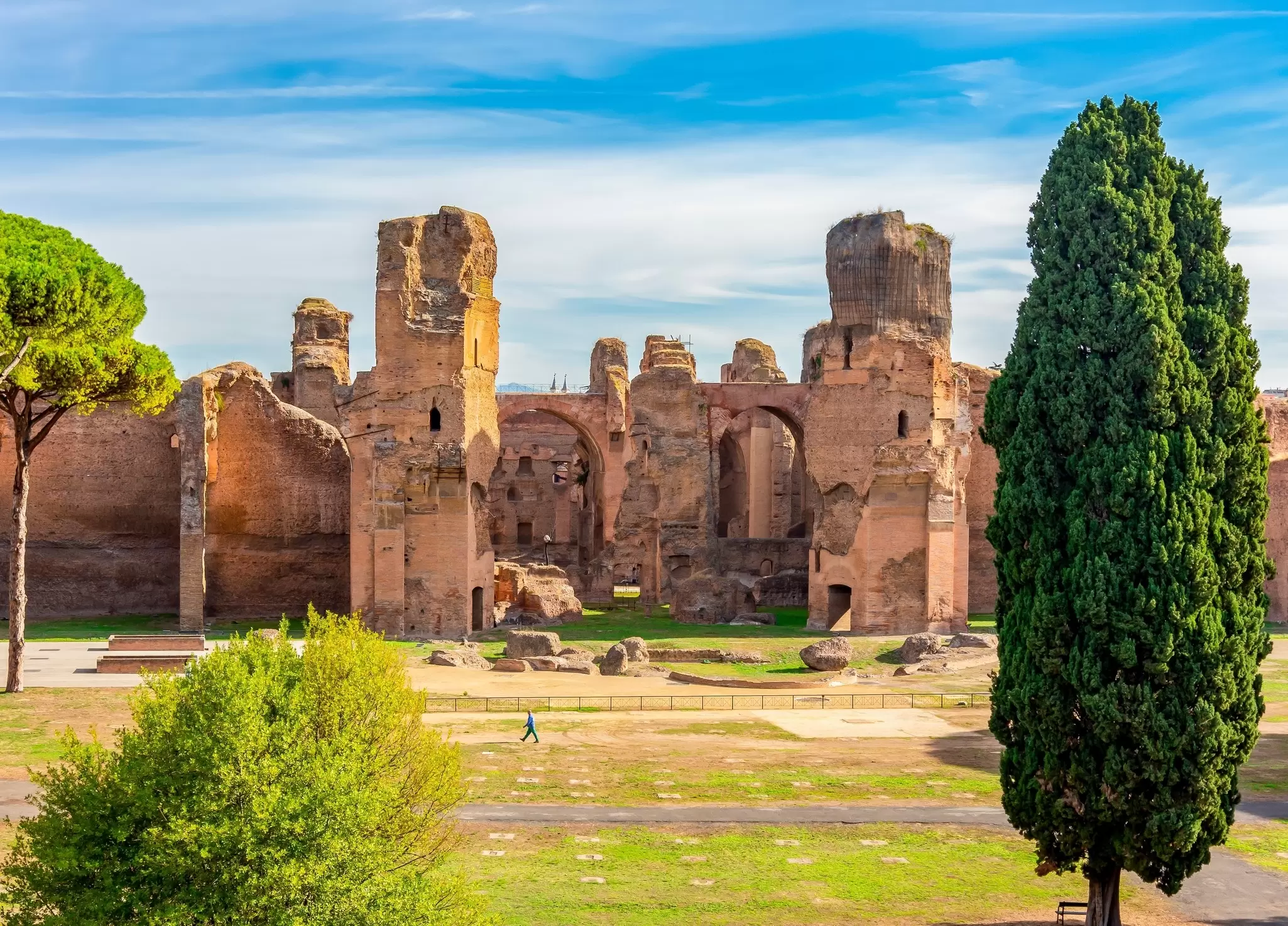
The Site Today
Most of the ruins are what's left of the central bathhouse. This was a huge rectangular edifice bookended by two palestre (gyms) and centered on a frigidarium (cold room), where bathers would cool off after spells in the warmer tepidarium and dome-capped caldarium (hot room). At the end of their exertions, bathers would relax in the columned natatio (swimming pool).
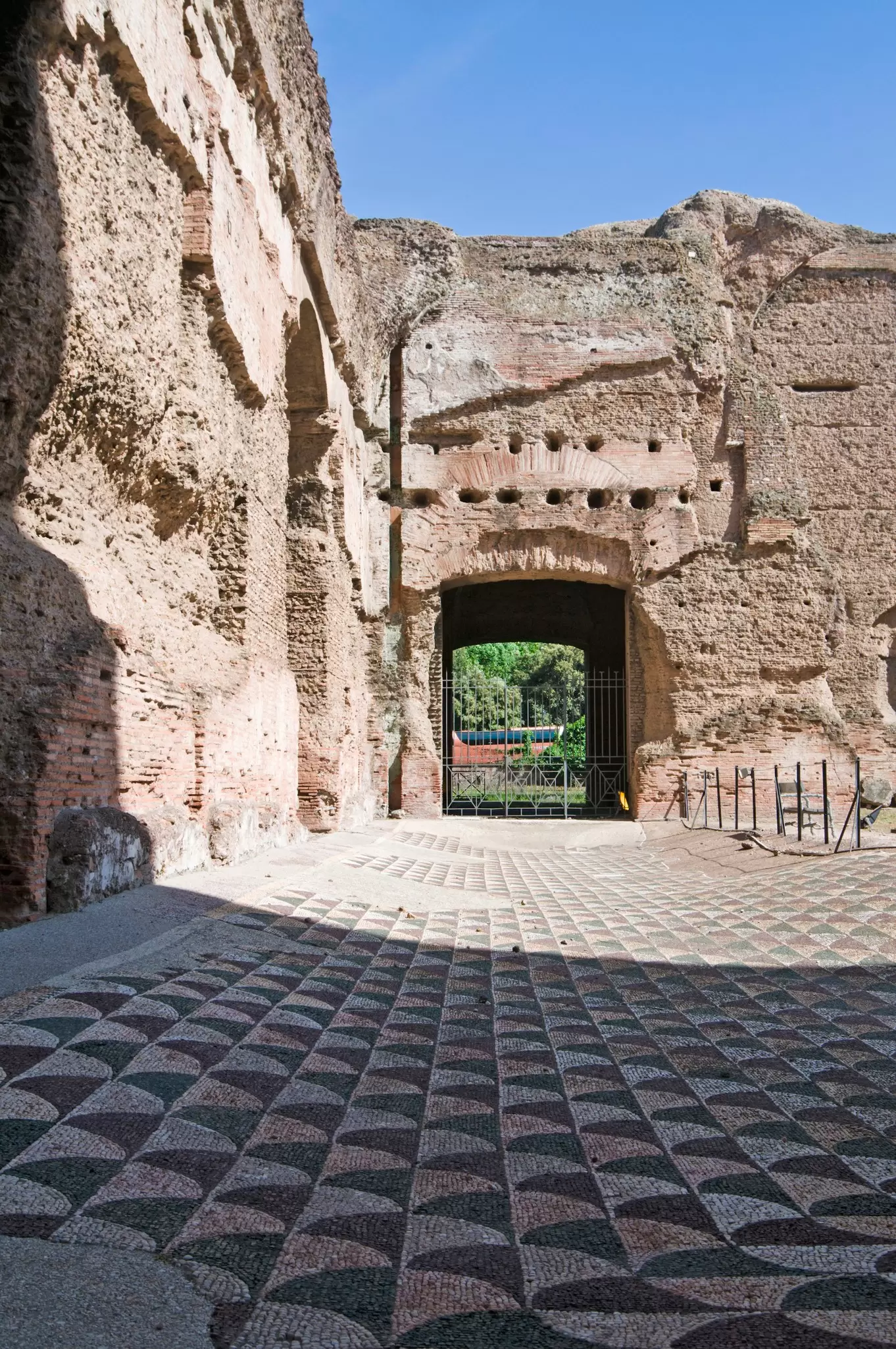
The first area you enter is the palestra occidentale (western gym) from where a wooden walkway leads over sections of geometric black-and-white mosaic flooring to the natatio. Here, bathers would splash around in an Olympic-sized pool and play games on the sides. Near the pool, you can still see a slab of pockmarked marble (the tabula lusoria) which was used as the board for an ancient game called 'tropa' or "the hole game" – it’s on your right as you head towards the palestra orientale (eastern gym).
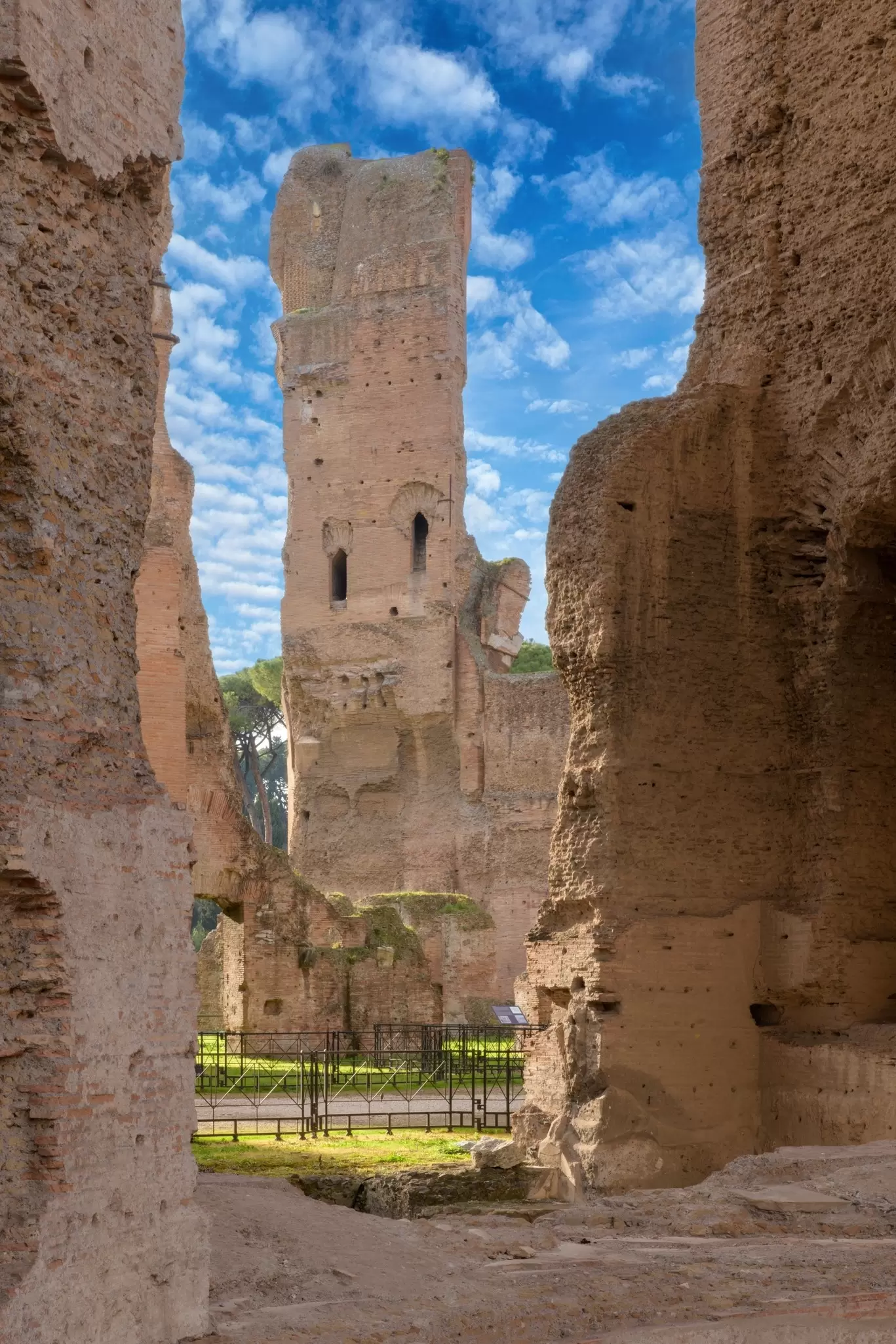
From the eastern gym, a gravel path doubles back through the frigidarium. This monumental hall, which was originally richly decorated and measured 58m by 24m, has provided much architectural inspiration over the centuries, influencing buildings such as Chicago's Union Station and New York’s original Pennsylvania Station.
Domus di Vigna Guidi
Off the palestra orientale, you can visit the recently restored Domus di Vigna Guidi, a 2nd-century-CE house that was partly destroyed when the baths were built. Of particular note are the rare religious frescoes in the sacellum (a chamber for domestic worship) depicting Roman gods and Egyptian deities, a mix that reflected the fusion of religious cults taking hold in Rome at the time.
Installations
Once you’ve finished in the main ruins, take time for a leisurely stroll around the grassy grounds. Here you'll find two contemporary installations. The first, Lo Speccio (The Mirror; 2024), is a large rectangular pool of water designed to reflect the ruins and create light effects with its lateral fountains.
The second, in the top right corner of the grounds, is a three-ring infinity sign laid out in the grass. This is Il Terzo Paradiso (The Third Paradise; 2012) by the contemporary Italian artist Michelangelo Pistoletto.