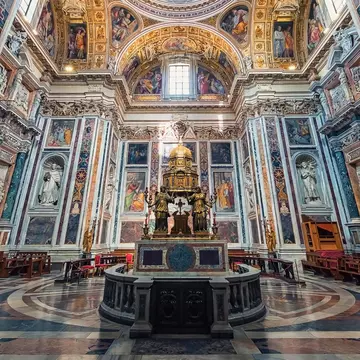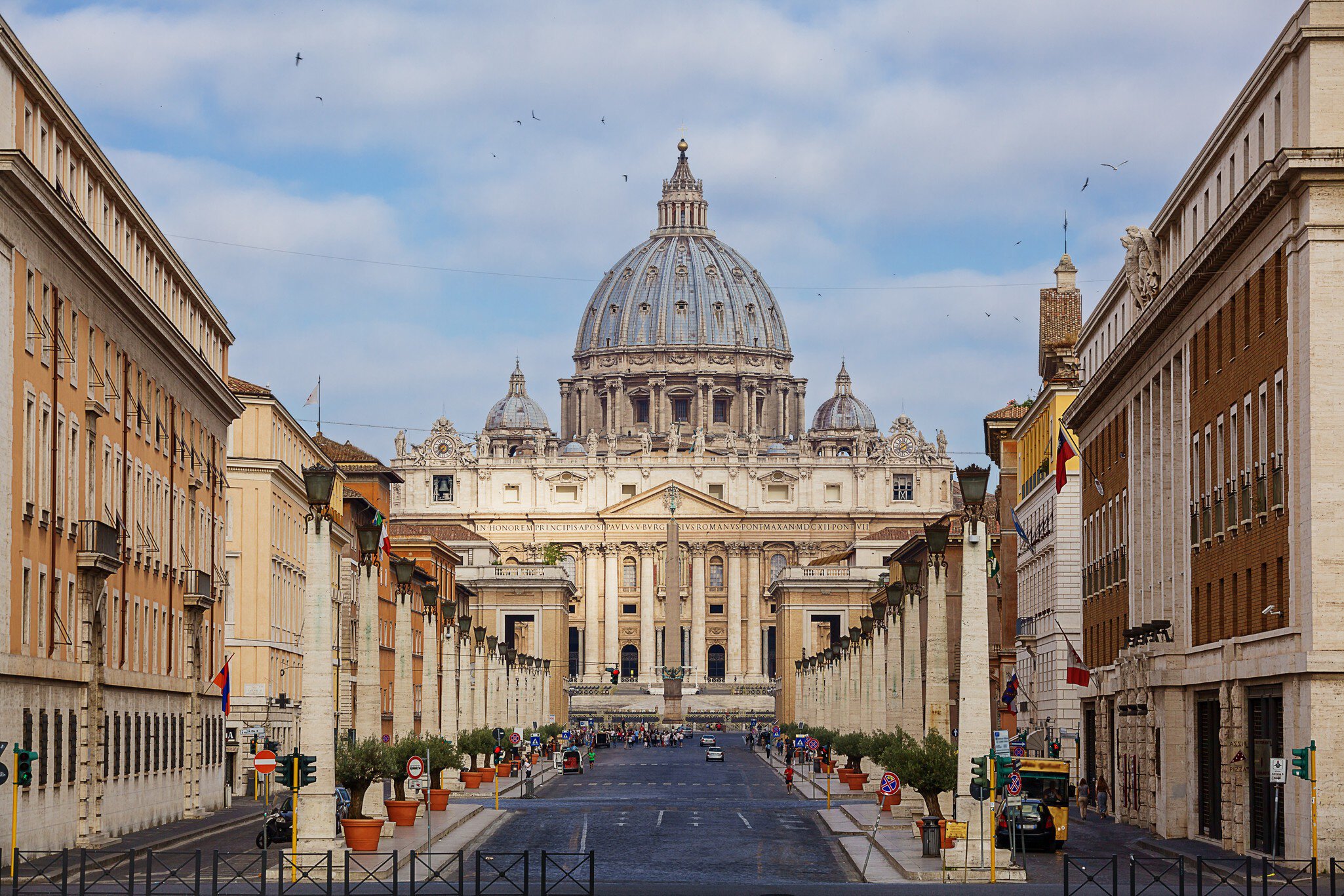
Arguably the most famous church in the world and undoubtedly the most stunning one in a city – and a country – that is absolutely dotted with them, St Peter’s Basilica is an endless triumph of riches and artistic genius, with incredible masterpieces at every corner that will leave you dazzled as you try to take them all in.
The History
Before there was the basilica we see today, there was another one that was supposedly built sometime around the start of the 4th century, commissioned by Emperor Constantine – the one who officially converted the Roman Empire to Catholicism. The place chosen for the church was not just any place but the supposed location where St Peter was martyred, so the perfect place to build a church dedicated to him that would be used by the pope, the man who is Peter’s successor according to Catholic doctrine.
Plans for the current basilica were first laid out in the 14th century, since the old church had fallen into disrepair and ruin – but official construction works started in 1506 under Pope Julius II and continued until 1626, when the basilica was finally consecrated under Pope Urban VIII. The project was helmed by Bramante, who meant for the church to have a Greek-cross floor plan and a massive central dome, until he passed away in 1514 – screeching construction to a halt as a number of architects, including Raphael, argued on how to continue.
Things started back up again when Michelangelo took over the project in 1547, simplifying Bramante’s original plan and designing his own version of one of the basilica’s most distinctive features – the dome. Sadly, Michelangelo also never got to see his work finished, which is understandable since he took it over when he was already in his 70s. The final architects to work on the basilica were Giacomo della Porta and Domenico Fontana, who completed the dome, and Carlo Maderno, who designed the basilica’s monumental facade.
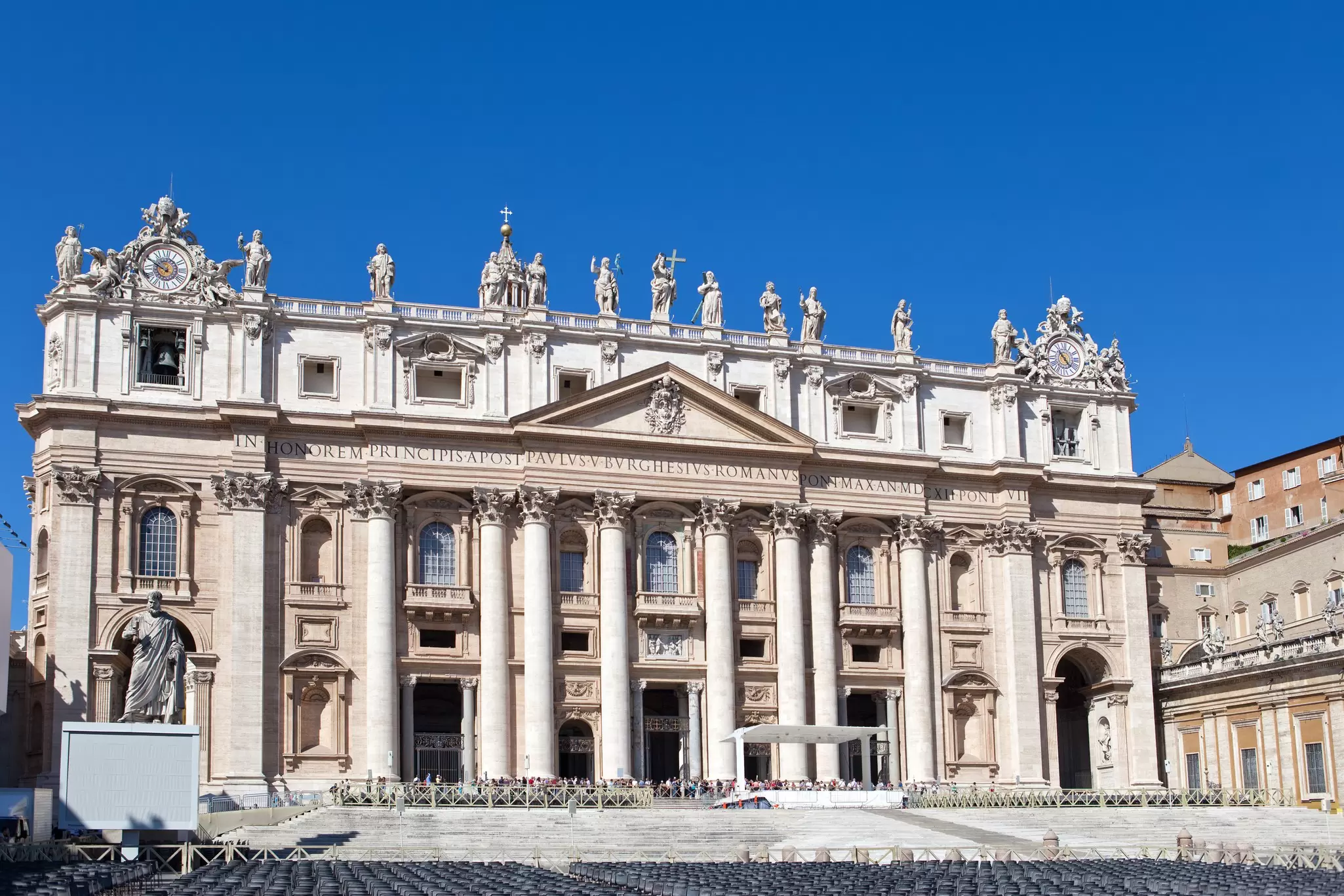
The Facade
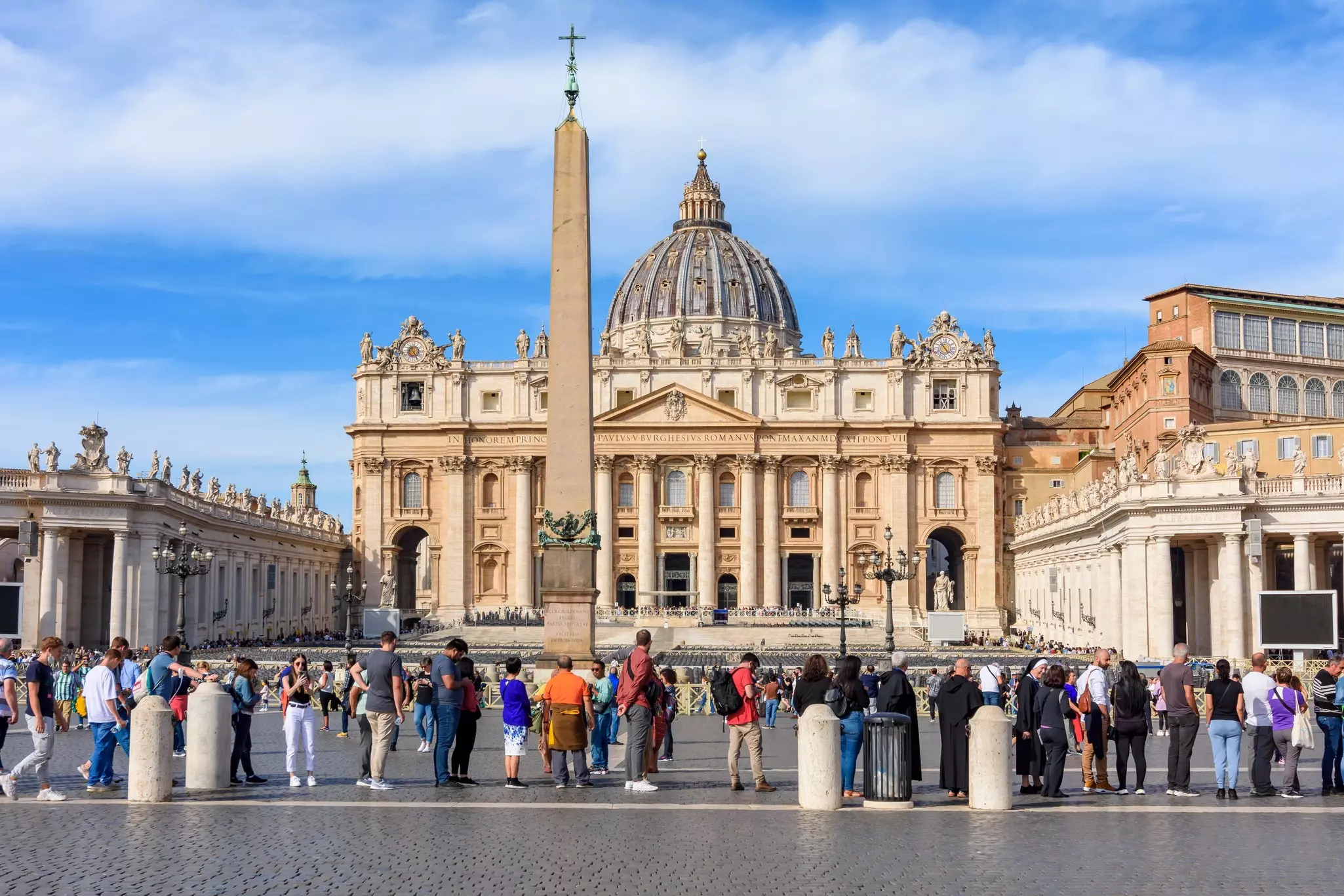
Speaking of the facade, the very last part of the basilica to be built and completed between 1608 and 1612, it parallels the basilica’s own staggering dimensions – being 115m wide and 48m high. The upper attic, supported by eight massive columns, bears statues of Christ the Redeemer, John the Baptist and the other apostles, with the exception of St Peter. The inscription running across the entablature reads "IN HONOREM PRINCIPIS APOST PAVLVS V BVRGHESIVS ROMANVS PONT MAX AN MDCXII PONT VII," which translates to "In honor of the Prince of Apostles Paul V Borghese, Roman Pontiff, the year 1612, the seventh of his pontificate."
The most well-known feature of St Peter’s facade is undoubtedly the Loggia della Benedizione, the balcony that sits right above the main entry portal. That’s where the newly elected pope is proclaimed to the thousands of faithful waiting in the square during the days of the Conclave, and where he appears to give his Urbi et Orbi blessing at Easter and Christmas.
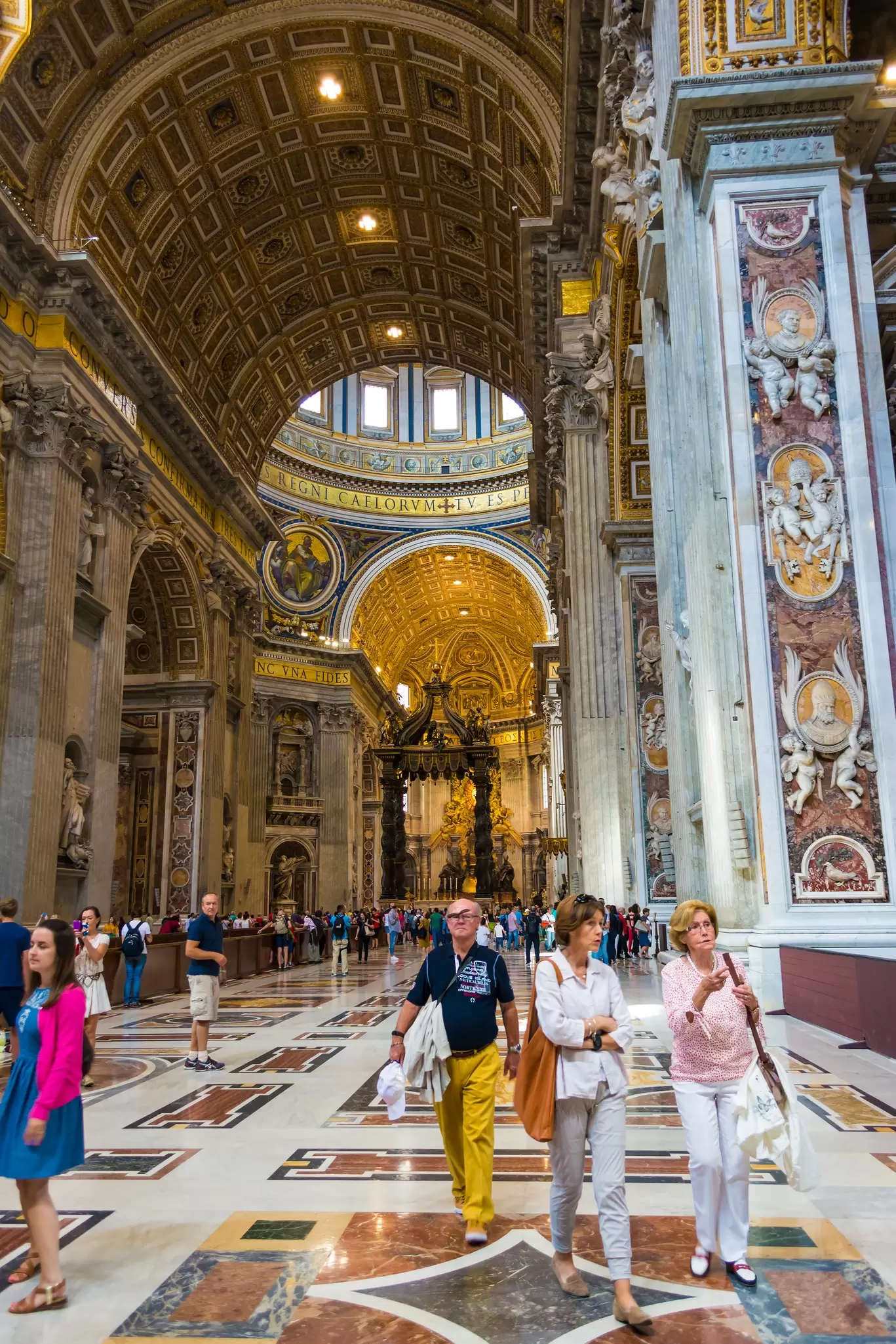
The Nave
St Peter’s central nave leads up to one of Bernini’s great masterpieces, the famous baldachin that stands over the papal altar – also known as the Altar of the Confession. The 20m-high baldachin is made of bronze taken from the Pantheon and is supported by four twisting columns, and it can’t be considered anything else but a pillar of Italian baroque.
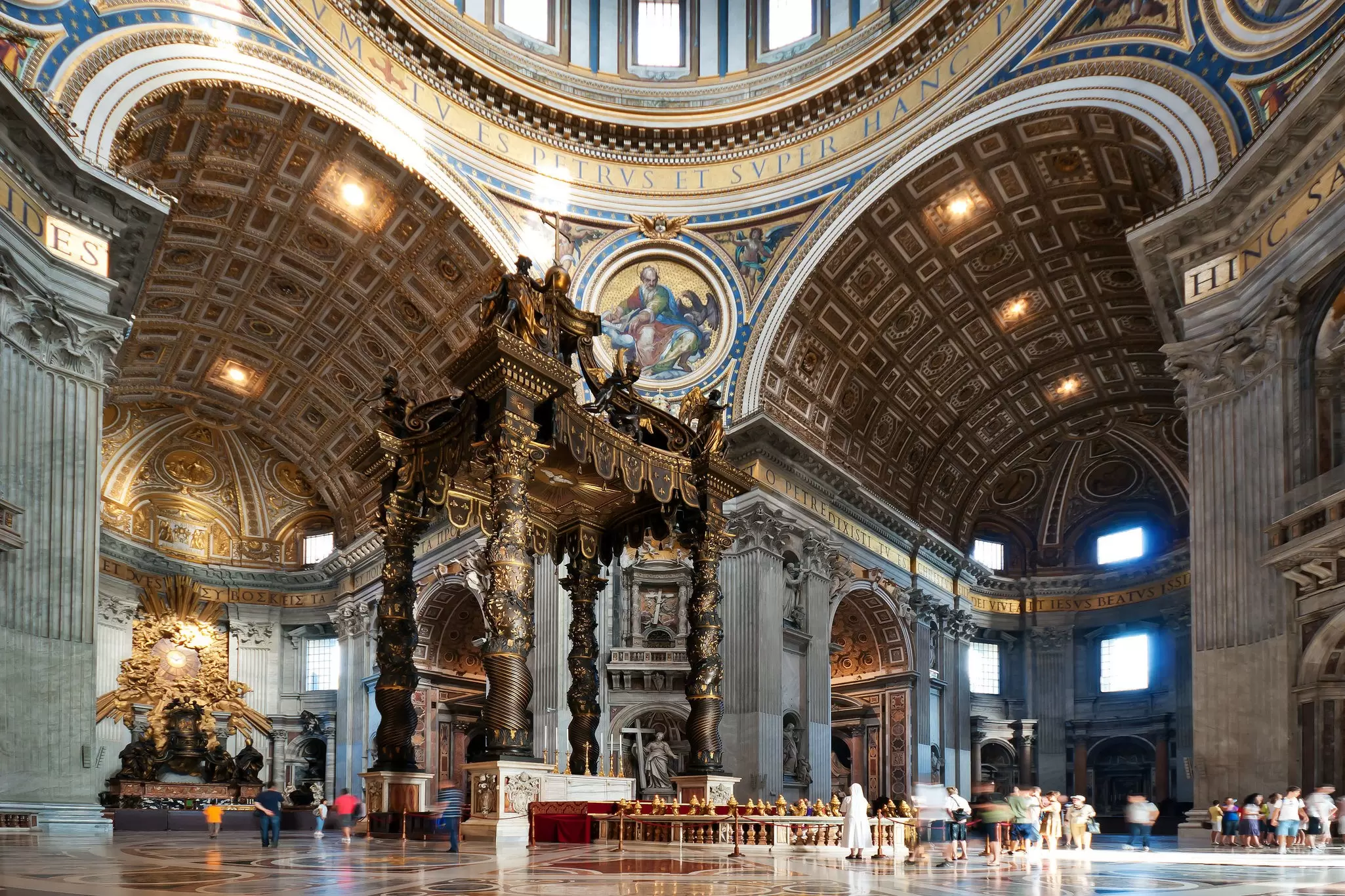
While you walk up the baldachin, don’t forget to look down at the nave’s pavement – on it, you’ll find a series of markers that represent the length of the biggest Catholic churches around the world that still, however, all fit inside the basilica. Then look up behind the altar, where you can find the magnificent Cattedra di San Pietro (Chair of St Peter), another masterpiece by Bernini. The gilded bronze throne that was once believed to be St Peter’s is held up by four massive statues of saints, with light shining on the entire composition from a yellow window surrounded by the golden angel and white dove of the Holy Spirit.
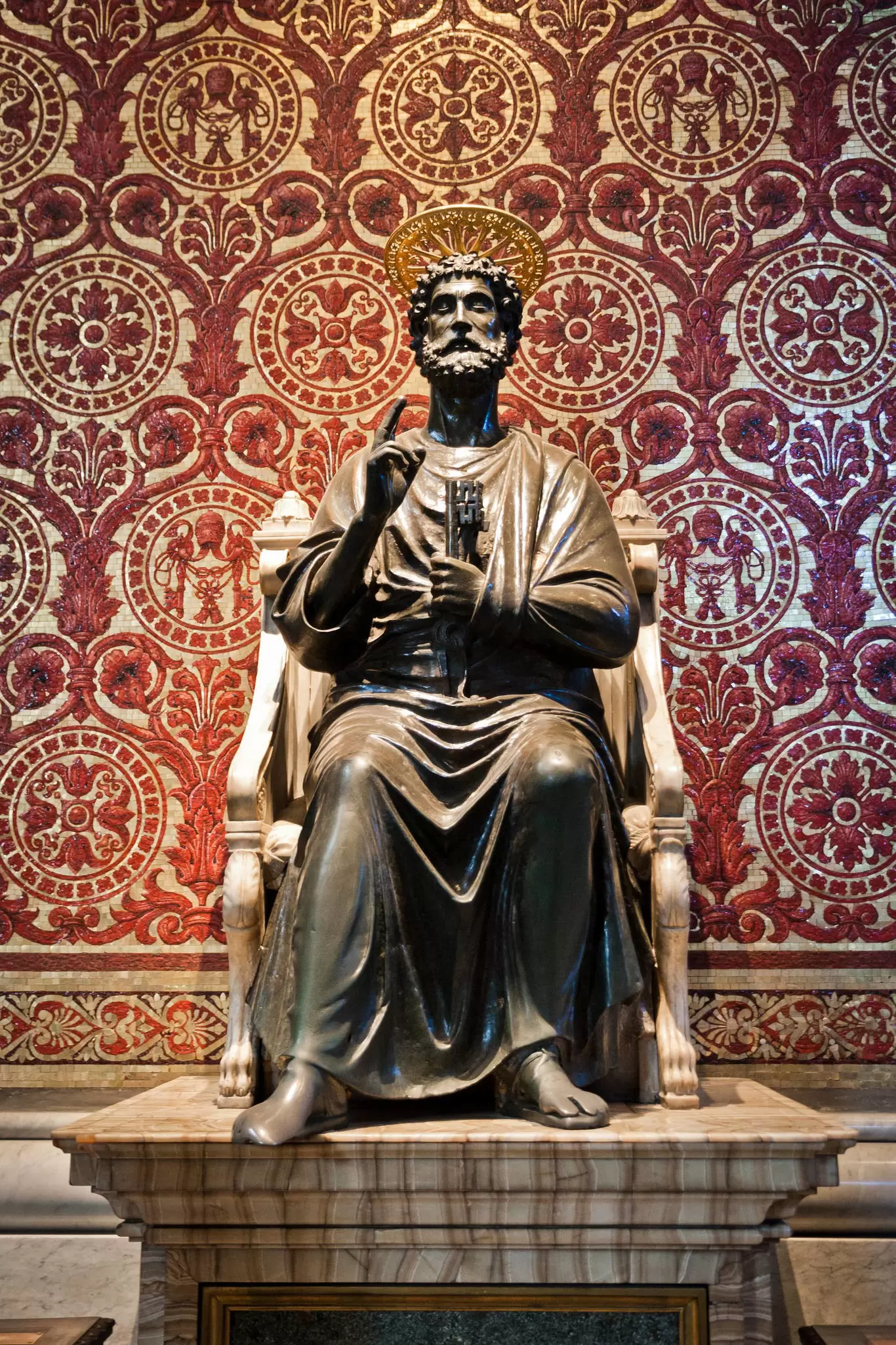
Around the baldachin you can find the four massive columns that hold up St Peter’s dome – and at the base of one of those columns you can see Arnolfo di Cambio’s bronze statue of St Peter, dating to the 13th century and much loved by generations of visitors and believers, so much so that the statue’s right foot has been smoothed down by centuries of devoted caresses.
The Left Aisle
On the left-hand side of the baldachin, you can find Bernini’s last great work in the basilica, the monument to Pope Alexander VII. The pope kneels down over a red marble cloth, from under which a skeleton is trying to emerge – the hourglass it carries in its hand symbolizes the slow but unstoppable flow of life. In fact, the basilica is dotted with statues celebrating some of the more than 250 popes who have presided over the Catholic Church.
Moving down the left aisle towards the entrance, you can find the Cappella Clementina – commissioned by Pope Clement VIII for the Jubilee of 1600 and containing the tomb of St Gregory the Great as well as a monument to Pope Pius VII. The arch between this chapel and the next, the Cappella del Coro, contains a monument to Leo XI.
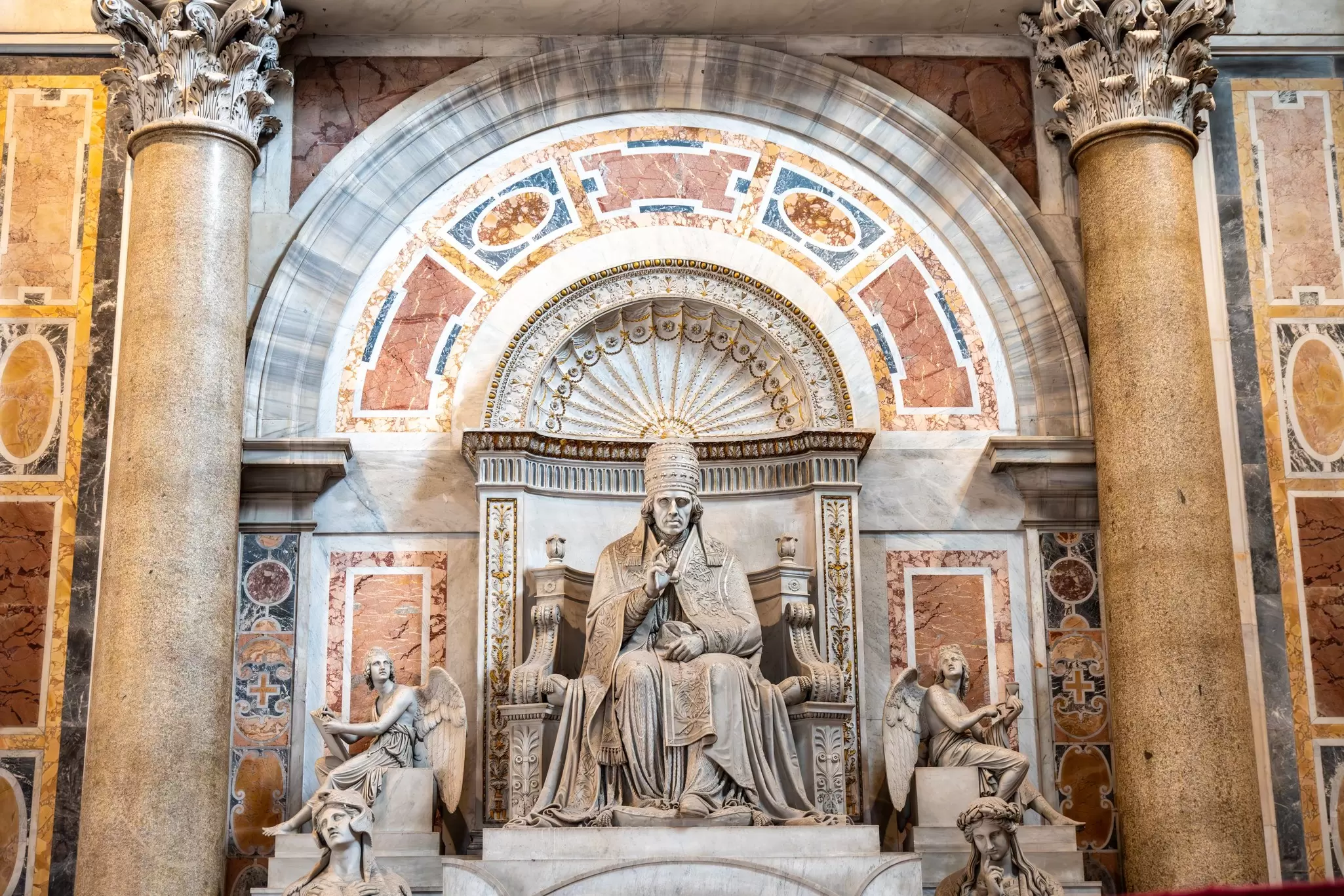
After the Cappella del Coro, created by Giovanni Battista Ricci, you can see a monument to Pope Innocent VIII. The Cappella della Presentazione then contains a black relief monument to Pope John XXIII and another one to Pope Benedict XV.
Finally, immediately to the left of the entrance, you can see the so-called Stuart Monument – built by Antonio Canova in honor of the House of Stuart when its members had been ousted from the British throne as they were widely considered simple pretenders.
The Right Aisle
As soon as you enter and turn to the right aisle, you’ll come face to face with one of Michelangelo’s most famous works, La Pietà (1498–99). Representing the Virgin Mary tenderly holding the body of Jesus once it was taken down from the cross, it’s the only work that Michelangelo has ever signed – look for his name on the sash across Mary’s breast. The sculpture is protected by a pane of bulletproof glass ever since a man took a hammer to it in the 1970s – even though, luckily, a team of restorers was able to bring it back to its original look thanks to the many pictures and models that existed of La Pietà.
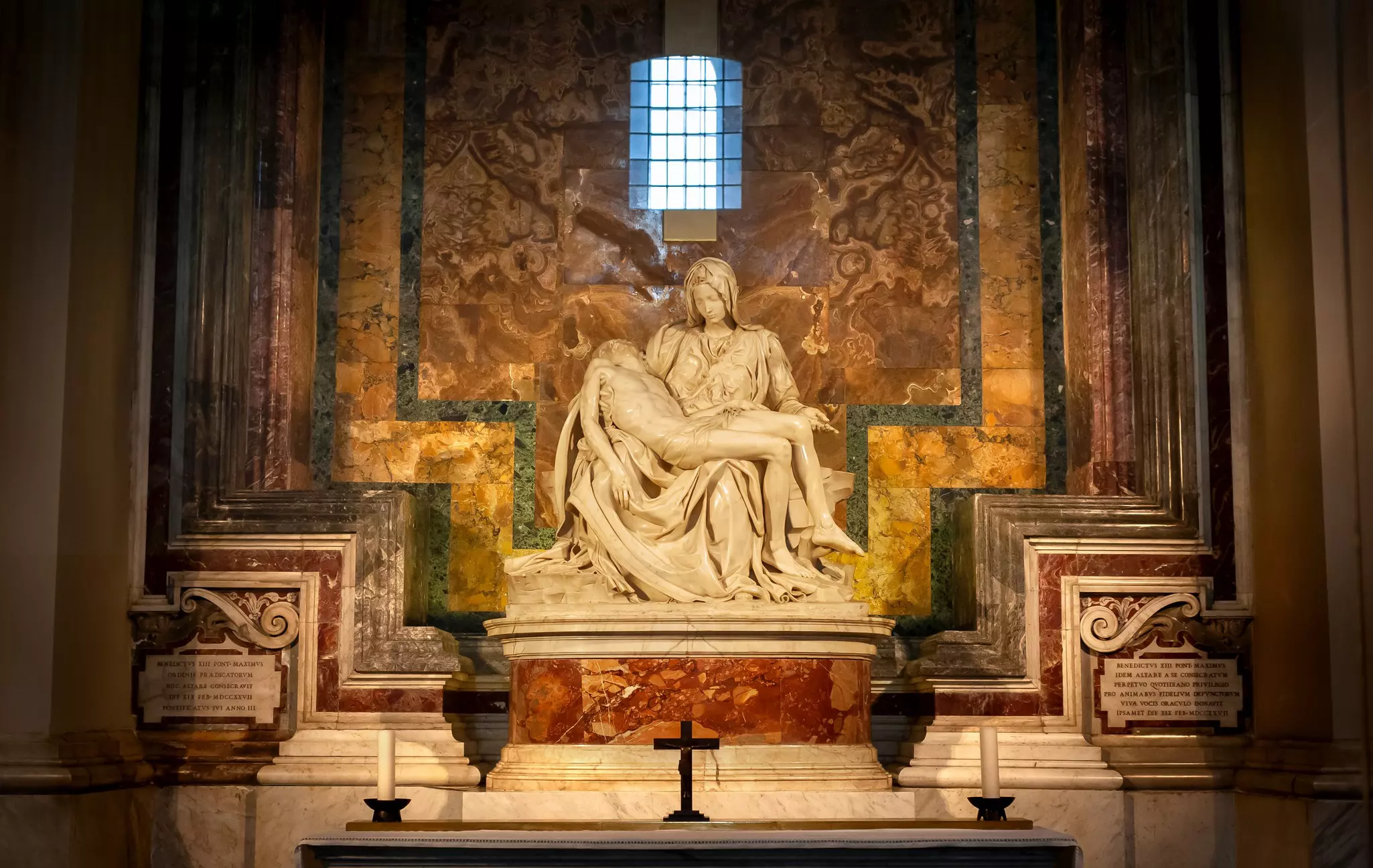
Not too far away from La Pietà, a massive red disc on the floor indicates the point where Charlemagne was crowned Holy Roman Emperor on Christmas Day of 800.
Moving towards the altar, you’ll pass the Cappella di San Sebastiano (Chapel of St Sebastian), which holds the tomb of Pope John Paul II, and the Cappella del Santissimo Sacramento (Chapel of the Blessed Sacrament), with marvelous decorations from Borromini, Bernini and Pietro da Cortone. You’ll then notice the grand monument to Pope Gregory XIII sitting right beside the Cappella Gregoriana (Gregorian Chapel), designed by Michelangelo.
The Dome
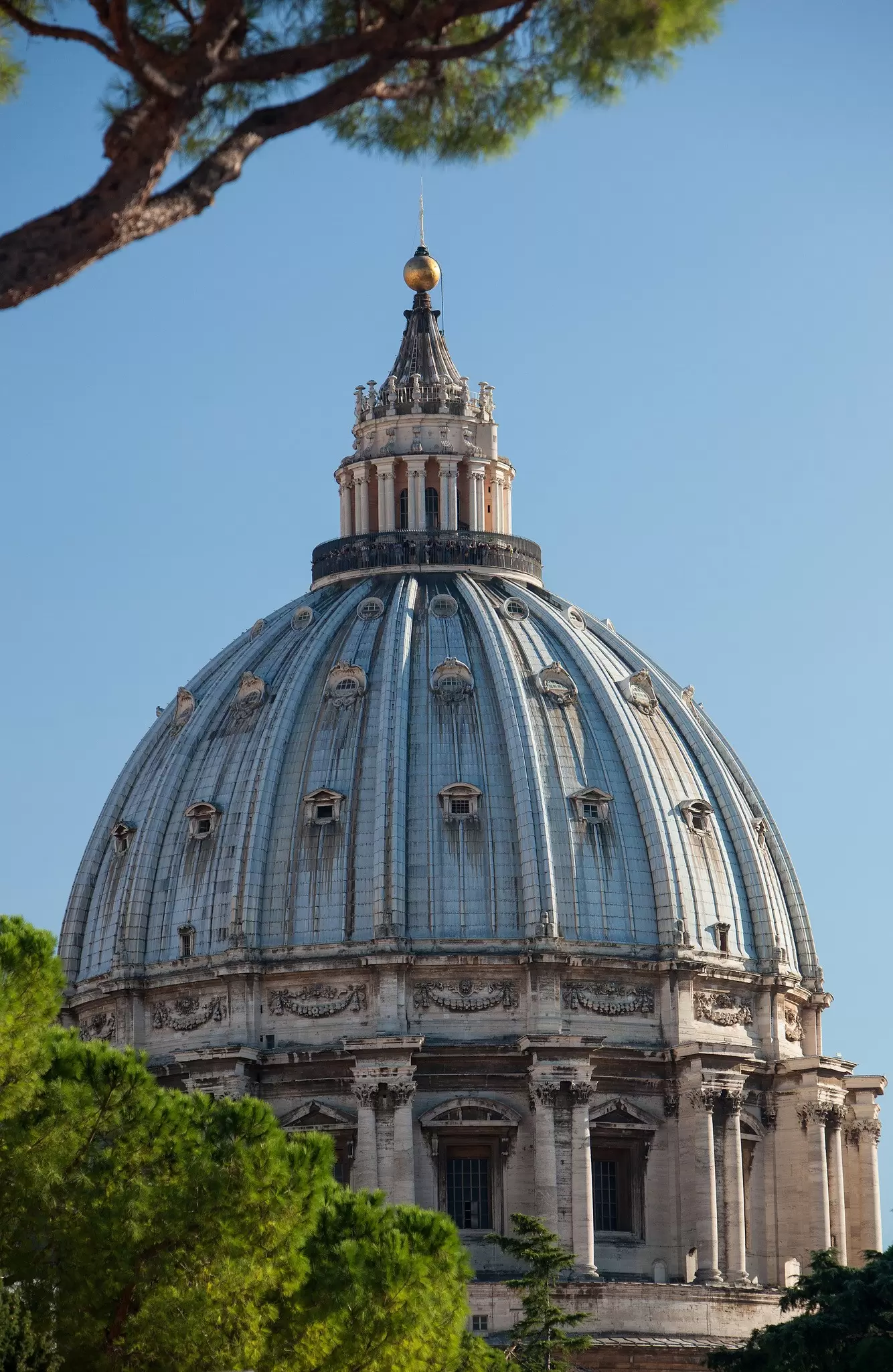
Michelangelo’s breathtaking St Peter’s Basilica Dome was modeled after the one that Brunelleschi had designed for the Duomo in Florence, and it soars up to 199m. You can see the four massive piers supporting it all around Bernini’s baldachin – they each have a name, actually, after the saint lodged in their niches. And those saints were chosen because they are each associated with one of the relics contained within the basilica. You can see St Longinus with his spear, that was supposedly used to pierce Christ’s side on the cross; then there’s St Veronica, holding the cloth that she used to wipe Christ’s face during his Passion; St Helena carrying Christ’s cross, a piece of which she was said to have carried back to Rome; and then St Andrew, whose head is kept within the basilica.
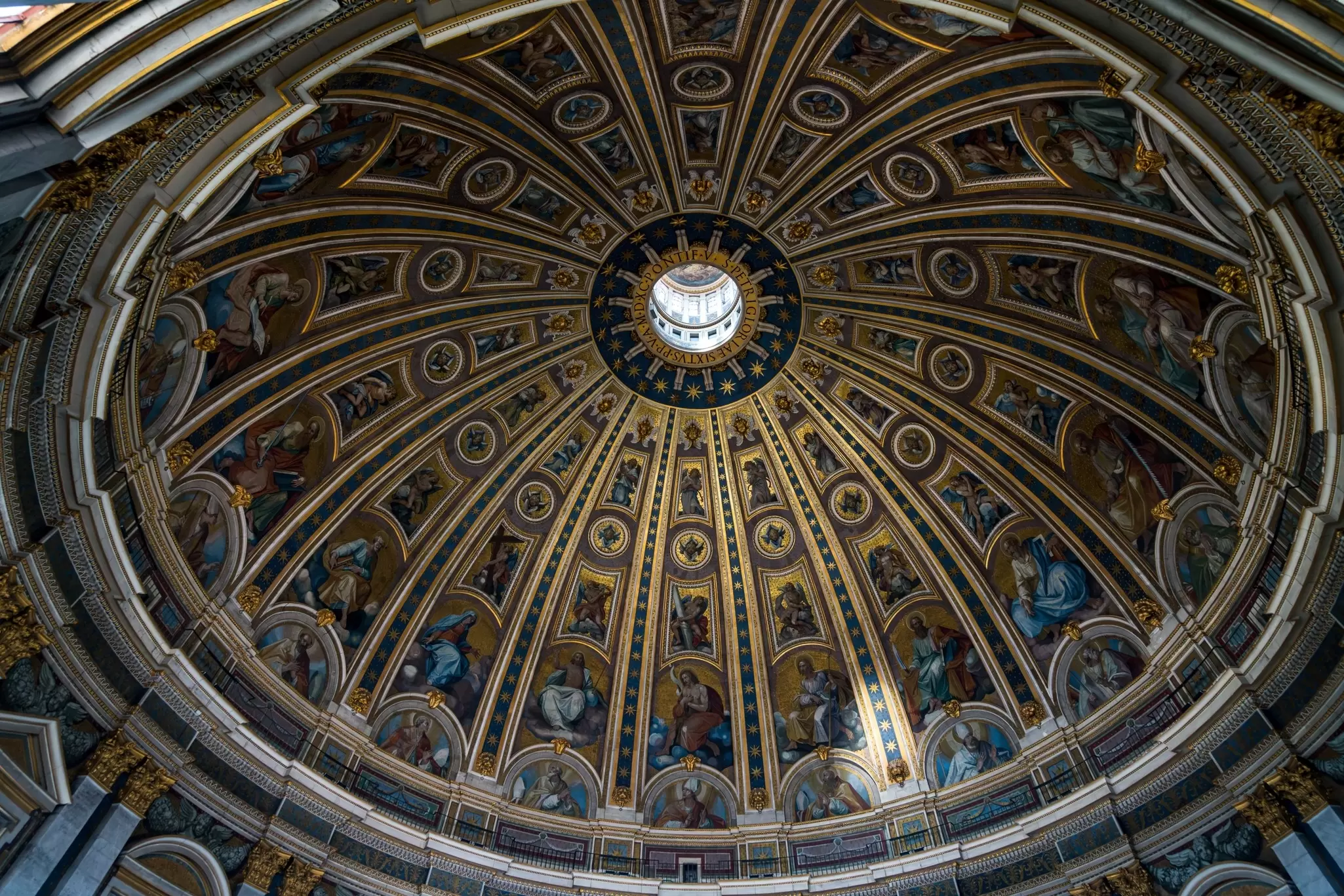
You can also climb up the dome, whose entrance is to the far right of the basilica’s main portico, where you can buy your ticket and then begin climbing. There are a total of 320 narrow steps in the ascent, even if a small lift can take you halfway up – keep that in mind if you suffer from claustrophobia or vertigo. The view, however, is spectacularly worthy especially if the day is bright and clear.