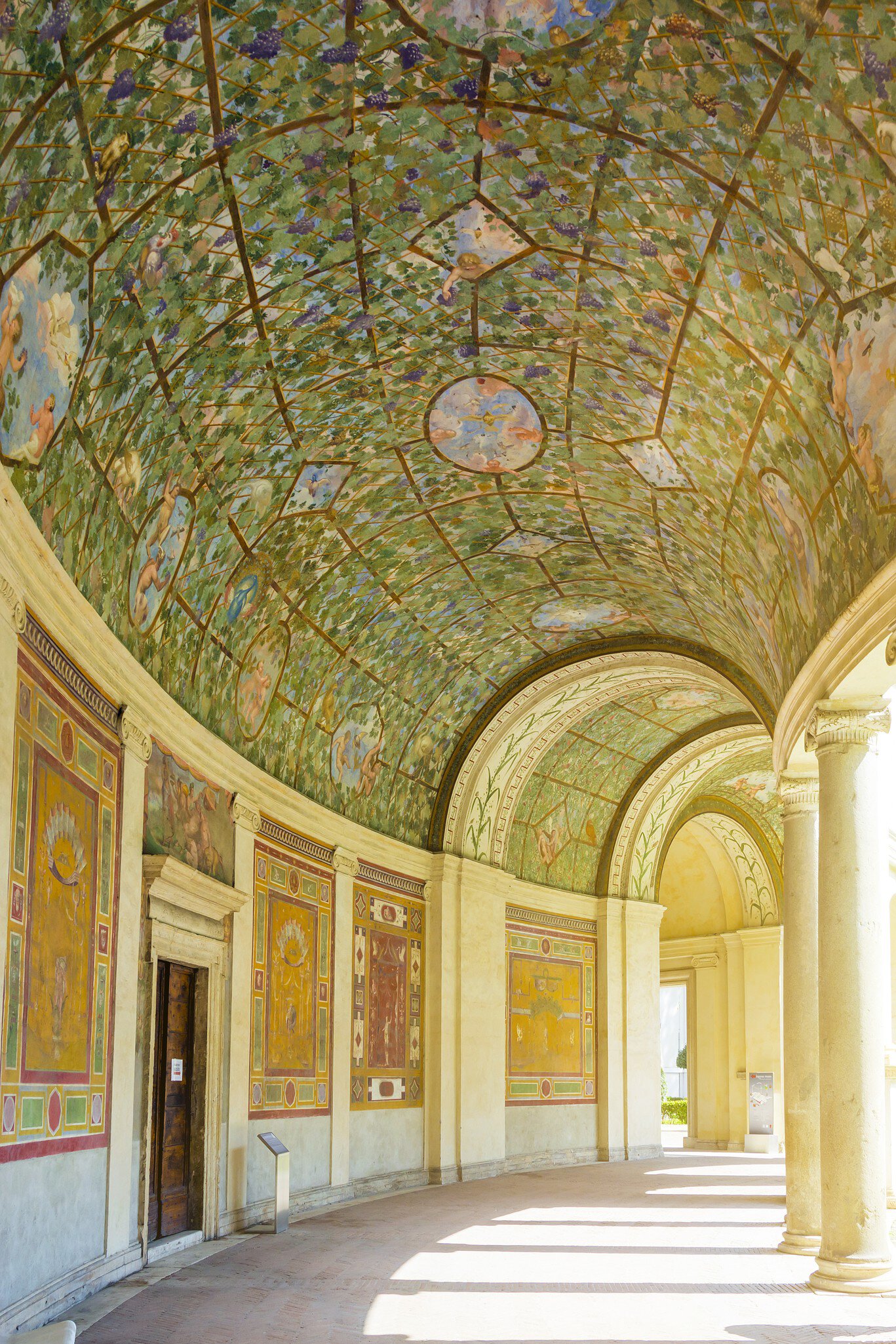
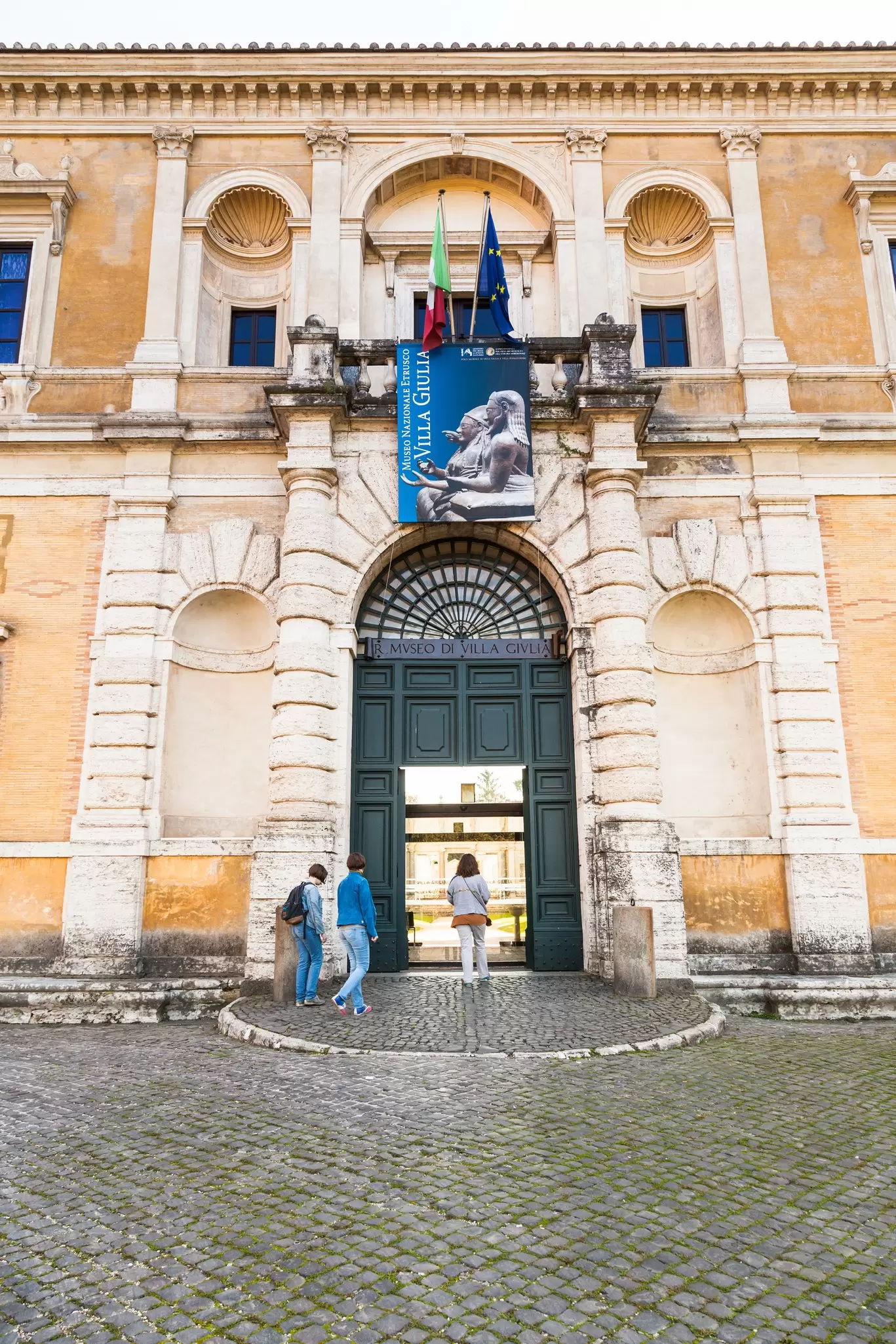
Housed in a 16th-century papal villa near Villa Borghese, the Museo Nazionale Etrusco di Villa Giulia feels a world away from Rome’s noise and relentless crowds.
The magnificent villa and its landscaped gardens provide a suitably grand setting for Italy’s premier collection of Etruscan treasures, providing a rare window into the mysterious pre-Roman civilization.
Collection Highlights
The well-labeled exhibits, many of which came from tombs in the surrounding Lazio region, range from bronze figurines and black bucchero tableware to temple decorations, terracotta vases and some dazzlingly sophisticated jewelry.
There’s a lot to see, but highlights include a terracotta statue of Apollo from the Etruscan town of Veio, just north of Rome; a 6th-century-BCE terracotta head (the Testa di Leucotea; Head of Leucotea), which originally adorned a temple relief; and a remarkable re-creation of a frescoed tomb from Tarquinia.
Also extraordinary are the Lamine di Pyrgi (Pyrgi Tablets), three gold sheets discovered during excavations of Pyrgi, Cerveteri’s ancient seaport. Dating to the end of the 6th century BCE, these are inscribed with texts written in Etruscan and Phoenician.
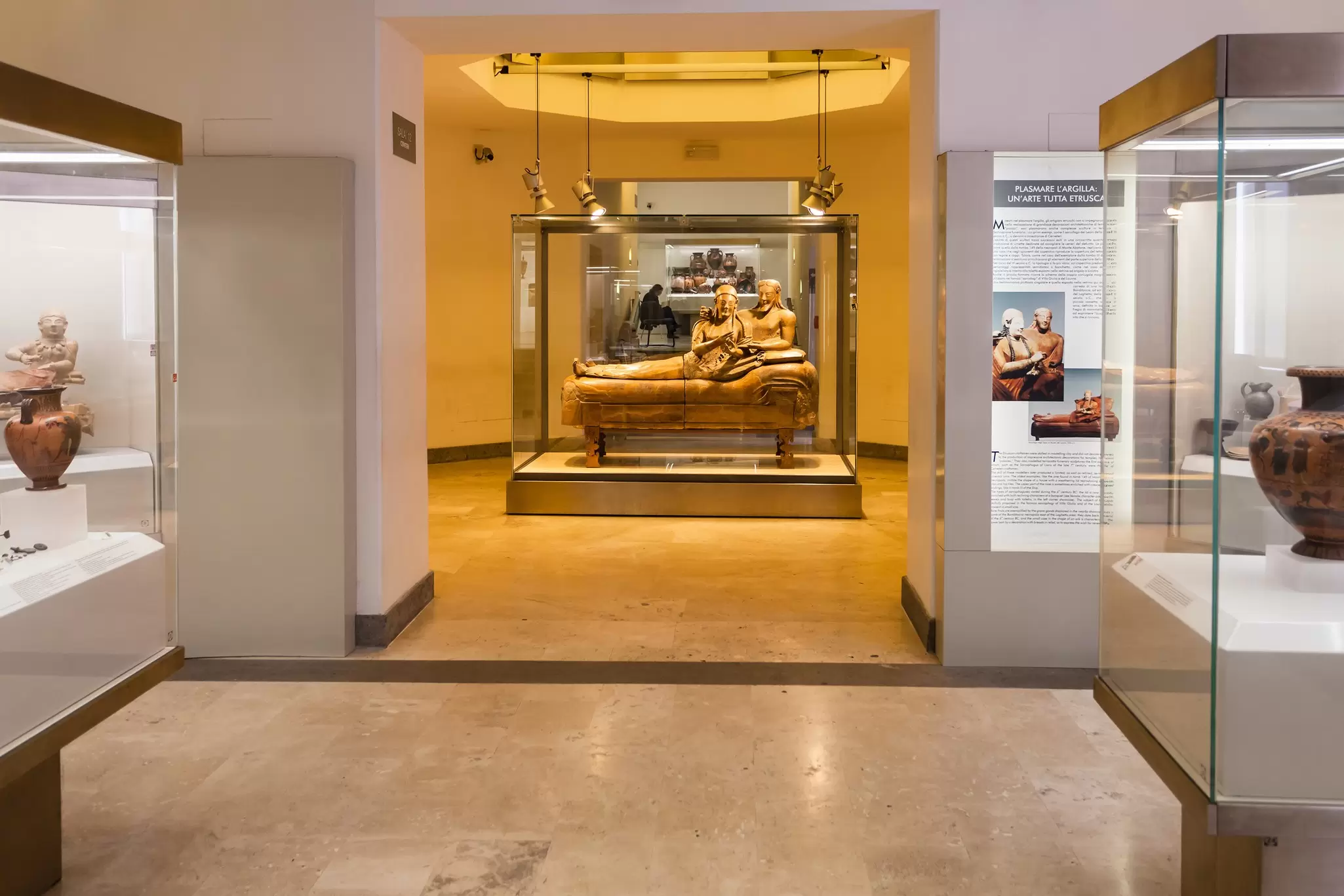
The museum’s signature piece is a 6th-century-BCE sarcophagus known as the Sarcofago degli sposi (Sarcophagus of the Spouses). This astonishing work, originally unearthed in a tomb in Cerveteri, depicts a couple reclining on a stone banqueting couch.
Further finds relating to the Umbri and Latin peoples are housed in the nearby Villa Poniatowski, which is open Friday to Sunday afternoons between May and October.