One of Boston’s most popular attractions, the 2.5-mile Freedom Trail is made up of 16 colonial and revolutionary sites, tracing the locations of the events that earned this city its status as the birthplace of the American Revolution. Whether you’re walking the trail at your own pace or on a guided tour, summon your inner Paul Revere and follow the redbrick road from the Boston Common to the Bunker Hill Monument.
The Freedom Trail’s 16 Stops
1. Boston Common
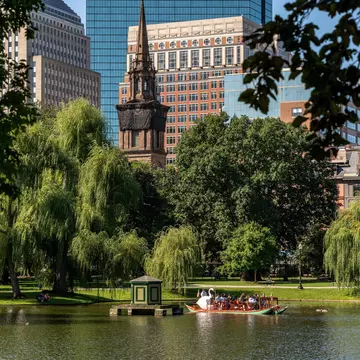
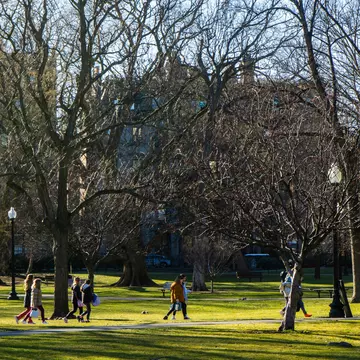
The Freedom Trail kicks off at the Boston Common, the country’s oldest public park and a centerpiece of the city. The 50-acre green is crisscrossed with walking paths and dotted with monuments. Don’t miss the memorial to Robert Gould Shaw and the all-Black 54th Regiment, which fought for the Union forces in the Civil War.
Local tip: The Boston Common is called “the Common” in local parlance – never “the Commons.” Use the singular or risk ridicule from Bostonians!
2. Massachusetts State House

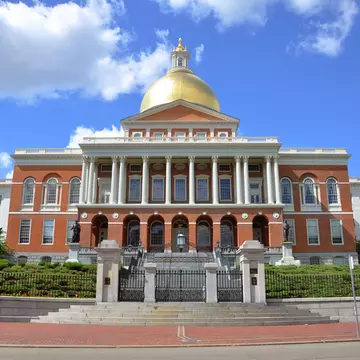
Overlooking the Boston Common, the Massachusetts State House occupies a proud spot atop the city’s last remaining hill – land that was previously part of Founding Father John Hancock’s cow pasture. Go inside for a free tour of the historic halls and the state’s seat of government.
Detour: The National Park Service has a virtual tour of the Black Heritage Trail, which explores the history of the abolitionist movement and Black community on Beacon Hill.
3. Park Street Church
The soaring spire of Park Street Church has been an unmistakable landmark since 1809. The church earned the moniker Brimstone Corner, both for its usage for gunpowder storage during the War of 1812 and for its fiery preaching.
4. Granary Burying Ground

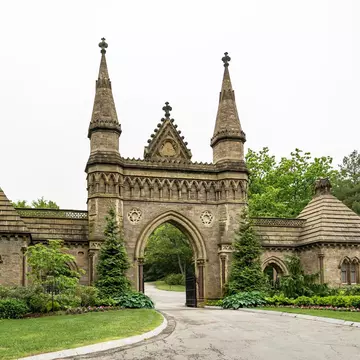
Next to the church, a pair of Egyptian Revival gates open to the Granary Burying Ground. The serene cemetery is the final resting place for many historic figures – including Sons of Liberty Paul Revere, Samuel Adams and James Otis – as well as those who died during the Boston Massacre.
5. King’s Chapel and Burying Ground
At the corner of School St, the Georgian King’s Chapel overlooks its adjacent burial ground, which is the oldest in the city. It is perhaps an odd choice for inclusion on the Freedom Trail, since it was founded as an Anglican church in 1688. It does, however, contain a large bell crafted by Paul Revere and the prestigious Governor’s pew, once occupied by George Washington.
Planning tip: In addition to the scheduled services, 30–40 minute music recitals are held in King’s Chapel every Tuesday at 12:15pm.
6. Site of the First Public School
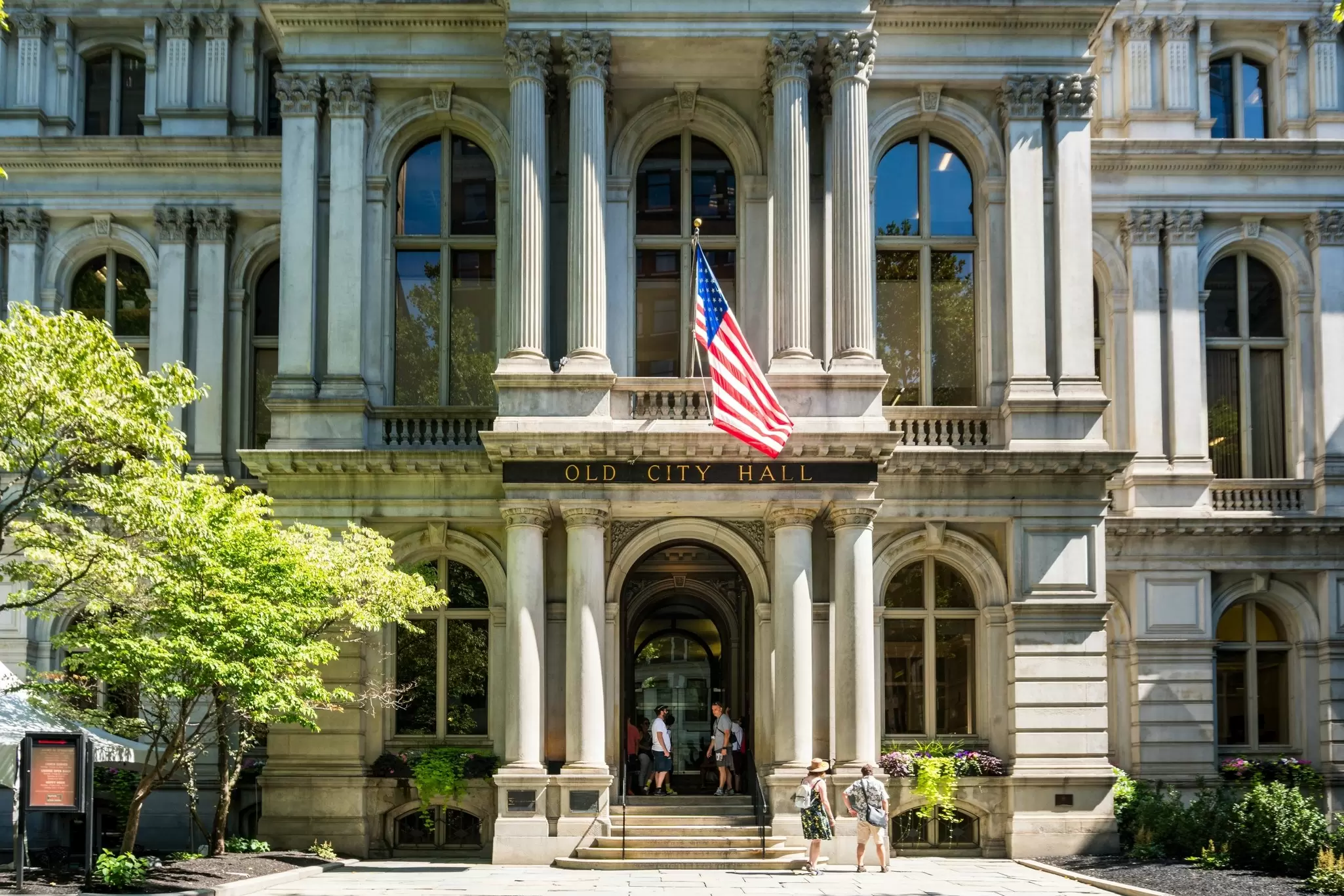
In front of Old City Hall on School St, a plaque commemorates the site of the country’s first public school, founded in 1635. Note the statue of Benjamin Franklin, the school’s most famous dropout. Enter the courtyard to discover other distinguished alumni and quirky artwork.
7. Old Corner Bookstore
The little brick building on the corner of School and Washington Sts is aptly known as the Old Corner Bookstore. In the mid-19th century, it was the home of Ticknor and Fields, an influential publishing house that helped shape American literature. The building now houses a Chipotle fast-food restaurant, but the original structure still stands.
8. Old South Meeting House
The Old South Meeting House saw the beginnings of one of the American Revolution’s most storied protests: the Boston Tea Party. Come off the street and listen to a reenactment of what went down that day.
9. Old State House
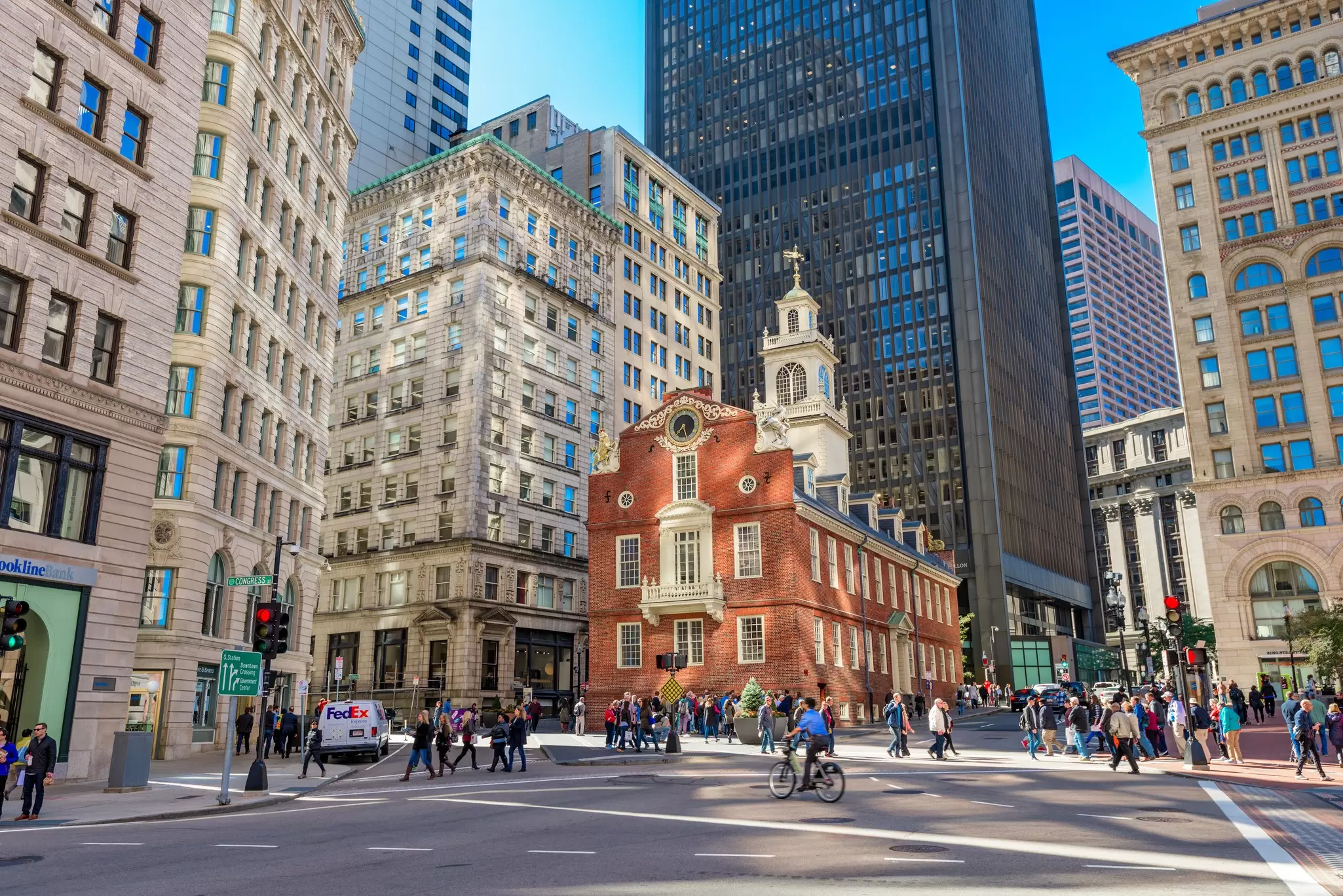
Before the Revolution, the seat of the Massachusetts government was the Old State House, a striking redbrick edifice. Inside, you can peruse artifacts and listen to firsthand accounts of Revolutionary events. Outside, gaze up at the balcony, where the Declaration of Independence was first read to Bostonians in 1776.
Planning tip: A single ticket gives entry to both the Old State House and the Old South Meeting House.
10. Boston Massacre Site
In front of the Old State House, the cobblestone circle marks the site of the Boston Massacre, the Revolution’s first violent conflict. On March 5, 1770, a crowd of protesters threw snowballs and rocks at British soldiers, who eventually fired into the crowd, killing five.
11. Faneuil Hall and Quincy Market

Faneuil Hall was Boston’s original market and public meeting place, built in 1740. Pause to admire the bronze statue of Samuel Adams, who sits astride a horse in Dock Sq, and then ascend to the 2nd-floor hall, where Adams was one of the many orators to speak out against British rule.
Behind Faneuil Hall, stop in Quincy Market to snack your way through a few of the food stalls and fuel up for the rest of your walk.
12. Paul Revere House
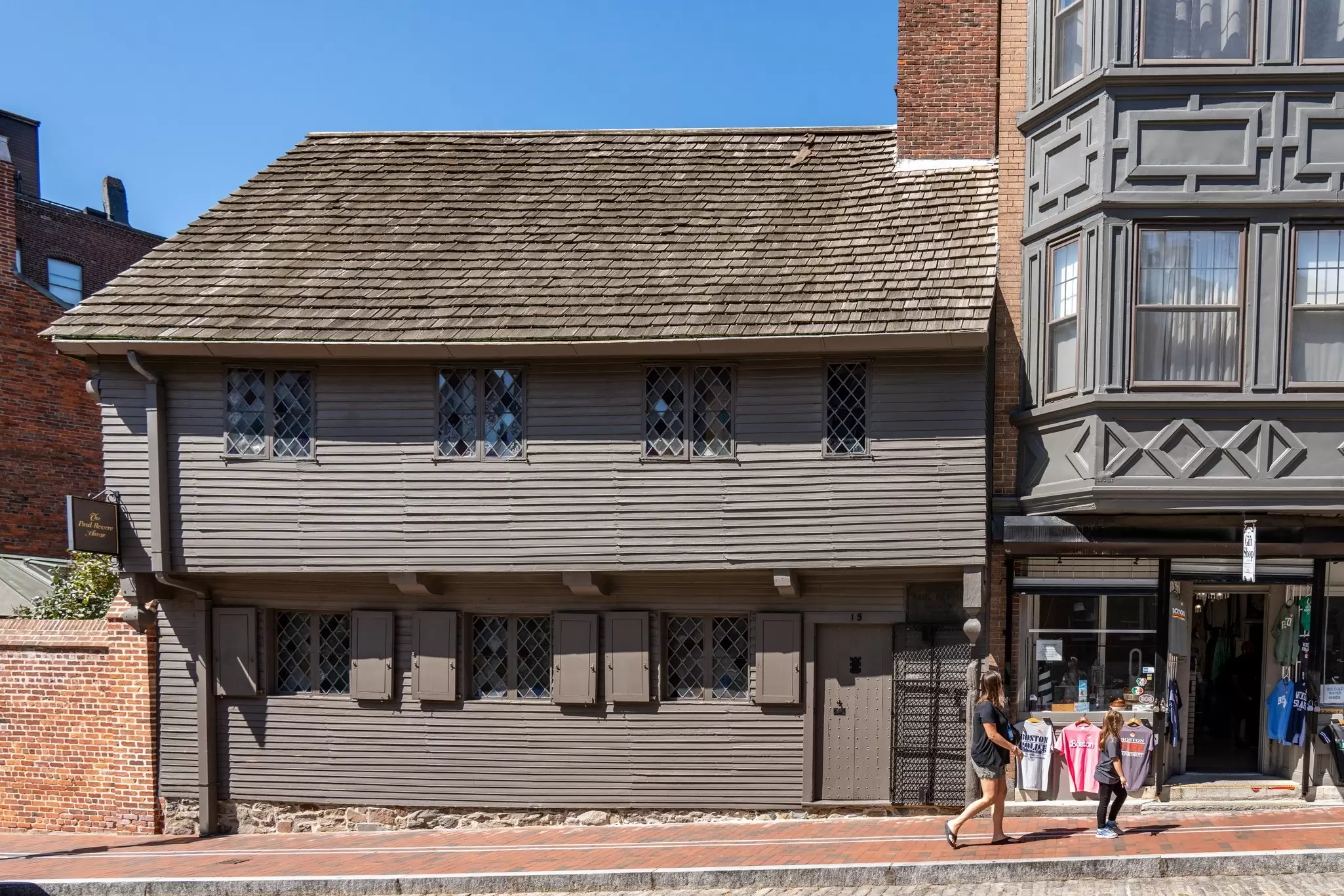
Cross the Rose Kennedy Greenway and into the North End to charming North Sq, home to Paul Revere for 30 years. Tours of the clapboard house shed light on Revere’s work and family life.
13. Old North Church
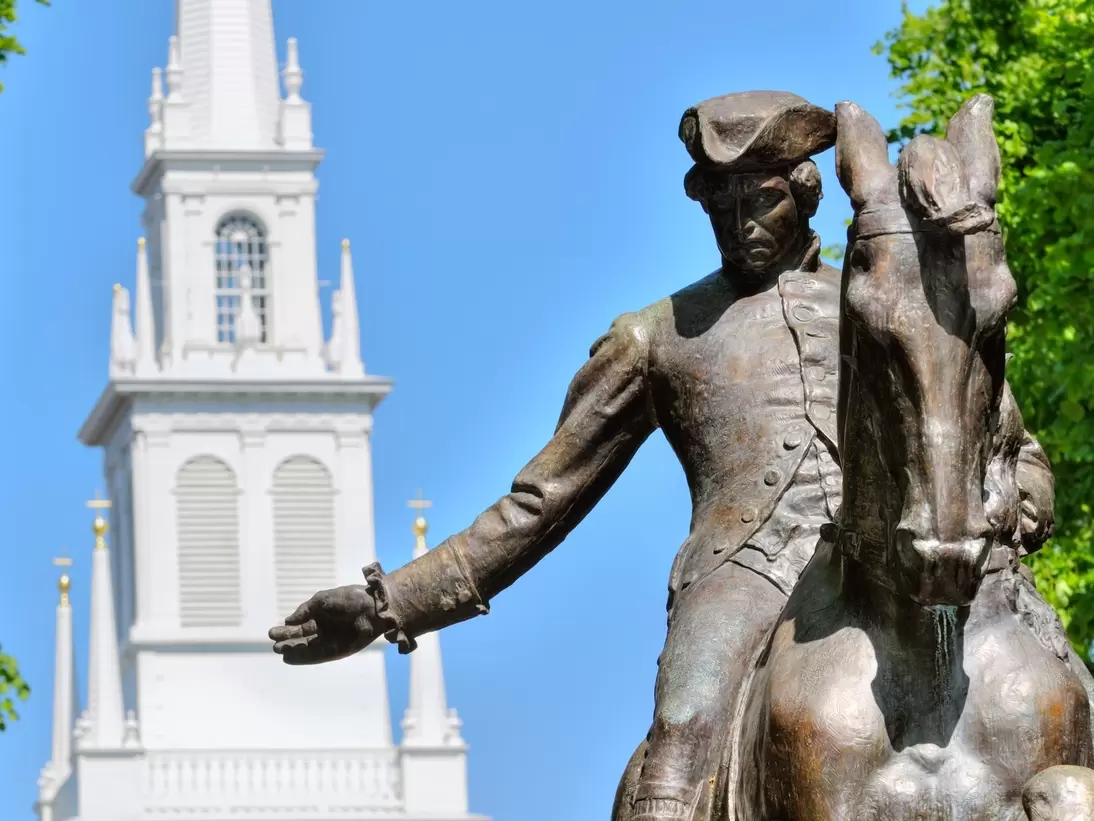
North on Hanover St, Paul Revere Mall contains a statue of the patriot himself. The park also provides a lovely view of your next destination, Old North Church. Boston’s oldest house of worship, the 1723 church played a crucial role in Revolutionary events. It was here, on the night of April 18, 1775, that the sexton hung two lanterns from the steeple as a signal that the British would advance on Lexington and Concord via the sea route.
Planning tip: Book an after-hours 45-minute tour of the church’s crypt to hear stories about the over 1100 people buried there and learn about archaeologists’ latest discoveries. Tours are typically on Friday and Saturday nights.
14. Copp’s Hill Burying Ground
The city’s second-oldest cemetery – dating from 1660 – is the final resting place for an estimated 10,000 souls. It is named for William Copp, who originally owned this land. Copp’s Hill Burying Ground contains some of the city’s oldest gravestones and offers grand views across the river to Charlestown.
15. Charlestown Navy Yard and USS Constitution

Across the Charlestown Bridge is the Charlestown Navy Yard, home of the world’s oldest commissioned warship, the USS Constitution. Board the ship for a tour of the upper decks, where you will learn about its exploits in the country’s earliest naval battles. The Navy Yard also contains a WWII destroyer, USS Cassin Young, as well as the excellent USS Constitution Museum.
16. Bunker Hill Monument
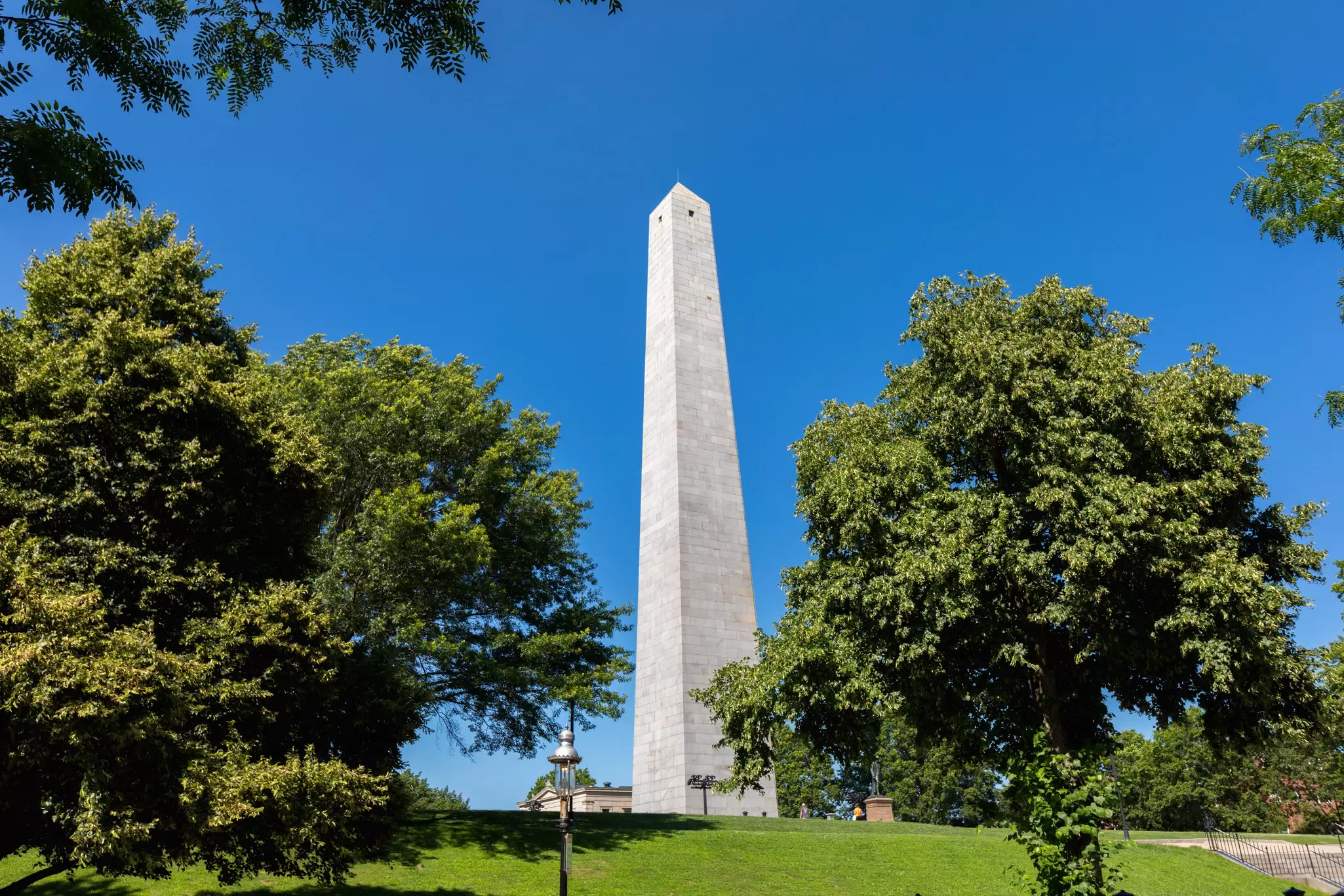
Narrow streets wind up to the 220ft granite obelisk that is the Bunker Hill Monument. Peek in the nearby museum to see dioramas and artifacts from the momentous battle and then climb 294 steps to the top of the monument to enjoy the panorama of the city, the harbor and beyond.
Planning tip: From April to June – due to the seasonal influx of school groups – you may need a climbing pass before ascending the Bunker Hill Monument. Passes are available first come, first served at the Bunker Hill Museum across the street.
The Best Freedom Trail Tours
If you’d prefer more guidance and storytelling as you walk the Freedom Trail, consider an audio, guided or interactive tour, like one of these.
National Park Service Audio Tour: For a self-guided tour, download the excellent – and free – NPS app.
Freedom Trail Foundation: Guides in period costume lead A Walk into History and tours of the North End.
Hub Town Tours: This intensive 2.5-hour tour covers all 16 Freedom Trail stops.
Boston by Foot: This truncated version of the Freedom Trail, Boston by Little Feet, is specially designed for kids age 6 to 12.
Ye Ole Tavern Tours: Combines education and libation at 10 historic sites and three pubs.
Photo Walks: See the first 11 Freedom Trail sites, with plenty of time to take pictures and get photography tips.
Boston Scavenger Hunt: Join a fun custom-designed scavenger hunt.
What Is the Best Time of Year to Walk the Freedom Trail?
The peak period is from April to October. Book tours far in advance, especially on weekends. Crowds may be lighter on weekdays in April and August. Slow times are from November through March. Tours may run only on weekends or not at all.
On Patriots’ Day weekend (before the third Monday in April), there is a special lantern-lighting ceremony at the Old North Church, as well as the Boston Patriots’ Day Parade. The Freedom Trail Foundation offers seasonal tours, such as spooky after-dark lantern-lit tours in October and holiday tours in December.