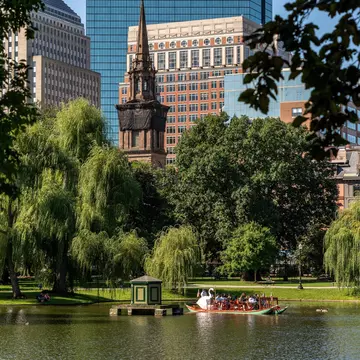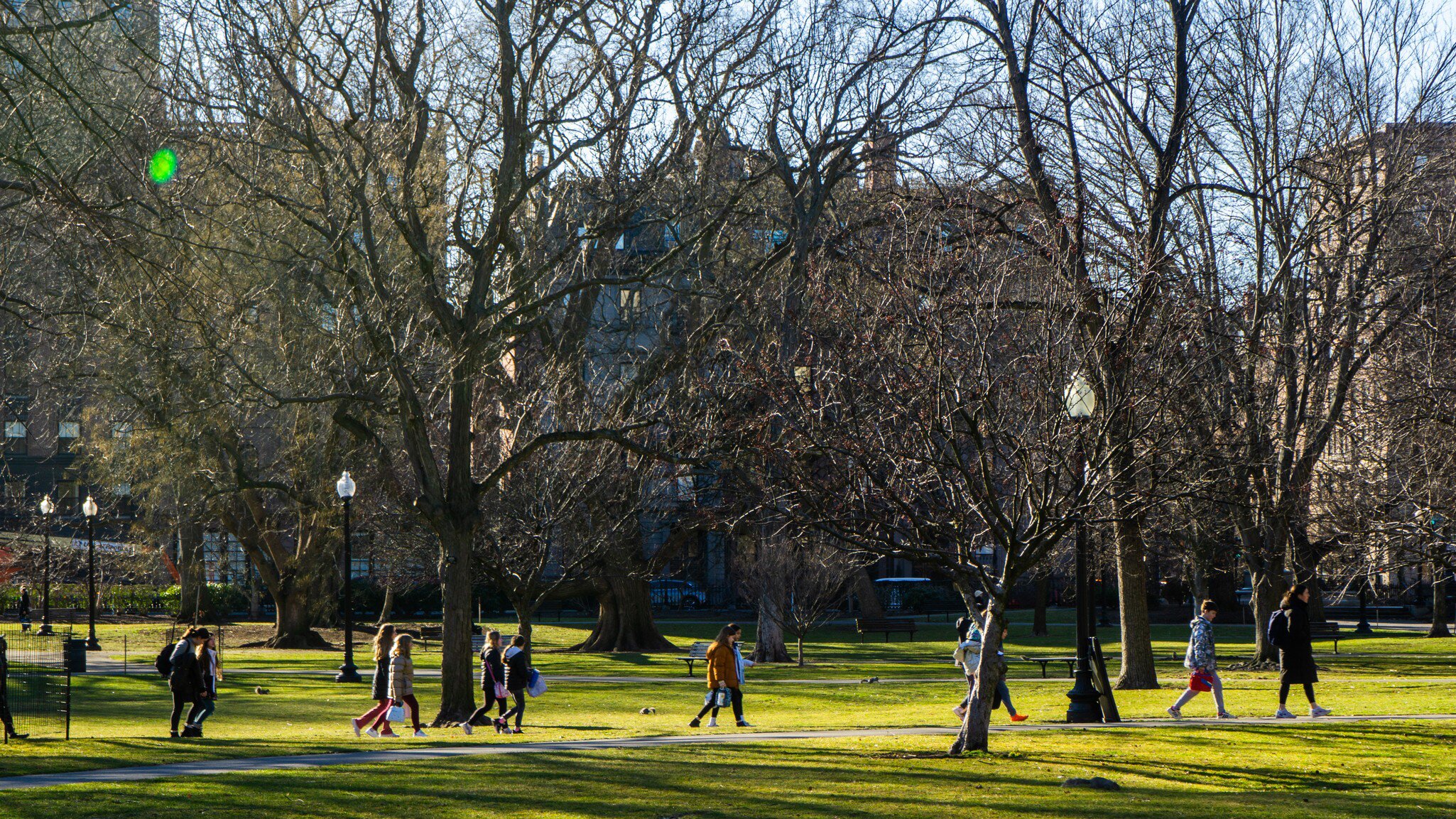
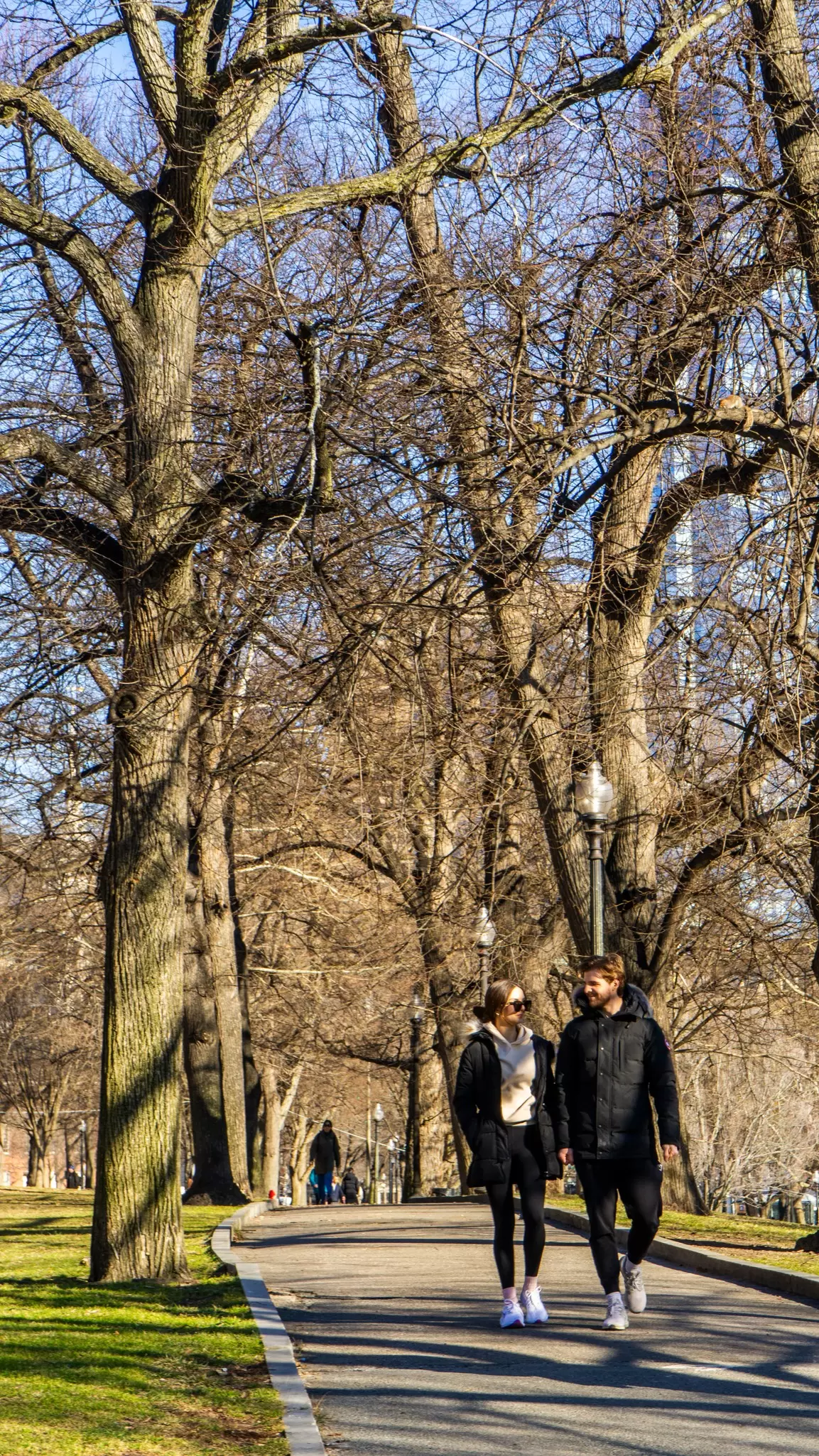
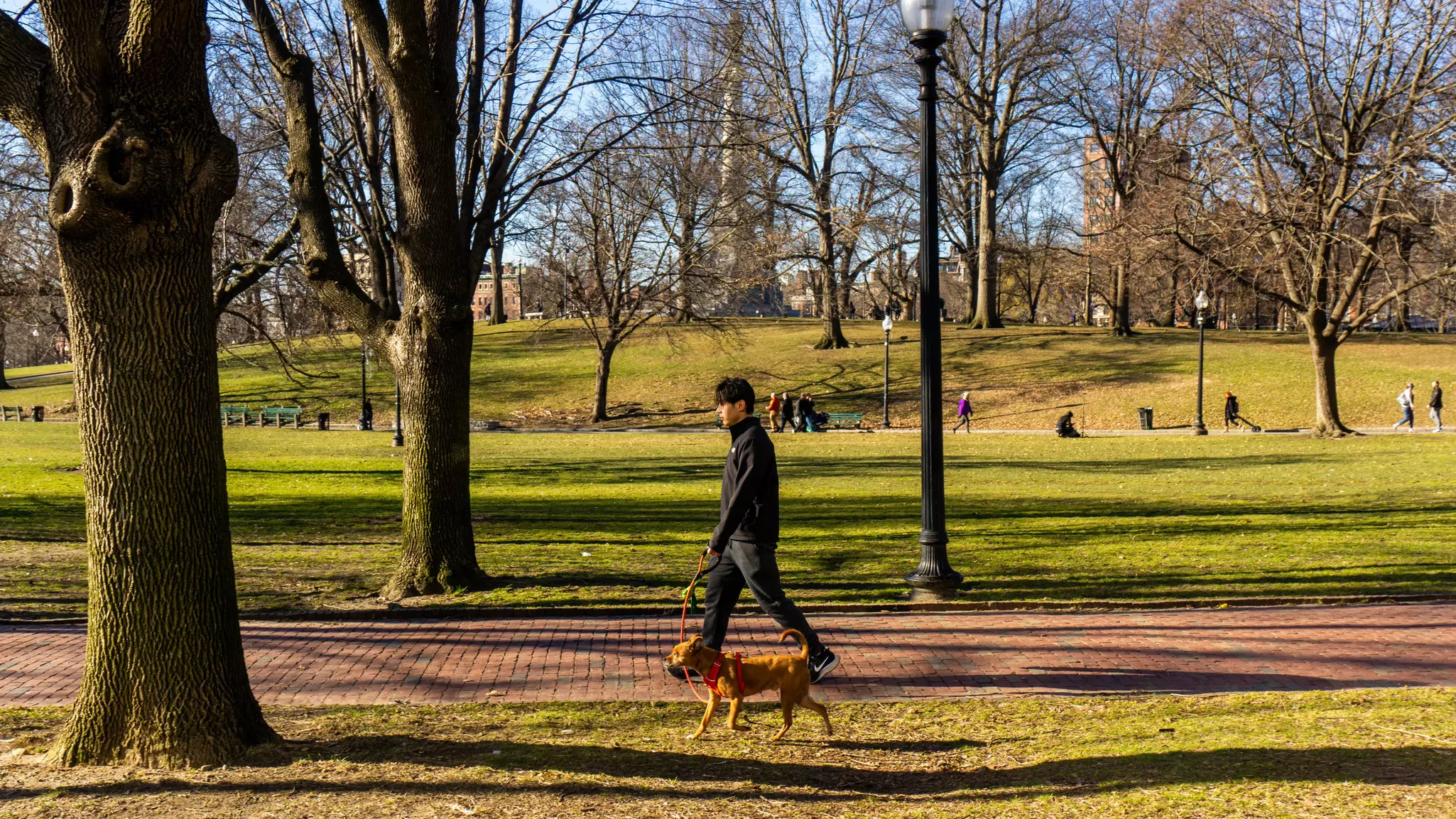
The oldest public park in the United States, Boston Common is the city’s green heart. On the unceded territory of the Indigenous Massachusett Nation, Puritan settlers set aside parkland here in 1634. Bounded by Tremont, Boylston, Charles, Beacon and Park Sts, the Common highlights the long-ago past, as well as more recent history, and serves as a leafy refuge in the urban center.
Get to Know Boston Common
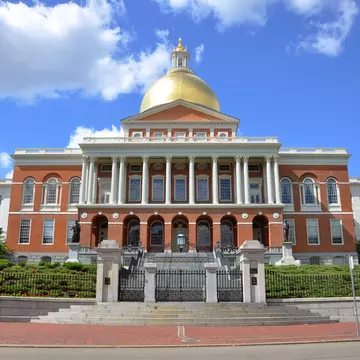
Concerts, theatrical performances and demonstrations all take place on the 50-acre Boston Common, dotted with monuments and sculptures that date from the Revolutionary era to the present. The Freedom Trail begins outside the Boston Common Visitor Center, crossing the park to the Massachusetts State House and then skirting the Common’s east side to Park Street Church and Granary Burying Ground. The Black Heritage Trail starts on the Common as well.
The Embrace
You can’t miss the Common’s newest landmark, The Embrace. Unveiled in 2023, this 20-foot-tall bronze sculpture of intertwining arms celebrates Dr Martin Luther King, Jr and his wife, Coretta Scott King, who met as students in 1950s Boston. He was working toward a PhD in theology at Boston University, and she was studying voice at New England Conservatory of Music.
King’s embrace of his wife when he received the Nobel Peace Prize in 1964 inspired the 19-ton sculpture, which artist Hank Willis Thomas and the MASS Design Group created. The work is installed on the 1965 Freedom Plaza, honoring Boston civil rights trailblazers of the 1950s, ‘60s and ‘70s. For background, read stories about the Kings and the city’s social justice pioneers on The Embrace website (embraceboston.org).
Brewer Fountain
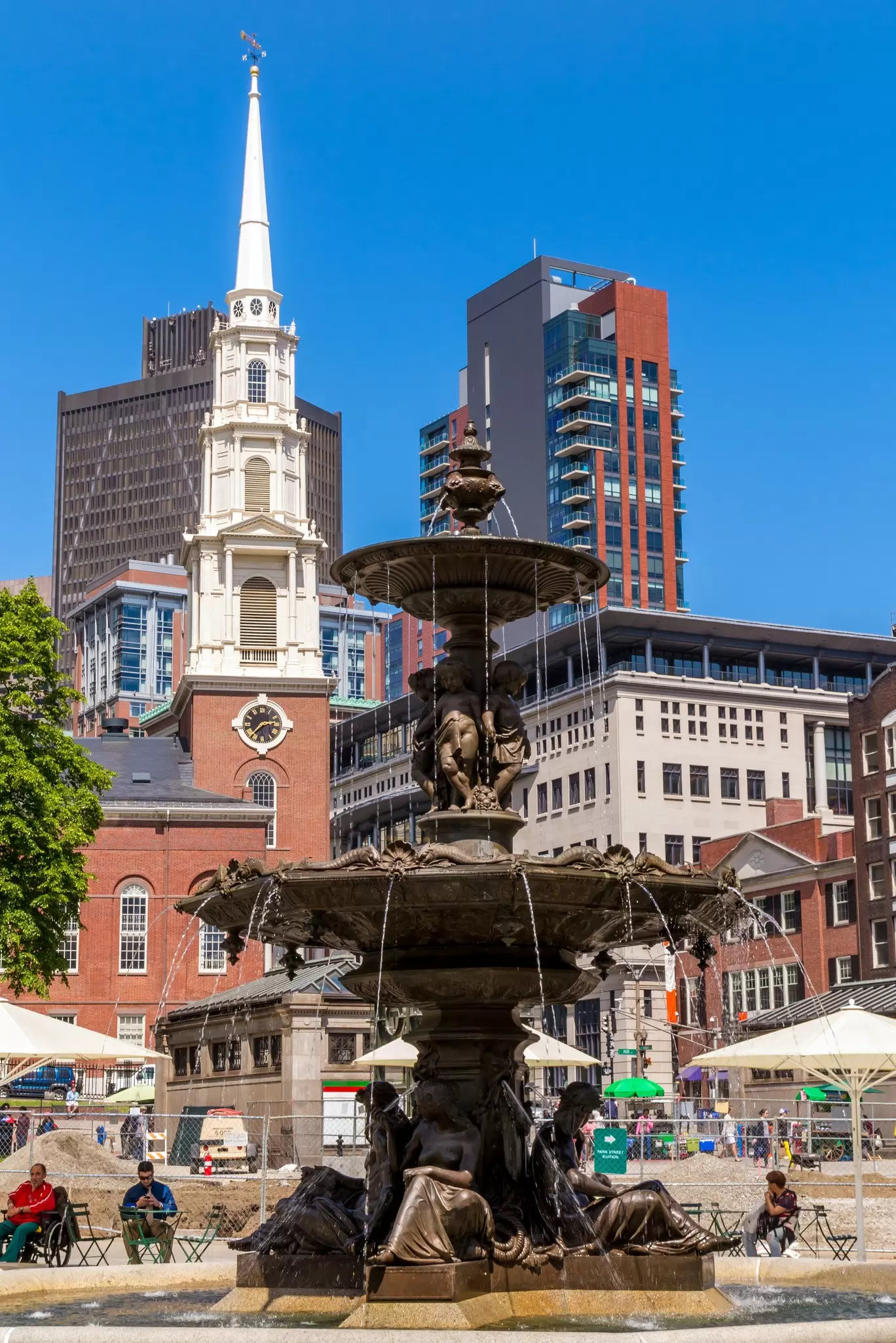
Four aquatic gods lounge in the 1868 bronze Brewer Fountain, cast in Paris and gifted to Boston by wealthy local merchant Gardner Brewer. From April through October, food trucks often park on the fountain plaza, a lovely spot for a bite on a sunny day.
Frog Pond
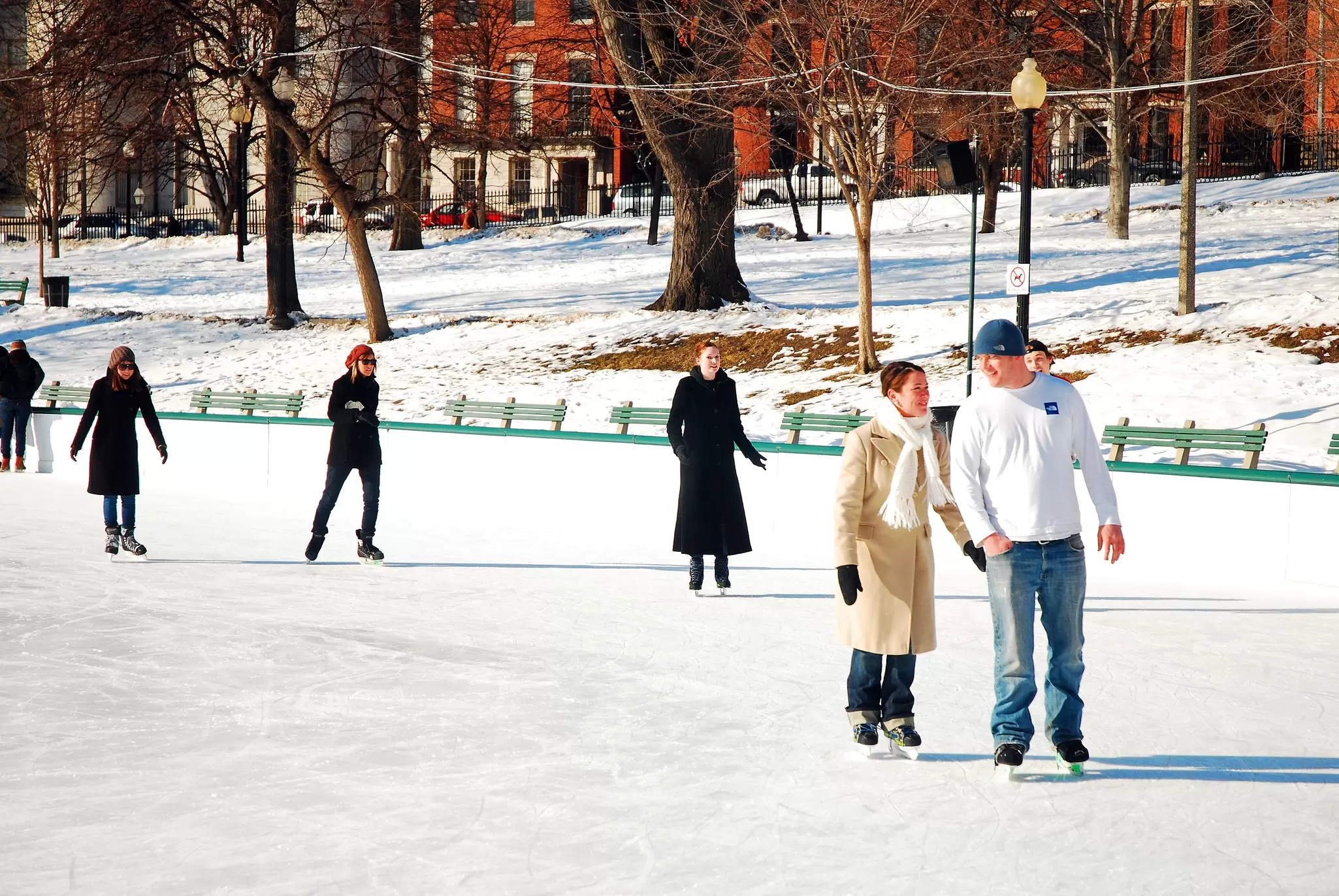
Rent ice skates and take a spin around the Frog Pond, which becomes a skating rink in the colder months. In summer, it’s a kids’ splash pad. Around the pond, look for six bronze frogs sculpted by Massachusetts artist David Phillips.
Central Burying Ground
When King’s Chapel, Copp’s Hill and Granary Burying Grounds began running out of space for the deceased, this former pastureland became the Central Burying Ground. Opened in 1756, this cemetery – furthest from the town center – was considered Boston’s least desirable. Wander among the faded headstones that mark the graves of colonists, British common soldiers and people from outside the city who died while in Boston. Painter Gilbert Stuart, best known for his portrait of President George Washington, is also interred here.
Robert Gould Shaw Memorial
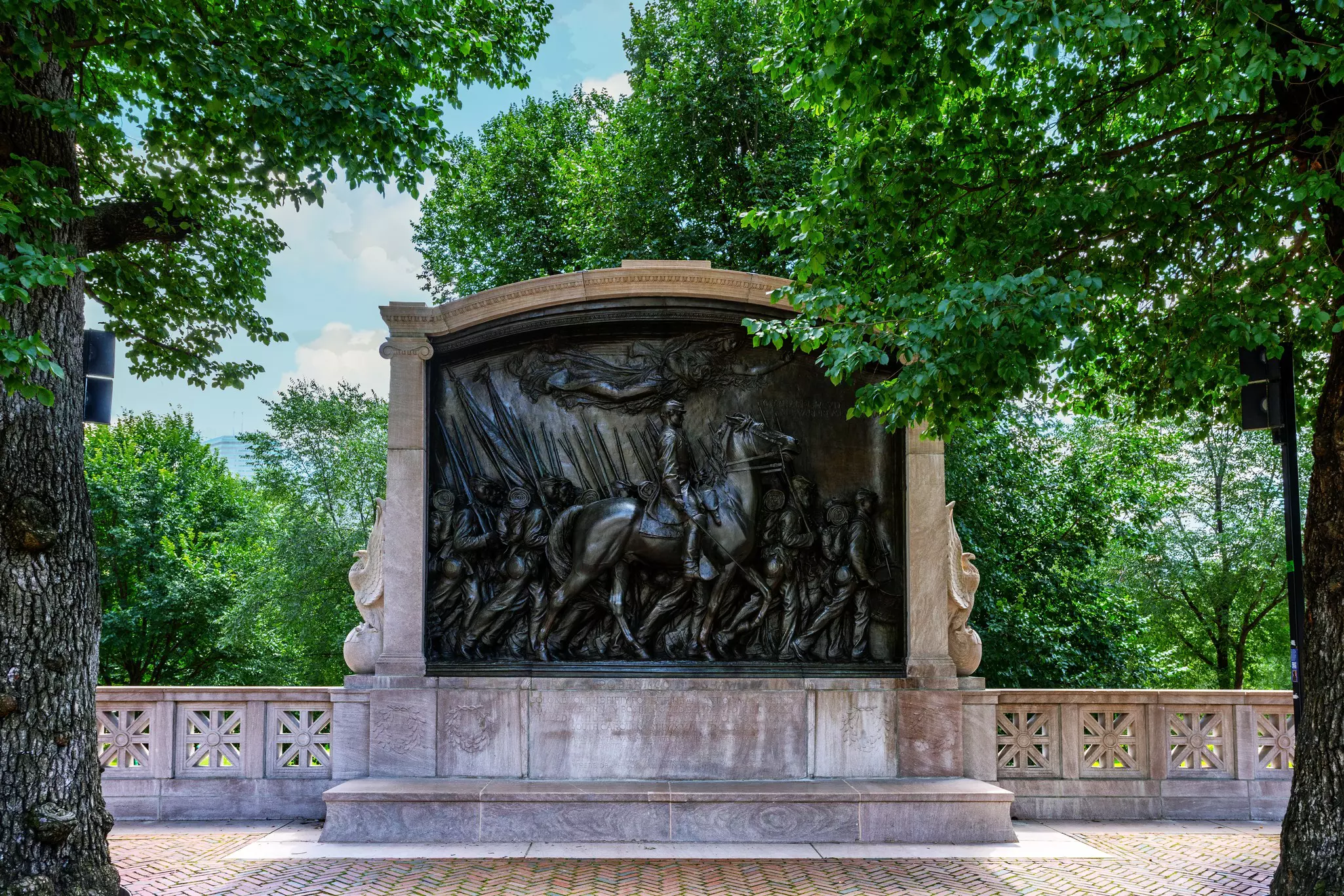
Opposite the Massachusetts State House, the Robert Gould Shaw and Massachusetts 54th Regiment Memorial, a bronze and granite sculpture by Augustus Saint-Gaudens, honors one of the first units of Black soldiers to serve in the US Civil War. The memorial is a starting point for the Black Heritage Trail.
Boston Massacre Monument
Although the 1770 Boston Massacre took place outside the Old State House, the 25-foot-tall Boston Massacre Monument, which replicates a Paul Revere engraving, remembers its five victims: Crispus Attucks, James Caldwell, Patrick Carr, Samuel Gray and Samuel Maverick.
Shakespeare on the Common
In July and August, the Commonwealth Shakespeare Company presents Shakespeare on the Common at the 1912 Parkman Bandstand, which is designed like a Greek temple. Pack a picnic for these free outdoor productions.
Embrace Ideas Festival
Taking place around Juneteenth weekend (June 19), which marks the day in 1865 when many enslaved people in Texas learned of their liberation, the Embrace Ideas Festival (embraceideasfestival.org) helps amplify anti-racism messages with lectures, street parties and other events at venues around the city, often including concerts and activities near The Embrace sculpture on the Common.