Even though it doesn’t make the traditional list of the seven Roman hills, the Gianicolo (also known as Janiculum Hill) is not to be underestimated.
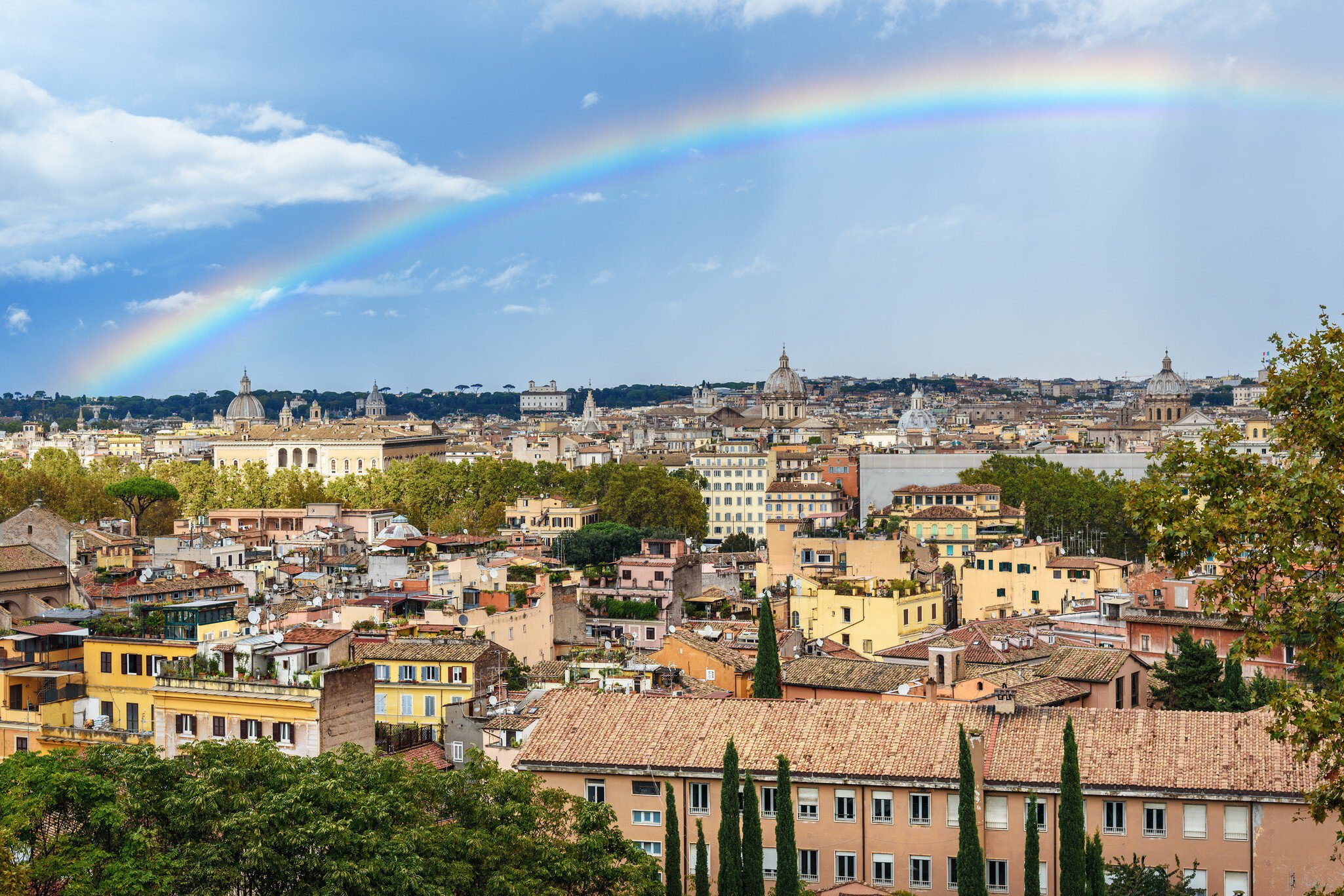
Gianicolo Hill has some of the most magnificent panoramic views in the entire city, and its green-shaded avenues are perfect for children and adults to stroll through. It is a place for quiet tranquility amid the chaos of the Eternal City.
Some History
Legend has it that the Gianicolo was first the location of a small village founded by the Roman god Janus himself – hence the name Gianicolo, or Janiculum – who presided over beginnings and endings with his two faces. The half-historical, half-mythical chronicles from the first days of Rome continue by saying that this area was originally a domain of the Etruscans before being annexed to Rome by one of its famous seven kings, Ancus Marcius.
What’s certain is that after the Unification of Italy in the latter half of the 1800s, the Gianicolo became a sort of monument to the Risorgimento and then to the Republic. On top of the hill, you can find two monuments to the famed General Giuseppe Garibaldi, including the Monumento ad Anita Garibaldi, as well as a series of busts dedicated to the most illustrious of Garibaldi’s soldiers. On the northernmost side of the hill, you can also see the Faro del Gianicolo, a monument to commemorate the 50th anniversary of the unification and built thanks to the contributions of the Italian community in Buenos Aires, as a testament to their bond with Italy.
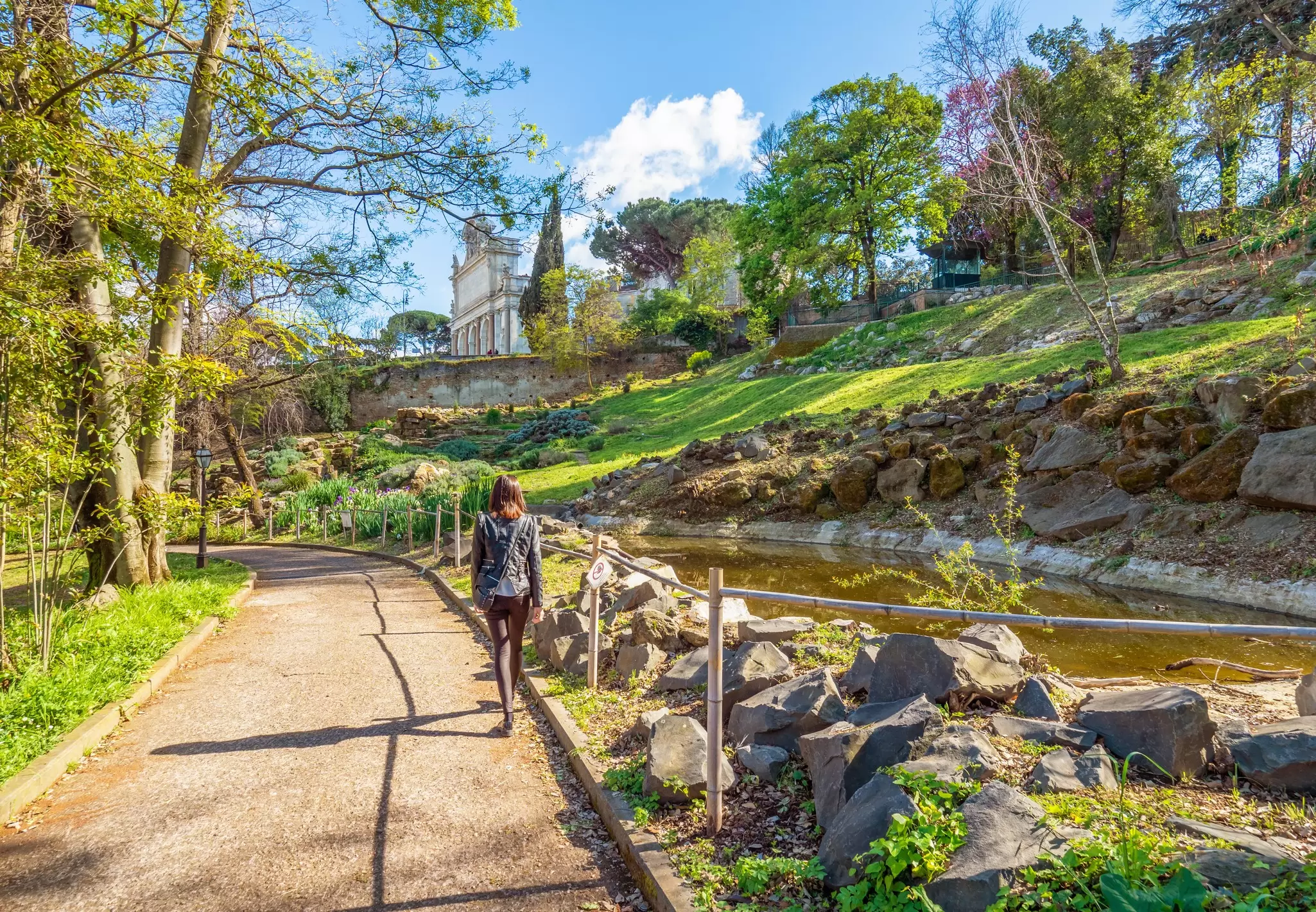
Orto Botanico
The very first garden to appear on the northernmost slopes of Gianicolo Hill was a garden of fruit trees and medicinal plants whose creation was ordered by Pope Nicholas III around the end of the 13th century. The actual ancestor to the modern-day Orto Botanico we see today, though, was initiated by Pope Alexander VI in the 16th century, and from there it flourished to become one of the most significant botanical gardens in Europe. Today, the 12 hectares of the Orto Botanico are home to up to 8000 different types of plants, including some that are very rare to find anywhere else on the continent, as well as several families of happy ducks and quiet red fish.
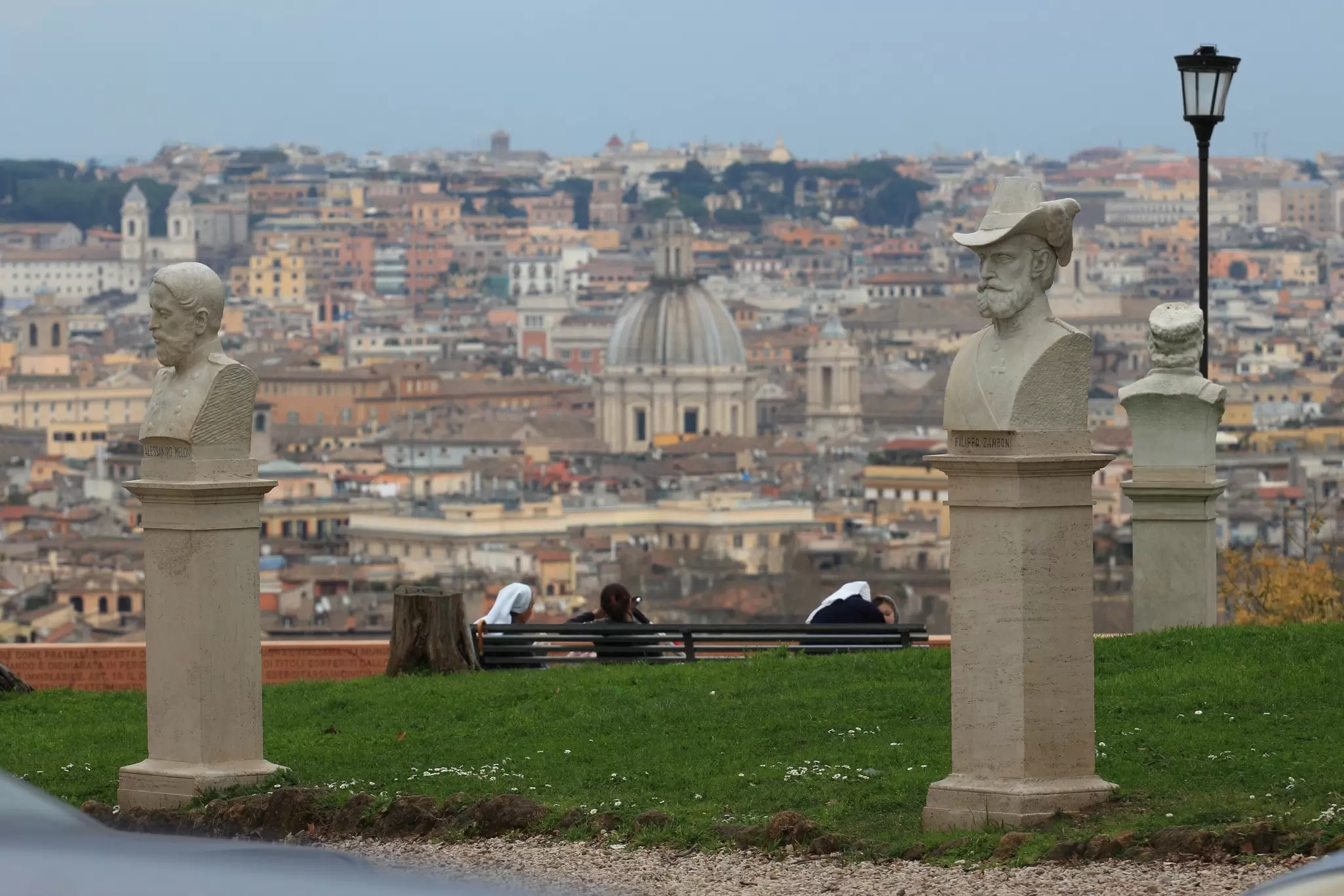
Viewpoint
One of the main attractions of the Gianicolo Hill is the Viewpoint over Rome that its height allows you to enjoy. The Passeggiata del Gianicolo is sometimes obscured by trees, that's true, but when the trees aren't there, your gaze can span over Rome’s myriad of domes as well as the winged victories on top of the Vittoriano.
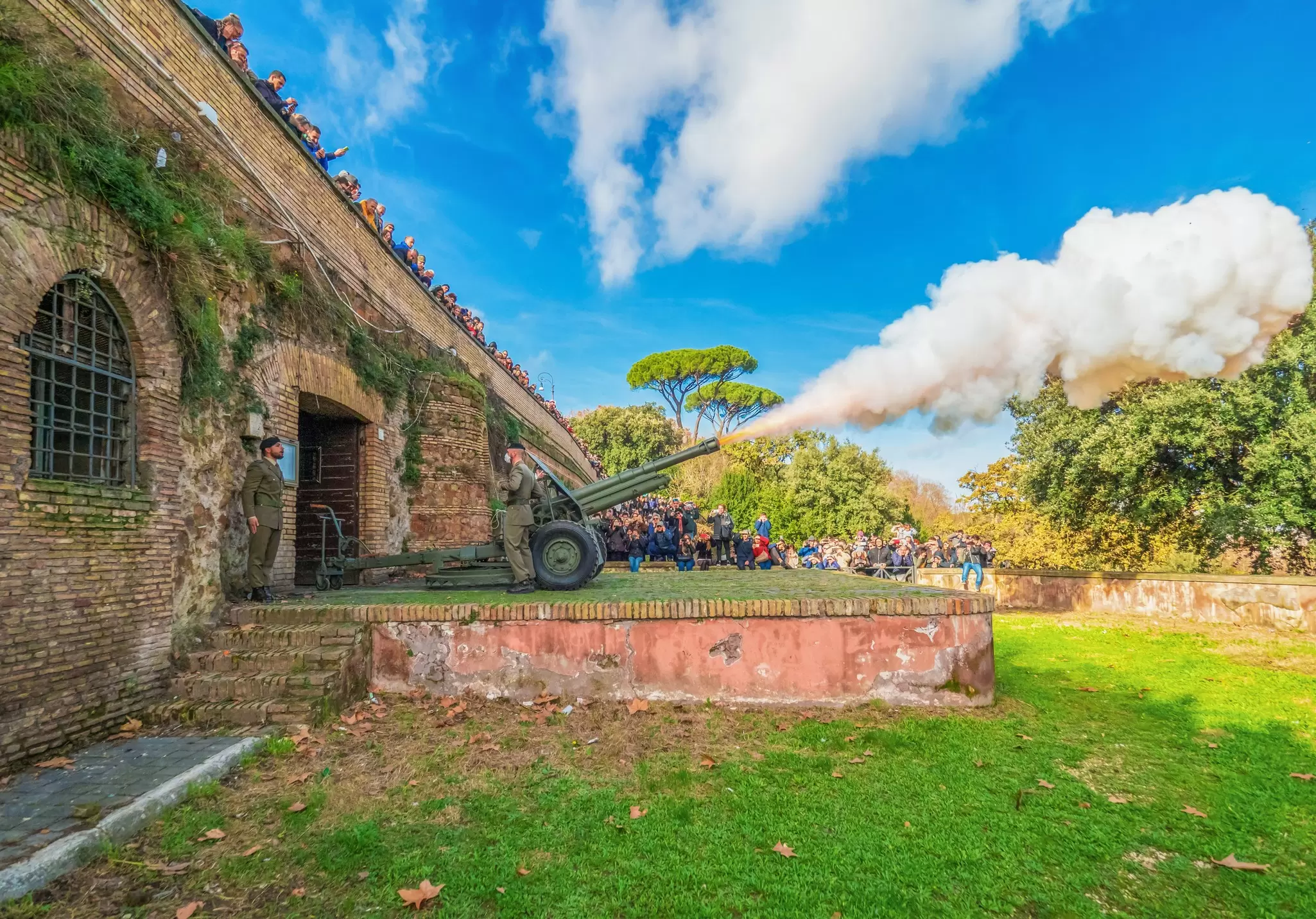
Cannonshot
The Gianicolo is also home to a long-standing Roman tradition – a cannon located just a few meters down from Garibaldi’s monument shoots a single blank shot as soon as the clock strikes noon. It’s a much-loved ritual that was introduced by Pope Pius IX in 1847 as a way to synchronize all the clocks and bells around the city and has stuck to this day. Initially stationed on Castel Sant’Angelo, the cannon was moved to the Gianicolo in 1904. It remained silent during the years of WWII, to not create panic, as well as for some years after, and went back to its original duty in 1959. On particularly quiet days, its booming noise can be heard as far as the Esquilino Hill, all the way over on the other side of the river next to the Colosseum.