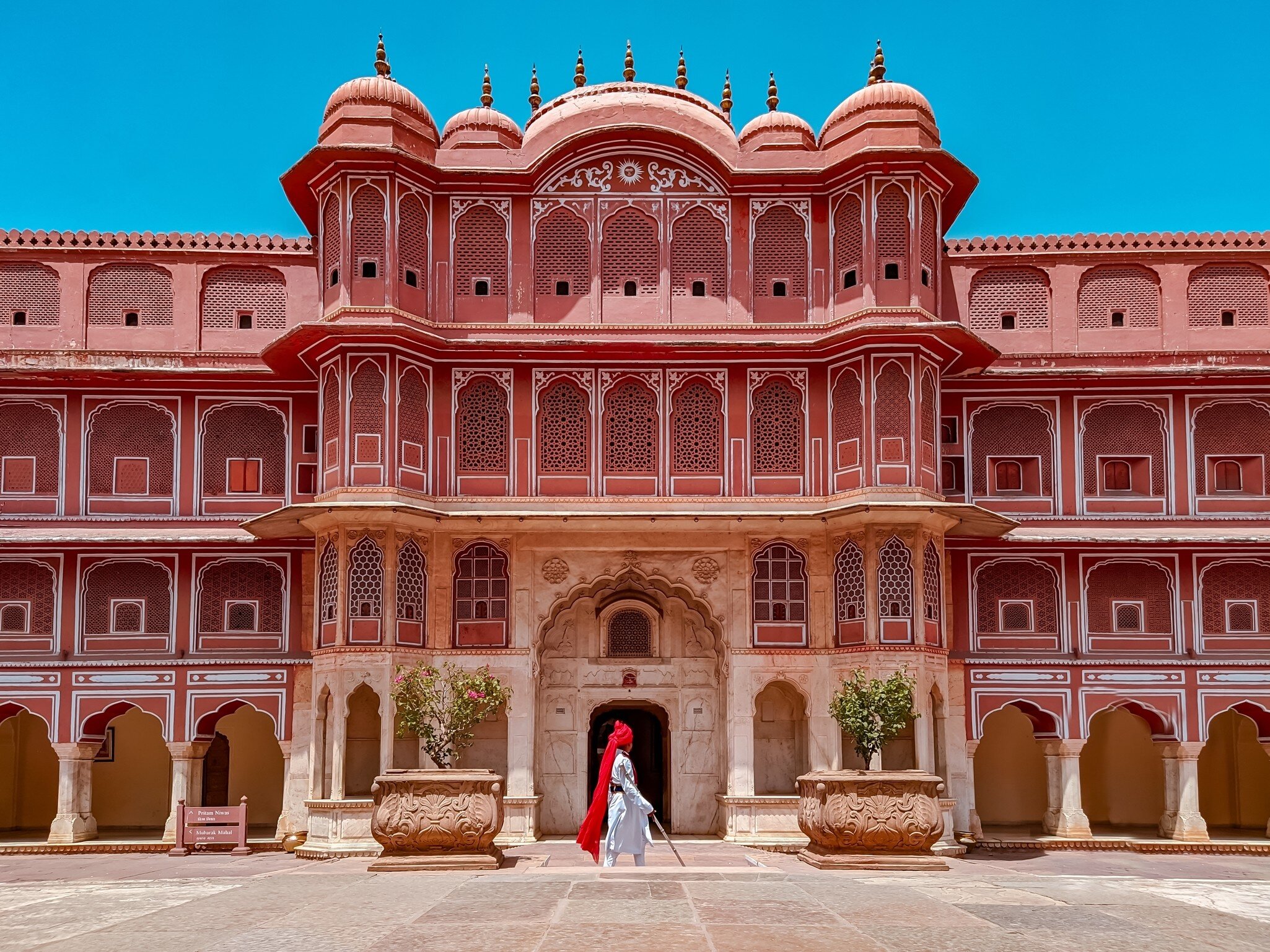
A grand gateway on Tripolia Bazaar marks the maharajas-only entrance to the City Palace, elegant home of Jaipur's maharajas, founded by Jai Singh II. Visitors can enter via two side gates on the east side of the palace to view opulent interiors and extravagant royal heirlooms. Being mostly on one level, it's one of the most wheelchair-friendly sights in the city.
Mubarak Mahal
The main public admission to the City Palace is via the eastern gateway, known as Virendra Pol, on the lane running behind Tripolia Bazaar. You'll enter a vast, open courtyard dominated by the Mubarak Mahal (Welcome Palace), built in the late 19th century for Maharaja Madho Singh II to receive visiting dignitaries.
A stylistic stew of Islamic, Rajput and European ideas, it was designed by British architect Sir Swinton Jacob. Today, it forms part of the Maharaja Sawai Mansingh II Museum, displaying a superb collection of royal choga and atamsukh robes and other ceremonial outfits, including the capricious clothing of Sawai Madho Singh I (it’s said he was 2m tall, 1.2m wide and weighed in at 250kg).
The Painting & Photography Gallery
Off the courtyard is the Maharaja Sawai Bhawani Singh building, displaying a fascinating collection of historic paintings – many daubed with real gold paint. Alongside deity paintings and cloth maps of medieval cities, old photos depict Jaipur's royal life, including snaps taken by early adopter of technology Sawai Ram Singh II in the 19th century.
The Armoury
In the courtyard's northwestern corner, the Anand Mahal Sileg Khana, formerly the Maharani’s Palace, houses the bristling royal armory. Kids will be gruesomely fascinated by the elaborately decorated guns, knives, talwar swords, clubs, maces and katar punch-daggers – a favored weapon for Rajasthani royals. Check if the armory is open; it closed for renovations in 2025.
Savarto Bhadra
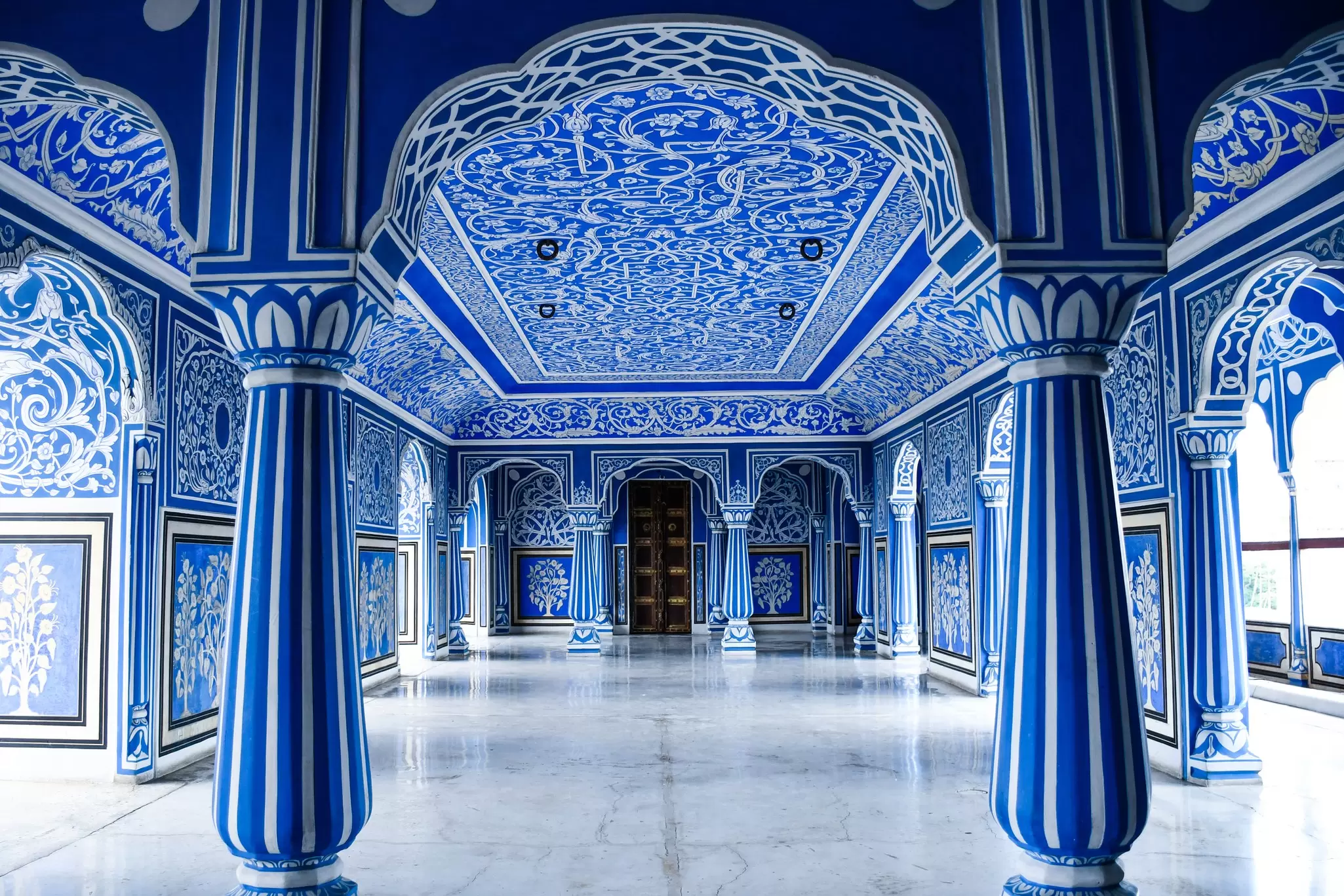
A filigree, elephant-guarded white marble gateway leads on to the second courtyard containing the Sarvato Bhadra, a marble-paved pavilion that was used as the Diwan-i-Khas (Hall of Private Audience), where the maharajas consulted their ministers. Decorated with floral motifs in white and sandstone pink, the pavilion contains two enormous silver ewers – reputedly the largest silver objects in the world – full of holy water from the Ganges.
Sabha Niwas
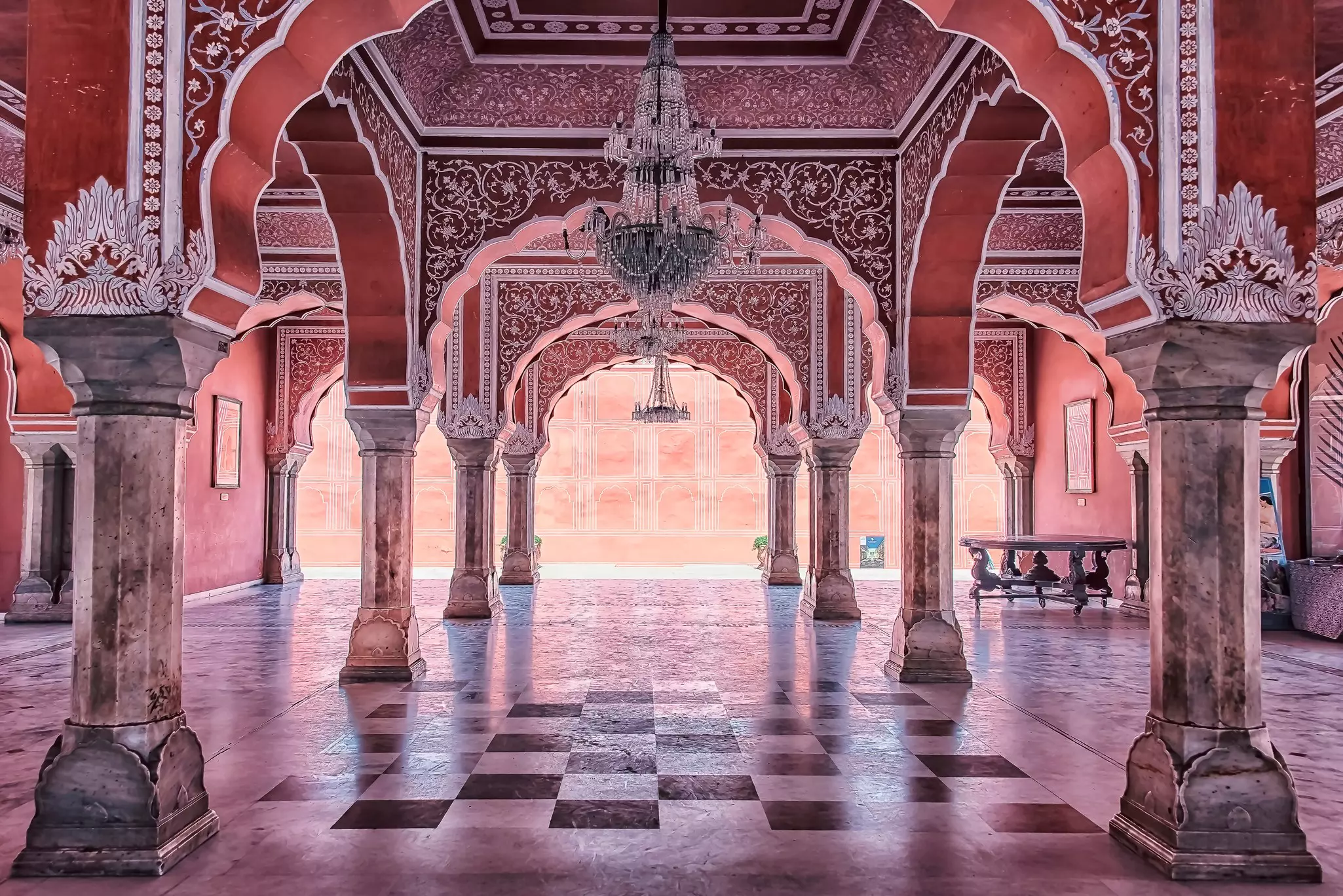
East of the Sarvato Bhadra, a doorway leads to the lavish Sabha Niwas, an extravagant, chandelier-lit state room decked out with thrones, royal treasures and portraits of past maharajas, which served as the maharaja's Hall of Public Audiences. The same courtyard contains the Rath Khana, displaying howdahs (elephant saddles), palanquins and elephant armor.
Pitam Niwas Chowk
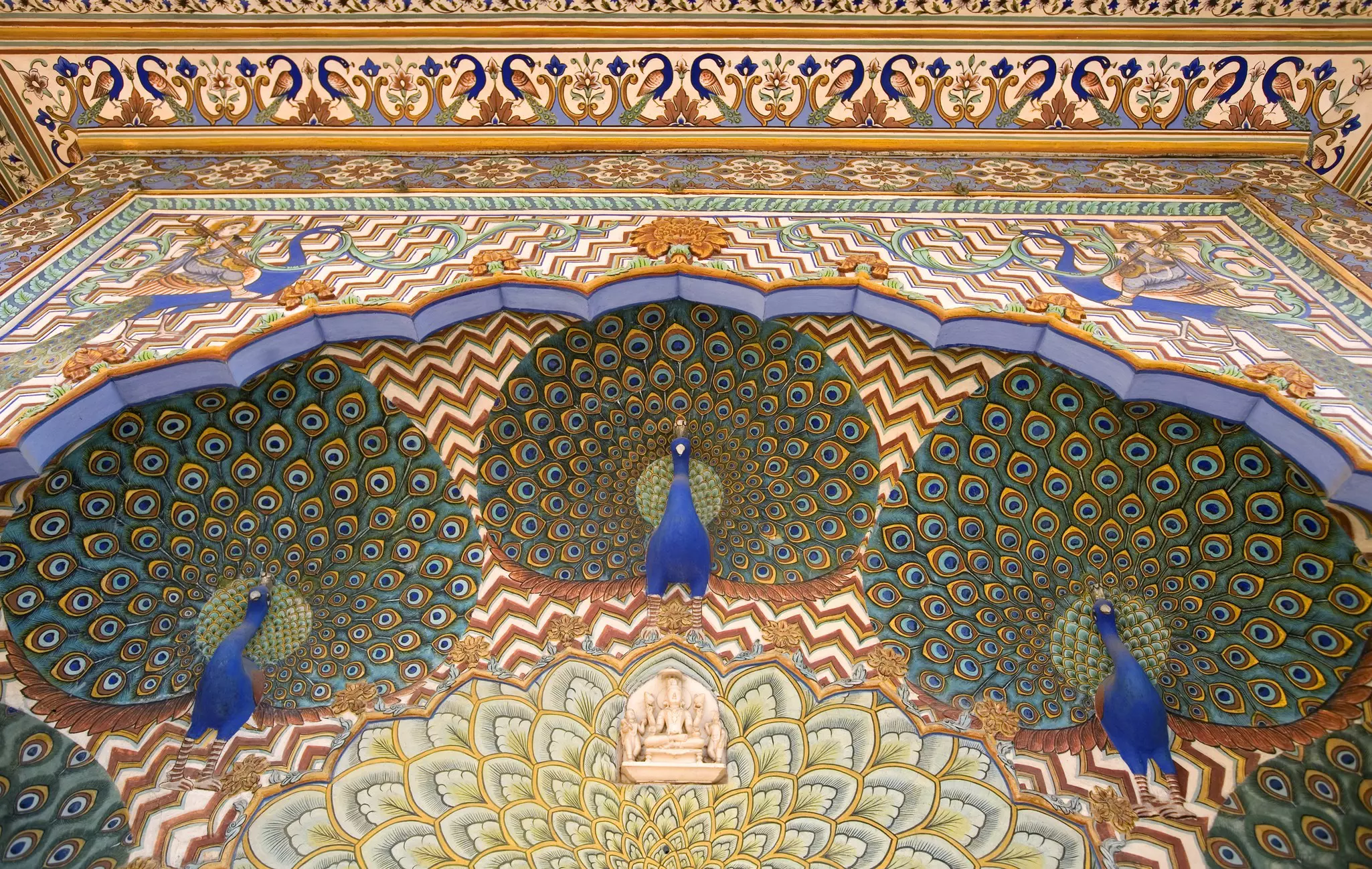
West of the Sarvato Bhadra, a gateway leads to Pitam Niwas Chowk – an open courtyard flanked by four glorious gates representing the seasons. The Peacock Gate (Varsha Deori) depicts autumn, the Lotus Gate (Grishma Deori) signifies summer, the Green Gate (Vasanta Deori) represents spring, and the Rose Gate (Sharad Deori) embodies winter.
Chandra Mahal
Beyond Pitam Niwas Chowk is the private palace, the Chandra Mahal, the wedding-cake residence of the present royal family. You can take a special 45-minute Royal Tour of selected areas for ₹5000/3000 (adult/child). For a taste of royal living to take home, the Princess Diya Kumari Foundation (princessdiyakumarifoundation.org) shop sells stylish clothes and homewares, supporting disadvantaged women.
Royal Temples
Several royal shrines are associated with the City Palace, including the phenomenally popular Govind Dev Ji Temple immediately north. It's also worth ducking into the often overlooked Sri Brij Nidhi Ji and Anand Krishna Bihari Ji temples southeast of the palace, built by Sawai Pratap Singh in the 19th century.
Guides & Tours
Official guides (from ₹400) and audioguides (₹200) are available to point out the palace's most fascinating features. It's worth taking a guide, if only to discourage the turbaned palace attendants, who can be a little overbearing in their enthusiasm to pose for photos for tips. To access the chambers used by the present generation of the royal family, book onto a pricy Royal Tour.