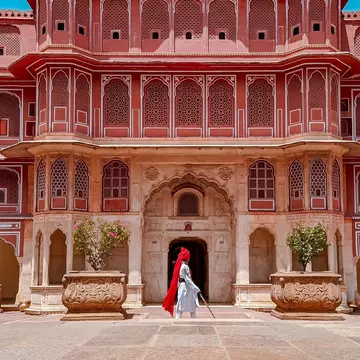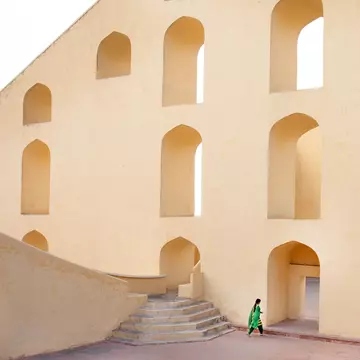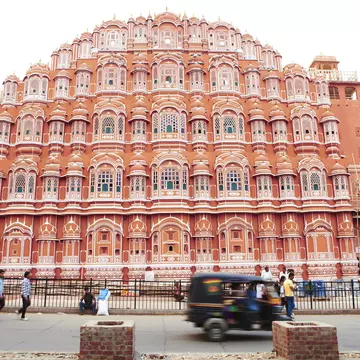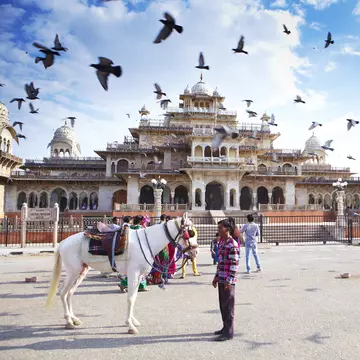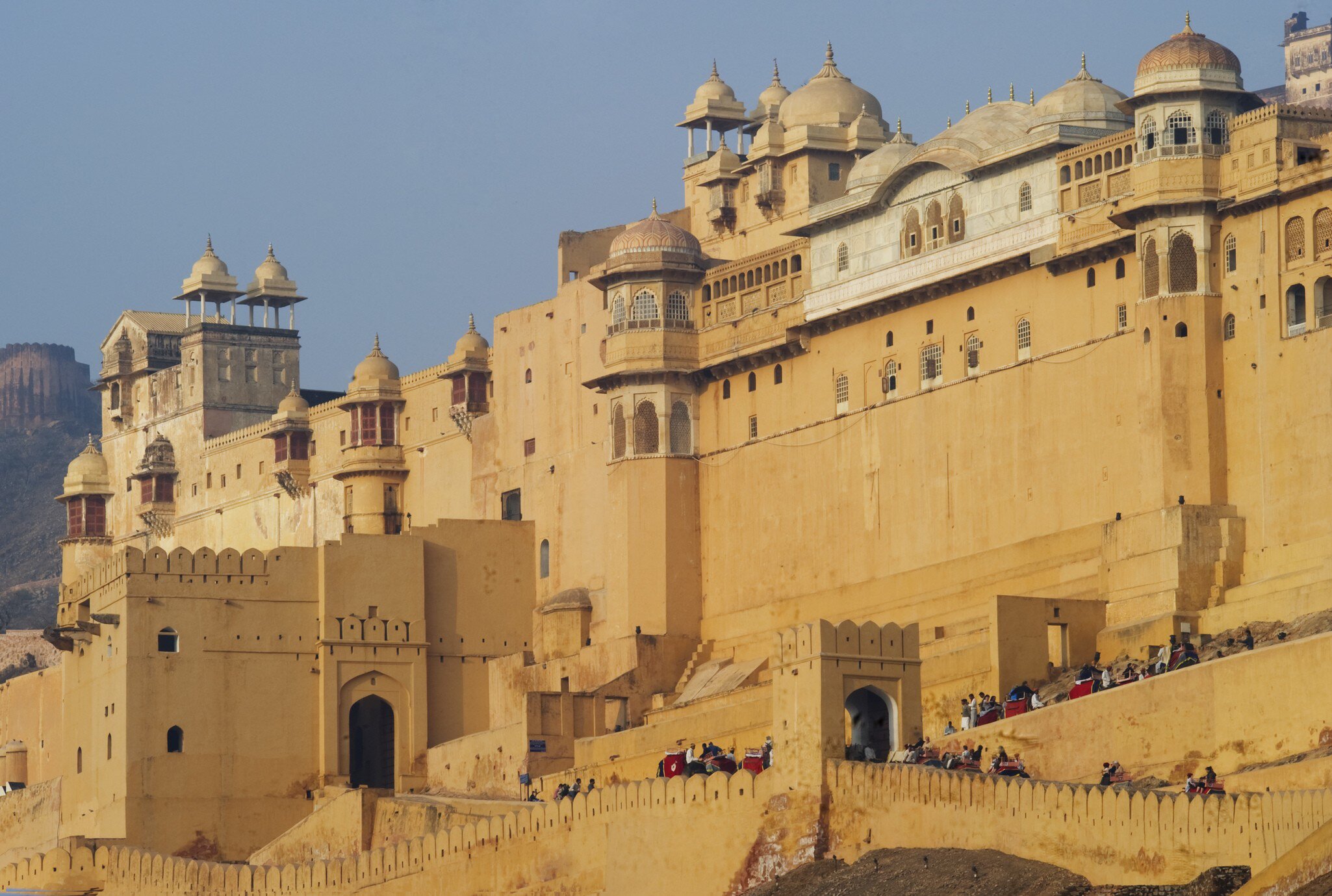
Rising over a rocky valley north of Jaipur, Amber Fort (Amer Fort) is almost a fortified city, enclosed by invader-repelling yellow and pink sandstone walls. Its battlements gaze over Mughal-style gardens, ancient stone temples and a crocodile-haunted lake. Inside the walls, extraordinary audience halls and royal apartments reveal the complex ceremonial and private life of Sawai Jai Singh II, the 18th-century maharaja of Jaipur.
Suraj Pol
From the ticket office on the Jaipur road, a zigzag pathway climbs to the imposing fort gates, or you can save yourself the 10-minute walk and pay for a transfer by 4WD (around ₹600 return) or electric buggy (₹40 one way). At the top, the soaring Suraj Pol (Sun Gate) was built to accommodate royal elephants – it's best to avoid transfers by elephant today as carrying passengers is harmful to these vulnerable animals. Beyond Suraj Pol lies the fort's first courtyard – once the only space open to the maharaja's ordinary subjects (and even then, only for special occasions).
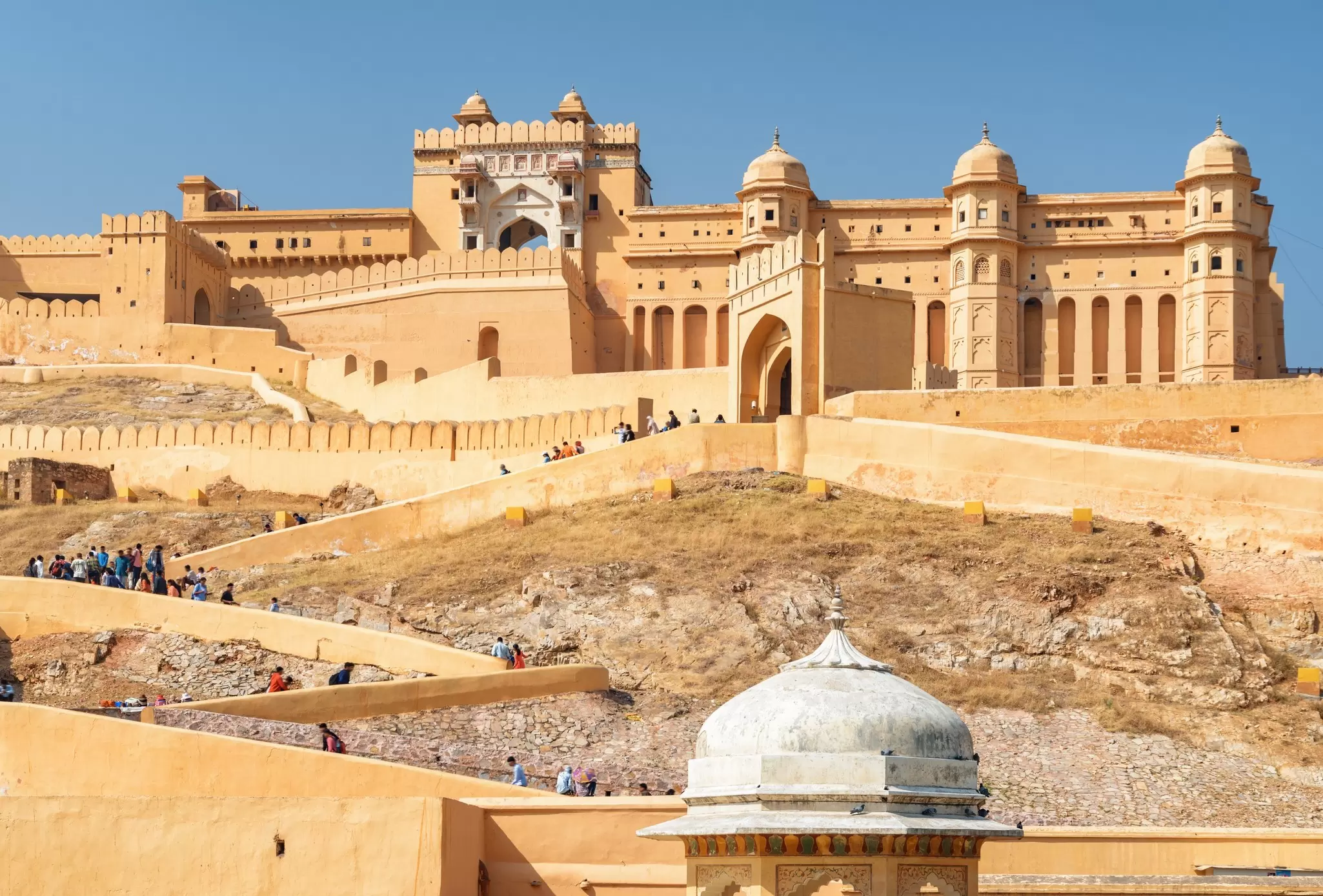
Jaleb Chowk
Victorious Rajput armies once displayed their captured booty to adoring crowds in Jaleb Chowk, the fort's public courtyard, enclosed by robust walls. You'll enter via Suraj Pol if you come on foot, or Chand Pol (Moon Gate) if you come by 4WD. Before you enter the royal part of the fort, glance up to the screened balconies where the women of court viewed proceedings in the square. Steps lead up to the revered Siladevi Temple; photography is banned but non-Hindus can step through the silver repoussé-work doors to view the marble interior.
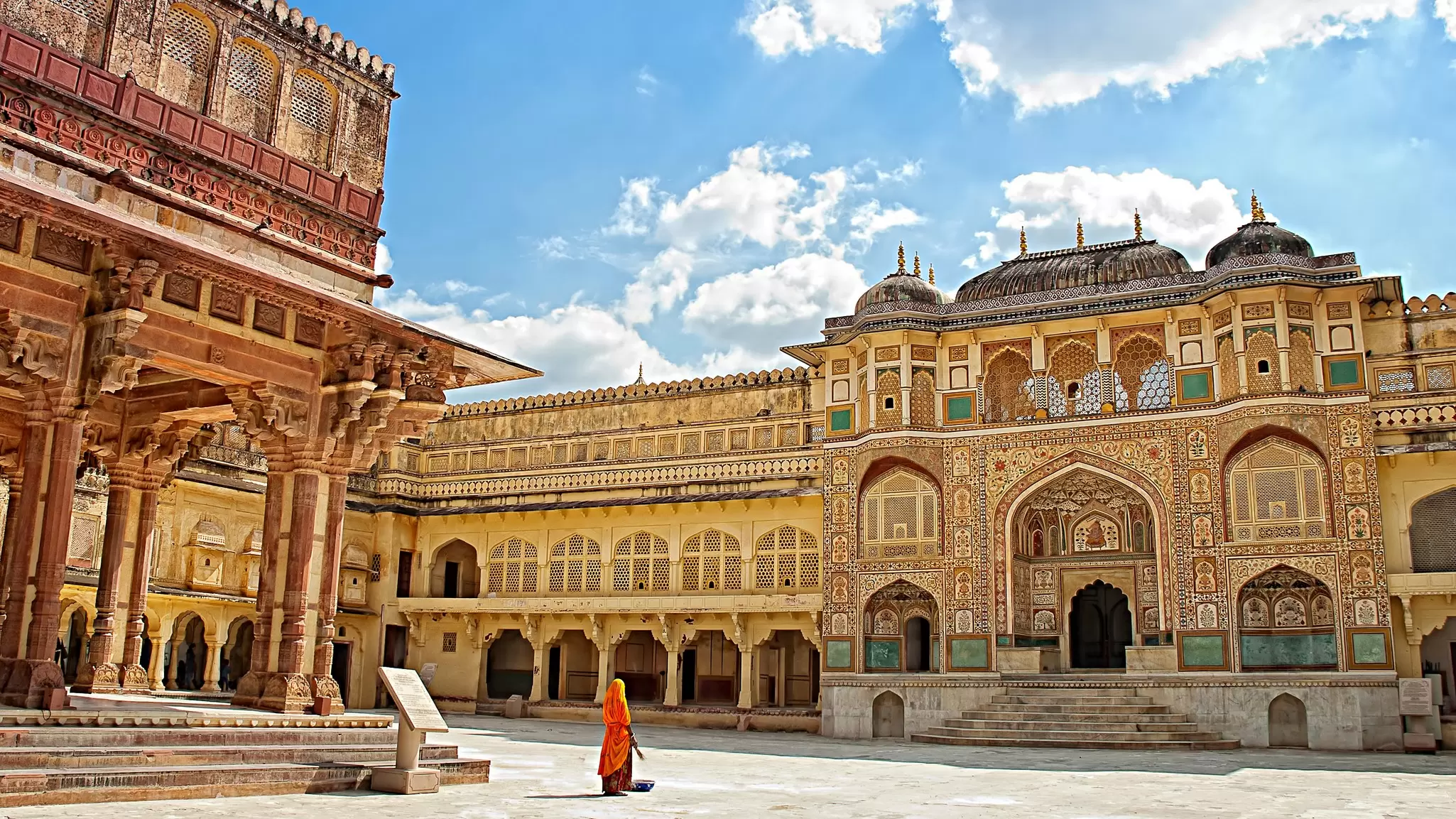
Diwan-i-Am
From Jaleb Chowk, a stairway climbs through the lavishly frescoed Singh Pol (Lion Gate) to the fort's second courtyard, where courtiers, military officials and invited dignitaries were granted audiences with the maharaja. The Diwan-i-Am (Hall of Public Audiences) is an airy, open structure, supported by rows of columns crowned by elephant-shaped capitals. Latticed galleries above allowed members of the royal household to view ceremonies in the courtyard without being seen.
Ganesh Pol
Marking the transition to the royals' private quarters, Ganesh Pol is a riot of frescoes and carvings, Fusing elements of Hindu and Islamic architecture, this grand gateway is covered in painted flowers and foliage, surrounding an image of Ganesh seated on a hexagonal throne. An alternative route to the upper levels winds through the maze-like royal hammam (Turkish-style baths) in the southeast corner of the courtyard.
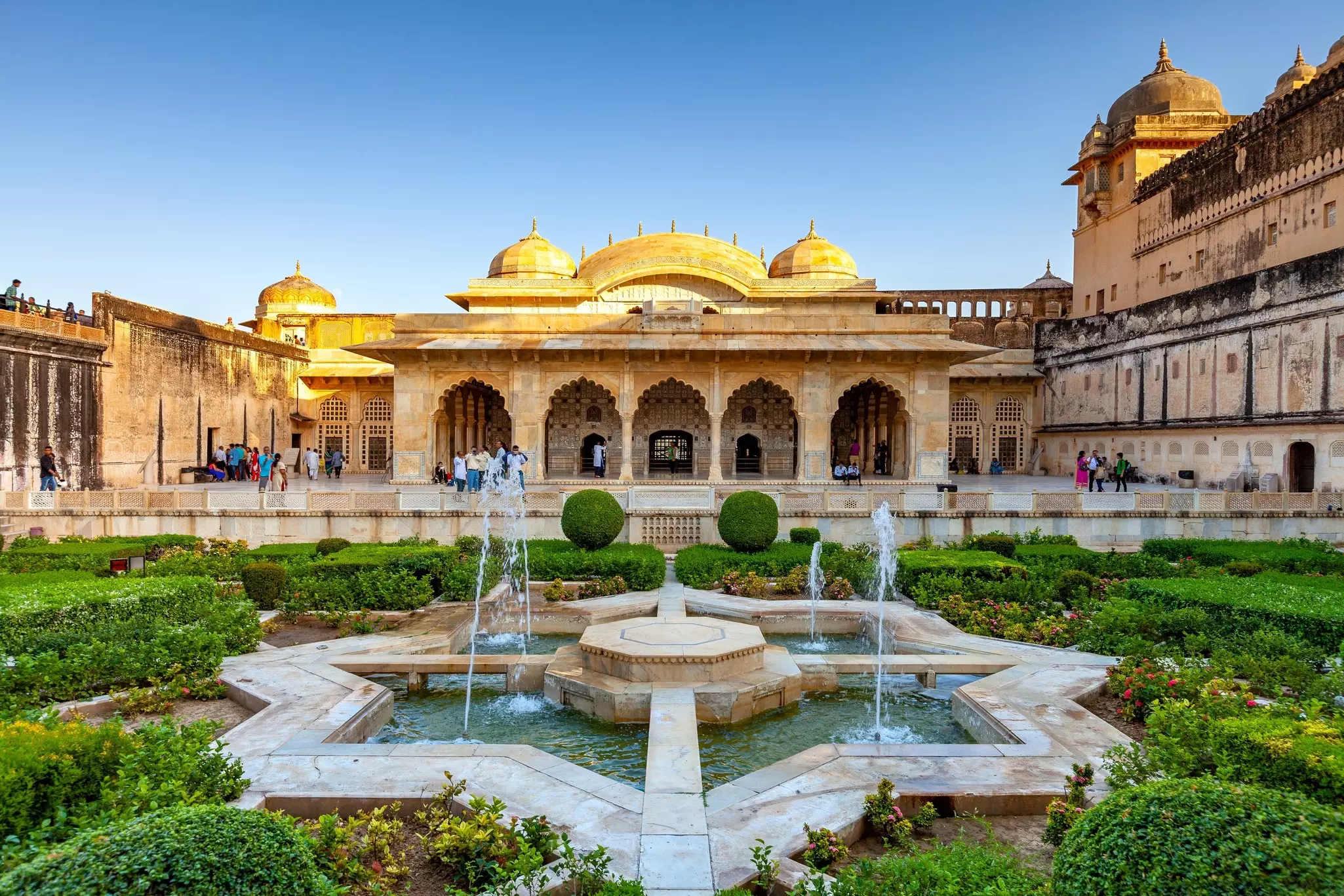
Jai Mandir
The maharaja's personal apartments surround the third courtyard, centered on the elegant Aram Bagh, a Persian-style pleasure garden. On the west side is the Jai Mandir (Hall of Victory), a space for private audiences, adorned with inlaid panels, bas-reliefs of insects and flowers, and extraordinarily intricate mirror mosaics.
Sukh Niwas
On the east side of the third courtyard is the Sukh Niwas (Hall of Pleasure), with a time-worn ivory-inlaid sandalwood door and a surprisingly modern-looking design scheme of floral carvings and vase-shaped niches. A channel once carried cooling water through this space to the gardens.
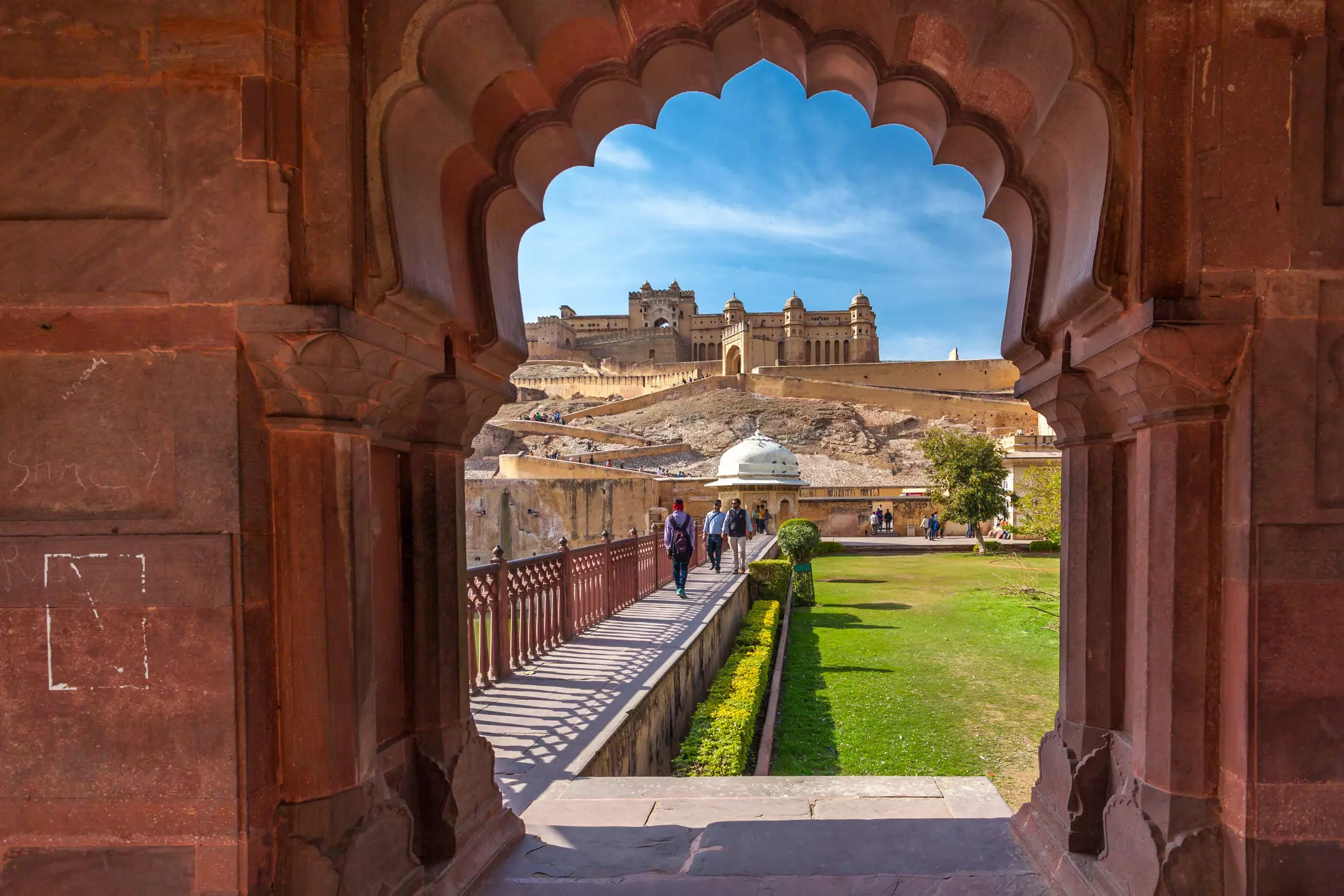
Zenana Apartments
The secluded women's quarters surround the fourth courtyard – designed so the maharaja could visit his wives and concubines without anyone else being aware of his comings and goings. Be sure to explore the warren of passageways inside the walls, which lead to unexpected chambers looking out over Amber village through lace-fine jalis (fretwork windows). See if you can find the mechanism in the northeast corner that once hauled water to the upper levels using clay pots attached to a rope.
Guide & Show
Official guides (from ₹400) can be arranged by the fort entrance and they'll help you see more of this labyrinth of a building. Alternatively, pay for an audio tour (₹200 to ₹250), though this won't cover less-explored corners.
Every evening, a lively, ticketed sound-and-light show (₹250) in English and Hindi illuminates the fort walls at 6.30pm – take in the spectacle from the ticket complex below the main gate.