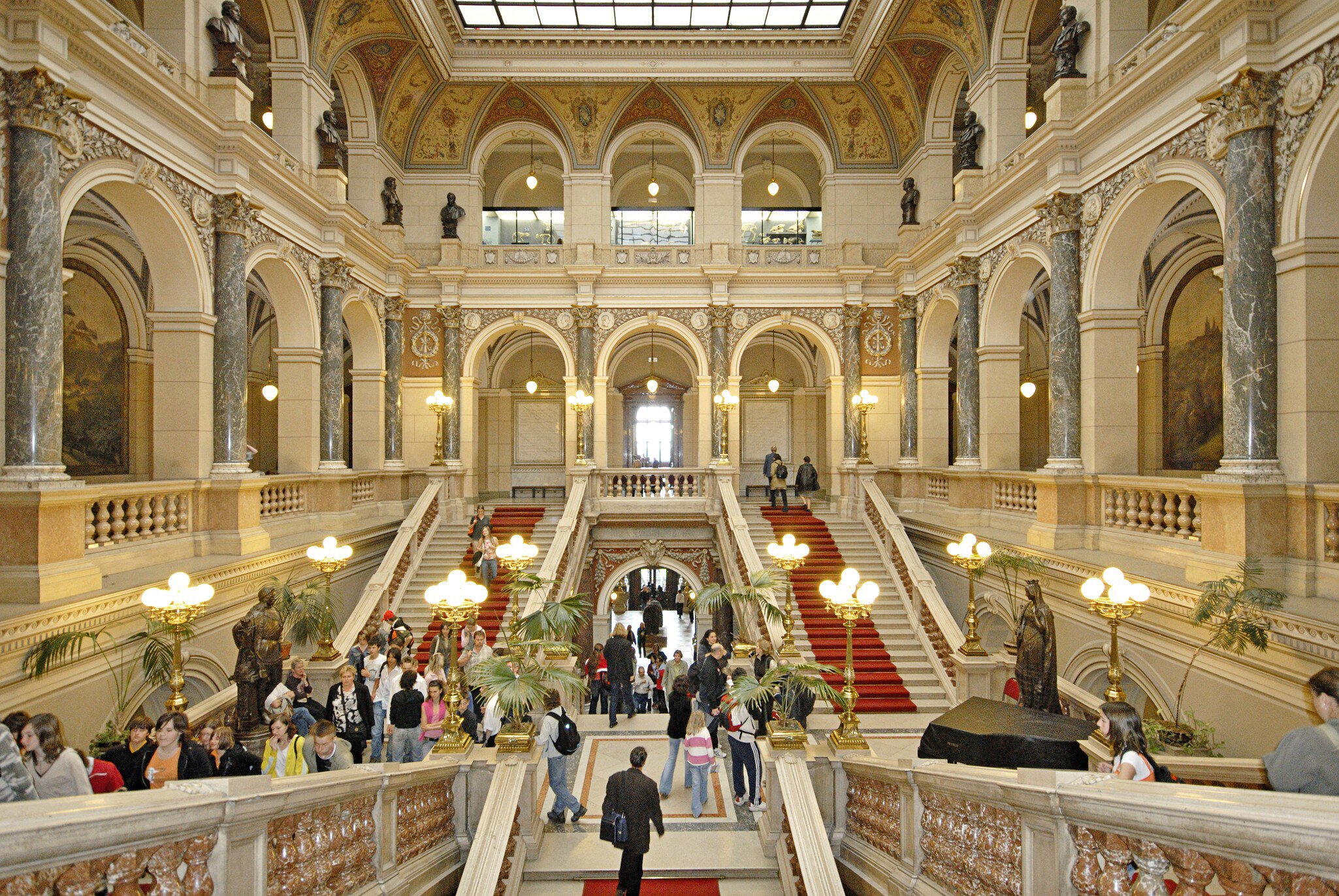
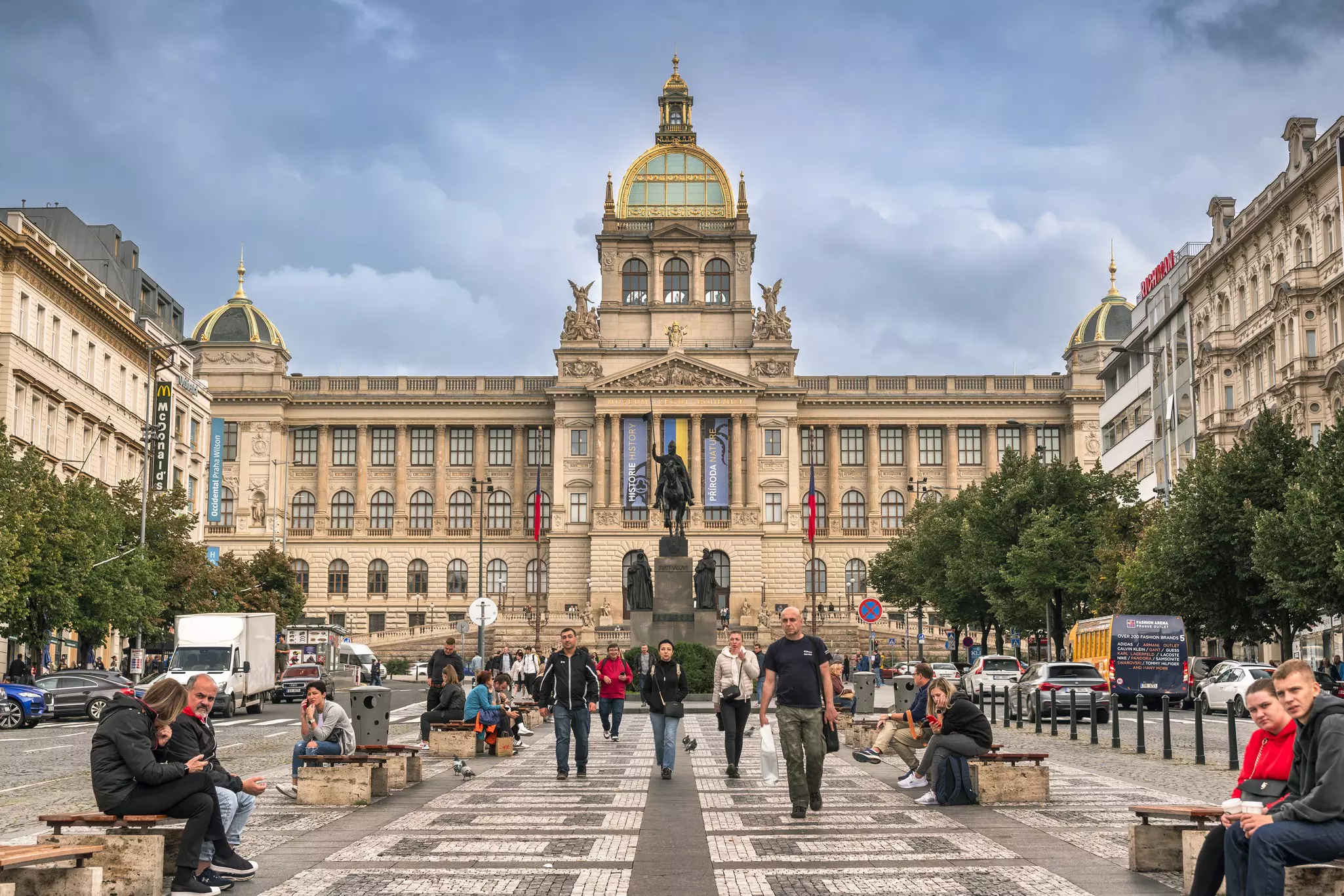
Looming high above Wenceslas Square is the neo-Renaissance bulk of the National Museum, designed in the 1880s as an architectural symbol of the Czech National Revival. The museum’s magnificent interior is a shrine to the cultural history of Czechia. The permanent exhibitions highlight the "miracles of evolution" and the history of the Czech lands from the 8th to 20th centuries.
Interiors & Entry Hall
For many people, simply the chance to glimpse inside this beautifully restored building is the main reason for a visit. The building's architectural style is neo-Renaissance, a 19th-century revivalist style that incorporated design elements from buildings built during the 16th-century European Renaissance. Here, that means, first of all, the elegant entry stairway, as well as plenty of marble everywhere, dazzling frescoes and interior "loggias."
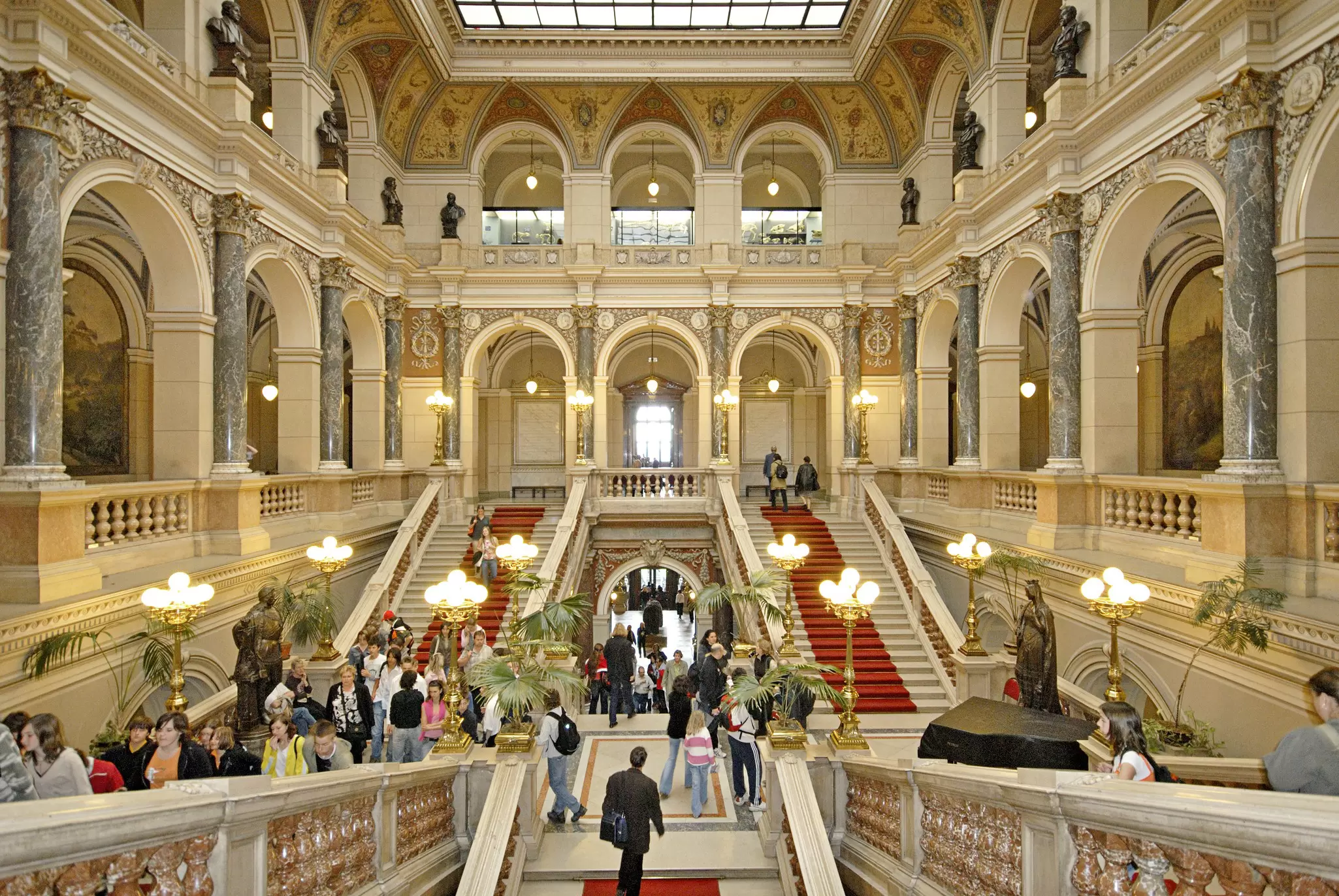
These are intricately carved open-air balconies or porches marked by an arch. Don't miss the beautifully decorated glass ceilings and views up to the cupola. This latter is accessible via a lift and affords great views over the square below. The "pantheon" on the 2nd floor – with busts of famous Czech creators and intellectuals – fulfills the building's intention of highlighting Czech (as opposed to German or Austrian) contributions to the arts and sciences.
Centuries of History
The bulk of the holdings on the main floor are given over to history of the Czechs, from the Slavic tribe's early emergence in the 8th century to the start of the 20th century (the "Museum of the 20th Century" in the "new" building picks up the story from here). Some 2000 objects are on display, so the best strategy here is simply to pick a period – perhaps the medieval period and birth of the Bohemian kingdom, or the Renaissance and Counter-Reformation (16th and early 17th centuries), or the 19th century –and focus your attention there.
Gemstones & Dinosaurs
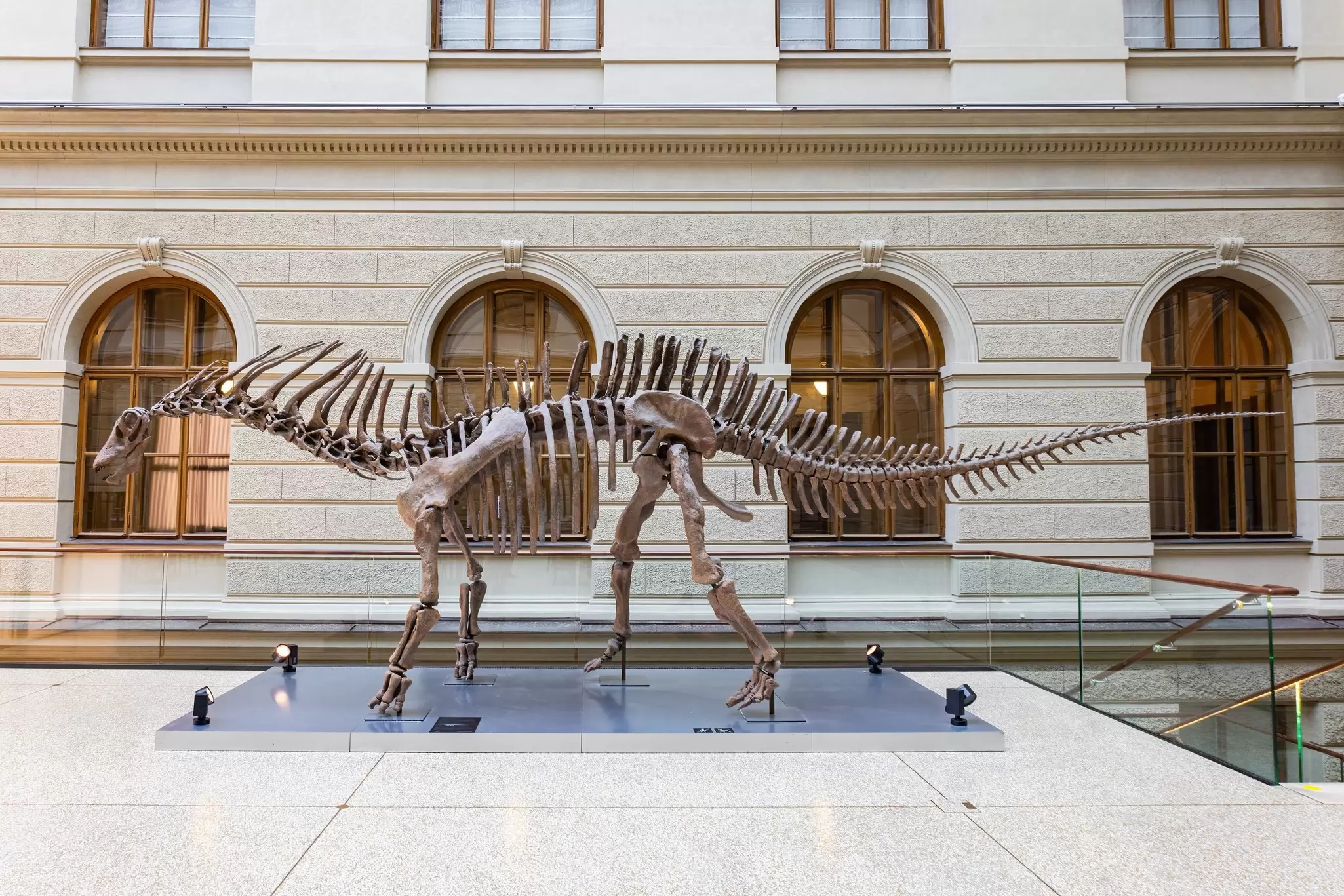
The National Museum is arguably strongest when it comes to the geology and natural-history exhibits. The "Hall of Minerals" draws on the mineral-collecting passions of an early aristocrat, Count Kašpar Šternberk (1761–1838), and shows off some 4000 different gemstones, minerals and unique rocks. The nearby "Hall of Meteorites" highlights both celestial objects that found their way to earth, and earthen rocks that were shaped and altered by meteorite impaction. The "Windows into Prehistory" features recreations of the world's earliest creatures, including (naturally) dinosaurs. A newer collection, the "Miracles of Evolution," dazzles with lifelike models of exotic animals, like enormous whales and giant squids.
The "New" Building
Across the road from the historic building, the National Museum's "new" building (or "annex") forms a constitute part of the museum (linked via an underground passage) and is home to two leading attractions. The "Children's Museum," on the building's 2nd level, is aimed at kids older than four years of age (accompanied by their parents). Three big halls are filled with interactive games and attractions. Entry to this museum is limited to 90 minutes and requires a separate entry ticket. Reserve a 90-minute time slot in advance over the website. The "Museum of the 20th Century," on the new building's 3rd level, narrates the gripping events of the 20th century, during which Czechoslovakia was born as a nation, suffered occupation at the hands of Nazi Germany, and later fell under the domination of the Soviet Union. It's part-gripping and part-bewildering to anyone who's not already familiar with this history.