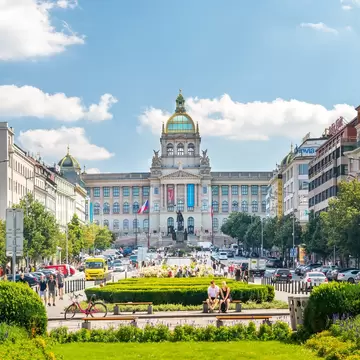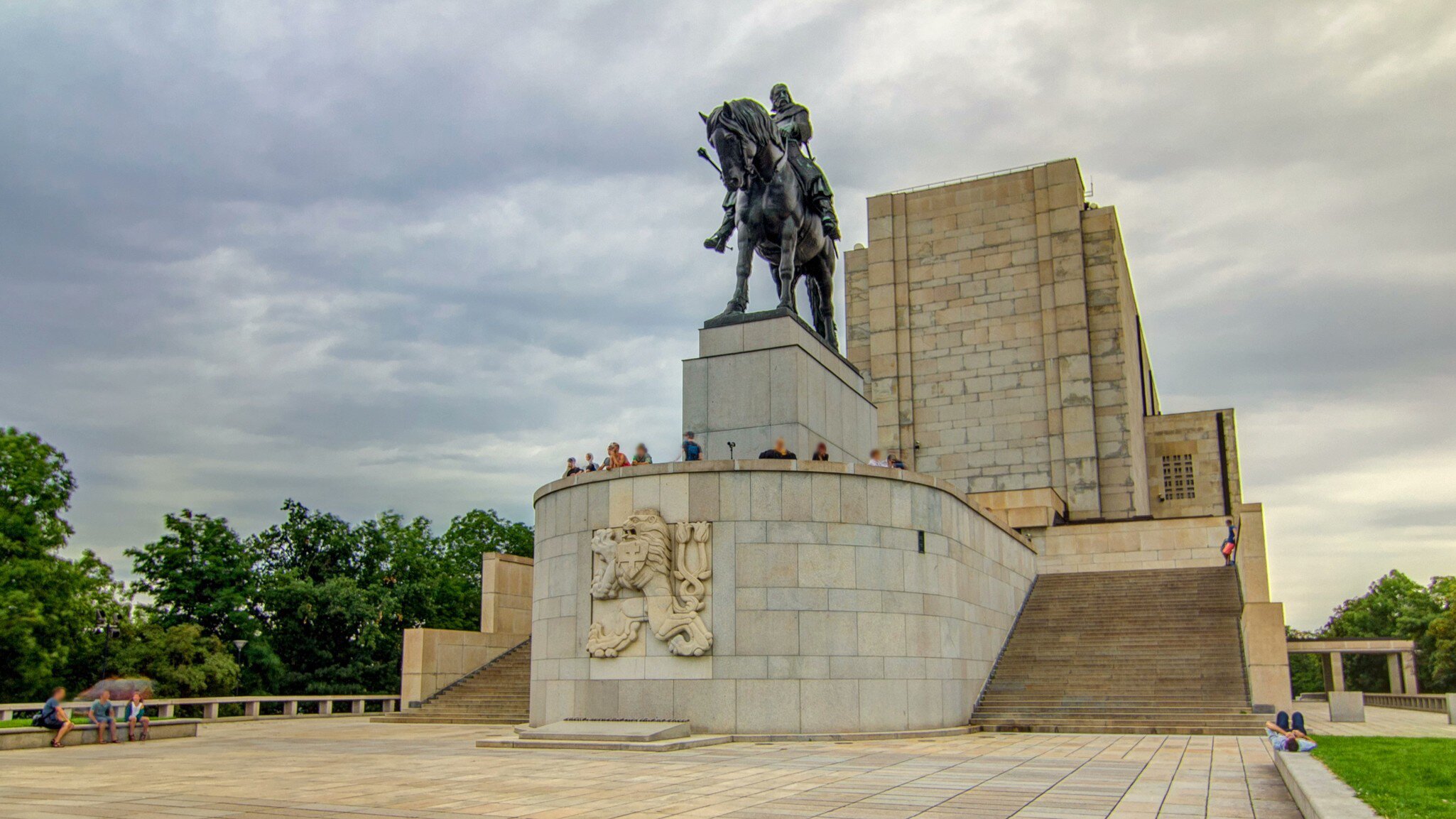
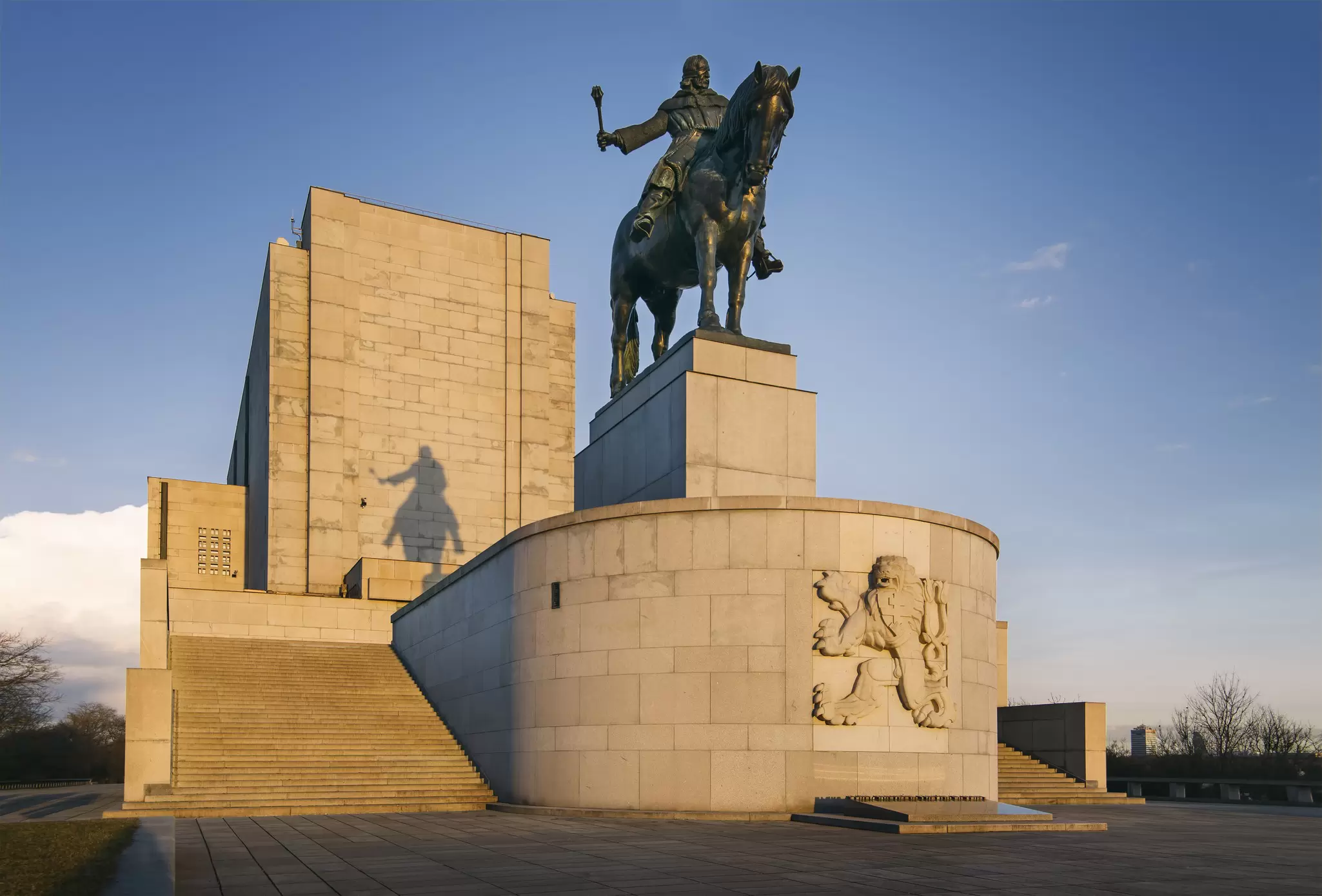
Žižkov's main tourist attraction is visible from all across the city (and we're not talking about the TV Tower). The district's prominent Vítkov Hill is home to one of the world's largest equestrian statues – of 15th-century Hussite general (and Czech hero) Jan Žižka. It's also the location of a sleek National Monument that celebrates Czechoslovak statehood and hides some bizarre communist-era secrets.
Hail to the Heroes!
The monument was originally conceived in the 1930s as a tribute to the heroes of newly independent Czechoslovakia, but was used first by the occupying Nazis in the 1940s and later by Czechoslovakia’s own communist leaders to serve their propaganda ends. The interior is a startling extravaganza of polished art-deco marble, gilt and mosaics. The structure is so distinctive that the directors of Netflix’s 2022 blockbuster The Gray Man even used it as a stand-in for a dictator’s mega-palace in Azerbaijan.
Fascinating or Gruesome?
The most grimly fascinating part of the building is the Frankenstein-like laboratory on the lower level. It was here, following the death of Czechoslovak communist leader Klement Gottlwald in 1953, where scientists battled in vain to prevent Gottwald’s corpse from decomposing. The original plan was to preserve his body in state – not unlike Lenin at Moscow’s Lenin Mausoleum. Gottwald’s body was placed on display by day and lowered into the white-tiled crypt here each night for a frantic round of maintenance and repair. He was eventually removed and buried in Prague’s Olšany Cemetery.