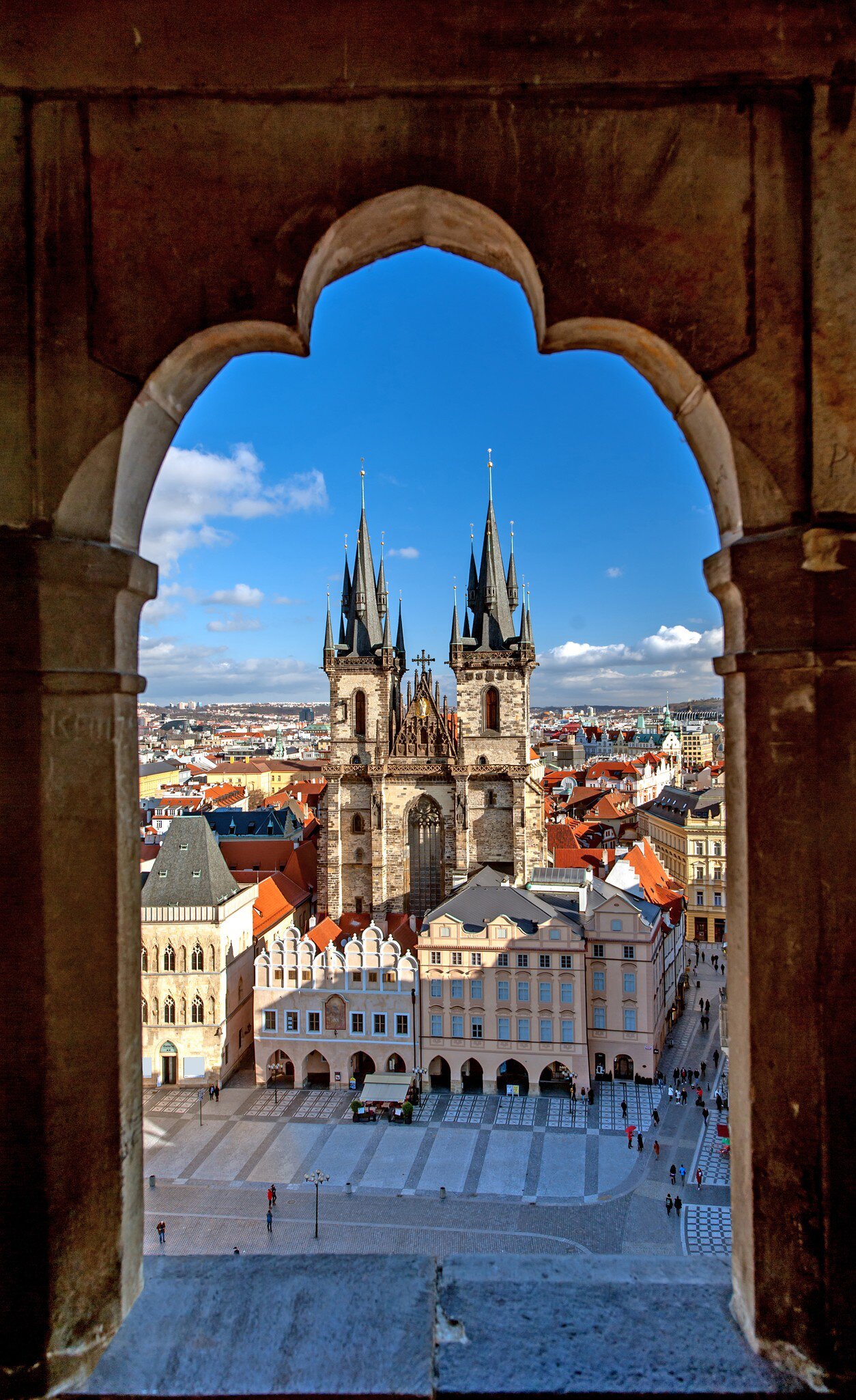
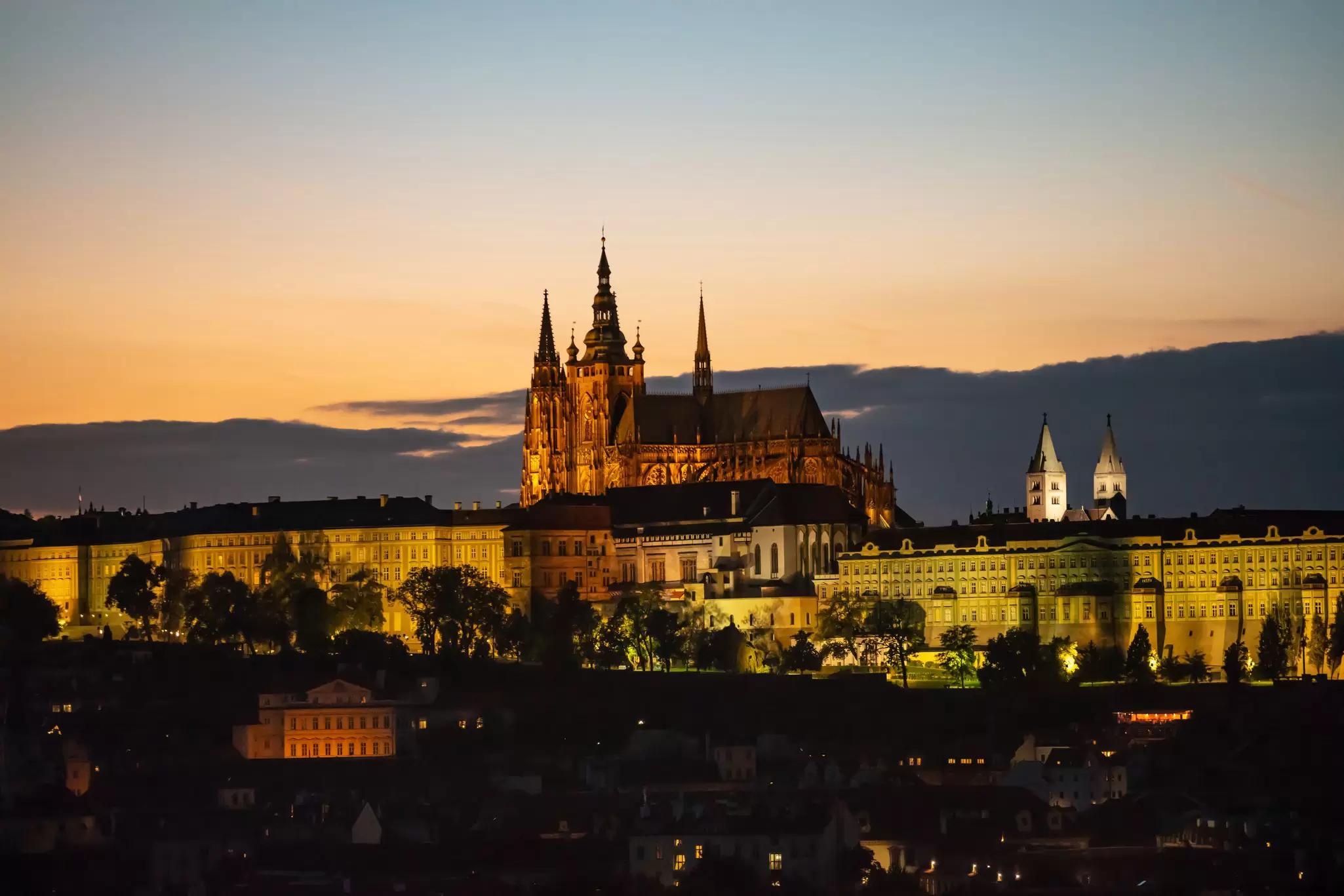
Looming high above the Vltava River, Prague Castle (Pražský hrad), with its serried ranks of spires and palaces, dominates the city center. Within its walls lies a fascinating collection of historic buildings, museums and galleries: home to some of Czechia’s greatest artistic and cultural treasures. The grounds of the Castle complex are free to enter, though to see the interiors (including adjoining St Vitus Cathedral) requires an admission ticket.
Admire the Entryway
Most visitors enter the castle complex through the main gate on Hradčany Square (Hradčanské náměstí). The entry is flanked by huge, baroque statues of battling Titans (1767–70) that dwarf the castle guards standing below.
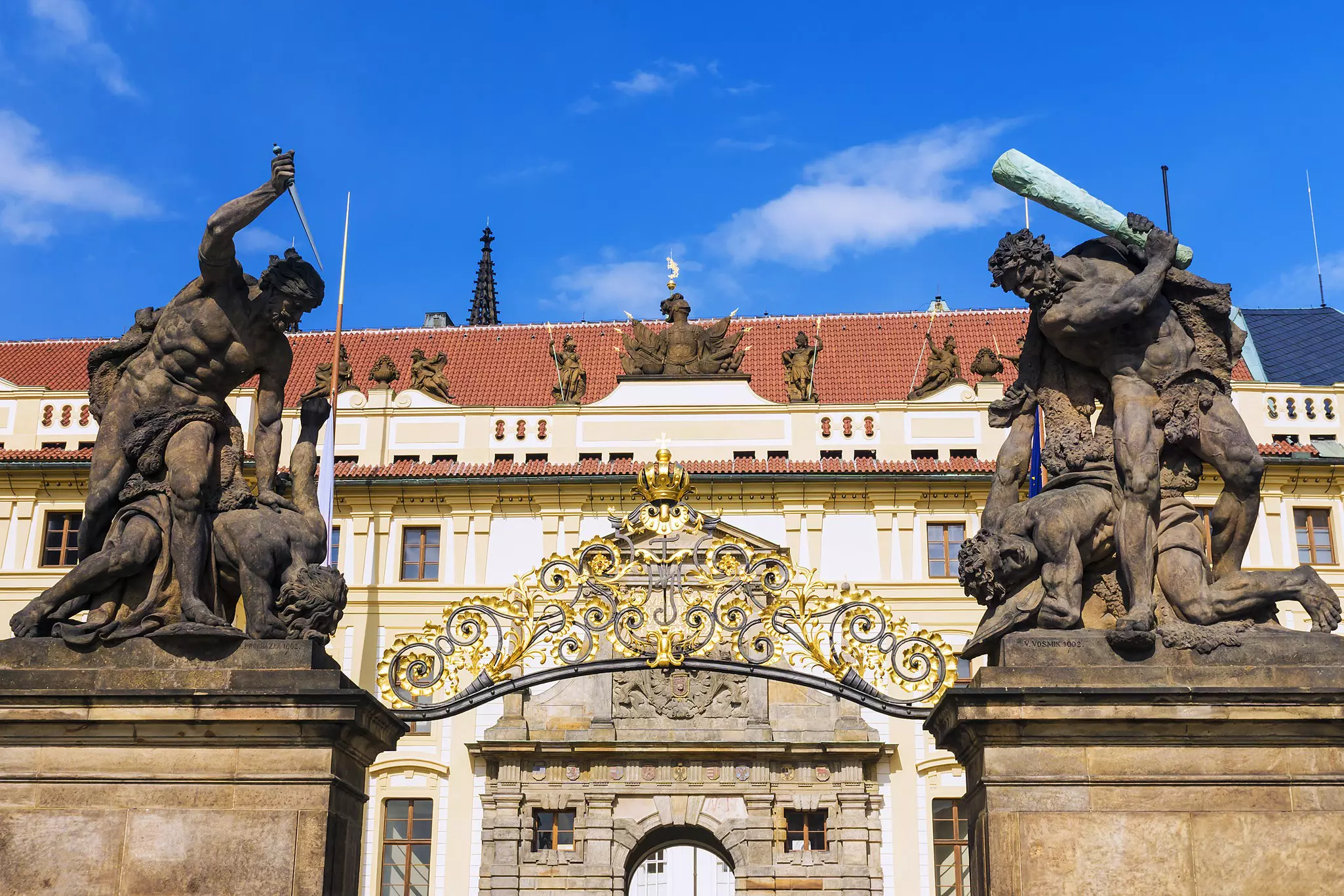
The changing of the guard takes place every hour on the hour, but the longest and most impressive display is at noon, when banners are exchanged while a brass band plays various fanfares.
Prague Castle Picture Gallery
This impressive picture gallery (hrad.cz), built up by Emperor Rudolf II and situated in the castle's second courtyard on entering, could have been so much grander had it not been for Swedish soldiers looting much of it in 1648. No matter, the collection has been beefed up over the years and includes valuable works by artists like Cranach, Holbein, Rubens, Tintoretto and Titian. Admission is not included in the main castle-entry ticket.
The Old Royal Palace
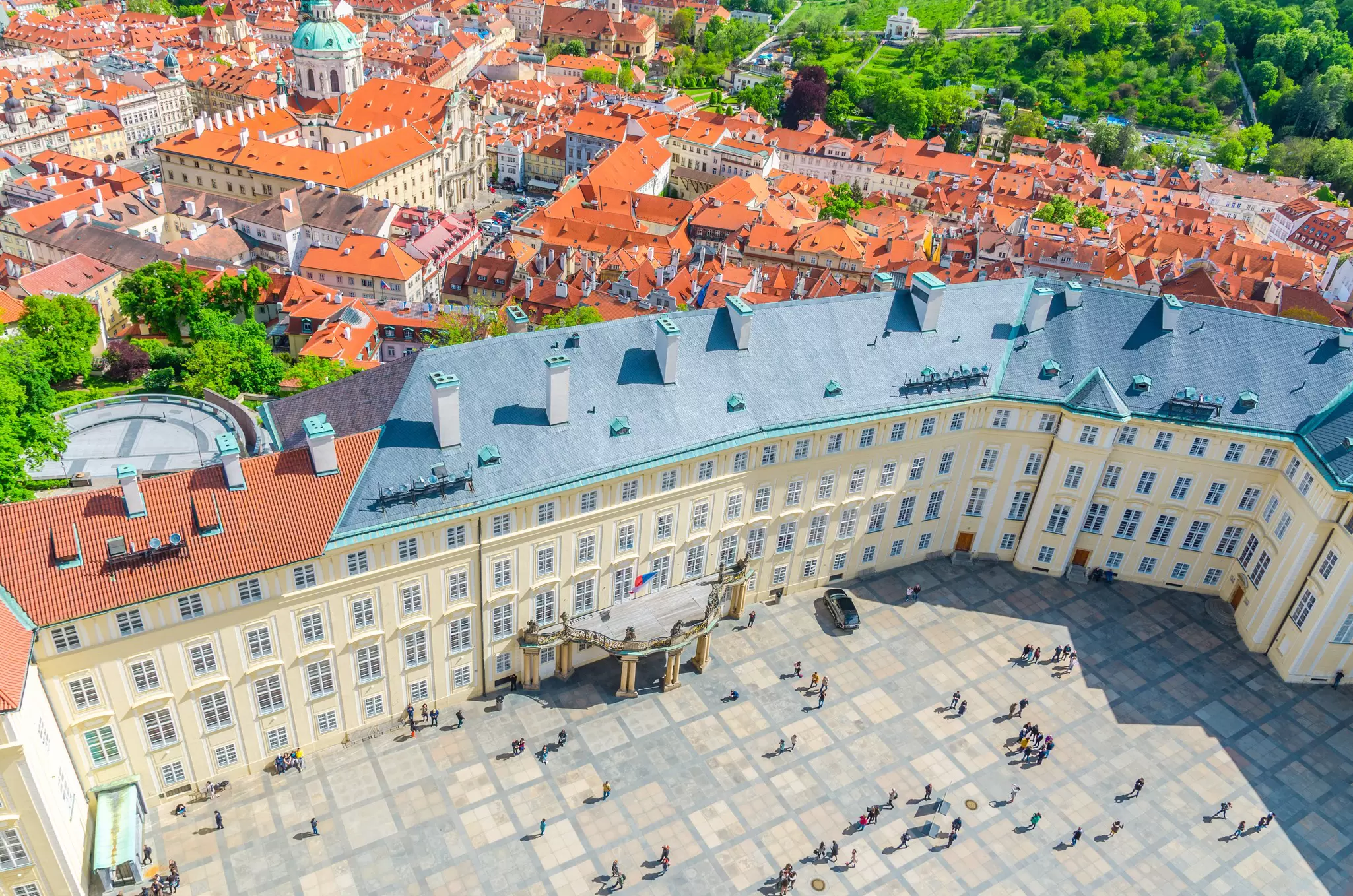
The Old Royal Palace, situated in the castle's third courtyard, is one of the oldest surviving parts of the castle, dating from 1135, and the high point for most visitors.
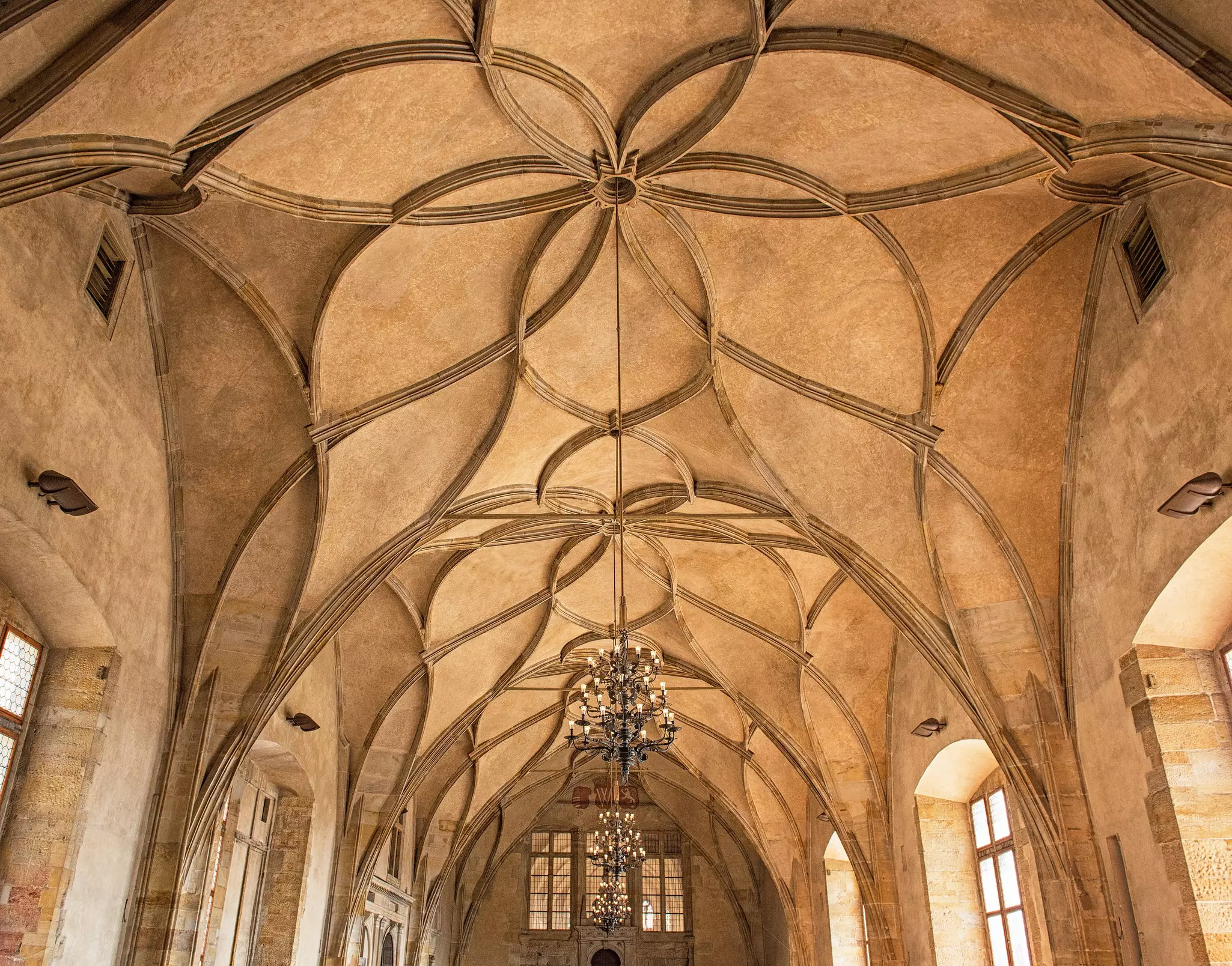
Don't miss the Vladislav Hall (Vladislavský sál), which is famous for its beautiful, late-Gothic vaulted ceiling (1493–1502) designed by Benedikt Rejt. Though more than 500 years old, the flowing, interwoven lines of the vaults have an almost art-nouveau feel, in contrast to the rectilinear form of the Renaissance windows. The vast hall was used for banquets, councils and coronations, and for indoor jousting tournaments – hence the Riders’ Staircase (Jezdecké schody), through an arch on the northern side, designed to admit a knight on horseback.
A door in the hall’s southwestern corner leads to the former offices of the Bohemian Chancellery (České kanceláře). On 23 May 1618, in the second room, Protestant nobles rebelling against the Bohemian Estates and the Habsburg emperor threw two of his councillors and their secretary out of the window. They survived, as their fall was broken by the dung-filled moat, but this Second Defenestration of Prague sparked the Thirty Years’ War.
Story of Prague Castle
The Story of Prague Castle museum, located in the Gothic vaults beneath the Old Royal Palace, ranks alongside the Lobkowicz Palace as one of the most interesting collections in the castle complex. It traces 1000 years of castle history, from the building of the first wooden palisade to the present day, illustrated by models of the site at various stages.
The exhibits include the grave of a 9th-century warrior discovered in the castle grounds, the helmet and chain mail worn by St Wenceslas, and a replica of the gold crown of St Wenceslas, which was made for Charles IV in 1346.
Basilica of St George
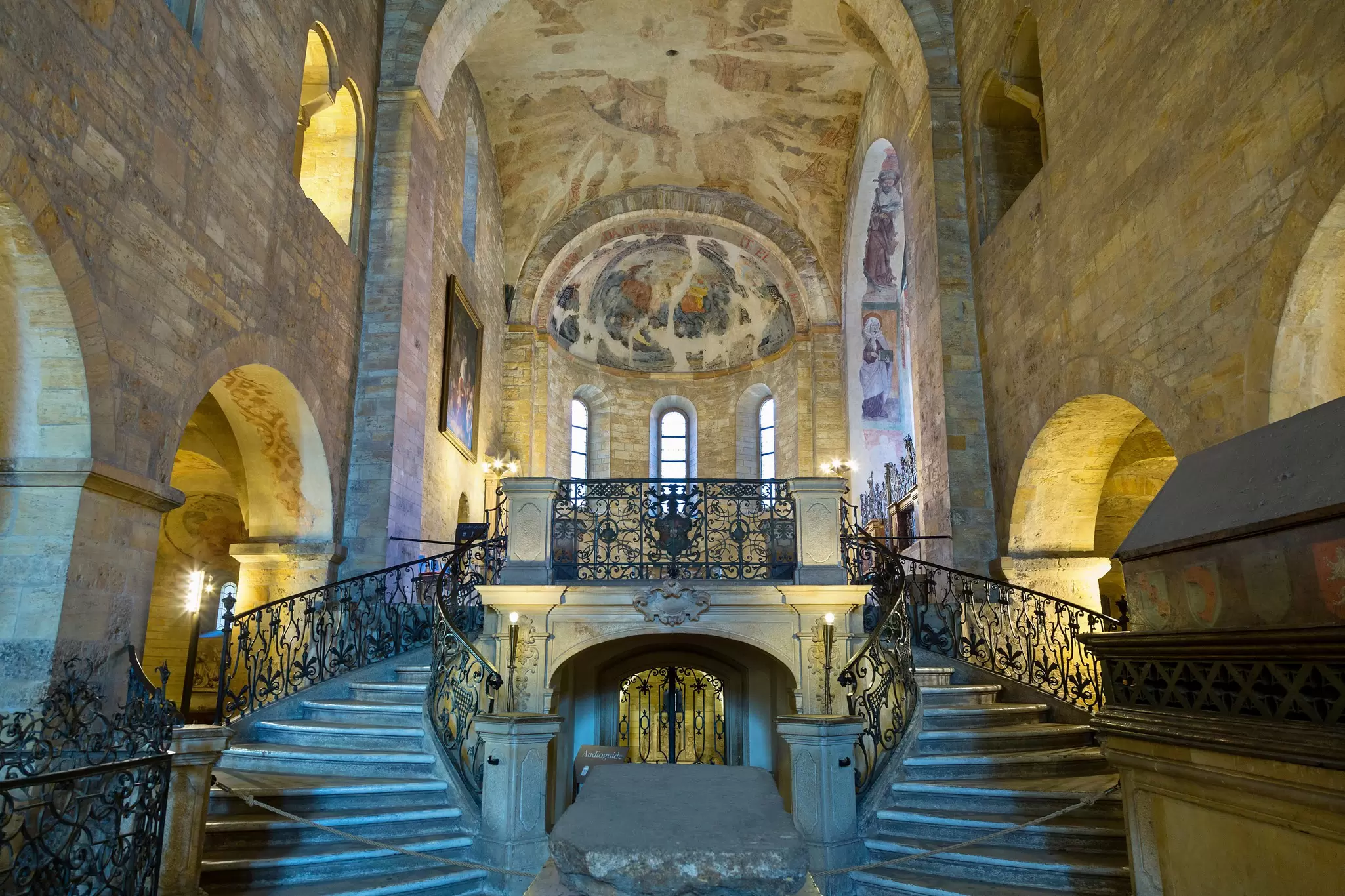
Just beyond St Vitus Cathedral and hiding behind a brick-red, baroque facade, the Basilica of St George is Czechia's best-preserved Romanesque basilica. The church was established in the 10th century by Vratislav I (the father of St Wenceslas). What you see today is mostly the result of more-recent restorations. The austerity of the Romanesque nave is relieved by a baroque double staircase leading to the apse, where fragments of 12th-century frescoes survive. In front of the stairs lie the tombs of Prince Boleslav II (d 997) and Prince Vratislav I (d 921). The arch beneath the stairs allows a glimpse of the 12th-century crypt; Přemysl kings are buried here.
Kafka's House on Golden Lane
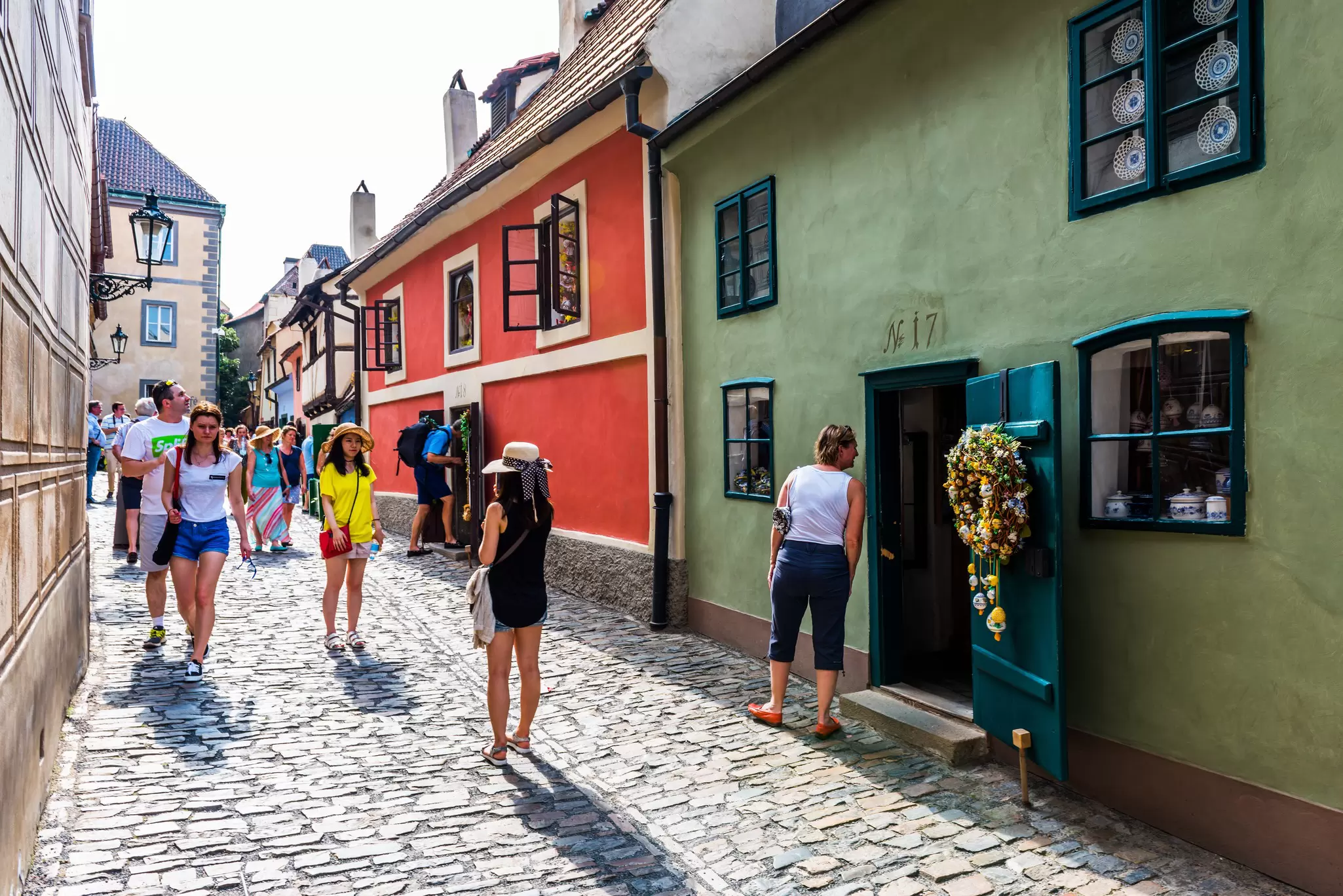
While strolling the castle grounds, nip down this colorful Golden Lane that runs along the castle’s northern wall. The impossibly tiny cottages here were built in the 16th century for the sharpshooters of the castle guard but were later used by goldsmiths. In the 19th and early 20th centuries, they were occupied by artists, including writer Franz Kafka, who stayed at his sister’s house at number 22 from 1916 to 1917.
Fascinating Lobkowicz Palace
The 16th-century Lobkowicz Palace (lobkowicz.cz) houses a private museum that shows off the Lobkowicz family's priceless paintings, furniture and musical memorabilia. The tour includes an audio guide narrated by the owner William Lobkowicz and his family. Highlights include paintings by Cranach, Brueghel the Elder, Canaletto and Piranesi, original musical scores annotated by Mozart, Beethoven and Haydn, and an impressive collection of musical instruments.
Explore the Royal Garden
To reach the Royal Garden, follow the gate on the northern side of the castle's second courtyard that leads to the Powder Bridge, which spans an even wilder piece of green called Stag Moat.
The Royal Garden started life as a classic Renaissance garden, built by Ferdinand I in 1534. It’s graced by several gorgeous Renaissance follies that feel forgotten amid the trees. The most beautiful of the buildings is the 1569 Ball-Game House, a masterpiece of Renaissance sgraffito where the Habsburgs once played a primitive version of badminton. To the east is the Summer Palace, or Belvedere (1538–60), the most authentic Italian Renaissance building outside Italy, while to the west is the former Riding School (1695).
Tickets & Practical Info
The main Prague Castle ticket includes entry to the Old Royal Palace as well as the Basilica of St George, Golden Lane and St Vitus Cathedral. Note an extra ticket is required to see the Story of Prague Castle exhibition and the Prague Castle Picture Gallery. Buy tickets online at Ticketportal (ticketportal.cz) or at the Castle Information Centre .
Don't Miss This View
In the 1920s, President Tomáš Masaryk hired Slovene architect Jože Plečnik to renovate the castle; Plečnik modernized the complex and added obelisks and decorative elements. His greatest contribution is the spectacular observation platform, Plečnik Viewpoint , on the castle's southern side. To find it, look for the Bull Staircase (Býčí schodiště) in the third courtyard opposite the south entrance to St Vitus Cathedral. The viewpoint is open April–October.