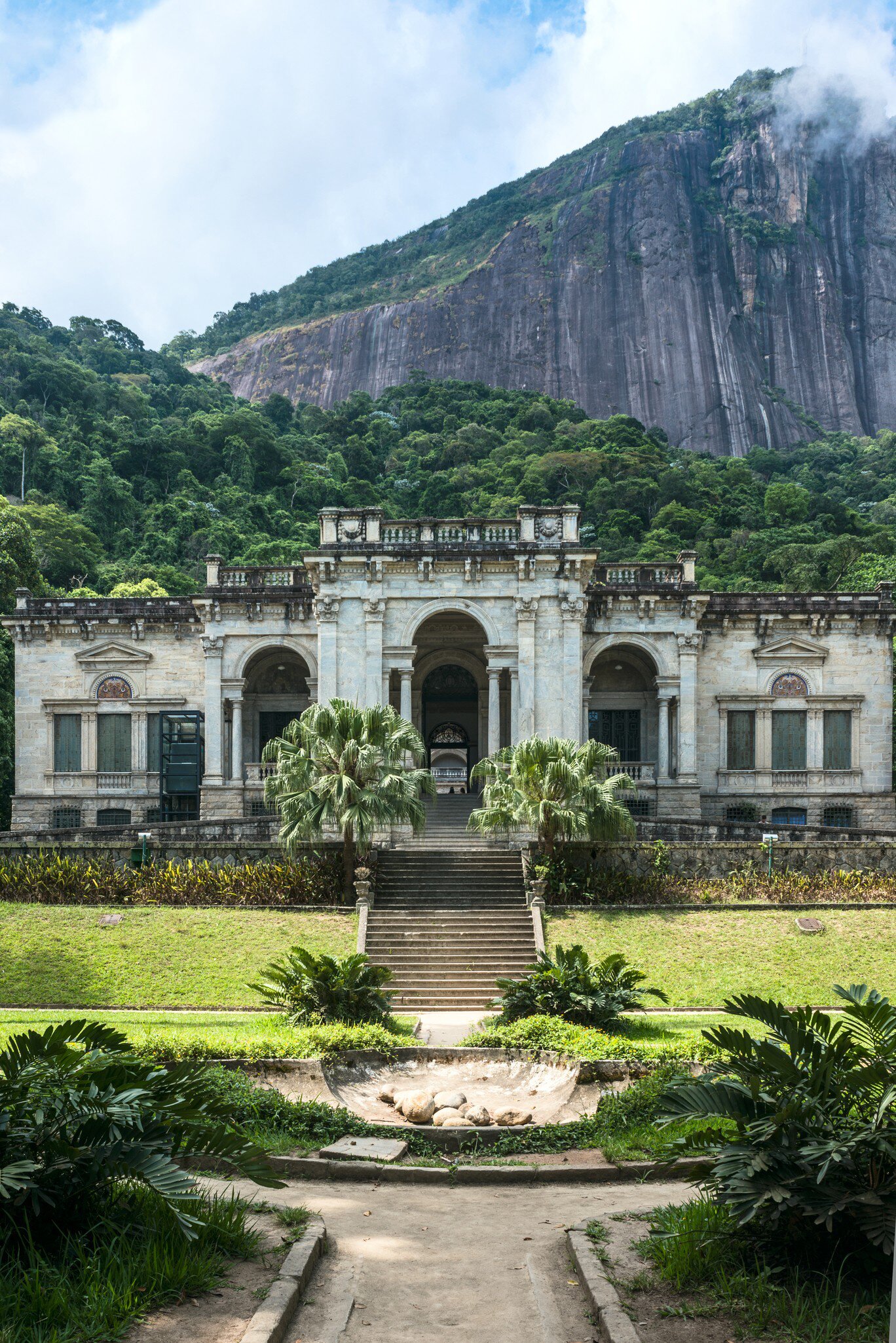
Parque Lage is a 52-hectare park located just a few streets off the Lagoa and a short walk from Jardim Botânico. Sitting at the feet of Cristo Redentor, melting into the Mata Atlantica, Parque Lage is a favorite for family outings and picnics, as well as a magnet for the artists and art-lovers of the city.
The Palacete
Parque Lage was the former residence of married couple Henrique Lage and Italian opera singer Gabriela Besanzoni. In 1920, Lage remodeled the mansion that had been built by his father with the help of Italian architect Mario Vodret, who designed an eclectic palazzo romano to please Besanzoni. The couple quickly became known for their magnificent parties – all the rage on the Carioca social scene – and Besanzoni even founded a theater society that met on the grounds. But it would all end in the 1950s when Lage found himself in financial trouble and had to trade the land to pay off his debts.
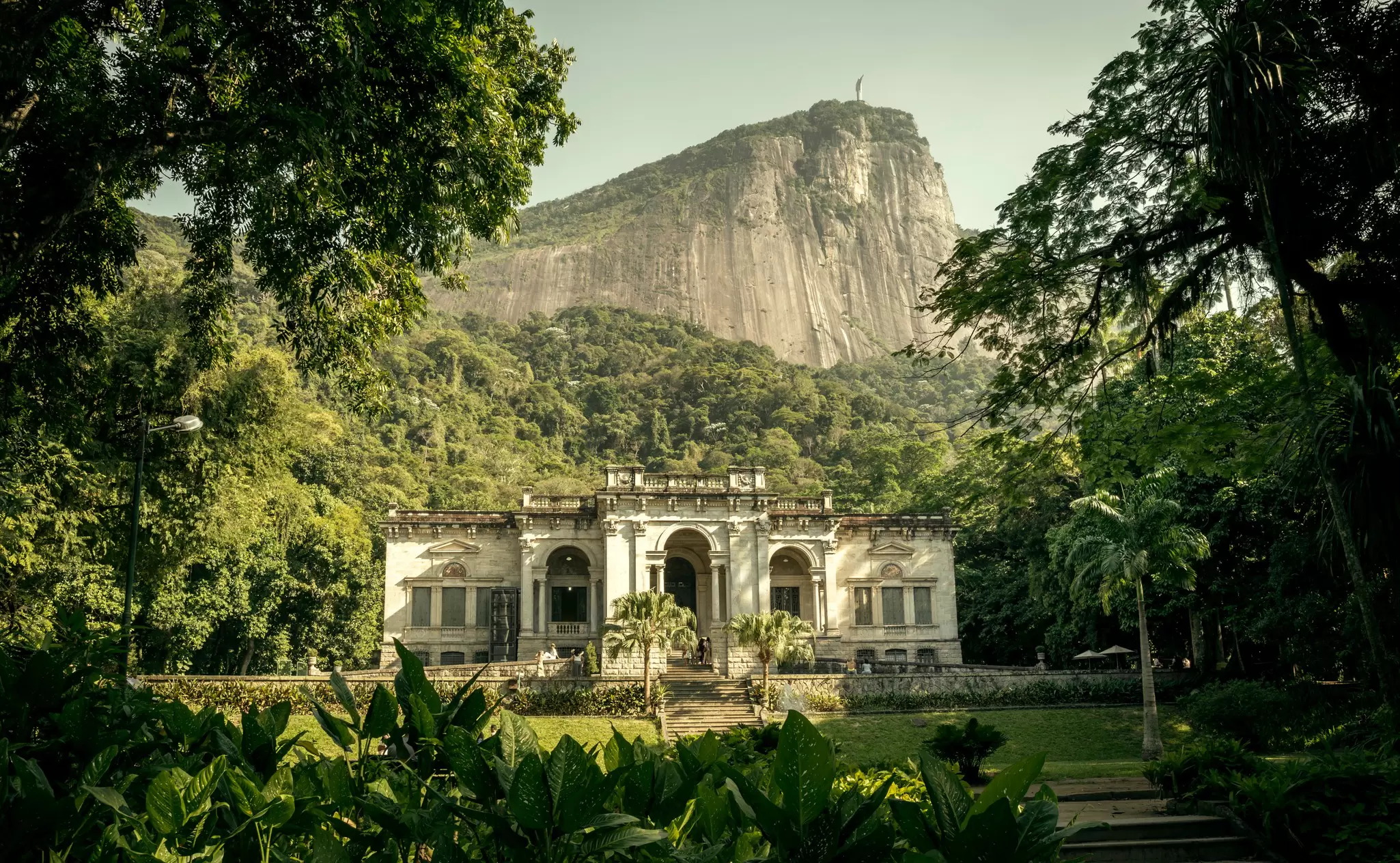
Luckily, Parque Lage was declared cultural patrimony in 1957, and after part of the grounds were sold to build the Globo TV Studios in 1960, the remaining area was opened to the public. In 1966, the Institute of Fine Arts was installed in the park's mansion, although it was dismantled during the Dictatorship and reopened as the Escola de Artes Visuais (EAV; School of Visual Art) in 1975, which it remains to this day.
EAV: An Intellectual Encounter
From the second half of the 1970s, the EAV became the place where artists and intellectuals met. It was known to be one of the most liberal and intellectually free spaces in the city, where the strict censorship imposed by the regime was frequently challenged. It was at EAV where Francisco Bittencourt founded the city's first and most important LGBTIQ+ magazine, Lampião, in 1978; and where vanguard psychoanalysts of the era founded the first Escola Freudiana do Brasil (Freudian School of Brazil.).
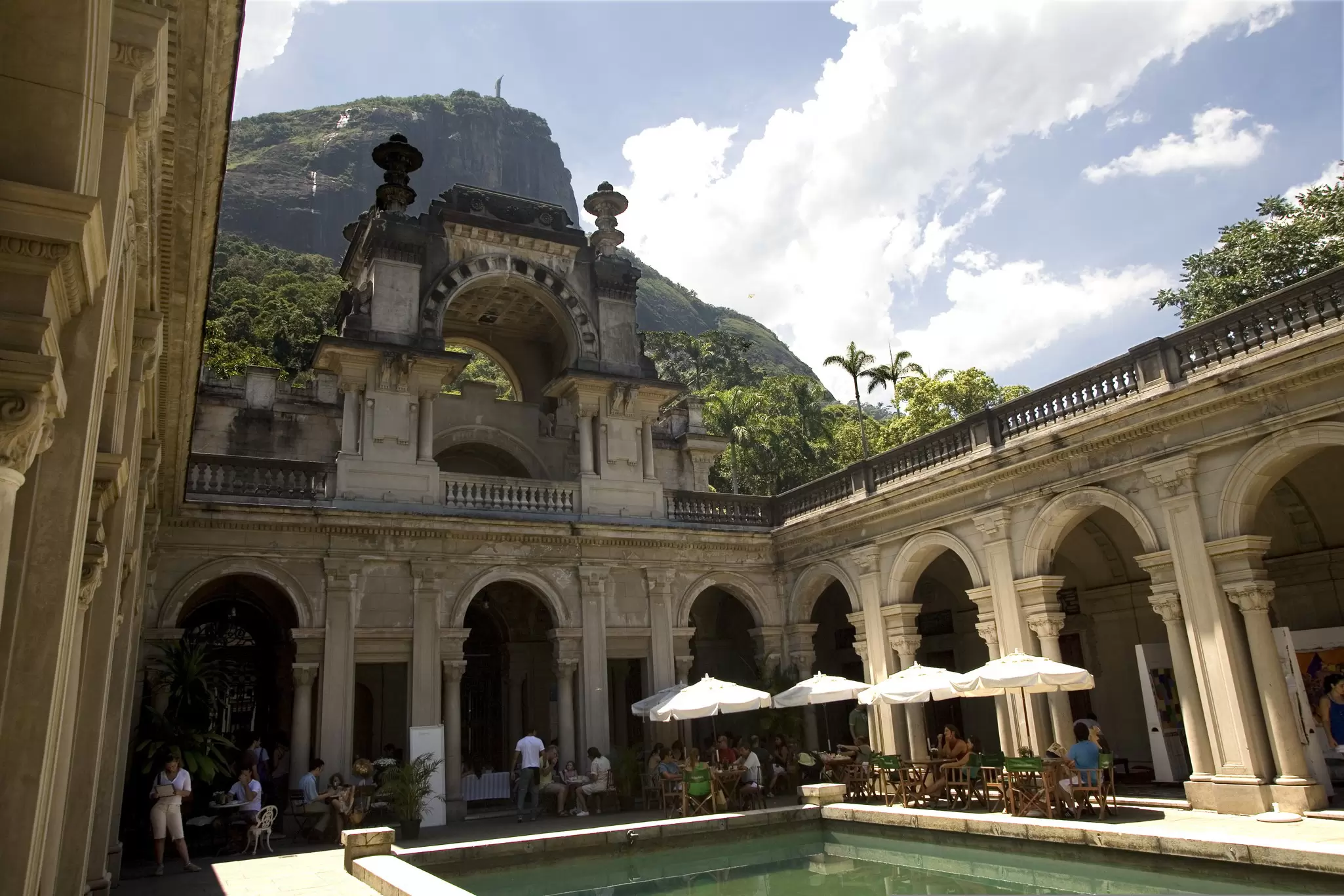
These days, the EAV is still very much a part of the city's artistic heartbeat. Beyond hosting regular theater performances, concerts, lectures and events, the school also offers rotating exhibitions and cultural immersions, and of course, a full calendar of classes. If you have some local language skills, you can join one of the continuing art courses – simply pay the monthly fee and arrive with your materials in hand.
Grounds & Gardens
The gardens were originally projected by English landscape artist John Tyndale in 1840, and although the area is significantly smaller than the original 52-hectare estate, the grounds retain their whimsical quality, featuring ponds and pathways, artificial caves, castle-like towers, a children's playground and even a small aquarium, all encased in the Mata Atlantica.
Visiting
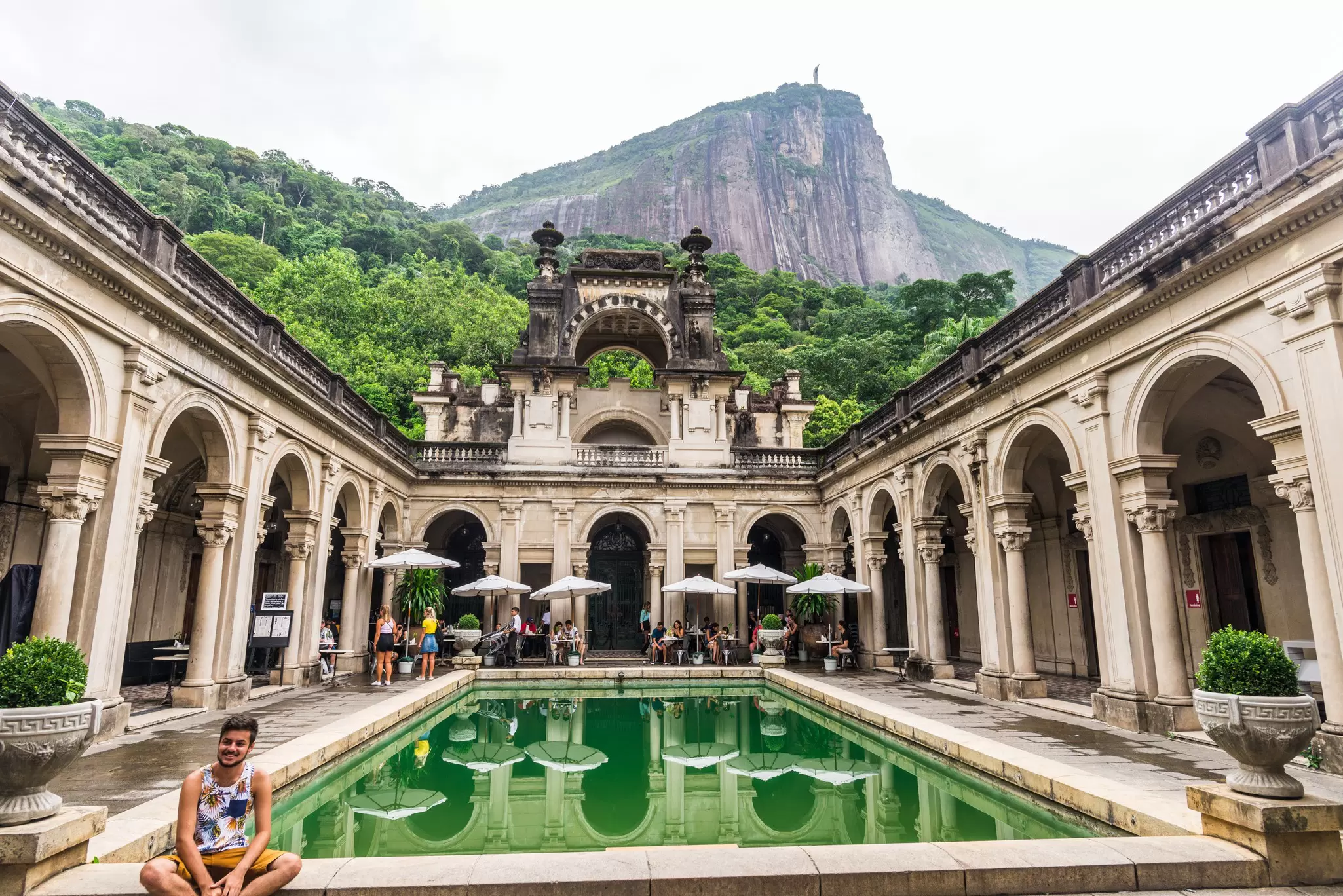
You can visit the park for free daily from 8am to 6pm, while the mansion itself is open from 9am to 5pm; but be aware of long lines if you're hoping to take the iconic poolside photo. Inside the mansion you can brunch at PLage Café by the pool – the lovely setting is more of an attraction than the food; however, if you don't mind the wait (tables are first come, first served), it is a special place to have a coffee.
A Trail to Corcovado
The park also hides the trailhead for the trek to Corcovado, a two-hour uphill hike through the forest that takes you to Cristo Redentor. Departure is permitted from 8am to 3pm daily, however it's important to note that the Panieras Visitors Center ticket office at the top (where you can buy your entrance to the statue itself) only functions until 5pm.