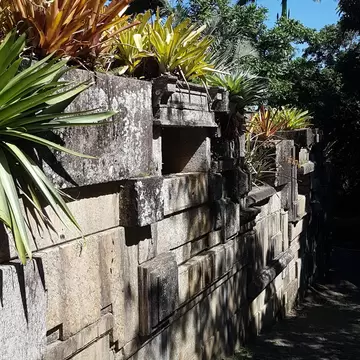
Perched atop Corcovado Hill with arms open wide is Rio's most emblematic site: Cristo Redentor (Christ the Redeemer). At more than 700m above sea level, the iconic art deco statue – elected one of the Seven Wonders of the Modern World – is visible from across the city, welcoming residents and visitors alike to Rio's sandy shores.
Corcovado
Corcovado (which means "hunchback" in Portuguese) is the 710m (2330ft) granite peak in the center of the Tijuca National Forest from where Cristo reigns – and it was a tourist attraction long before Christ's arrival. The Corcovado railway, inaugurated in 1884, was Brazil's first tourist train, taking visitors up to enjoy the incredible views for nearly half a century prior to the statue's inauguration.

Cristo Redentor
The Cristo Redentor statue, which clocks in at 38m tall (the equivalent of a 13-story building), is the largest art deco statue in the world. Its creation was a collaborative effort that began in 1922 with a project by Brazilian architect and engineer Heitor da Silva Costa and Italian-Brazilian artist Carlos Oswald. But the actual sculpting took place in France, where artists Paul Landowski (Polish-French) and Albert Caquot (French) took the helm, along with Romanian Gheorghe Leonida, who was responsible for creating the face.

Upon the statue's arrival in Brazil, local engineer Heitor Levy, who would become known as the statue's master-builder, was charged with the monumental task of dismantling the 1100-ton statue and managing a crew of nearly a thousand people as they transported Christ to to the top of Corcovado (primarily by train) and remounted him at the peak's peak. The statue was inaugurated after five long years of work on October 12, 1931.
Inside the monument are 12 plateaus connected by stairs that create a very precarious walkway up to the openings in the arms and head of the statue. While travelers can't enter, here's a fun fact: there is an Argentinian religious restoration artisan named Pablo Cardoso who lives inside the statue; in a small apartment under Christ's left arm.

The Heart of Christ
It may surprise you to know that Cristo Redentor has an actual heart. The 1.3m-tall hollow soapstone heart is visible from both inside and outside the statue (although you'll need to be at the height of his chest, 9 stories up, to see it). What's more, inside the heart is a bottle that contains the family tree of head engineer Heitor Levy.
The Chapel
Cristo Redentor is also a religious sanctuary – there is a small Catholic chapel around the backside of the statue that you're welcome to visit, with 22 seats and standing room for another 10–15 people. Via the chapel's website (santuariocristoredentor.com.br) you can request to take part in Mass, join a pilgrimage group or even schedule a baptism or wedding (depending on availability).
Visiting
There are three ways to arrive at the top of Corcovado: by train, by van, or on foot.
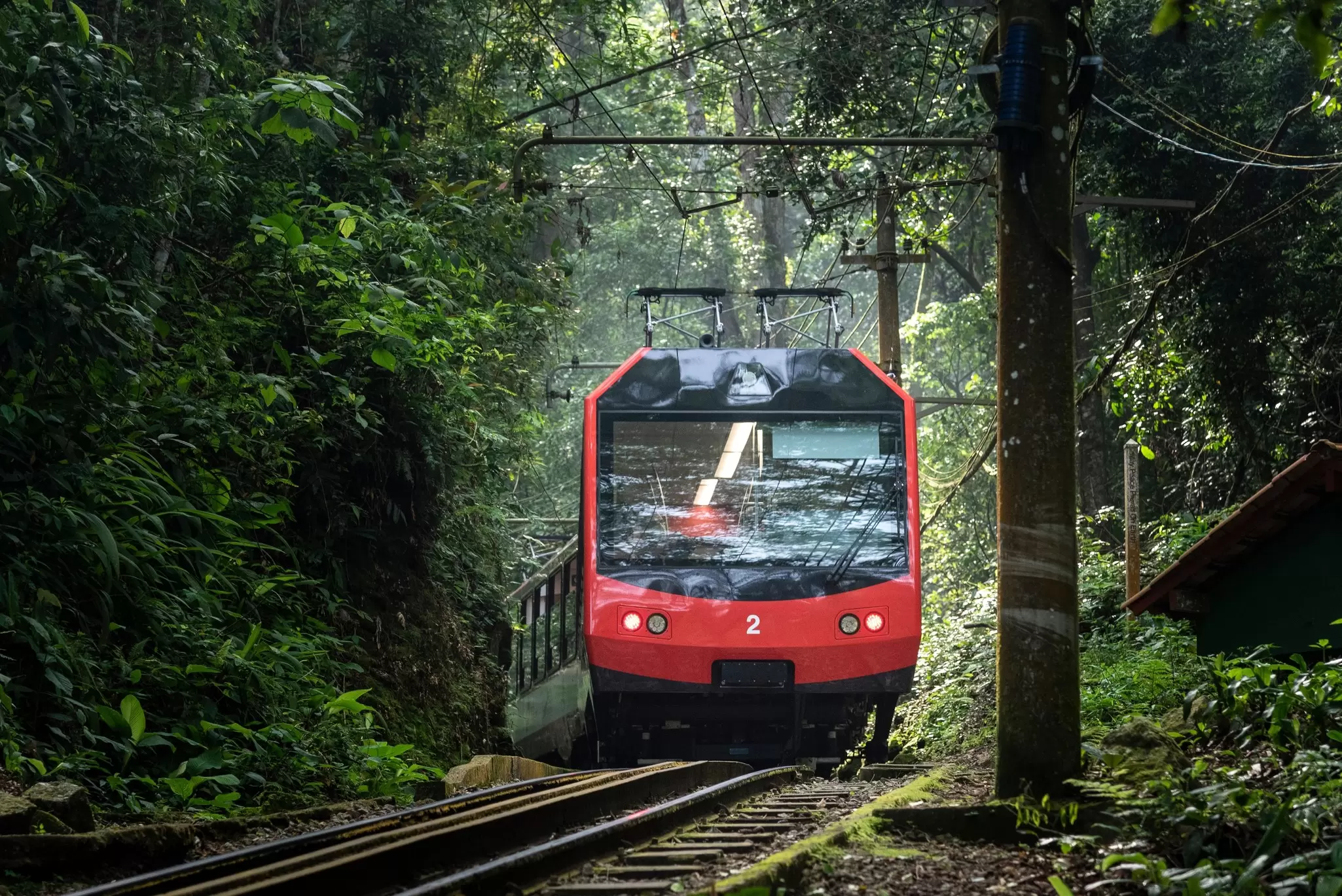
The distinctive red train leaves from its station in Cosme Velho on a 20-minute journey to the top – buy tickets in person or online (tremdocorcovado.rio). Official vans, which leave from Largo do Machado, Copacabana, Barra da Tijuca or the Paineiras Visitors Center, can be prebooked online (paineirascorcovado.com.br) or in person at a departure point.

If you're feeling particularly fit, there is a hiking trail from Parque Large to Corcovado (it's a two-hour, entirely uphill hike); or you can cycle through the Tijuca National Forest from Horto (also entirely uphill). Either way, purchase your entrance ticket to the site upon arrival at the Paineiras Visitors Center.