Aug 5, 20265 min read
A Guide to the Marrakesh-Timbuktu GalleryAug 5, 2026
5 MIN READ

Writer
The Marrakesh-Timbuktu Stage 7 gallery. Speaking Objects SARL

Writer
Highlights
Lonely Planet writer Helen Ranger guides visitors through the Marrakesh-Timbuktu gallery.
Follow caravan routes through exhibits on Amazigh, Tuareg and West African cultures.
Walk seven minutes from Djemaa El Fna; entry is 100 dirham, free for under-12s.
Order tea under a Moroccan tent on the rooftop, then try Naranj for Lebanese fare.
Lonely Planet may earn a commission from affiliate links on our site. All recommendations and reviews reflect our own independent opinions.
Marrakesh, built around 1070, has always been a vital trading hub. Caravan routes from the other side of the Sahara crossed deserts and mountain ranges to carry goods from one population center to another. Gold, salt, hides and handicrafts, foodstuffs and fabrics – all were traded along these routes. And so Marrakesh emerged as the trade and cultural exchange outpost it still is to this day. At the Marrakesh-Timbuktu gallery (formerly Musée Tiskiwin), visitors can delve into the history of the art and culture found along these arteries across the Sahel (northwest Africa).
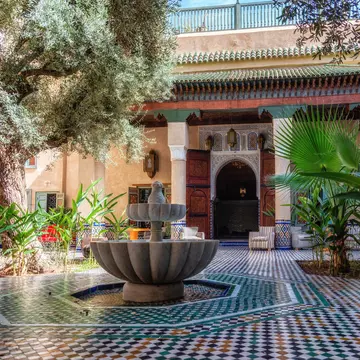
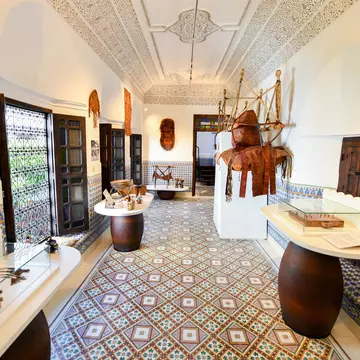
The collection at this beautifully laid-out exhibition space in a newly restored riad in the medina was assembled by Dutch anthropologist Bert Flint, who spent most of his life in Marrakesh (he died in 2022 at age 91). He traveled around in the region and worked to understand how the various cultures – the Amazigh, the Tuareg of North Africa and the peoples of West Africa – formed a cohesive whole across the continent, finding the inherent beauty in everyday objects such as painted leather cushions used in tents, carved wooden stakes, camel saddles, baskets, spoons and carpets.
Prepare for your own exploration of the collection with this guide to the Marrakesh-Timbuktu gallery.
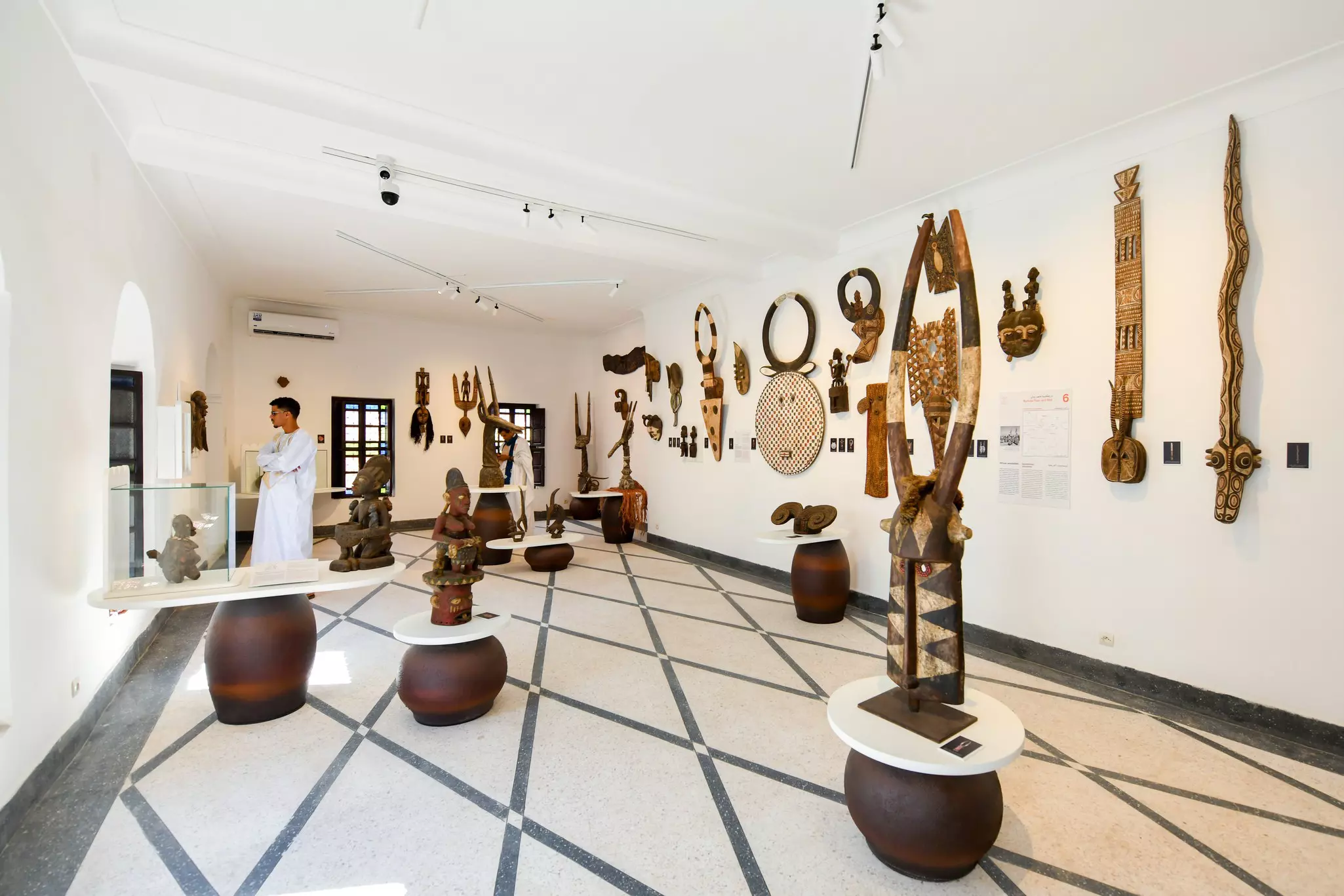
Visitors to Marrakesh-Timbuktu follow a journey aping the caravan routes across the Sahara, moving in a wide circle through two enormous salons and six rooms. First up is the Neolithic art from the Sahara, dating back 7000 years, when the Sahara was a grassland teeming with animals and its people were hunter-gatherers. Examples of their rock art, figurines and tools are on view.
As the Sahara started drying up about 5000 years ago, people moved to the edges of the desert, and vital trade evolved into long, arduous journeys. People living along the caravan routes used whatever was at hand to make the objects they needed or traded. The people of the Middle Atlas herded their animals at different altitudes depending on the season, so the baskets, ceramics and cedar crafts that are displayed were functional for their owners but also feature patterns and markings that gave them prestige and even denoted magical powers.
Seminomadic Amazigh people raising sheep and goats lived in the eastern High Atlas Mountains. Women worked with wool to make textiles and carpets. This makes for a fascinating exhibit of their tents in Stage 2, examining how they were built and arranged inside, before leading into Stage 3, where visitors see how people in Algeria farmed the valley oases along rivers. These communities made mud bricks to build kasbah (fortresses) and fortified villages where craftspeople, caravan traders and jewelers settled.
In the heart of the Sahara in Stage 4, the Tuareg people come to the fore. They raised goats and camels, going north in the winter to trade leather handicrafts for dates and heading south in the summer, their camels carrying salt into Niger to trade for food, handicrafts and textiles. The women made intricate, colorful leather goods such as painted bags.
Stage 5 proceeds westward to the Niger River. The Tuareg communities here were seminomadic. They lived in tents made of skins or grass mats, so their household goods had to be transportable; they carved stakes, made calabash holders and wove mats.
By Stage 6, visitors reach the legendary Timbuktu. By the 14th century, the city was a famed center for scholarship and science. The West African people living here were farmers and hunters, and their animist and ancestor worship statues, masks and spoons are on display.
Move toward modern-day Mauritania in Stage 7, meeting Amazigh and Arab communities en route who raised sheep and goats. The women worked the leather, using colors that still shine today. The last leg of the journey ends in Marrakesh, and visitors can see on screens the brilliantly painted geometric ceilings of the remote western High Atlas Mountain mosques that so inspired Flint.
The final space holds special exhibitions and work by local artists, such as photographs by Boris Witjas of Marrakesh and mountain villages in the 1960s and 1970s.
Source note: This section draws on the Marrakesh-Timbuktu gallery’s exhibition materials. English and French panel texts by Sawsan Curation; exhibition curated by Sawsan Curation.
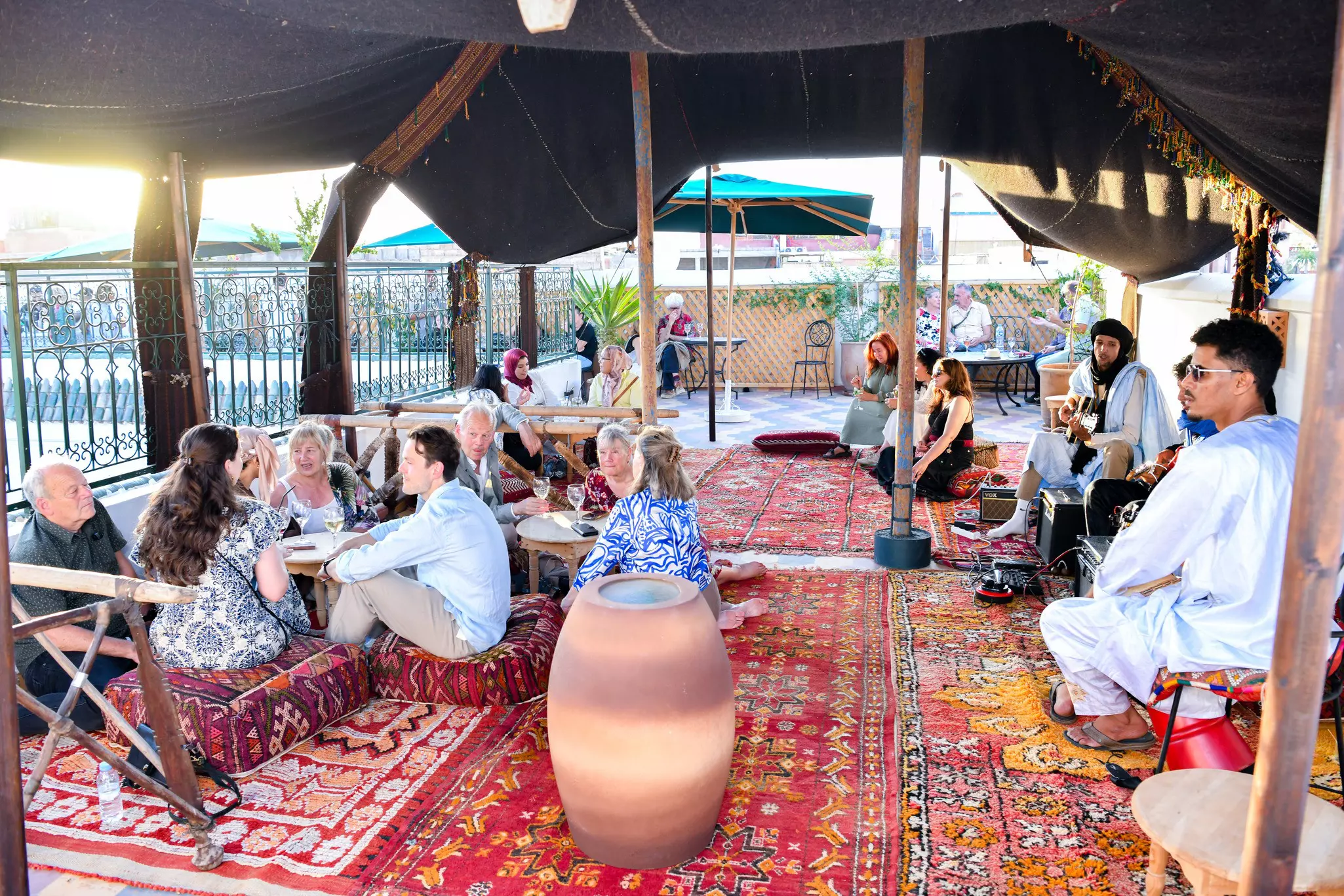
Visitors can sit on the rooftop under an authentic tent from southern Morocco and drink tea, coffee and soft drinks.
The gallery is at 33b Rue Boutouil, off Rue Riad Zitoun El Jdid, a 7-minute walk south from Djemaa El Fna and 10 minutes from Bahia Palace. It is open from 10am to 7pm every day (the last entry is at 6.30pm), and tickets are 100 Moroccan dirham. Admission is free for children under 12. It’s not possible to book online.
Count on at least an hour to wander through the exhibition space and have some refreshments on the rooftop.
All of the signage is in English, French and Arabic. There’s wi-fi throughout the gallery so you can use a smartphone to scan the QR codes at some of the exhibits too.
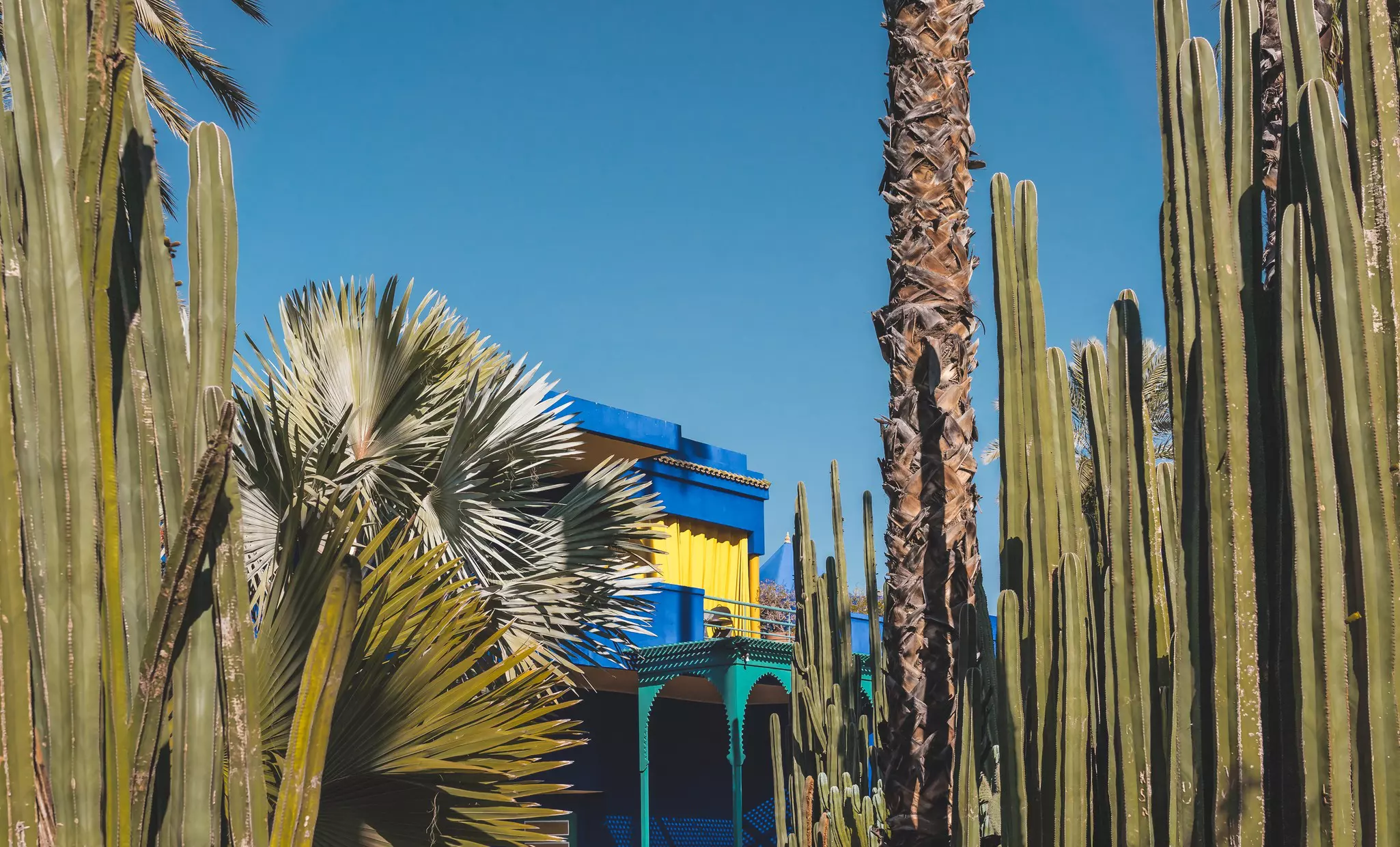
Flint donated 700 carpets and textiles to the Pierre Bergé Museum of Berber Arts inside the Jardin Majorelle in Marrakesh’s Ville Nouvelle neighborhood; they are displayed on a rotation.
Antiquarian Aziz El Khanjar’s tiny shop, Jewellery Aziz, is packed with treasures, many of which are museum quality. He and his father used to travel to the Sahara and further afield, and discuss their findings with Flint. Jewellery Aziz is next to the pharmacy in the Funduq Louarzazi at Bab Ftouh, just north of Djemaa El Fna.
The ground floor of the riad is wheelchair accessible, but the upper floors are not, since elevators cannot be installed in these old houses.
Rue Riad El Zitoun El Jdid has plenty of good restaurants. Look out for Naranj for excellent Lebanese fare, Mandala Society serves an Icelandic-Moroccan fusion brunch, and Black Chich specializes in African dishes.
Explore related stories