Sep 28, 20268 min read
Top things to do in Vang Vieng, LaosSep 28, 2026
8 MIN READ

Writer
Vang Vieng, Laos. Em7/Shutterstock

Writer
Lonely Planet may earn a commission from affiliate links on our site. All recommendations and reviews reflect our own independent opinions.
Surrounded by limestone karst mountains and the Nam Song River, Vang Vieng remains one of Laos’ best places to build a trip around outdoor adventure. While it is still a favorite on the backpacker trail, the town now draws in outdoor enthusiasts who want to explore caves, lagoons, a range of river activities and hiking.
Instead of booking group tours online to the main attractions, wait until you can shop around in town to get better deals. If you want to do it on the cheap, rent a motorbike, bicycle, buggy or take a tuk-tuk to reach the blue lagoons, caves and viewpoints outside of the city center. Year-round activities also include kayaking and tubing on the Nam Song River. For the best views of the city, take a hot air balloon or go paramotoring for a great perspective of rice fields, rugged limestone cliffs, and the city below.
After dark, Vang Vieng becomes lively, with crowded bars, a nightly street market, a range of restaurants and street food stalls in the center of town. It is an excellent base for active days outdoors, with a balance of nightlife activities to keep everyone entertained.
The caves around Vang Vieng are spectacular, but caves come with certain hazards: they’re dark, slippery and disorienting. Visit with a guide for deeper or less developed caves. Of the most accessible caves, many are signed in English as well as Lao, and an admission fee is usually collected at the entrance.
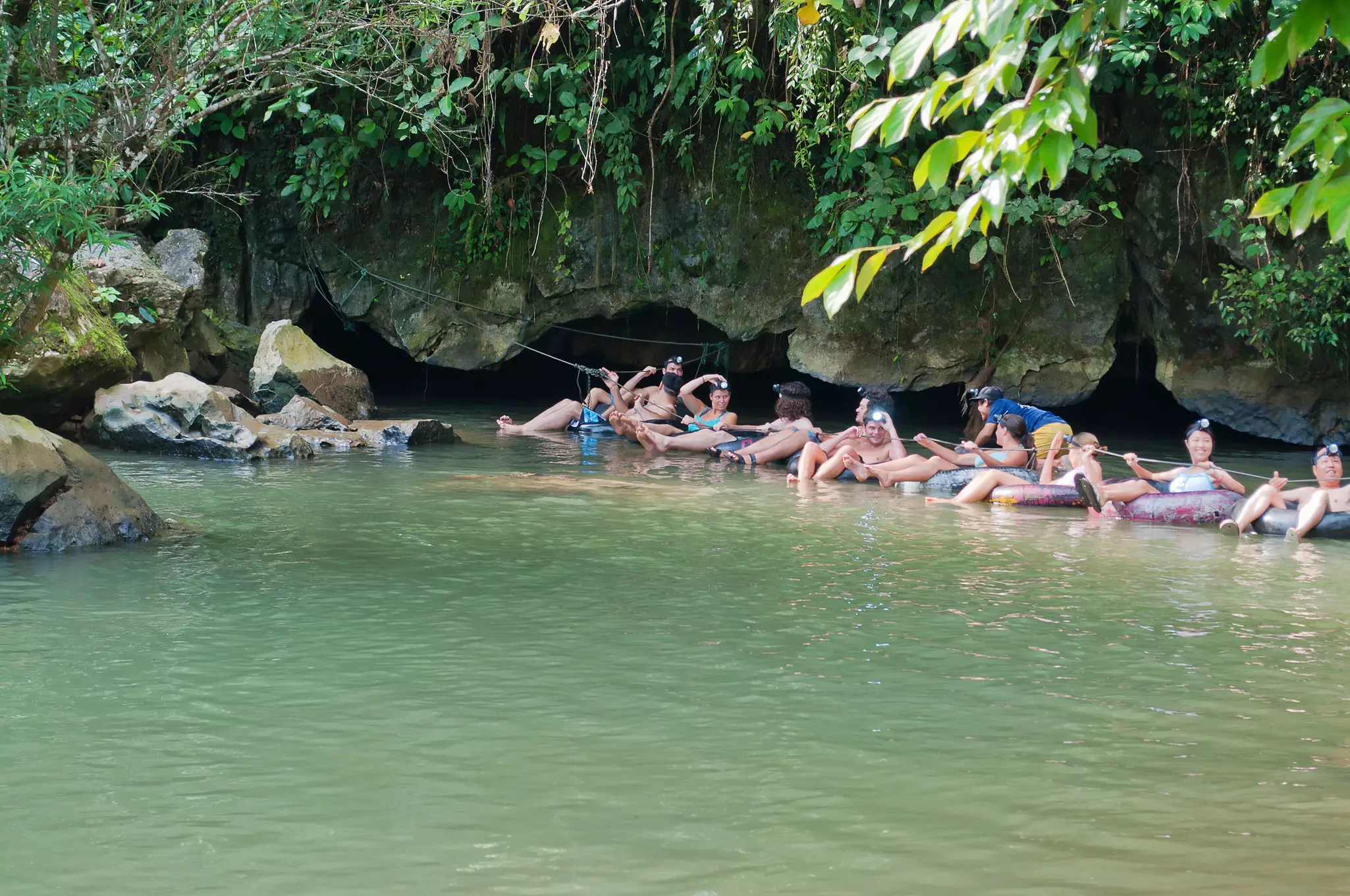
To visit a cluster of caves all within a short distance of each other, head about 10 miles north of Vang Vieng. Tham Nam is one of the most popular caves to explore. A small stream runs through its low entrance, and this is the cave most associated with tubing. Here, you can rent tubes and pull yourself through the cave by a series of ropes. It is often visited during group tours that include kayaking, ziplining or visits to nearby caves. Visit it yourself via motorbike, buggy or by arranging a tuk-tuk and paying 40,000 Lao kip (40,000K) to enter. Nearby, Tham Loup, is a large and fairly rough cavern with impressive stalactites. Tham Xang, in the same northern cave cluster, is a small cavern containing Buddha images and a Buddha footprint, plus an elephant-shaped stalactite that gives the cave its name.
The most famous of the caves around Vang Vieng, Tham Chang is one of the easiest cave stops to reach from town, located about a mile from the main tourist area. Stairs lead up to the main cavern entrance, where cool air, lit walkways, broad chambers and limestone formations make it a less demanding option than the caves farther out. Inside, it’s well-lit and has stairs that lead you to a viewpoint over the river. There’s also a blue lagoon nearby that you can swim in, which costs a separate fee.
Located west of Vang Vieng, the vast Tham Phu Kham is considered sacred by the Lao. The main cave chamber contains a reclining Buddha, and from here deeper galleries branch off into the mountain. Its hugely popular largely because of nearby Blue Lagoon 1; the cave is found down a short path from the lagoon. Inside, there’s a metal staircase throughout the cave, and it sits about 5 miles from town. During the rainy season, the rocky staircase that leads you to the cave entrance can be very slippery, so come prepared with the right shoes, not sandals.
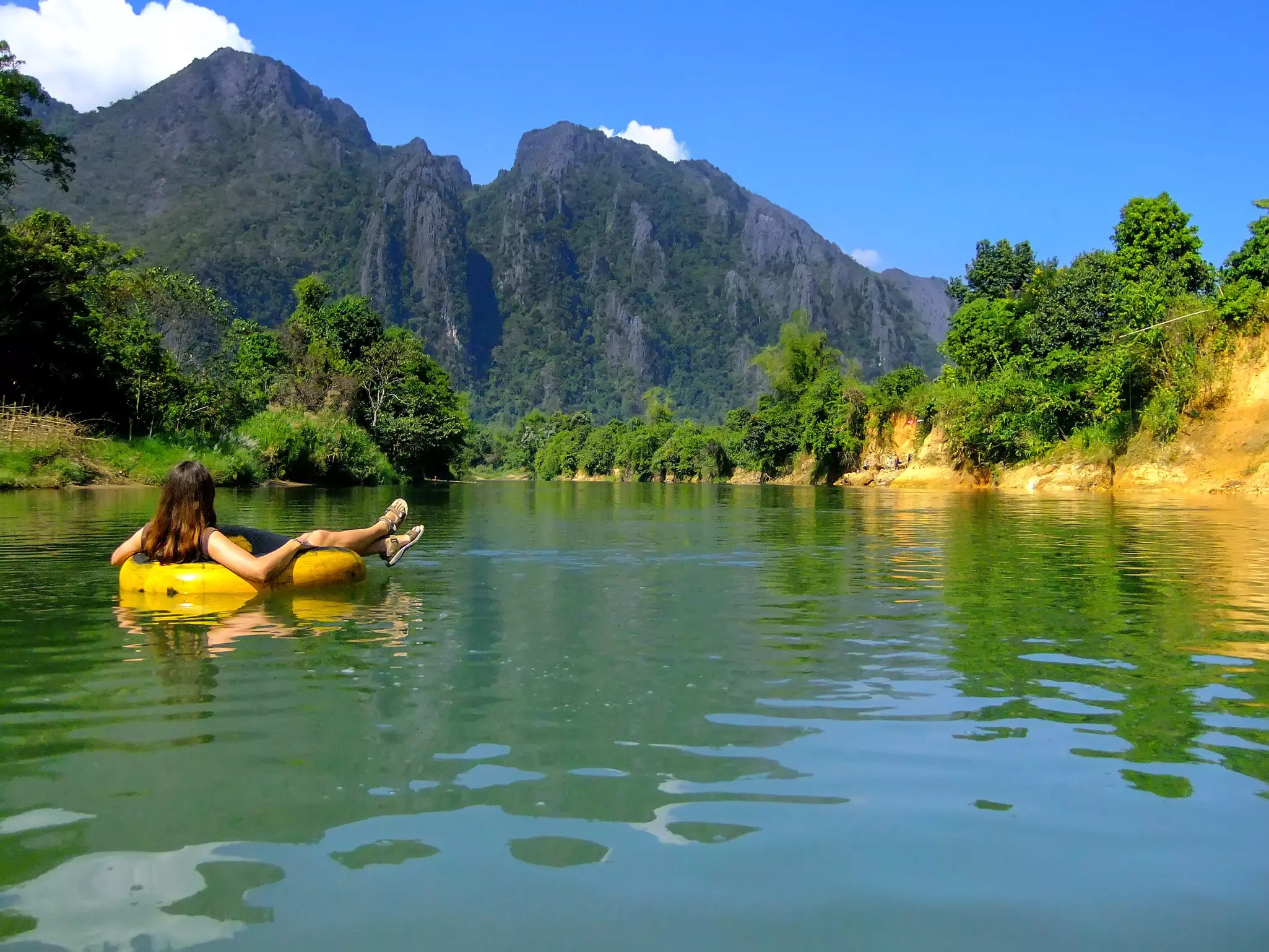
Tubing is one of the best things to do in Vang Vieng, especially to escape the heat. Whether tubing or kayaking, rivers can be dangerous, and in times of high water, rapids along the Nam Song can be quite daunting. Wear a life jacket when tubing, and it's worth asking how long the trip should take (durations vary on the time of year, usually lasting about 4 to 5 hours, depending on how many stops you take.)
Back in the day, there was more of a party scene with dozens of bars lining the river. Today, there are only a handful of bars that you can stop at along the way, if you so choose. Finally, don't forget that while tubing the Nam Song might be more fun when you're under the influence, it's also more dangerous. Tubing can be easily arranged through your accommodation or tour operators.
Planning tip: Take something – a sarong, perhaps – to put on when you finish the trip and have to walk through town. The locals don't appreciate people walking around in bathing suits.
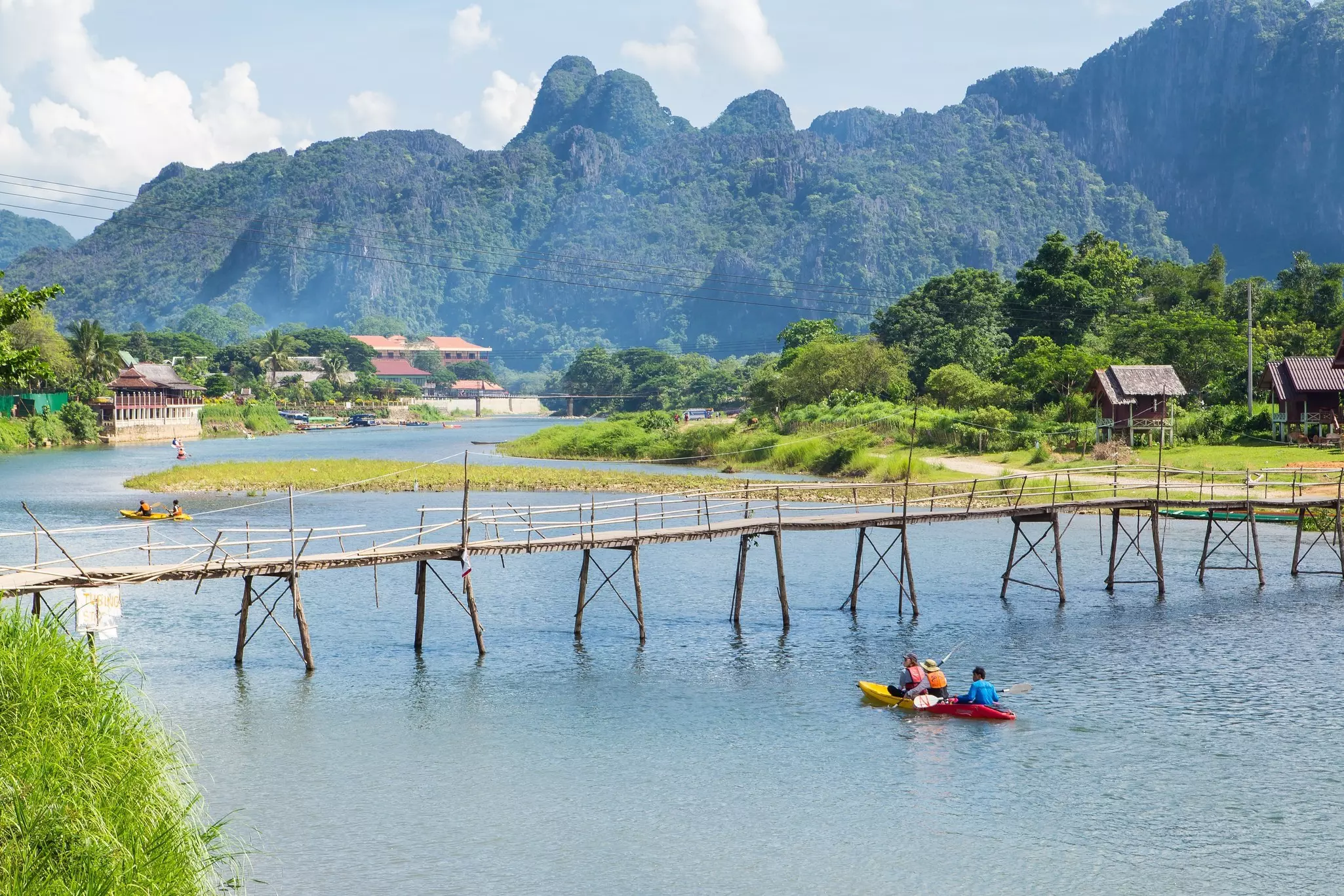
Kayaking is still a popular daytime activity, and trips are typically combined with other activities such as visits to caves and villages, optional climbing, cycling and with a few rapids if you are visiting during the rainy season.
There are loads of operators, and prices are reasonable, depending on if you want to do a full-day or half-day trip. Some of the best kayaking trips along the Nam Song are conducted by the excellent Green Discovery Laos and involve a lot of paddling.
Local tip: Wait until you are in town to shop around for the best prices and to choose what combination tour resonates with you the most. Booking online can be extremely overpriced compared to what you’ll be quoted on site.
Rock climbing is not the biggest draw in Vang Vieng these days, but it is still another way to experience the landscape. One of the most established climbing schools, Adam’s Rock Climbing School offers half-day courses, with guides, transport, water and equipment included. The course covers the basics, and everything from knots to foot placement. More experienced climbers can still find bolted routes around Sleeping Wall, Sleeping Cave, Secret Canyon and Pha Daeng Mountain, though older route counts should be treated carefully.
Planning tip: The dry months are still the safer bet for climbing, while some shaded or overhanging limestone routes may remain usable during lighter rain.
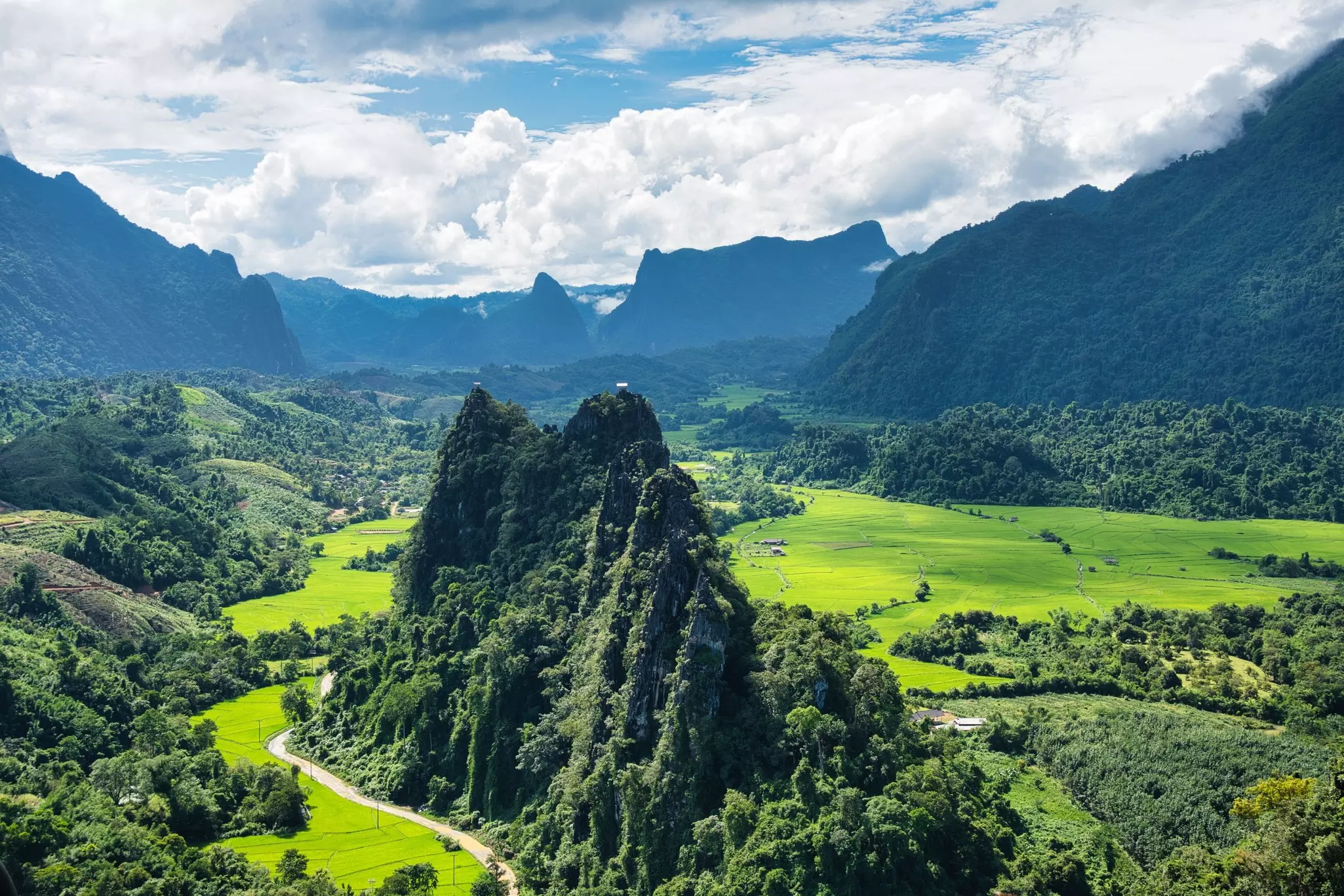
Located 5 miles west of central Vang Vieng, Nam Xay Viewpoint is known for its panoramic views and the motorcycle on top that you can sit on for photo ops. The climb is steep, almost vertical, scrambling over rocks, so it feels more like rock-climbing than a traditional hike with steps. There’s uneven terrain, and a handful of ropes and bamboo rails help you reach the summit, with one small hut to rest and take a break. It’s a strenuous hike but the views of karst mountains, lush rice fields and the valley below are some of the best perspectives of the countryside, with many going during sunrise and late afternoon.
Another popular and less difficult hike nearby, is the Pha Hor Kham Viewpoint. This hike combines two viewpoints in one, one that features a small model airplane and the other one that overlooks a different section of the valley with a winged horse statue. Most people will find it easier, with a more gradual ascent and places to rest along the trek.
Planning Tip: Nam Xay becomes extremely slippery after rain, particularly during the wet season. Avoid the trail altogether when it gets muddy, and almost impossible to climb. Wear hiking shoes; many visitors come directly from the nearby Blue Lagoons wearing sandals, which makes the climb difficult due to sharp rocks and tree roots.
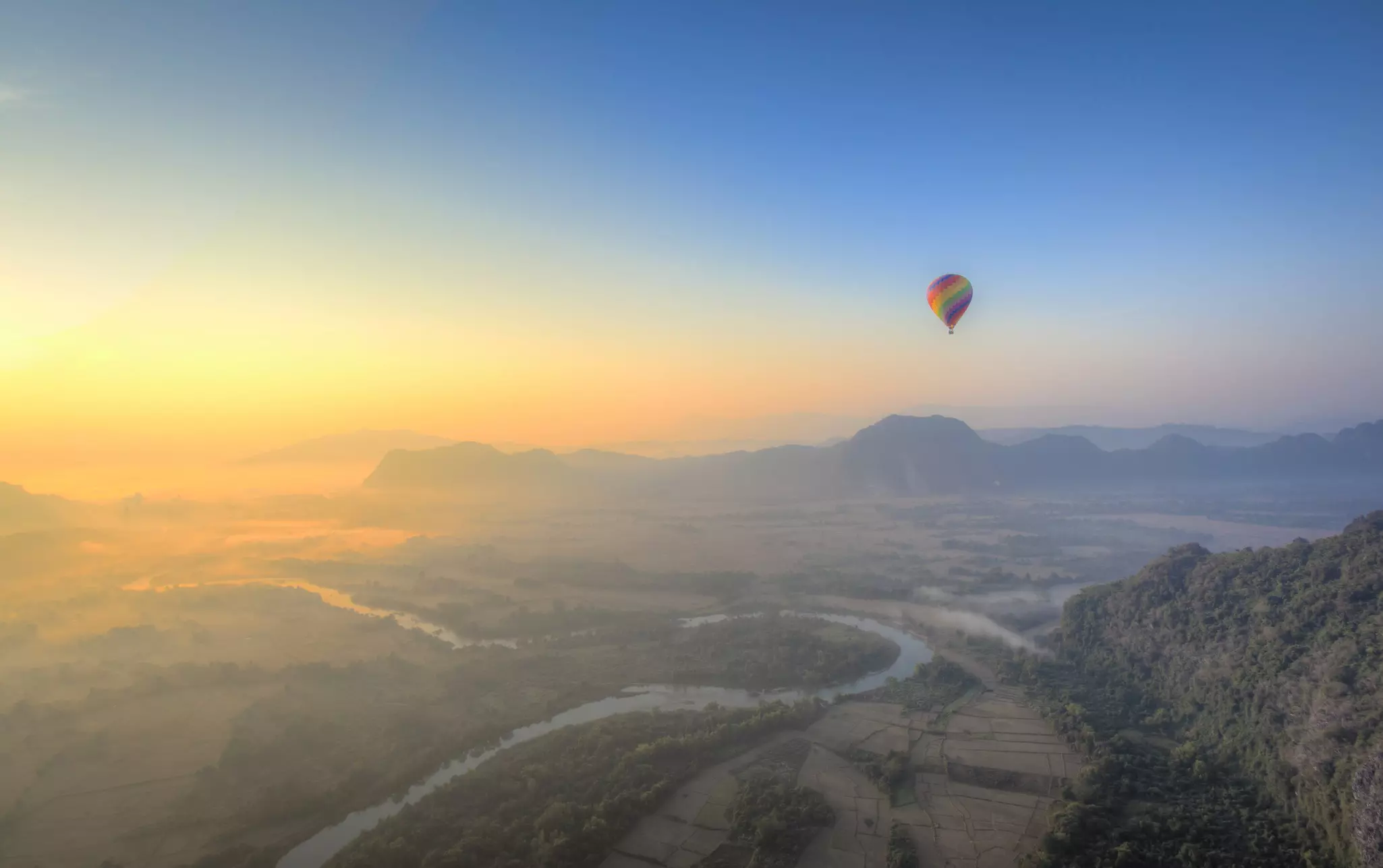
Another popular attraction to get a unique view of the city is a ride in a hot-air balloon or paramotororing, which will take you over the city center, near the mountains, with great views of the river below. Most depart in the early morning before sunrise and a few hours before sunset every day, weather permitting and can be booked at several venues in town. Depending on the season, paramotoring starts at around US$80-100 for a 20-minute ride, but the views are completely worth the cost of entry. For the hot air balloons, Above Laos offers 40-minute or 1-hour tours for about US$150 per person. Sunrise and sunset are excellent times to book.
A popular half-day trip that's easy to do on your own takes in a few worthwhile caves and blue lagoons, all within a short, clearly marked walk. Begin this excursion by riding a motorcycle or taking a jumbo 13km north along Rte 13, turning left a few hundred meters beyond the barely readable Km 169 stone, a roadside marker.
A road leads to the river, where you cross a toll bridge and encounter Tham Sang. Continue west to Tham Nam. From here, a path takes you about 1km northwest to the entrances of Tham Hoi and Tham Loup.
Just north of these caves is Blue Lagoon 4, another spring-fed swimming stop. From there, it's an easy 1km walk back to the bridge. This loop is usually included in the kayaking/trekking/tubing combo trip run by most Vang Vieng tour operators. There are six lagoons in total, spread over the countryside, all distinct in their own beauty and with different amenities like ziplines. The most cost effective way to see them is renting a buggy or motorbike and spending the entire day visiting them all to discover your favorites.
Downtown Vang Vieng is easily negotiated on foot. If you want to explore the outdoor attractions, renting motorcycles costs roughly 150,000K per day. To save on seeing attractions like the caves and lagoons, share a tuk-tuk with a group of new friends and use your bargaining skills. Let the drivers know which activities you want to see prior to hopping in.
Explore related stories