Aug 13, 20268 min read
A Walking Tour of Patan, Nepal's City of History and HeritageAug 13, 2026
8 MIN READ
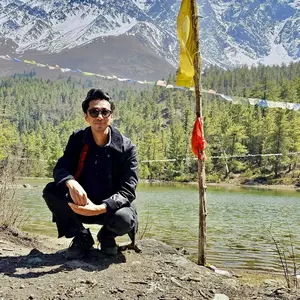
Writer
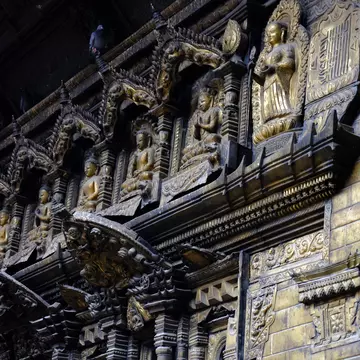
Gilded panels on the Hiranya Varna Mahavihar (Golden Temple) in Patan, Nepal. Bibek Bhandari

Writer
Highlights
Writer Bibek Bhandari guides a 2km walk through Patan's alleyways and sacred courtyards.
Start at Patan Dhoka and head south through hidden passages to Mikha Bahal's Buddhist courtyard.
Sri Bahal's Buddhist manuscripts date to the 1300s; Haka Bahal shelters Patan's living goddess.
End at UNESCO-listed Durbar Square, where royal courtyards and the stone Krishna Mandir await.
Lonely Planet may earn a commission from affiliate links on our site. All recommendations and reviews reflect our own independent opinions.
Nepal-based writer Bibek Bhandari offers a walk through the alleyways of Patan, visiting temples, historic courtyards and sacred ponds away from the tourist trail.
Many streets in the Nepali city of Patan have no names, yet few locals lose their way. For centuries, temples, shrines and monasteries have served as landmarks, with gods – not signposts – guiding locals and visitors through the ancient royal city formerly known as Lalitpur.
In medieval times, Patan was one of three competing city-states in the Kathmandu Valley – Lalitpur (Patan), Kantipur (Kathmandu) and Bhadgaon (Bhaktapur). Spilling south of the Bagmati River, modern Patan is still a maze of narrow gallis, or alleyways, and hidden passages threading together ancient residential compounds.
Not always pinned on maps, these passageways open onto noisy commercial streets crowded with speeding motorbikes or sacred and serene bahals, or bahas – open Buddhist courtyards that have long served as communal spaces for Patan residents and centers for Buddhist teaching and prayers.
Exploring Patan's historic quarters is one of Nepal's great pleasures, so here is a walk that steers away from the usual tourist trail, offering a glimpse into how faith, rituals and the daily routines of locals are intertwined in this 2000-year-old city.
Start/End: Patan Dhoka/Patan Durbar Square
Distance: Around 2km
Approximate walking time: 2 hours
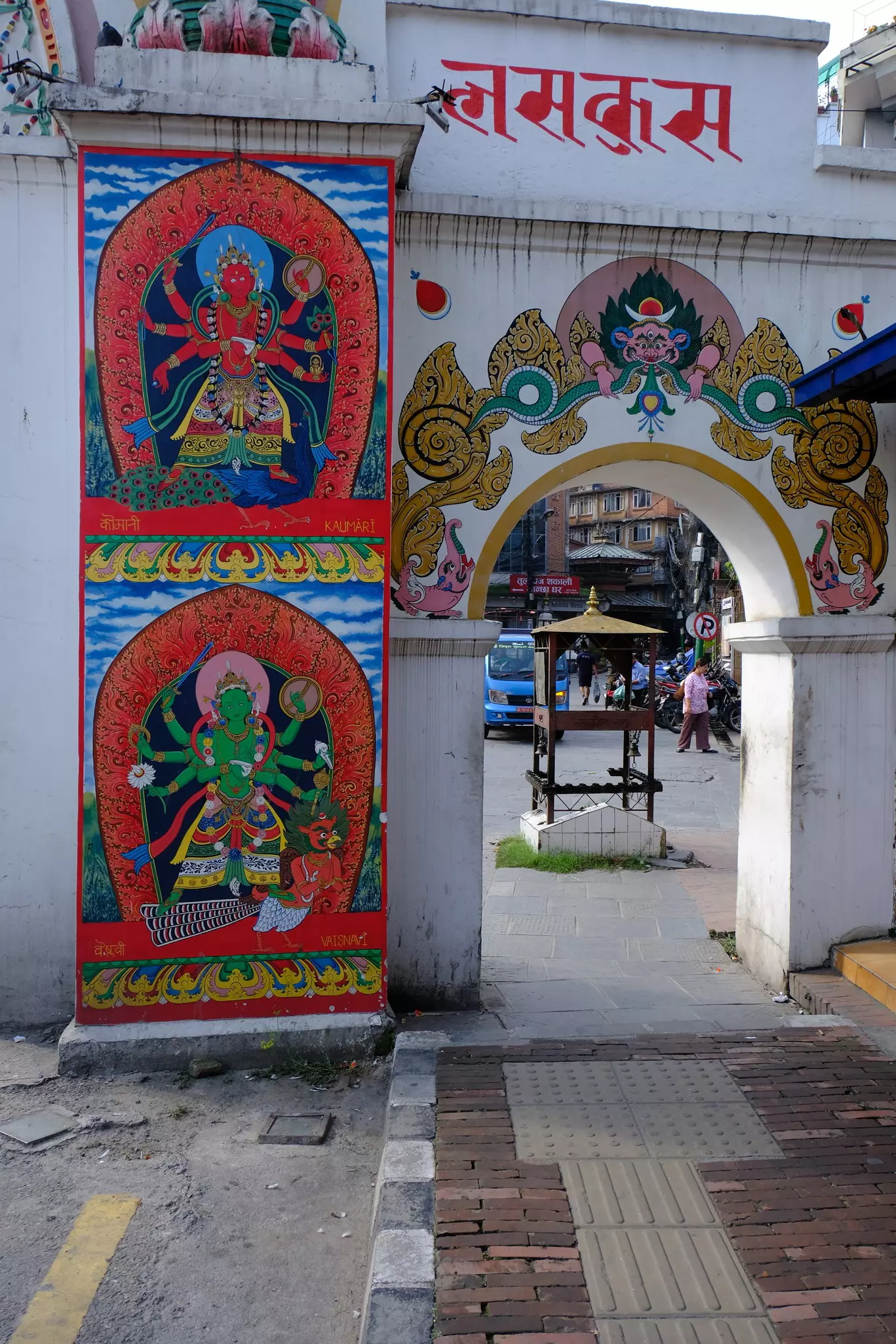
Home to Patan's most famous temples and royal monuments, palatial Durbar Square is the starting point for many city tours, but this walk begins from less-frequented Patan Dhoka (Patan Gate) about a kilometer northwest. This brightly painted gateway was once a major entry point to the kingdom from Kathmandu, and it still serves as a bustling commercial center today.
After passing through the gate, you’ll spot a 17th-century temple dedicated to the elephant-headed Hindu deity Ganesh. Nearby are an ancient well, the stone water tank known as Jadhu Hiti, and a falcha, one of the traditional shelters for resting found dotted throughout the city.
“When you entered a Newari settlement in olden times, they always had certain elements for visitors, including ponds, rest areas, taps and a drinking water tank,” explains Sandip Maharjan, a culture and heritage guide who also co-runs the Ancient Kathmandu Instagram account, focusing on the city’s history and culture.
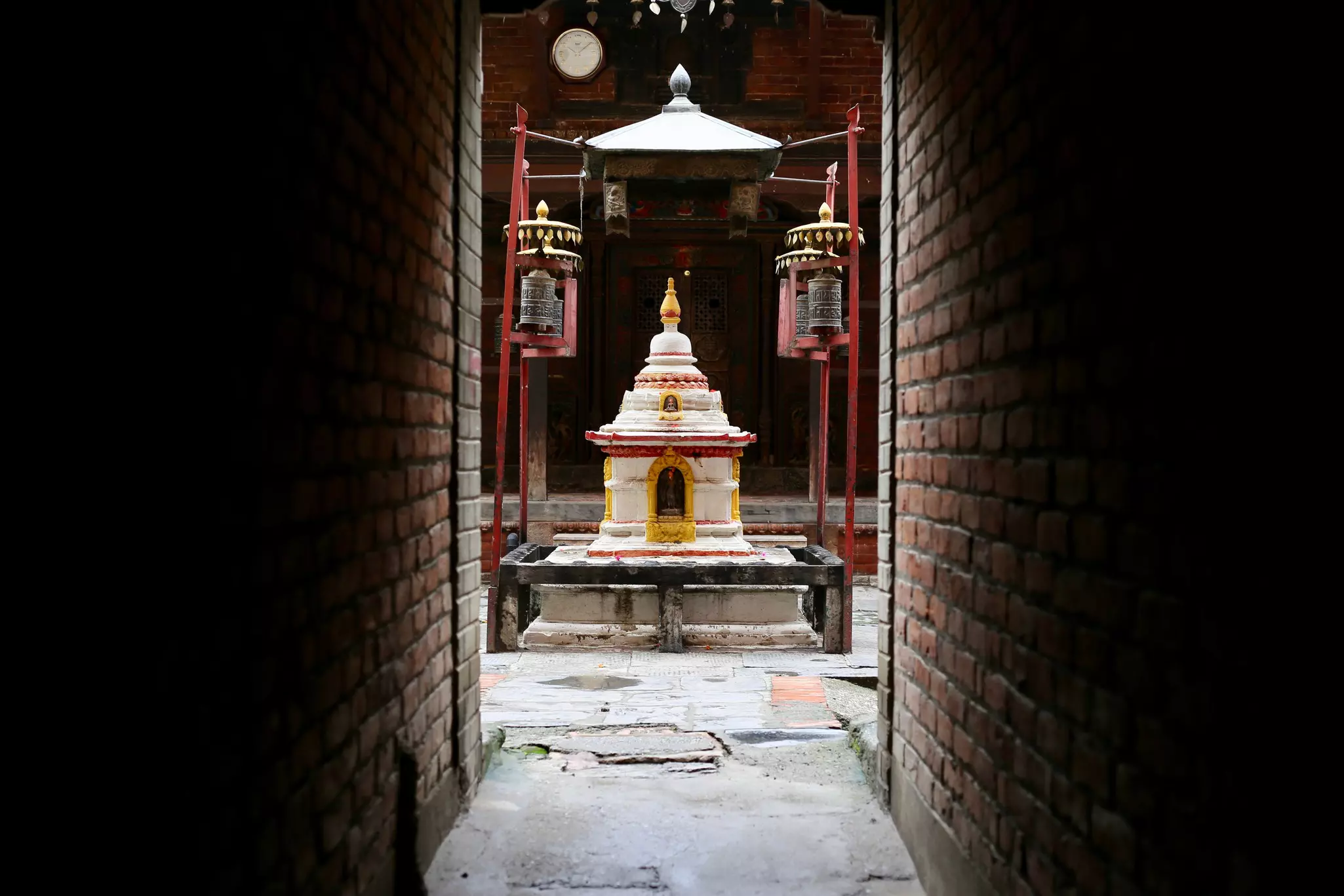
Navigating Patan’s streets is a journey through the past and present – historic brick-and-mud homes with elaborately carved wooden windows and doors stand sandwiched between nondescript concrete houses. Along the streets, hidden alleyways provide access to courtyards that hold deep religious and cultural significance.
When exploring Patan's backlanes, you'll be better off with a guide than a map, but even if you are exploring alone, you should be able to find the alley leading from Patan Dhoka to Mikha Bahal (Supreksana Mahavihar), about 400m south.
Inside this historic courtyard, a Buddha statue behind a metal fence receives prayers from devotees. The streaks of sacred vermilion powder outside are left by worshippers demonstrating their faith even though the deity is untouchable.
The barrier also serves a practical purpose – hundreds of Nepal’s sacred sculptures were stolen and smuggled to museums and private collections in the West after Nepal opened to foreign tourists in the 1950s, though some are gradually being returned (you can see examples in Kathmandu's National Museum).
As you meander through the interconnected courtyards in Mikha Bahal, consider their architectural design. The passages aren’t always straight – some cut diagonally, and others turn at a 90-degree angle. Maharjan describes this as an “invisible wall” that once provided residents with some protection from invaders.
The narrow bends of these passages also affect the airflow through the courtyards, helping to keep these communal spaces naturally cool – an ancient concept that is finding new uses in modern urban design.
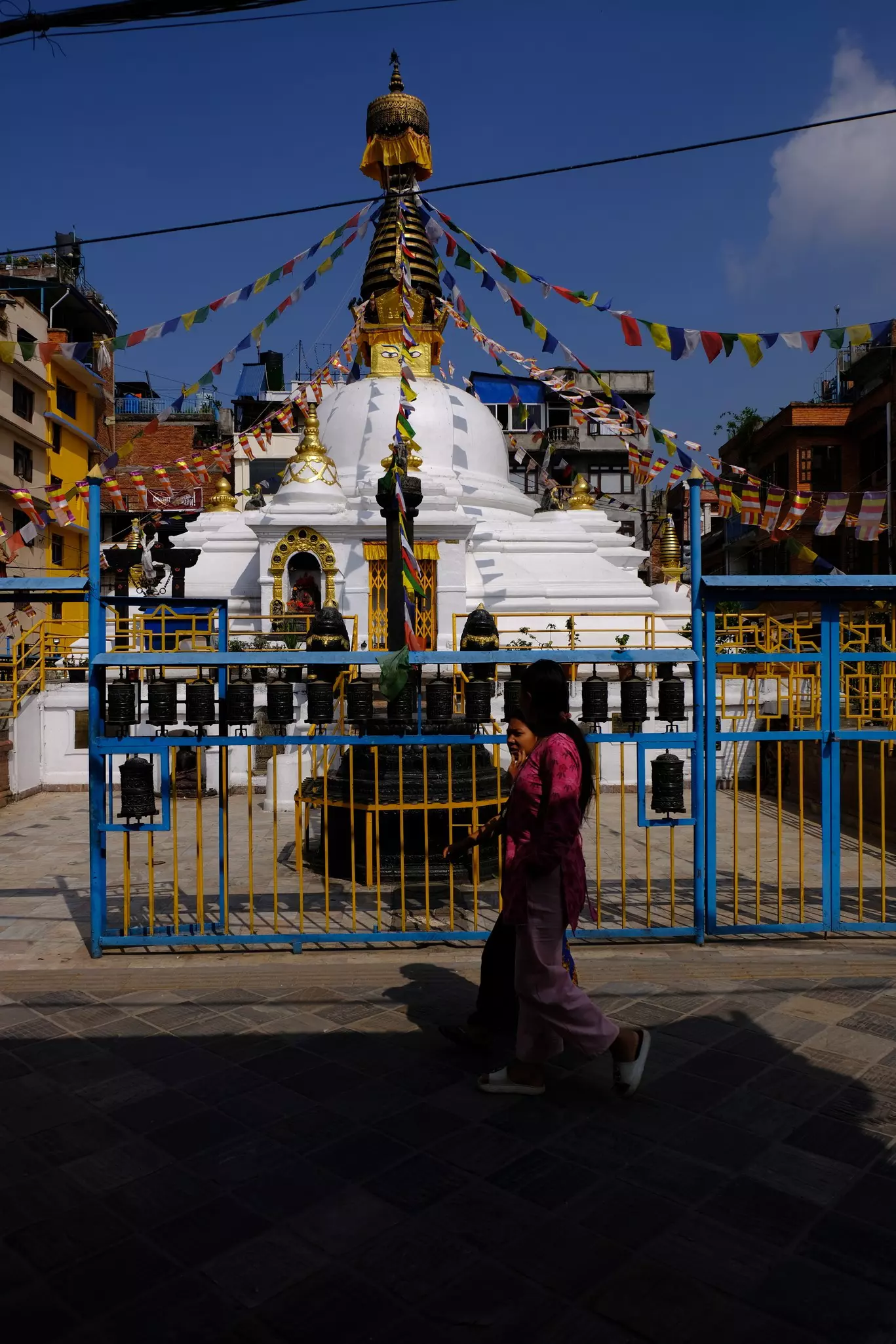
A 10-minute walk from Mikha Baha will land you at Pim Bahal Pokhari, known as Jagmadu Pukhu in the Newar language, which translates to “pond without foundation” in English. Here, alongside a Krishna shrine on a brick causeway, you'll find the imposing, whitewashed Ashok Chaitya. This is thought to be the center of the ancient city, which is marked out by four stupas built by the Indian Emperor Ashoka during his visit to the Kathmandu Valley over 2000 years ago.
Facing this important Buddhist shrine is the pond, which folklore says was built overnight by demons. It's also an impressive accomplishment of water management, incorporating rainwater harvesting and groundwater recharge systems, and feeding traditional water spouts that once provided drinking water to Patan residents.
Today, Pim Bahal is a confluence of history, heritage architecture and modern Nepali culture. Around the pond, dotted cafes and restaurants are popular hangout spots for local young people.
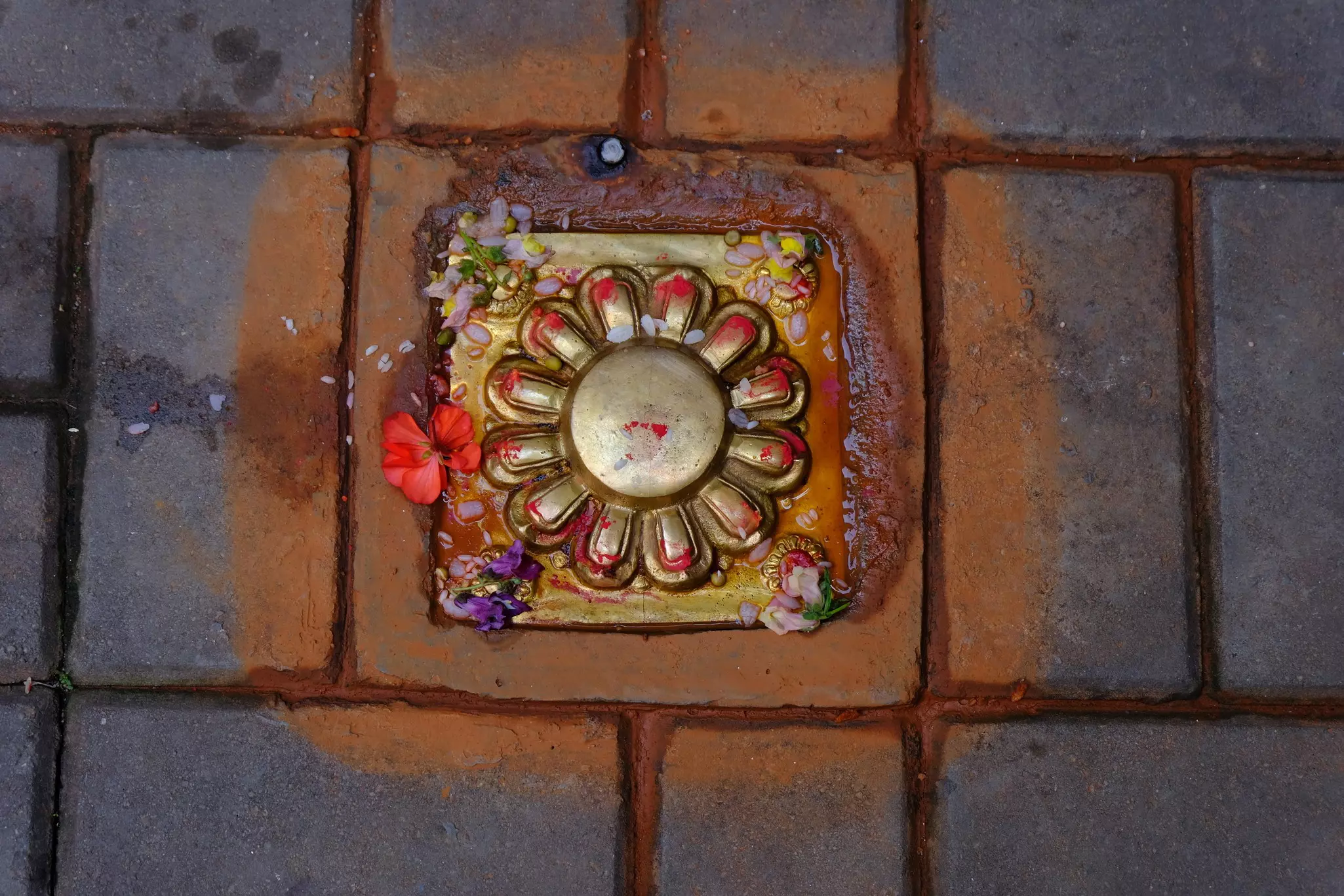
Walking through Patan offers lessons in the symbolism and rituals that form part of daily life in Nepal. It’s common to find circular stone or metal fixtures known as pikhalukhu in front of Newari houses. These are the first points of worship every morning, and you'll often find them adorned with flowers and vermilion powder.
“This is where the spirit of the house stays and it also demarcates the boundary between the spiritual and physical world,” Maharjan says. “During the shraddhas (death anniversary ceremonies), we offer food to our dead, and the pikhalukhu is an acknowledgement that while they are members of the family, they should not cross the boundary to be with the living.”
Patan’s streets are dotted with temples and monasteries, but daily rituals unfold at every turn in the city. Inside the bahals, mornings usually bring the sound of temple bells and the smell of gwara mari – fried dough balls – and freshly brewed chiya, or milk tea, which you can order in any local tea shop.
Toward dusk, the scent of charred meat escapes from green-curtained doorways, while in tucked-away corners, women are sometimes seen distilling aila, the valley's potent grain-based liquor, used as an offering during festivals and ceremonies. “The streets of Patan mean life,” Maharjan says. “There’s everything here.”
An unassuming alley leading off Pim Bahal will take you into the courtyard housing the Bishweshwor Temple, a rare Hindu place of worship in a traditionally Buddhist area. The temple is not listed on Google Maps, so ask a local – English is commonly understood – to point you in the right direction.
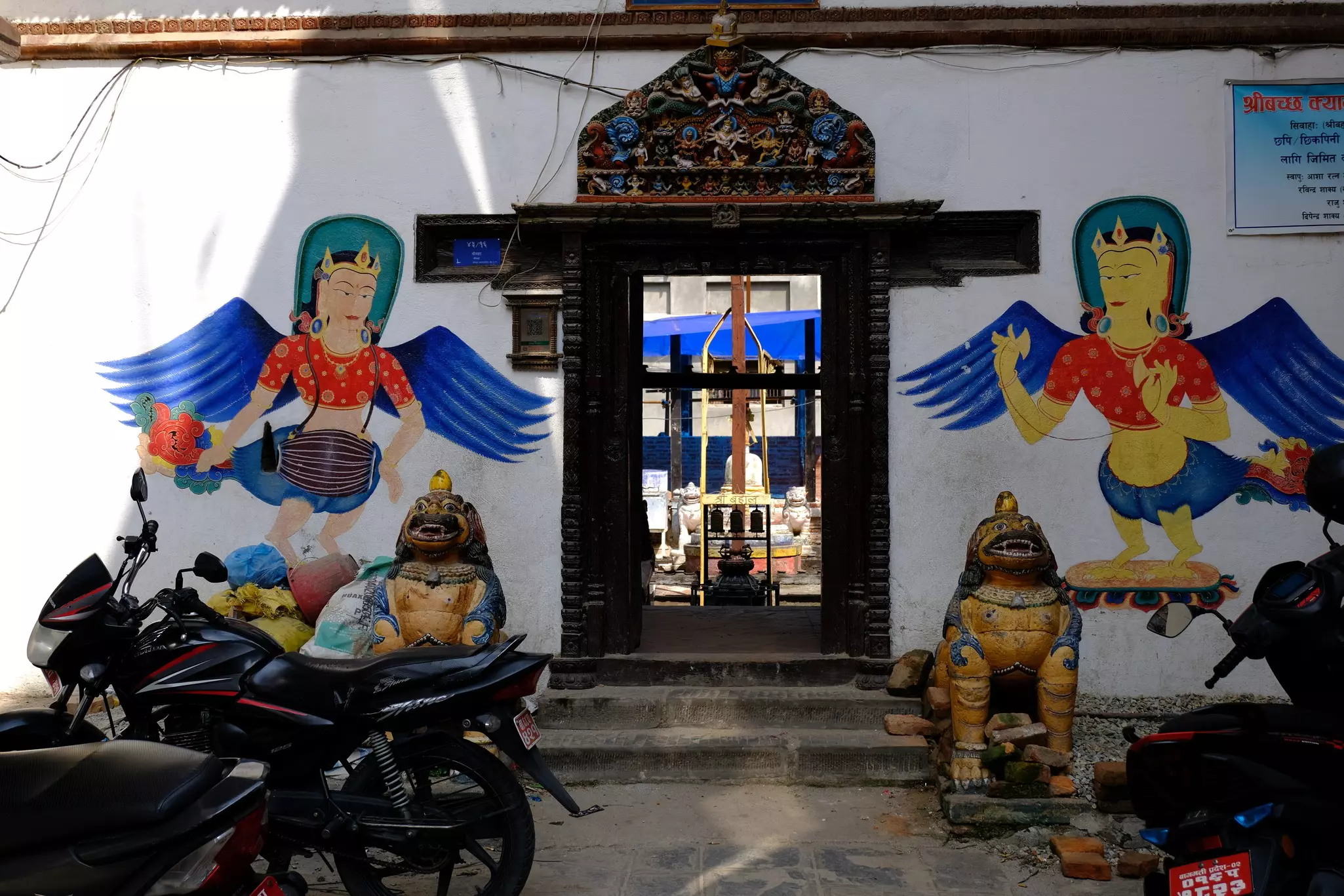
After exiting the temple, you can walk south through the stone-paved streets past local mom-and-pop stores to Sri Bahal (Sri Vaccha Mahavihar), one of the 18 major Buddhist courtyards in Patan. At the intricately carved entrance, visitors are greeted by paintings of gandharvas (celestial musicians); inside are revered Buddhist manuscripts dating back to the 1300s.
Other smaller bahals dot the surrounding streets, including Na Bahal (Padmavati Mahavihar), a short walk away. You can then make your way east and detour south to reach the Purnachandi Pukhu, another sacred pond flanked by an ancient Siddhi Lakshmi temple.
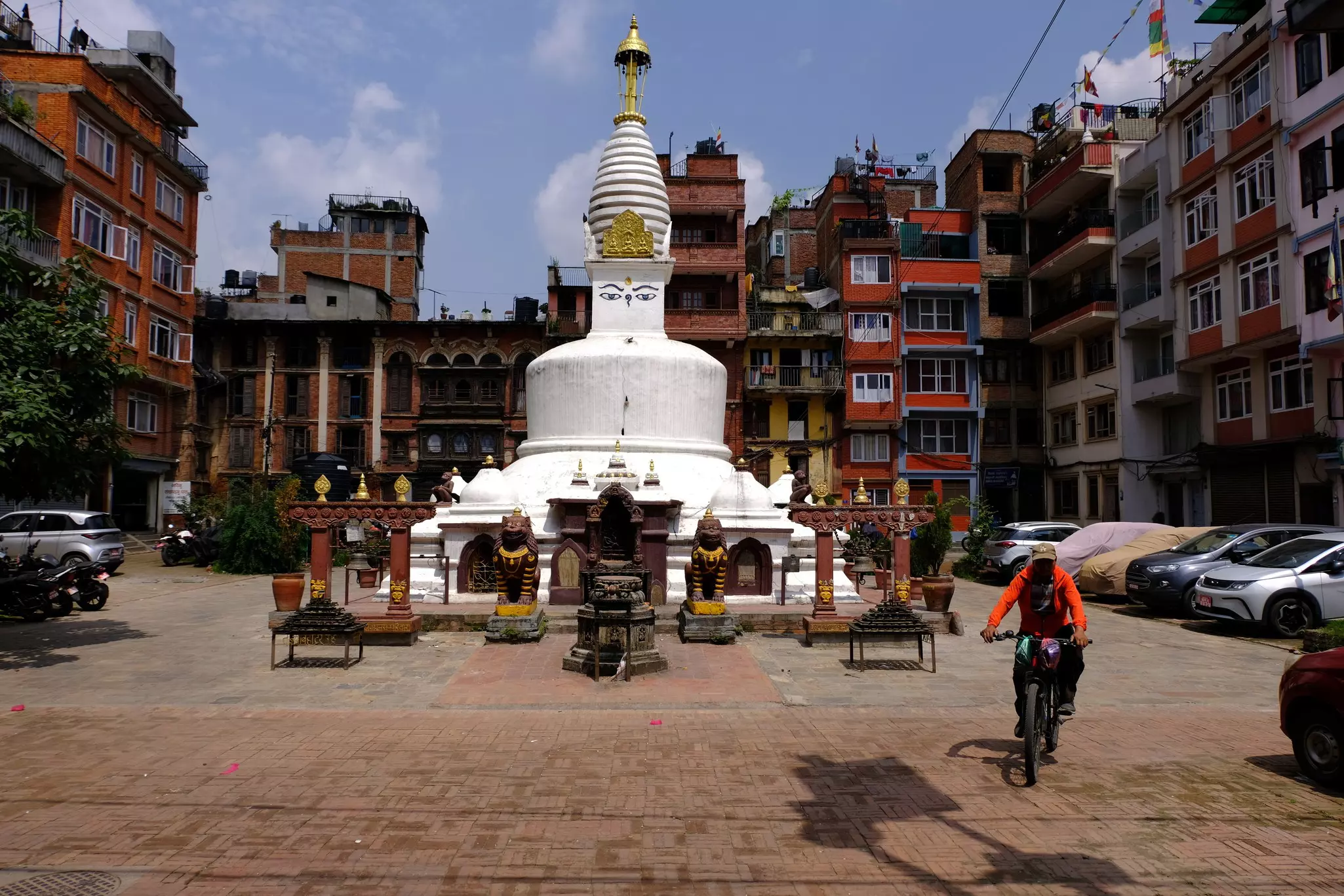
A 3-minute walk east from Purnachandi Pukhu lies the residence of Patan’s living goddess, the Kumari, located in the Haka Bahal (Ratnakar Mahavihar). Kathmandu, Patan and Bhaktapur each have their own Kumari – young Buddhist girls from the Bajracharya clan, who are revered as the living incarnation of the Hindu goddess Taleju until they reach puberty.
About 450m east of the Kumari house, an alley leads to the Dau Bahal (Dattanama Mahavihar), one of the finest examples of Newari residential architecture. The bahal also houses one of Patan’s largest wells and a gargantuan chaitya(stupa).
Continue north toward Nag Bahal, then go east to reach the Hiranya Varna Mahavihar, also known as the Golden Temple or Kwa Bahal, dating back to around the 11th century, with its gilded facade rising above the surrounding homes. The temple is a spiritual enclave, home to an immaculate, ornamented Buddha statue.
Here, the scents of incense linger in the air. On auspicious days, the chanting of priests reading the Pragya Paramita, a sacred Buddhist text written in gold inscriptions, drifts through the courtyard. Pigeons flutter as butter lamps flicker outside the elaborately carved temple.
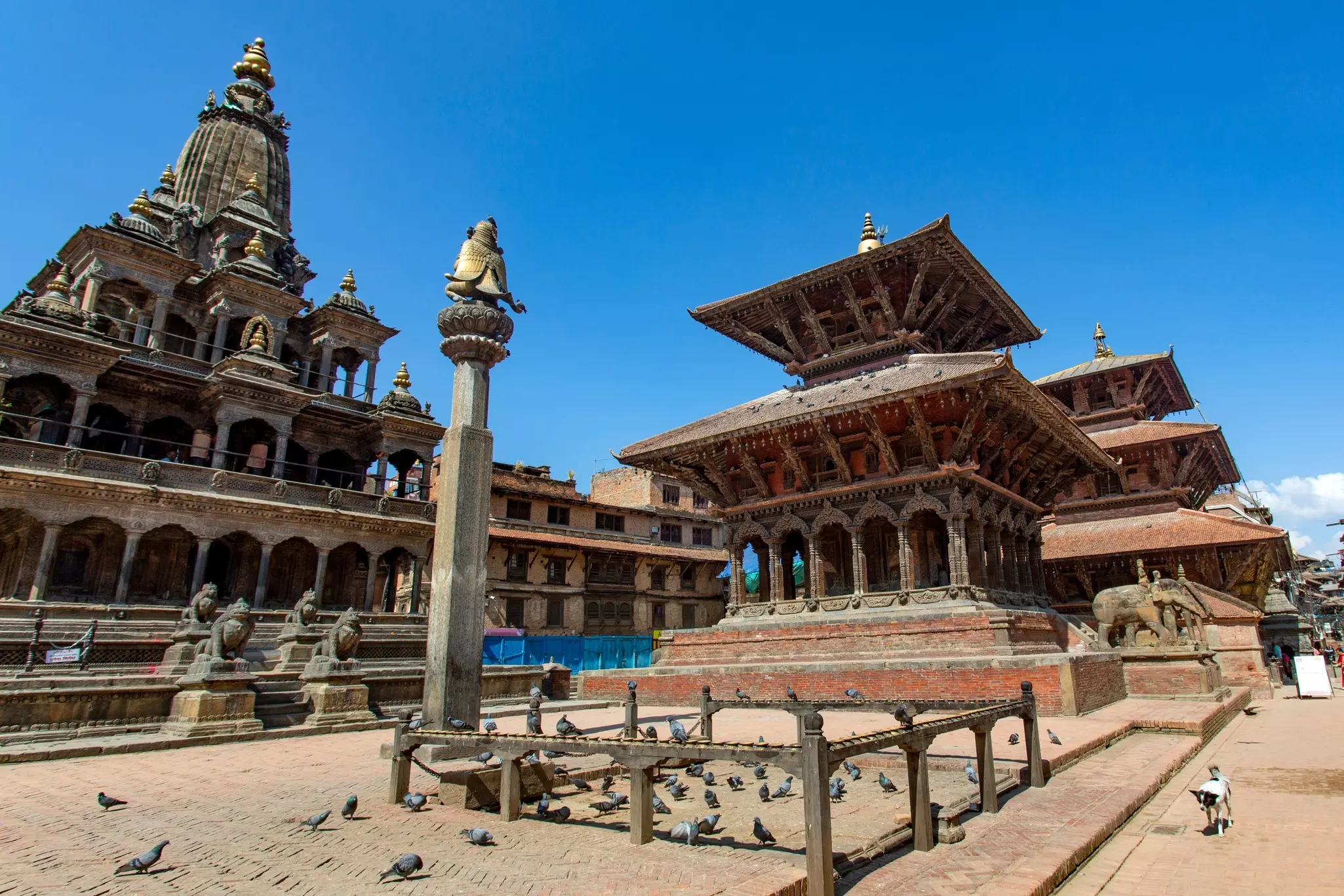
From here, go east and turn south to reach Patan's grand Durbar Square, which offers even more exquisite royal courtyards, built by the Malla kings of Lalitpur between the 14th and 18th centuries. A UNESCO World Heritage Site, the complex includes the famous Patan Museum and a treasure trove of temples, most notably the stone-built Krishna Mandir dating back to 1637.
Arriving at the palace complex needn't be the end of the experience. Instead, it encourages you to explore other less-explored gallis around the square – leading toward the bustling Mangal Bazaar or the 16th-century Mahabouddha Temple – where you can make more unexpected discoveries.
In a place where many streets have no names, losing your way might be the best way to find how the past still lives in the present in Patan's ancient heart.
Explore related stories