Sep 2, 20267 min read
The 8 Best Places to Visit in SardiniaSponsored by
Jun 15, 2026
10 MIN READ
Writer
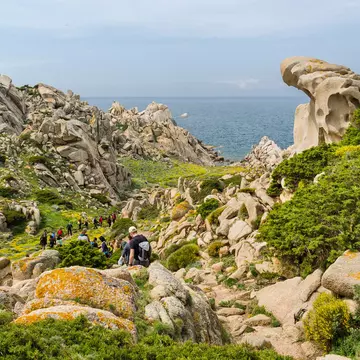
Hikers in Sardinia, Italy. Alessio Orru/Shutterstock

Writer
Non sono Italiano, sono Sarda — I'm not Italian, I'm Sardinian. I've heard this repeatedly over the years I've been traveling to Sardinia. Sards are committed to their Sardinian-ness. At first, this insistence felt perplexing, even exclusionary, but it didn't take long to discover that Sardinians are friendly, straightforward, philosophical souls and generous to a fault. They've simply spent the last 2000 years under foreign rule, and now they want to express themselves and share their culture with curious travelers. It's quite an invitation.
Take some time away from the dazzling beaches to discover what that invitation actually means. Sardinians go about their business farming, fishing, shepherding, sailing, winemaking, weaving, cheesemaking, distilling, honey gathering and partying at festivals – the likes of which I've not seen elsewhere – and everywhere you go you'll find long tables set for epic lunches, craft guilds and religious brotherhoods enacting festivals where everyone gets out their finest traditional clothes to celebrate being part of something bigger than themselves. It's uplifting being part of it on your travels.
A Delta nonstop flight now makes this corner of the Mediterranean more accessible from the US than ever. Here is how to get into it.
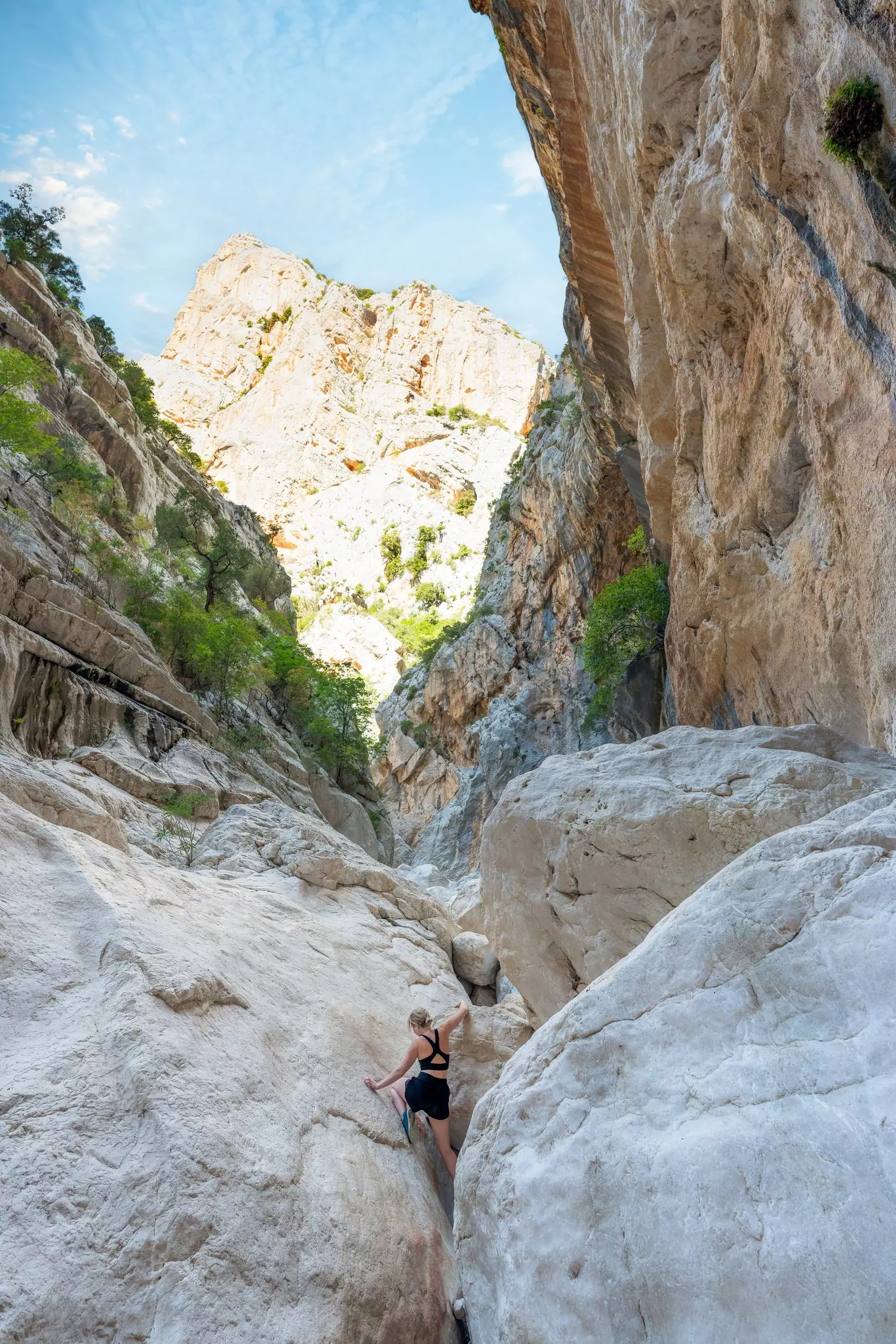
The awesome Gola Su Gorropu is a deep gash in the limestone landscape of the Supramonte with walls towering 500m high, where shy mouflon hide in the shadows. It is one of the most dramatic natural formations in Europe and one of Sardinia's great hiking experiences.
There are two main approaches. The most dramatic begins from the car park opposite Hotel Silana at the Genna 'e Silana Pass. The 8km trail takes 1½ to 2 hours one way, so allow at least 4 hours for the return. The descent is mostly easygoing; the climb back up is considerably tougher. A second, slightly easier route (14km) is via the Sa Barva bridge, about 15km from Dorgali. You can hike about 1km into the gorge without climbing gear. At the narrowest point, just 4m wide, is Hotel Supramonte – a tough multi-pitch climb graded 8b up a vertical rock face.
How to do it: Campo Base Gorropu guides the hike and also offers a 4WD return ride with time to explore the gorge independently. In summer, it organizes an awesome night in the gorge. For cultural-focused guided treks, Fabrizio Caggiari at Sardegna Nascosta is a highly regarded guide based in Oliena.
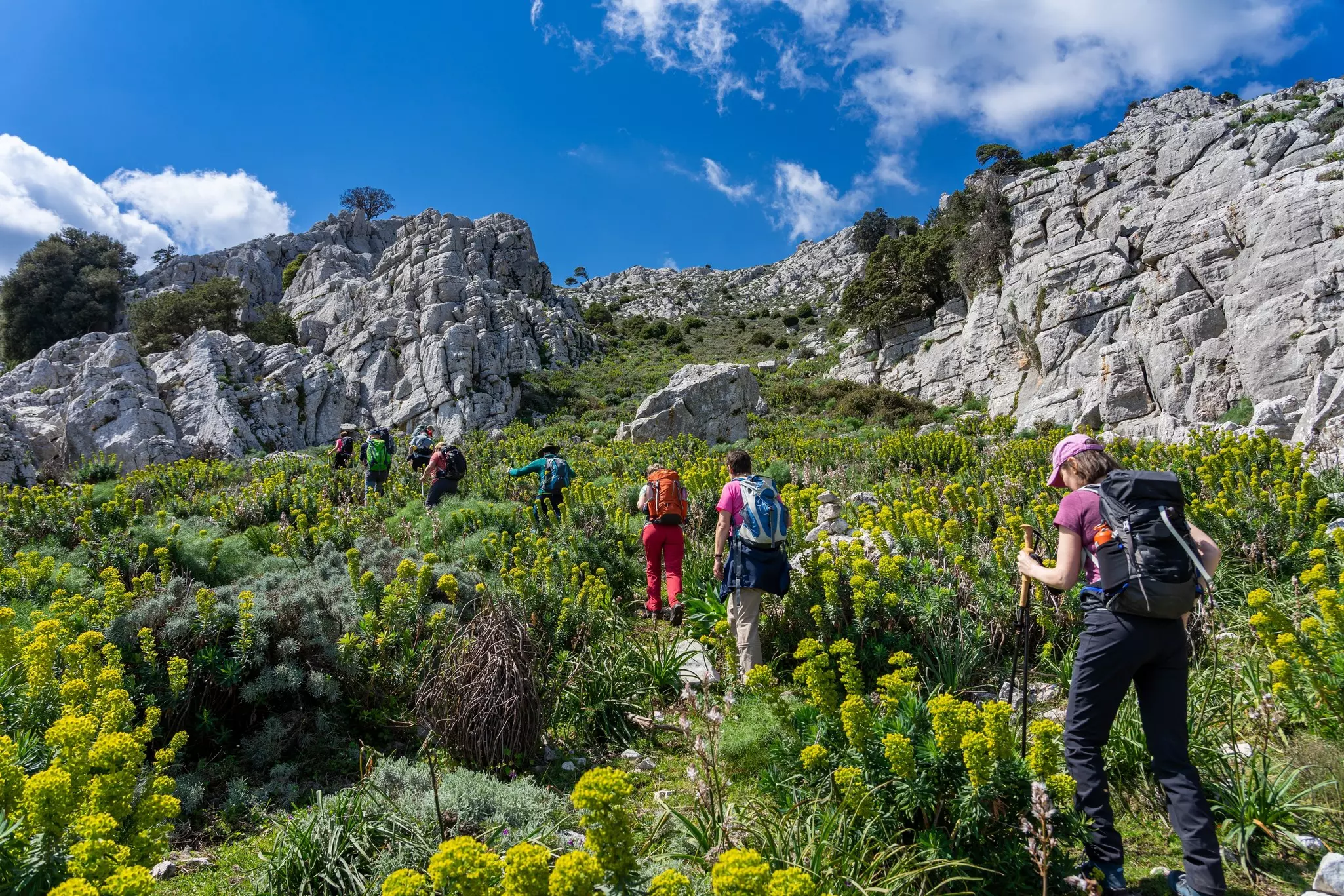
Deep in the Supramonte's Valle di Lanaittu, the ancient nuraghe village of Tiscali is the most atmospheric of all Sardinia's Bronze Age sites, hidden in the eerie twilight of a deep mountain overhang amid holm oak and turpentine trees. The site is reached via the Valle di Lanaittu, a karst valley full of fragrant rosemary, mastic, juniper and olives that flourish beneath striated cliffs. From the same valley you can also visit the sacred nuraghe well of Sa Sedda 'e Sos Carros, Sa Nurre de Su Hoda — a surreal cavern pierced by a shaft of light at midday creating a near-mystical effect — and the gorgeous green spring of Su Gologone, the final outflow of Italy's largest underground river system. Try to reach the spring around 1pm when the sun passes directly overhead and turns the water brilliant green.
How to do it: Base yourself in Oliena or Dorgali, which serve as the northern gateways to the Supramonte. Gabriele Pinna at Dreaming Supramonte guides 3-hour hikes to Sa Nurre de Su Hoda from Campo Base Lanaitho, set at the end of the unpaved road through Lanaittu. Kayaks are available from Sorgenti Su Gologone for paddling the cliff-lined Cedrino River.
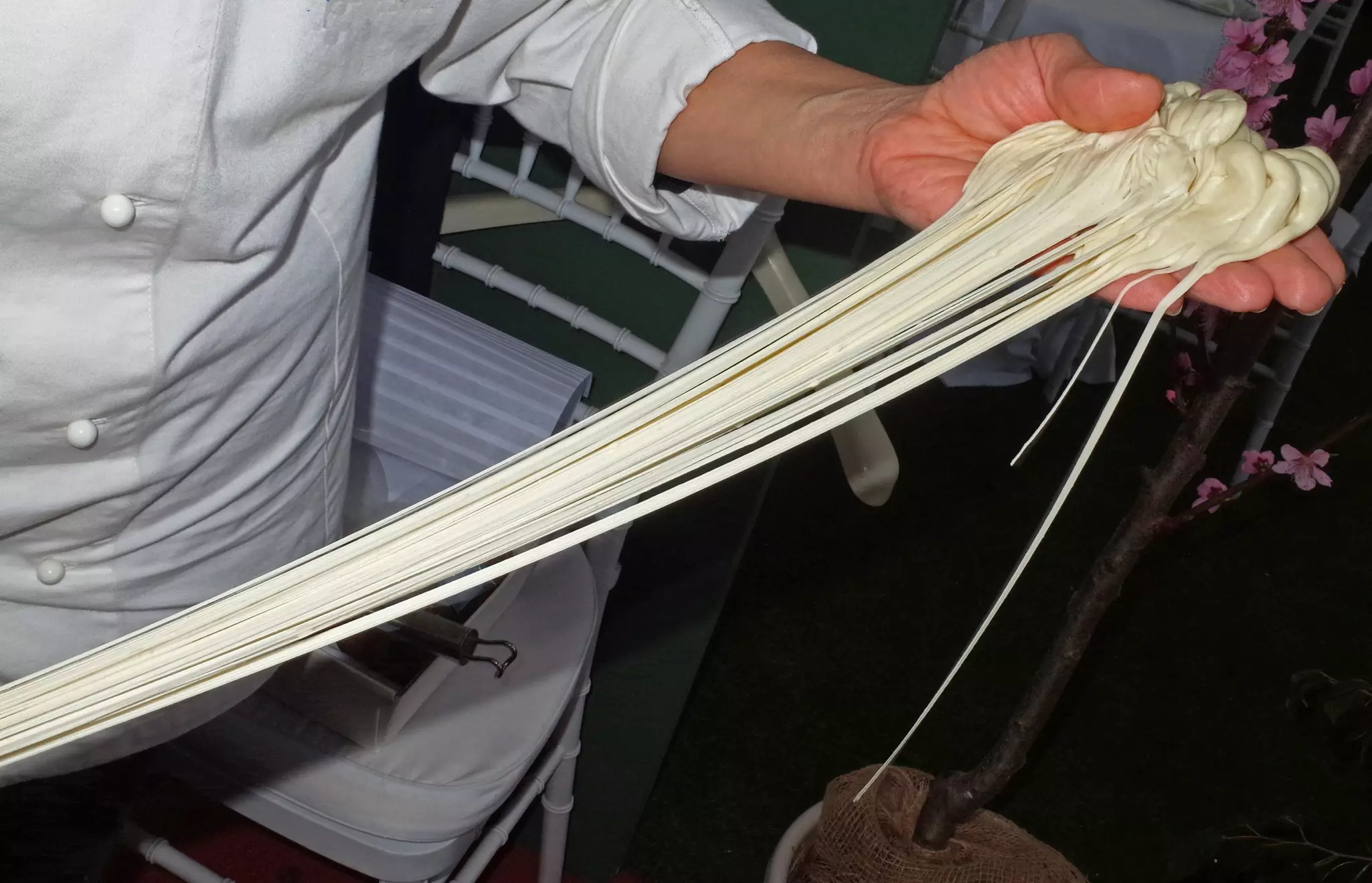
Su filindeu – fili di dio, or "threads of God" – is classified by Slow Food's Ark of Taste as one of Italy's traditional recipes most at risk of extinction. Made from a semolina dough laboriously kneaded, rolled and folded into needle-thin strands and left to dry into a lace-like sheet, it is soaked in sheep's broth and served with aged pecorino. It is now made by just 10 people in Nuoro, most famously Paola Abraini, who raised the alarm about the pasta's precarity.
The place to try it is Il Rifugio, a Slow Food-recognized restaurant in the island's cultured mountain capital, where su filindeu arrives in broth alongside mutton with artichokes. Nuoro itself repays an afternoon: the Museo Etnografico Sardo houses one of Italy's finest collections of traditional costumes and island crafts, and the Museo MAN has hosted some of Sardinia's most serious contemporary art shows since 1999.
How to do it: Try it in Il Rifugio in Nuoro, but for something more challenging, visit during the Festa di San Francesco, held on May 1 and October 4. This involves a 33km pilgrimage from Nuoro to the village of Lula, where su filindeu is served to pilgrims who complete the walk.

Mamoiada's carnival festivities kick off on January 16 and 17 with the Festa di Sant'Antonio. According to myth, Sant'Antonio stole fire from hell to give to humankind and, to mark the fact, bonfires are lit in villages across the Barbagia region. But more than the fireworks, it is the appearance of the mamuthones – traditional Sardinian performers who wear costumes and perform ritual dances around the Carnevale period –
that gives the festival its sinister edge. Anthropologists believe they embodied the deepest fears of rural communities, and that the ritual parade was an attempt to exorcise these demons before spring.
Up to 200 men don brown sheepskins and appear as primitive figures wearing inscrutable wooden masks. Strapped on their backs are clanking campanacci (cowbells) weighing up to 25kg. They shuffle along followed by the issohadores, dressed as period gendarmes, whose job is to drive them out of town. The mamuthones return on Shrove Tuesday and the preceding Sunday to close Carnival. If you can't make the festival, visit the small Museo delle Maschere Mediterranee to see an exhibit explaining the festival and displaying the dress.
How to do it: Mamoiada is a 20-minute drive from Nuoro. The Locanda Sa Rosada is one of Mamoiada's best restaurants, housed in a 19th-century farmhouse with beamed rooms. While in town, seek out the Mamojà Association to taste Mamoiada's remarkable high-altitude Cannonau wines, grown from ancient vines at 736m above sea level, silky and distinct from anything produced on the coast.
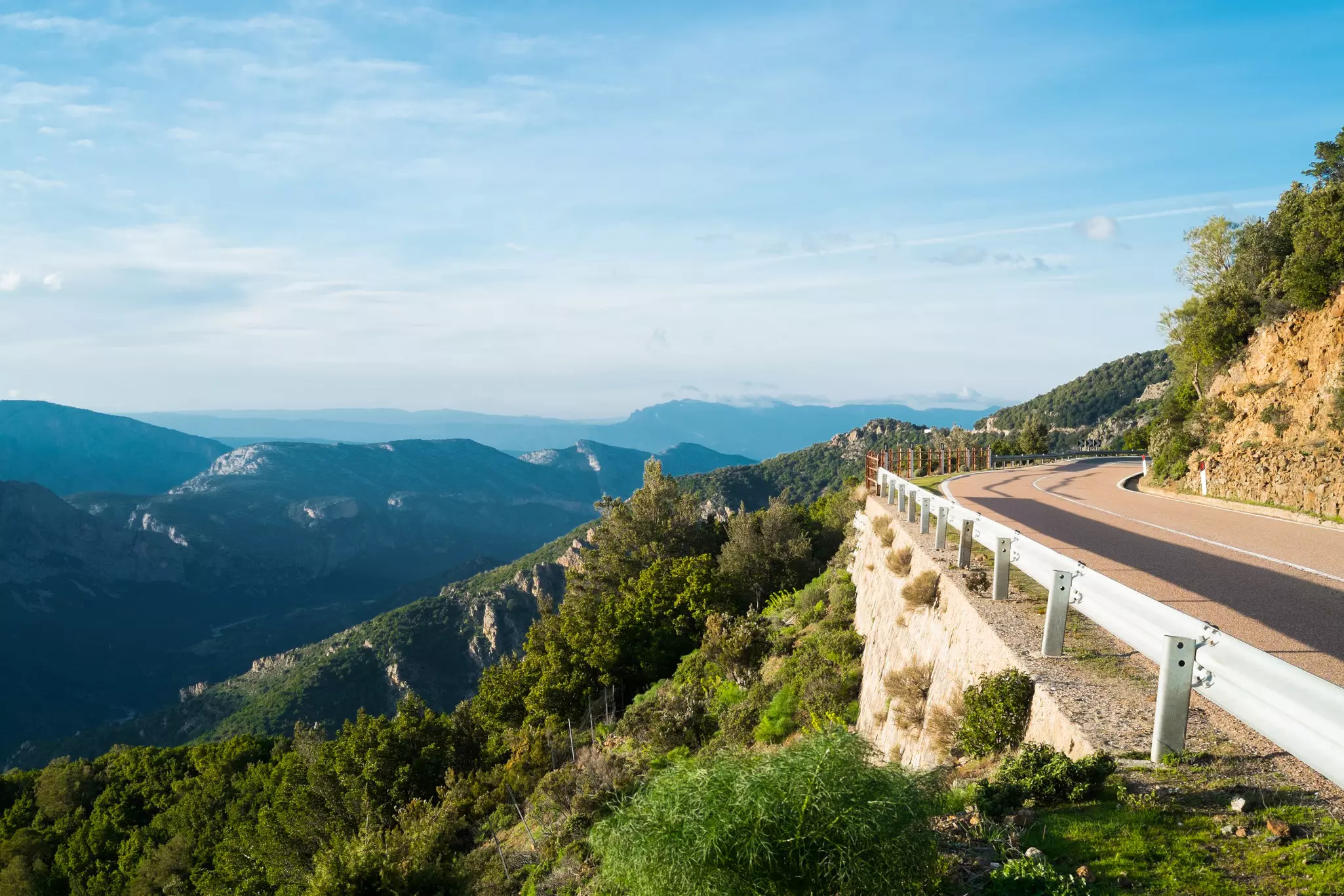
The region of Ogliastra, in Sardinia's mountainous interior, contains the highest concentration of male centenarians in the world, a fact first documented by scientists Gianni Pes and Michel Poulain in 2004 and later explored by Dan Buettner as part of his global Blue Zones research. The traditional Sardinian way of life – natural movement, communal eating, small portions, daily downshifting over a glass of Cannonau, and deep familial bonds – is considered a significant contributor.
The best way to experience it is to stay with nutritional biologist Dr Ivo Pirisi at Casa Mediterranea in the tiny village of Nurachi. The house is built entirely of sustainable làdiri clay bricks and wrapped around an intimate courtyard garden full of edible and medicinal plants. Breakfast – a 2-hour affair of homemade bread from a traditional mud-brick oven, seadas (pastry with cheese and honey), hot fritters, artisan cheeses and charcuterie – is the centerpiece, and over it you'll talk with Ivo and Rita about Sardinia's ancient food culture, strong familial bonds and life-affirming traditions.
How to do it: Dr Pirisi also runs the Longevity Academy, leading people-centered journeys exploring the complex social, nutritional and environmental aspects of Sardinian village life that have resulted in the extraordinary numbers of centenarians. Book well in advance; the house has eight rooms and fills quickly.
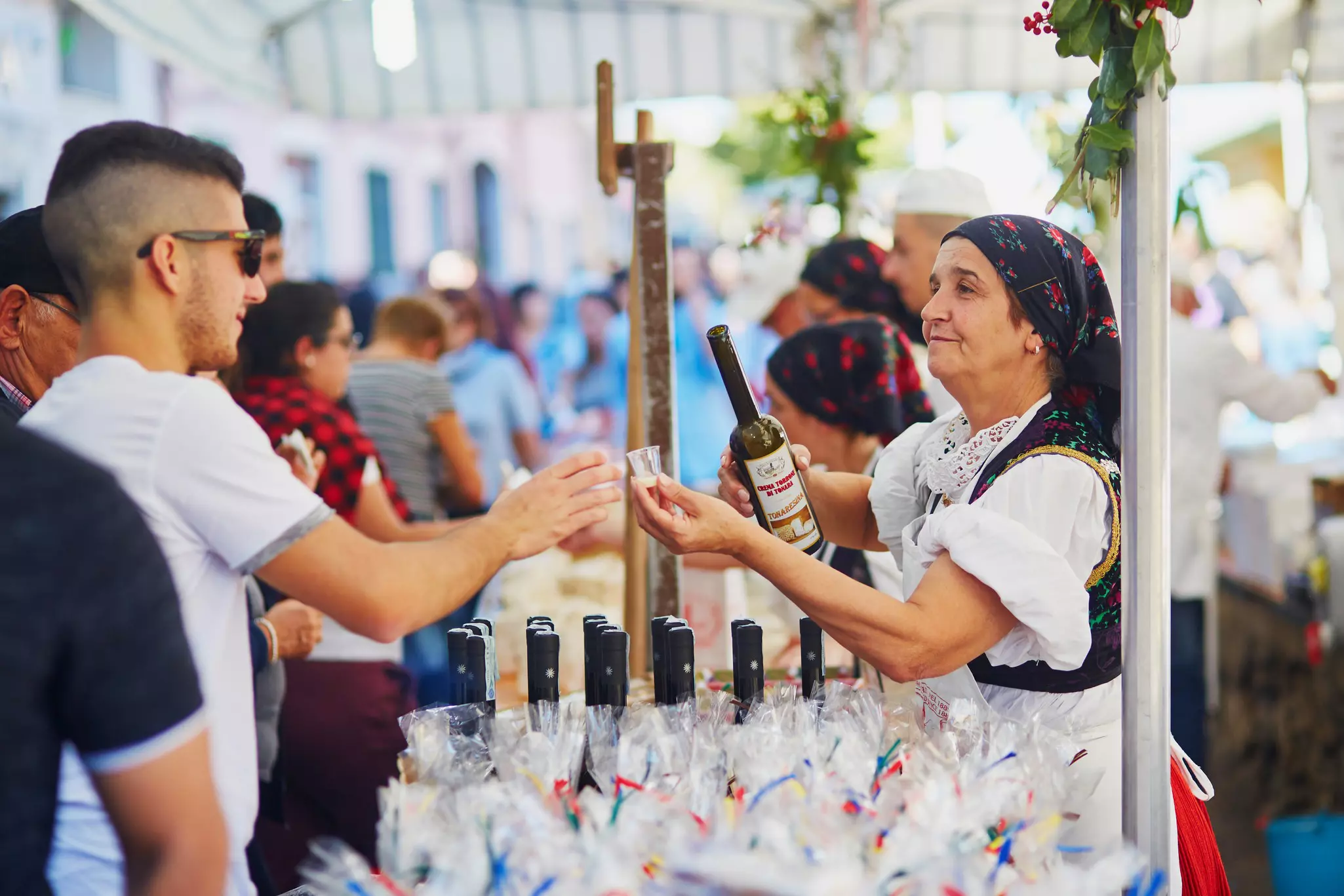
Running from September 7 to December 15 and involving 32 Barbagia towns, Autunno in Barbagia is one of Sardinia's best festivals. Each village hosts the festival for one weekend, showcasing its particular food, music, singing, costume and crafts, with demonstrations of rural craft and food production, top artisans showcasing their talents, and the chance to try your hand at bread-making, cheese-making or weaving. There are guided excursions to archaeological sites and out-of-the-way sanctuaries, and the festival is also the place to hear cantu a tenore, Sardinia's extraordinary tradition of throat-singing.
In the Barbagia di Belvì, the village of Aritzo is surrounded by ancient chestnut woods crisscrossed by easy walking trails, and its Sagra delle Castagne chestnut fair takes place on the last Sunday of October. Hiking and biking in the interior are best between April and June and in September and October, when hotel rates also drop 10% to 20% from peak season prices.
How to do it: The festival is organized by Cuore della Sardegna, with the full schedule of villages and weekends listed on the website. For the Aritzo chestnut experience, join Francis Manca and his family at Your Sardinia Experience for immersive sessions in their centuries-old chestnut grove, at their beehives, and in the kitchen with his mother and sisters.
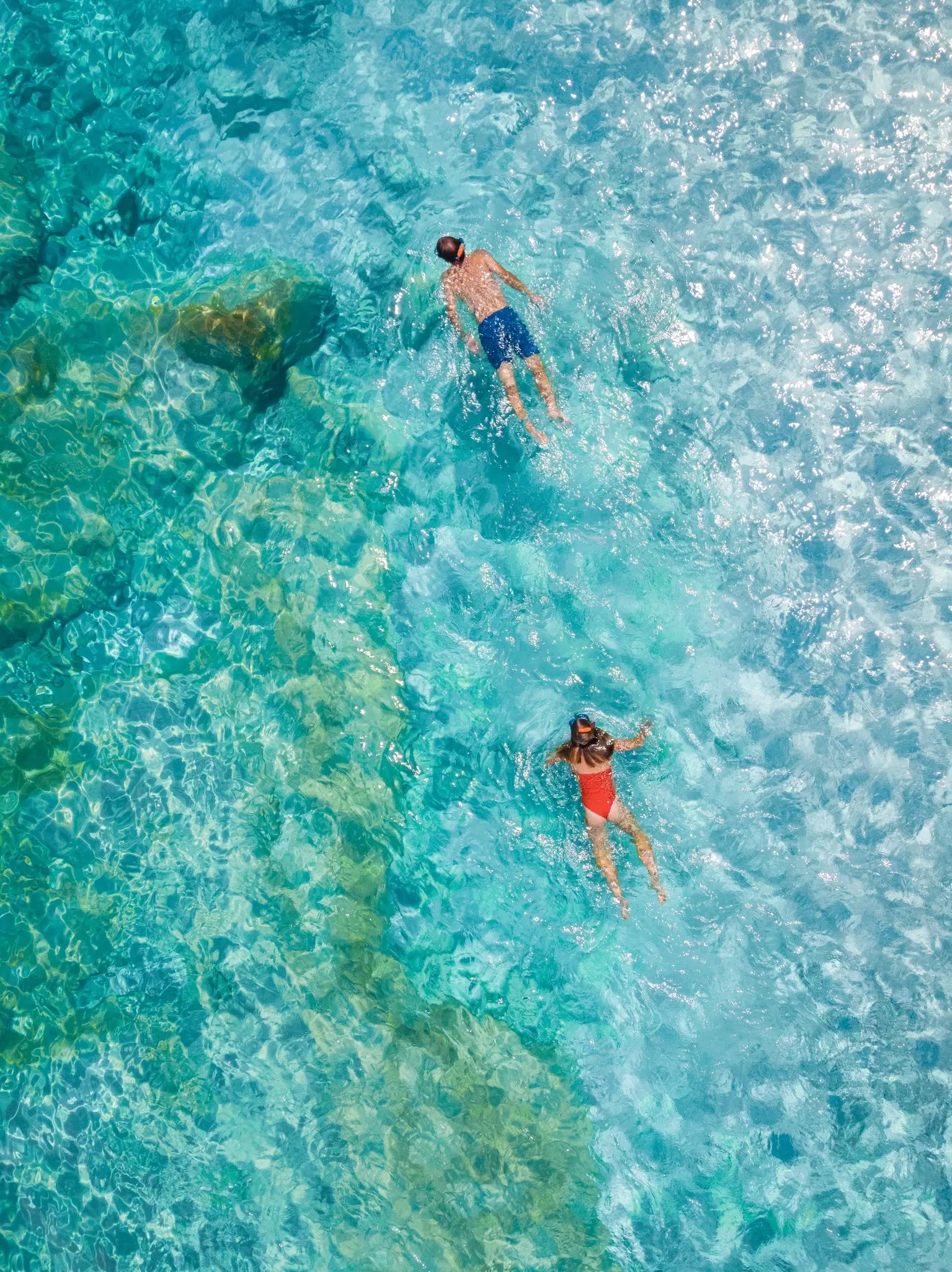
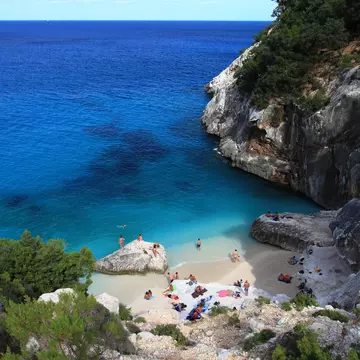
The Golfo di Orosei is framed by imperious limestone peaks with a wall of cliffs dropping sheer into water of a color that resists easy description. The beaches along this stretch – Cala Goloritzè, Cala Mariolu, Cala dei Gabbiani, Cala Biriola, Cala Luna – are accessible only by foot or by boat, which is precisely what makes them extraordinary.
A typical tour departs Marina di Orosei or Cala Gonone at 9:30am and speeds south along the cliff face to Cala Goloritzè, where you anchor offshore and swim in luminous water. Heading north, you'll stop at Cala Mariolu for 1½ hours, then cruise on to the bluish-green Piscina di Venere (Venus' Pool). In the afternoon there's a swim at pebbly Cala Biriola and a final stop at Cala Luna, where you can buy a beer and savor it on the beach. Outside summer the Golfo di Orosei's unsung treasure is Orosei itself, a scenically positioned town at the gulf's northernmost point, with cobbled lanes, dozens of medieval churches and stone houses with flower-filled courtyards that most visitors speed past on the way to the beaches.
How to do it: Blue & Green Best, run by Paolo Insolera and Maria Cossu, offers excellent guided tours including a 5-night cruise of five cale, full of detail on the geology and environmental efforts to protect the beaches and sea grottoes. Oltremare Orosei runs tours for 12-person groups departing from Spiaggia Osalla.
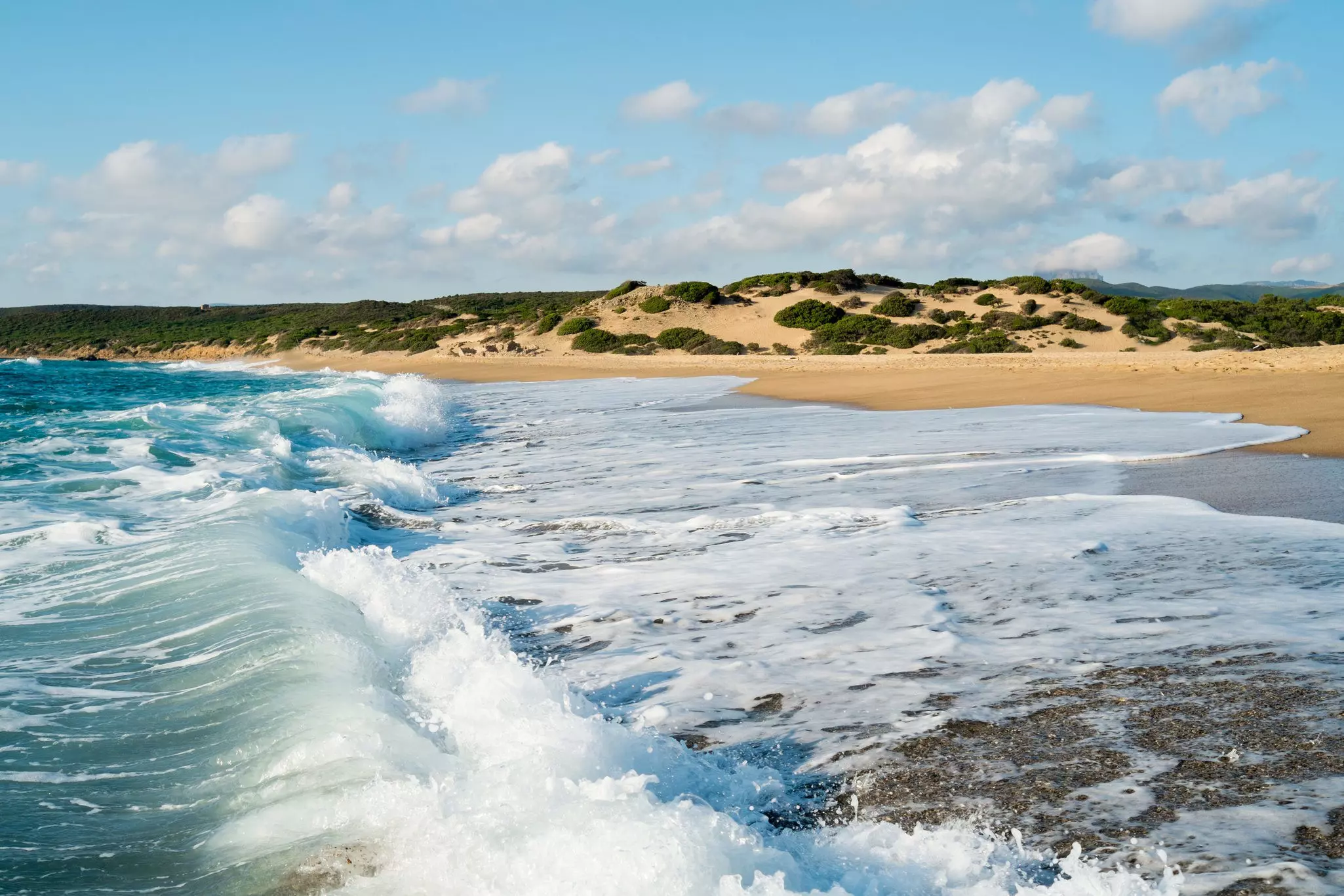
The Costa Verde – Sardinia's most untamed stretch of coastline – extends from Capo Pecora in the south to Torre dei Corsari in the north: a wild expanse of tawny sand driven by the mistral into dunes that rise up to 70m or more, the highest in Europe. The 28km-long dunefield of La Piscinas is an area of outstanding natural importance with constantly shape-shifting dunes that sit 2km back from the water.
To get here is half the fun: turn onto the SP66 from the SS126 and drive towards the abandoned mining town of Ingurtosu, where you can wander around the crumbling buildings including the neogothic Villa Ginestra and Villa Wright. The final stretch is a dirt track ending at the parking lot, from where it's 100m to the beach. The wind makes for forceful waves and currents can be strong, so take care in the water.
How to do it: Spiaggia di Scivu is the southernmost beach, reachable via hiking trail from Capo Pecora or via a turnoff on the SS126 to Arbus. Spiaggia di Piscinas, 4km further north via the SP66, is the more celebrated stretch. There are toilets, a kiosk and a lifeguard at the parking lot. The nearby Le Dune Piscinas hotel is a lovely base for exploring the coast.
Book your Sardinia trip with Lonely Planet Journeys
See Sardinia how it's meant to be seen
Planned by local experts and tailored to you, Lonely Planet Journeys handles the logistics so you can just enjoy the trip. Tell us what you want and we'll build your Sardinia itinerary from scratch, or browse our bookable trips to get inspired.


Explore related stories