Sep 20, 20268 min read
A Guide to Walking St Cuthbert's Way in the UKSep 20, 2026
8 MIN READ

Writer
Walkers on the Pilgrim's Way to Lindisfarne Island, the final stage of St Cuthbert's Way. fotoVoyager/Getty Images

Writer
Lonely Planet may earn a commission from affiliate links on our site. All recommendations and reviews reflect our own independent opinions.
St Cuthbert’s Way is a long-distance walking trail that winds through the wild uplands of the English–Scottish border region, following in the footsteps of its namesake early medieval saint. Most sublime of all is its last stage, in which pilgrims must walk across an intertidal zone at low water to reach the Holy Island of Lindisfarne. Plan your walk through history with this guide to the route.
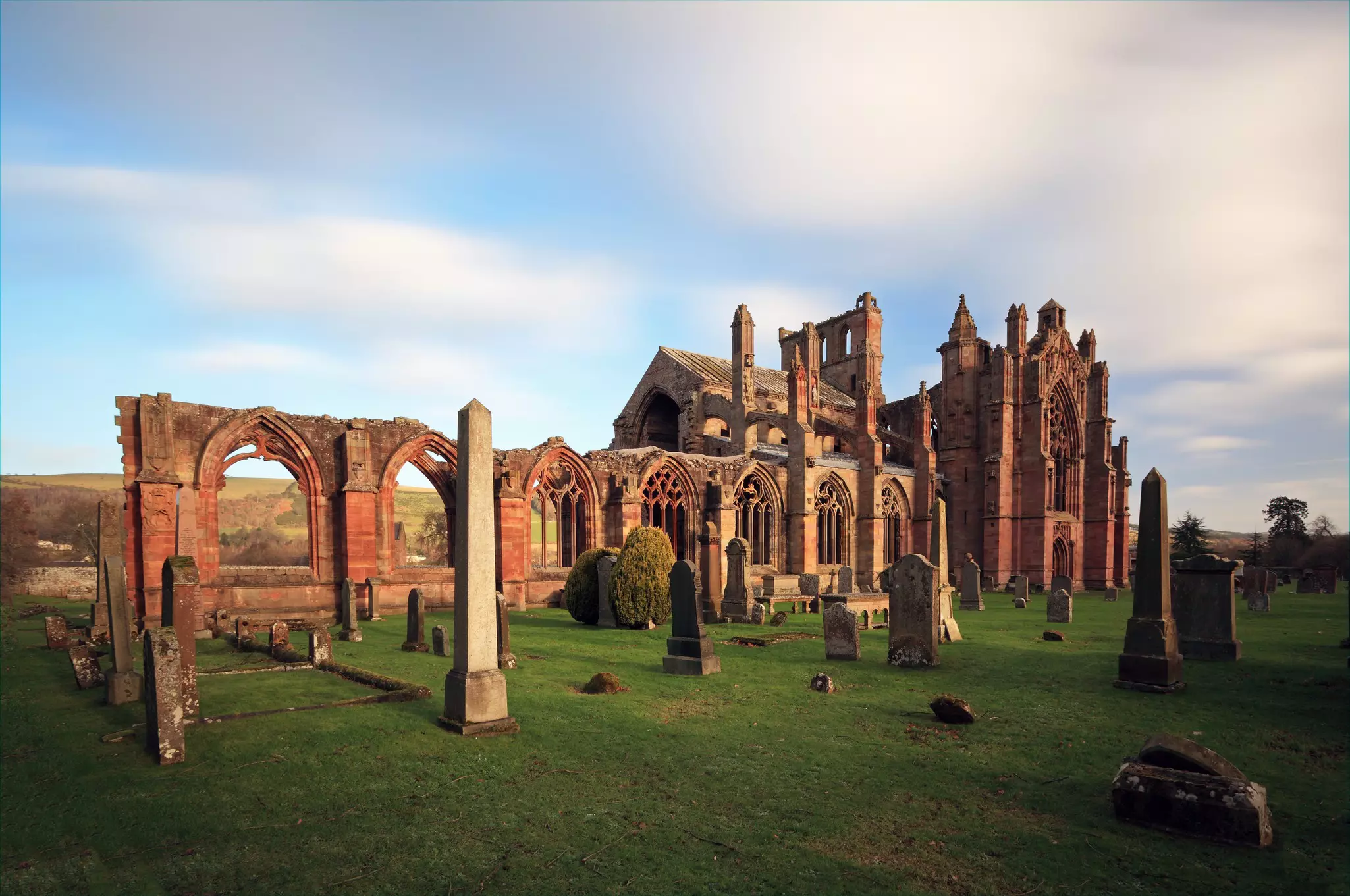
St Cuthbert’s Way is a 62.5 mile walking route. It begins at Melrose Abbey in Scotland, where Cuthbert trained as a young man. Eventually the Cheviot Hills loom, the path winding over barren moorlands and passing ghostly hillforts and Anglo-Saxon settlements. The path crosses the England–Scotland border – a fence in a field – and finishes on the Holy Island of Lindisfarne on the wild, windblown coast of Northumberland. It's this final stretch that makes the trail wholly unique. Walkers must wait until low water to make the 3-mile crossing to the tidal island, typically removing their boots and feeling the squelch of soft mud between their toes.
St Cuthbert's Way is by no means the busiest nor the most famous long-distance trail in Britain, but it is one of the most satisfying – traversing the heathery uplands and patchwork farmland of these sparsely inhabited borderlands, finding sanctuary in venerable pubs and friendly market towns en route.
On the quietest and most beautiful parts of of the route, you sense you might be on another kind of border, between the mundane and the metaphysical, the modern and the mystical.
In the eyes of some, St Cuthbert's Way is a stroll into English history. In the eyes of others it is a true pilgrimage route in the mold of the Camino de Santiago, following in the footsteps of a holy man from the dawn of Christianity in these isles.
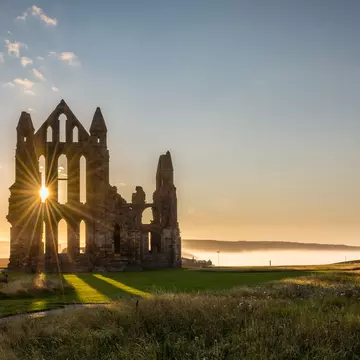
St Cuthbert is northern England’s most revered saint. Born in 634 CE, he was a shepherd who spent long periods immersed in nature. A vision in the night sky inspired him to begin his ministry and he traversed great distances on foot to spread the word. He was named Bishop of Lindisfarne – one of the most important church leaders at that time – and he enjoyed time alone in the wild quarters of the island: he felt he could hear God speak most clearly in places of solitude.
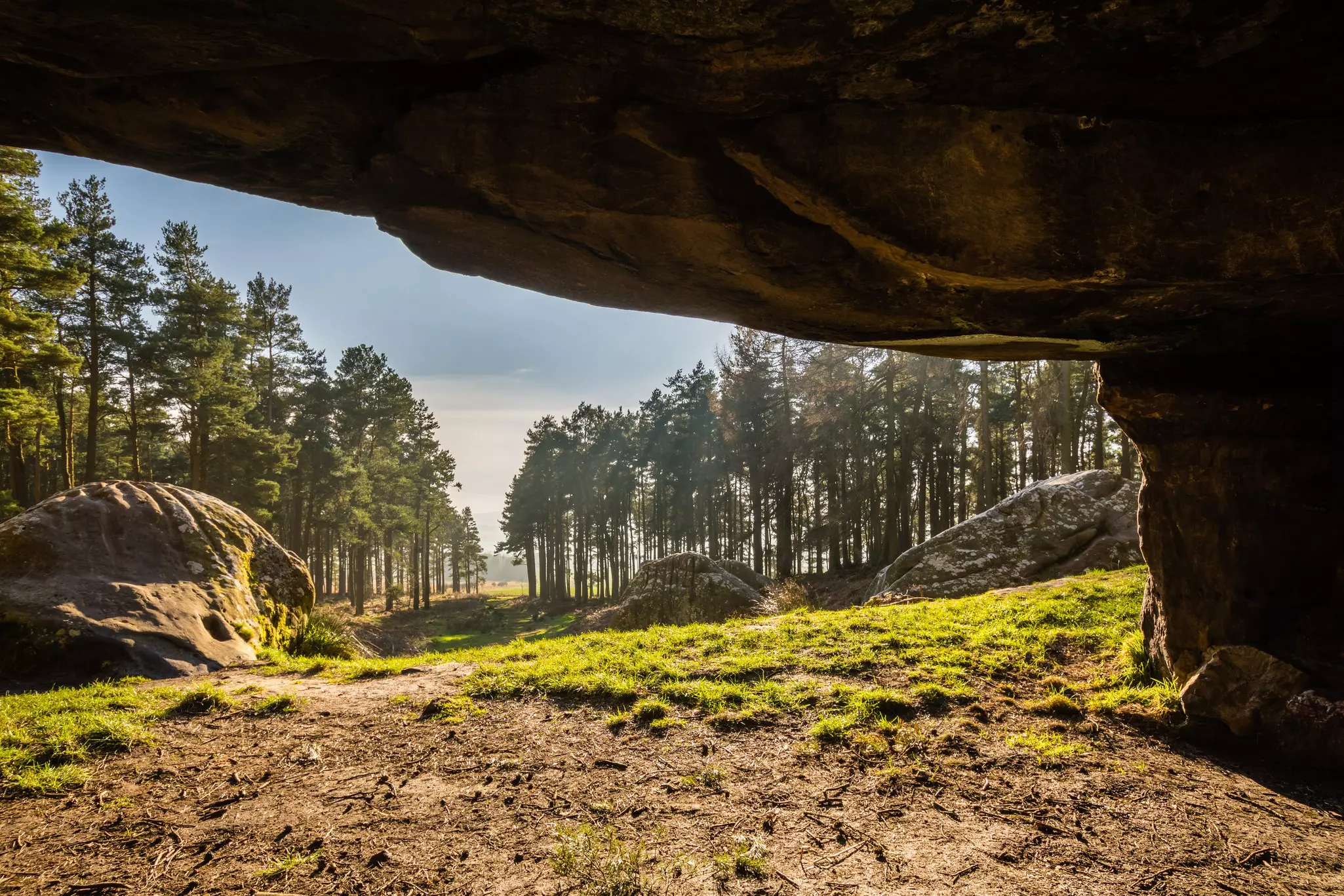
St Cuthbert has been venerated across the centuries – soon after his death, wandering disciples carried his bones for 7 years to keep them safe from marauding Vikings. One place where they supposedly hid them was St Cuthbert’s Cave – a beautiful overhang set in shadowy forests where hikers find respite from rain and sun. In WWII, local legend goes that Cuthbert miraculously summoned a mist to obscure his final resting place, Durham Cathedral, from German bombers.
In 21st-century Britain, Cuthbert remains a mysterious and much imagined figure – in part because of his habit of spending long, solitary spells out in nature. The saint is said to have loved the company of seabirds and enjoyed cold water immersion (accounts go that otters would curl up on his feet to warm them after he emerged from his swims). His affinity with wild places resonates with many in an age of environmental anxiety.
The trail bearing his name connects places associated with his life – beginning in Melrose Abbey where he trained – but it is, surprisingly, a wholly modern creation, first plotted out in the 1970s. In any case, you can be sure your footsteps will, at certain points, have intersected with those of Cuthbert and his disciples.
St Cuthbert’s Way is typically walked from west to east over 4 to 6 days, and can be tackled by anyone of moderate fitness. The path is well marked by signposts and well trodden especially through late spring to early fall: cell phone reception tends to vanish in the uplands but with good maps, it's hard to get lost. There are a few bracing ascents – particularly in the Cheviot Hills that straddle the border – but the highest point en route is a modest 450m, so this is no mountain walk.
Accommodation and food can be found in characterful pubs in towns en route, such as Jedburgh, Kirk Yetholm, Wooler and Beal. Camping is an option but by no means a necessity – be aware wild camping is lawful in Scotland but not in England.
A significant challenge can be posed by the weather – wind and rain can be merciless at these latitudes, and bright sunshine can turn to hailstorms in the blink of an eye, so pack for all seasons and bring stout boots. All this being said, the single greatest logistical challenge of St Cuthbert’s Way comes in the form of the Pilgrim’s Way to Lindisfarne, a stretch that requires both advance planning and some measure of pluck.
ThePilgrim’s Way is the name given to the 3-mile-long section of trail across the tidal mudflats from Beal to the single village on Lindisfarne. Here, about twice a day, the saltwater retreats to the horizon, and a short window opens during which walkers can make their way across a foreshore that, not long before, was submerged by the sea.
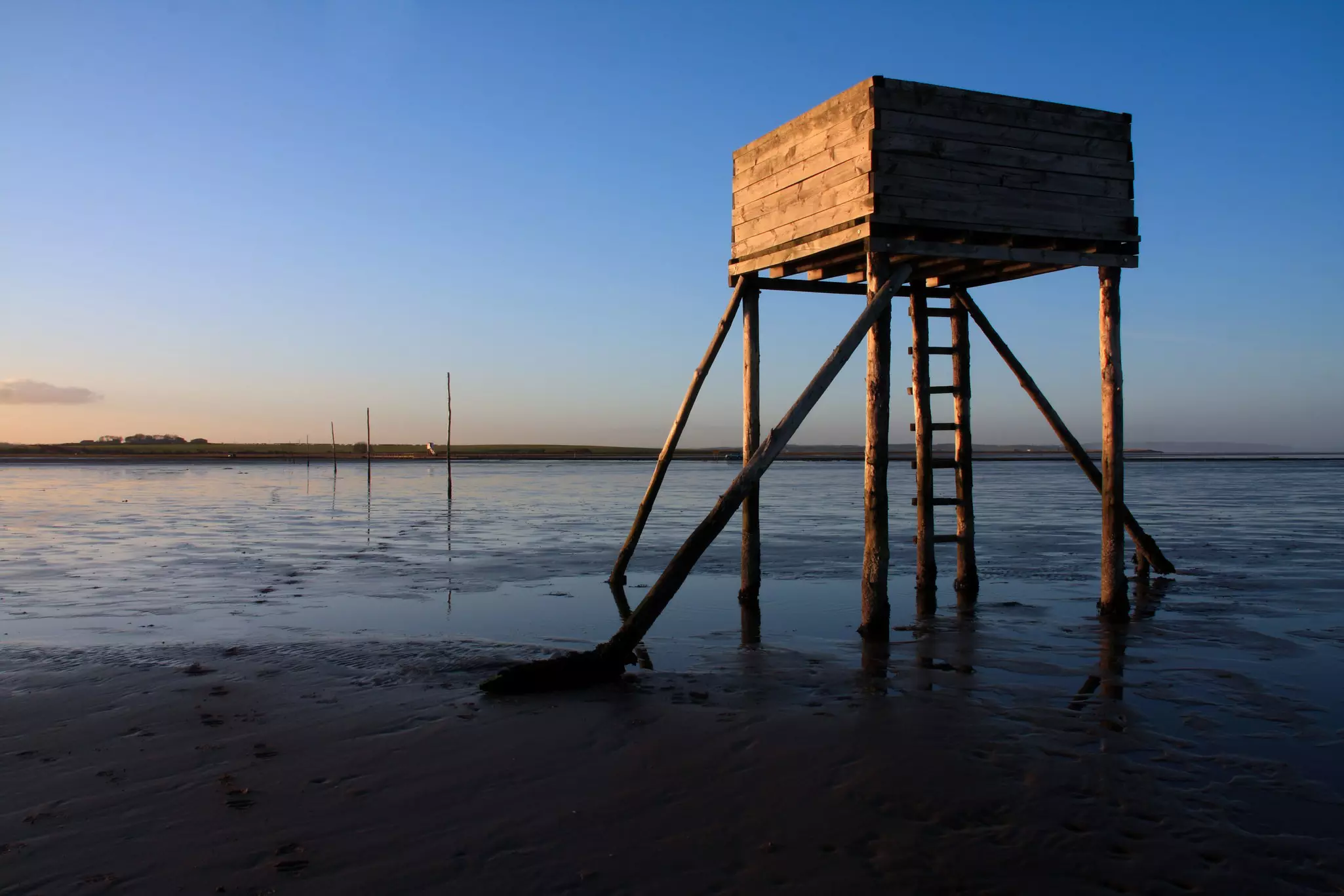
Crossing to the island entails a leap of faith. You strike out into a marine wilderness that feels far from civilization (motorized traffic takes a separate route along a tarmac causeway to the north): you may have no company but seabirds and seals basking on the mirror-like expanses. It also makes for a deeply surreal experience – wooden posts are jammed into the mud at intervals to point the way should a sudden mist obscure the path ahead. Also bizarre are the tidal shelters set along the route – rickety, treehouse-like structures into which desperate souls can escape should they be caught by advancing water. Timing is essential – check the safe crossing times published online in advance.
The reward, however, is treading in the footsteps of Lindisfarne-bound pilgrims across the millennia, and spending a few hours in a marine desert that has an almost otherworldly resonance. The crossing is full of lessons: here, as in a human lifetime, you have a finite amount of time, and you must use it wisely.
There’s a great many fascinating stops along St Cuthbert’s Way. Be sure to allow some time in Kirk Yetholm – a hiker’s hub with lively inns which marks the midpoint of the route, while also serving as the finishing line of England’s first and most famous long-distance walking route, the Pennine Way. You’ll find a number of Iron Age hillforts in the Cheviots – one of the most dramatic is to be found at Yeavering Bell, a conical rise just off the trail. St Cuthbert’s Cave offers the last landmark before Lindisfarne. Depending on who you ask, this craggy overhang in the woods was either the saint’s hermitage or a place where his remains were kept for safety from the Vikings.
With Lindisfarne Priory long since ruined, some choose to officially end their trip at St Mary’s parish church on the island, a humble edifice within which you can find a modern sculpture of the faithful bearing Cuthbert’s coffin.
While you’ll meet plenty of secular hikers on the route, you’ll also find people who earnestly term themselves "pilgrims" – both Christians and seekers of all stripes. Pilgrimage has been on the rise in Britain for over a decade now: and even if you’re not an adherent of a particular faith, there are good reasons to treat your journey as a pilgrimage. The British Pilgrimage Trust offers useful advice on how to make a walk like St Cuthbert’s Way as fulfilling and meaningful as possible, emphasizing the importance of setting out with a particular intention in mind. Ultimately however, "pilgrimage" is something you can define on your own terms – walkers of all faiths and none can all draw wisdom walking the road to Holy Island.
Benjamin Myers’ masterly work of fiction Cuddy (Bloomsbury) traces the influence of St Cuthbert on residents of northeast England across the ages. My own book On This Holy Island (Bloomsbury) offers a portrait of Lindisfarne as a place of contemporary pilgrimage, and meditates on the significance of its tidal rhythms. Cicerone’s St Cuthbert’s Way guidebook is a great resource for walkers, with plenty of detailed maps. For something off the wall, watch 2025-horror film 28 Years Later – a zombie movie set and filmed on Lindisfarne, in which the island (quite appropriately) is cast as a sanctuary from the insanity of the wider world.
St Cuthbert’s Way crosses some remote country, but the start and finish points are relatively accessible. Tweedbank – an hour from Edinburgh on the Borders Railway – is walkable from Melrose Abbey. At the other end, bus 477 takes 45 minutes to connect Lindisfarne with the border town of Berwick Upon Tweed, which has direct and fast train services to Edinburgh (40 minutes away) and London (3 to 3 hours away).
Explore related stories