Apr 3, 20267 min read
Best Remote Lodges in South AmericaJun 18, 2026
10 MIN READ
Writer
The protected wetland area of Kaw-Roura in French Guiana. Jerome Delaunay/Getty Images

Writer
Lonely Planet may earn a commission from affiliate links on our site. All recommendations and reviews reflect our own independent opinions.
French Guiana is, as its name suggests, French, but you won’t find it on a map of France because it’s in the northeast corner of South America. This means that France’s longest land border, at around 700km long, is actually with Brazil, over 7000km away from mainland France.
Once a penal colony, today French Guiana is Europe’s primary space center, bristling with technology. It's a mix of dense tropical forest crisscrossed by a network of rivers. Despite its 350km-long coastline, the territory is not thought of as a beach destination because the sea is brown and cloudy due to sediment dumped by the Amazon river.
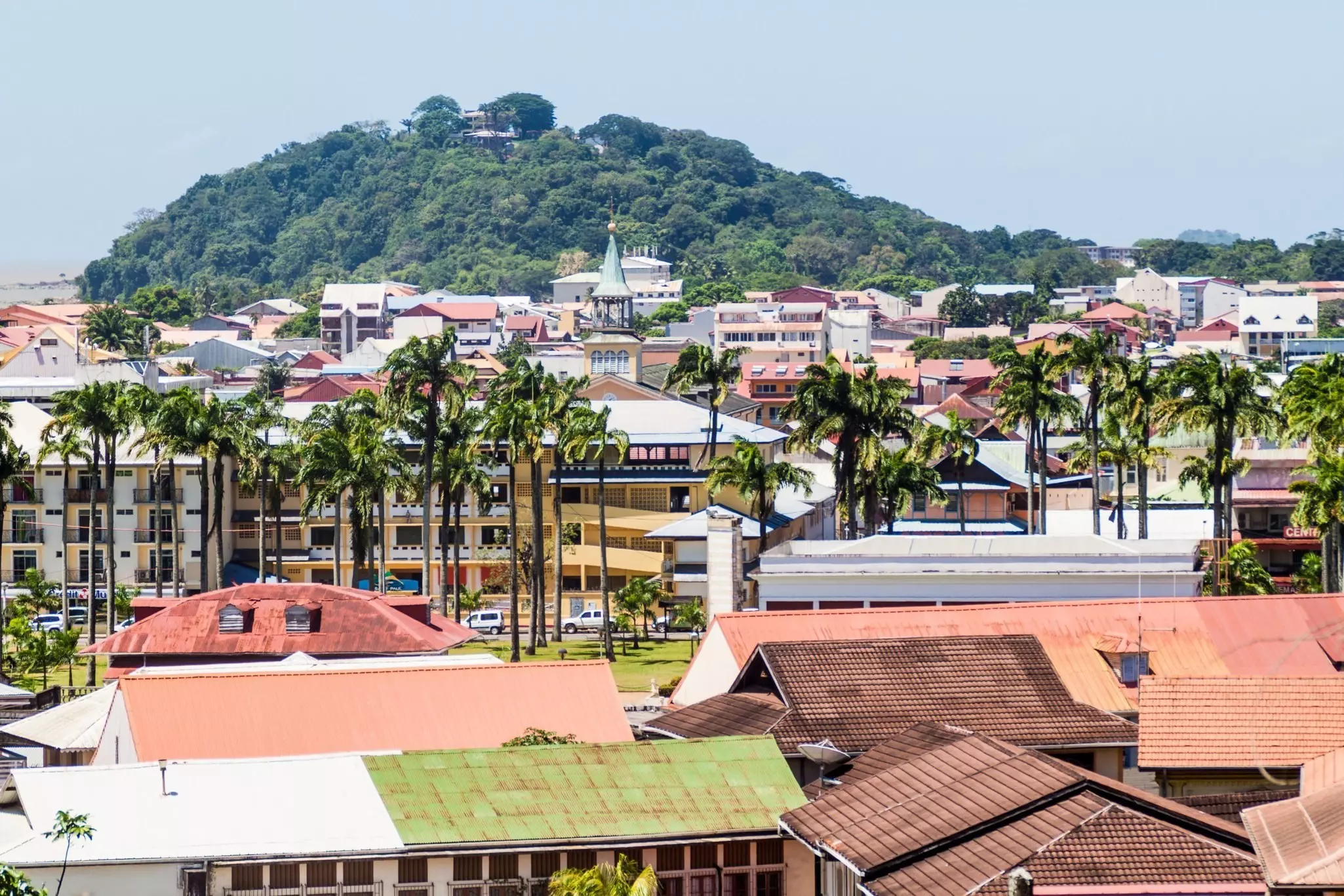
French Guiana's three main towns are strung along the coast. Furthest east is bustling, busy Cayenne, the departmental capital, with narrow, arrow-straight streets lined by low-rise buildings in various states of repair. Furthest west is sleepy Saint-Laurent-du-Maroni built by and for convicts in the mid-19th century. Today the huge prison here is one of the main tourist attractions. And more or less in the center is genteel Kourou, entirely dedicated to the vast space center and home to the hundreds of scientists and technicians who work there.
Plan your visit to French Guiana with this visitor's guide.
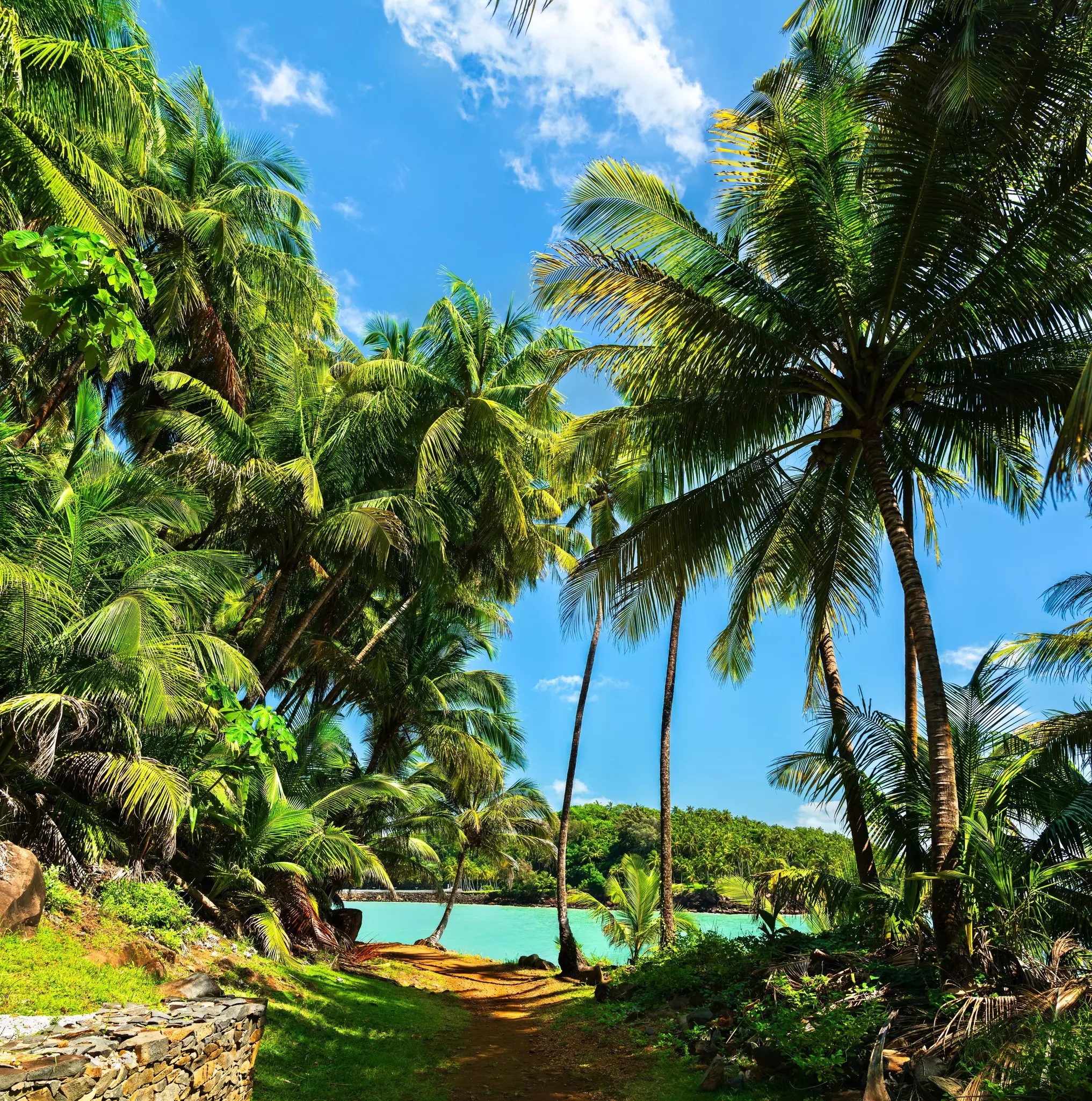
French Guiana doesn't fall in earthquake zones or the paths of hurricanes, typhoons or other climatic disruptors, which is why it was chosen as Europe’s space center
Lying between latitudes 2° and 6° N, the climate is equatorial so it’s always humid and hot with temperatures hovering between 22°C and 31°C (71.6°F and 87.8°F). The best time to visit is during the dry season, from July to mid-November, when you're almost guaranteed sunshine and very little rain.
But that’s also the height of the tourist season, so prices will be higher and attractions more crowded, particularly during the French summer school holidays from early July to the end of August.
A week will allow you to spend a couple of days in the capital city of Cayenne, another two days in Kourou (one at the space center and the other on the Îles du Salut where you’ll find clear, blue sea), a day in Saint-Laurent-du-Maroni visiting the penal colony and a couple of days relaxing in the forest sleeping in a hammock under a carbet (ramada or hut with no walls).
But to explore the interior and visit villages such as Saül in the heart of the Amazon, Camopi on the eastern border with Brazil or Maripasoula on the opposite side, add another week or more. There are no roads, so airplane or dug-out canoe are your only transportation options.
There are 9-hour direct flights from Paris to Cayenne with either Air France or Air Caraïbes. You can also fly direct to Cayenne from Fort de France in Martinique (another overseas French department in the Caribbean), and from the Brazilian cities of Belém and Fortaleza.
If you’re in North America you’ll have to get to either Toronto, Montréal or Miami from where you can fly to Cayenne via Martinique.
There’s an hourly bus service (TIG5) between Cayenne and Kourou. It takes an hour to cover the 62km and costs €10. But getting from Kourou to Saint-Laurent-du-Maroni, 189km west, on public transport takes much longer (4 hours), so it's probably best to rent a car.
The main coastal road – the RN1 – goes west from Cayenne, traffic is light except in the capital city where, like almost every other city in the world, traffic snarls up at rush hour. The RN2 heads southeast from Cayenne to Saint Georges de l’Oyapock on the Brazilian border.
The town of Saül is only accessible by plane. You can fly to other settlements like Camopi on the Brazilian border or Maripasoula and Grand Santi on the Suriname border but you can also book dug-out canoe (pirogue) excursions to these places. Allow plenty of time. It takes 4 days to get from Saint-Laurent-du-Maroni to Maripasoula.
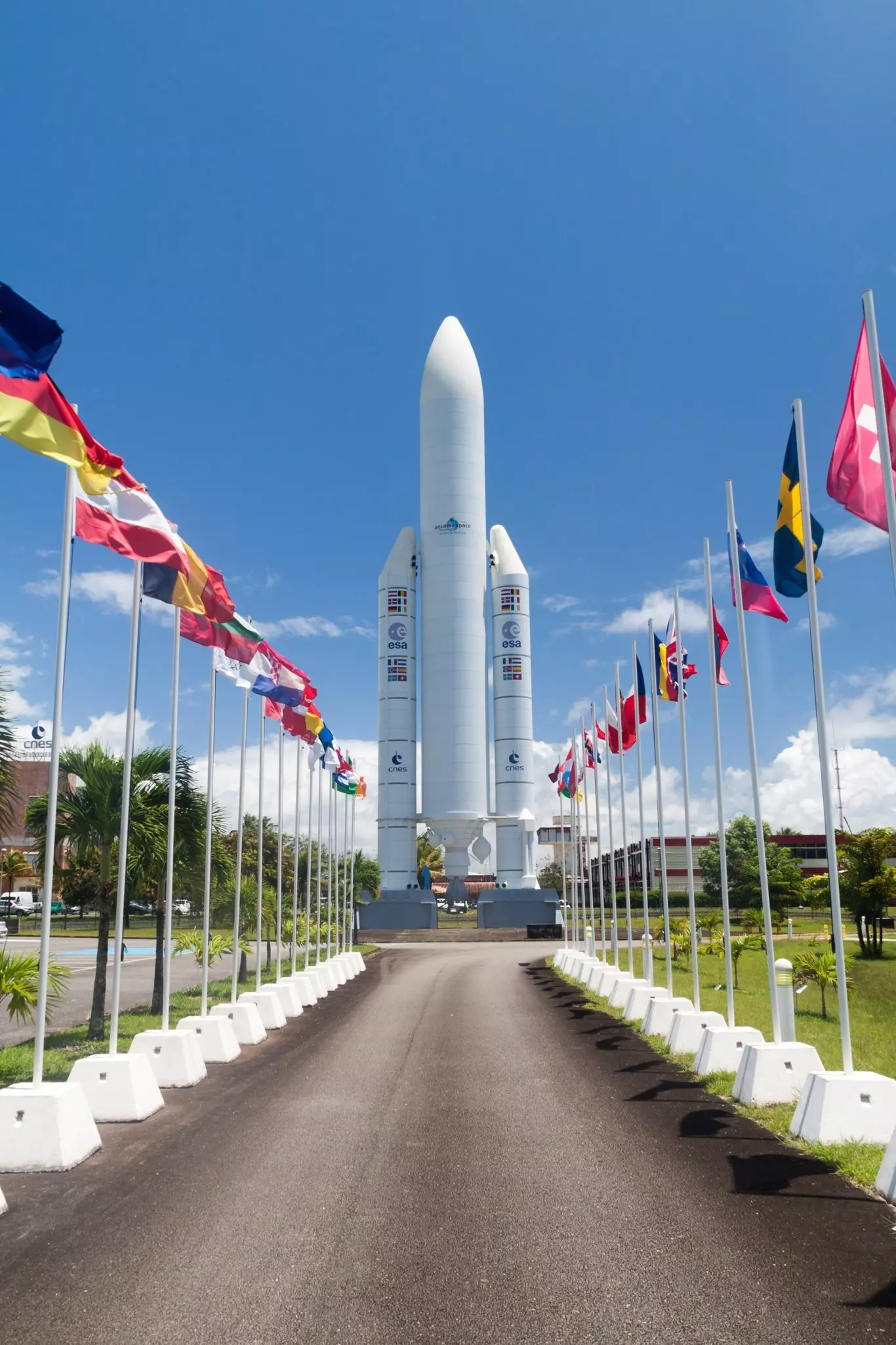
Visit the European spaceport in Kourou, officially known as the Centre Spatial Guyanais, and the new Guyaspace Experience, where all exhibits and multimedia are in French and English.
Interactive screens, hands-on objects, audio and video give visitors a sense of what life is like on a lunar base. Learn about the stars in the planetarium, understand what satellites do in space, and see what goes on behind the scenes at a launch base. Check online before your visit as the site is closed for a few days before each rocket launch.
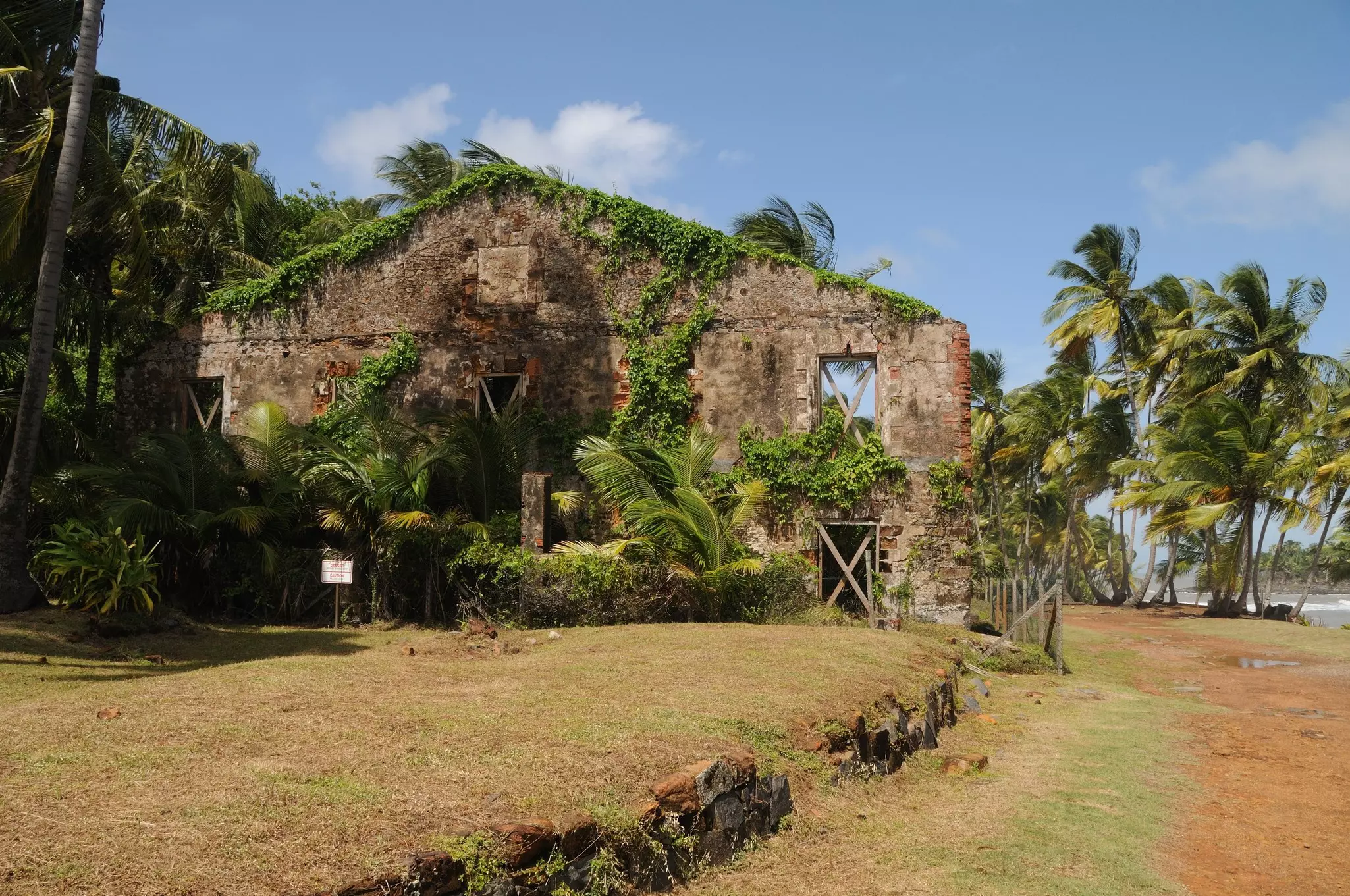
Take the hour-long motorized catamaran ride from Kourou to the Îles du Salut (Salvation Islands) archipelago, which lies 15km off the coast. These postcard-perfect, tiny islands were, in fact, home to a penal colony from 1854 to 1946 and are today owned by France's national space research center (CNES), as they lie directly under rocket launch-paths.
Of the three islands, only the central one, the Île Royale, can be toured freely and this is also where you’ll find the only restaurant: l’Auberge des Îles. You cannot visit the northern Île du Diable (Devil’s island), where France’s most famous 19th-century political prisoner, Captain Alfred Dreyfus, was held in solitary confinement from April 13, 1895 to June 9, 1899.
It's possible to take a guided tour of the southern Île Saint-Joseph. This is where another famous inmate was held for 2 years: Henri Charrière, whose 1969 partially autobiographical book Papillon described his experience as a bagnard (convict). You can also visit the penal colony of Saint-Laurent-du-Maroni on the mainland where most convicts, including Charrière, were held. He escaped, was captured and relocated to Île Saint-Joseph.
The small Musée Des Cultures Guyanaises has some pre-Colombian ceramics and tools, a collection of objects from the trade of enslaved people and artifacts made by the different cultural groups of the region, notably some beautiful pieces made out of feathers.
A quaint cabinet of curiosities opened at the Alexandre Franconie Museum in Cayenne in 1901 in a building now classified as a historic monument right in the center of town. The museum will be closed for the first six months of 2027 and will reopen as a natural history museum, where you'll be able to see the collection of Amazonian insects and birds and learn how much the plants of the forest contribute to modern medications. The former Jean Martial hospital, just across the road, will be transformed into French Guiana’s cultural center and will house the rest of the museum’s collection.
There are almost 50 well-indicated footpaths (known locally as layons) through the Amazon in French Guiana. An easy introduction is the Rorota path, which begins just behind the Gosselin beach in Cayenne.
This 5.6km walk will likely take you about 1 hour and 30 minutes. Don’t forget your binoculars as you’ll very likely see some sloths up in the trees. Wear trousers, not shorts, to protect you from insect bites and prickly plants and take at least 1L of water to drink for every hour that you’ll be out.
You’ll most likely come across at least one chablis (and no, it’s not a bottle of wine but what the locals call a fallen tree trunk). Be careful stepping over them, this is where snakes like to hang out.
Wear good hiking shoes and take a small plastic bag to protect your electronic devices when it rains, which it often does, even if it’s only for a few minutes. You may notice, here and there on a tree trunk, a small panel with an image of a mobile phone. These are the only spots in the forest where you'll be able to get cell connection.
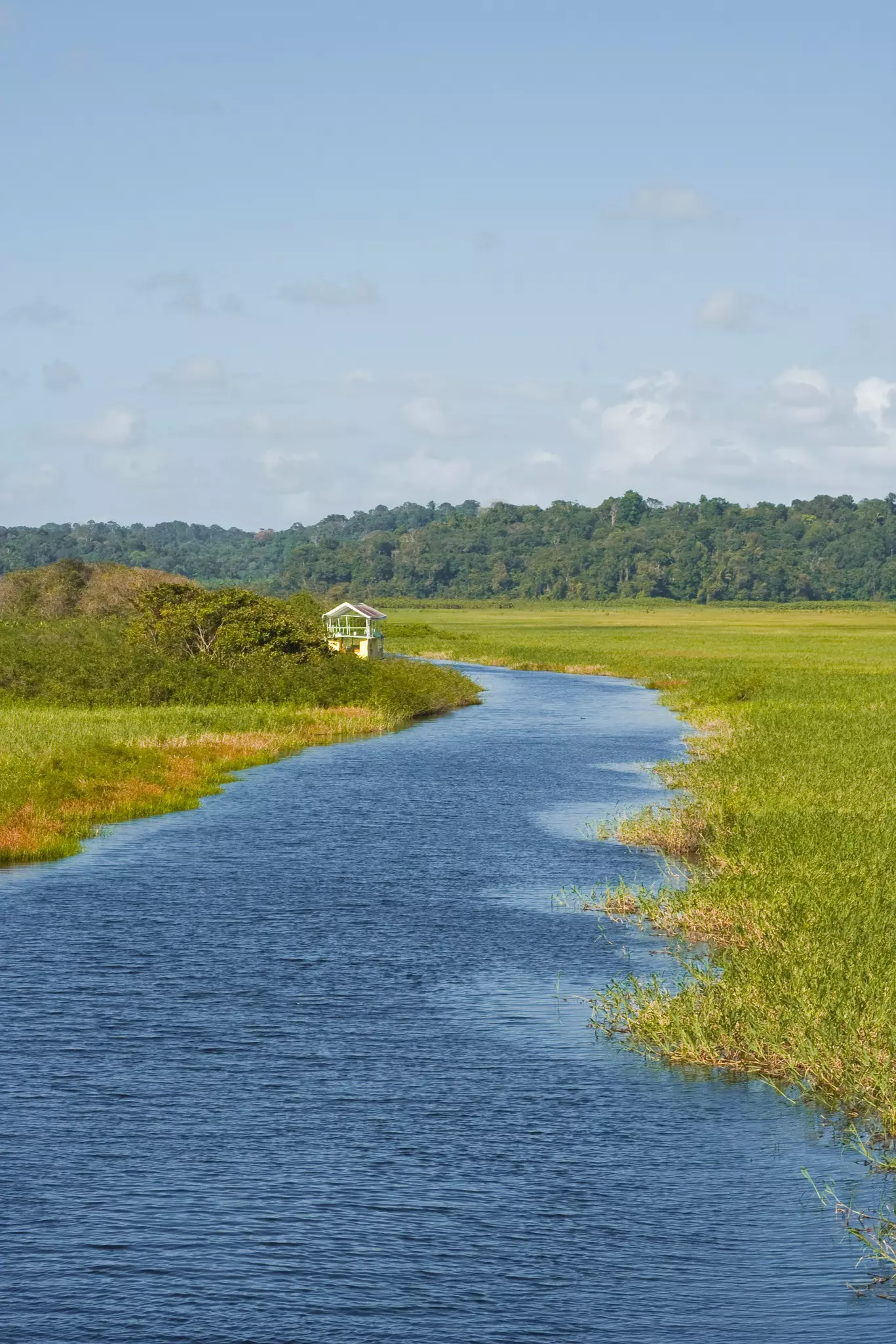
Around 80km southeast of Cayenne is Kaw-Roura, France's largest wetland and a protected area. Hire a dug-out canoe with a guide and paddle on the Kaw River, where you might see the world's largest rodent: the capybara, known locally as a cabiaï or the Kaw zebu. If you want to see caimans, who tend to emerge from their hiding places at dusk, spend a night in a floating ecolodge.
A favorite weekend activity among locals is taking off with their hammocks (every self-respecting Guianese owns one) to stay in the forest or along one of the many rivers under a carbet, the traditional Guianese wooden huts with no walls. They are like basic campgrounds where you'll need to bring your own food to cook on-site.
Carnival in French Guiana begins on Epiphany (January 6) and lasts until Ash Wednesday (the Wednesday preceding Easter Sunday, which is a movable feast). It's the major cultural activity here for the first part of the year and on weekends. In towns and villages, spectacularly costumed people and decorated floats accompanied by drums and brass bands parade down the streets every Sunday in what is known locally as cavalcades or vidés.
And in a tradition that is unique to French Guiana, the Touloulous, women whose identities are hidden under a head-to-foot disguise (spectacular ball gown, mask, gloves and wig), invite any man to dance during the Saturday night balls, generally giving him unsolicited advice as to how to improve his moves! The day after Mardi Gras, King Vaval is burnt symbolically, thereby burying the carnival for another year.
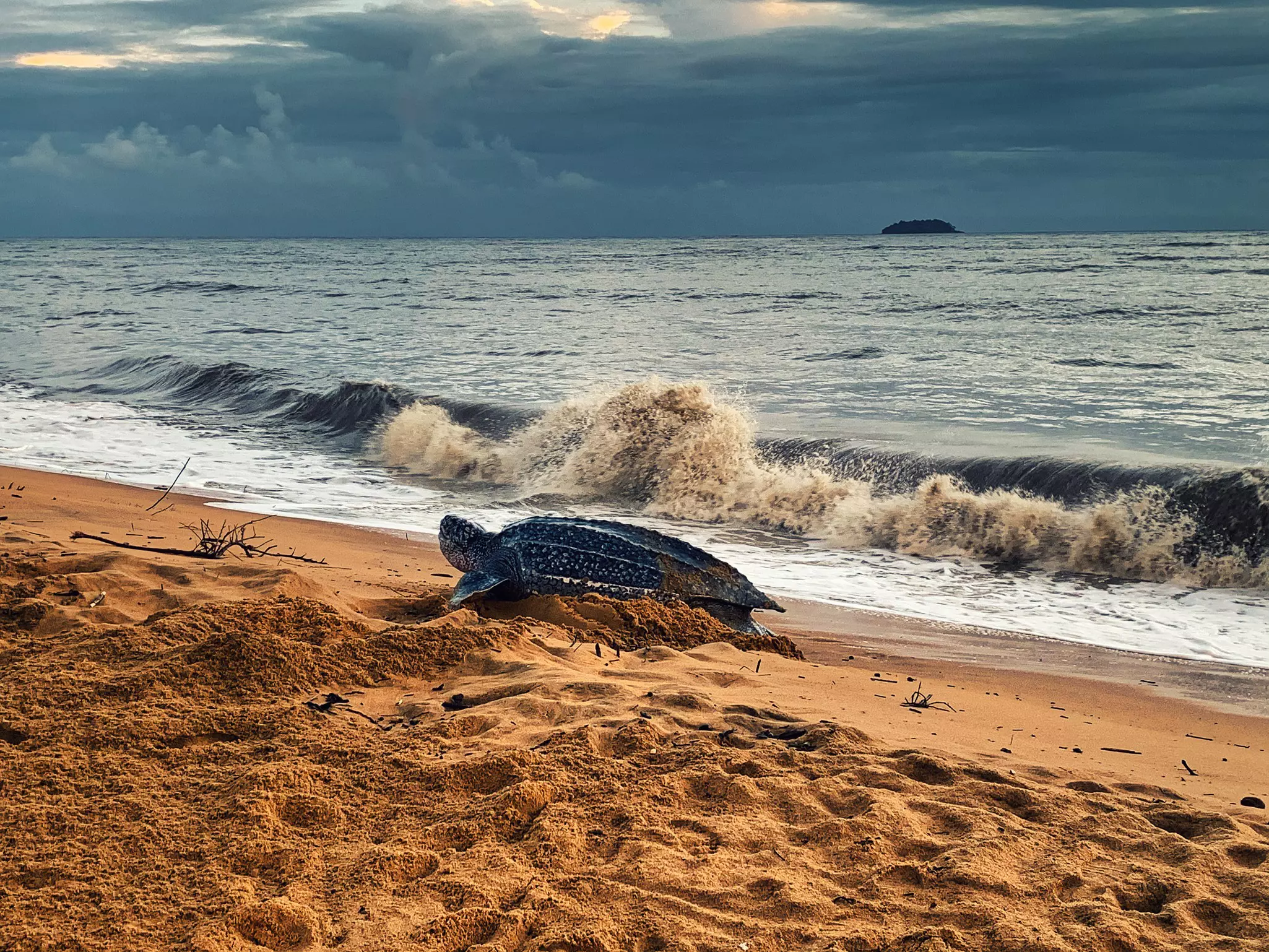
From April to August, leatherback sea turtles lay their eggs on the Salines beach in Cayenne, generally between 5pm and 7am. Keep your distance from the animals, ensure you don’t disturb or touch them, always stay behind them so they can’t see you, don’t try to help them, keep very quiet and only use lamps or torches which emit red light to see. While it's possible to go alone, hiring a guide is recommended – try the Kwata association or the Réserve Naturelle de l’Amana. You’ll also be able to see the olive ridley sea turtle and the green sea turtle swimming in the waters off French Guiana.
I love to spend a couple of relaxing days at Camp Cariacou, an hour’s motorized dug-out canoe ride from Kourou along the eponymous river. Here, there’s no internet and only emergency telephone service so you can really disconnect. Sleep either in one of the two double-beds or, even better, in a mosquito-net protected hammock, which is cooler in the really heat and humidity.
During the day explore the Amazon with the guide from the Compagnie des Guides de Guyane who’ll teach you how to forage or take you racing in one of their dug-out canoes, or try your hand at archery, fishing or weaving. Kayak quietly along the Balata creek where the camp is set up on the lookout for wildlife.
This is France, and prices are comparable with mainland France, plus a bit more for the distance!
Three- or four-star hotel: €90 to €230 per night
Short-term rental in Cayenne: €49 per night
Basic overnight stay in a carbet with hammock and mosquito net: €30
2 days and a night at Camp Cariacou: €185
3-course dinner for two: €45 per person
Beer: €3.50
Glass of fresh fruit juice: €4
Bottle of mineral water: €5
Compact car with manual shift: €240 per week
In the towns and cities, dress in clothes that you would wear when it's hot and humid – but not beachwear. Don’t forget a hand-held fan, a hat and sunglasses. In the forest wear lightweight trousers and closed shoes or solid sandals that don’t mind getting wet.
You’ll hear dire warnings about mosquitoes and the risks of Dengue fever and malaria. Take sensible precautions by covering up, using repellent and checking in advance of travel with a medical professional if antimalarials are required for the regions you're visiting.
Explore related stories