Sep 2, 202614 min read
A Guide to Broome and the Dampier PeninsulaSep 2, 2026
14 MIN READ

Writer
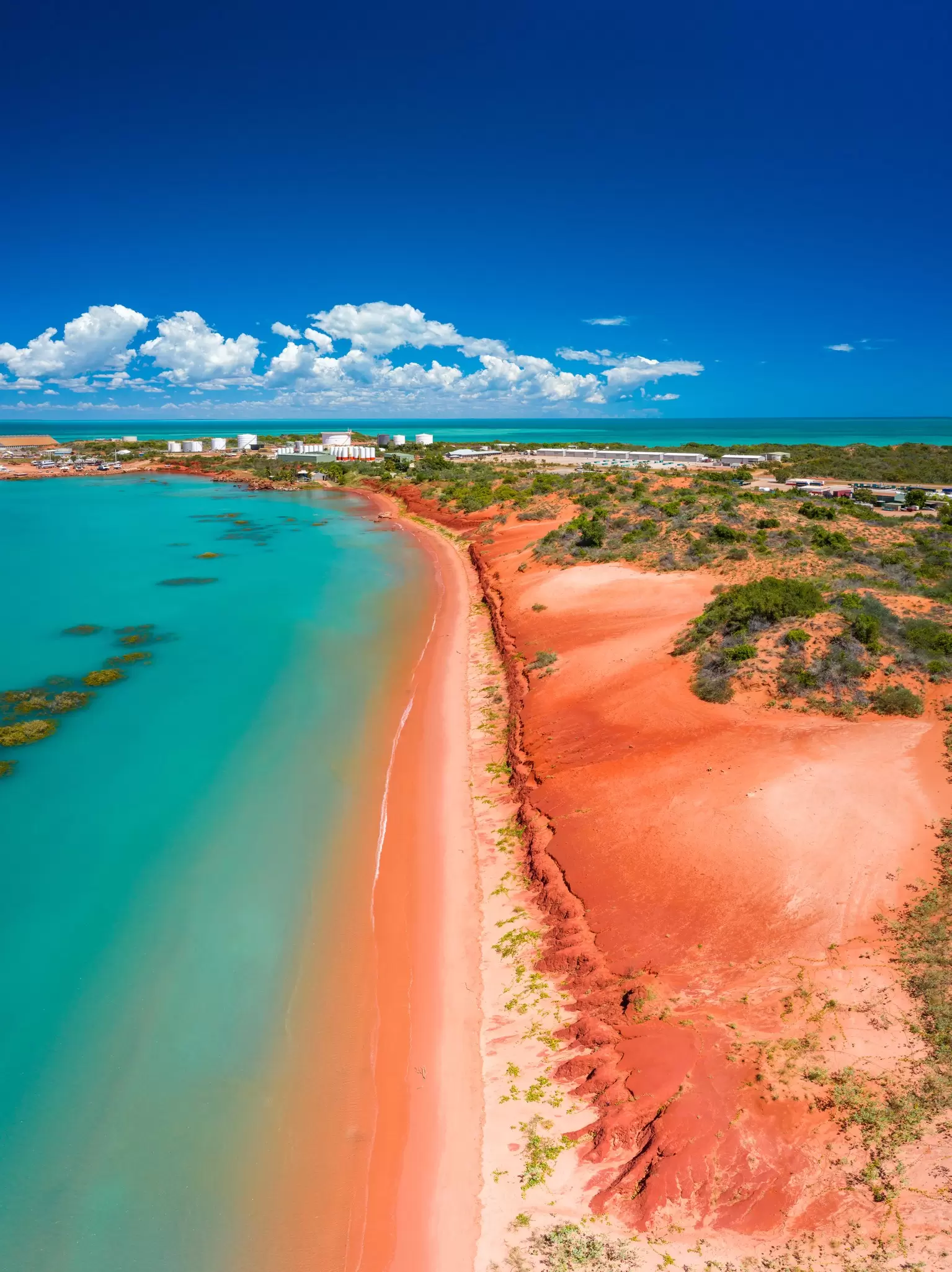
Broome's Roebuck Bay. Matt Deakin/Shutterstock
Writer
Lonely Planet may earn a commission from affiliate links on our site. All recommendations and reviews reflect our own independent opinions.
Ask me where I go when I drift off to sleep at night and I won’t even have to think twice about my answer: Australia’s Kimberley region.
Situated in Western Australia’s northernmost reaches, this jaw-droppingly beautiful and relatively remote coastal region is known for its ancient Aboriginal rock art, iconic boab trees, unusual waterfalls and striking contrast of red ranges against turquoise waters.
It would take weeks to explore the Kimberley in its entirety, but you only need a week to discover the West Kimberley, including the gateway town of Broome. Here’s how to make the most of your trip.
Like most of northern Australia, the West Kimberley – including Broome and the Dampier Peninsula – is known for its tropical climate, with two distinct seasons.
During “the wet” (November to April), visitors can expect the kind of intensity that will make your ex seem chill: oppressive humidity, downpours on the daily and soaring temperatures that regularly climb into the mid-30s°C (90s°F), with the occasional cyclone making things extra spicy.
Not surprisingly, some tours (including to Horizontal Falls) don’t operate during the wet season and many businesses, including in Broome, have reduced opening hours. If you’re planning on traveling onwards to Derby or the East Kimberley, roads may also be closed due to flooding. To make things even less appealing, ocean swims aren’t recommended at this time of year, due to the presence of marine stingers.
The dry season (May to October) is the best time to visit. It’s comparatively cool, but you’ll still be soaking in the sun, with temperatures in the 20s and 30s°C (60s to 80s°F). The skies will be blue; the water will be warm (and safe to swim in), and everything will be open at this time. This is also when Broome’s population swells from less than 20,000 to around 50,000 people, adding to the holiday vibe.
Time your visit for Staircase to the Moon, a natural phenomenon where the light of the full moon reflects off the exposed mud flats of Broome’s Roebuck Bay. Its arrival is celebrated with night markets and live music performances – alongside increased demand for hotel and restaurant reservations. Book well in advance. A full list of dates for Staircase to the Moon in 2027 can be found on the Visit Broome website.
This is not a weekend destination. First off, slipping into “Broome time” – which is less of a quantitative measurement and more of a state of being – will likely take a couple of days. (You’ll know you’re officially on Broome time when you forget your phone in your hotel room and don’t even bother to go back to get it.)
Give yourself at least two to three nights in Broome to adjust to the shift, before driving north towards the Dampier Peninsula, which deserves – at bare minimum – another two to three nights. A full week is enough time to tick off most of the top sights and activities without feeling rushed, including a day or overnight trip to Horizontal Falls.
If you’ve got ample time up your sleeve, the 2350km (1460-mile) drive from Perth to Broome via the Coral Coast is one of Australia’s best RV trips, with stops like Ningaloo Reef along the way.
But, if like the rest of us, you’ve only got a week or less to spare, you’re going to want to fly. Both Qantaslink and Virgin Australia operate multiple non-stop flights daily from Perth, with a flight time of around 2 hours and 30 minutes.
Broome International Airport is roughly a 10-minute drive from both Broome’s central business area and Cable Beach. Most resorts are situated near Cable Beach’s more touristy north end.
It’s possible to visit the region without a car; tour operators – including Horizontal Falls Seaplane Adventures – will pick you up from your accommodation. To get to the Dampier Peninsula, Cygnet Bay Pearl Farm offers bus transfers from April to October. However, access to wheels provides more flexibility. Rent a car from local agency Broome Broome Car Rentals, a 2-minute walk from the airport.
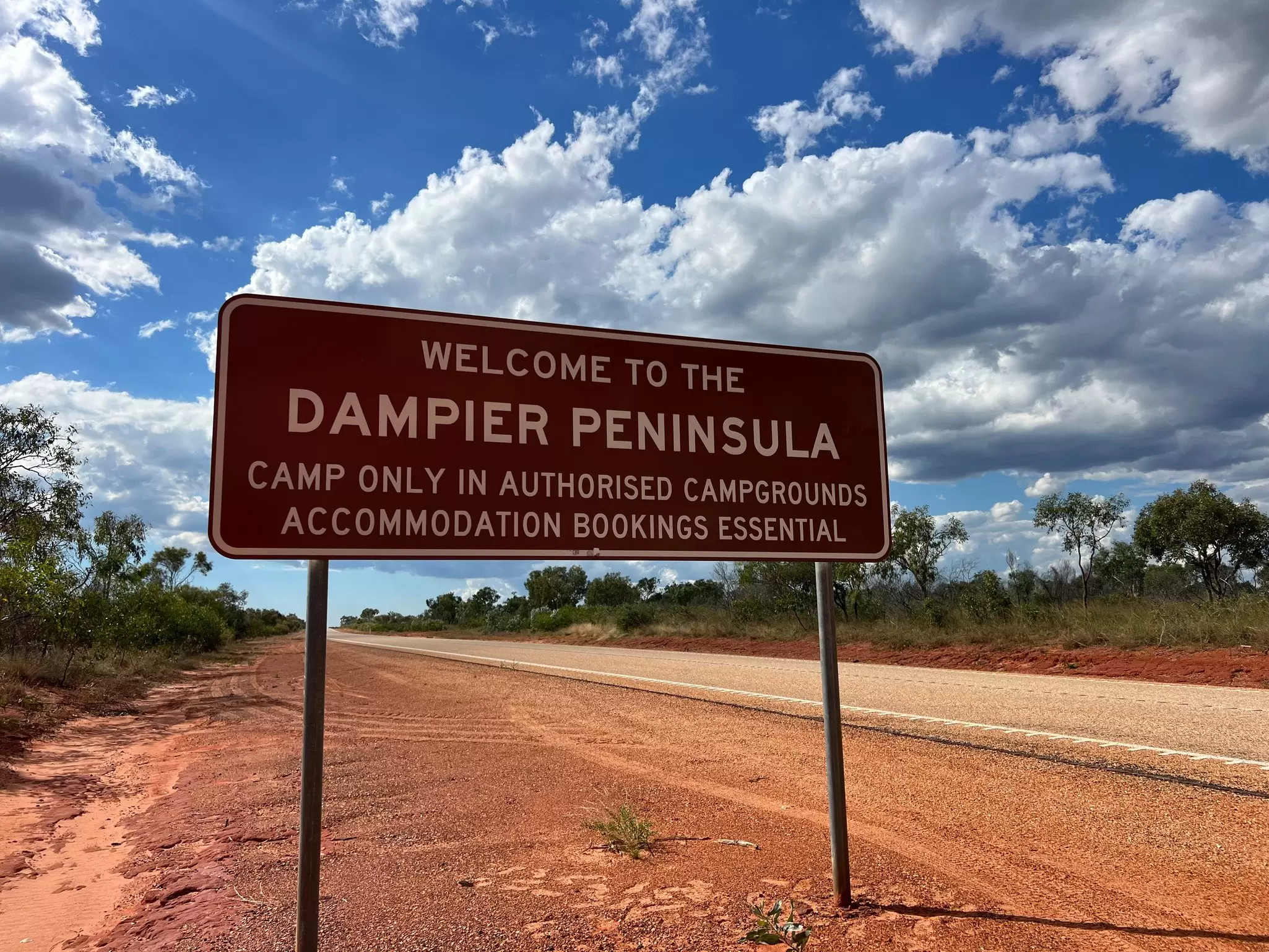
The road from Broome to the Dampier Peninsula (the Cape Leveque Road) is fully paved, making it possible to drive a 2WD all the way to Cygnet Bay. But if you plan on taking any side quests, a 4WD with high clearance is the way to go.
Avoid driving after dark, in the early morning or twilight hours; in addition to the usual suspects (kangaroos and wallabies), wild donkeys also like to make a roadside – or middle-of-the-road – appearance, creating a serious highway hazard.
Finally, heed the warning of locals and do not leave any luggage or belongings in your vehicle while in Broome, which may look alluring to opportunistic thieves. Most hotels are willing to hold your bags for the day.
Australia’s most internationally recognized beaches – such as Bondi and Byron Bay – are situated on the East Coast. So, it’s easy to understand why watching the sun set over the ocean is novel for East Coast Australians and beloved by international visitors.
The most obvious place for sundowners is Cable Beach’s northern end, near Broome’s bigger resorts. Cable Beach is also where you can ride camels at sunset, with two operators in town (Broome Camel Safaris and Red Sun Camels) offering nightly tours. (Want to interact with the camels but less than keen on riding them? They stop by Spinifex Brewing for a feeding on their way home for the night.)
At Cable Beach’s southern end, you’ll discover more of a local scene, with dozens of 4WDs parked along the sandy beach, vehicles zooming around, dogs playing in the surf and speakers blasting.
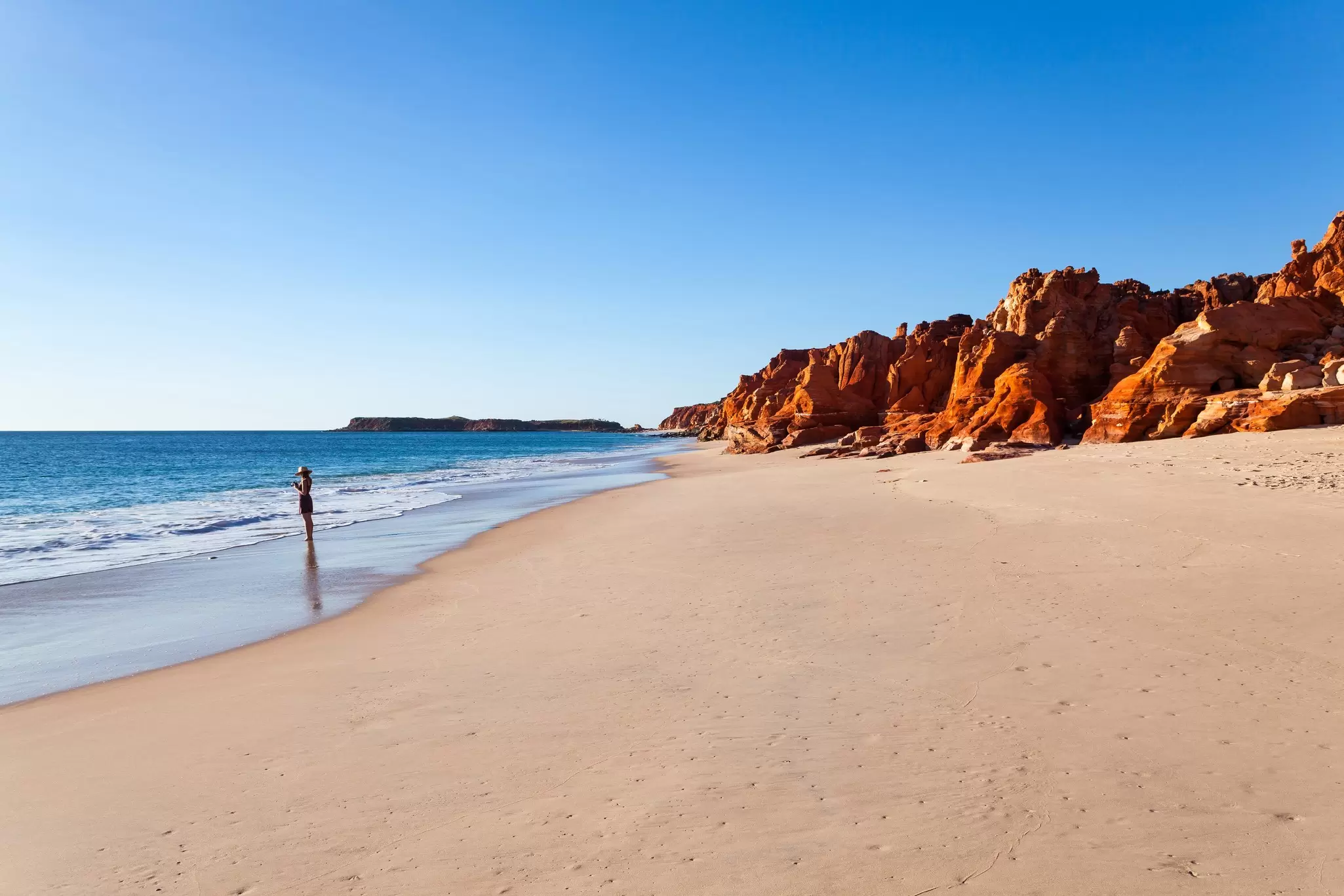
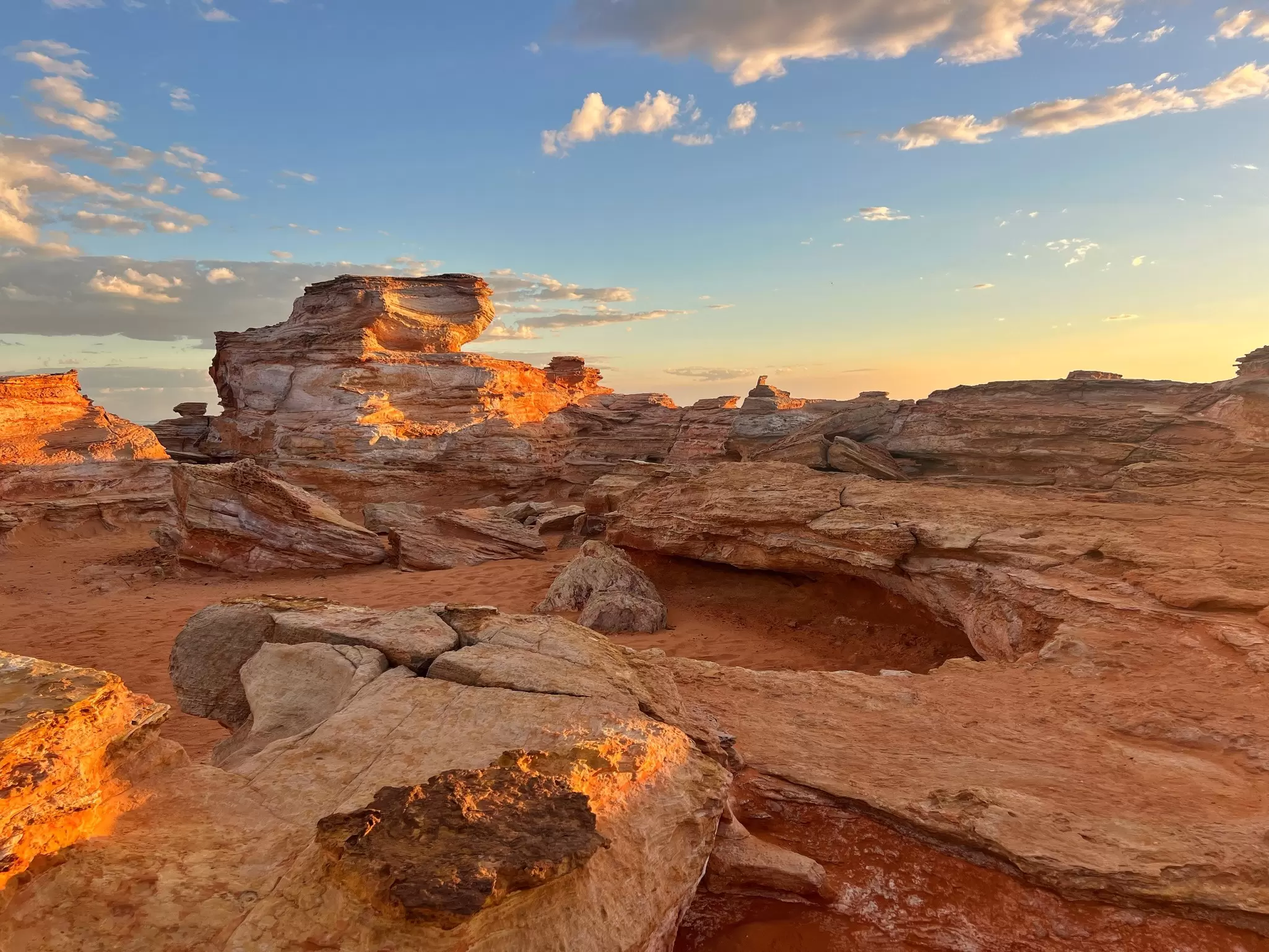
But it isn’t the only waterfront spot to watch the sun slip away. My suggestion: get away from the crowds at Gantheaume Point. You’ll find dinosaur footprints and fossilized plants preserved in the red rocks – which seemingly change color during golden hour. Then, you should still have enough time to zoom over to Cable Beach for the afterglow before the day descends into darkness.
The pristine white sand of Cable Beach – which stretches for 22km (14 miles) is hard to beat. After all, it’s the reason so many choose to vacation here. Parking and amenities such as showers can be found near the Broome Surf Life Saving Club.
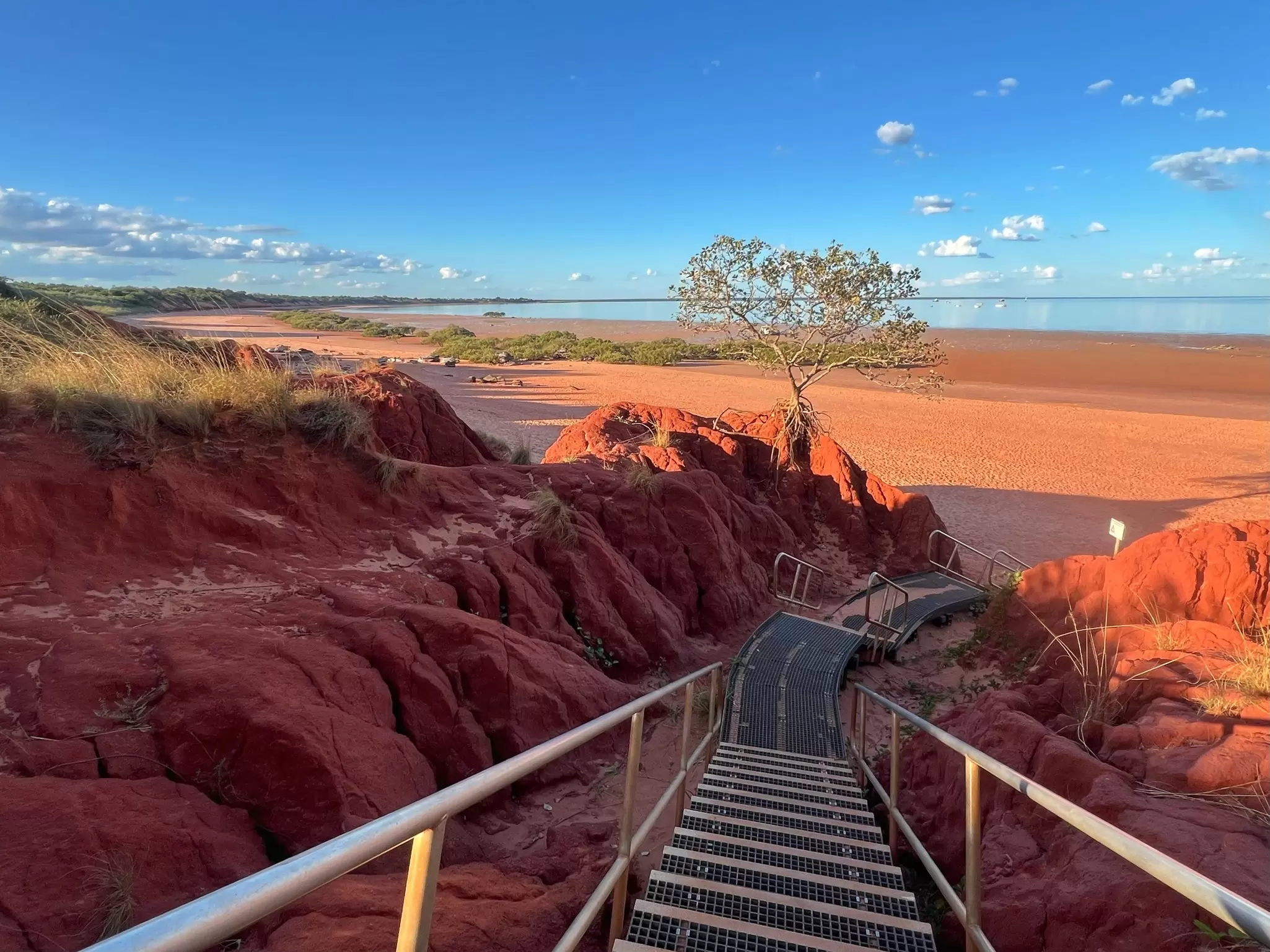
But the beaches don’t end at Cable Beach. There’s also Town Beach – with its massive wharf and endemic boab trees – and my personal pick, Simpson Beach in Roebuck Bay. Hidden down a road near the port, its vibrant pink and red hues provide a stunning contrast to the turquoise waters. One word of warning: leave your white bathing suit (swimming costume) at home. While it’s safe to swim, the iron-rich sand will stain light clothing.
A young community with a population of less than 20,000 people, Broome’s fascinating (and sometimes dark) history feels more expansive. Aboriginal people have lived in the area for at least 30,000 years. Then, in the 19th century, the town was established as a pearling port and by 1910, it exported around 80% of the world’s mother-of-pearl for buttons.
Get a sense of the lay of the land with stops at Town Beach, Chinatown (Broome’s downtown area), the Japanese Cemetery and Cable Beach. Be sure to stop into Cygnet Bay’s Broome showroom, which showcases one of the world’s largest pearls.
For guided tours, contact Broome & Around or Kimberley Cultural Adventures. Both operators cover similar sites, but the latter provides insights into the region’s First Nations culture, including the opportunity to forage with a Traditional Owner of the Winawul Country, Robert Dann, for bush tucker (native edible plants).
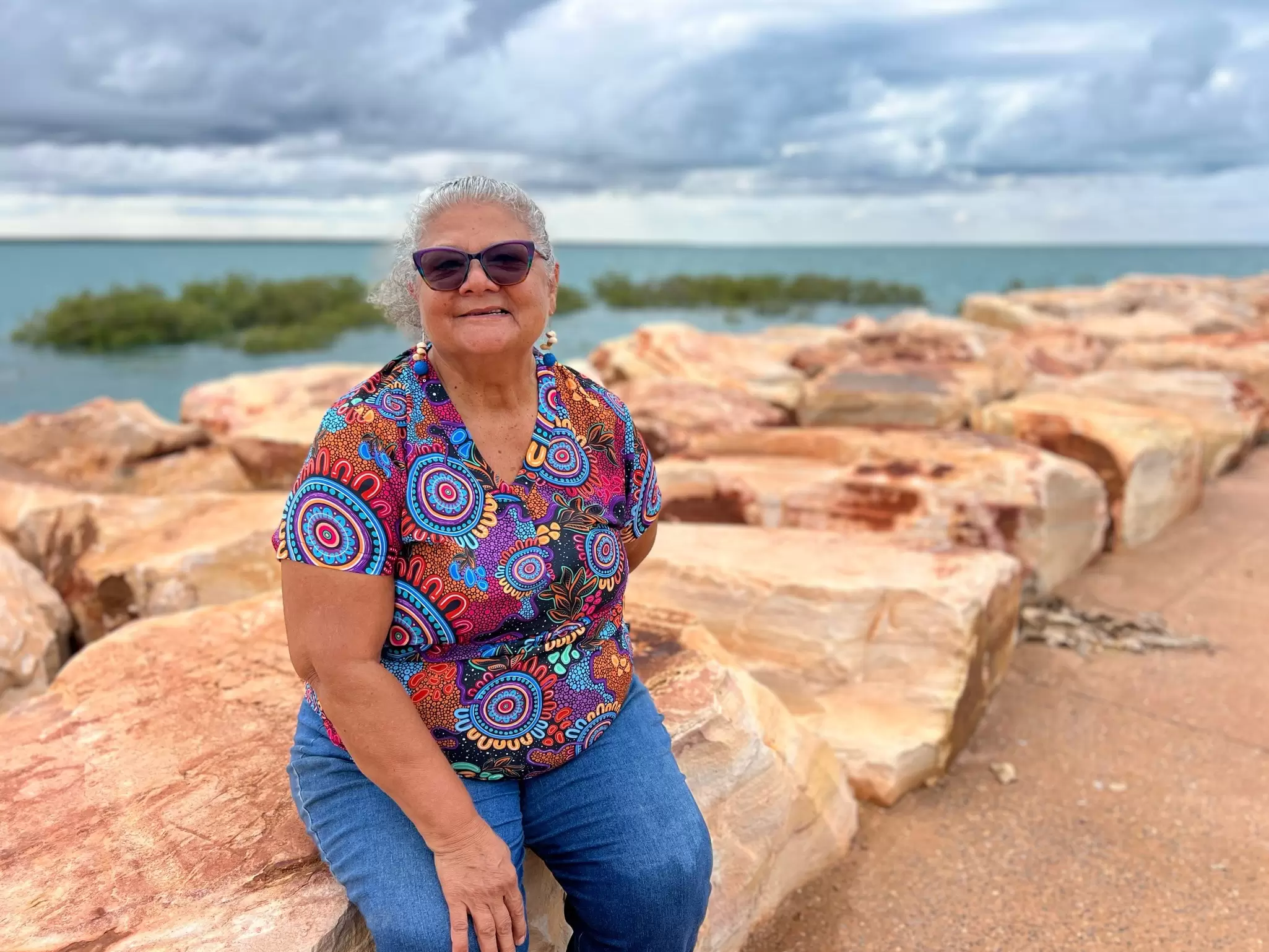
My favorite tour, though, is with Pat Torres of Jarndu Ngaank Tours. An Elder who has connections to the Djugun, Yawuru, Nyul Nyul, Bard, Jabirr Jabirr and Ngumbarl people, Torres shares her deep cultural knowledge and lived experiences through the lens of Western anthropology and sociology.
On this 90-minute tour, you may participate in a smoking or water cleansing ceremony and learn more about skin groups and taste native bush tucker – all from the perspective of a woman. “In both tourism and the bush tucker industry, it’s about imparting knowledge to make people better people so they don’t suffer the continued impacts of colonization,” says Torres.
If you’re having difficulty adjusting to “Broome time,” your first stop should be one of the town’s famous local breweries. Situated near the water, Matso’s has made a name for itself nationally. Its mango beer is worth a try, but most come here for its icy cold ginger beers. (Don’t miss the chili and lime ginger beer.)
The town’s best outdoor beer garden, though, goes to Spinifex Brewing, close to Cable Beach. It has a playground for kids, a mega-screen for sports, and many misters to keep everyone cool. If beer isn’t your thing, order the house lemon-lime bitters as a slushie. Made with native finger lime (Citrus australasica), it’s an enticing non-alcoholic option.
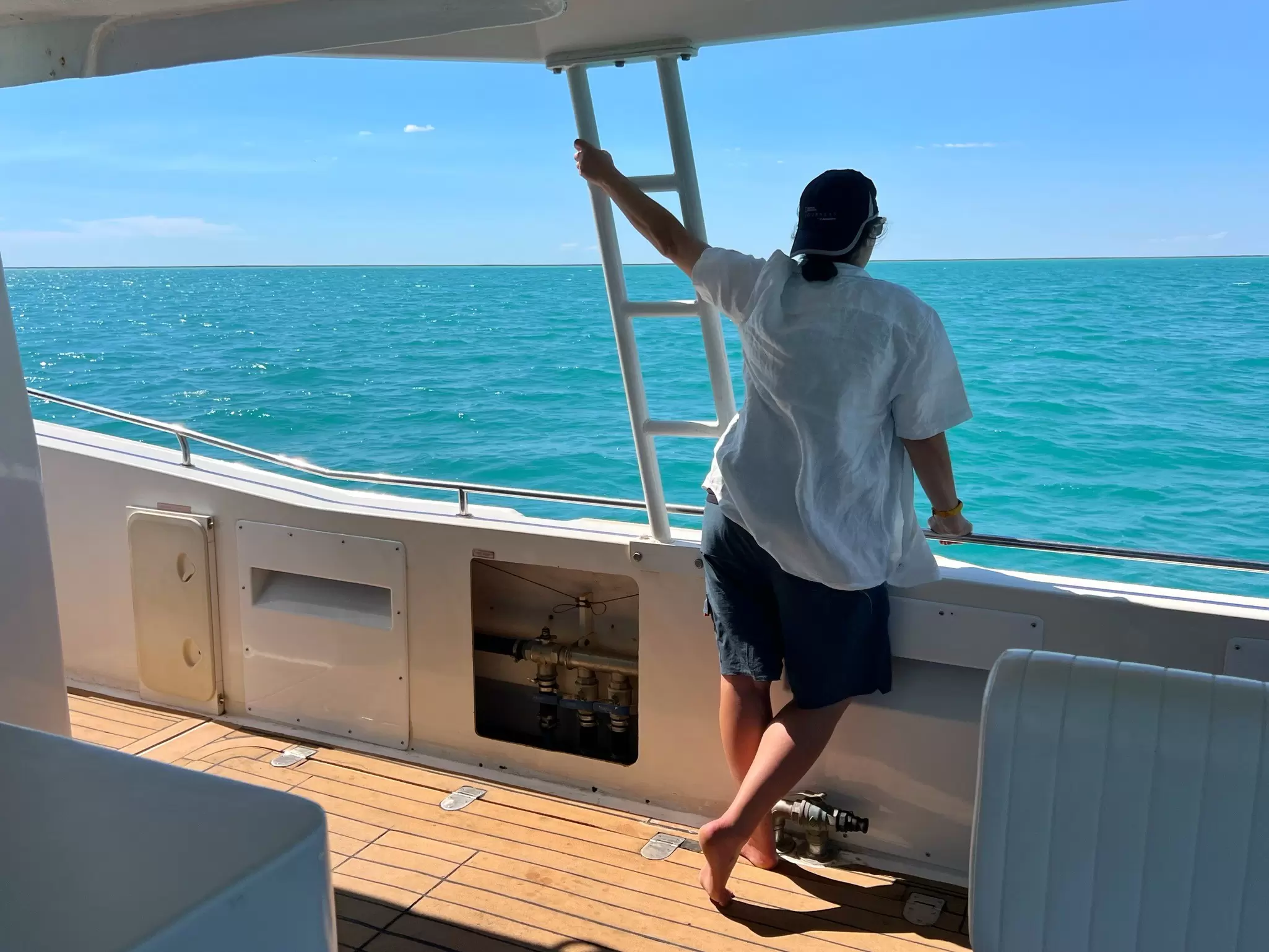
The rarest dolphin in Australia, the snubfin dolphin, makes its home in Roebuck Bay. On a morning tour with Broome Whale Watching, you have a good chance of spotting these beakless dolphins. But that’s not all – the bay is also habitat for dugongs, sea snakes, bottlenose dolphins, sharks, manta rays, turtles and more. (I saw all these and more during a 4-hour tour.)
The boat ride is just as epic with surreal views of red sand against turquoise blue waters and lots of snacks to keep you distracted as you seek out snubfins.
You can’t leave this region without buying a pearl – which is why you need to head due north from Broome to the family-owned Cygnet Bay Pearl Farm on the Dampier Peninsula.
Established in 1960, it cultivates pearls grown in the largest oysters in the world, Pinctada maxima. Today, the working pearl farm offers accommodation, a full-service restaurant, a gift shop (where you can buy your own pearl, straight from the source) and the chance to explore one of Australia’s most remote stretches of coastline.
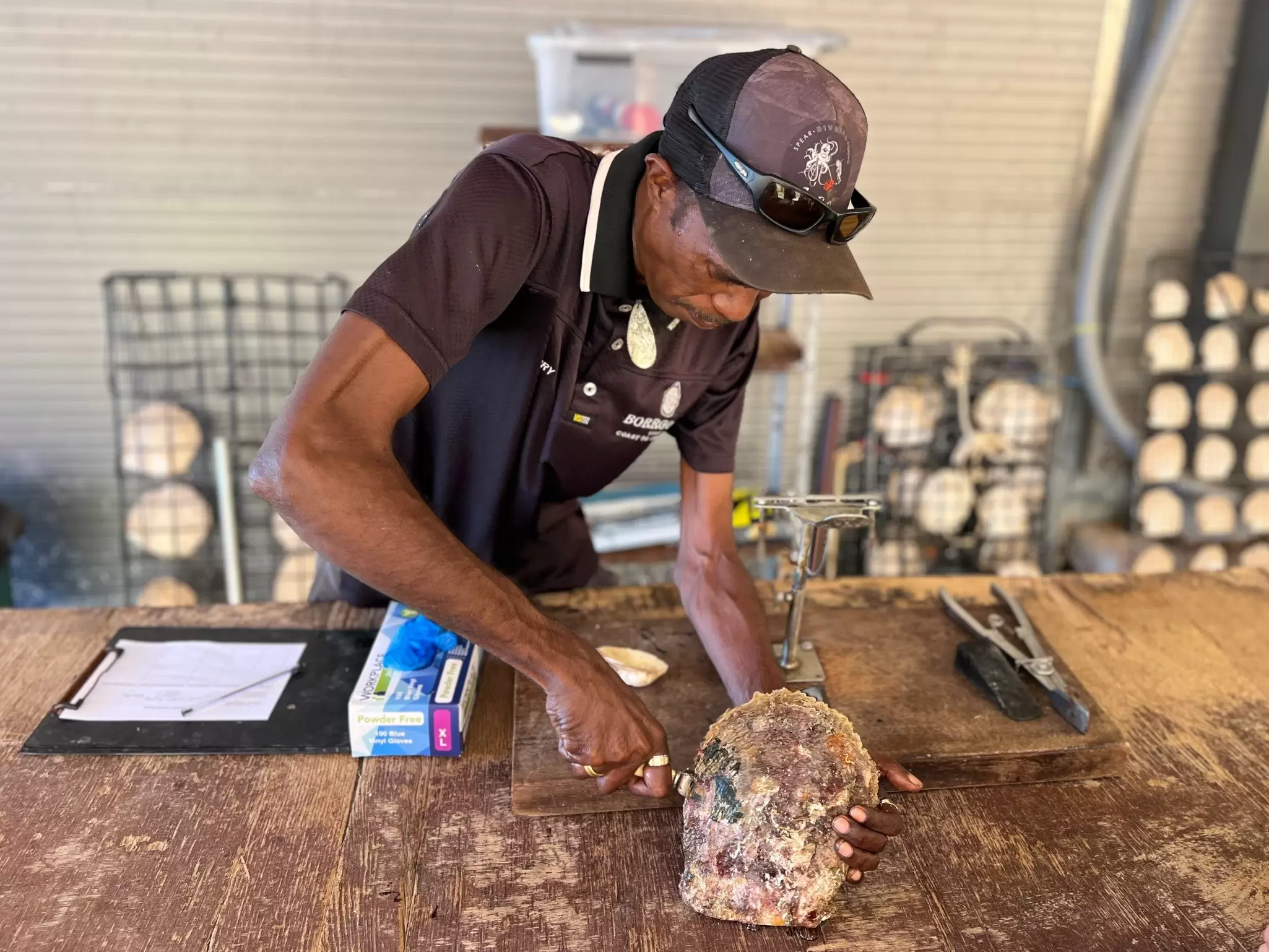
There are countless tour options, including seaplane adventures to Horizontal Falls and boat tours to see the giant tides (more on both below). But don’t miss the pearl farm harvest tour (where you’ll see how pearls are seeded, harvested and graded) or the opportunity to connect with the land’s Traditional Owners, the Bardi Jawi people.
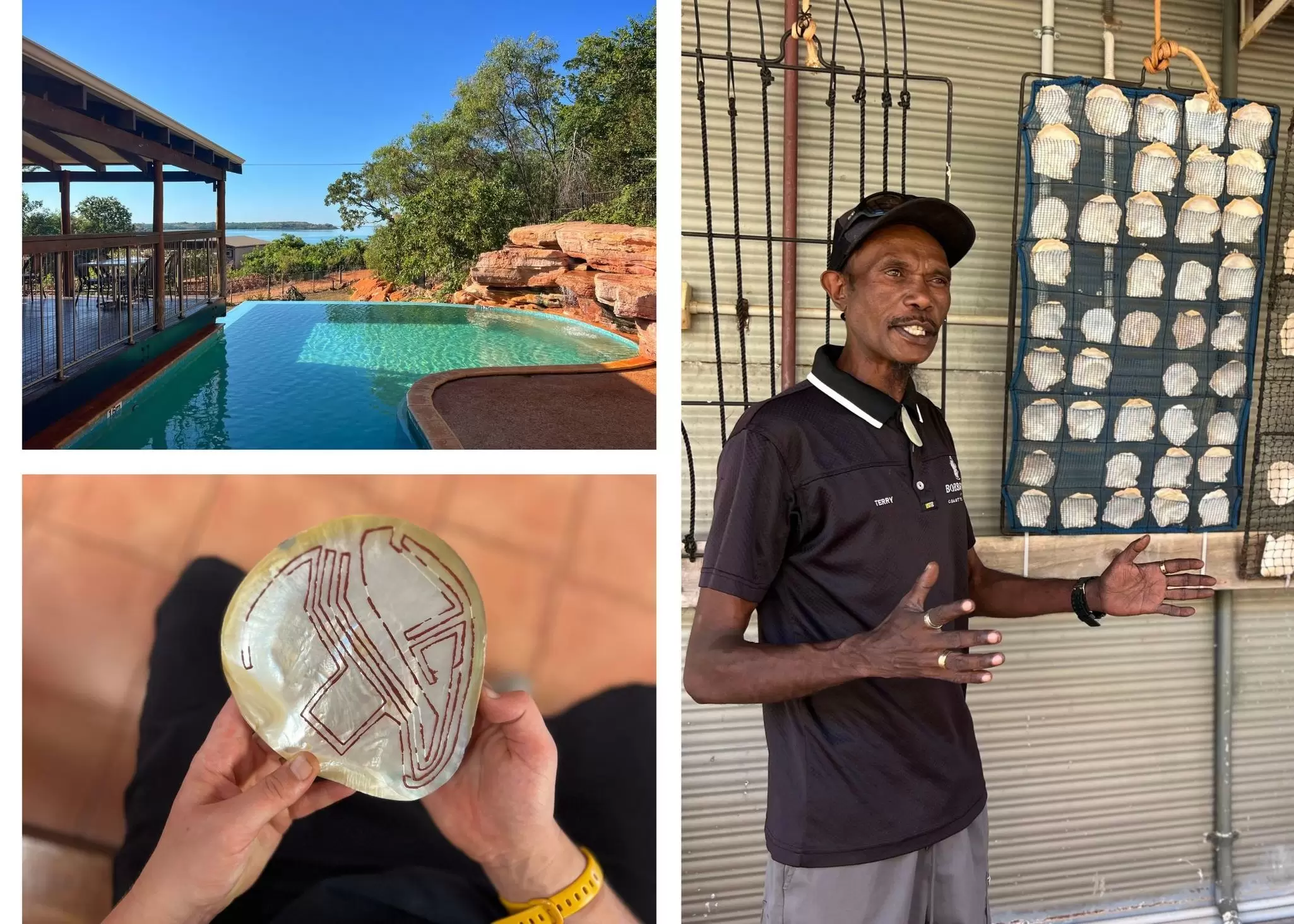
On a Borrgoron Coast to Creek Tour, you’ll meet Bardi man Terry Hunter, who is the fourth generation of Hunters to work on the farm. Alongside his deep knowledge of pearl farming, he also shares the importance of the oysters to the area’s First Nations people, who used to carve the shells into riji, an art form that is still preserved today by local Bruce Wiggan. “The pearls mean absolutely nothing to my people,” explains Hunter. “We don’t believe in the pearls, we believe in the shell.”
Accommodation at Cygnet Bay includes RV sites, luxe safari tents, and fully refurbished pearler’s shacks situated on the edge of a tidal lagoon within a nationally endangered monsoon vine thicket.
The most majestic thing you’ll see off the coast of the Dampier Peninsula isn’t a whale or a dolphin. It’s the movement of the sea. Here, even on a calm day, rapids form, flowing down rivers in the middle of the ocean. Massive whirlpools and eddies swirl – like a phantom giant is swirling its fingers through the water from above – and turtles ride in the currents.
The incredible phenomenon – which holds deep cultural significance and frequently features in local artwork – is the result of some of the biggest tides in the world, which create tension as the water moves through King Sound. On the largest of these, a king tide, the depth can vary by 10 meters at Cygnet Bay.
The best way to see it in action is on a 2-hour Sea Safari departing from Cygnet Bay Pearl Farm, when you may also have the chance to visit the Waterfall Reef, a 2km-long waterfall that rises out of the water when the tide falls.
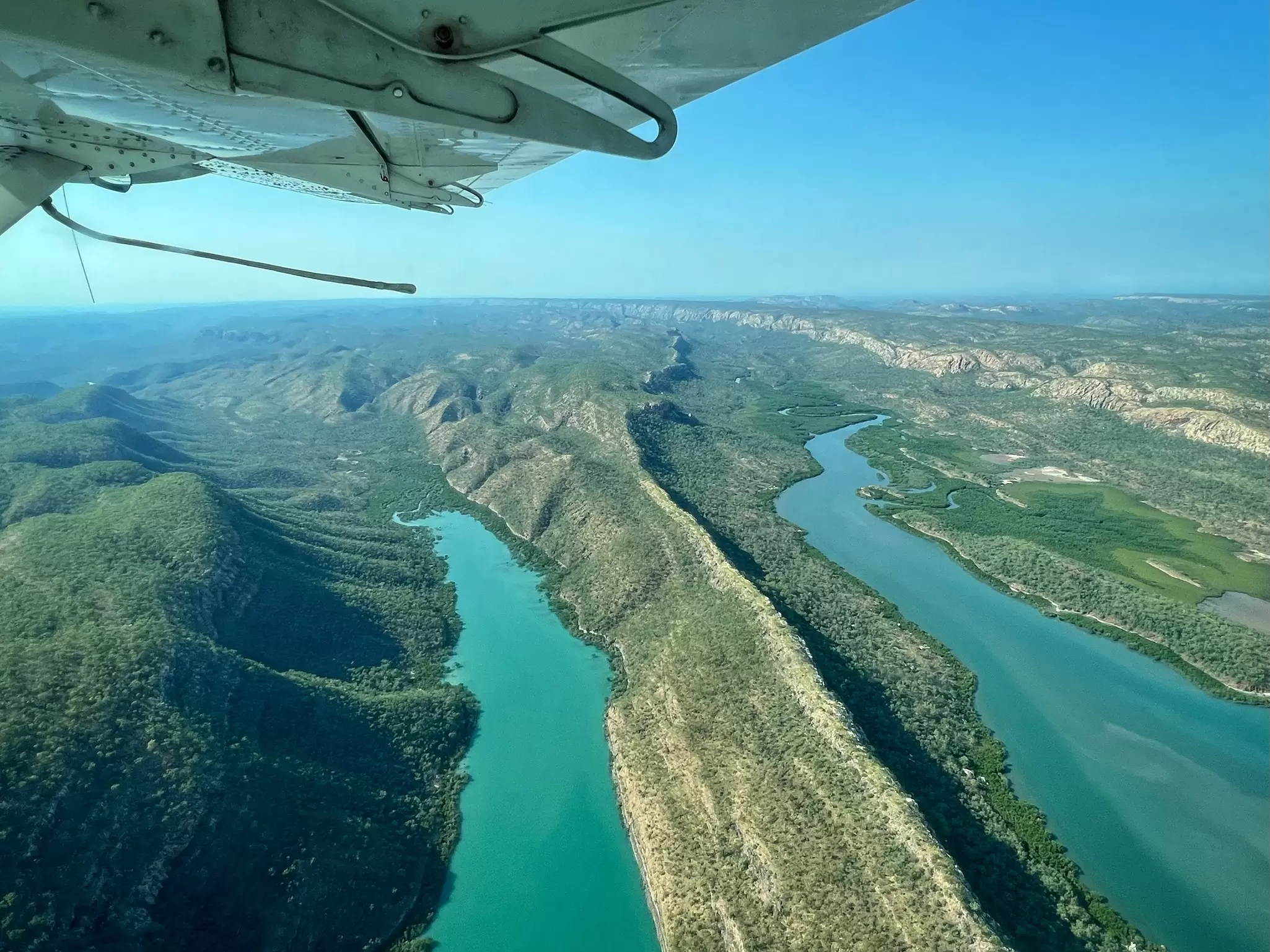
Seeing Garaan-ngaddim, known as Horizontal Falls, is one of the Kimberley’s most powerful experiences. Described by David Attenborough as “one of the greatest natural wonders in the world,” this natural phenomenon sees one million liters (or about 1,000 cubic meters) of water per second compressed and squeezed through narrow gaps in two parallel gorges.
Just as impressive is the seaplane ride to get there. On this full-day excursion trip departing from Broome or Cygnet Bay, you’ll soar over Sunday Island, King Sound and mangroves that snake their way away towards 1.8-million-year-old sandstone mountain ranges, and finally over the falls themselves, before arriving at a pontoon anchored in the calm waters of Talbot Bay. Jet boats will take you from the pontoon to see the falls in action and to explore the nearby serene Cyclone Creek. Knowledgeable guides from Horizontal Falls Seaplane Adventures will explain the science behind the area’s ancient geology, while Dambimangari cultural guides provide insight into the power of Wunggurr, the spiritual snake responsible for the falls.
Owing to its remote location, Broome is not a budget destination. Meals, in particular, can be pricey, with most fresh food and essentials being trucked 2200km (1370 miles) from Perth to Broome along the Great Northern Highway. Expect to pay up to $35 or $40 even for a basic pub burger. Drinks are relatively on par with the rest of the country; a beer will set you back about $9 while a glass of wine is roughly $14. Choose accommodation with a kitchenette to reduce costs, and if you plan on visiting Cygnet Bay, bring groceries to prepare your own breakfasts and lunches.
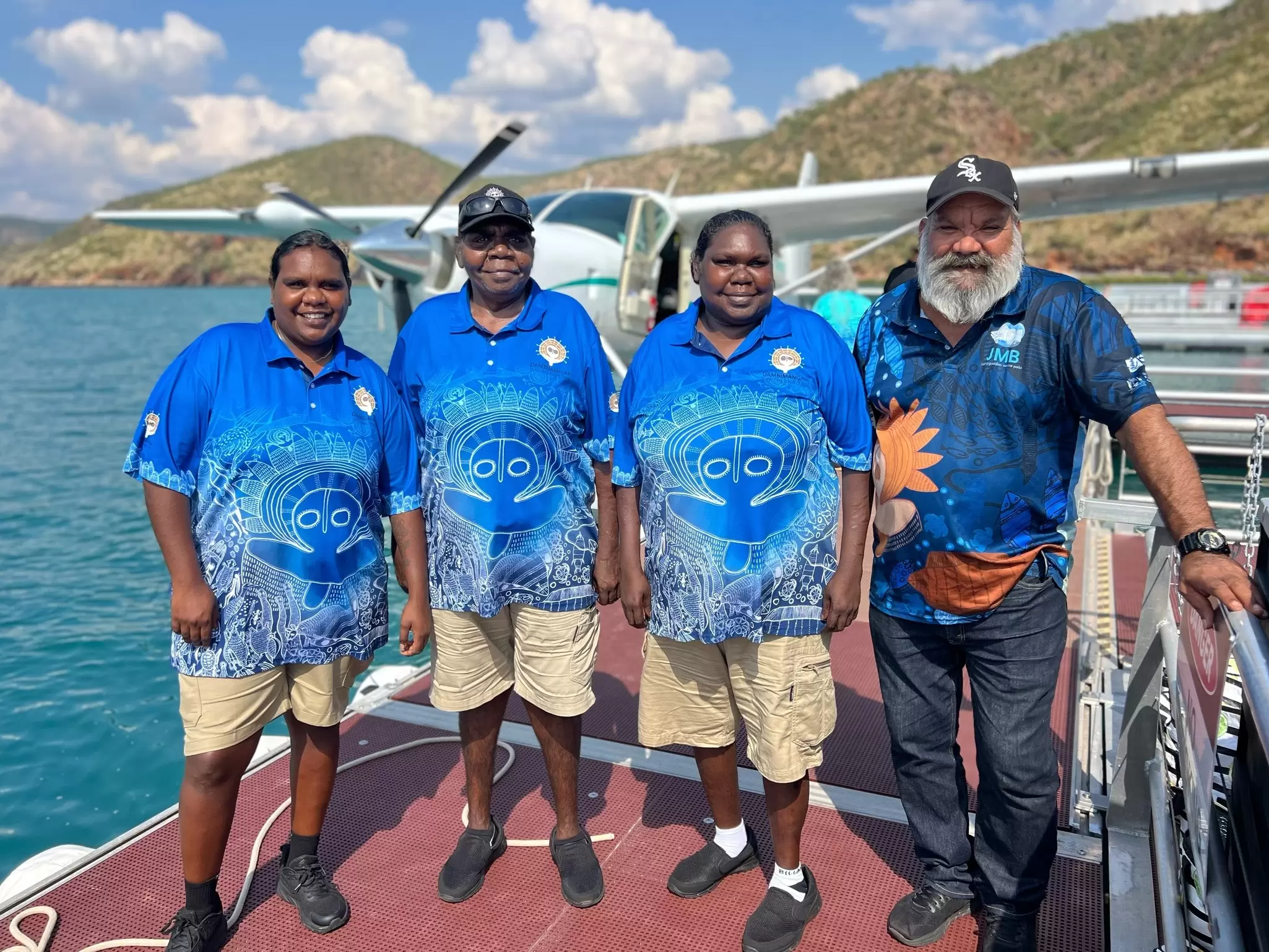
The rumors that Horizontal Falls is “closing” aren’t quite correct. The plan for the site isn’t to prevent tourists from entering the area and seeing the falls – but rather to stop them from travelling by jet boat through the “falls,” where water squeezes tightly between two narrow, parallel gorges. The adrenaline activity contradicts cultural protocol (the violent waters are seen as being created by a spiritual serpent known as Woongudd) and is dangerous. In 2022, a boat crashed while travelling through the waterfall's second gap, injuring 27 people. “That was Country talking to us,” says Geoff Nevill, of the Dambimangari Aboriginal Corporation.
The second gap is already closed, and the Dambimangari Aboriginal Corporation is now working closely with Journey Beyond to train cultural guides at the site, providing a way for youth to return to Country. This agreement runs until at least 2028.
Jessica Lockhart travelled to Broome and the Dampier Peninsula at the invitation of Tourism Western Australia. Lonely Planet does not accept freebies for positive coverage.
Book your Australia trip with Lonely Planet Journeys
See Australia how it's meant to be seen
Accommodations, activities and ground transportation all taken care of, so you can focus on the fun part. Tell us what your dream trip to Australia looks like, and our local experts will build it from scratch. Or start with one of our itineraries and make it your own.

Explore related stories