Sep 2, 202614 min read
A Guide to Broome and the Dampier PeninsulaAug 25, 2026
9 MIN READ

Writer
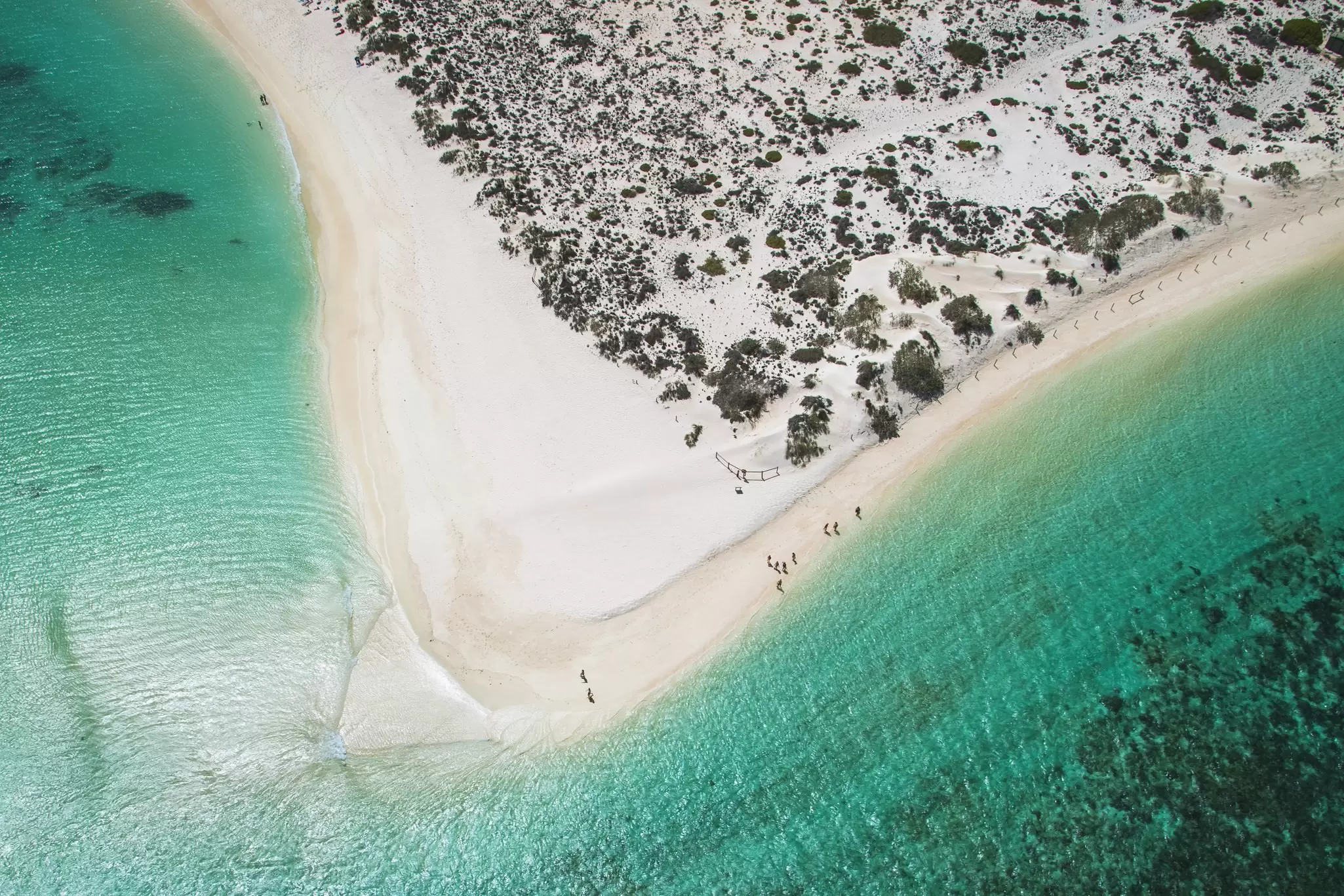
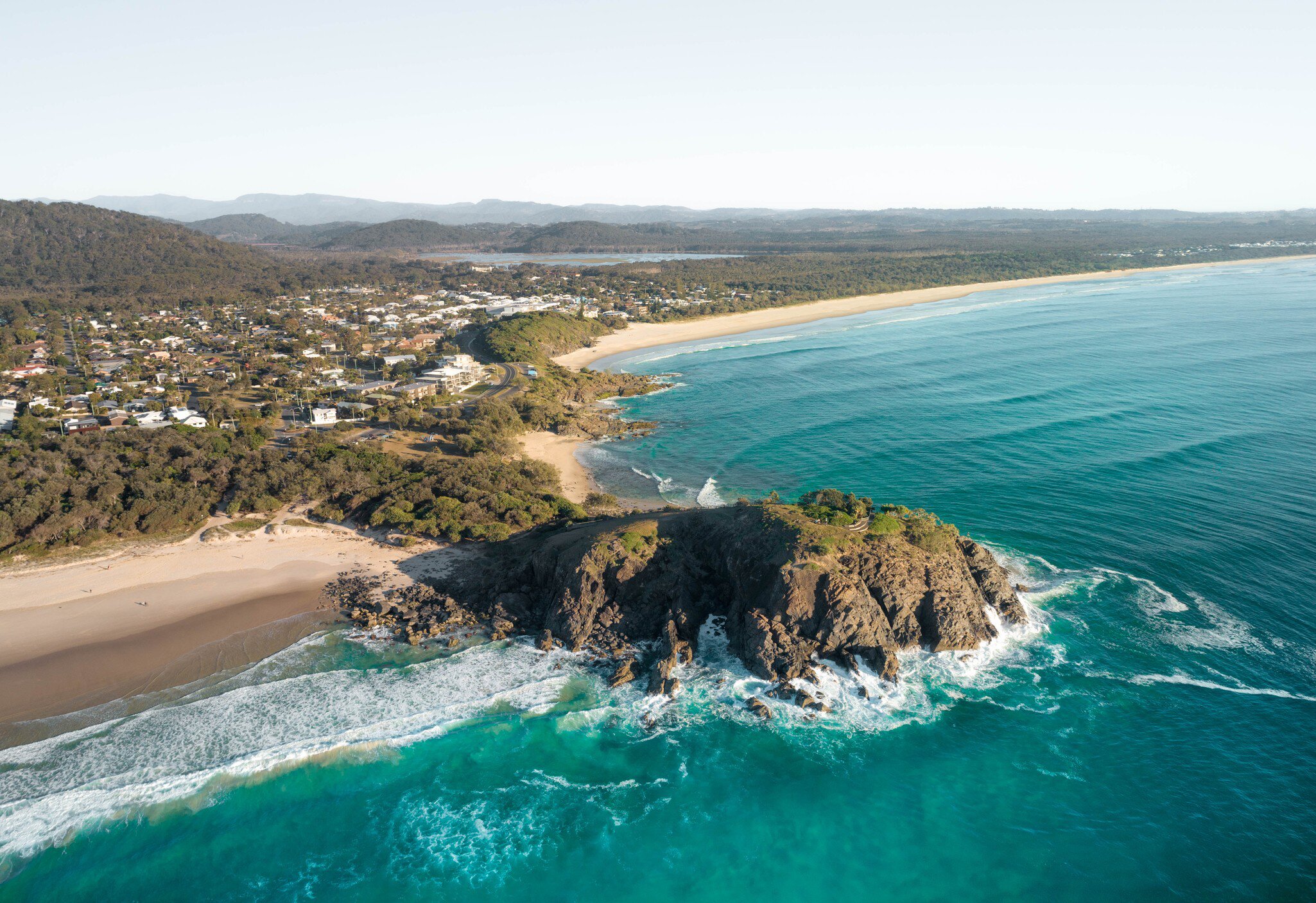
Aerial view of Ningaloo Reef. Jonathan Stacey/500px
Writer
Highlights
Editor Jessica Lockhart guides you through Western Australia's Ningaloo Reef.
Plan your visit around 'magic May,' when whale shark sightings peak at Ningaloo.
Book a whale shark tour from Exmouth; snorkel Turquoise Bay's coral gardens directly from shore.
Stay at Sal Salis for parfait-pink sunsets, three-course meals and guided Cape Range hikes.
Lonely Planet may earn a commission from affiliate links on our site. All recommendations and reviews reflect our own independent opinions.
Like a poorly synchronized swim team, we form a jagged line in the ocean, a spotter plane circling above us. Snorkel masks bobbing above the waves, we're waiting for our cue. Then, suddenly, it's go-time.
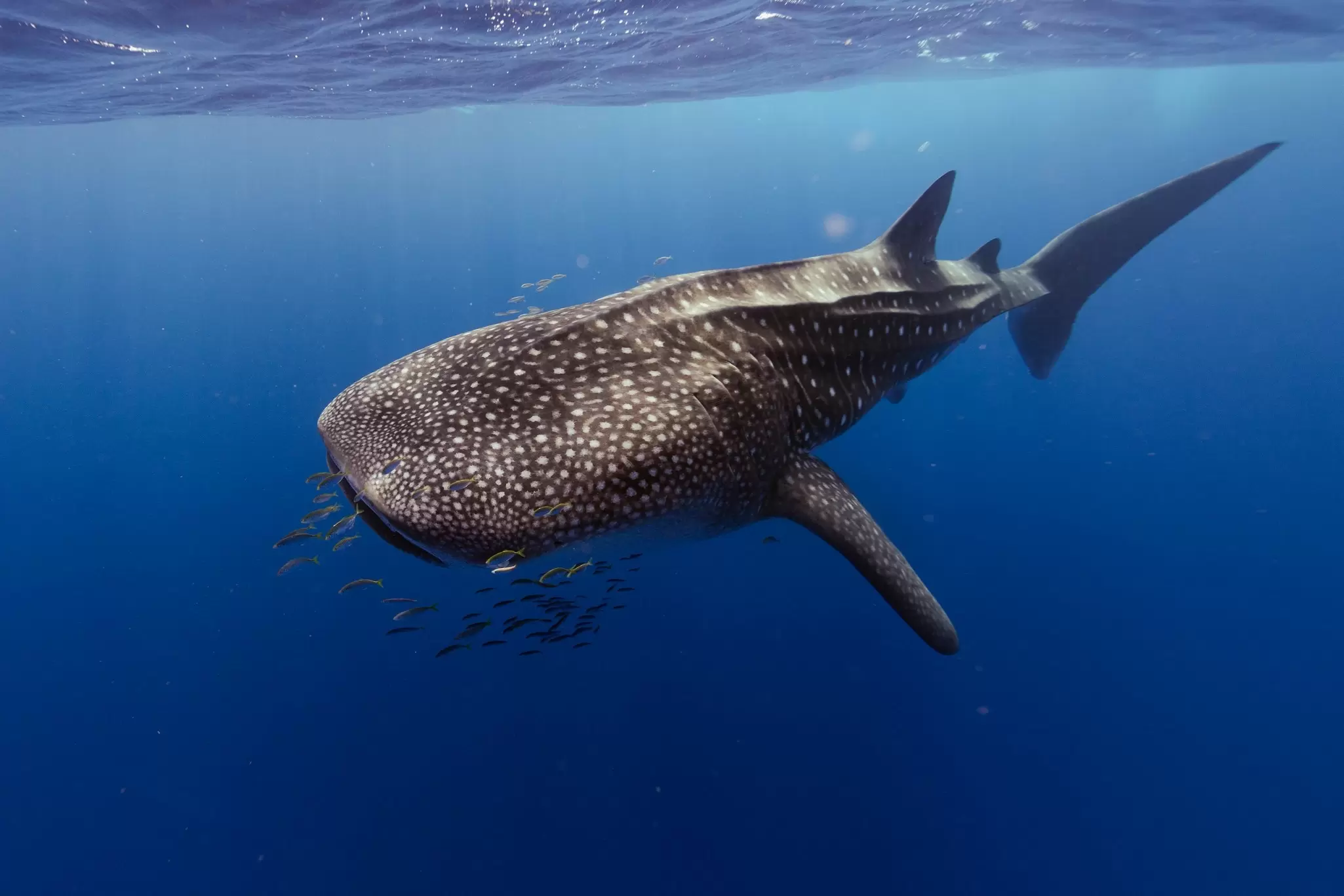
I put my head in the water, unprepared for the enormity of the creature gliding past, a school of remoras and baitfish in its slipstream. Even under the water, the sunlight illuminates the intricate white pattern on its back; nature's dot painting.
I clutch my partner’s hand underwater, and my snorkel mask fills with tears. For years, I’ve been waiting for this moment. I’ve always dreamed of swimming with the whale sharks at Ningaloo Reef, and somehow, they're even more beautiful than I'd imagined.
Everyone knows the Great Barrier Reef, but it’s not Australia’s only noteworthy reef system. Another is Ningaloo Reef, a fringing coral reef that stretches for 260km off the coast of Western Australia. Although Ningaloo (or Nyinggulu, an Aboriginal word that may mean “deep water”) is famed for its whale sharks, it’s also possible here to see manta rays, migrating humpback whales, green and loggerhead turtles, more than 500 species of fish and around 300 species of coral.
Cruising back to Exmouth – Ningaloo’s main hub – we spot something even better: a dugong with her calf. It's my first time seeing the mermaid-like creatures in the wild, and I can't even begin to contain my excitement.
“How is this even real life?” I squeal. “This is the best day ever!”
Ready for your own best day ever? Here’s everything you need to know about visiting Australia’s Ningaloo Reef.
Whale sharks arrive at Ningaloo to feed on plankton blooms between March and early August. However, ask any local and they’ll tell you that the month to go is during “magic May,” when whale shark sightings peak. The autumn season coincides with good visibility and somewhat cooler weather, a treat in a region where temperatures hover around a sweltering 38 degrees in the summer. (Unless you're a fan of sweating, plan your trip for March through November, to avoid the heat and cyclones.)
In addition to the whale shark season, other seasonal highlights include migrating humpback whales (from June to November), nesting turtles (November to March) and manta rays and dugongs (all year round).
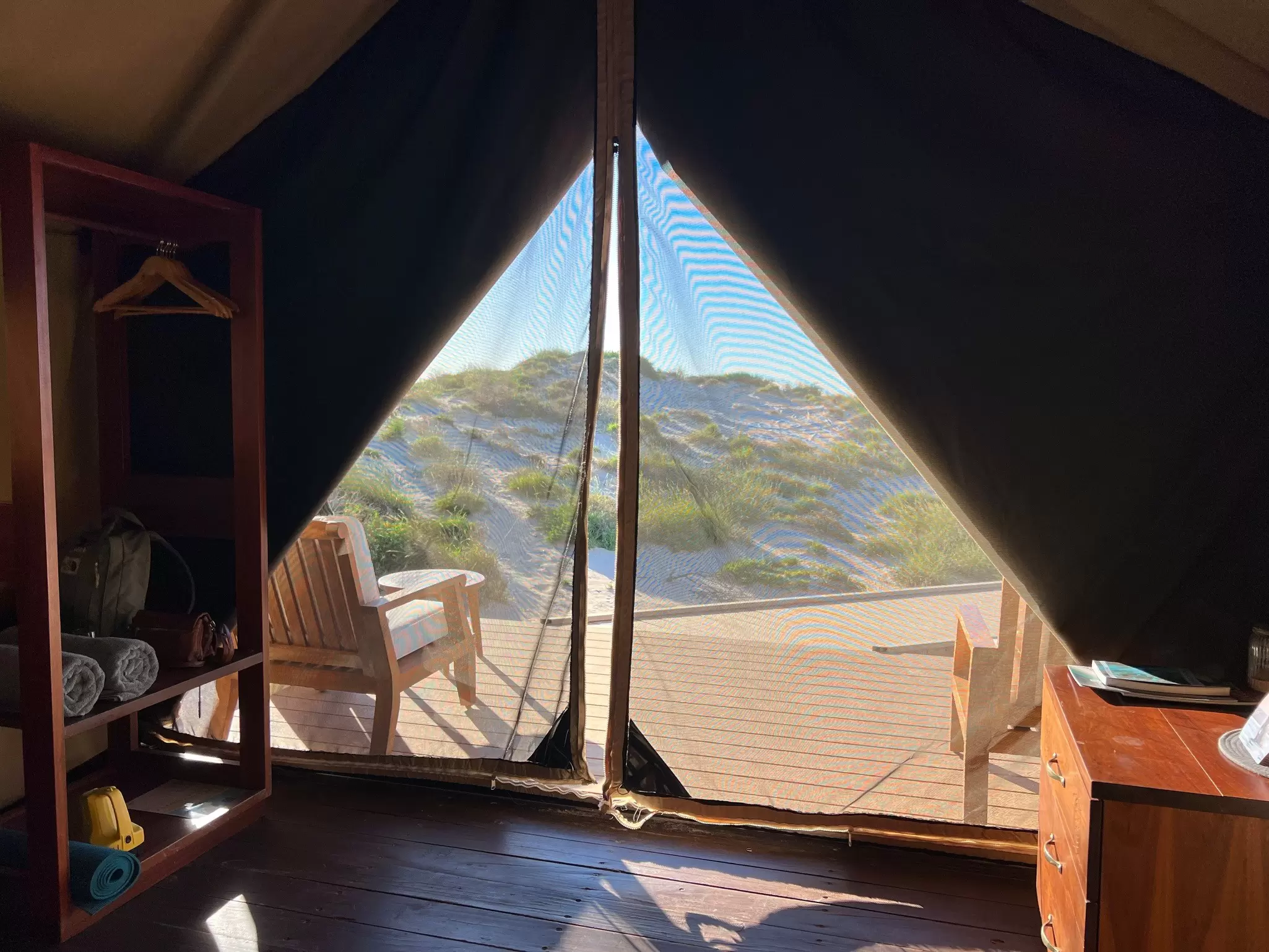
We spent two nights at Sal Salis, an eco luxury resort nestled in the dunes between the ocean and the foot of Cape Range National Park. It was enough time to tick off our goal of seeing the whale sharks – but it was a nerve-wracking gamble. With only one full day to get on the water, we had no contingency plan for bad weather or a no-show from the sharks. And even though everything did go to plan, we were envious of the travelers who had booked an extra day. They were able to go snorkeling elsewhere on the reef, do land-based adventures (like hiking in the national park) or just read a book beside the ocean.
I’d recommend booking three to four nights in the Exmouth area and, if budget allows, making two of these nights at Sal Salis, so that you can soak it all in.
There’s no question that the roughly three to four-day drive from Perth to Exmouth – the gateway to Ningaloo Reef – is one of Australia’s most iconic road trips. The 1250-km (775-mile) journey follows Western Australia’s Coral Coast, with stops along the way that include the Pinnacles (an otherworldly desert landscape of ancient limestone columns), Monkey Mia (famed for its population of friendly Indo-Pacific dolphins) and Hutt Lagoon (a bubblegum-pink lake).
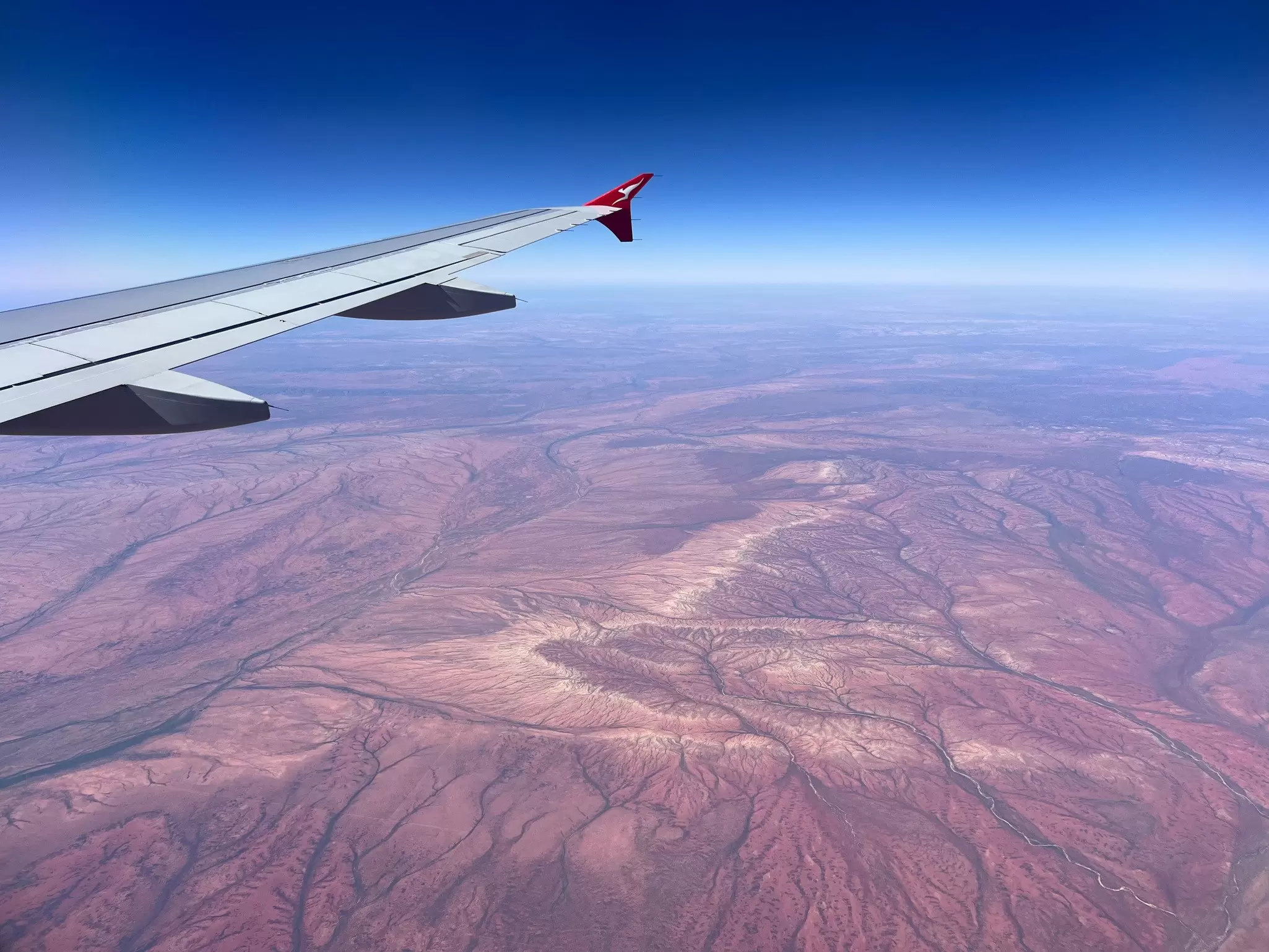
But if you’re tight on time, the two-hour flight from Perth Airport (PER) to Exmouth’s Learmonth Airport (LER) has its own appeal. Nab a window seat and your in-flight entertainment will include gazing down on the Western Australian outback, where vast salt plains and ripples of rich red sand stretch all the way to vibrant green mangroves, which snake out at the ocean’s edge.
Guests staying at Sal Salis will be whisked away to the seaside resort (90 minutes by road) via a dedicated shuttle. Staying at accommodation in Exmouth? The drive takes about 30 minutes, with Exmouth Bus Charters offering door-to-door service (AUD$45adults/AUD$40 children) from the airport.
You may want to rent a car if you plan on exploring the tracks of Cape Range National Park, but if you’re just here for Ningaloo Reef, most tour operators offer pickup from Sal Salis or accommodation within Exmouth. The town is small enough that you can walk anywhere else you want to go.
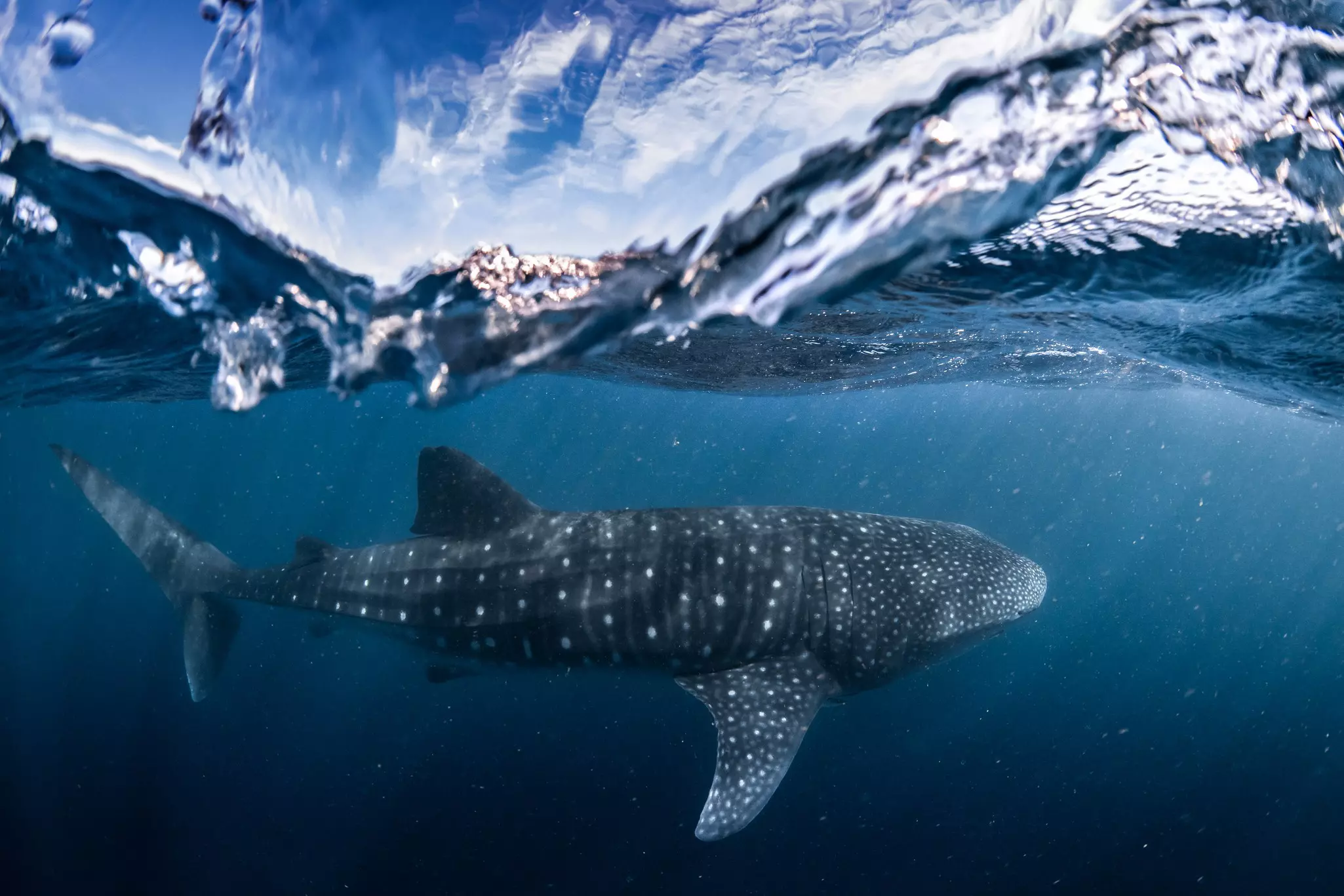
This is what most people come here for – the opportunity to swim alongside the world’s largest fish. (Yes, they are sharks. No, the filter feeders are not dangerous.)
Tours depart daily from Exmouth during the whale shark season, with nearly a dozen operators permitted to get in the water with the giants. Licensed operators must abide by strict regulations to ensure the safety and wellbeing of both swimmers and sharks, making Western Australia one of the best-managed and arguably most ethical destinations to partake in the activity. Research conducted by biologists in Western Australia demonstrates that swimmers have a negligible effect on whale sharks, provided the activity is conducted with care to prevent behavioral stress. (This is not true in other destinations around the world, where whale sharks are often overcrowded.)
Choose a tour operator that uses a spotter plane – such as Exmouth Dive & Whale Sharks – which helps boat captains find the sharks in the water. Tours start from around 500 Australian dollars ($500) for a full-day excursion. Tours include lunch, marine biology talks and all the gear you'll need for your swim. On a good day, you’ll have the opportunity to jump into the water with the whale sharks more than once. (On my tour, we swam with the whale sharks a total of seven times, although only for a few minutes at a time per regulations.)
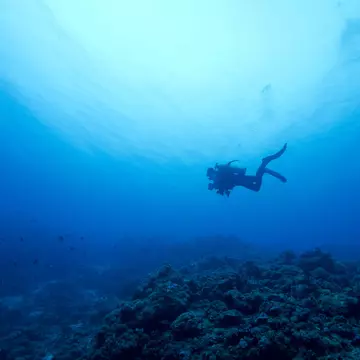
Unlike the Great Barrier Reef – where you have to travel by boat to the outer reef – Ningaloo Reef is accessible directly from shore. Unfortunately, the fringing reef isn’t immune to climate change. In early 2025, it suffered from a massive coral bleaching event, resulting in mortality across the system.
While you should keep your expectations in check, it’s still well worth visiting and has famed snorkeling sites such as Turquoise Bay (where you can drift over shallow coral gardens), the Oyster Stacks (keep an eye out for turtles, rays and reef sharks) and Coral Bay (which was reportedly less affected by bleaching).
Osprey Bay – which has a dedicated 3.2km kayak trail – is favored by turtles. Tour operators, including Exmouth Adventure Co, will fully kit you out with everything you need, with tours start from $175 adults/$155 children.
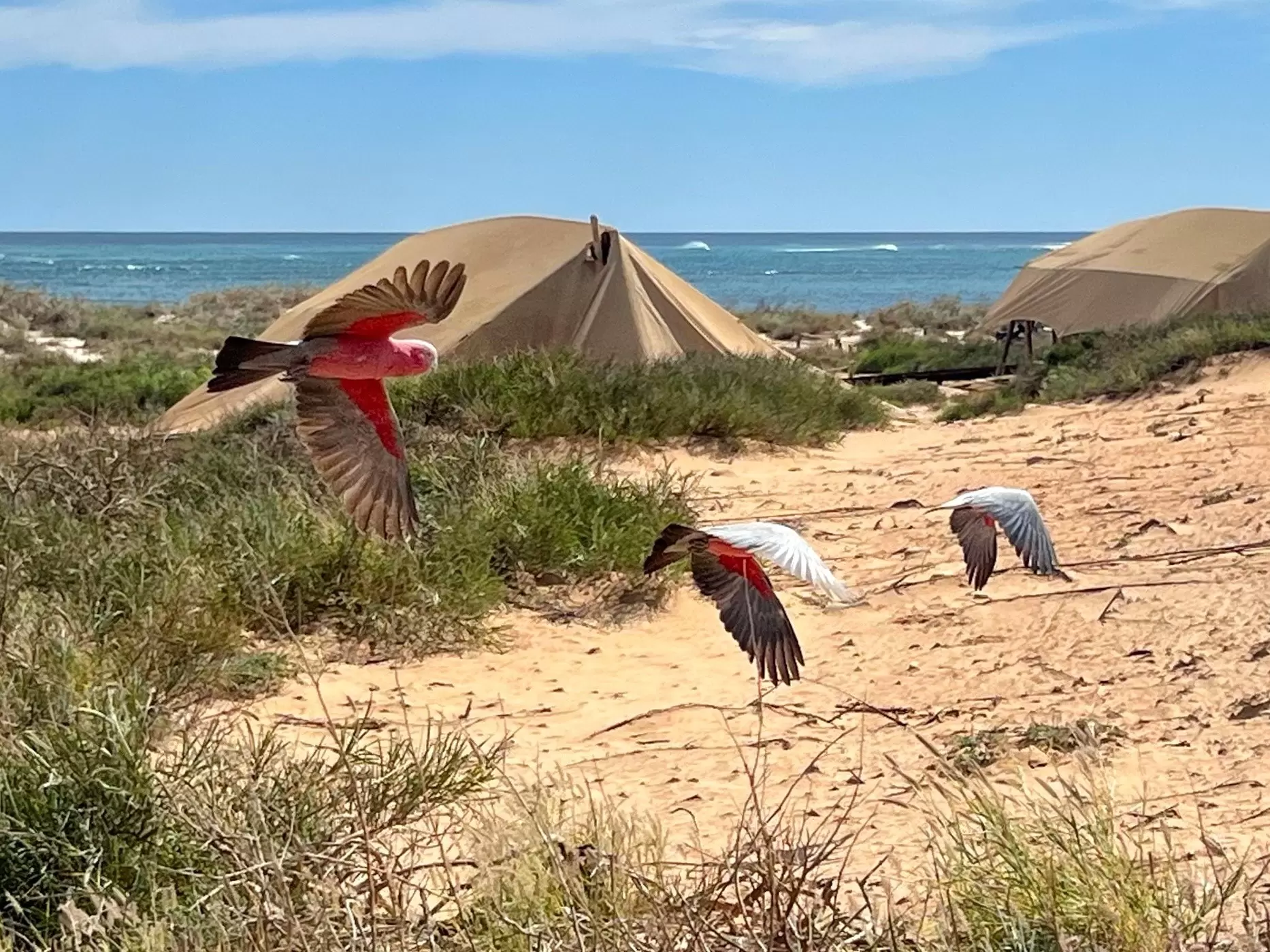
Situated southwest of Exmouth, Cape Range National Park is where rocky red cliffs meet the turquoise sea, forming the backbone of the peninsula. The park is home to emus, kangaroos, wallabies, but is best known for its 700-some caves, which home rare endemic species such as the blind cave eel, a fish with no eyes or body pigment. It’s also where archeologists have uncovered evidence of 35,000 years of human history, with Baiyungu, Thalanyji and Yinigurdira people being the area’s Traditional Owners.
Visitors can explore the park on one of its hiking trails, including the Mandu Mandu Gorge, a 3km walk that rewards hikers with views overlooking the Ningaloo Coast. The hike, which requires a good level of fitness, is best done earlier in the day.
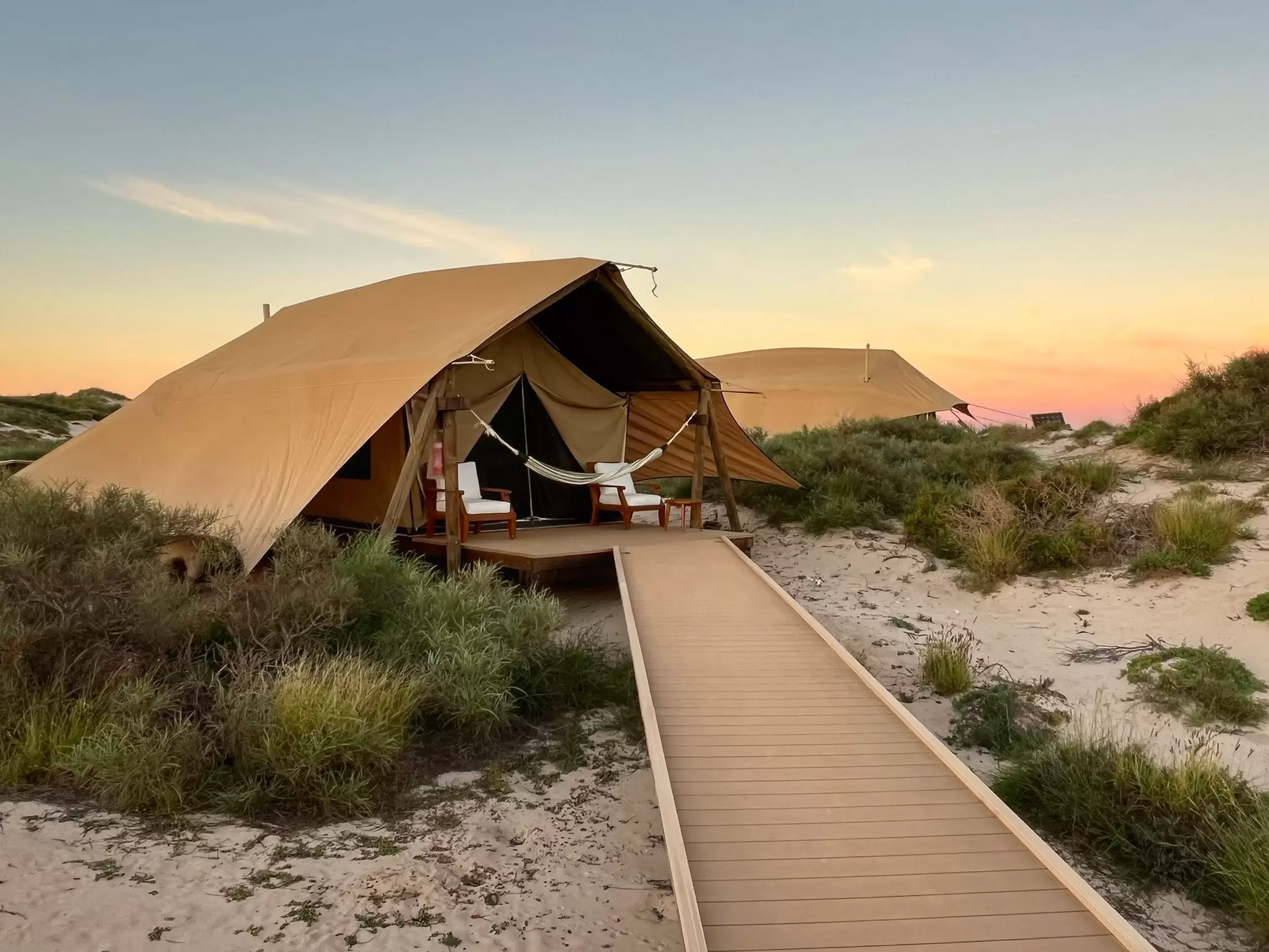
With its safari tents set in the sand dunes, Sal Salis is the very definition of barefoot luxury. But it isn’t for everyone. There is no air-conditioning, the toilets are composting, and its beachfront location leaves it exposed to strong winds and weather. But on a good day (and there are mainly good days) this is paradise. Picture parfait-pink sunsets, fresh animal tracks in the dunes every morning and three-course meals with perfectly paired wines.
The lodge (which is open from March until mid-November) will also take care of tour bookings, including your whale shark swim, with optional offerings such as guided daily snorkels and hikes in the nearby national park.
Counterintuitively, it doesn’t always pay to be the first one in the water. In fact, depending on the direction the whale shark is swimming, you may actually be at the front of the pack if you’re in the last one in the water and the last one in the in-water lineup. Why does this matter? Because in the excitement, it can be very easy to get a face full of flippers.
If you’re not confident in the water, you’ll want to stick close to your guide. But if you’re a strong swimmer and want to get away from the fray, ask your guide if you're allowed to swim around the back of the shark – keeping a safe distance – to the opposite side. It will feel like swimming a short underwater marathon to make it happen. But trust me when I say that feeling you’re gliding alone through the water with one of the ocean’s most beautiful creatures is well worth the effort.
Jessica Lockhart stayed at Sal Salis at the invitation of Journey Beyond. Lonely Planet does not accept freebies for positive coverage.
Book your Australia trip with Lonely Planet Journeys
See Australia how it's meant to be seen
Accommodations, activities and ground transportation all taken care of, so you can focus on the fun part. Tell us what your dream trip to Australia looks like, and our local experts will build it from scratch. Or start with one of our itineraries and make it your own.

Explore related stories