May 28, 20268 min read
A Guide to Diving Indonesia's Raja Ampat IslandsMay 28, 2026
8 MIN READ

Writer
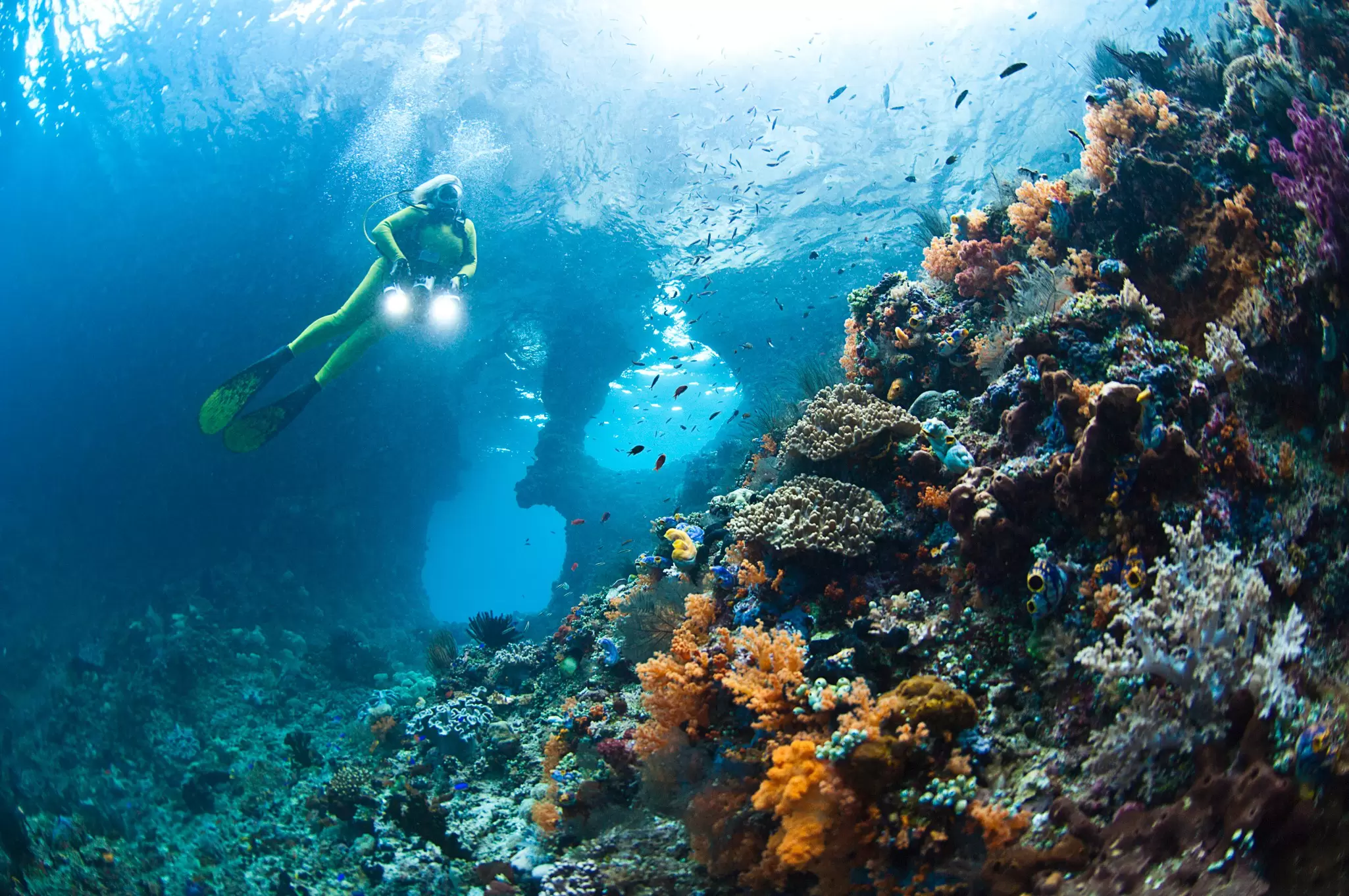
A diver surrounded by marine life in the Raja Ampat Islands, Indonesia. Giordano Cipriani/Getty Images
Writer
Lonely Planet may earn a commission from affiliate links on our site. All recommendations and reviews reflect our own independent opinions.
At the heart of the Coral Triangle, Indonesia’s Raja Ampat is the global epicenter of marine biodiversity, home to over 75% of known coral species worldwide. A holy grail for scuba divers, this UNESCO Biosphere Reserve in remote Southwest Papua offers a teeming underwater gallery of textures and colors unmatched by any other diving destination, with manta rays and macro life galore.
A combination of nutrient-rich currents, ancient tectonic uplift and minimal development across the region’s 1500-odd islands has fostered Raja Ampat’s unique marine environment, with over 2 million hectares protected by marine park areas (MPAs). The entire region has also been an enforced shark and ray sanctuary since 2013, with many species now showing signs of recovery following decades of shark finning in the region. With rapid tourism growth increasing pressure on the Raja Ampat’s fragile marine ecosystems, diving here comes with a responsibility to embrace practices that ensure your visit leaves a positive impact.

The Southwest Papua port city of Sorong is the gateway to the Raja Ampat Islands. Sorong’s Domine Eduard Osok Airport currently receives domestic commercial flights only, including direct flights from Bali (4 hours). Pelni ferries also sail in from neighboring regions including Maluku and Sulawesi.
Most of Raja Ampat’s accommodations are concentrated in the Dampier Strait, between Pulau Batanta and Pulau Waigeo, in the region’s north. Private boat transfers to dive resorts, as well as twice-daily public ferries to Waisai on Pulau Waigeo, typically take about 2 hours. Overnight ferries run to remote Pulau Misool in the south, or you can book a 5-hour private transfer to Misool resort.
While there’s little to see and do in Sorong, it’s wise to arrive a day before your dive trip, as flight delays and cancellations aren’t uncommon.

Diving is possible year-round in Raja Ampat, with many divers planning their trip between October and April (when most liveaboards operate) for the best chances of diving with manta rays that aggregate at cleaning stations across the region. The best visibility is typically enjoyed between November and March, but I’ve experienced great visibility in May and June.
June to September is generally considered the low season due to rain and stronger winds, which can shut down boat travel in July and August, though the water temperature remains a constant 28–30°C (82–86°F) year-round. Accommodation deals are easier to find during the low season, and it’s less crowded.
Aim to stay for at least a week to experience a variety of dive sites as well as excursions to epic viewpoints over the karst-island landscape or to spot birds of paradise.
Most local resorts and liveaboards offer certification courses from open water to instructor, but I recommend getting certified and logging at least 30 dives before your trip so you can focus on enjoying the best diving you may ever do. With strong currents possible at many dive sites, it’s important to have buoyancy control to help you avoid touching the reef, and good air consumption to enjoy longer dives – both skills come with experience.
While not mandatory, advanced open water (AOW) certification, allowing dives up to 30m/100ft deep, is strongly recommended. Enriched air nitrox (EAN) certification is a bonus. Most Raja Ampat resorts and liveaboards offer EAN, which offers increased safety and extended dive times by reducing nitrogen absorption.

The Raja Ampat’s color-popping, coral-encrusted walls are a highlight, but dive sites also include sloping reefs, high-current pinnacles, manta cleaning stations, seagrass beds, pier dives and mangrove dives. Along with an array of tropical fish, critters you can expect to see on any dive include pygmy seahorses, vibrant shrimp, technicolor nudibranch and curious moray eels, as well as pelagics including reef and wobbegong sharks, barracuda and manta rays, depending on the time of year. Four of the world’s seven turtle species can also be seen in the Raja Ampat Islands, and you might be lucky enough to spot a dugong.
The main diving regions are the Dampier Strait and eastern Misool. The diving in both is superb, with the more accessible Dampier Strait better known for its high-energy drift dives, and Misool (more commonly visited by liveaboard) for its lack of crowds and sublime soft corals.
The tightly-managed Misool Marine Reserve is a beacon of biodiversity, but the most species recorded on a single dive were recorded at Cape Kri in the Dampier Strait, where marine ichthyologist Dr Gerald Allen counted 374 species of fish on a 90-minute dive in 2012. Among my favorite sites is Fam Wall in the Damper Strait’s Fam Islands, a vertical wall exploding with color and life, but I can’t name a bad (or even average) dive I’ve logged across the region.
Be aware, however, that Raja Ampat is not an untouched paradise. Marine plastic and other marine waste is an increasing problem, as is coral damage caused by careless divers and irresponsible anchoring. Divers may also encounter cyanobacteria blooms fueled by untreated wastewater illegally discharged by some homestays and liveaboards.

The snorkeling is excellent in the Raja Ampat Islands, with many resorts and homestays offering great snorkeling on house reefs. Resorts and homestays can also arrange snorkeling day trips, and many liveaboards accommodate snorkelers. The quality of snorkeling (and diving) gear can vary at budget outfits, so it’s best to bring your own.
Indonesia has some of the world’s cheapest diving, but there are some additional costs to consider for a Raja Ampat dive trip.
All visitors are required to pay the 1,700,000Rp marine park entry fee (collected at Waisai Harbour or by your accommodations), valid for a year. Costs for diving, places to stay and food are higher than you’ll pay in Bali. Expect to pay upwards of 600,000Rp per dive, with prices decreasing for diving packages and divers with their own gear. Resort transfers from Sorong can also add up.
With the closest hyperbaric chamber in Manado in North Sulawesi, diving insurance is a must.
Liveaboard diving safaris are a popular way to dive Raja Ampat, with many companies using traditional phinisi (wooden sailboats) hosting eight to 22 divers. Seven-night trips typically stick to the Damier Strait or Misool, with longer itineraries usually combining both regions.
Liveaboards are ideal for divers who enjoy staying on boats and spending minimal time on speedboats journeying to dive sites. Liveaboards including the Blue Manta, Dewi Nusantara, Pindito and White Manta have been specializing in Raja Ampat trips for decades, meaning staff have an intimate knowledge of local reefs, but there’s a proliferation of options, with Diveplanit and ZuBlu among the best regional-specialist booking platforms.
Another popular way to dive Raja Ampat by boat is aboard an expedition cruise with the likes of Coral Expeditions. While expedition ships offer more comfort, daily diving opportunities are more restricted than the 3–4 dives per day offered on liveaboards.

The Raja Ampat’s dozen-odd dive resorts offer the same amount of daily diving opportunities as liveaboards, plus the opportunity to snorkel or dive on the house reef and immerse in the resort’s natural setting. Speedboat rides to some sites can take over an hour, but most sites will be closer to your accommodations.
Among the region’s most sustainably managed resorts are Papua Diving’s two resorts (Kri Eco Resort and Sorido Bay Resort) on Pulau Kri in the Dampier Strait, and Misool, the only resort in the south. Both resorts support a ReShark project to repopulate the region’s Indo-Pacific leopard sharks.
The Raja Ampat Islands also have a handful of dedicated diving homestays including Turtle Dive Homestay on Pulau Kri and Corepen Dive Center on Pulau Gam. Many other homestays work with local dive shops such as Aborek Dive Shop on Pulau Aborek.
Be mindful that budget diving outfits can be lacking in safety standards, professional dive guides and gear quality.
Observing minuscule pygmy seahorses clinging to colorful fan corals is a Raja Ampat highlight. To ensure future divers can enjoy observing these sensitive creatures, avoid using a torch/flashlight to focus on them, which can fatally stress them, and stick to a five-photo limit for flash photography. On manta dives, minimize your bubbles and use of flash photography, which can deter or disorientate the rays.
Choosing accommodations and operators committed to protecting the reef (Green Fins is a good place to start) is another great way to help protect the fragile marine environment, as well as prioritizing safety, observing marine life from a respectful distance, avoiding contact with the reef and using reef-safe sunscreen. Programs led by organizations like The SEA People and Indo Ocean Project enable visitors to give back to Raja Ampat through citizen science, reef restoration and other activities.
With no effective waste management facilities in the Raja Ampat Islands, some local accommodations burn or dump rubbish. Avoid purchasing or discarding plastic items in the Raja Ampat and consider packing out your rubbish to dispose of responsibly elsewhere.
Book your Indonesia trip with Lonely Planet Journeys
See Indonesia how it's meant to be seen
Planned by local experts and tailored to you, Lonely Planet Journeys handles the logistics so you can just enjoy the trip. Tell us what you want and we'll build your Indonesia itinerary from scratch, or browse our bookable trips to get inspired.


Explore related stories