Advertisement

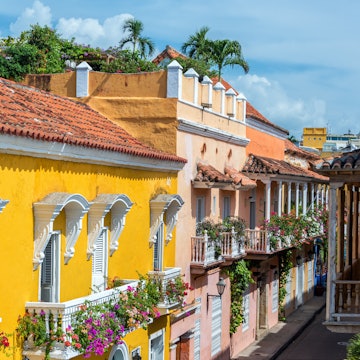
A square in Cartagena. Matyas Rehak/Shutterstock
Like much of the Caribbean, Cartagena is a blend of coastal beauty, historical significance and cross-cultural influences. Palm leaves sway in the salty sea breeze, dazzling sunsets paint the sky enchanting shades of pink and gold, and sun-kissed beaches meet the shimmering sea.
It was also the center of power and wealth for the Spanish colonial empire in the 16th century. As a vital hub for trade and commerce, Cartagena threw together people from various parts of the world, including Spanish colonizers, European traders, enslaved African people, Middle Eastern immigrants and Indigenous groups.
The convergence of multicultural traditions has left an indelible mark on Cartagena’s architecture, music and cuisine, setting the scene for a wide range of experiences that appeal to all kinds of travelers.
Here are the top experiences and hidden gems to seek out when you visit Cartagena.

1. Wander the labyrinthian streets of Cartagena's walled city
Wanderlust-stricken souls will find themselves enchanted by Cartagena's colorful and captivating Old Town, which is best explored on foot. Within its thick coral walls that once safeguarded the city from plundering pirates in the 17th century, history reverberates as loudly as the local champeta music spilling from open windows as you stroll by. Opulent mansions, adorned with ornate door knockers, bright pink flowers and fluttering Colombian flags, have been converted into beckoning shops, restaurants, boutique hotels, art galleries and museums that unravel the city’s storied past.
On the Plaza de Bolívar, don’t miss the Palacio de la Inquisición and its spine-chilling collection of torture devices used to extract confessions from heretics and witches in the colonial era. Nearby, the Santuario de San Pedro Claver pays tribute to a saintly priest whose compassionate treatment of enslaved people contrasted with the unenlightened period he witnessed.
Detour: Take respite from the hot tropical sun by ducking into the atmospheric – and air-conditioned – Ábaco Libros y Café. This coffeehouse for bibliophiles has floor-to-ceiling books wedged between exposed brick archways. Order a hot or cold brew and take a seat at one of the handful of tables inside.
2. Marvel at the engineering prowess of the Castillo San Felipe de Barajas
The Castillo San Felipe de Barajas, one of the city’s most iconic landmarks and the largest fort in South America, is located on a hill overlooking the city and sea. After Sir Francis Drake ravaged Cartagena in 1586, an existing structure on the hill was fortified. It took a couple of centuries, many more attacks and subsequent renovations for the imposing fortress to look like it does today.
If you don’t mind tight spaces, duck into the short and narrow tunnels that were designed to slow invading troops if they managed to breach the barrage of gunfire after scaling the deceptive outer ramparts. To delve deeper into the fort’s engineering ingenuity, pay for an audio guide or a tour guide at the entrance since signage is limited.
Planning tip: From the fort’s highest point, the 360-degree view is an unforgettable vantage point to bid adieu to the day, before the historic site closes at 6pm. At Cartagena’s latitude, sunsets occur around 5:30pm in November and 6:30pm in June.

3. Experience the art of bohemian Getsemaní
Once a primarily working-class neighborhood just outside the Old Town’s walls, Getsemaní has evolved into an artsy enclave renowned for its captivating street art. Along narrow alleys strewn with fluttering pennants, umbrellas and other colorful embellishments, weathered walls have become plein-air canvases for large-scale murals. During the day, locals converge to chat or play Parqués (a version of the board game Parcheesi), but as the sun goes down, the same alleys transform into open-air restaurants and bars.
At the heart of Getsemaní lies Plaza de la Trinidad, a vibrant square where one can grab quick bites and cold drinks, then revel in nighttime entertainment against the backdrop of a historic church. Look to the right of the church to spot one of Getsemaní’s most emblematic murals depicting a grackle taking off amid sparks of color. The bird, locally known as Maria Mulata, has iridescent black feathers that display rainbow hues in the right light.
Planning tip: For a more in-depth tour of the neighborhood, Free Tour Cartagena and Beyond Cartagena both offer no-charge walking tours of Getsemaní, but expect to tip at least 20,000 Colombian pesos (C$20,000).

Meet your new travel partner
Get unlimited data while you travel with Holafly eSIM. Peace of mind and no hidden fees wherever you go.
4. Lounge on one of Cartagena’s beaches
Cartagena's beaches may not have the same breathtaking beauty as other coastal gems in Colombia, but their accessibility and convenience make them a viable option for a beach within reach. The Bocagrande neighborhood, characterized by towering condos, hotels and bustling shopping plazas along a mile-long stretch of shoreline, often draws comparisons to Miami Beach.
The crowds of beachgoers and the constant presence of street vendors interrupt any chance at tranquility and relaxation. On the bright side, you don’t have to leave your patch of sand to get something you didn’t know you needed (refreshingly cold drinks to massages).
For more serenity, consider Playa El Laguito in the predominantly residential neighborhood of Castillogrande. From there, hire a boat to take you to Tierra Bomba, an island with a nicer public beach or private beach clubs that have all-inclusive day passes. Alternatively, book passage to the captivating Islas del Rosario or the picturesque Playa Blanca on Isa Barú. They are the closest thing you’ll get to crystal-clear turquoise waters and soft white sand near Cartagena.
Detour: La Boquilla is a peaceful fishing village at the northeastern edge of Cartagena. It holds the distinction of being one of Colombia's first beaches to receive Blue Flag certification, signifying compliance with international standards of biosafety, accessibility and sustainability. Kitesurfers love the area and tourists use it as a jumping-off point for boat tours in the surrounding mangroves.

5. Sip cocktails on a rooftop oasis at sunset
Cartagena’s coastal setting provides an unobstructed view for watching the sun vanish beneath the waves – a time-honored tradition most often enjoyed with a cocktail. Café del Mar, atop the city walls, may be the most iconic place for the ritual, but there are other establishments with better prices and fewer crowds. Seek out hidden rooftop bars that are equally bathed in the mesmerizing glow of the golden hour.
In the heart of the Old Town, venture to Townhouse Rooftop, a chill palm-tree studded spot with tropical-fruit drinks such as the Colombian Mule or Passion Fruit Coolada. Overlooking the Portal de los Dulces, the Mirador Gastrobar has unforgettable people-watching opportunities. In Bocagrande, savor signature drinks and tantalizing international fare at 51 Sky Bar, Colombia’s highest open-air bar.
6. Take a spin around the dance floor in a salsa club
Salsa may be a Cuban export, but Colombians have adopted the musical style as their own. Whether you're an experienced salsa dancer or taking your first steps, the welcoming atmosphere within Cartagena’s salsa clubs encourages everyone to join the fun. Inside, the dance floor becomes a melting pot of swirling bodies, moving in sync with the music’s pulsating beats.
Starting around 11pm, the Café Havana in Getsemaní fills with people from all over the world. With a steep cover charge, it may be the most expensive option, but the live music is top-notch. For a more local vibe, try Club Los Carpinteros in the heart of Getsemaní.
Detour: El Coreano may be outside the tourist circuit, but it's an affordable option with some of Cartagena’s most-seasoned salsa dancers.

7. Savor Cartagena’s restaurants, street eats and market fare
Cartagena boasts one of the most dynamic gastronomic landscapes. The city has a variety of restaurants at all price points that artfully blend local flavors with global influences. In the heart of Old Town, the sophisticated Mar y Zielo fuses traditional Colombian cuisine with Middle Eastern flavors, representing a more recent wave of immigration. Celele, located in Getsemaní, delivers an exceptional dining experience in a relaxed and unpretentious atmosphere. Each dish is a work of art curated to showcase the diversity of ingredients found in the region.
Alongside haute cuisine, the city has a diverse and affordable assortment of quick bites from street vendors. The tempting aroma of deep-fried foods lures passersby on practically every street corner and plaza. Any time of the day or night, you can step right up for specialties like patacones (fried plantains), papas rellenas (ground beef and mashed potato balls), arepa de huevo (stuffed arepa with egg) or buñuelos (fritters). If you’re looking for something a little bit healthier, pick up mango biche (unripe mangoes seasoned with salt, lime juice and chili powder) from a vendor along the Calle de la Iglesia in Old Town or order a shrimp cocktail or ceviche from a stall along Avenida Venezuela just outside the walled city.
If you’re feeling adventurous, head to the chaotic Mercado Bazurto, a bustling maze of narrow alleys lined with food stalls piled high with produce, raw meat and seafood. The sights, sounds and smells are an assault on the senses, but it’s worth the trip. Not only can you load up on all kinds of exotic tropical fruits found only in Colombia, but also sample some of the prepared foods made right before your eyes.
Planning tip: The best time to visit the Bazurto Market is mid-morning to early afternoon when the lunch establishments are preparing and serving meals hot off the grill, out of the fryer or straight from a bubbling pot. Place your order early because once the food is gone, the stalls either close for the day or have limited options until the following day.
8. Cruise the streets of Cartagena in a chiva party bus
As soon as the sun goes down, Cartagena nightlife rolls out, quite literally, in the form of a chiva party bus, or chiva rumbera. Chivas (“goats” in English) are a traditional form of public transportation, traditionally used to transport people and cargo through rural parts of Colombia. In Cartagena, these colorful buses are conscripted for a journey into the city’s party scene, outfitted with colorful lights and loud music.
As the chivas rumble along the city’s thoroughfares, passengers revel in the pulsating beats of reggaeton or sometimes live Vallenato music in between shots of all-you-can-drink rum or, sometimes, aguardiente – Colombia’s go-to firewater. After an exhilarating ride, the chiva stops in front of a nightclub, ensuring that the fun continues without pause.
9. Go for the gold at the Museo del Oro Zenú
The Museo del Oro Zenú is located in a magnificent colonial mansion, which underwent a renovation and reopened its doors in early 2023. Facing the Parque de Bolívar, the free – and air-conditioned – museum displays artifacts representing 6000 years of pre-Hispanic culture within the Colombian Caribbean region.
The highlight is the permanent collection of exquisite objects made from gold and tumbaga, a versatile alloy made of gold and copper. Zenú (or Sinú) artisans could cast, hammer, engrave and inlay tumbaga to create unique works of art representing the natural and spiritual world. Included among the treasures on display are an assortment of wind instruments, crafted in anthropomorphic and zoomorphic shapes, which provide a melodic soundtrack to the past.
Planning tip: The Museo del Oro Zenú is open Tuesday to Saturday, from 9am to 5pm, and Sundays. The exhibits are in both Spanish and English. Guided tours in English are available at 11am and 3pm, offering a deeper understanding of the fascinating exhibits and their cultural significance.

10. Worship the views from the Convento de la Popa
In the early 17th century, Father Alonso García Paredes had a vision in which the Virgin Mary directed him to construct an Augustinian monastery on the highest hill above Cartagena. At the time, the Cerro de la Popa harbored a dense jungle teeming with venomous snakes and a goat-like demon revered by local Indigenous people.
Today, the Convento de Nuestra Señora de la Candelaria, or Convento de la Popa for short, still sits at the summit. The building survived pirate attacks and the fight for independence under the leadership of Simón Bolívar in the 19th century. The complex includes a beautiful cloister filled with tropical plants and flowering trees, and a chapel with a gilded altar and shrine to Nuestra Señora de la Candelaria. The 360-degree panoramic views overlooking the city are unmissable.
Planning tip: Instead of walking the hill on your own (there's a risk of armed robbery and other crimes), negotiate a price with a taxi driver that includes round-trip transportation and a stop of 30 to 60 minutes.
11. Perk up with Colombian coffee
A visit to Colombia would be incomplete without indulging in its renowned coffee. While most of the premium-quality beans are exported from the country, there’s a growing demand for the good stuff within the country. Luckily, Cartagena promises a satisfying pursuit for an exceptional cuppa.
Café San Alberto’s award-winning coffee originates from the Hacienda de San Alberto in Colombia's famous coffee triangle. Partake in the coffee baptism to appreciate the characteristics of specialty coffees and discover the perfect flavor pairings. Época Espresso Bar is renowned for its specialty coffees, with the Carajillo Ahumado, a delightful blend of espresso and aguardiente, stealing the show.
Libertario Coffee Roasters offers connoisseurs a diverse range of flavor profiles, which can be savored alongside delectable French pastries or a light breakfast. For an afternoon pick-me-up, Café del Mural in Getsemaní opens its doors at 3pm, serving freshly roasted and brewed coffee using various methods.
12. Go fish in the coastal mangroves bordering La Boquilla
A canoe trip through the Caribbean’s coastal mangroves with Ecotours Boquilla is more than a scenic boat ride. It’s a vital way to preserve the cultural heritage of the seaside village of La Boquilla. Local fishers have embraced their roles as tour guides, imparting their ancestral knowledge of casting fishing nets and crab traps.
Emerging from the maze of interwoven roots and branches, the boga (boat driver) ushers everyone into the murky water of a shallow lagoon to learn how to throw weighted nets that sink to the sandy bottom, trapping bait fish that will be used in the crab traps. If all goes well, enough crustaceons will take the bait so everyone can eat fresh-caught boiled crab once on dry land. It’s the appetizer to a hearty feast of fried fish, coconut rice and patacones (fried plantains) expertly prepared in an open kitchen at the water’s edge.
Advertisement
Take your Colombia trip with Lonely Planet Journeys
Time to book that trip to Colombia
Lonely Planet Journeys takes you there with fully customizable trips to top destinations–all crafted by our local experts.