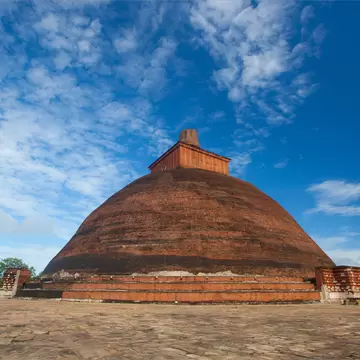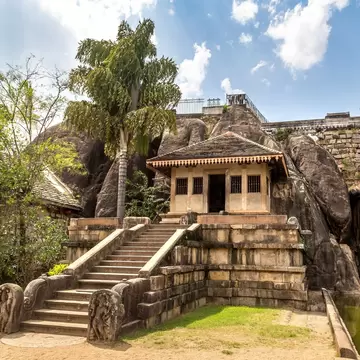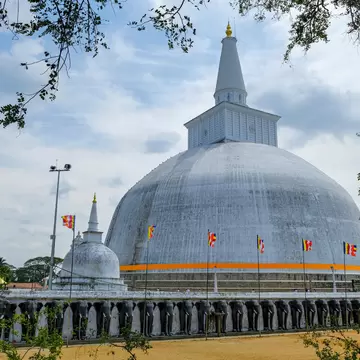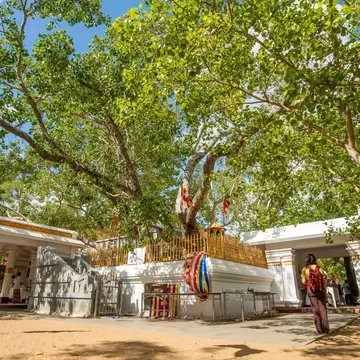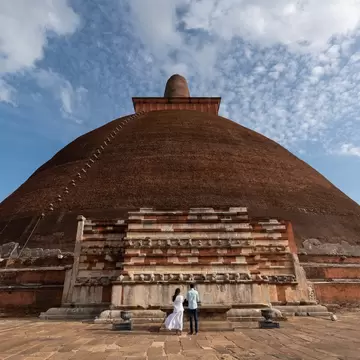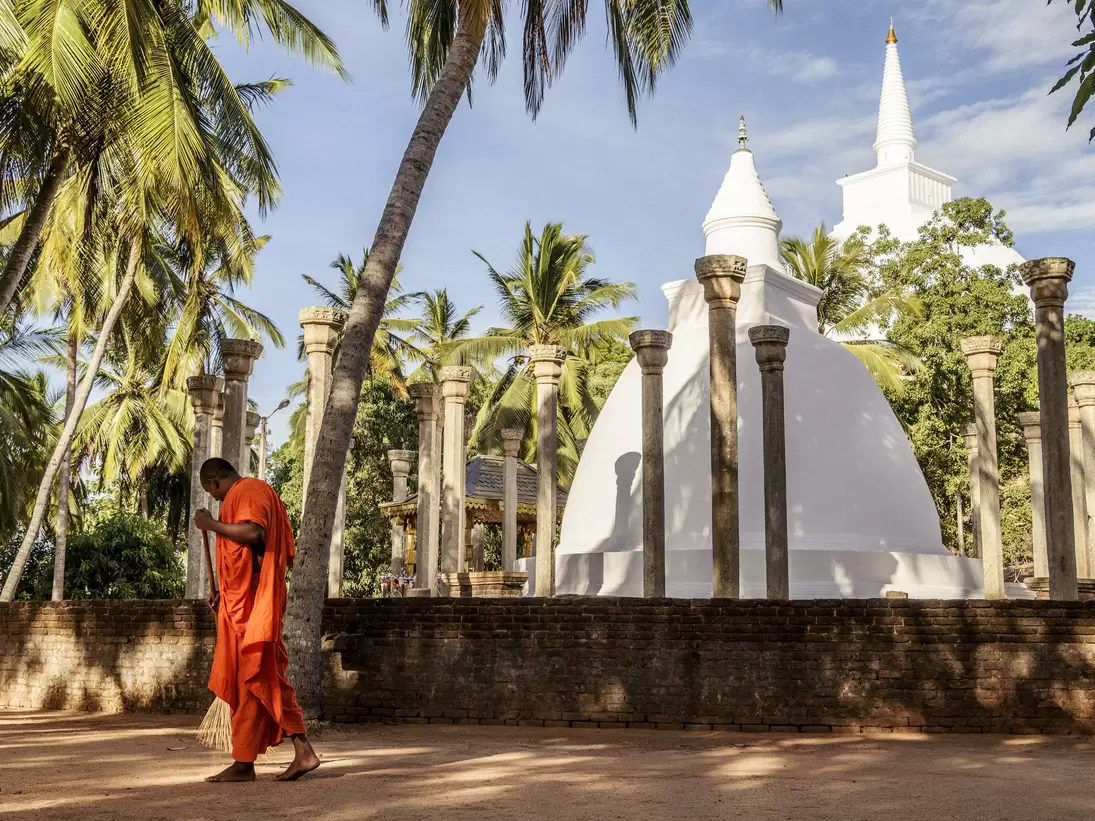
The sleepy village and temple complex of Mihintale (adult Rs 1000), 13km east of Anuradhapura, is associated with the earliest introduction of Buddhism to Sri Lanka and draws a stream of local pilgrims. The stream turns to a flood during the Poson Poya, held on the full-moon night in June to commemorate the conversion of King Devanampiya Tissa at what is now the site's main Ambasthale Dagoba. Some backpackers time their visit to catch sunset views from the site's hilltops.
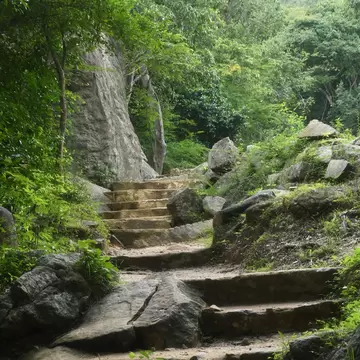
To visit the site, most pilgrims climb steps for 15 minutes to reach the ticket office at the second landing, though travelers with their own transport drive up Old Rd and start their visit from there.
Next to the ticket office is a monks' refectory with huge stone troughs that lay followers would fill with rice for the monks. Nearby, on the raised platform of the monastery's relic house, are two inscribed stone slabs erected during the reign of King Mahinda IV (r 975–91) and laying out monastic rules of conduct. To the side of the relic house is the meeting or convocation hall; the raised dais in the middle was where the most senior monk would have presided over monastic discussions. Sixty-four stone pillars once supported the roof.
Just below this area, near the car park, don't miss the Sinha Pokuna, a small pool decorated with a 2m-high rampant stone lion, reckoned to be one of the best animal carvings in the country. A stream of water once flowed from the lion's mouth.
The main ceremonial stairway, lined with araliya (frangipani) trees, leads up from the second landing to the main Ambasthale (Mango Tree) Dagoba. Just before you arrive you should take off your shoes.
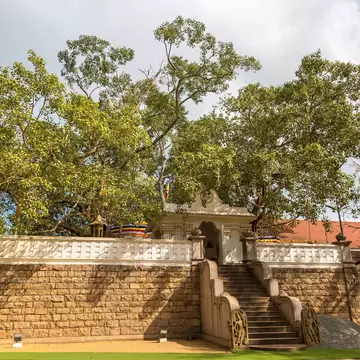
To the north, up a flight of rock-carved steps, is a large white Buddha statue, while to the left of the steps leading to the Mahaseya Dagoba is a bodhi tree that is said to be one of the oldest in Sri Lanka. To the east of the dagoba, rock-carved steps climb the Aradhana Gala (Meditation Rock), where Mahinda is said to have preached. There are still great views of the surrounding valley.
The modern Relic House here has an ornate golden relic casket flanked by elephant tusks. A path leads downhill from here for 10 minutes to a large flat stone cave where Mahinda lived. The track to the cave is hard on bare feet.
Walk up steps to the Mahaseya Dagoba (the largest at Mihintale), which some believe enshrines the Buddha's urna (the dot or curl of hair between Buddha's eyes). To the side you'll find the smaller, recently renovated Sela Chaitya, one of the oldest stupas in Sri Lanka and said to hold relics of Mahinda.
Follow the steps behind the Sela Chaitya and you'll drop down to a junction. Straight on leads to the sunset viewpoint of the 5m-tall Eth Vihara stupa. The right branch here takes you to the Naga Pokuna (Snake Pool), so called because of a five-headed cobra carved in low relief on the rock face of the pool. Its tail is said to reach down to the bottom of the pool. Water from this pool fed the Sinha Pokuna below. From here you can descend to the main stairway.
Before you leave the parking lot, check out the partly ruined 12m-high Kantaka Chetiya, one of the oldest dagobas at Mihintale, which dates back over 2000 years. The four stone flower altars at the cardinal points are backed by vahalkada (solid panels of sculpture), which rank as among the oldest and best preserved in the country. Take some time to explore the surrounding boulder and cave shrines that housed monks some 2000 years ago.
As the climb takes 25 minutes, you may wish to visit early in the morning or late in the afternoon to avoid the midday heat. You can cut the walk in half by driving up the side Old Rd and starting near the Monk's Refectory.