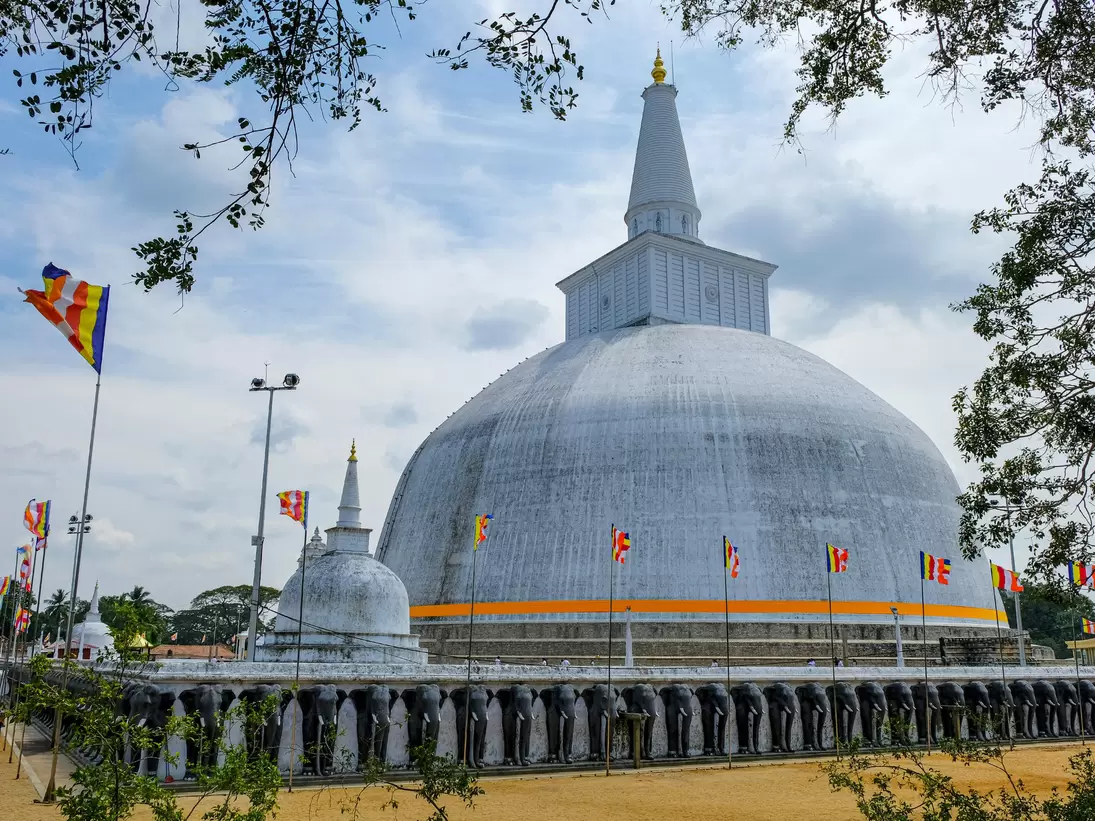
From the Sri Maha Bodhi complex, it's a short stroll north to this magnificent white dagoba. Sunset is a particularly lovely time to visit, as pilgrims light oil lamps and meditate in front of the stupa, while floodlights illuminate the brilliant white dome. As you enter the dagoba platform, notice the walled frieze of 344 elephants, a few of which are originals dating from 140 BCE.
During the dagoba's consecration, a portion of the Buddha's ashes were allegedly enshrined here in a grand ceremony attended by monks from northern India, Kashmir and Afghanistan. At the time, it was the world's biggest stupa, with a 7m-deep foundation made of limestone broken with hammers and then crushed by elephants. Today the dagoba rises 55m, considerably less than its original height; nor is its form the same as the earlier "bubble" shape.
Ruvanvelisaya was commissioned by the great builder-king Dutugemunu (r 161–137 BCE), though he didn't live to see its completion. However, as he lay on his deathbed, a false bamboo-and-cloth finish was placed around the dagoba so that Dutugemunu's final sight could be of his "completed" masterpiece. A limestone statue in a small pavilion east of the dagoba is popularly thought to be of Dutugemunu.
The land around the dagoba is dotted with the remains of ponds and pools, and collections of columns and pillars, all picturesquely leaning in different directions. Slightly southeast of the dagoba, en route to the Sri Maha Bodhi Temple, you can see one of Anuradhapura's many monks’ refectories.