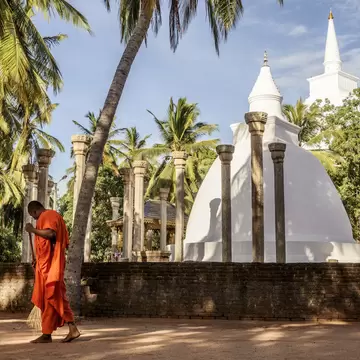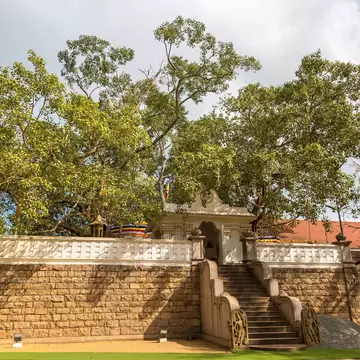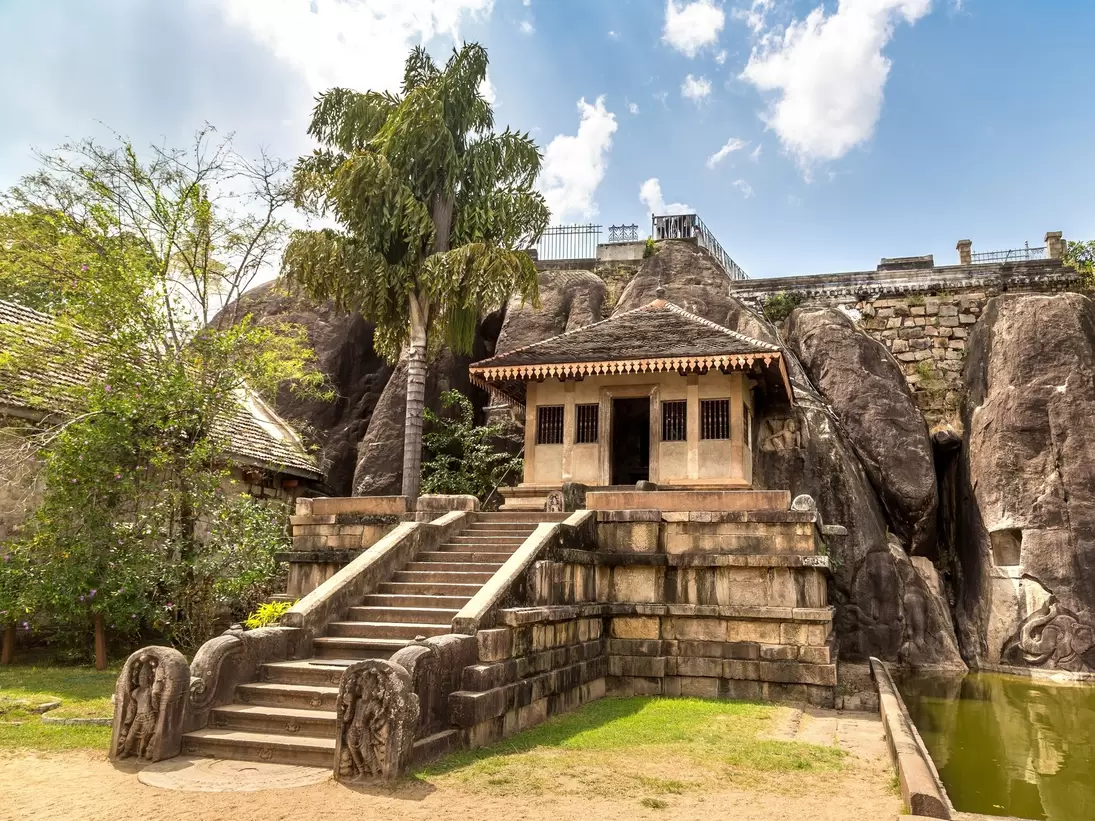
This charming rock temple (adult Rs 500), dating from the reign of Devanampiya Tissa (r 307–267 BCE) and located to the south of the main site, is set around a lovely lotus pond, the corner of which is carved with images of elephants playfully splashing water, with an enigmatic 7th-century-CE carving of a man and his horse just above. The pondside temple has some fine half-hidden murals.
The small museum here features the famous Gupta-style "lovers" sculpture, which dates from around the 5th century CE and depicts Prince Saliya (the son of Dutugemunu), who disobeyed his father and gave up his right to the throne to marry his low-caste love Asokamala.
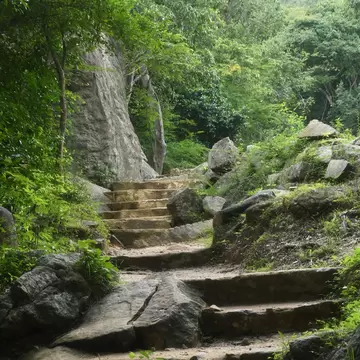
Climb around the back to the rock summit to see the bell-shaped stupa and a pair of Buddha footprints etched into the rock. For centuries, footprints were the most common symbol of Buddhism, until the iconic Buddha image was created in northwestern India in the first century CE.
South of the Isurumuniya Vihara are the faint remains of the Vessagiriya cave monastery.