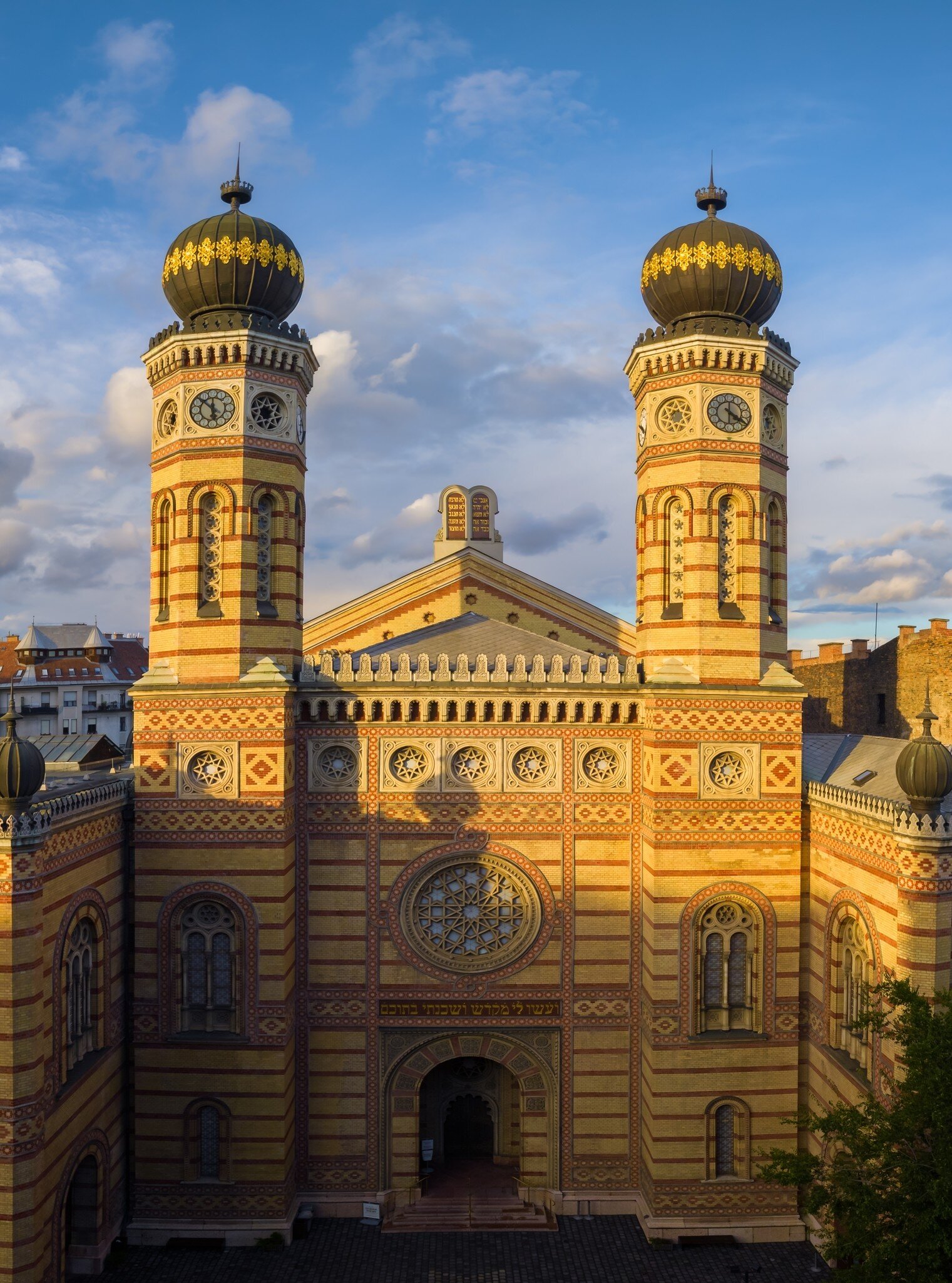
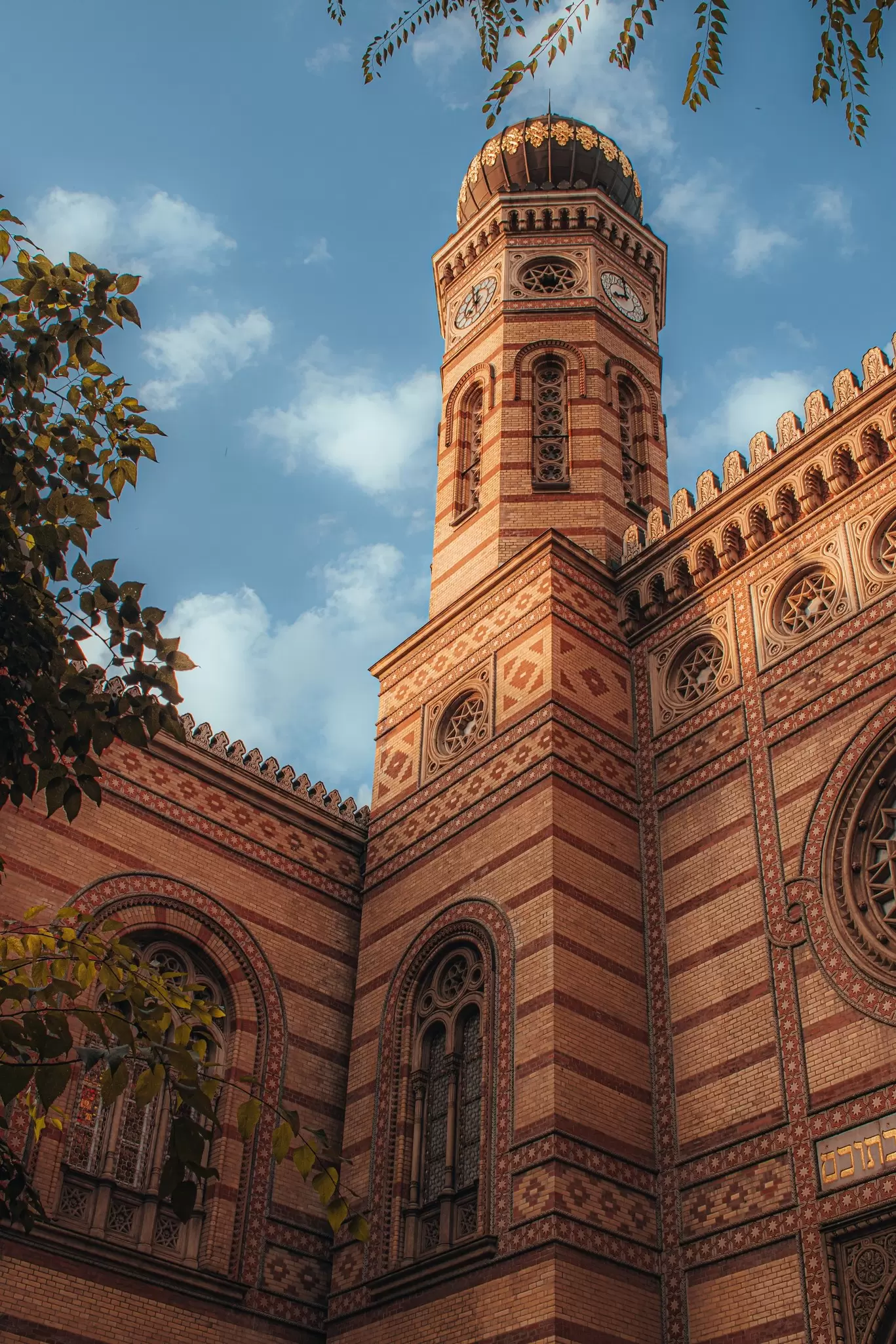
With its crenellated red-and-yellow glazed-brick facade and two enormous Moorish-style towers, Budapest’s stunning Great Synagogue, also called the "Dohány utca Synagogue," is the largest Jewish house of worship in Europe, seating 3000 people. Visit for its majestic architecture, the Hungarian Jewish Museum and Archives and the Holocaust Tree of Life Memorial.
The "Jewish Cathedral"
The Great Synagogue was completed in 1859 in Moorish style. It was designed by German architect Ludwig Förster, while the inner sanctum is the work of Frigyes Feszl, master of Romantic architecture in Hungary.
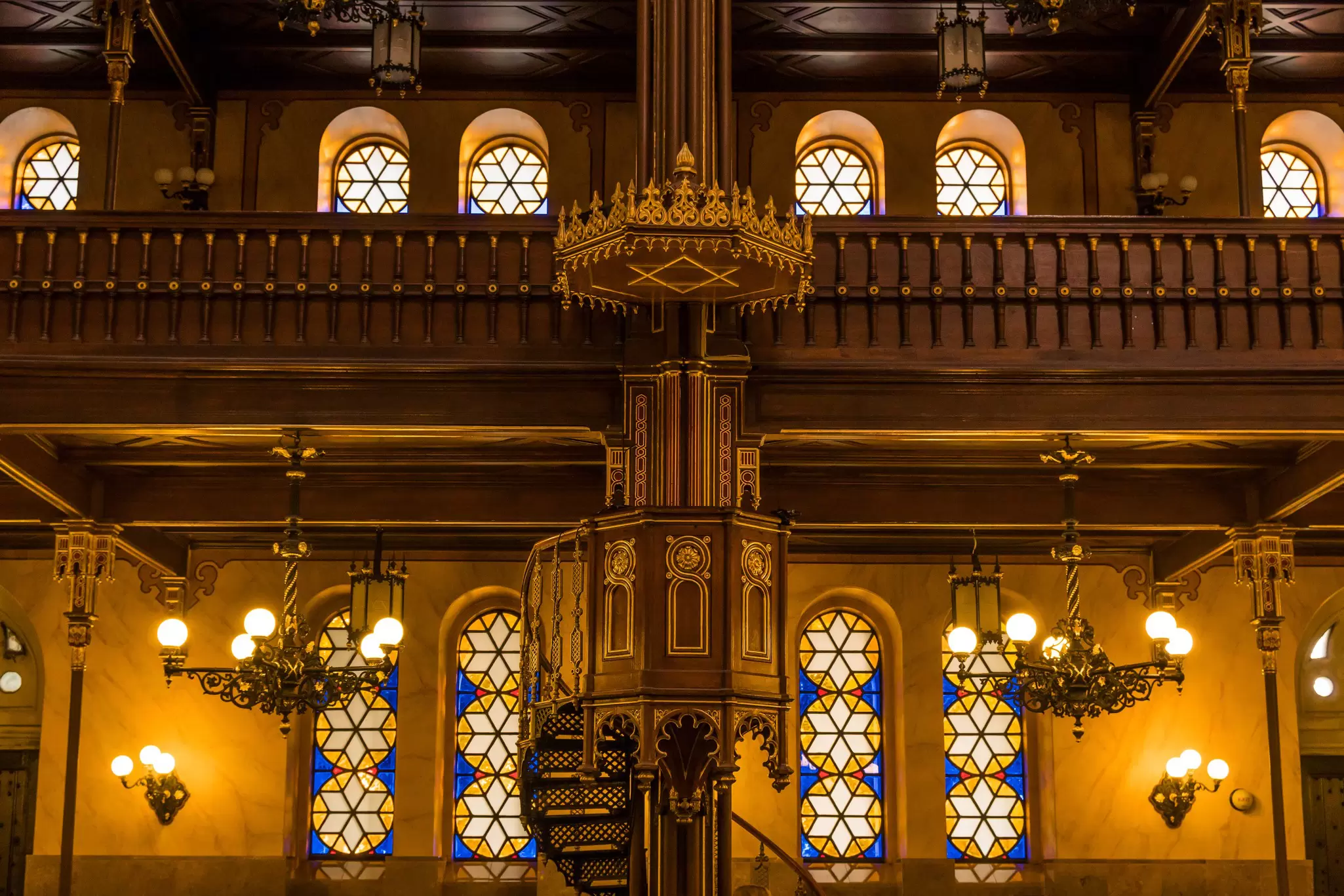
As the Great Synagogue is the temple of the Neolog Jewry (those more in favor of integration into Hungarian society since the 19th century), it has some distinctive Christian elements, including pulpits, a 5000-pipe organ and a central rose window with an inscription from the second book of Moses. For that reason, it's sometimes referred to as the "Jewish cathedral." Don’t miss the decorative carvings on the Ark of the Covenant by Frigyes Feszl, who was also responsible for the wall and ceiling frescoes of multicolored and gold geometric shapes. The Great Synagogue was built in Budapest’s former Jewish quarter, where many people of the Jewish faith still reside today.
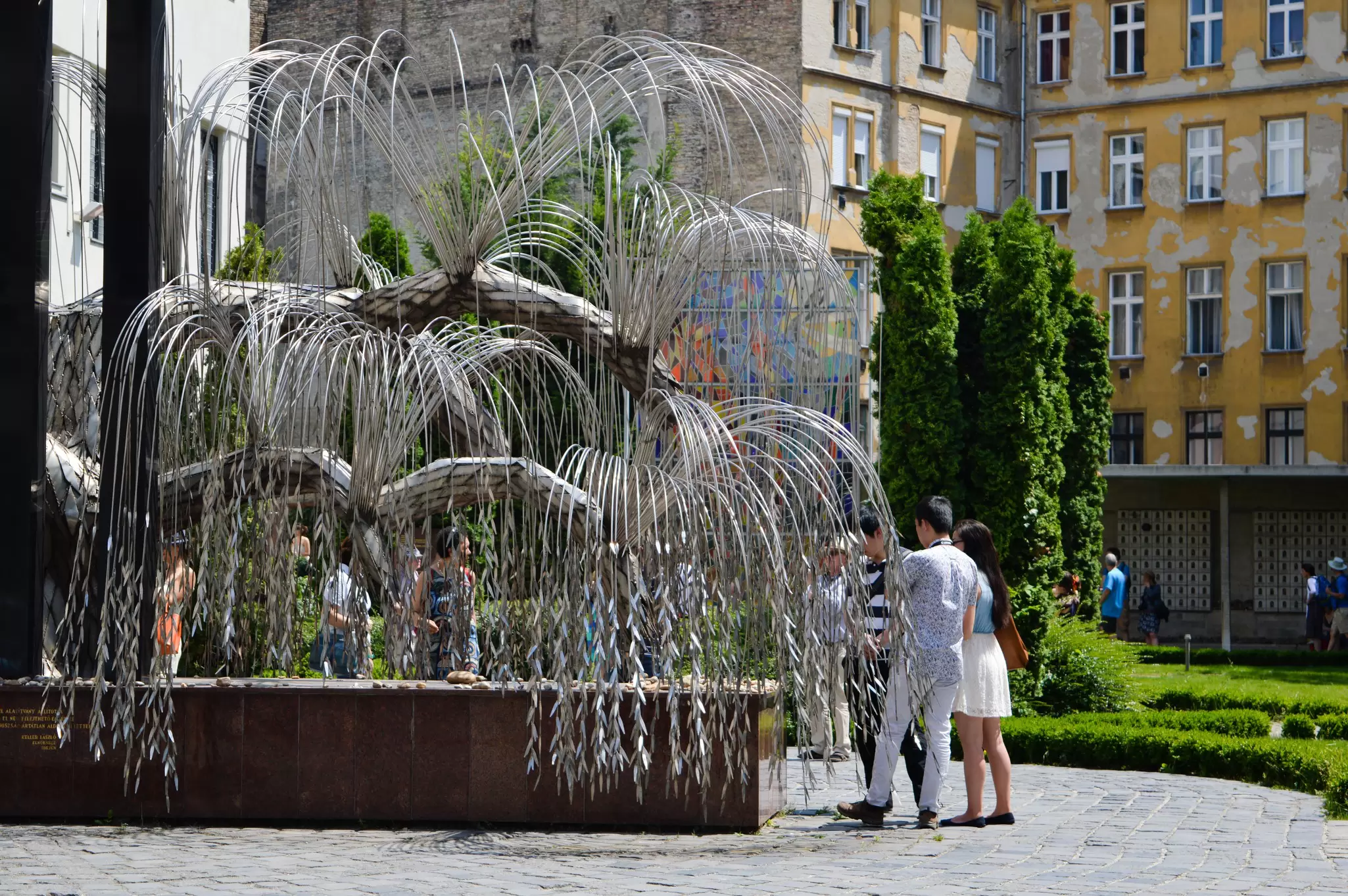
Holocaust Tree of Life Memorial
The memory of the Holocaust is strongly intertwined with the old Jewish quarter where the synagogue is situated. During WWII, Dohány utca was the border of the ghetto. Originally designed as a garden, the outside area became the burial place of nearly 2600 Jews who perished during the Holocaust. The centerpiece of the garden, named Raoul Wallenberg Memorial Park, is a mournful monument. Designed by Imre Varga, the Holocaust Tree of Life Memorial is a weeping willow made of iron whose metal leaves are engraved with the family names of some of the hundreds of thousands of victims.
Nearby is a black-marble memorial to two dozen "Righteous Among the Nation," a title used by the State of Israel to describe non-Jewish people who saved Jews from the Nazis. Along with Wallenberg, the plaque lists Carl Lutz (the Swiss vice-consul), Ángel Sanz Briz (the Spanish ambassador in Hungary), Giorgio Perlasca (an Italian who declared himself the Spanish consul) and Angelo Rotta (an Italian prelate bishop). Behind, a stunning stained-glass memorial remembers Holocaust victims, while in front, a plaque commemorates Nicholas Winton (1909–2015), the "British Schindler" who rescued more than 600 Czech Jewish children just before WWII, portrayed by Anthony Hopkins in the 2023 film One Life. The construction of the park was financed by the famous American actor of the 1950s, Tony Curtis, originally named Bernard Schwartz, whose parents were Hungarian Jews.
Hungarian Jewish Museum & Archives
After visiting the garden, take the transparent lift up to the Hungarian Jewish Museum & Archives to get a top-down view of the memorial park. This upstairs annex of the Great Synagogue contains interesting items related to both religious and everyday life, such as a vast array of liturgical items in silver, including Torah finials from 1602; a dozen stained-glass windows of biblical scenes, salvaged from a local high school; and manuscripts, including a handwritten book of the local Nagykanizsa Burial Society from the late 18th century. A multi-language audio guide with extra information on several exhibits is available at the reception desk free of charge.
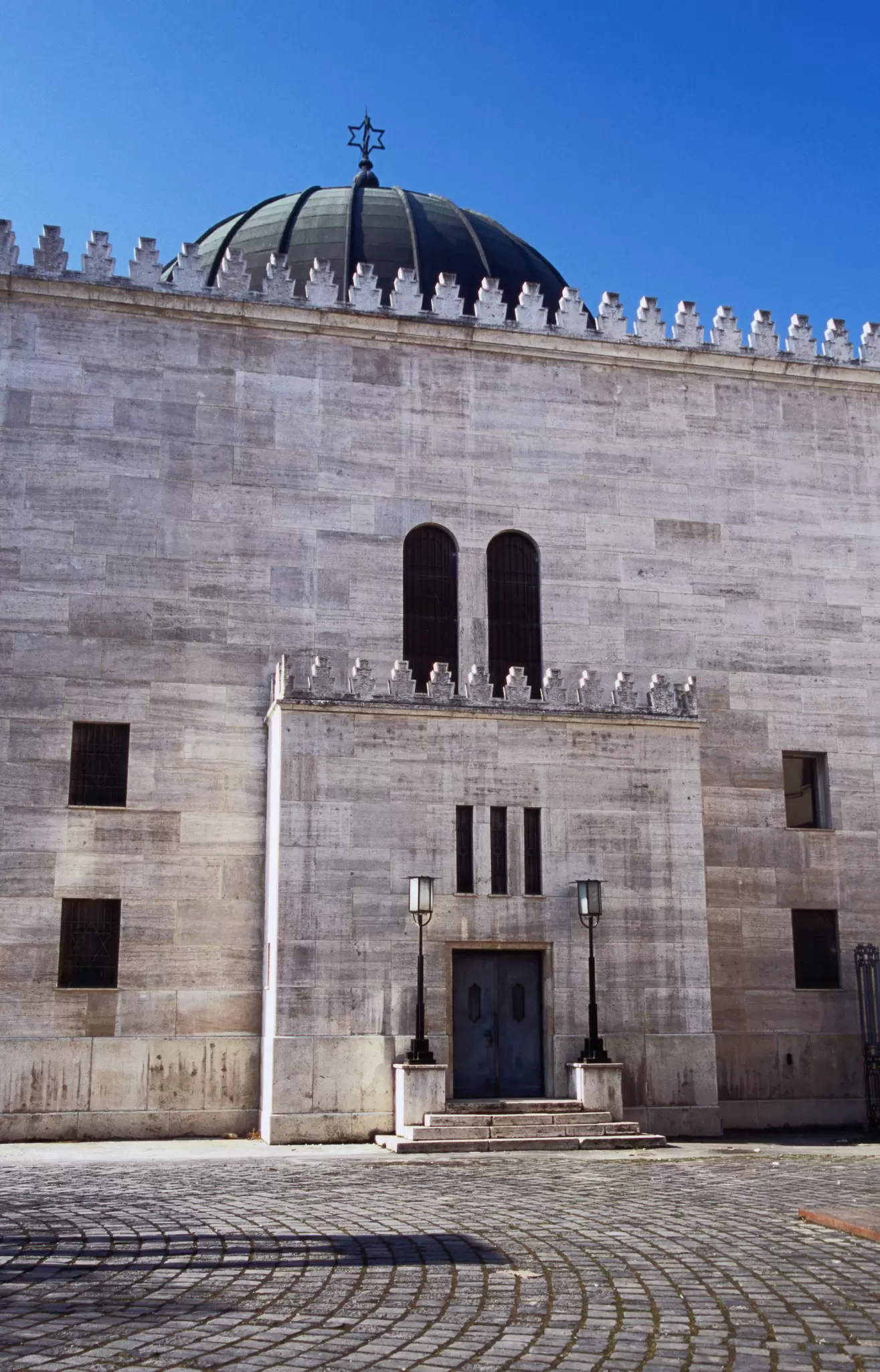
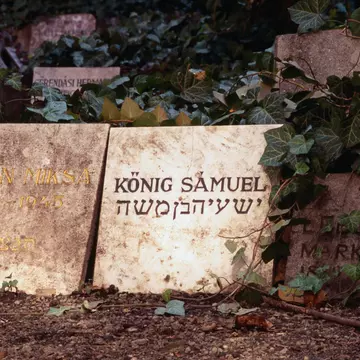
Downstairs, you can see Ottoman-era tombstones recovered from the Jewish quarter in Buda. The oldest is that of a girl from 1350. Behind the museum, you’ll find the 186-seat Art Deco Heroes’ Temple built in 1931 to honor the fallen in WWI.