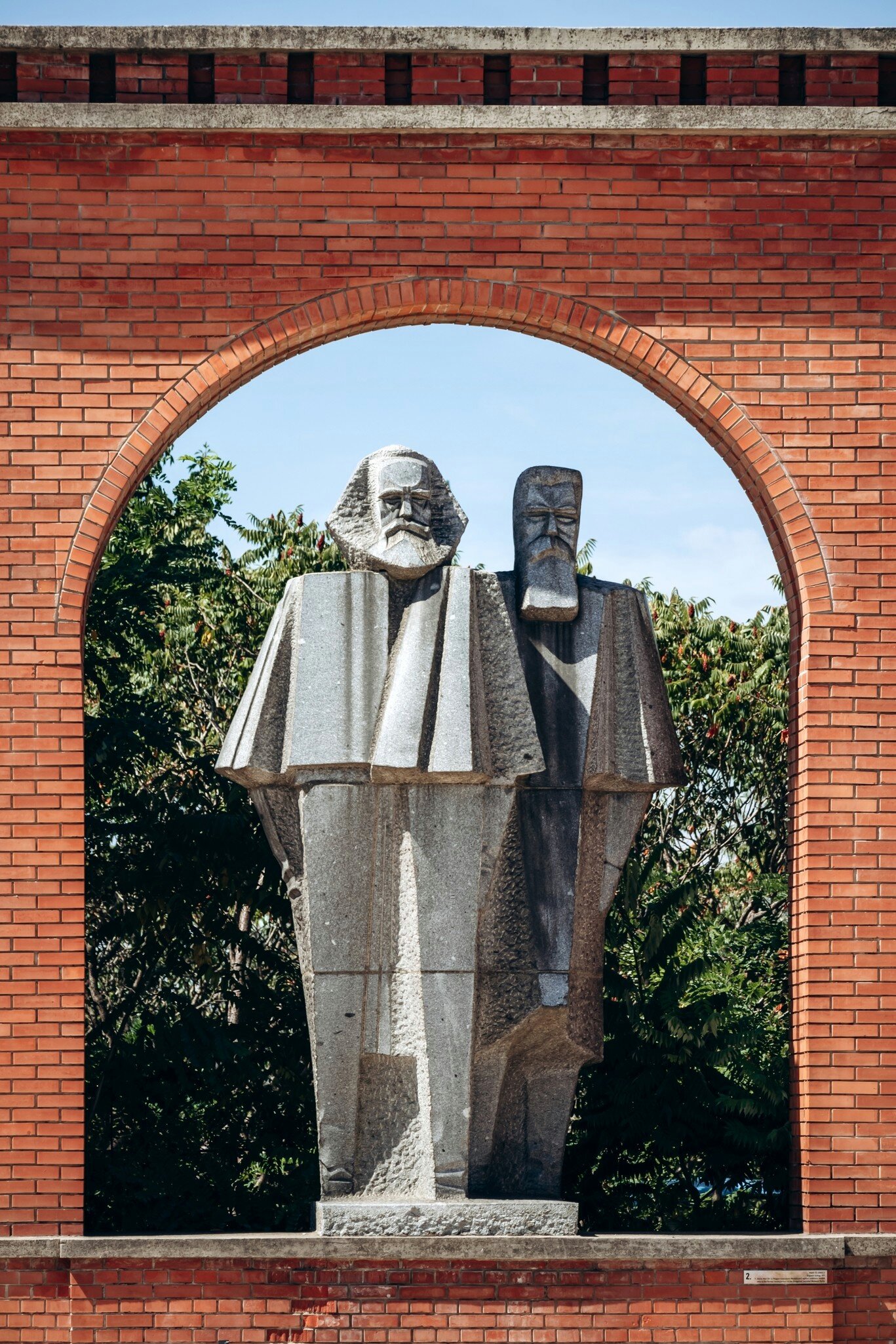
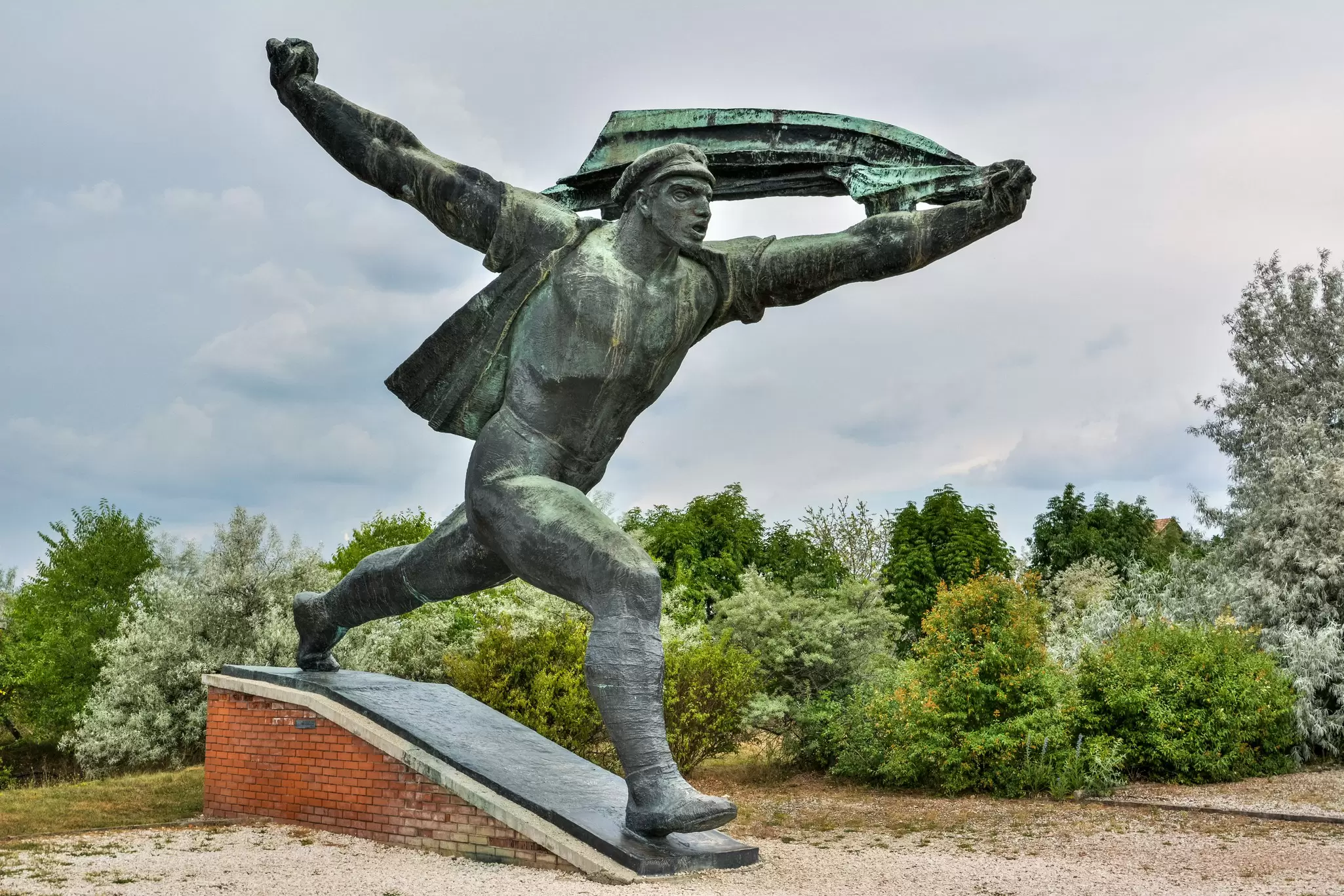
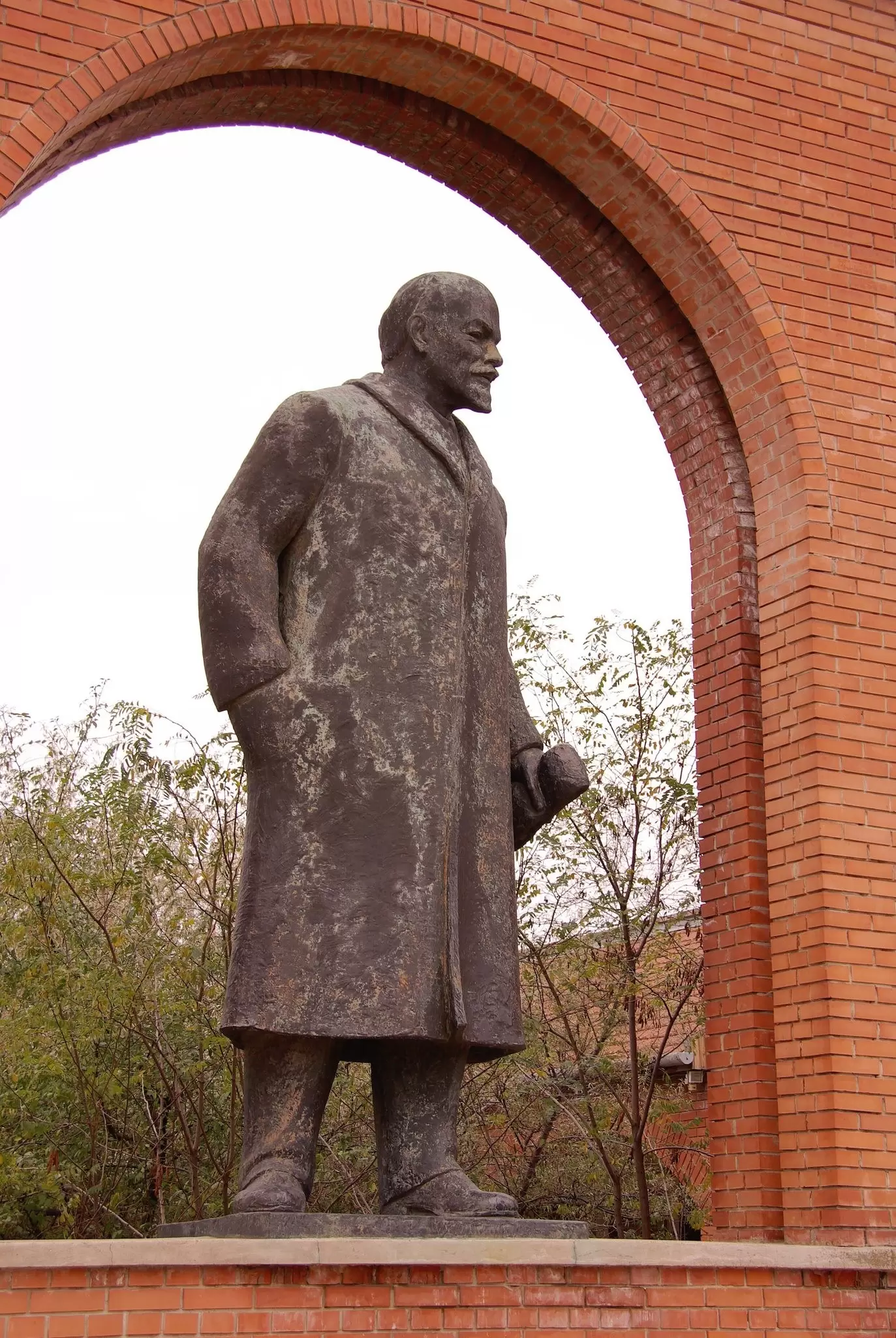
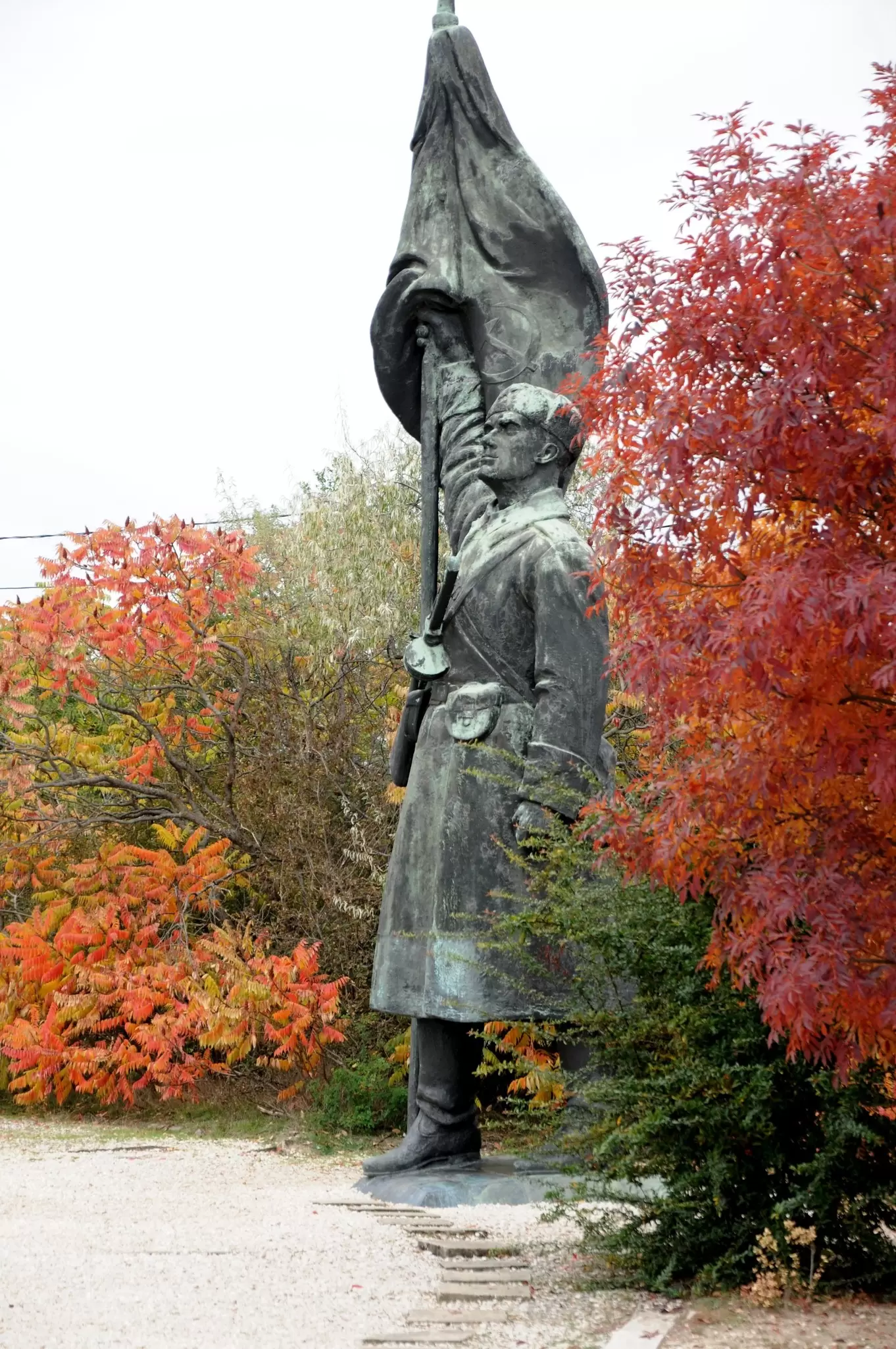
This huge open-air park provides a sneak peek behind the Iron Curtain, guarding the gigantic statues of Lenin, Marx, Engels, homegrown red-star heroes and other types of communist propaganda that were removed from the streets of Budapest after the fall of the Berlin Wall in 1989. While Memento Park is not, strictly speaking, part of this district, it’s an important South Buda site.
Ghosts of Communism Past
Whether you opt for a guided tour or decide to wander around on your own, note that Memento Park doesn’t serve as a statue cemetery, nor is it about publicizing autocrats. Instead, the museum’s main quest is to present the fall of a broken ideology by showcasing thematically displayed communist-era artworks and reminders that once stood on the streets and main squares of Budapest.
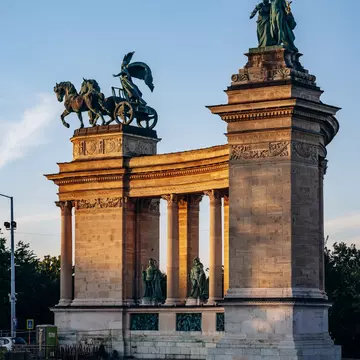
The museum’s antique-style entryway displays the iconic duo of communist ideologists, Marx and Engels, on one side, and Lenin’s bronze statue on the other. Passing through, you’ll run into the ticket office that doubles as a quirky gift shop offering all sorts of bittersweet keepsakes, including candles and propaganda posters.
To the right from the ticket office, you can sit inside an old Trabant – a classic East German car that was a dream for many Hungarian families during communism – and eavesdrop on the communist hotline in the vintage phone booth to hear the voices of Joseph Stalin, Mao Zedong and even Che Guevara. On the left, you can consult a grand map that gives you a recommended route to explore the statue park.
Follow the Red-Bricked Road
Inside the statue park, the trophies of Soviet-era sculpting are not just scattered around haphazardly but are systematically organized. The centerpiece is a five-point red star made of flower beds, while around, paths wind in figure-eight patterns, suggesting that any route you embark upon will always lead you back to the central "only true and right road," referring to a key element of communist ideology.
After navigating the central path of the sculpture park with detours taken along the circular routes, you’ll reach the end of the road. However, instead of an exit, you run into a massive brick wall, indicating that the road of communism doesn’t lead anywhere, and you can only turn back to walk down the same path again.
When Stalin Got the Boot
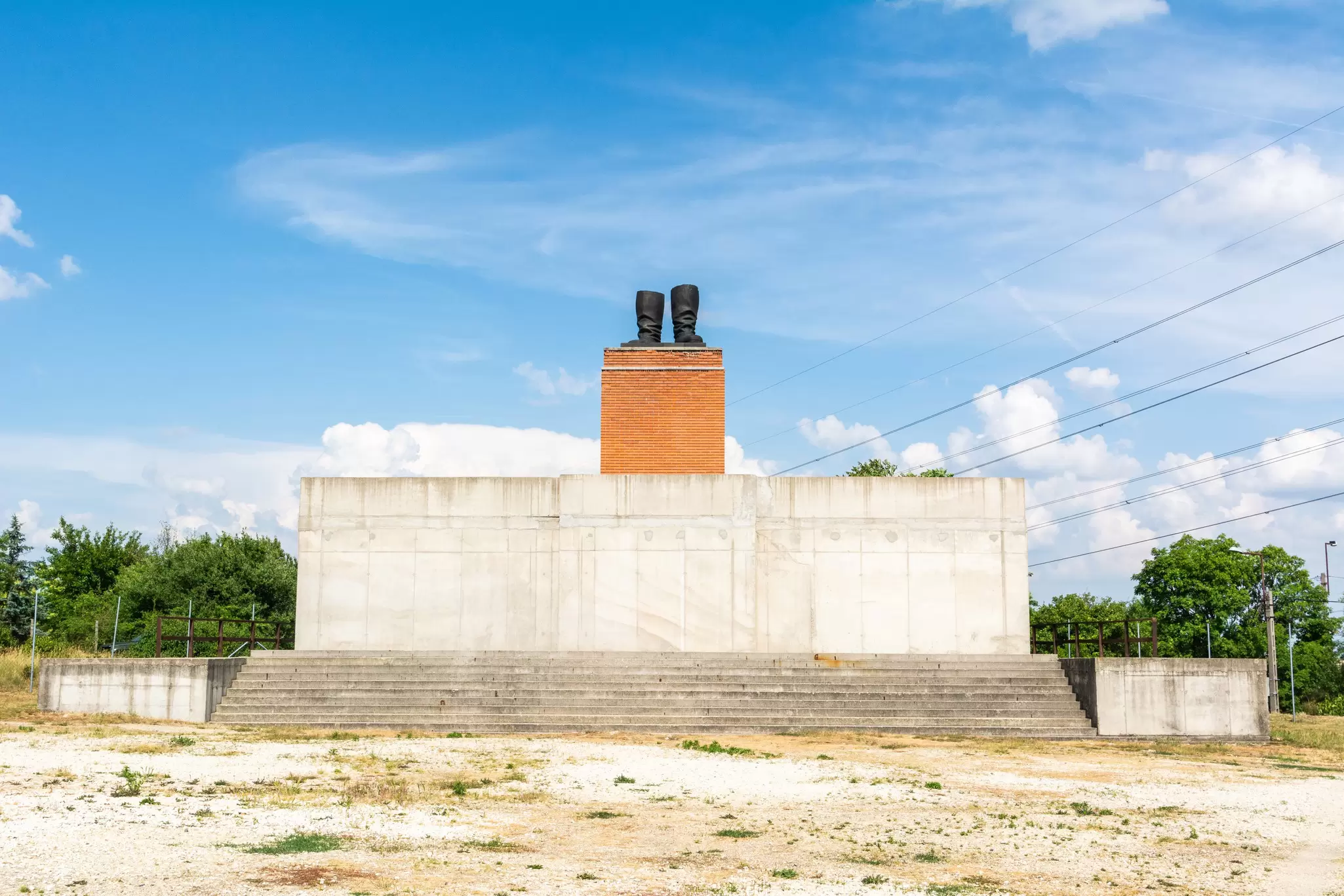
Opposite the main entrance, you’ll find the park’s top attraction, a pair of gigantic boots. It’s a replica of the original 8m-high bronze statue of Stalin that was pulled down from its plinth on Dózsa György út in City Park during the 1956 Uprising and sawed apart until only the boots remained. Climb the stairs behind the monument to reach a balcony and get a great view of the park entrance and wave to other visitors from the very spot where communist leaders once waved to the crowds below.
Inside the plinth, you can see a small exhibition of busts, including one of Lenin as a child, as well as temporary displays. In front, a wooden barracks showcases the events of the 1956 Uprising and 1989 regime change, as well as fascinating footage of Hungary’s secret police in training, which shares handy tips on how to spy on "enemies of the state."