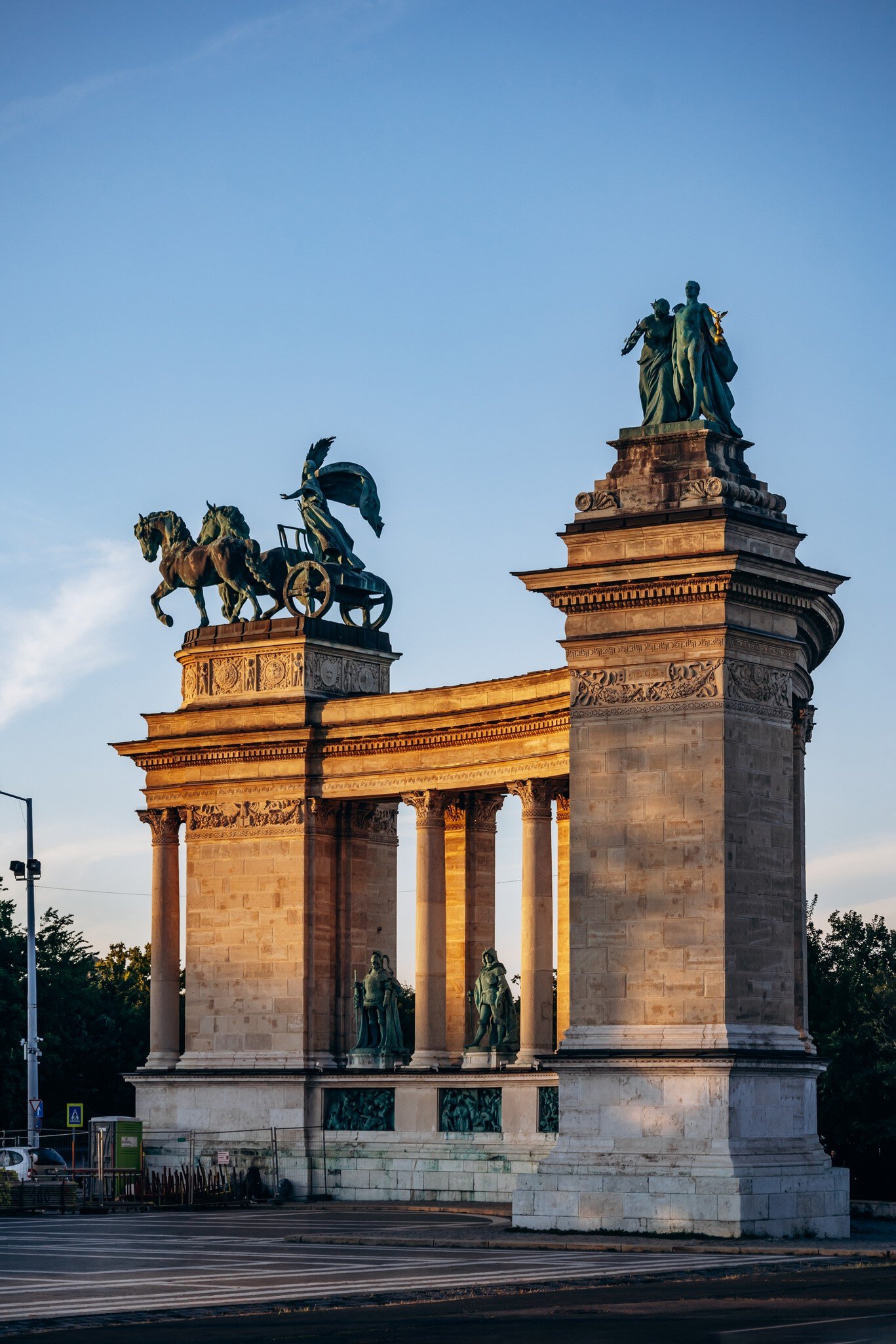
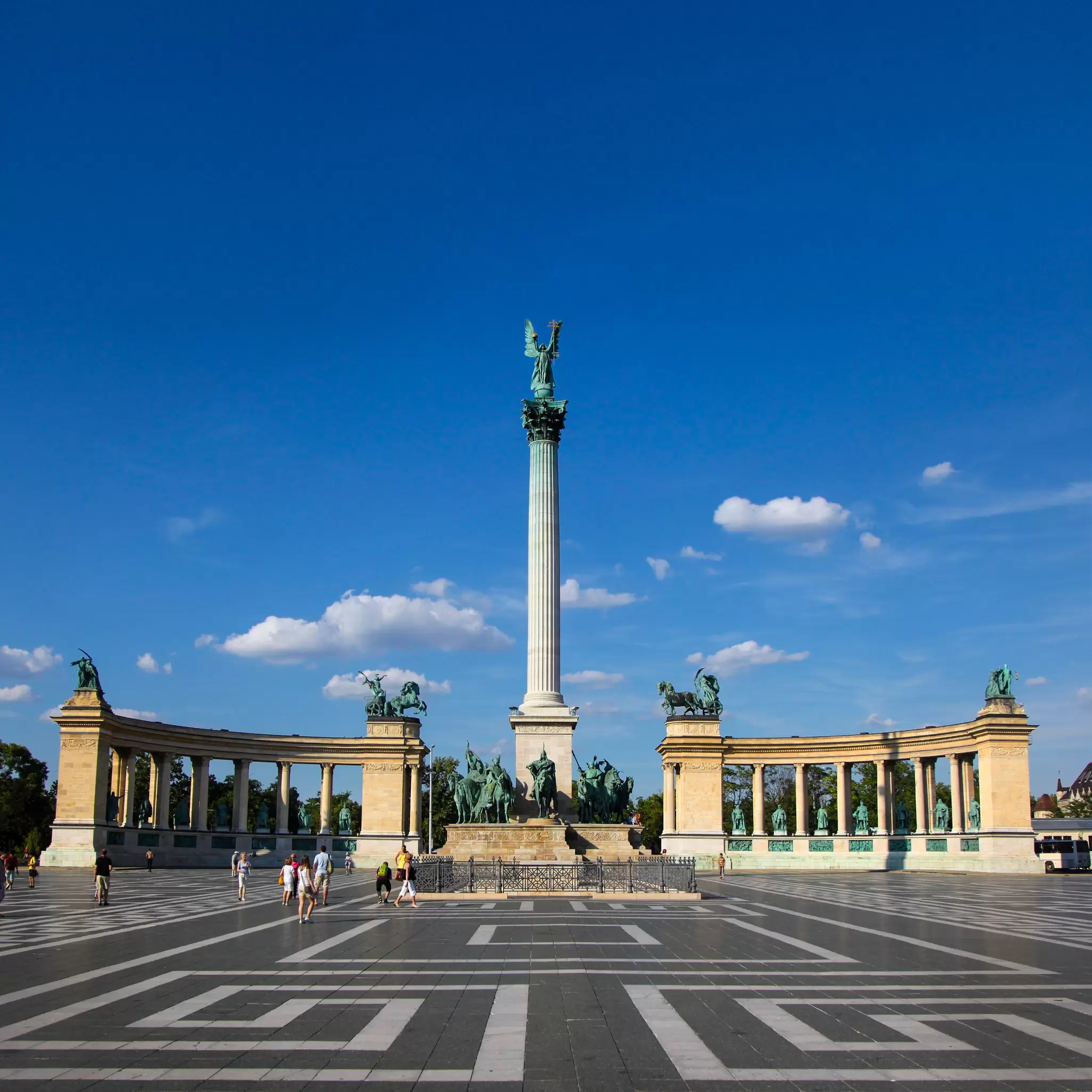
This picture-perfect plaza concluding tree-lined Andrássy út is Budapest’s largest and most symbolic square, serving as an elegant gateway to City Park. Framed by monumental statues narrating the tale of Hungary’s formation and resilience, and flanked by two major museums, the Museum of Fine Arts and the Kunsthalle, Heroes’ Square offers a blend of culture, striking architecture and history.
A Showcase of Hungarian History
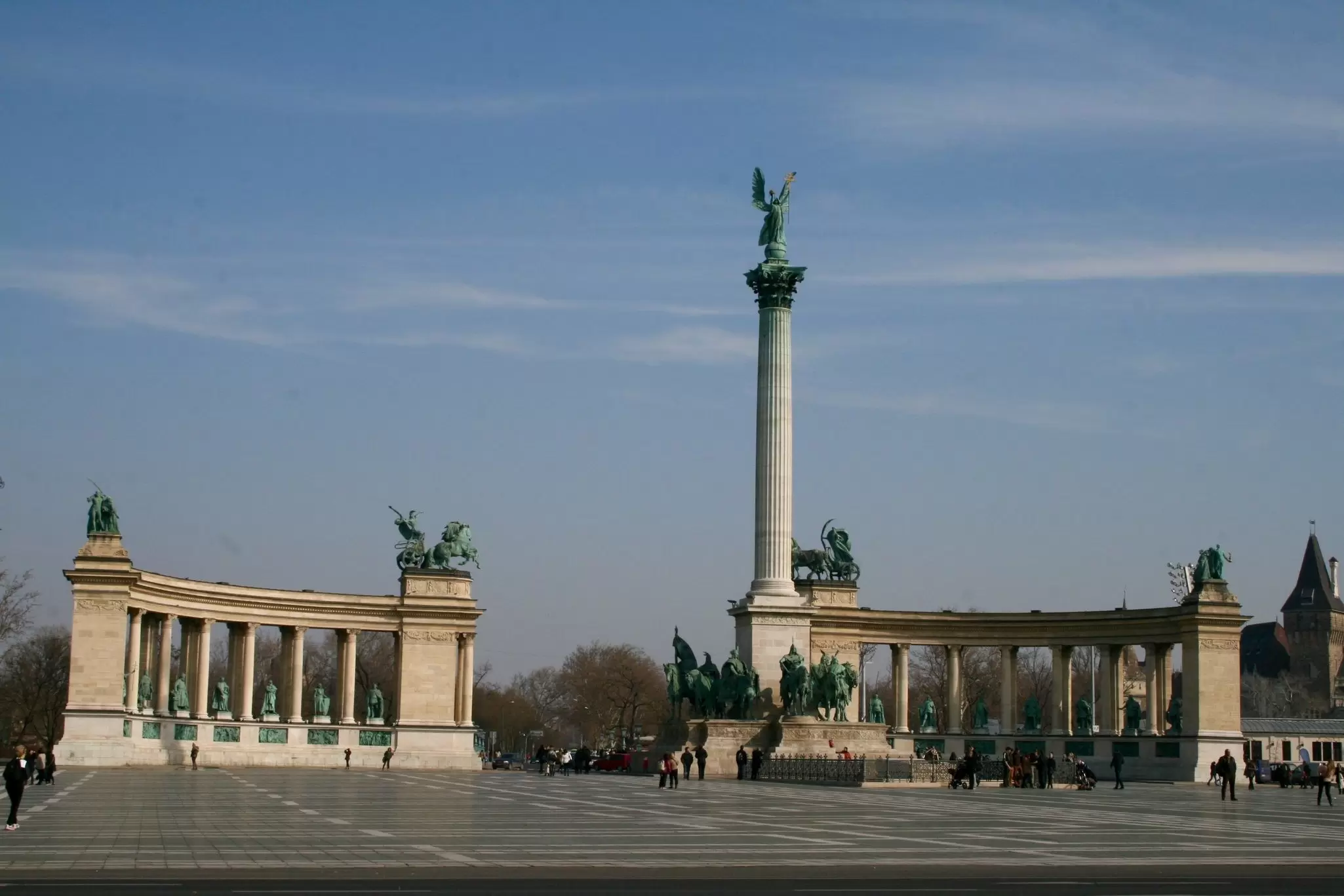
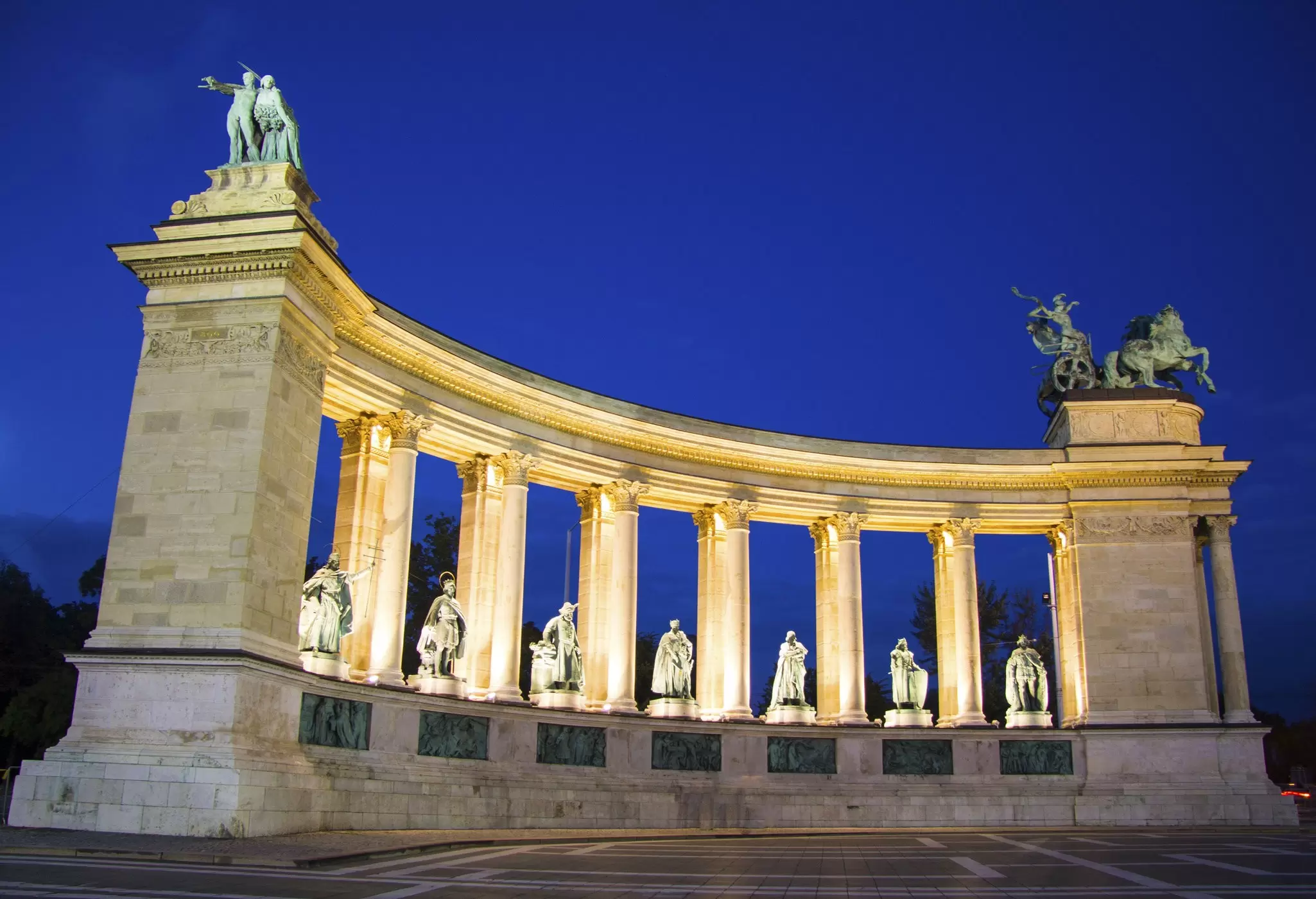
The centerpiece of the World Heritage–listed square is the hemispherical Millennium Monument (Ezeréves emlékmű), erected in 1896 for the celebrations marking the 1000th anniversary of the Magyar conquest of the Carpathian Basin. Left and right, two colonnades display two sets of seven leaders whose lives had a major impact on Hungary’s history.
Who Are the Heroes?
Far left is Szent István (King Stephen, c 975–1038), Hungary’s first king and the nation’s founder. As depicted in the relief below his statue, Stephen was enthroned on Christmas Day in the year 1000 with the support of Pope Sylvester II, establishing this land as the Magyar domain.
Next is Szent László (Ladislaus I, c 1040–95), a knight-king whose victories marked the beginning of an expansion period for the medieval Kingdom of Hungary and ensured the security of its eastern borders for about 150 years. In the relief, he defeats a maiden-abducting Cuman soldier.
Next stands Könyves Kálmán (Coloman the Learned, c 1074–1116), best known for his proclamation that vampires and witches are not real, sparing many religiously persecuted people from being burnt at the stake, as portrayed in the relief.
On his right is András II (Andrew II, c 1176– 1235), whose reign was marked by controversy with barons and the issuing of the Golden Bull of 1222, which has been called the Hungarian Magna Carta. In the relief, Andrew II leads a crusade to liberate Jerusalem.
Beside Andrew II is his son, Béla IV (1206–70), during whose reign the Mongol invasions left three-quarters of Hungary in ruins. The relief portrays a grim scene as he rebuilds Hungary afterwards.
Next is Károly Róbert (Charles I, 1288–1342). It’s interesting that there's no inscription above his relief, and it doesn’t even depict the above king but his predecessor, King Ladislaus IV, who helped Count Rudolf I defeat the powerful Bohemian King Ottokar at Marchfeld in 1278, which marked the beginning of the Habsburgs' rise to power. Some say the inscription was removed for political reasons after WWII, while others believe there had never even been one to disguise the inconsistencies between the dates.
Last is Lajos Nagy (Louis the Great, 1326–82), who, during his long reign, established an empire encompassing most of Eastern Europe and beyond. In the relief, he marches into Naples in 1348.
The Right Colonnade
The first statue on the right colonnade is of János Hunyadi (c 1407–56), a leading commander against the Turks in the 15th century, whose victory against Turkish invaders at Belgrade kept the Turks away from Hungary for several decades.
His son, King Matthias Corvinus (1443–90), is best remembered for his cultural contributions to the country as a Renaissance king – he promoted artistic development, launched major building projects, created a royal library and enjoyed conversations with prominent Humanist scholars, as depicted in the relief.
Next is István Bocskai (1557–1606), a Habsburg supporter at first, who later protested against Austrian rule with widespread popular support, victoriously leading homegrown armies against Habsburg troops, as seen in his relief.
To his right stands Gábor Bethlen (1580–1629), whose reign marked Transylvania’s golden age, and who opposed the autocracy of the Habsburgs partly by forging an alliance with the Czechs, as depicted in his relief.
Beside him stands Imre Thököly (1657–1705), a rebel Hungarian patriot and leader of the Hungarian Protestants in their struggle against Austrian Habsburg rule. In the relief, the kuruc army defeats the labancz troops in the Szikszó battle in 1679.
Then comes Ferenc Rákóczi (1676–1735), a scion of a noble Magyar family and a Hungarian national hero, best known as the leader of the uprising against the Habsburgs between 1703 and 1711. In the relief, he is welcomed home after an early victory.
The last leader depicted is Lajos Kossuth (1802–94), an emblematic figure of the 1848–49 War of Independence, who in the relief calls the people of the Great Plain to arms.
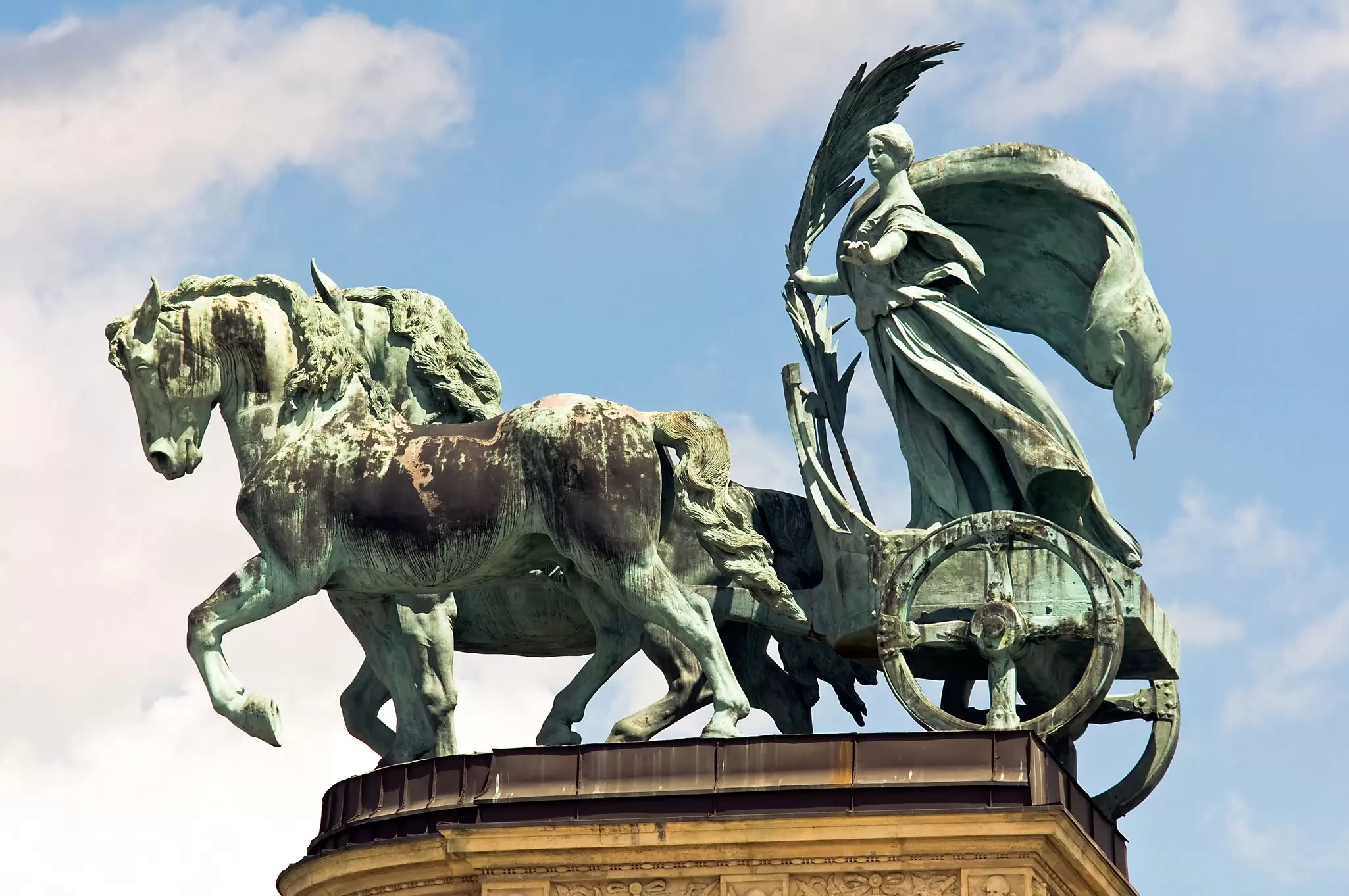
Look Skyward
Atop the colonnades stand the chariots of War and Peace facing each other, as well as the allegorical bronze figures of Labour and Wealth and Knowledge and Glory.
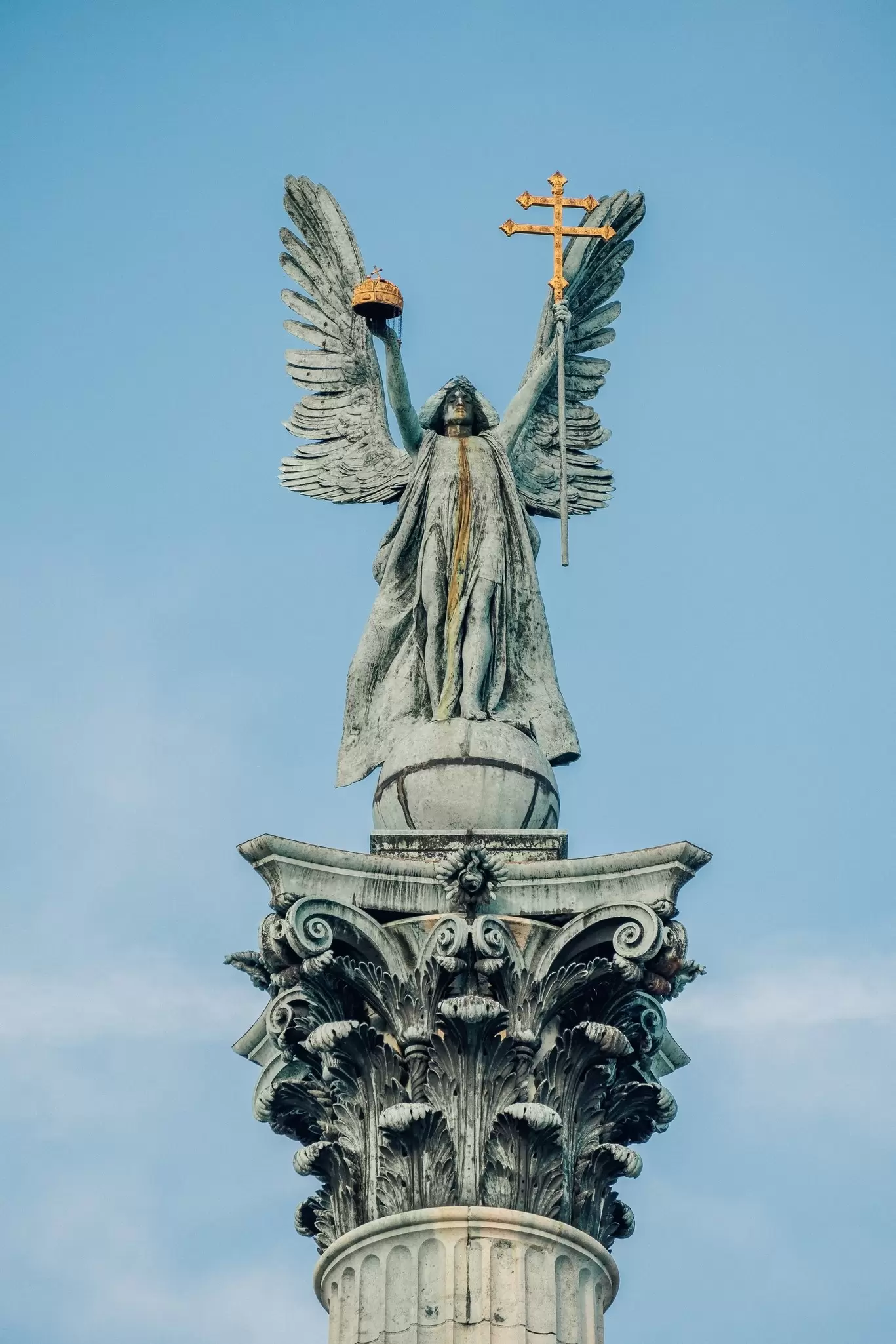
In between the colonnades, a 36m-high obelisk is topped by the statue of Archangel Gabriel holding the Hungarian crown and a patriarchal (two-barred) cross. At its base, the seven horseback warriors are the tribal leaders who brought the Magyars to present-day Hungary around 896 CE. In front of the obelisk lies the Grave of the Unknown Soldier, commemorating those who died defending the country throughout history.