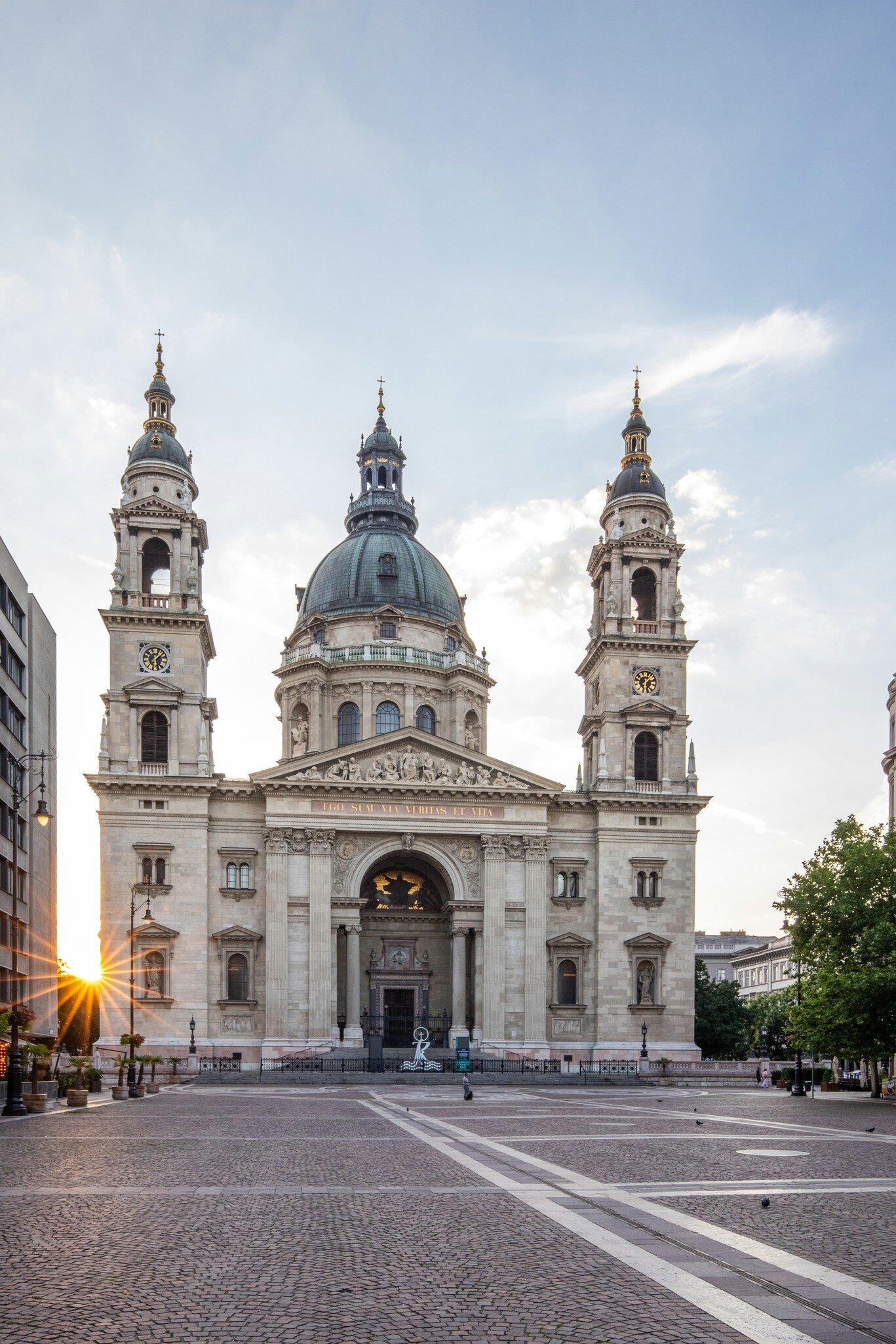
The Basilica of St Stephen is the most sacred Catholic church in all of Hungary, if for no other reason than that it contains the nation’s most revered relic: the mummified right hand of the church’s patron, King St Stephen. The church is also the Budapest seat of the shared Metropolitan Archdiocese of Esztergom-Budapest.
False Start
The neoclassical cathedral, the largest in Hungary, is in the form of a Greek cross and can accommodate 8000 worshipers. It was originally designed by József Hild, and though work began in 1851, the structure was not completed until 1905. Much of the interruption had to do with the fiasco in 1868 when the dome collapsed during a storm. The building then had to be demolished and rebuilt from the ground up by Hild’s successor, Miklós Ybl.
Reaching the Dome
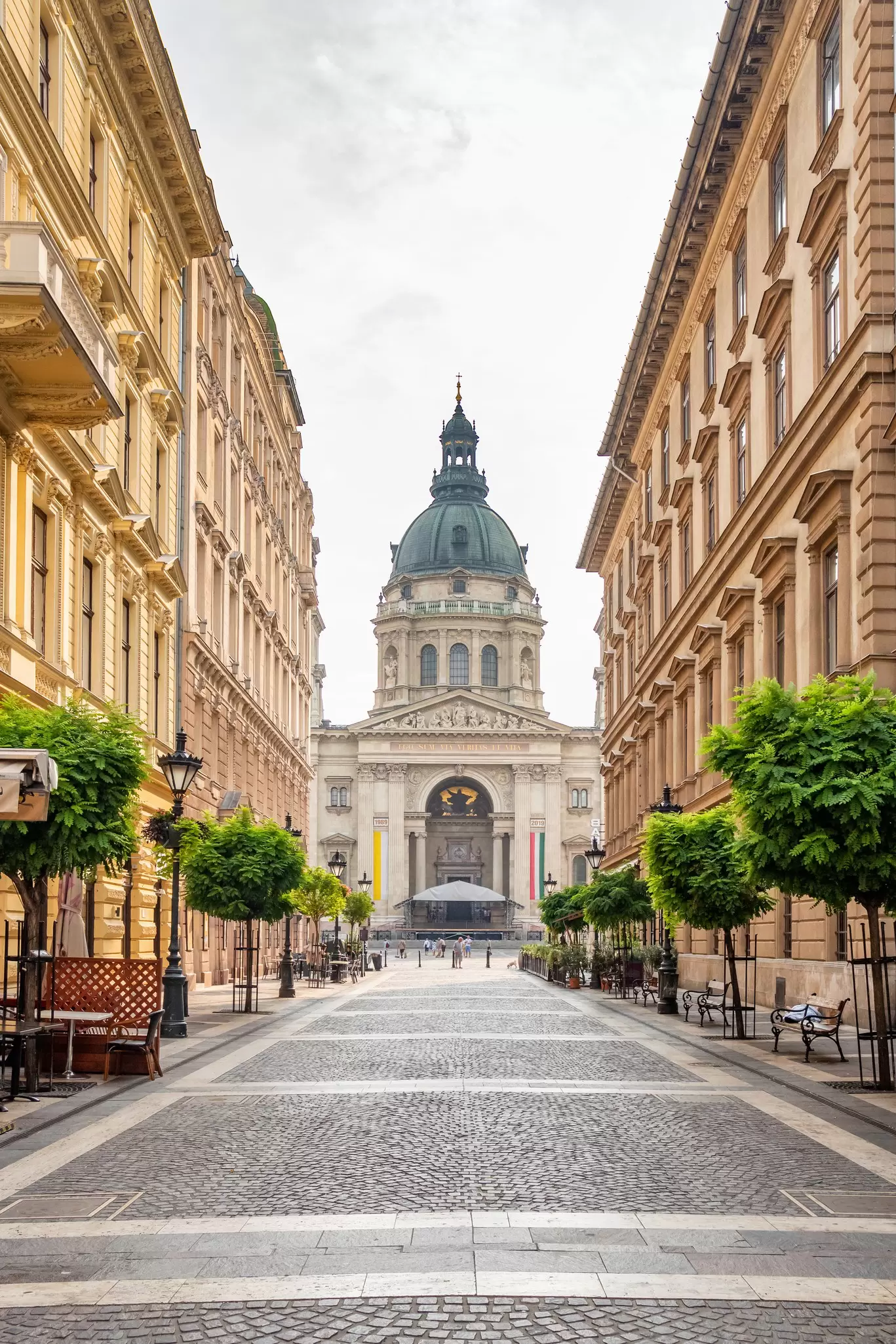
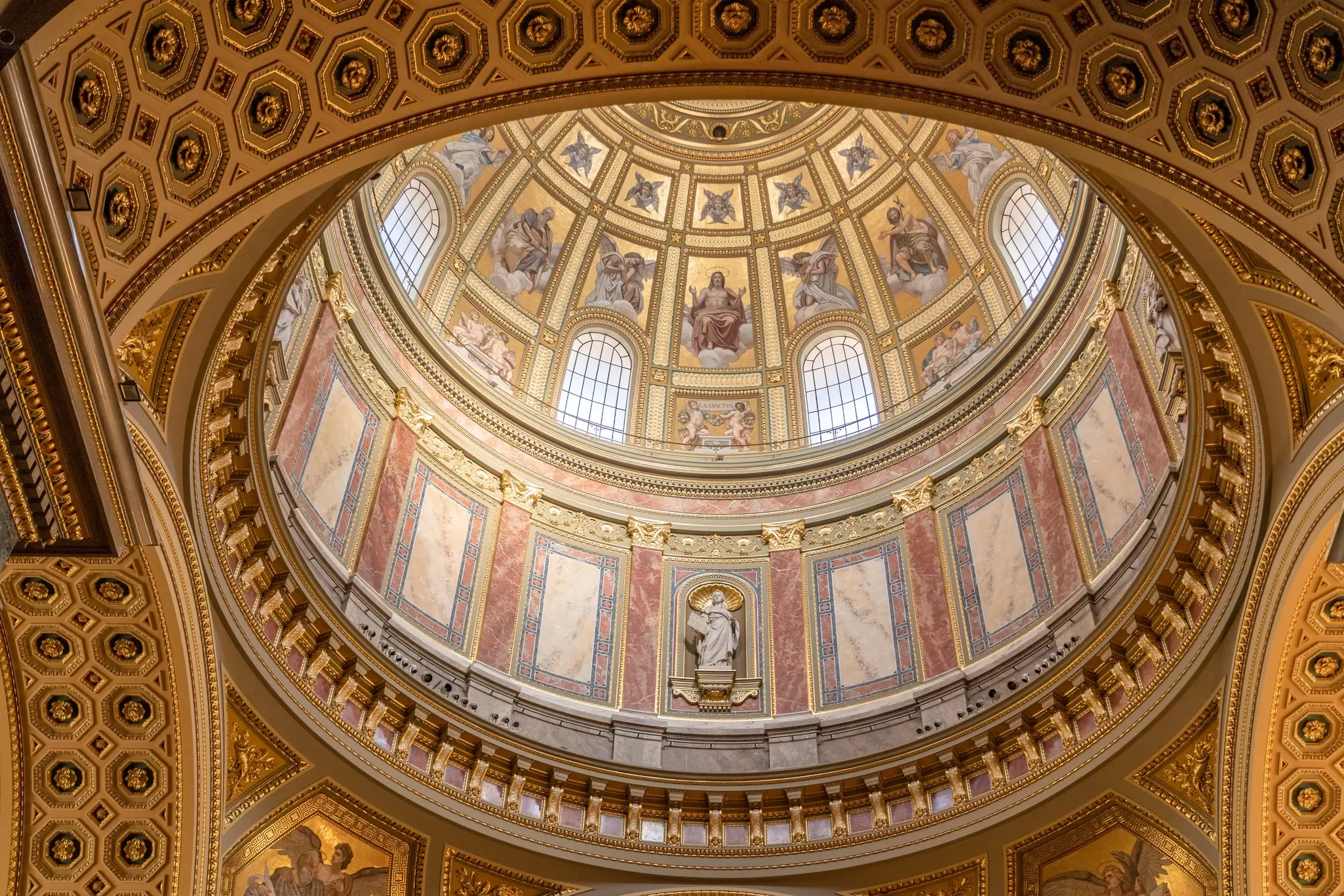
The facade of the basilica is anchored by two hefty towers; the one at the southwest contains a bell weighing more than nine tonnes, the northwest one a carillon of six bells. Behind the towers is the 96m-high dome, with statues of the four Evangelists filling its niches.
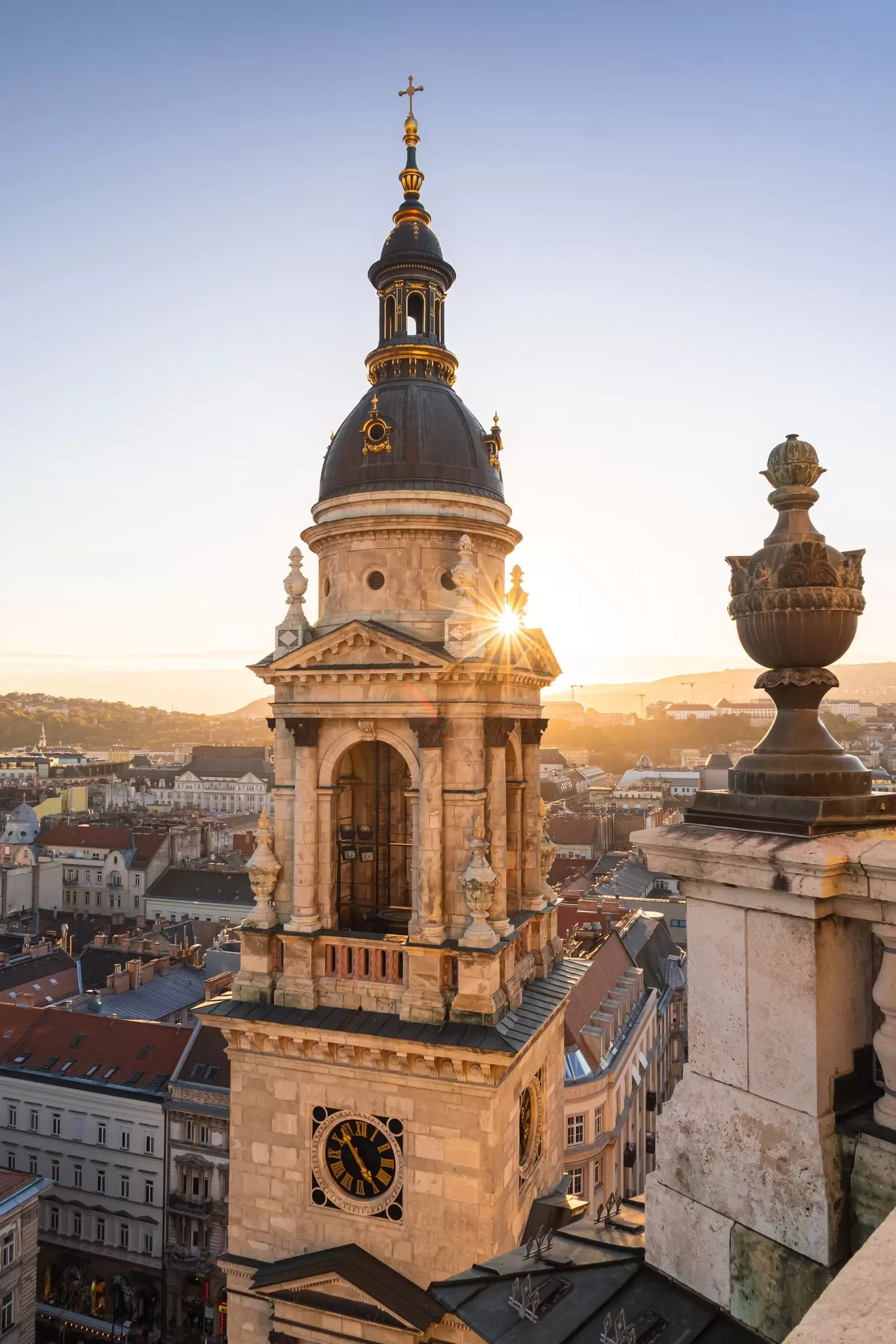
The top of the dome, which offers the best views in the city, can be reached on foot or via lifts. If you want to walk all the way, you’ll face 302 steps. Otherwise, take the normal-sized lift, which is to the right of the main steps to the basilica’s entrance, to the 3rd floor and walk 145 steps to the dome’s exterior. If you can manage to get a space on the second four-person lift on the 3rd floor, you’ll only have to walk 28 steps from where the lift deposits you.
Touring Inside
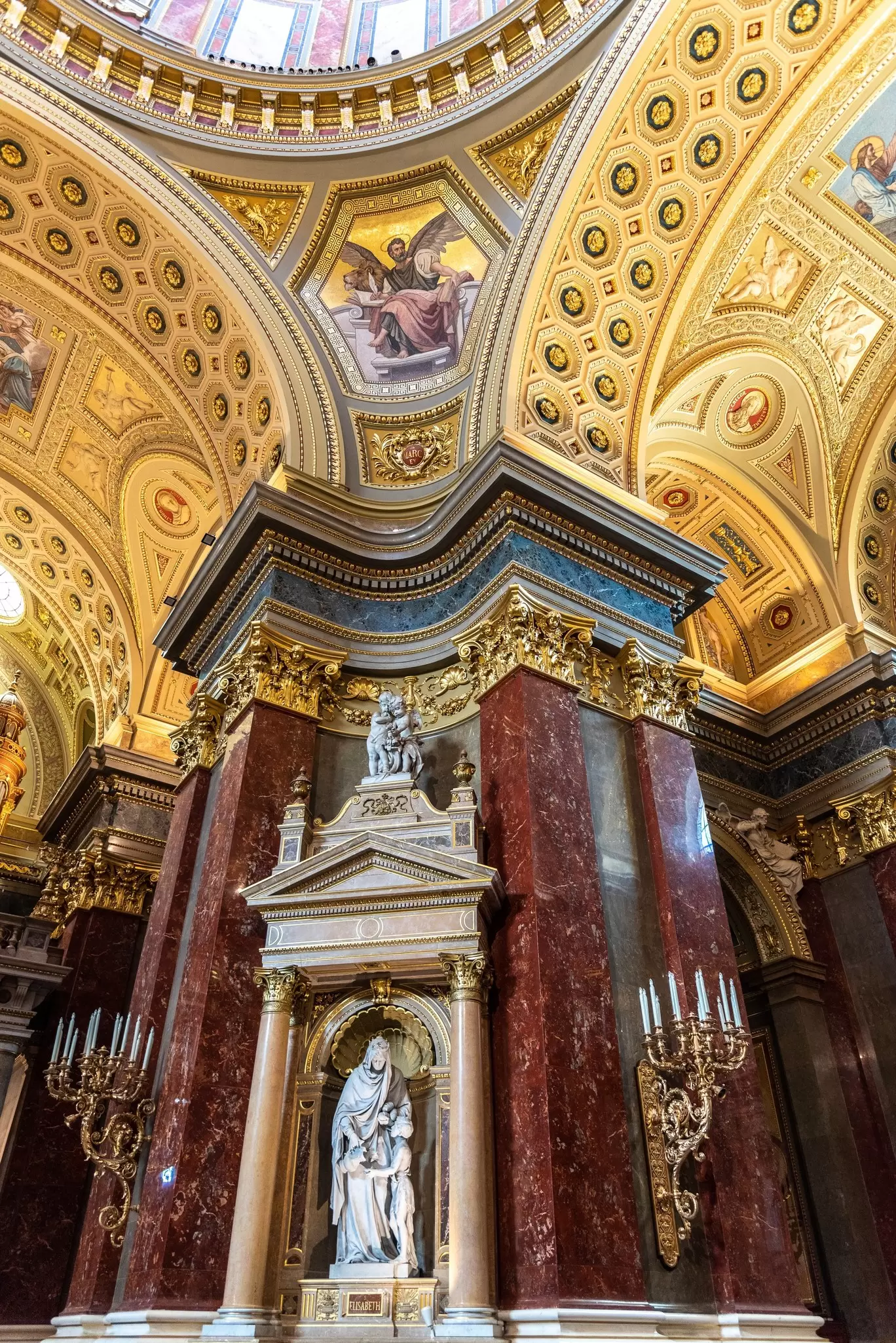
The basilica's interior glimmers in low-lit splendor, with Károly Lotz’s golden mosaics on the inside of the dome seeming to produce a light all of their own. Noteworthy items include the great organ built by József Angster in 1905 above the nave, Alajos Stróbl's statue of the king-saint on the main altar and Gyula Benczúr's painting of St Stephen dedicating Hungary to the Virgin Mary and Christ Child, to the right in the north aisle. Below the painting is a glass case containing the basilica’s major drawcard – the Holy Dexter (or Holy Right), the mummified right hand of St Stephen and an object of great devotion here.
The relic was restored to Hungary by Habsburg Empress Maria Theresa in 1771 after it was discovered in a monastery in Bosnia. Like the crown of St Stephen, it too was snatched by the bad guys after WWII, but was soon, er, handed back. In 1996, to mark the millennium of Stephen’s marriage to the Bavarian princess Gizella, the bishop of Passau in Germany sent the queen’s hand to Hungary, where they were finally reunited in marital bliss.
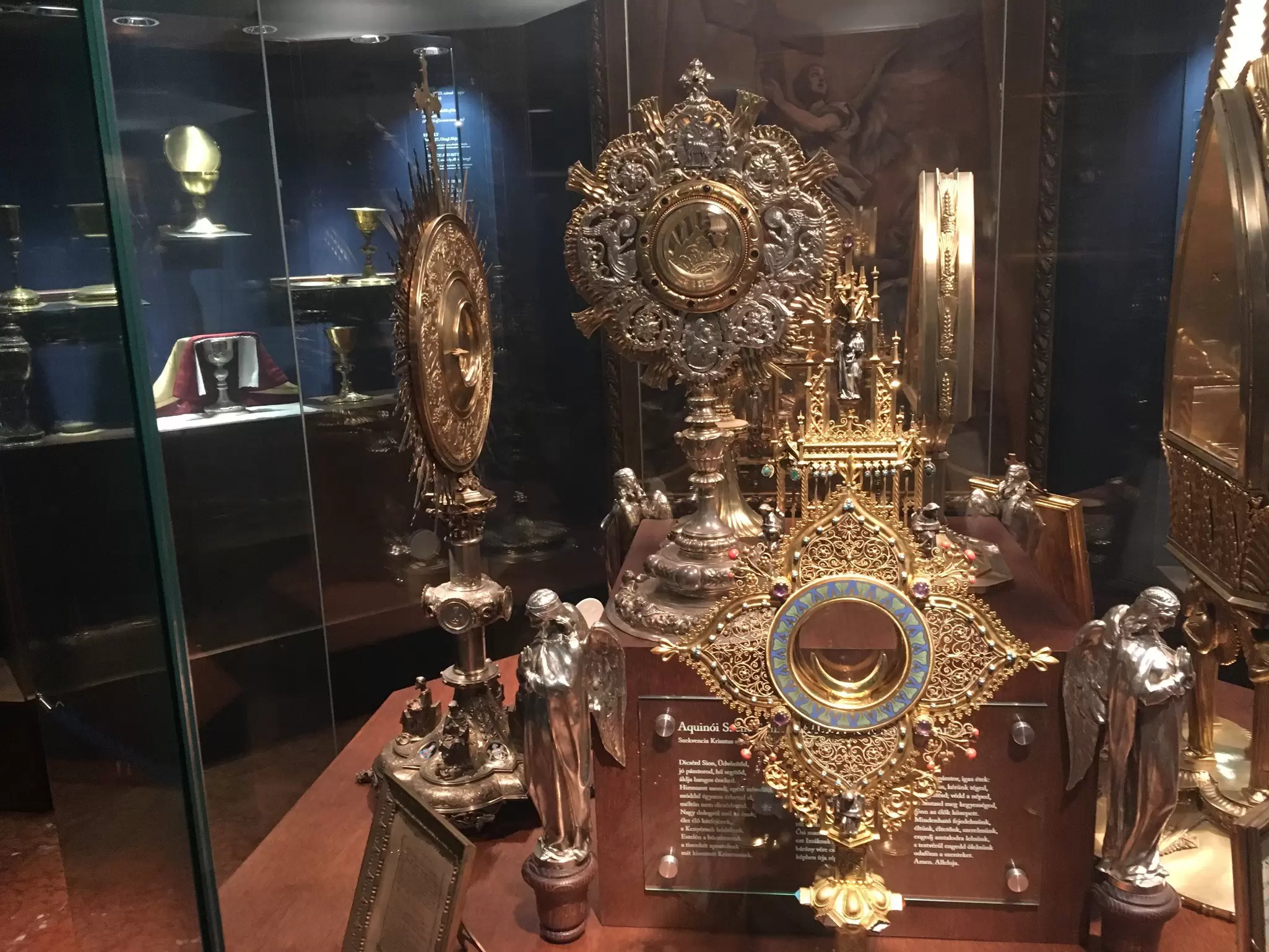
The 2nd floor contains a treasury of ecclesiastical objects, including censers, chalices, ciboria, croziers and vestments. Don't miss the Art Deco double monstrance (1938). Otherwise, the treasury is a veritable shrine to Cardinal József Mindszenty, including his clothing, devotional objects and death mask.