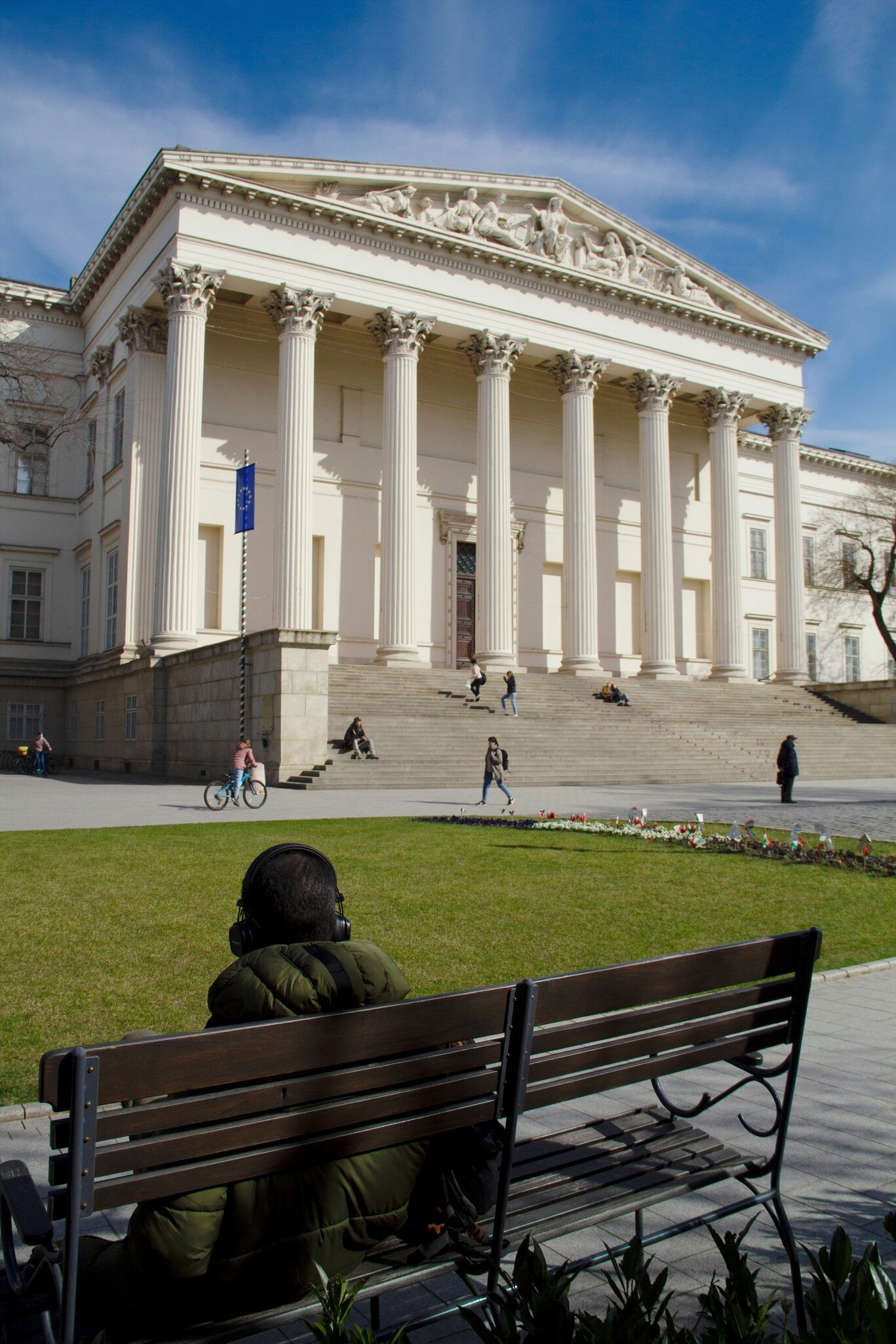
The Hungarian National Museum houses the nation’s most important collection of historical relics. It traces the history of the Carpathian Basin from the Stone Age and that of the Magyar people and Hungary from the 9th-century conquest to the fall of communism. If you visit just one museum in Budapest, make it this treasure trove.
The Backstory
The museum was founded in 1802 when Count Ferenc Széchényi donated his personal collection of more than 20,000 prints, maps, manuscripts, coins and archaeological finds to the state. It is now housed in an impressive neoclassical edifice purpose-built by Mihály Pollack in 1847.
Coronation Mantle & Beyond
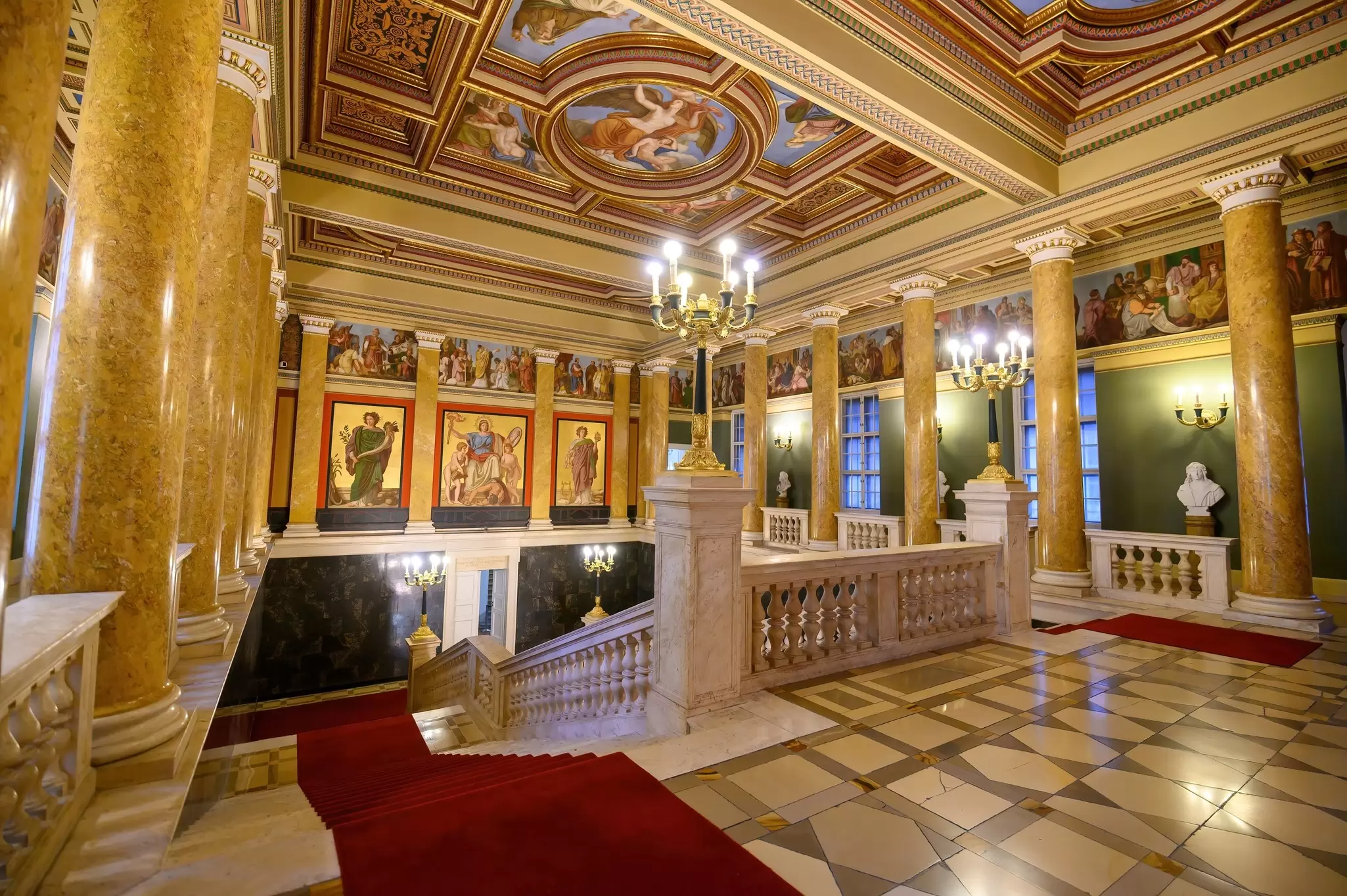
The room immediately to the left of the grand staircase on the 1st floor contains the museum’s most precious object: King Stephen’s beautiful crimson silk coronation mantle, stitched by nuns in 1031. It was refashioned in the 13th century, and the much-faded cloth features an intricate embroidery of fine gold thread and pearls with likenesses of the 12 Apostles, Old Testament prophets and the king-saint himself. The mantle forms part of the museum’s logo.
Interconnecting rooms behind include the stunning oak-paneled Széchenyi Hall designed by Ybl in 1865, a Cabinet of Curiosities of glass, porcelain and ceramic objects from the original collection, and the exquisite Seuso Treasure, a hoard of 14 Roman silver vessels from the 4th century, only returned to Hungary in 2017.
Between East & West
To the right of the staircase on the 1st floor, exhibits in 10 rooms look at the development of the Carpathian Basin from prehistory to the arrival of the Magyars in the 9th century. Highlights include Bronze Age burial sites in room 3, the Iron Age figure of a golden stag that once decorated a prince's shield in room 5 and the Hun-era diadem from Csorna in western Hungary in room 7.
History of Hungary
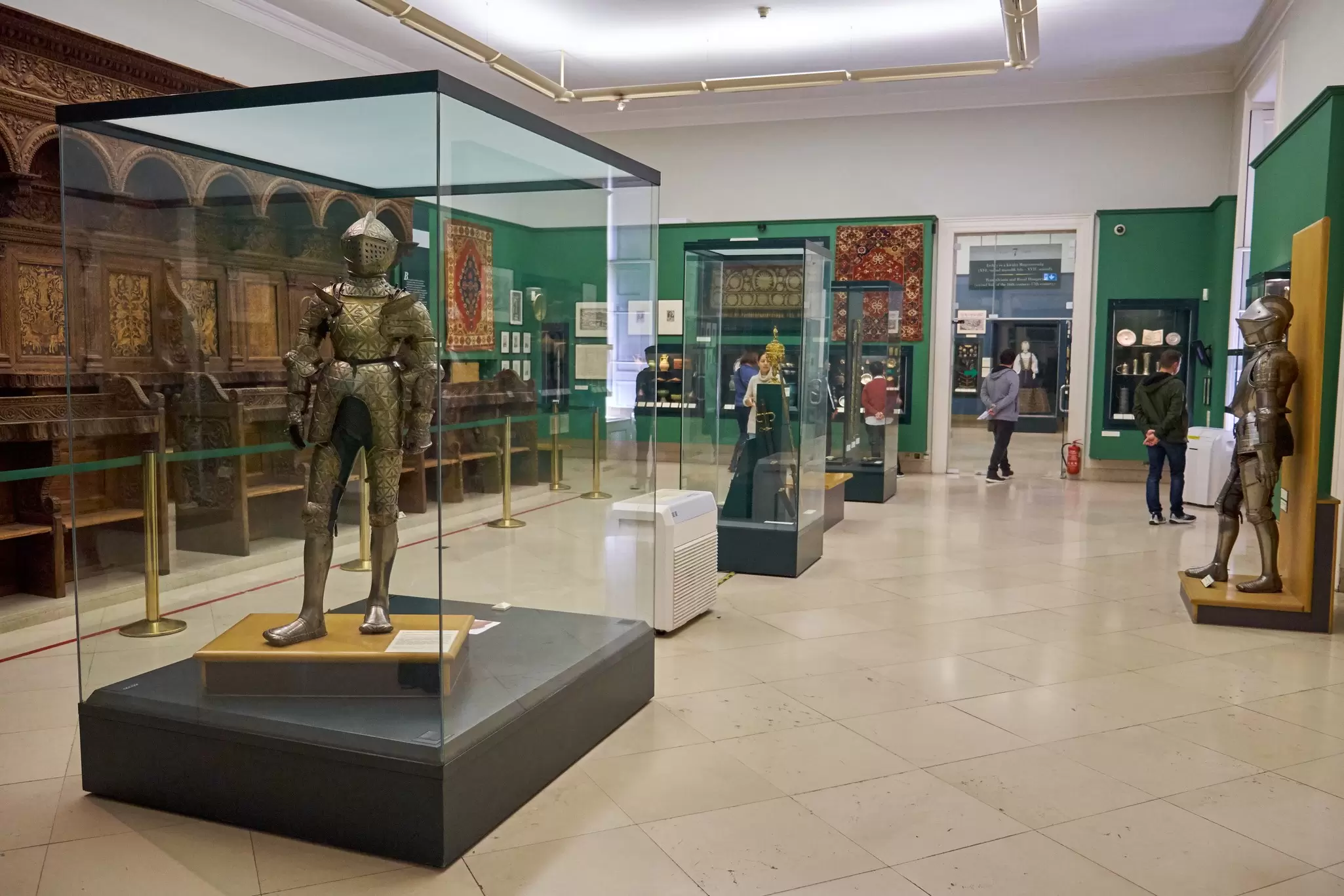
On the floor above, on either side of the 19th-century Ceremonial Hall, the history lesson continues painlessly through 20 rooms. To the right, it starts with the Árpád dynasty and carries on to the 16th-century Turkish occupation. On the left, the wars of independence lead to the Habsburg Empire, the two world wars and the rise and fall of communism. Highlights here include the 11th-century Byzantine Monomachus crown in room 1, the 15th-century Jakovich saddle, which may have been owned by Vlad the Impaler (Dracula), in room 3, a 16th-century Ottoman leather coat in room 6, a Broadwood piano used by both Beethoven and Franz Liszt in room 13 and classic prewar films on show in room 18.
But the highlight for many will be the last two rooms that examine Hungary's role in WWII, the 1956 Uprising and the four decades of communist rule that followed. There's footage from 1956, a mock-up of a secret police office, samizdat publications, part of the barbed-wire fence that once separated Hungary from Austria (and the West) and a town sign from Leninváros (Lenin Town) which reverted back to its original name, Tiszaújváros, only in 1991. Best of all, there’s the hand of the monster-sized Stalin statue that once graced the City Park.
Lapidarium
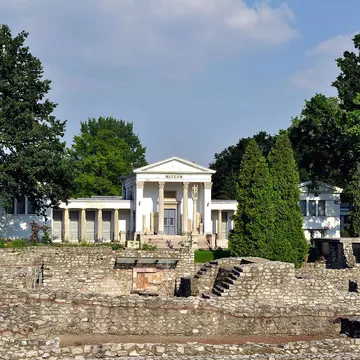
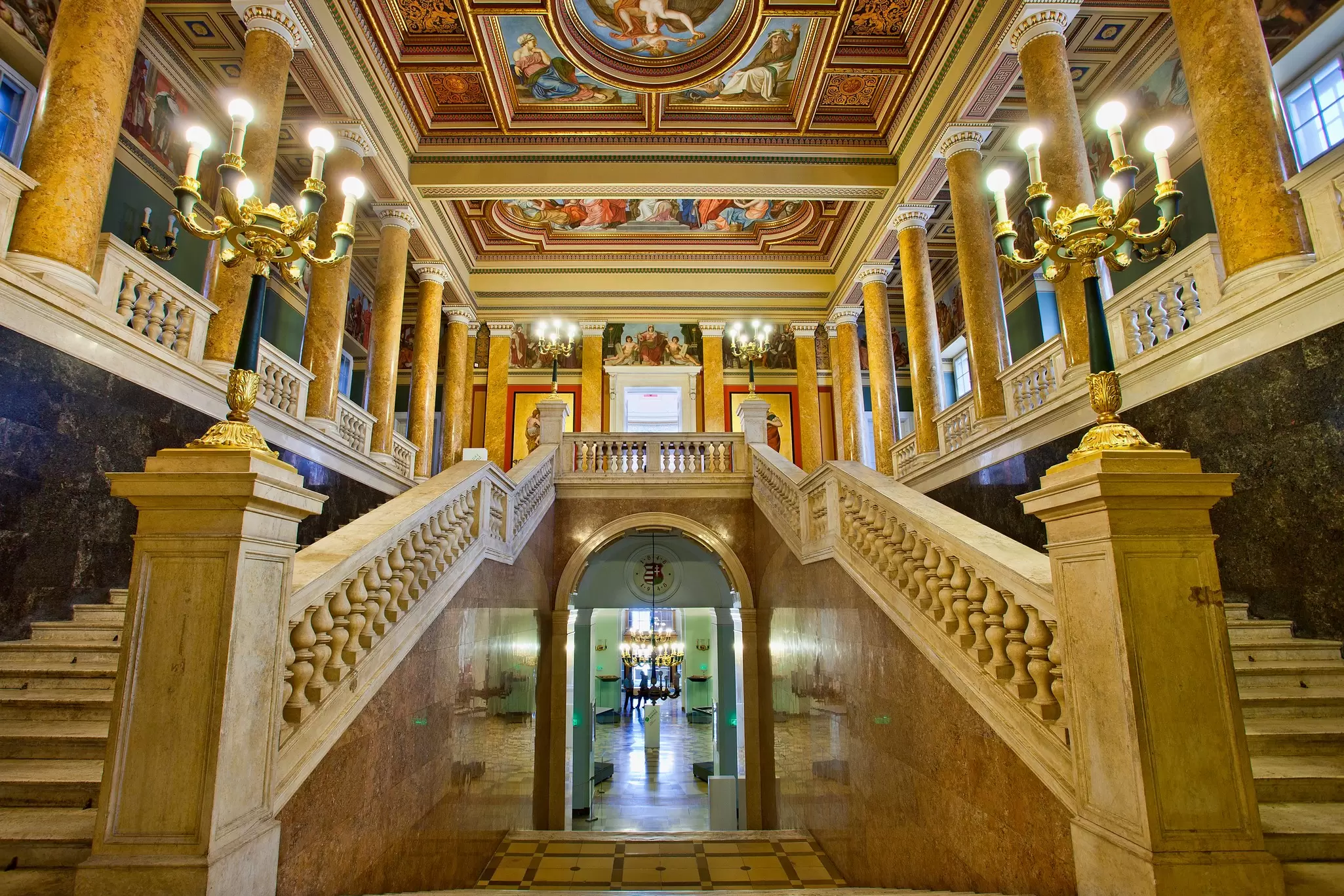
Before leaving, make your way to the basement and the lapidarium, with finds from Pannonia Province ruled by Rome for four centuries. These include a sacrificial altar from the 2nd century and a stunning mosaic from the same century found at a Roman villa at Balácapuszta near Veszprém.