Jul 29, 20265 min read
The Best Hawker Centers in SingaporeJul 10, 2026
11 MIN READ

Writer
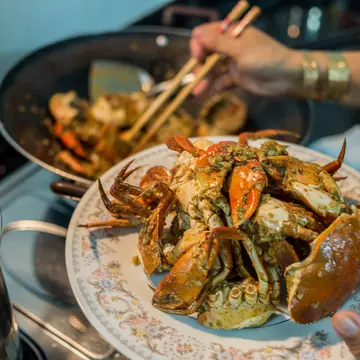
Preparing chili crabs in Singapore. SamuelBrownNG/Getty Images

Writer
Highlights
Writer Jaclynn Seah guides you through Singapore's vibrant hawker-center culture and beyond.
Order Hainanese chicken rice at Maxwell Food Centre or try chili crab at Jumbo Seafood.
Nyonya laksa in Katong and nasi padang at Kampong Gelam capture Singapore's Peranakan-Malay heart.
The traditional breakfast set – kaya toast, soft-boiled eggs and kopi – anchors any Singapore morning.
Lonely Planet may earn a commission from affiliate links on our site. All recommendations and reviews reflect our own independent opinions.
Belying its small size, Singapore has a wealth of fabulous food options that reflect its diverse cultures. Recipes first introduced by migrants bringing a piece of home with them have been remixed into uniquely Singaporean dishes – ones that leave visitors hungry for more, even after they return home.
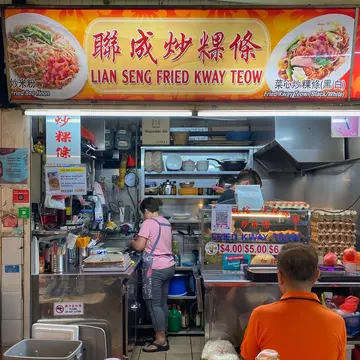
You can find food gems in just about any neighborhood here, with options for every type of traveler and budget. You’ll find cheap street food favorites at the ubiquitous hawker centers – so key to Singapore’s identity that they’ve been awarded UNESCO Intangible Heritage status. You can also shell out at a growing list of award-winning fine-dining establishments, seek out a sign-free family restaurant that reviewers rave about or fill your Instagram feed at a hip cafe with lines out the door.
Eating well and often is essential for any Singaporean itinerary – though narrowing down a list of must-eat food is akin to choosing your favorite child. Nonetheless, we’ve done our best; all you have to do is arrive with an empty stomach and an open mind.
Here are a few of Singapore's most popular foods, and how and where to eat them.
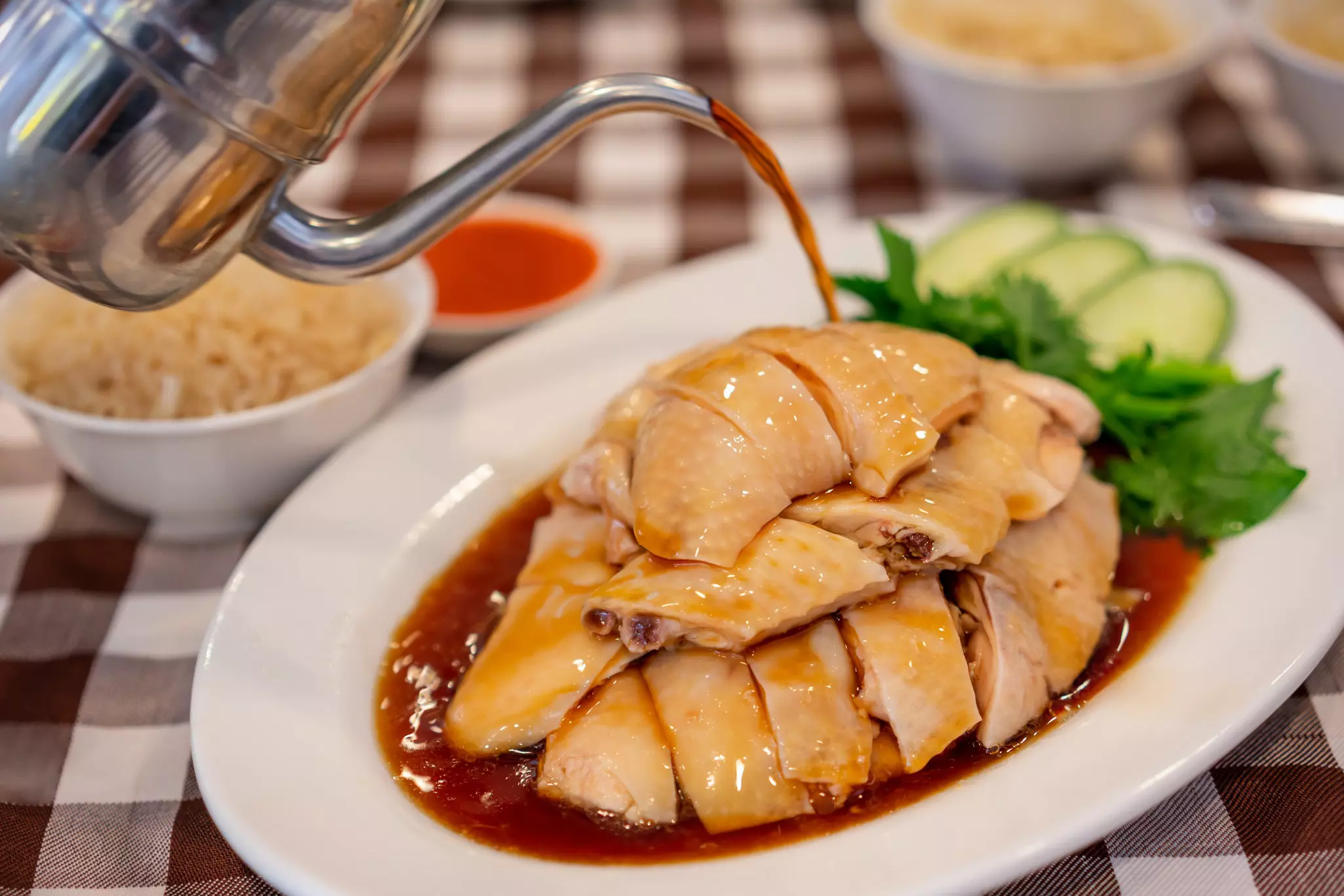
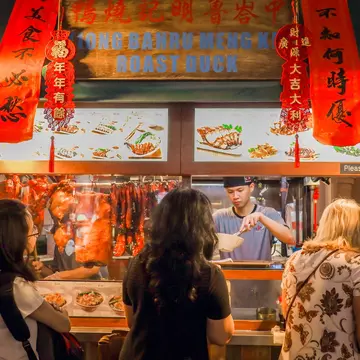
Just what makes this chicken-and-rice dish so special? Adapted from a Hainanese dish called Wenchang chicken, it features poultry that’s poached, sliced and served lukewarm. Don’t skip out on the gelatinous skin, one of the highlights of the dish; get the roasted chicken version if you prefer a crispy skin. The fragrant rice is tasty enough to be a meal in itself. Garnish with some slices of cucumber and top it off with your preferred ratio of dark soy sauce and what some swear to be the most important element: spicy and tangy garlic chili sauce.
Where to try it: Tian Tian Hainanese Chicken Rice at Maxwell Food Centre in Chinatown is arguably the most famous hawker center stall in the entire country. (In a chicken-rice showdown years ago, its version beat that of celebrity chef Gordon Ramsay.) Pow Sing, Nam Kee and Boon Tong Kee are established restaurants where you can eat chicken rice, alongside other Chinese home-cooked style zi char dishes, in a more comfortable setting.
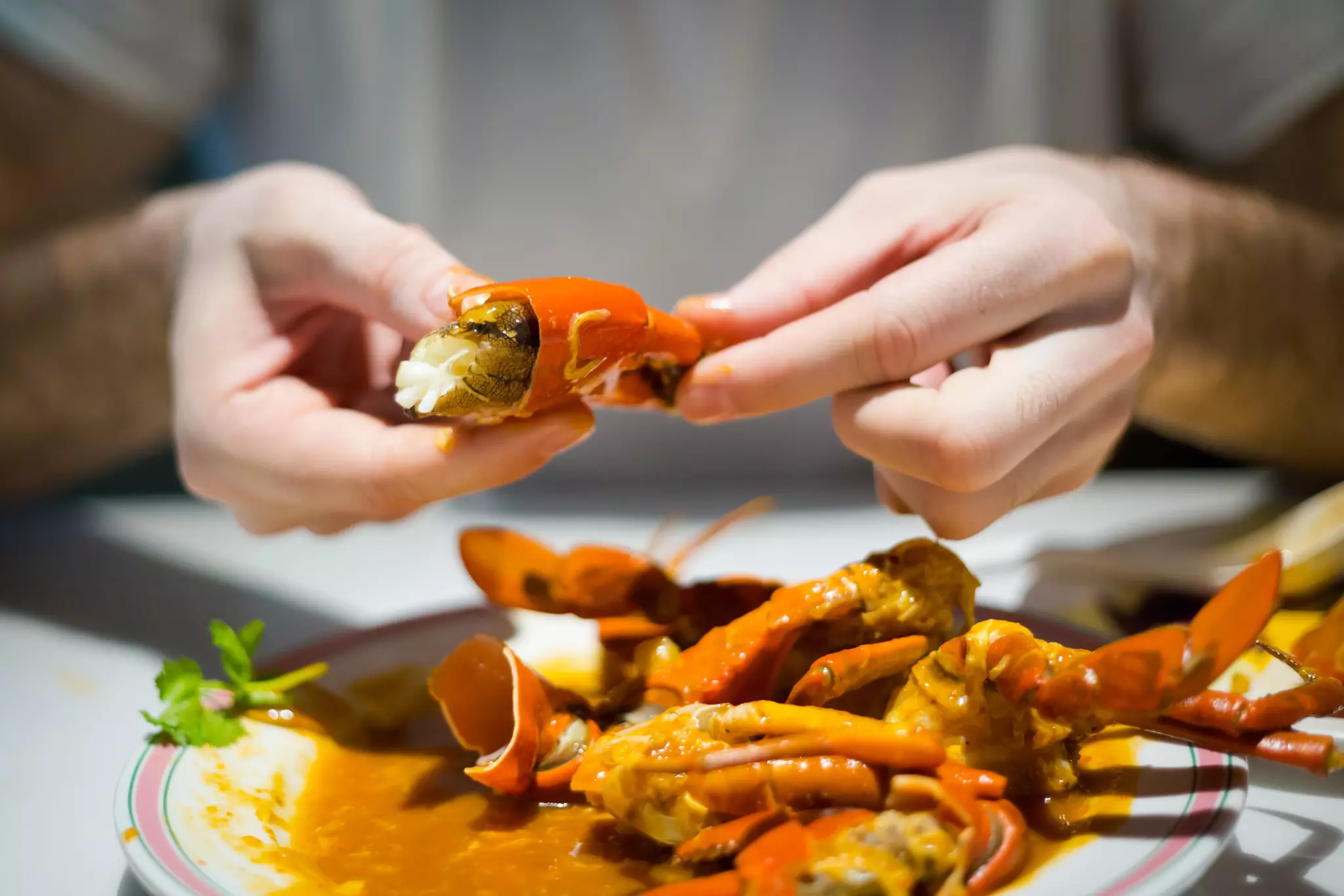
Put on your bibs: it’s time to crack open some chili crabs, and it’s going to be messy. In what many consider Singapore’s national dish, deep-fried, hard-shelled mud crabs are drenched in a thick and starchy orange gravy that’s somehow sweet, savory, sour and spicy all at once. The best part of the meal is mopping up all that sumptuous sauce with some fried or steamed mantou bread buns.
If chili is not to your taste, black pepper crab is another preparation worth trying. Other popular crab dishes include white pepper crab, salted egg crab and clay-pot crab soup with thick white bee hoon noodles.
Where to try it: Roland Restaurant in Marine Parade is credited with creating chili crab in the 1950s. Black pepper crab was first created in 1962 by Long Beach Seafood (the UDMC outpost at East Coast Park has a wonderful seaside ambiance). Jumbo Seafood serves up its crabs downtown, on Orchard Road and at Changi Airport.
Nasi means rice in Malay, and Padang is the Indonesian city where the Minangkabau, some of Singapore’s earliest Malay settlers, hailed from. A format of dining rather than a dish per se, nasi padang delivers plenty of variety, lots of lemak (coconut milk) and the fiery kick of chilies and spices. Popular dishes for the spread include braised beef rendang covered in a thick, pasty gravy, and spicy sambal goreng, a stir-fried dish of tofu, tempeh (fermented soybean) and green beans with a whole bunch of spices.
To enjoy nasi padang, you can either select from multiple dishes behind a display counter to add to your plate of rice, or opt for hidang, where multiple plates of food are served and shared at your table, family-style. Utensils are provided, but the customary way is to eat using your right hand.
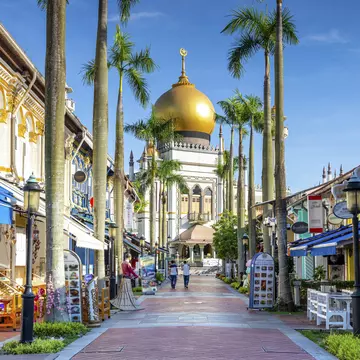
Where to try it: One of the first Malay communities in Singapore is Kampong Gelam, home to two well-known nasi padang restaurants perpetually thronged with crowds: Sari Ratu on Pahang St and Hajjah (HJH) Maimunah at Jalan Pisang. For a wider variety of Malay food in Singapore, head to Geylang Serai Market or Haig Road Food Centre in the east.
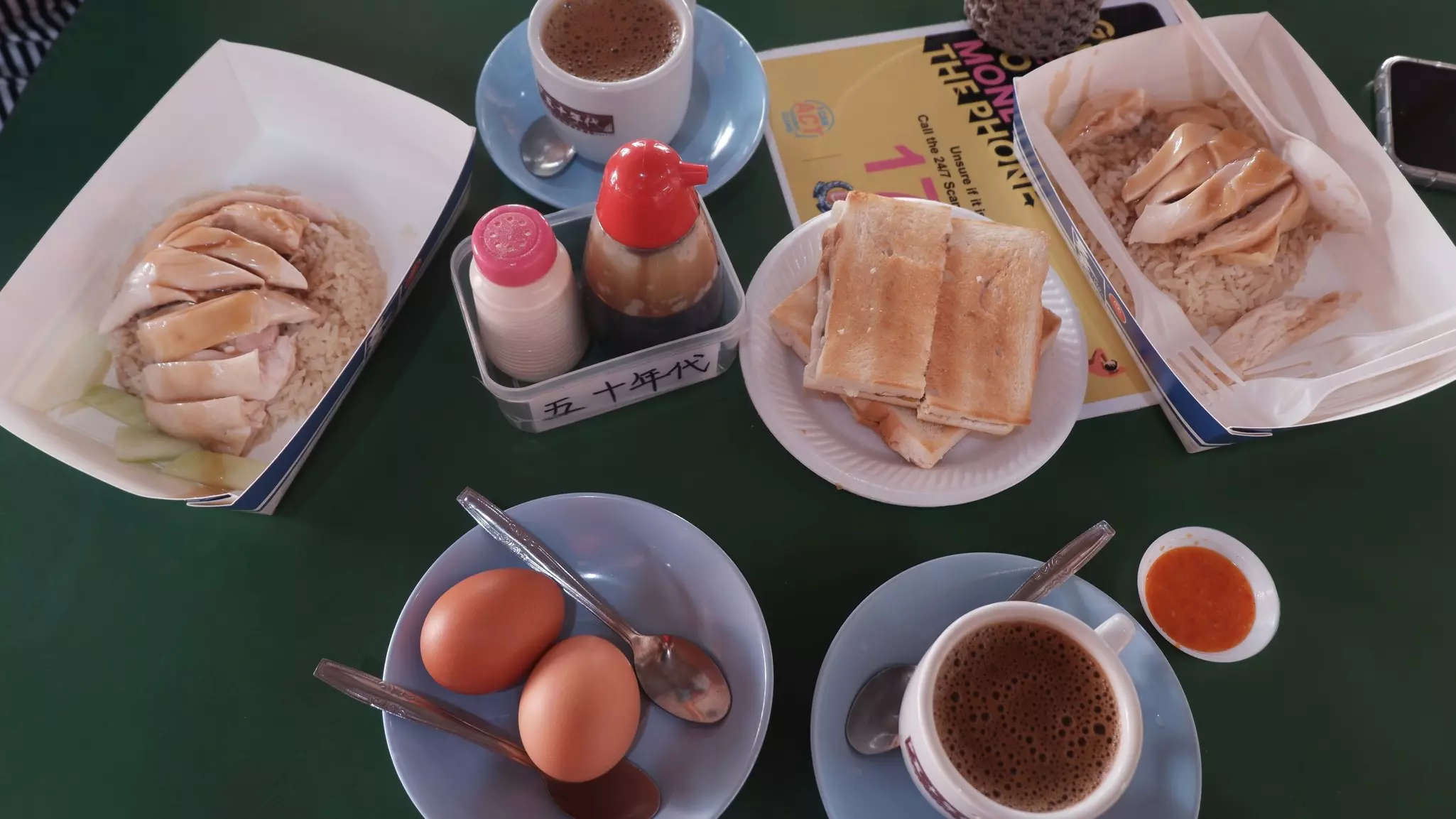
What Singaporeans call a “traditional” breakfast set was created by Hainanese immigrants, who played a significant role in the city-state’s early food scene and kopitiams (coffee shops). The spread consists of toasted bread slathered with coconut jam (kaya) and a slice of butter; a pair of soft-boiled eggs that you crack open into a small saucer, season with a little soy sauce and pepper and slurp up; and a steaming cup of local-style kopi (coffee) or teh (tea). There is an entire lingo to add sugar an condensed milk; good luck following it.
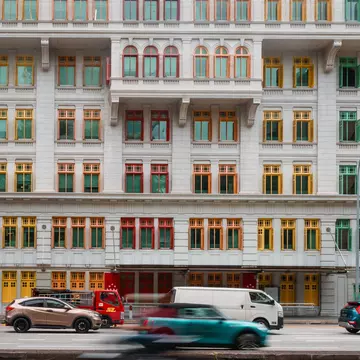
Where to try it: The breakfast set is usually sold by the drink stalls in coffee shops only in the morning, but you can eat it any time of day at Ya Kun Kaya Toast and Killiney Kopitiam – well-known franchises with several decades of history and outlets all over Singapore and abroad. Check out their original outlets on China St and Killiney Rd, respectively.
Fish-head curry is another uniquely Singaporean fusion dish, the result of an Indian chef’s attempt to attract a Chinese audience. He dunked a big ikan merah (red snapper) fish head into his spicy Kerala-style curry with some vegetables; the result is a delicious dish loved by all, copied by many and sold in both Chinese and Indian restaurants today. Don’t be put off by the bulging fish eyes: aficionados claim that the eyeball is one of the tastiest parts of the fish head, though most will agree that the cheek meat is the most tender.
Where to try it: Samy’s Curry on Dempsey Hill is a longstanding establishment where you can eat South Indian food on banana leaves; their fish-head curry is thicker and typical of South Indian cuisine. Na Na Curry, run by a Peranakan family, has several outlets and curry options. Their sourish asam-style (sour and spicy) fish-head curry is a best seller.
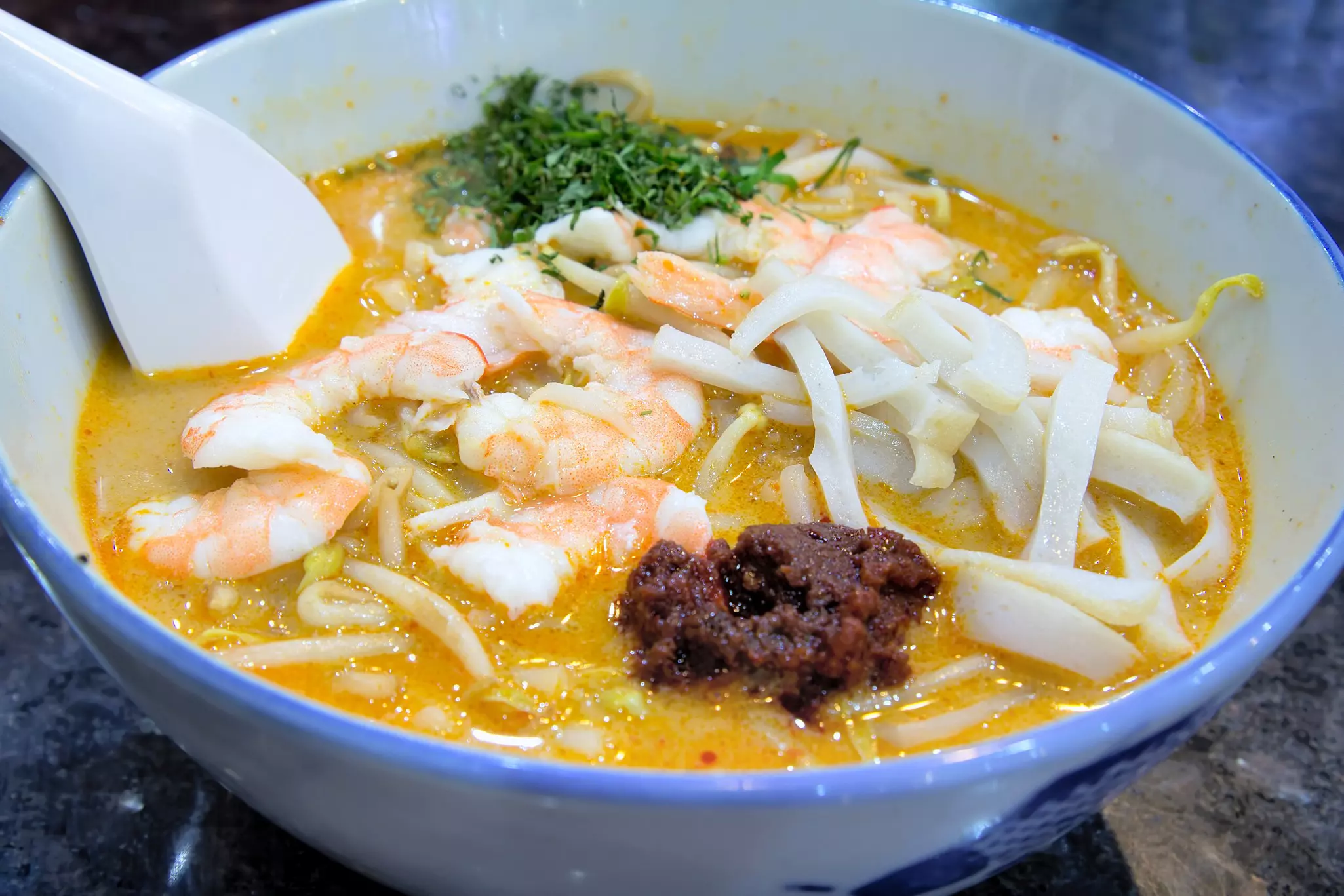
Nyonya laksa is a real hodgepodge of influences thanks to its creators, the Peranakans. Born from the intermarriage between local-born Malays and early Chinese and Indian migrants, the Peranakan community has rich traditions that draw from a blend of these cultures – and Nyonya laksa is a wonderful one.
The dish consists of white-rice noodles soaked in a lemak coconut-milk-based broth flavored with a strong rempah (hand-pounded paste made from spices and other ingredients). It’s then topped off with seafood like prawns and cockles. The noodles are usually trimmed short and eaten with just a soup spoon.
Where to try it: Nyonya laksa is often called Katong laksa, after the famous Peranakan enclave in eastern Singapore where you can find some of the best Peranakan food. Every laksa store there claims to be the original Katong laksa; you can decide between 328 Katong Laksa and Janggut Laksa. Alternatively, Sungei Road Laksa at Jalan Berseh is where you can get a rare bowl of laksa cooked over a charcoal fire.
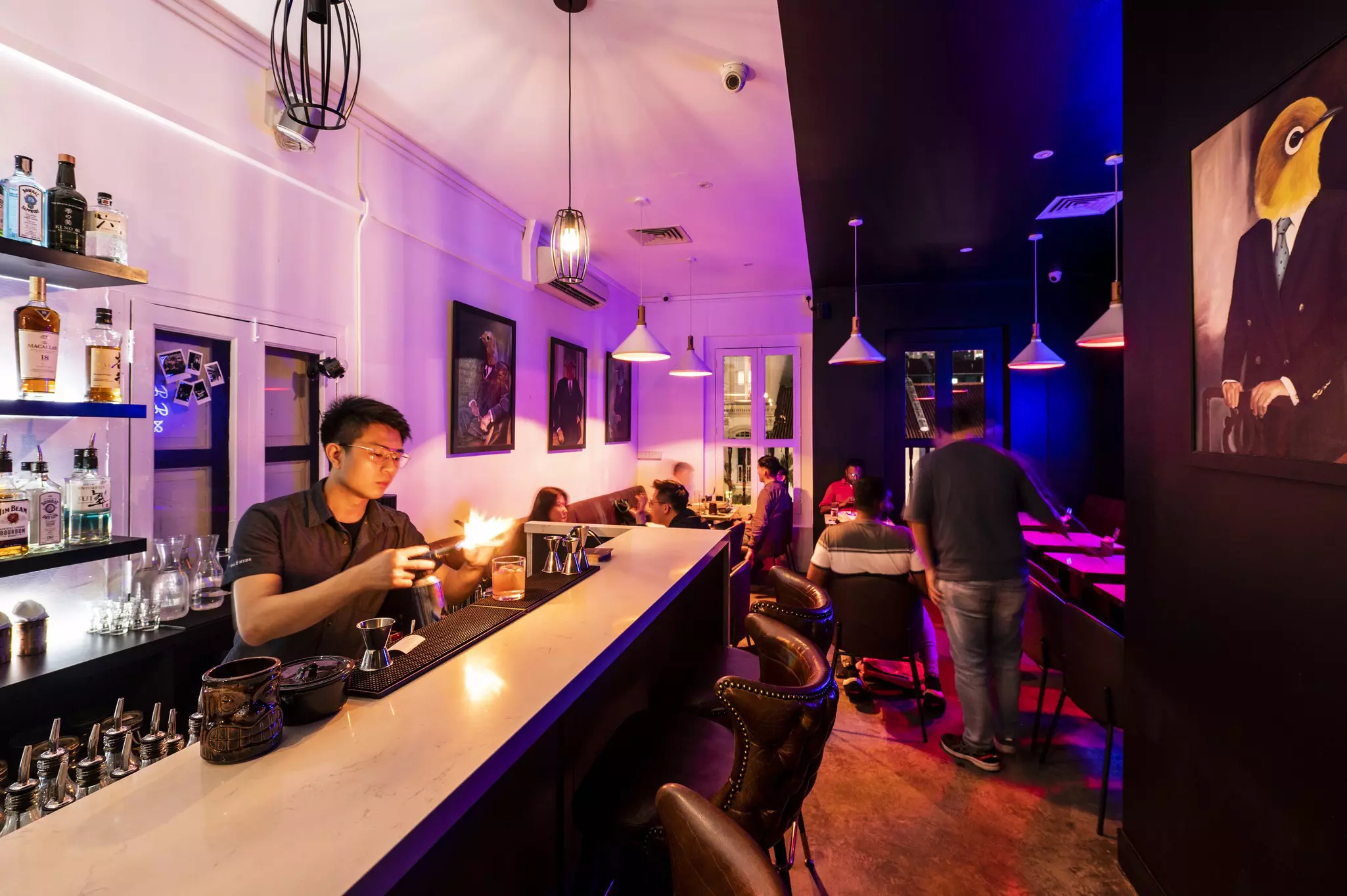
No doubt, sipping on a glass of the Singapore Sling at the iconic Raffles Hotel Long Bar while tossing your peanut shells on the floor is a storied tradition for Singapore visitors. But we recommend broadening your horizons, for the local cocktail scene has grown exponentially over the last decade, with many bars and mixologists earning international accolades for creating clever concoctions inspired by local flavors. From hidden speakeasies that require a password for entry to sky-high hotel bars overlooking the city skyline, venture out into the night to properly experience what Singapore’s nightlife has to offer.
Where to try it: Nutmeg & Clove on Purvis St does a great job enhancing classic cocktails with more Asian flavors like black-plum vinegar and green barley. Origin Bar at the Shangri-La Hotel has cocktails inspired by local neighborhoods like Chinatown and Orchard. Bar Stories in Kampong Gelam offers bespoke cocktails that a bartender whips up based on your preferences.
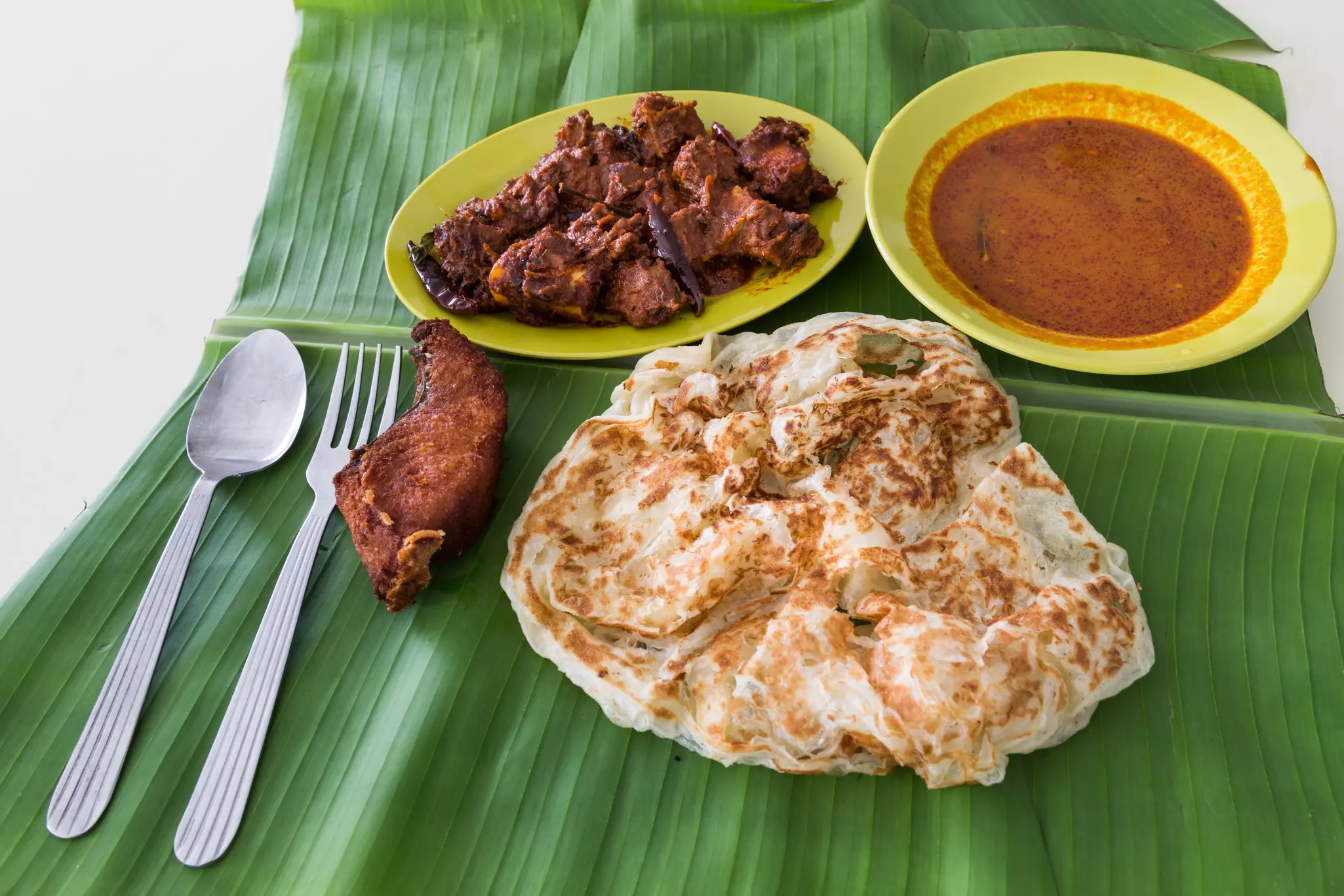
Indians are known for their flatbreads – and Singapore has truly embraced the roti prata. A little crispy outside and slightly chewy inside, kosong prata in its most basic form is dough that is hand-kneaded, stretched and fried on a griddle greased with ghee (clarified butter). Dip it into curry or sugar for a little extra flavor.
Prata shops in Singapore have gotten quite creative. Beyond standard egg and onions, you can now find ingredients like cheese and mushrooms, or even sweet versions with chocolate and ice cream. Try ordering a “plaster,” where the egg is cooked on top of the prata, or “tissue/paper,” where the dough is stretched super-thin and shaped into an extra crispy cone.
Where to try it: Roti prata can be eaten any time of day, though it is most popular for breakfast and supper. Mr and Mrs Moghan’s is a tiny prata shop along Joo Chiat Rd that’s a local favorite. If you’re looking for a broader range of wilder flavor options, try Casuarina Curry at Casuarina Rd or any Springleaf Prata Place outlet.
It’s not difficult to be a vegetarian in Singapore, with plant-based and meat-free diets growing in popularity. On many restaurant menus, you can find meatless options, like Impossible Foods or Quorn, alongside the animal-meat options. In larger hawker centers and food courts, there is usually at least one vegetarian stall and fruit stall, while shopping malls typically have a salad shop.
Vegetarianism has always been a part of Singapore’s food culture due to the presence of meat- and allium-avoiding adherents of Buddhism, Taoism and Hinduism. Fortune Centre on Bencoolen St has a larger-than-usual selection of affordable vegetarian eateries in its midst due to its proximity to Kwan Im Thong Hood Cho Temple and Sri Krishnan Temple. Little India, with its plethora of North and South Indian restaurants, also has plenty of delicious Indian vegetarian options.
Where to try it: Whole Earth on Peck Seah St is a multiple Michelin Bib Gourmand recipient where you can find Thai and Peranakan dishes (we swear you won’t notice the missing meat in their Nyonya laksa). Warung Ijo along Beach Rd is an Indonesian restaurant that offers local favorites like nasi padang and lontong in vegetarian and vegan forms. If you’re into raw foods, check out The Living Cafe in Bukit Timah.
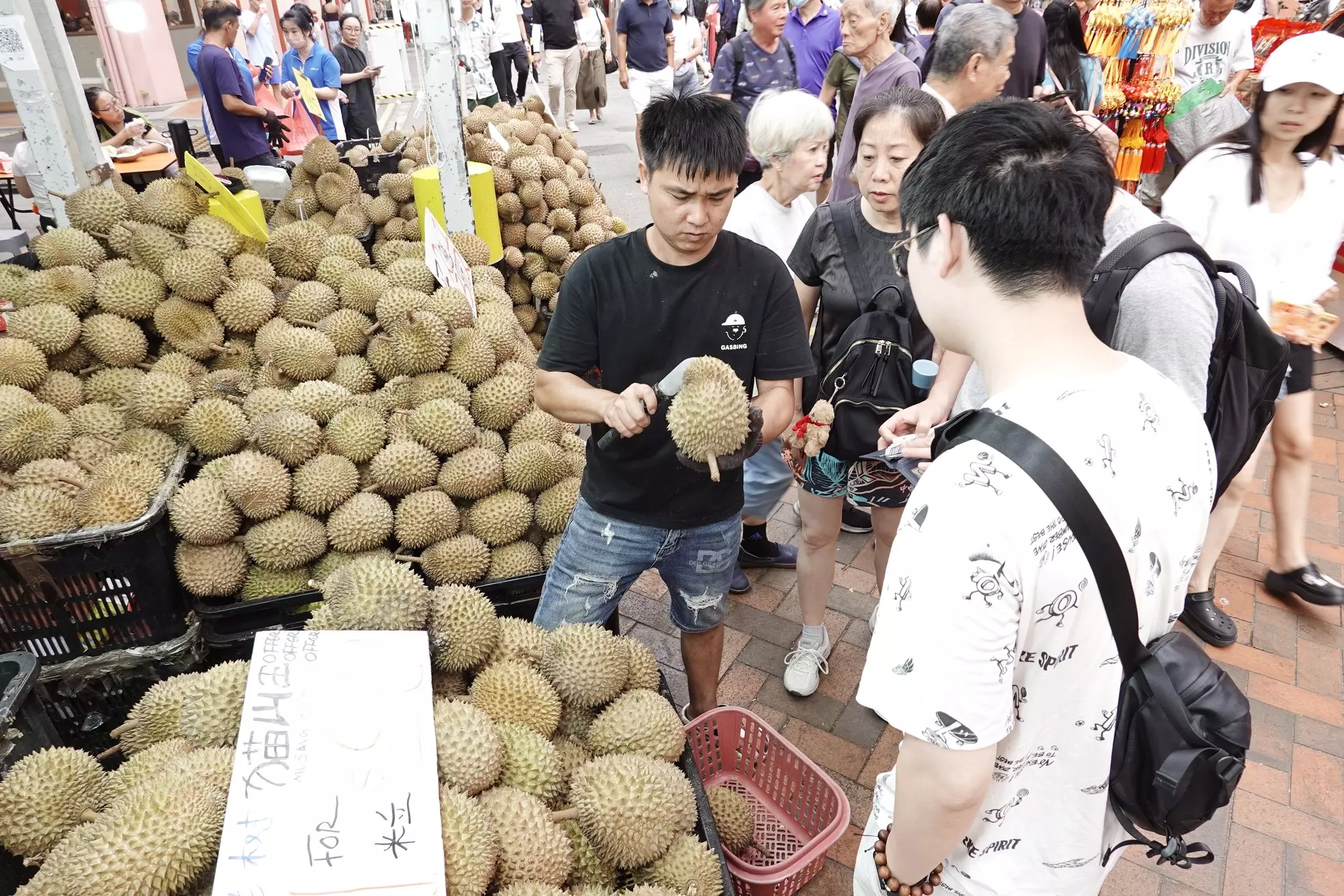
Durian: This eye-wateringly pungent fruit can be pretty intimidating – but crack open its spiky shell and you’ll be rewarded with a creamy, slightly bitter flesh that’s quite unlike that of any other fruit. It can be eaten throughout the year but is most abundant and cheapest when in season, from June to August. Pick an open-air location to eat, as the durian’s lingering stench means it’s banned from public transport and hotel rooms.
Ice cream sandwich: The only hawker you’ll see on Singapore’s street corners these days is the ice cream man, usually found at major road junctions in Orchard Road or downtown. This local dessert is a chunk of ice cream sliced off from a larger block and wedged between some rainbow-colored bread or two flimsy wafers. Eat it quickly, as it starts melting almost instantaneously.
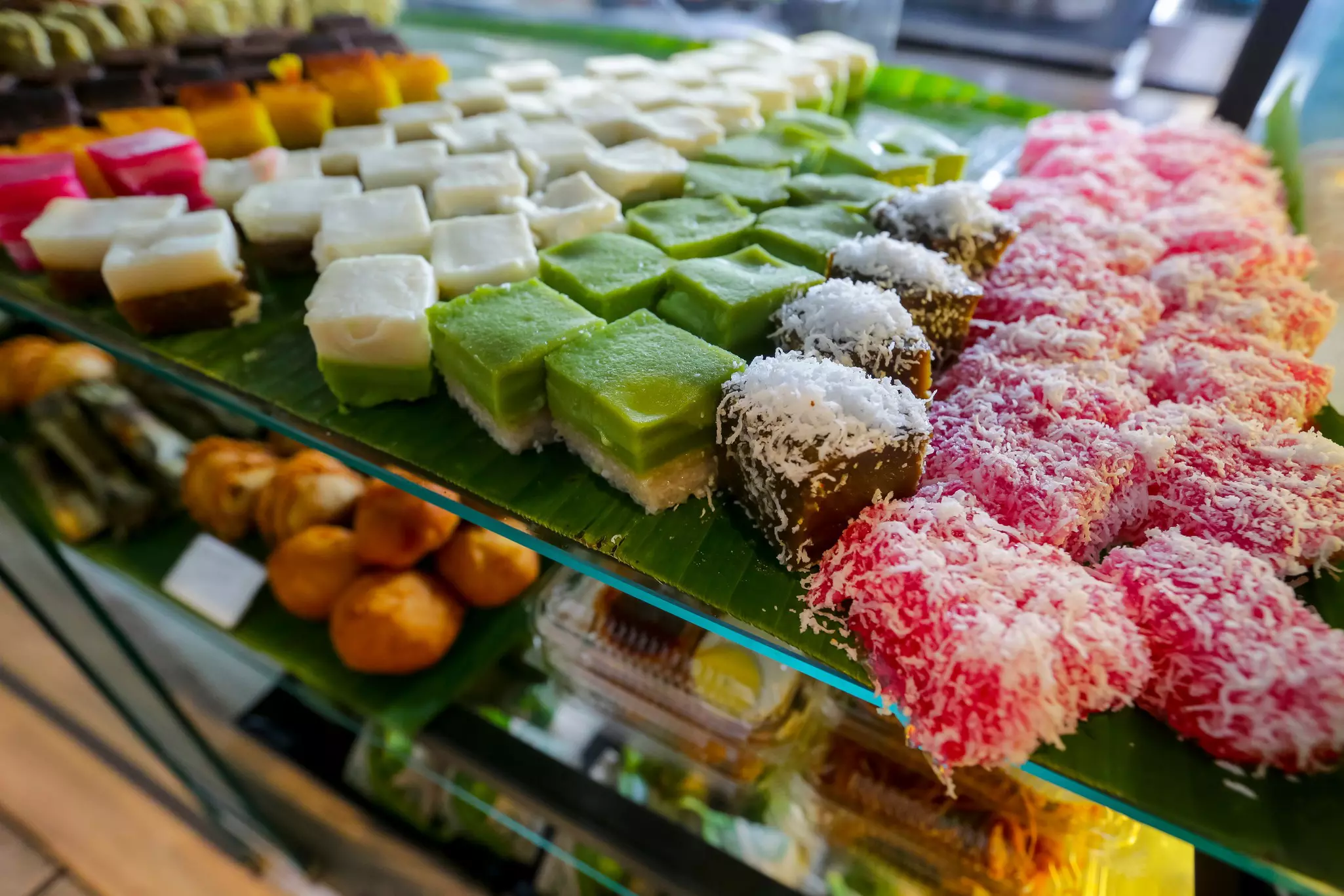
Kueh: These colorful, traditional bite-sized snacks can be savory or sweet. Usually made from glutinous rice and flavors like pandan, gula melaka (palm sugar), coconut shavings and mung bean. Popular varieties include kueh salat (two-layered glutinous rice with pandan coconut custard), ang ku kueh (turtle-shell-shaped glutinous rice dough filled with peanut or bean paste) and ondeh ondeh (a ball of pandan wrapped around gula melaka and rolled in coconut shavings).
Explore related stories