Aug 9, 20269 min read
A Guide to Alicante, SpainAug 9, 2026
9 MIN READ

Writer
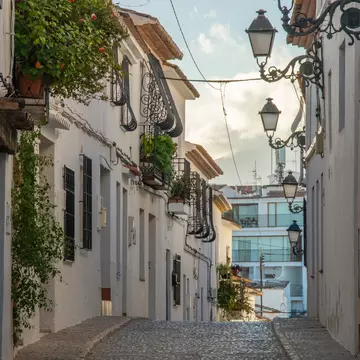
A cobblestone street in the town of Altea. Nina Alizada/Shutterstock

Writer
Highlights
Writer Jamie Ditaranto guides you through Alicante, Spain's sunbaked Costa Blanca city.
Come in May–June or September–October for beach weather and far smaller crowds.
Visit Castillo de Santa Bárbara for free, then stroll the marble-tiled Explanada de España.
For day trips, head to Benidorm, Elche's palm grove or Isla de Tabarca by ferry.
Lonely Planet may earn a commission from affiliate links on our site. All recommendations and reviews reflect our own independent opinions.
On the sunbaked southeastern shores of the Mediterranean, Alicante is a city that will leave an impression, if you give it time. It certainly left an impression on me when I found myself on the Costa Blanca during the holy week of Sant Joan – the focus of Spain’s fiery summer solstice celebrations.
Like many travelers exploring this stretch of shoreline, I found myself transferring through the province’s coastal capital, but I wanted to take the time to explore Alicante's cultural roots and deep history as well – part of a personal mission to embrace slow travel through Spain since moving to the country 4 years ago.
Hosting about half as many people as Valencia, this small city feels like a big town, and it's home to many incredible landmarks, including a 9th-century castle and green spaces adorned with mystical fig trees and classical fountains. With over 300 days of sunshine each year, you can enjoy the beaches and dig deeper into this city’s ancient history and modern traditions through the changing seasons.
If you are looking to explore a smaller Spanish city close to great beaches, here’s everything you need to know about visiting Alicante.
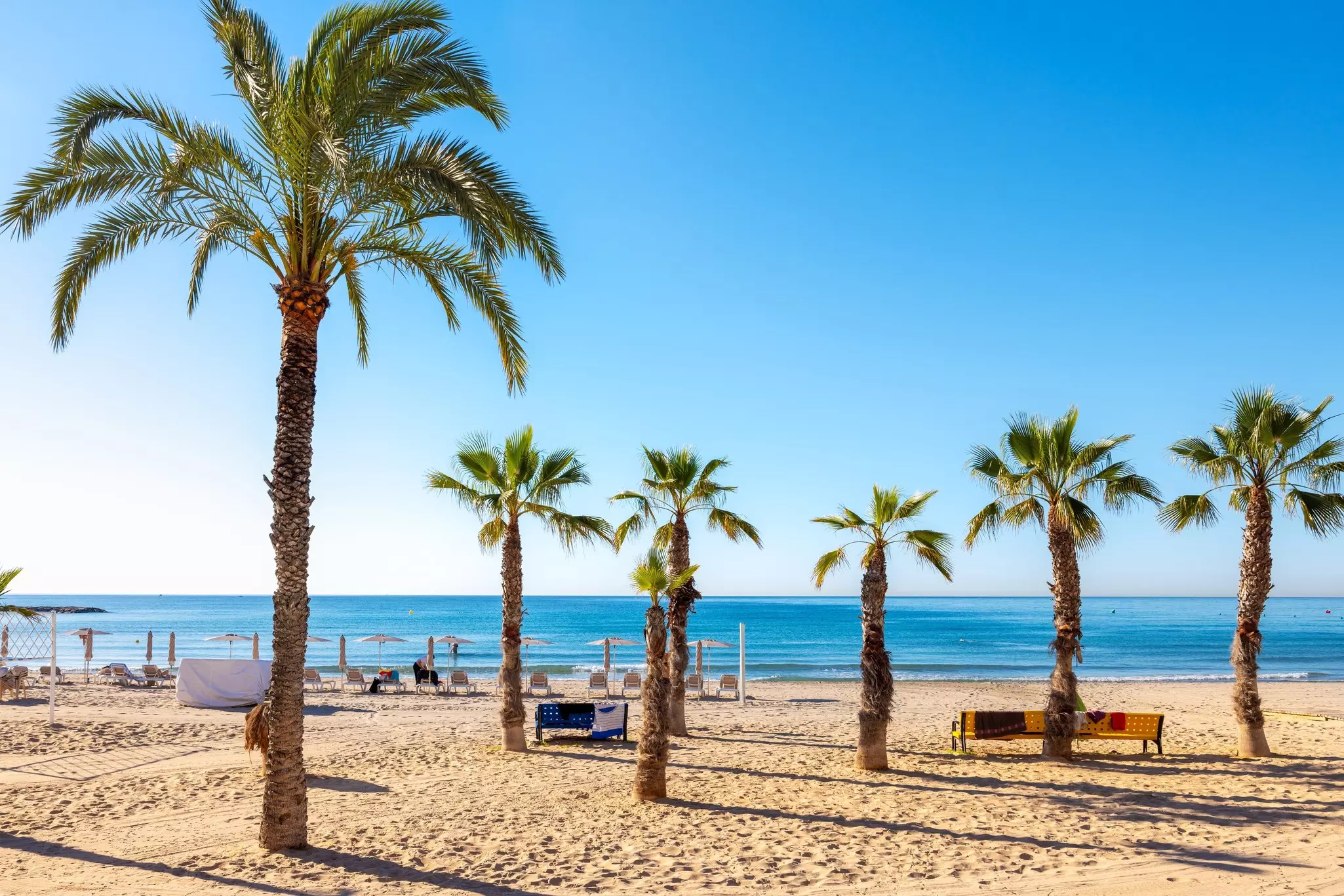
Unless you plan to spend all your time partially submerged in the sea, it may be wise to avoid the brutally hot summers in Alicante. Temperatures regularly rise above 32ºC (90°F), and the beaches and nearby resorts tend to be at their busiest.
Come during the shoulder seasons, from May to June or September to October, and you can still enjoy weather that’s warm enough for the beach and see the sights with much smaller crowds. The weather is also cooler, which makes sightseeing much more pleasant.
Wintertime can be an affordable time to go, with off-season deals aplenty, and the weather is still mild, with daily highs averaging around 16ºC (60°F). This is a little cool for beach basking but ideal for hikes up to the castle and touring nearby towns.
Events and festivals pepper the calendar, from the religious processions of Semana Santa in March (and sometimes April) to the artistic bonfires dedicated to Sant Joan during the summer solstice in June. In April, you can observe or take part in the Santa Faz pilgrimage, one of the largest events of its kind in Spain. Roads are closed to traffic, and hundreds of thousands of people make the 8km walk from downtown Alicante to the Santa Faz Monastery.
Travelers bound for beach resort areas such as Benidorm, about 37km northeast along the coast, sometimes only see Alicante’s train station or its airport, but you should try to spend at least 2 nights here to thoroughly explore the city. Those planning to add on day trips around the Costa Blanca should plan for a stay of 4 or 5 nights; the Alicante Tram, trains and local buses provide easy access to the resorts along the coast.
If you already have your fly-and-flop holiday booked at a resort or beach town elsewhere on the Costa Blanca, but plan to arrive and depart from Alicante, consider bookending your trip with at least a night at either end of your trip. This will give you time to settle into vacation mode on arrival, and wind down at the end of your trip with some last-minute shopping or an evening walk along the waterfront promenade.
Alicante is a very walkable city, particularly the Old Town, which is right next to the sea and hemmed by Platja del Postiguet, one of the city's best beaches. Even the castle is accessible via a panoramic elevator, so you don’t need a car to explore the town.
The airport is a 20-minute drive away by taxi or on the C6 bus, and the train station is very central, just a half-hour walk from the beach and the city center. Alicante is built on a slope, so you may have to climb steps if you want to reach some of the best viewpoints.
There is no underground metro system, but you can use public buses or trams to get down to the beach, and travel further afield to Benidorm and other resorts. Alternatively, rent a bike and take advantage of the bike lanes.
A trip to Alicante is a reminder that there's more to the Costa Blanca than just that blinding white sand.
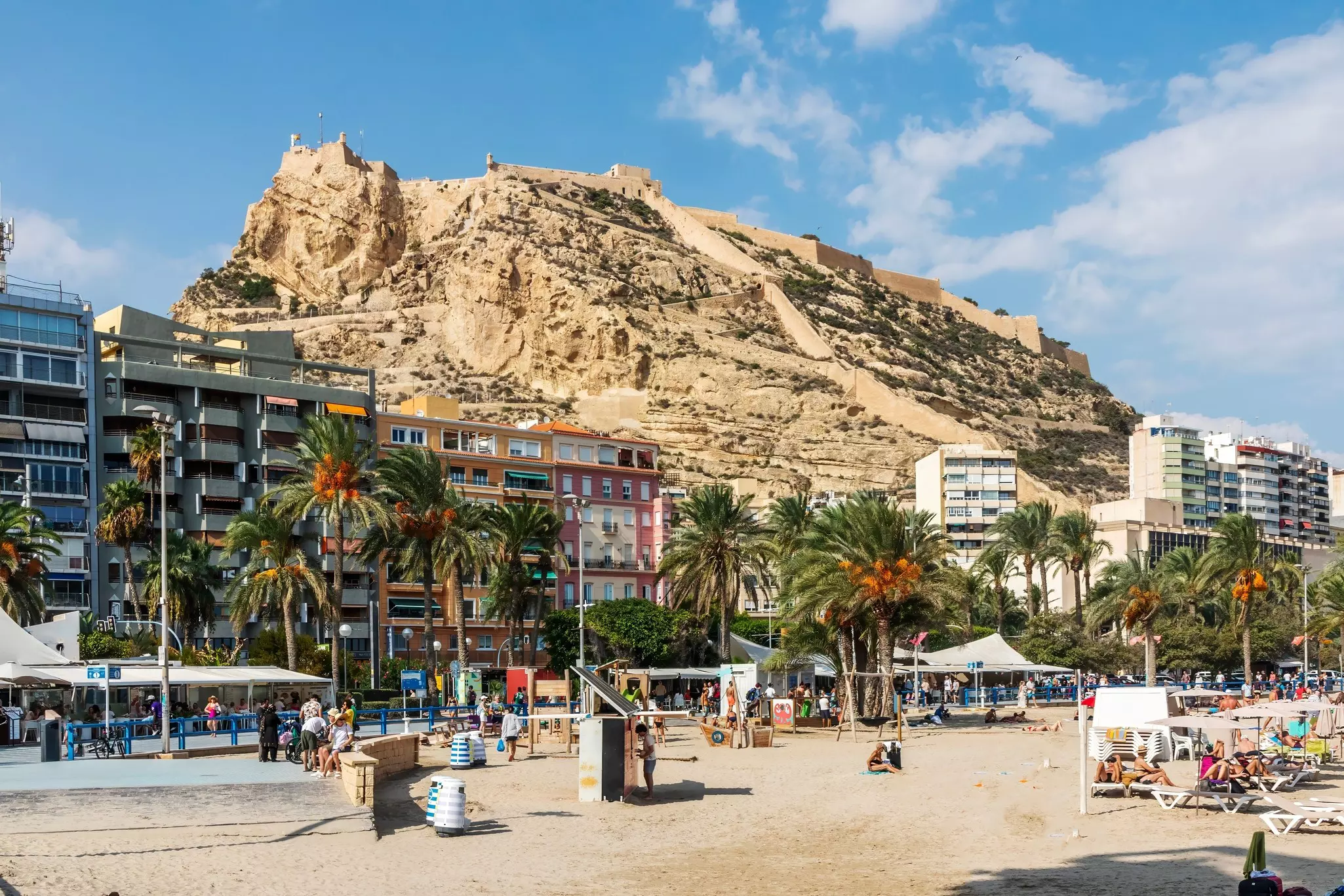
The ruins of the 9th-century castle rising above the city are free to visit, but you can save yourself a steep climb up the slopes of Mt Benacantil by taking the panoramic elevator located across the street from the beach. There are free guided tours in English and Spanish, or you can book a wine or beer tasting (fees apply).
Originally built by the Moors, the castle’s timeline reflects many phases of Alicante’s history, from the Christian repossession of the castle in the 13th century to its role during the War of Spanish Succession (1701–14) and its time as a prison during the Spanish Civil War (1936–39).
Alicante’s promenade, Explanada de España, is a true beauty, lined with palm trees on either side and paved with over 6 million tri-color marble tiles. The three-dimensional design is meant to mimic the lapping waves of the Mediterranean, and it rambles for 600m alongside the port, wafted by sea breezes.
If you’re staying in the city center, Platja del Postiguet is steps away, but it’s not the only beach that is easily accessible from Alicante. Hop on one of the coast-following trams and ride until you find a swimming area that suits your style, whether that means the clear waters of Platja de l’Albufereta (3km along the coast) or the expansive, 3km-long sands of Platja de Sant Joan (about 7km northeast).
If you don’t mind a short hike, you can also take the tram as far as Cap de l’Horta (Cabo de La Huerta), a rocky cape that has many clear-water coves ideal for snorkeling. Alternatively, rent a bike to explore the seaside along the Via Verde de Cantera, an elevated greenway that connects Postiguet to Albufereta.
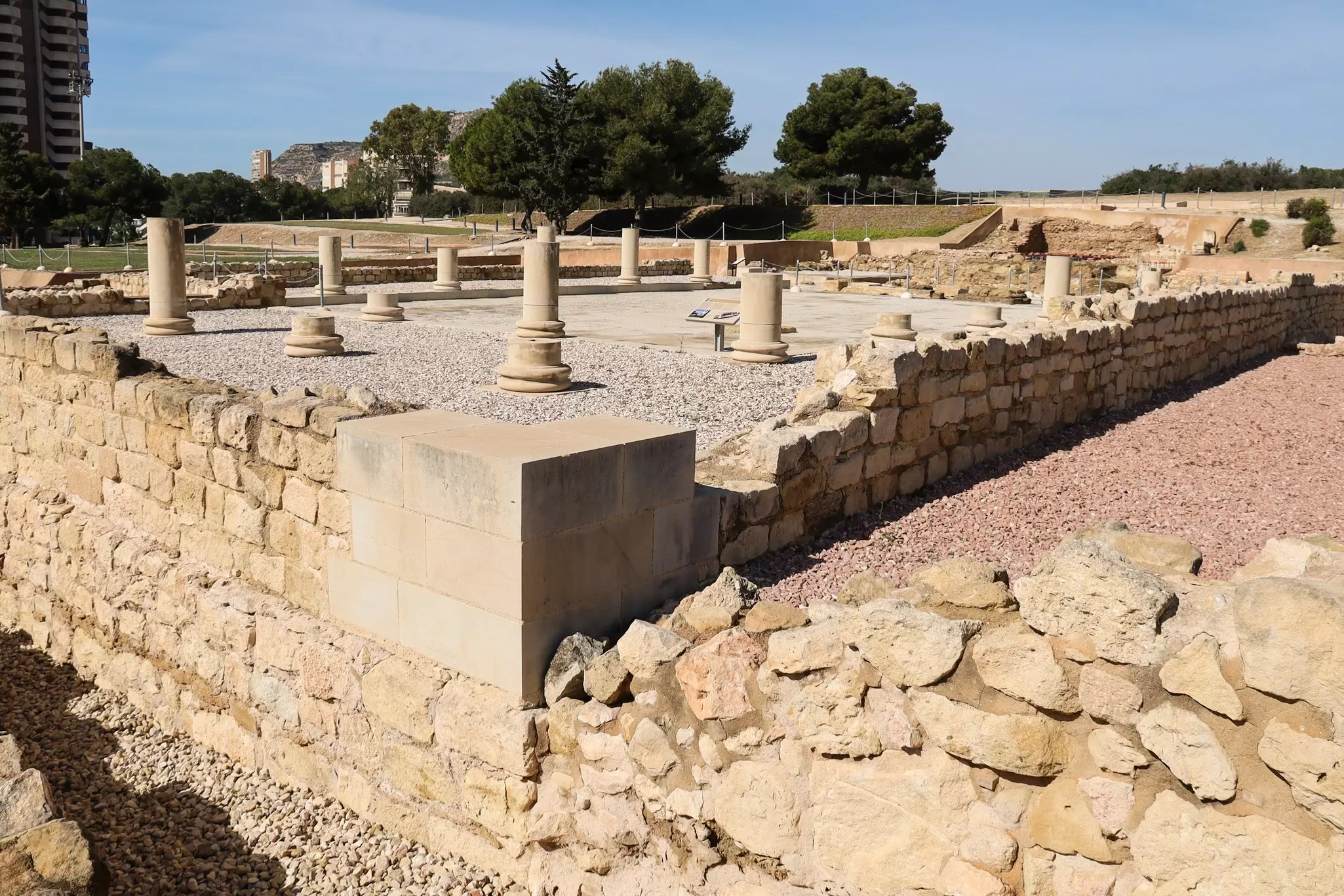
Unlike other cities in Spain, where the Roman ruins are right under your feet, you'll have to travel 3km northeast of the city center to find the foundations of Lucentum at Tossal de Manises. In incredible condition, this large site preserves the original, intact layout of the Roman City, with visible remnants of the forum, bathhouses and the city's walls.
After it was abandoned in the 3rd century, the ruling Moors used the ruined city as a necropolis. The archaeological site is administered by the Museo Arquelógico de Alicante (MARQ) in the city center, which displays some of the remarkable artifacts found at the site.
Alicante is nicknamed “The City of Rice,” and its restaurants show off the full diversity of Valencian cuisine, with a wide variety of seafood-based rice dishes that go beyond the typical paella. Try ordering the arroz senyoret, or gentleman’s rice – a classic dish made with boneless fish and peeled shrimp.
For fantastic tapas, head to the CuatroLatas Bar on Plaza Gabriel Miró, where you can order classic local plates such as tomato with tuna belly or pericana, an intensely flavorful red pepper spread served with bread and salted fish.

I don’t normally think of fireworks as a daytime spectacle, but even months after visiting, I can still feel the rumbling and smell the gunpowder of Las Mascletas. Instead of the colorful lights and glitter of typical fireworks, this massive fireworks display creates a wall of sound and smoke as the pyrotechnics are ignited at La Plaza Luceros.
Las Mascletas takes place during the Fogueres de Sant Joan, a week-long festival celebrating the summer solstice every June. Alicante marks the holiday by constructing massive papier-mâché sculptures known as hogueras – similar to the sculptures created for Las Fallas in Valencia in March. These colorful, Disneyesque creations are painstakingly crafted by local artists over several months, then displayed for one week in the city streets before being set on fire on the night of June 23.
Arrive in Alicante a few days before the solstice to experience the fireworks and take time to walk around the city and admire the artistry of the hogueras displays before they’re gone forever…or you'll have to wait until next year’s festival.
As in most places in Spain, credit cards are widely accepted at bars and restaurants in Alicante. However, it is useful to have euros (€) in cash handy for purchases from street vendors. Excluding accommodation, expect to spend between €30 and €100 per person per day on food and activities. Here are some sample costs in Alicante.
Double room at a beachfront hotel: from €180-350 per night
Hotel room in the Old Town: €90-200
Bus ticket: €4.50
Ticket for the Castillo de Santa Barbára elevator: €2.70
A caña (small draft beer): €3.50
A paella meal for two: from €40-50
A bocadillo (sandwich) from the Mercado Central: €6
Bike tour of Alicante: €35 per person
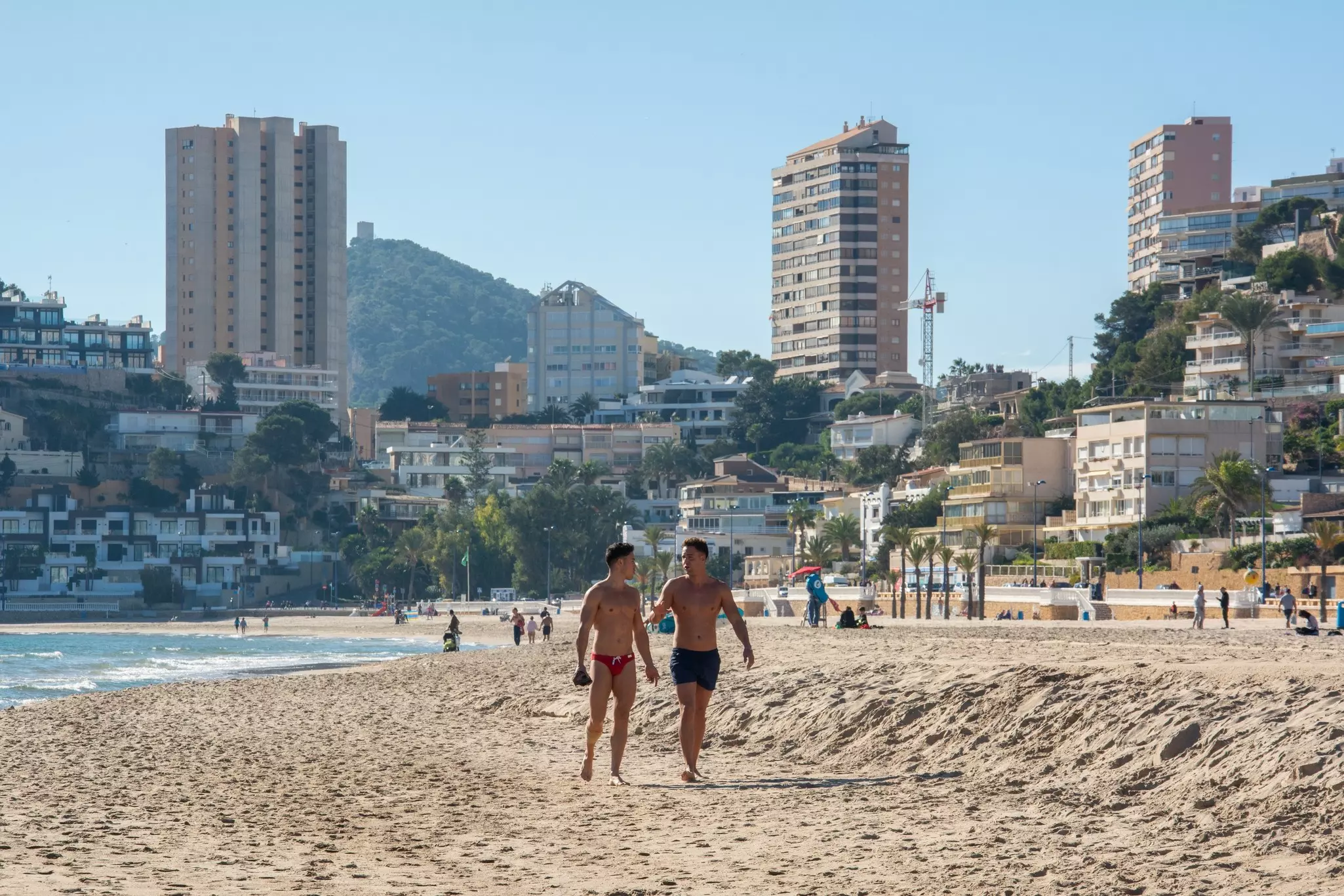
Using Alicante as a launchpad, you have the entire Costa Blanca at your fingertips. To the north, the beaches of Benidorm are only a 45-minute drive away. Although many travelers brush off the city for its skyline crowded with high-rises and mass-tourism model, the blue waters and coves here are undeniably gorgeous, and there is also a burgeoning gastronomic scene, with modern restaurants such as La Fava showcasing the city’s culinary roots.
Or, you can travel half an hour southwest to Elche, an inland city recognized by UNESCO for its unique setting inside Europe’s largest palm grove. You’ll find the city’s oldest palm tree – the 180-year-old "Imperial Palm" – at the Huerto del Cura, a well-maintained garden home to many species of plants and flowers and a family of peacocks.
If the weather is beachy, hop on the ferry from Alicante to Isla de Tabarca, the smallest inhabited island in the Mediterranean, with a walled city you can walk around and a gorgeous beach lapped by cerulean waters, where a rocky shore meets white sand once you wade in a bit.
Need help planning your next trip? Check out Lonely Planet Journeys to get connected to a local expert who can craft a custom itinerary for you.
Explore related stories