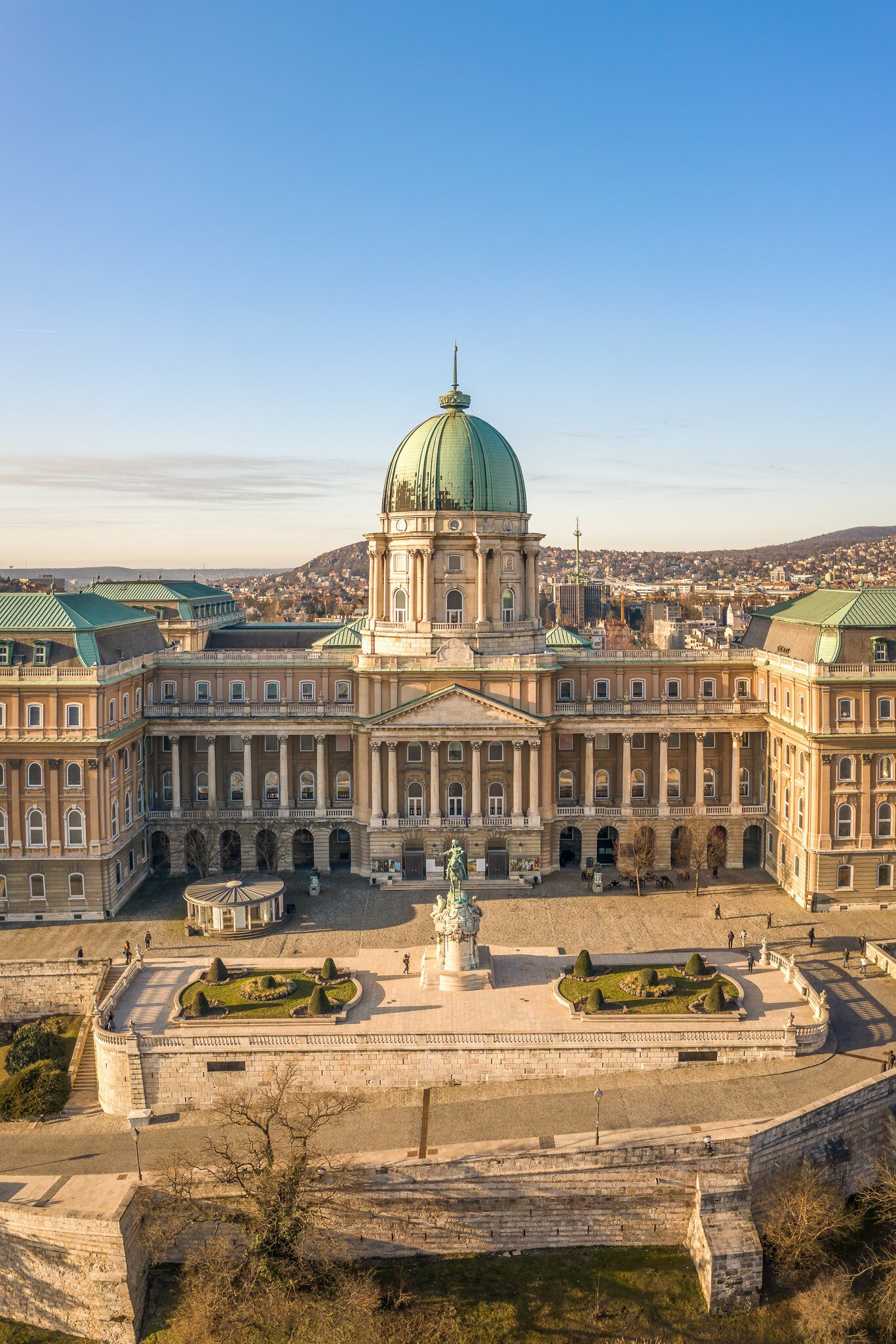
Crowning Castle Hill, the Royal Palace towers over Budapest with a commanding presence. This immediately recognizable, emblematic attraction is both an architectural marvel with walls whispering tales of kings, wars, victories and the undying spirit of a nation, and a cultural beacon inviting visitors to embark on an immersive journey into the heart of Hungary’s history and culture.
The First Glimpse of Grandeur
The Royal Palace is part of the larger Castle Hill area, a UNESCO World Heritage Site that encompasses a myriad of historic sights, charming cobblestone streets and stunning viewpoints that set the stage for a journey back in time. There are multiple ways to enter, all hinting at the grandeur within.
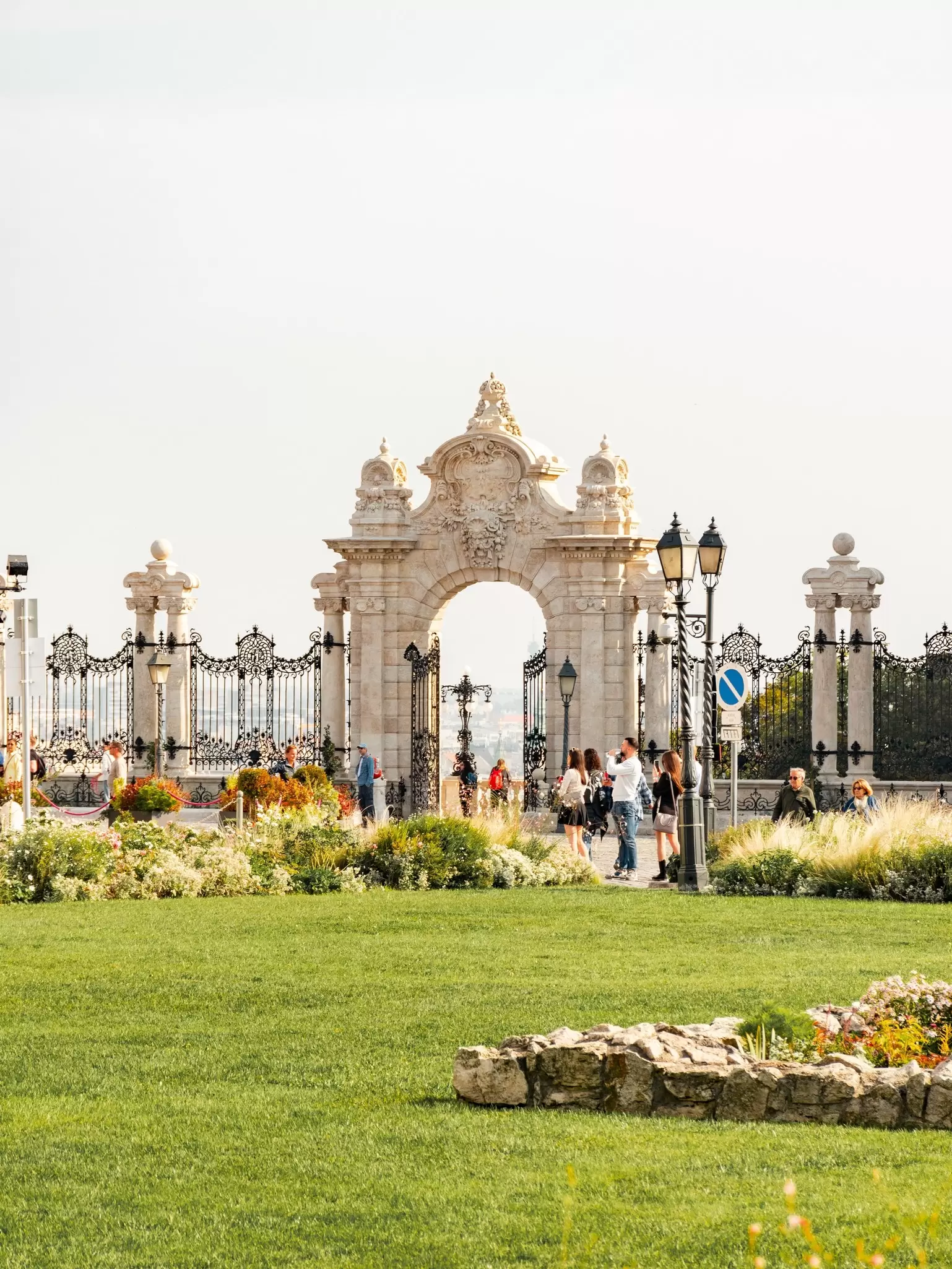
It’s best to go via the ornate wrought-iron Habsburg Gate – topped by a bronze turul sculpture, the falcon-like totem of the Hungarians – and symmetrical stairways. You can also enter via the Corvinus Gate, topped by a big black raven symbolizing King Matthias Corvinus, or take the escalator or steps from the Castle Garden Bazaar below the south end of Castle Hill. Though the Royal Palace is a captivating building, do turn your back to it as the views from the palace grounds are equally breathtaking with sweeping panoramas of Budapest and the Danube. As you explore the palace grounds, allow yourself to be drawn to its hidden corners and quiet alcoves that offer a moment of reflection amidst the grandeur.
Art, Literature & History Within Hallowed Walls
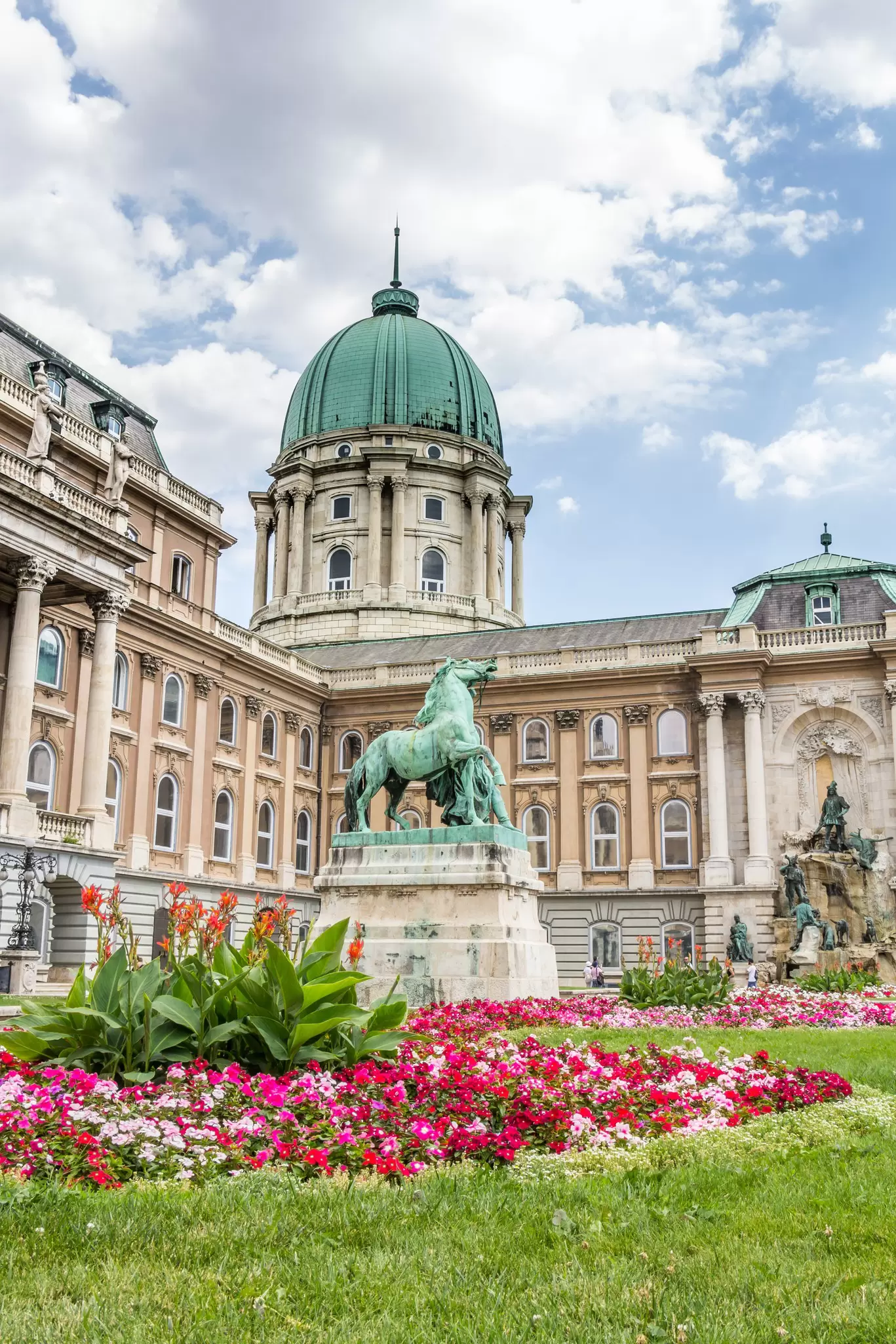
A testament to Hungary’s storied past, the Royal Palace was first built by King Béla IV when he moved the county’s capital from Esztergom to Buda in the mid-1200s, following the Mongol invasion that necessitated the construction of a fortified stronghold. Over the past seven centuries, it has been razed and rebuilt several times – in 1686, it was completely leveled in a war against the Turks, while during WWII, it was bombed and robbed clean – and various architectural styles have left their marks, from Gothic to Renaissance, baroque and neoclassical. Today, it houses the Hungarian National Gallery (buildings A to D), the Castle Museum (building E) and the National Széchenyi Library (building F).
Magyar Masterpieces
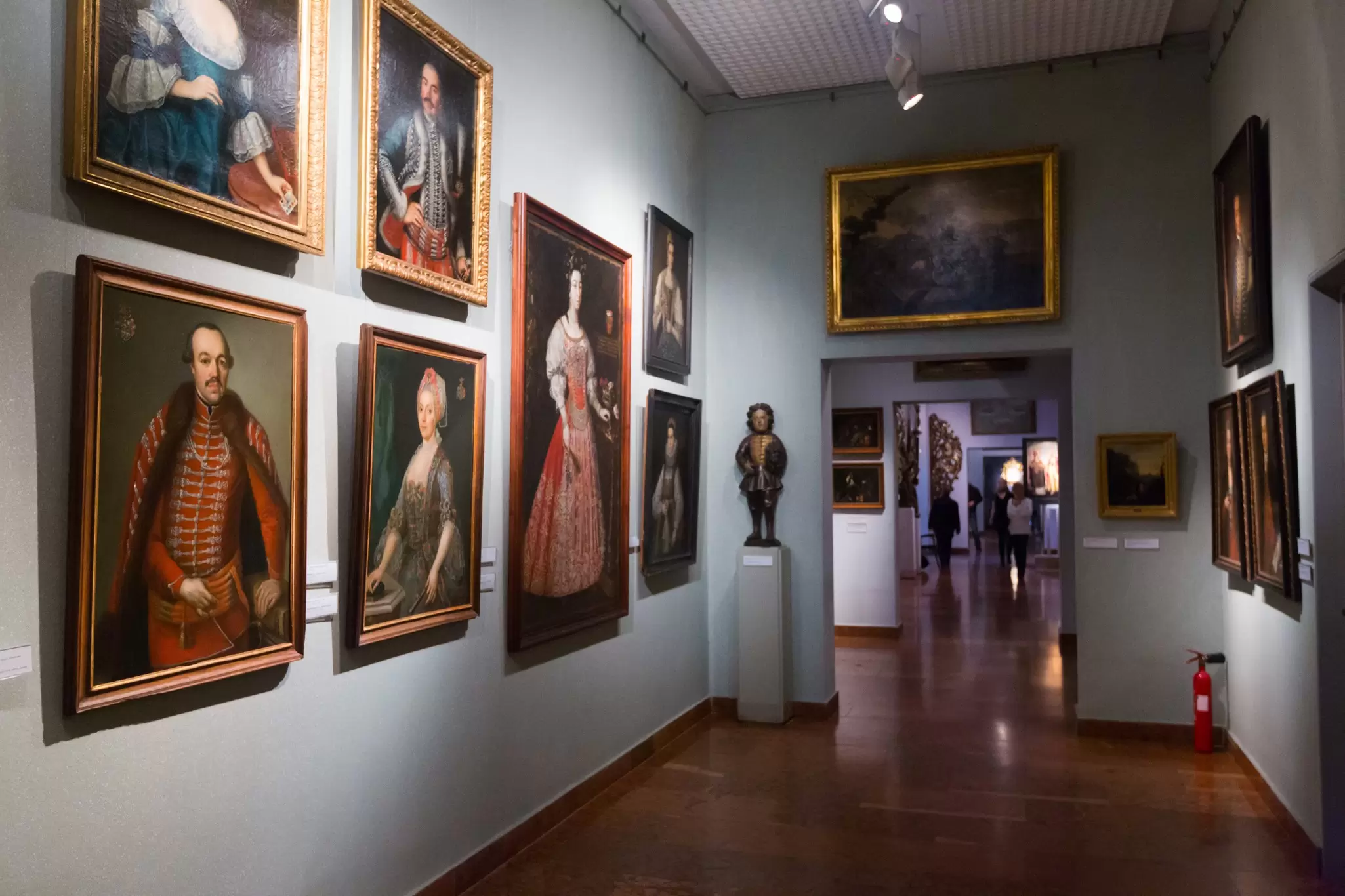
Comprising several wings and spread across four floors, the Hungarian National Gallery (mng.hu) contains an overwhelming collection of thousands of artifacts presenting the development and rise of the fine arts in Hungary from the 11th century onwards. From the ground floor to the 3rd floor, the permanent exhibitions present Renaissance stonework, Gothic church adornments, an important collection of paintings by the most prominent Hungarian painters of the 19th and 20th centuries, nude sculptures, late-Gothic winged altarpieces and a collection of international art since 1800. There are major temporary exhibitions too. The 3rd floor provides access to the palace’s dome for breathtaking views.
The most prominent paintings include the works of Mihály Munkácsy, the "painter of the Great Plain," most notably the Yawning Apprentice; the Balloon by Pál Szinyei Merse, Hungary’s foremost impressionist – the subject of which appears all over City Park – on the 1st floor; and the Ruins of the Greek Theater at Taormina by Tivadar Kosztka Csontváry, one of the country’s greatest painters, on the 2nd floor. Devote about two to three hours to the museum.
Discover Budapest’s Turbulent History
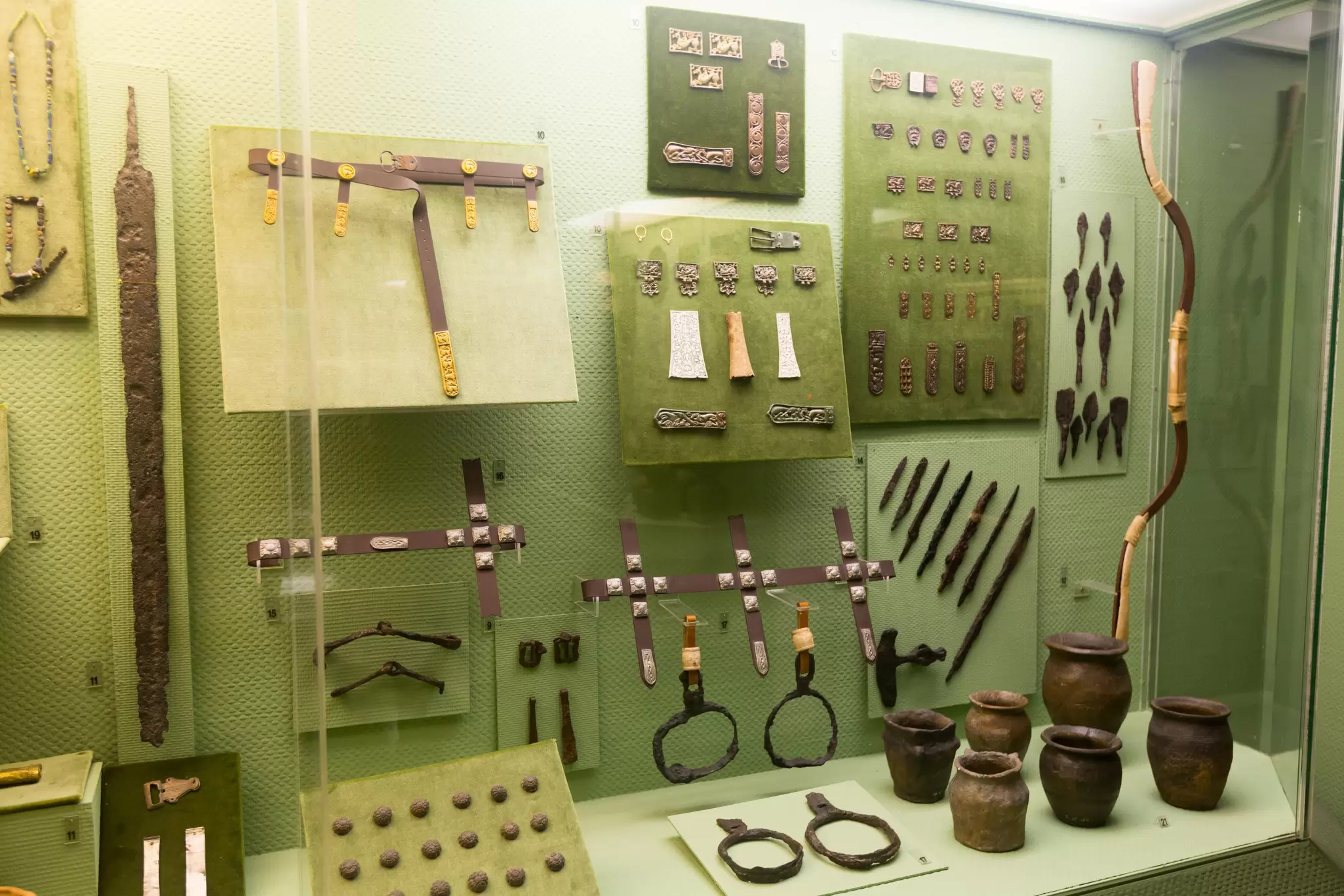
The Castle Museum (varmuzeum.hu) tells the story of Budapest from prehistoric times to the present day. You'll find restored rooms dating back to the medieval period in the basement. The ground floor’s exhibits reimagine Budapest during the Middle Ages with statues of courtiers, squires and saints discovered during excavations in 1974, as well as artifacts recovered from a 10m depth from a well with coins dating back to the early 15th century, most notably a tapestry of the Hungarian coat of arms of the House of Anjou. The 1st floor is home to an intriguing exhibit called "Light & Shadow: 1000 Years of a Capital" that showcases the history of a city destroyed and rebuilt many times, in chronological order, through a look at housing, ethnic diversity, religion and other issues over the centuries. The 2nd floor travels even further back, to prehistoric times, and follows the evolution of Budapest to the end of the 8th century.
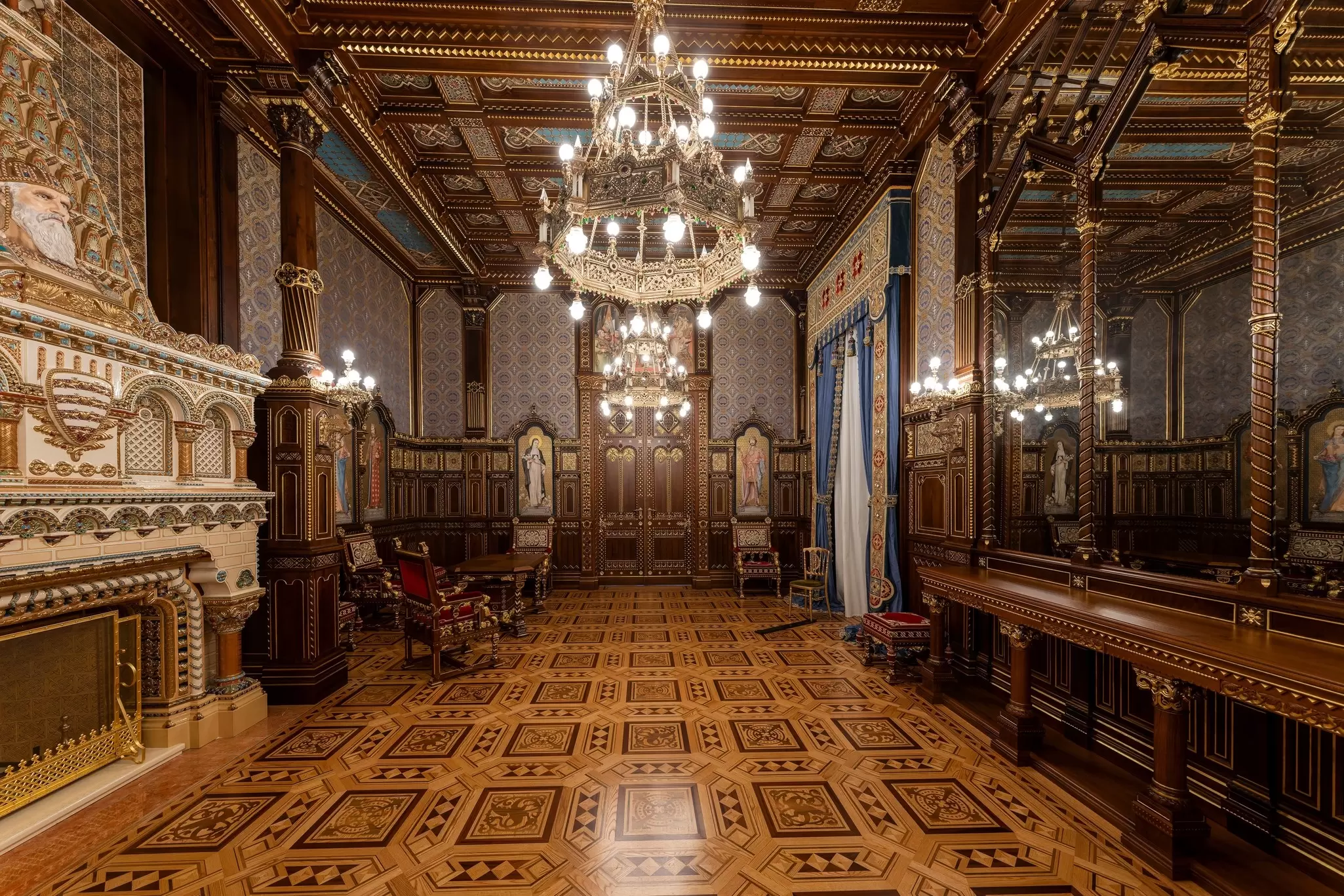
For an extra charge, you can access an absolute jewel box in this wing of the Royal Palace. St Stephen’s Hall (szentistvanterem.hu; adult/child 3900/1950Ft) is an authentically reconstructed 19th-century room filled with fine furnishings, the country’s largest fireplace, wonderful ornaments and huge amounts of gold. Combined tickets are available.
National Széchenyi Library
The National Széchenyi Library (oszk.hu) contains codices and manuscripts, a large collection of foreign newspapers and a copy of everything published in Hungary or in the Hungarian language. It's also home to the largest state-of-the-art digitization center in Central Europe. It isn’t a lending library – members are allowed to do research, peruse the general stacks and read the foreign newspapers and magazines.
Toss a Coin to Return
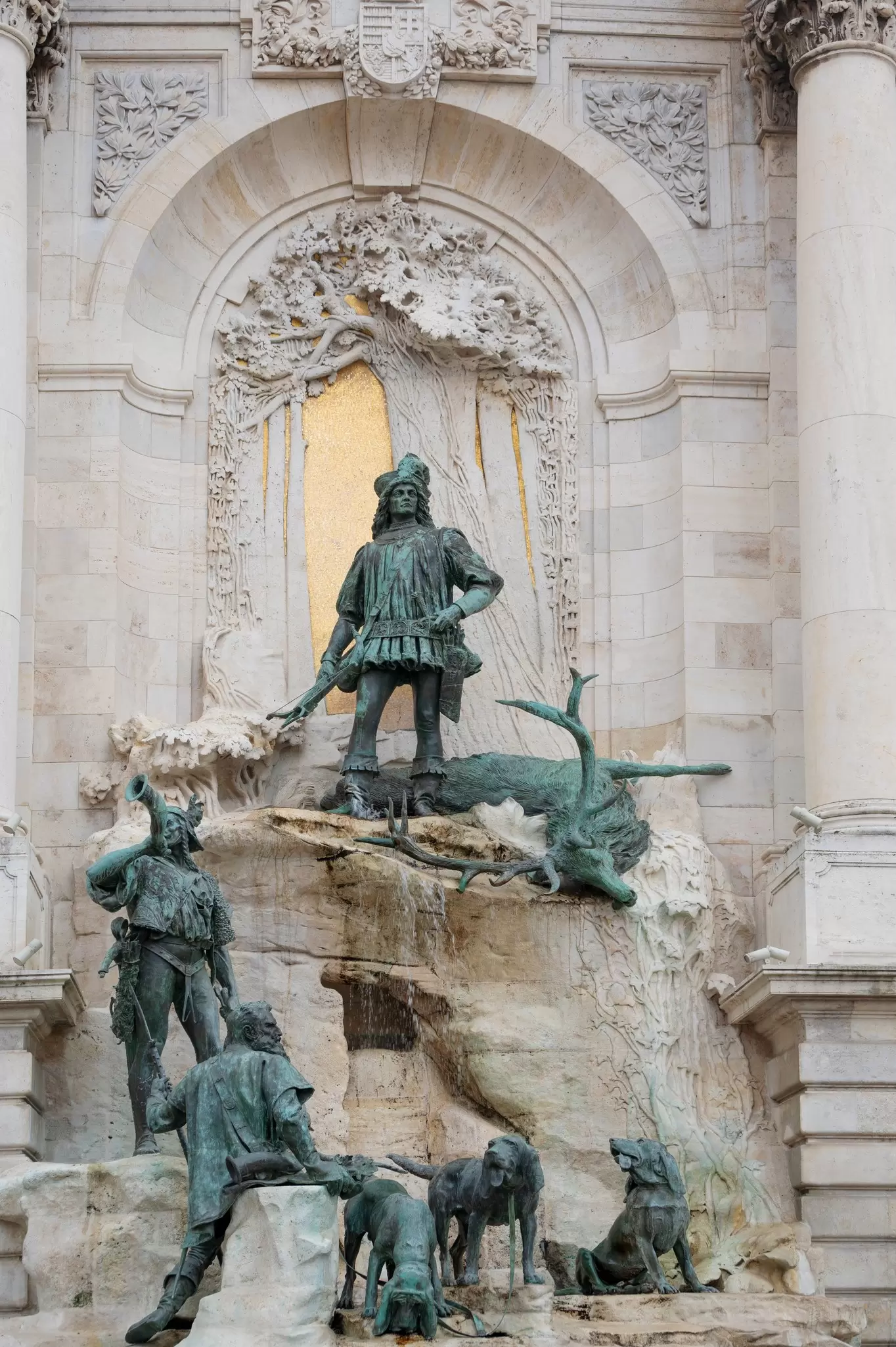
Nicknamed Hungary’s Trevi Fountain, Matthias Fountain in the Hunyadi Courtyard next to the Hungarian National Gallery is a popular sight. It was designed by famed fin-de-siècle sculptor Alajos Stróbl in 1904 and completely rebuilt with the help of his grandson, Mátyás Stróbl, in 2020. The central figure portrays one of the most popular Hungarian monarchs, King Matthias the Just, in hunting attire, resting after killing a deer stag. To his right is Szép Ilonka (Beautiful Helena) cradling a deer; in author Mihály Vörösmarty’s famous poem, she falls in love with a dashing young hunter – the king in disguise – and upon learning his identity and feeling unworthy of his love, dies of a broken heart. You may notice that the middle one of the king’s dogs looks slightly different from the other two. This is because it was blown up in WWII, and though it was quickly replaced, the quality differs. Below the fountain lies the Habsburg family crypt, accessible from the Hungarian National Gallery on guided tours.
Mysteries Below
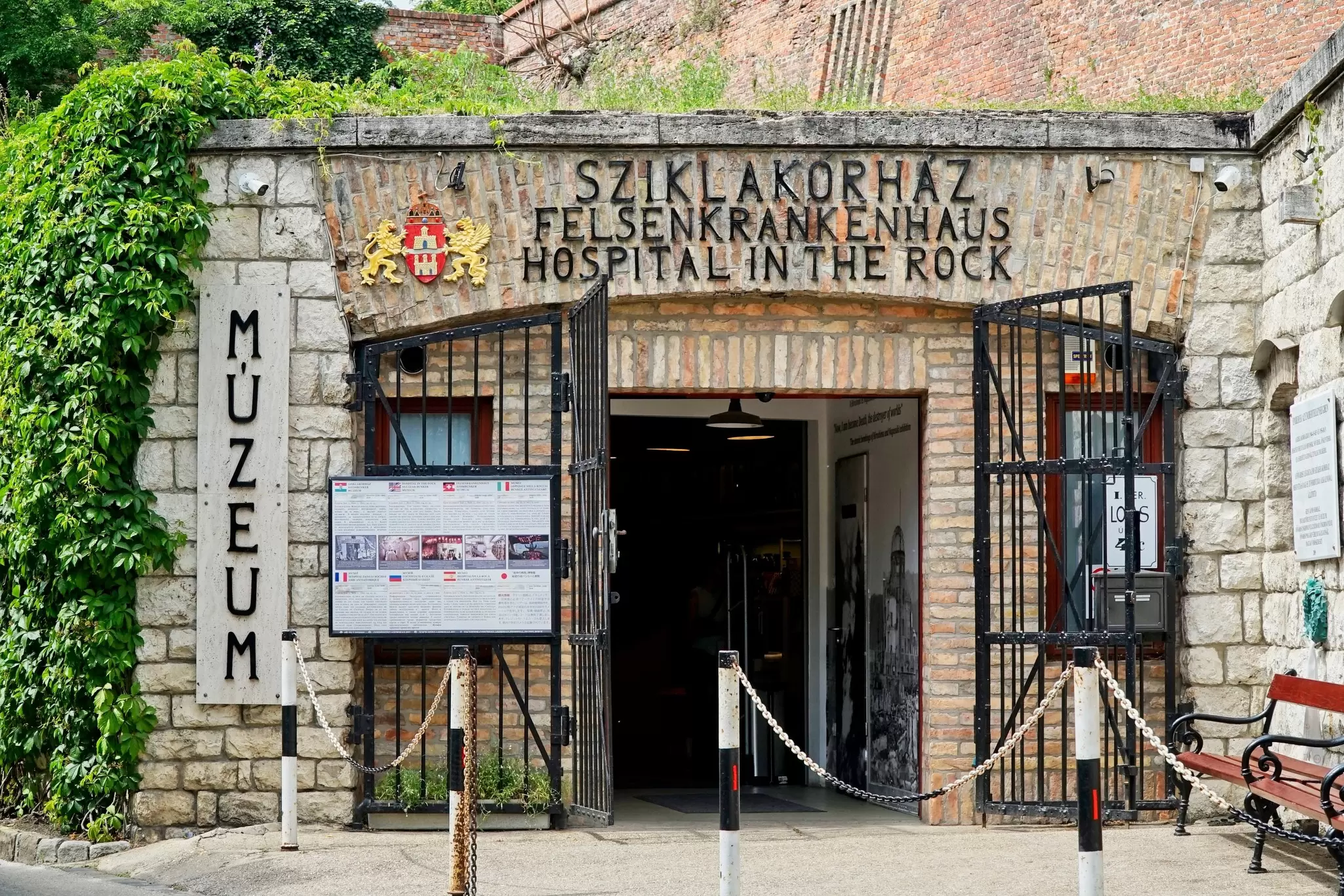
Wandering the winding roads around the Royal Palace, you may not realize that an approximately 3000m-long, partially natural cave system stretches right below your feet. It has always been an important part of history in the Castle District, used by everyone from ancient humans and the Romans to Soviet soldiers and Budapest residents for various reasons, from storage to secret bunkers. While most of the cave system is closed to visitors, some parts are accessible on guided walking tours organized by the Duna Ipoly National Park (dunaipoly.hu). You can also take a peek down memory lane yourself by visiting sections of it in the Hospital in the Rock and the Labyrinth.