In a city known for its glass towers and superlatives, Al Hosn is where Abu Dhabi's story begins. The site comprises a stone watchtower built in 1760, which once guarded the island's only freshwater well, a museum housed in a fortress that was once home to the ruling Al Nahyan family, a traditional crafts exhibition and a contemporary cultural center.
A Sea-Stone Watchtower
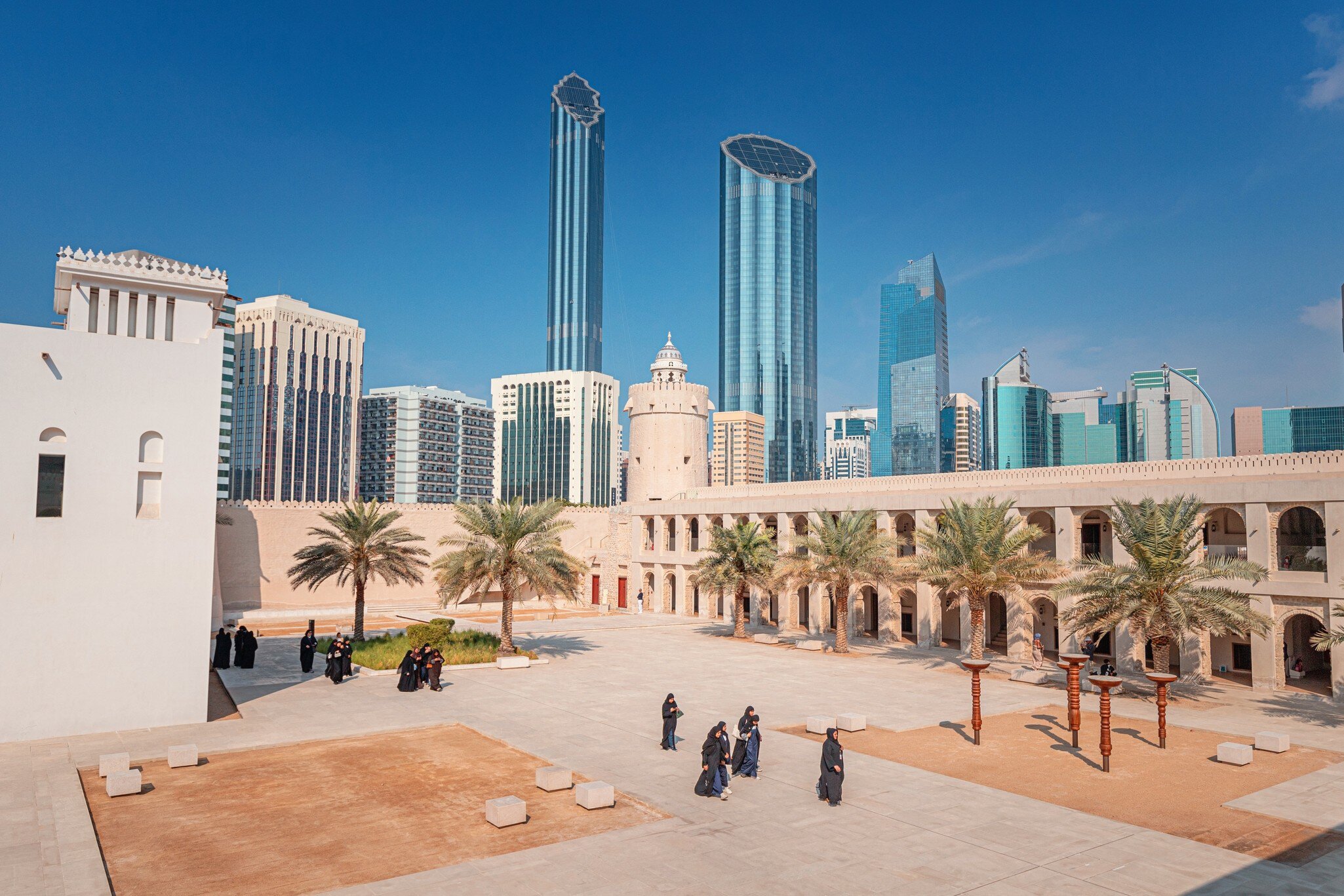
Start in the courtyard of Qasr Al Hosn and look up. The circular watchtower was built in 1760 after freshwater was discovered on Abu Dhabi Island. Today, it feels almost modest against the city's skyline of high-rises. Yet this small structure cemented an island community and later became the nucleus of political life. Stand at its base and notice the coral sea-stone construction, reminders of a thriving settlement that emerged from simple coastal surroundings.
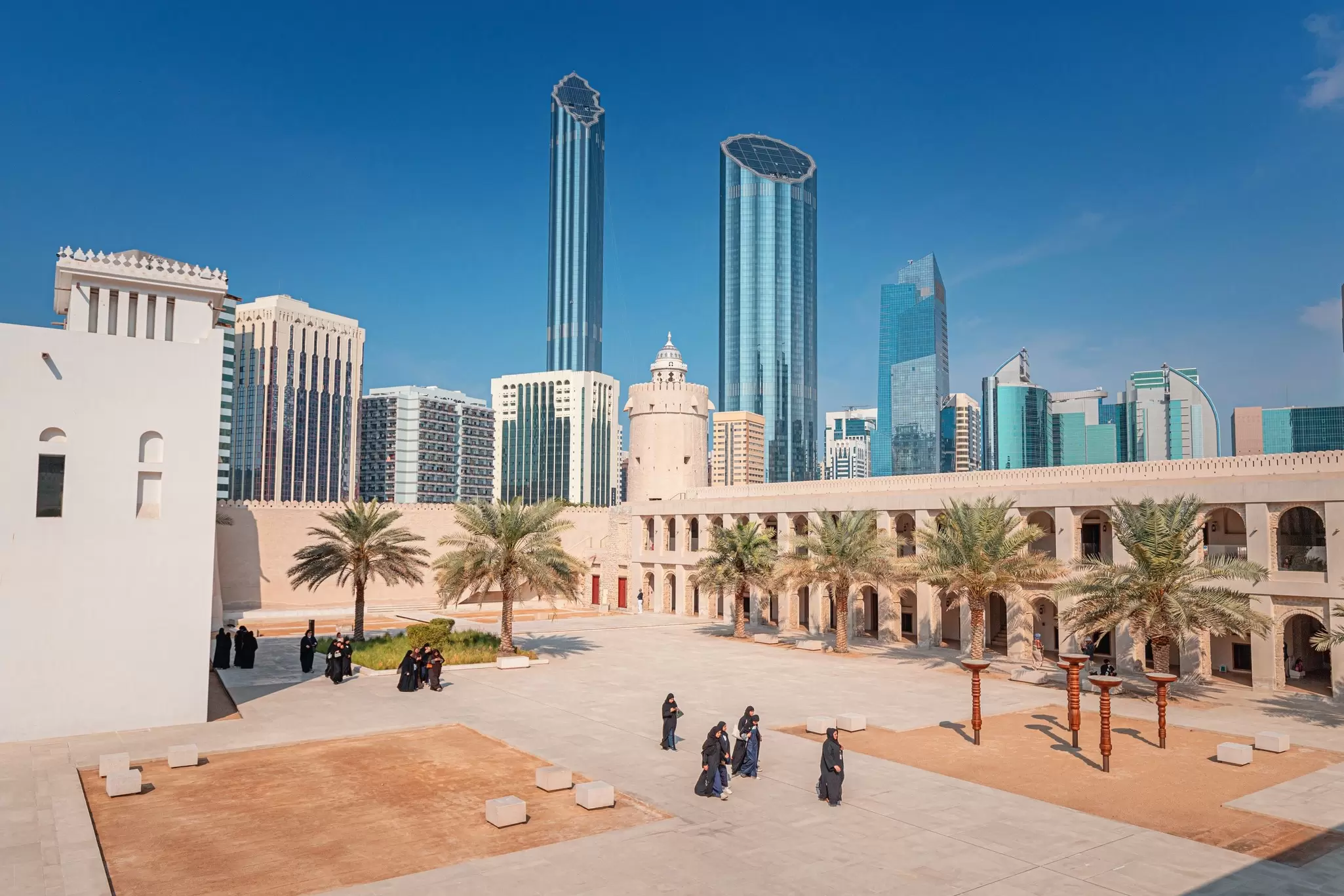
The Inner Fort
In 1793, the watchtower was expanded into a defensive fortress known as the Inner Fort. This served as the seat of government, military headquarters and royal residence of the Al Nahyan family. The museum galleries are chronological and immersive rather than decorative – take your time. The exhibitions trace the migration of the Bani Yas from the oases of Liwa to Abu Dhabi Island, and follow the pearling economy that sustained life here before the discovery of oil triggered the city's seismic transformation in the mid-20th century.
The Outer Palace
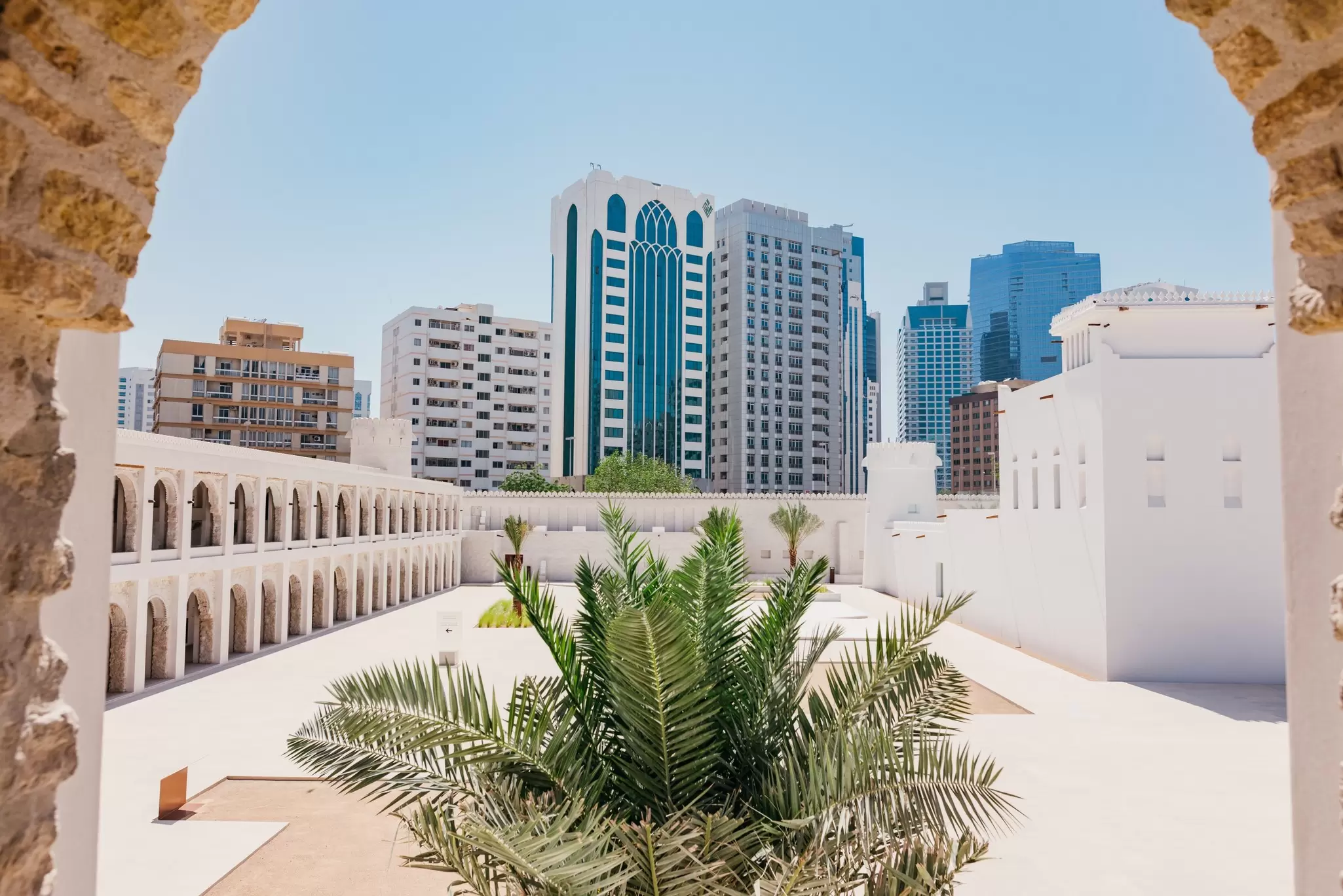
After a long history that included housing a consultative council and a national archive, Qasr Al Hosn reopened as a museum in 2018, following nearly 11 years of conservation and restoration work. Cross into the Outer Palace, which was added between 1939 and 1945 by Sheikh Shakhbut bin Sultan Al Nahyan as the emirate's confidence – and resources – grew. Walk through restored majlis rooms and domestic spaces with exhibits including furniture, jewelry, household items and clothing, that bring to life the stories of the members of the ruling family that lived within the fort.
Influential Women
Don’t rush the galleries dedicated to the women of Al Hosn. Figures such as Sheikha Salama bint Butti, the mother of Sheikh Shakhbut bin Sultan Al Nahyan, and Sheikha Quot bint Shakhbout Al Nahyan, who not only learned to drive at a time when few cars and roads existed in Abu Dhabi but also supposedly taught this valuable skill to a few palace guards, emerge not as footnotes but as central community builders. They were responsible for shaping education, family life and civic identity. Plan to spend at least 90 minutes visiting the fortress and palace.
Living Traditions
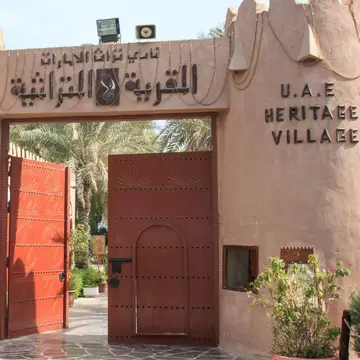
Don't forget to caffeinate at Bait Al Gahwa in the House of Artisans, where cardamom-infused Arabic coffee is prepared and served in a majlis setting. The ritual – roasting, grinding, pouring – unfolds slowly in a traditional ceremony.
A Seat of Art & Culture
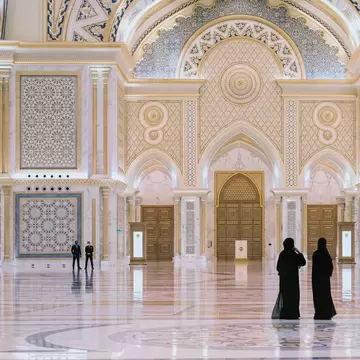
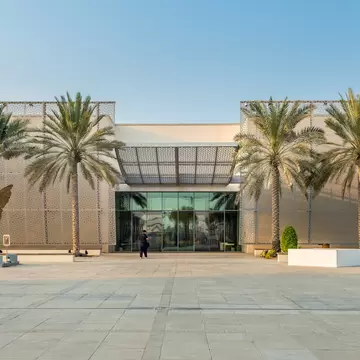
Originally opened in 1981 and meticulously restored, the Cultural Foundation now hosts rotating exhibitions of regional and international art, performances in its 900-seat theater and numerous painting, sculpture, pottery and calligraphy workshops at its Al Marsam Al Hor studios. Architecture enthusiasts should examine the building's blue-tiled arches, geometric motifs and shaded courtyards that reinterpret Islamic design in a contemporary language. The bright and colorful spaces and interactive experiences at the 5250-sq-meter Abu Dhabi Children’s Library, located within the center, are popular with families on the weekends.