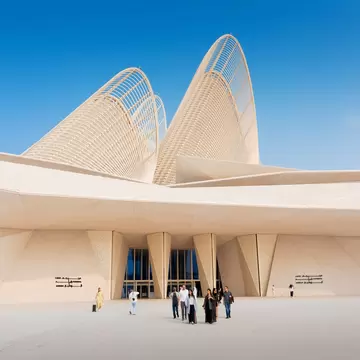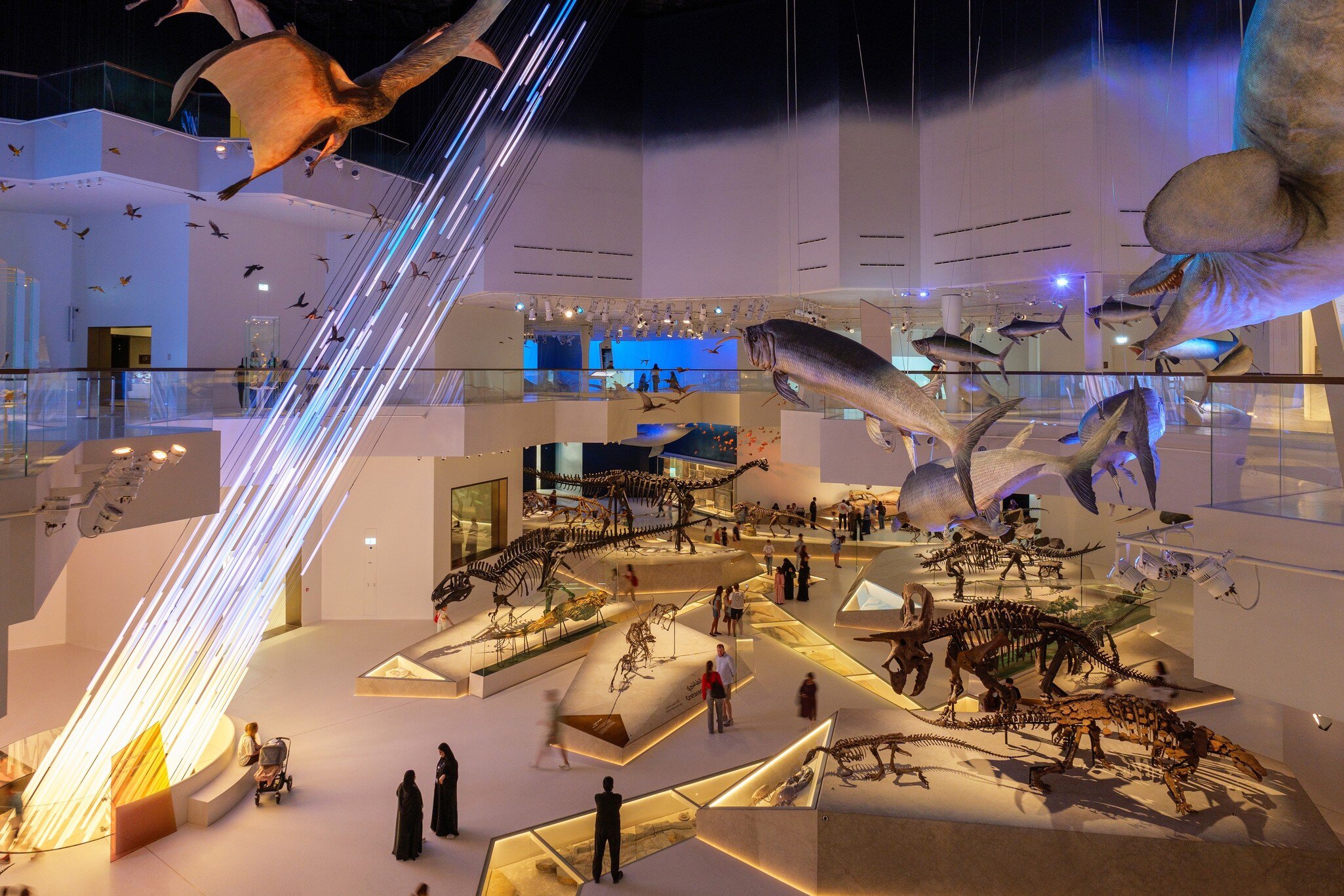
Abu Dhabi's Natural History Museum traces 13.8 billion years of planetary history through a distinctly Arab lens. The building, which resembles a wind-carved rock formation, rises from Saadiyat's sandy coastline and houses dinosaur fossils, meteorites and suspended whale skeletons. Its real strength, however, lies in the deeper exploration of the region's geology, biodiversity and climate future.
Walk Among Giants
The highlight of the museum is Stan, one of the most complete Tyrannosaurus rex skeletons ever discovered, displayed mid-battle with another T rex over a fallen Triceratops. The staging might seem dramatic, but it's grounded in research – bite marks on Stan’s fossil suggest real combat. In the marine section, a 26m blue-whale skeleton hangs unusually low, allowing visitors to fully grasp its scale.
Rocks Older Than the Earth
A fragment of the Murchison meteorite – containing material older than our solar system – begins the story of cosmic origins. Geological displays trace shifting continents and climate systems, while regional fossils like the four-tusked elephant Stegotetrabelodon emiratus from Abu Dhabi’s Baynunah Formation reveal a prehistoric landscape of rivers and grasslands, where today you'll only find swathes of desert.
Across Arabia
Don't miss a visit to the Human Story and Arabia's Climate galleries. They offer fascinating insight into early human movement across Arabia – a landscape that has shifted quite dramatically over time. Fossils and immersive displays depict how changing climates shaped migration routes and transformed a greener and more habitable space into the desert landscape we know it to be today.