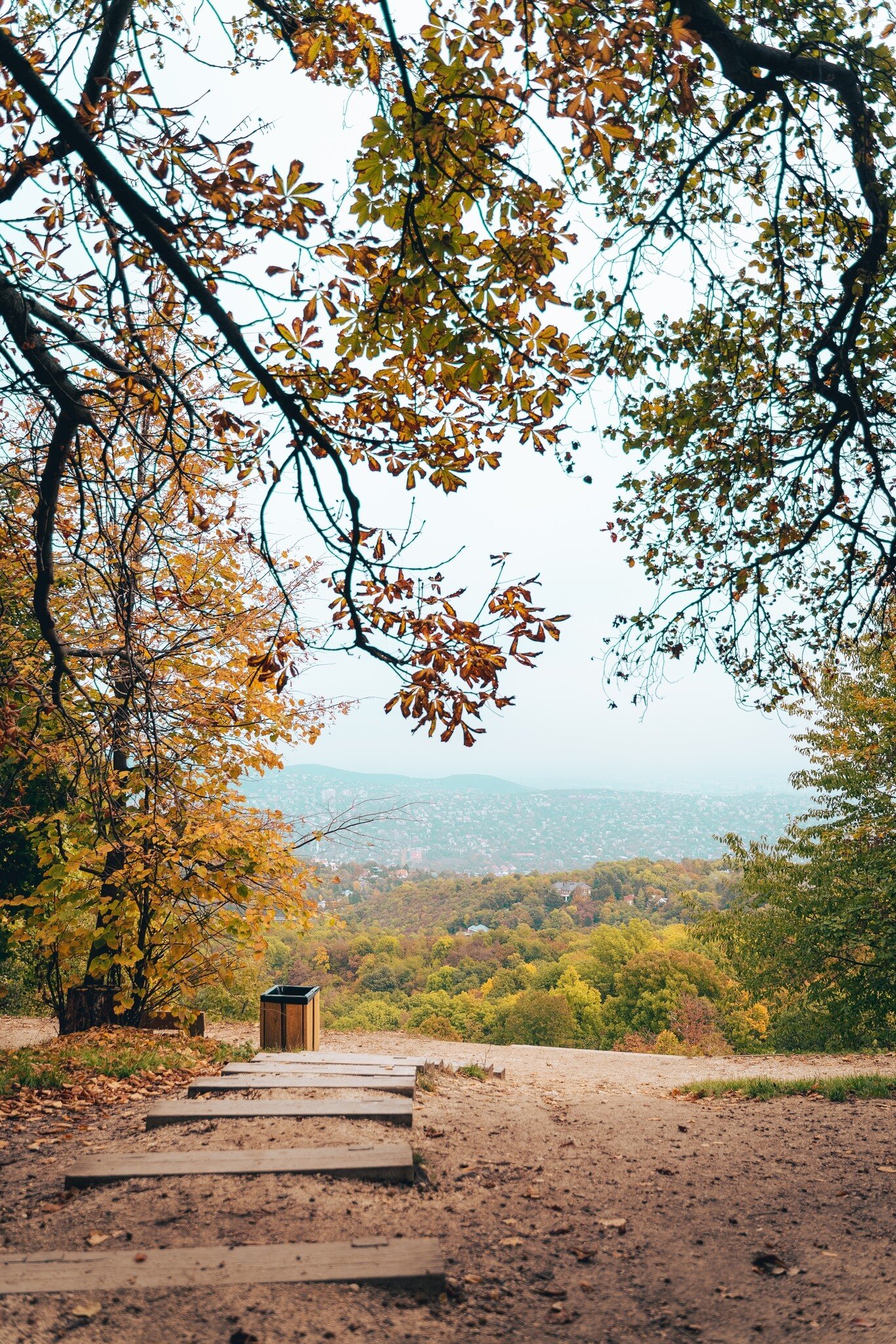
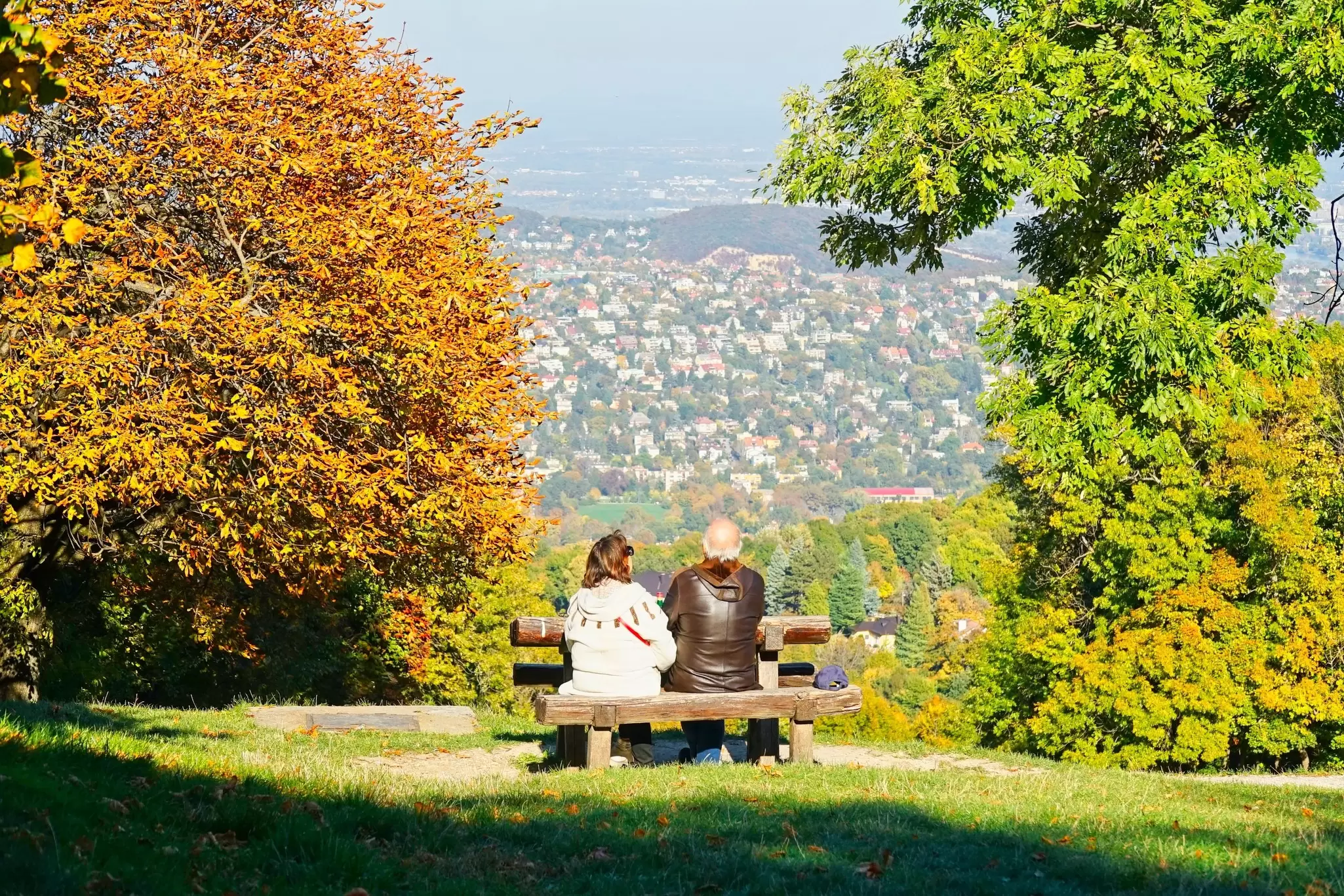
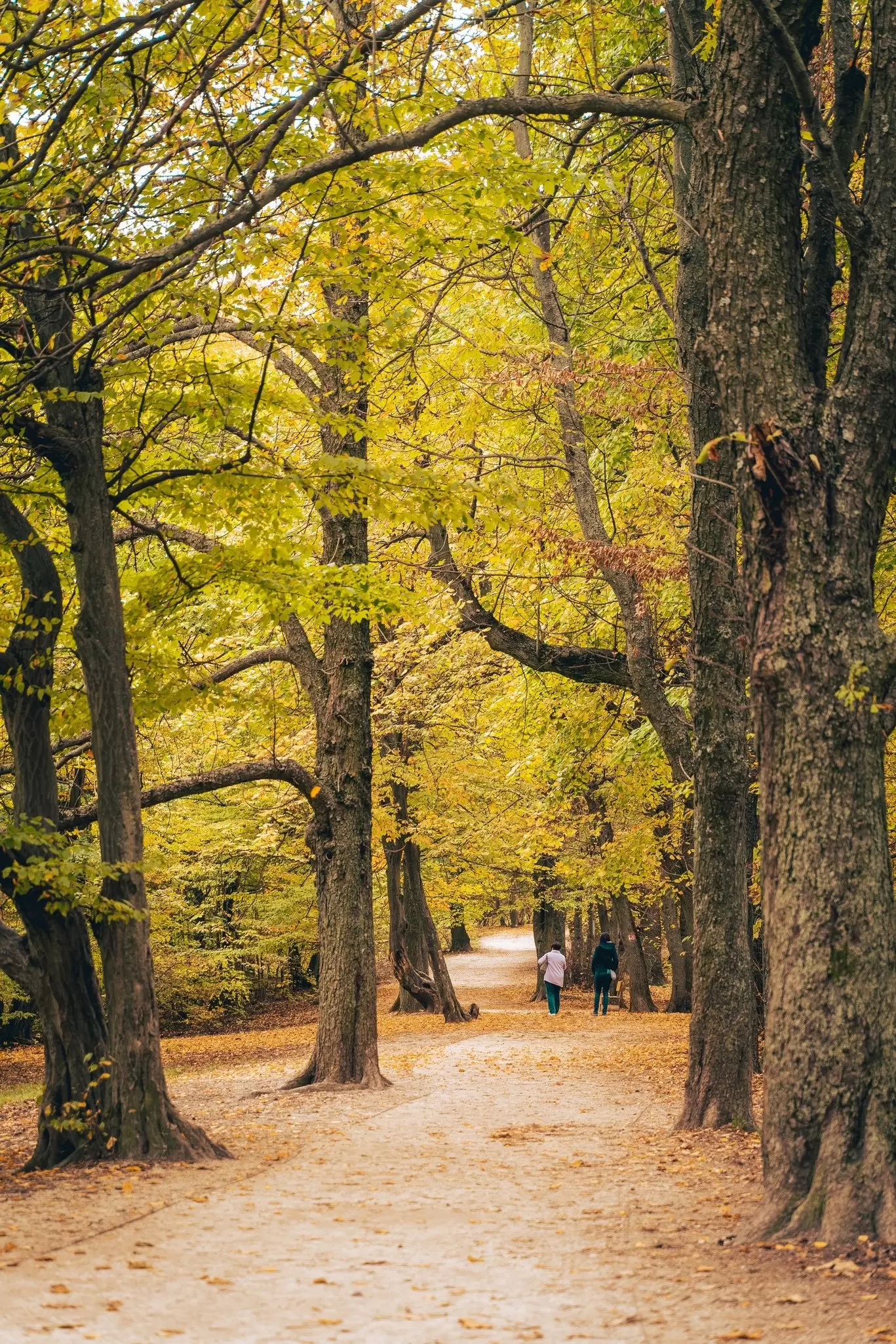
Normafa is a massive forested hill in the Buda Hills, still within city limits and easily accessible via public transport. It offers huge green spaces, hiking trails, a playground, food stalls, gorgeous views, picnic spots and even designated BBQ pits, all providing ample opportunity for quiet relaxation while busy Budapest stretches out below.
Hikes & Views
Normafa has always been the locals' favorite hiking destination, since it provides a touch of nature with hiking trails galore and gorgeous views still relatively close to downtown. This charming year-round destination offers something in every season: spring sees cherry blossoms, summer hikes and family picnics, autumn vibrant foliage, and winter sledging and even skiing on the spacious Anna Meadow. You can easily spend a whole or at least half a day here, and food stalls are available, so be sure to buy a delicious Hungarian strudel (flaky pastry flavored with cherries, poppy seeds or sweet cottage cheese) or a lángos (disk-shaped deep-fried dough topped with sour cream and shredded cheese).
A Towering Tree
Normafa is a site rich in history and legends connected to the cultural and natural heritage of Budapest. An ancient birch tree used to stand here, which, legend has it, sprouted in the year of King Matthias’ birth (1443). It quickly became a favorite meeting spot for locals, and lovers would carve their names into the tree. Many believed that if a young girl pulled a piece of bark off the tree and held on to it tightly, she would soon find everlasting love. Sadly, the lovey-dovey legends have contributed to the slow decay and eventual death of the tree.
The tree was also often frequented by writers, poets and artists, most notably those of the National Theatre. In the 1840s, famed opera singer Róza Schodelné Klein sang an aria from Bellini’s Norma under the tree, and this is where the name Normafa (Norma tree) comes from. Unfortunately, the tree was hit by lightning several times, and in 1927, it fell for good. The city authorities tried to save what was left of it after locals grabbed pieces as mementos, placing it in the artesian well on Margaret Island in the hopes of preserving it with limestone, but later forgot about it. Some say it rotted away, while others think it’s there, solidified to this day. In its place, a new tree was planted, and a plaque was placed to honor the beloved tree.
Visit the Highest Point in Budapest
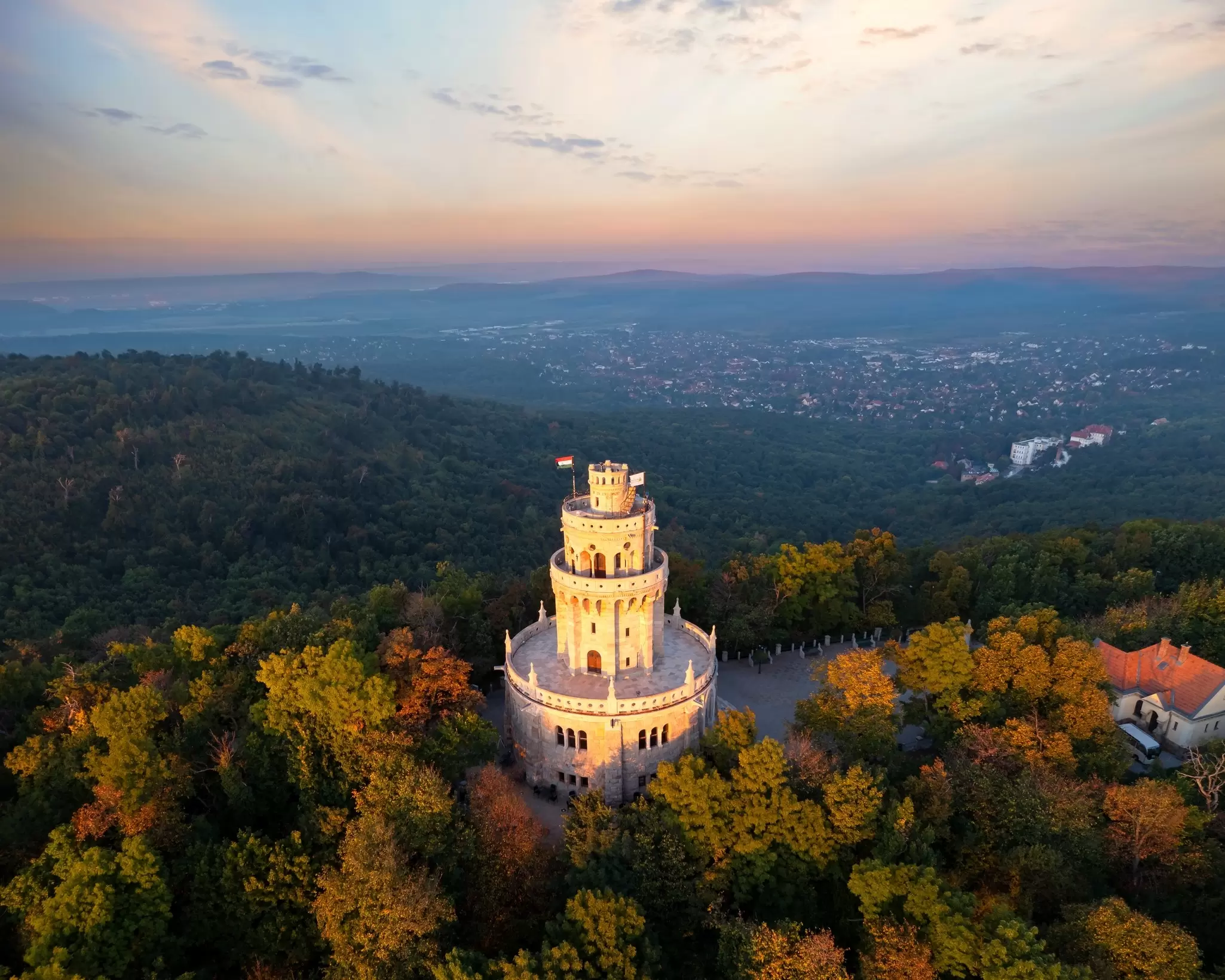
From Normafa, you can already see the Elizabeth Lookout Tower, which is a short but steep walk away. Topping 527m-tall János Hill, this neo-Roman lookout tower is the highest point in Budapest. Thanks to the dazzling design of Frigyes Schulek, who also conceived Fisherman’s Bastion, it resembles a three-tier wedding cake and is named after Hungary’s beloved Queen Elizabeth, affectionately nicknamed Sissi, who loved frequenting the area around Normafa. To get to the top, you’ll need to wind your way up a 100-step spiral staircase, but the stunning 360-degree panorama will make up for this calf-crunching exercise. On a clear day, you can see as far as the High Tatra Mountains, as well as the city stretching out below. You can also use the Children's Railway or the Chairlift to reach János Hill.