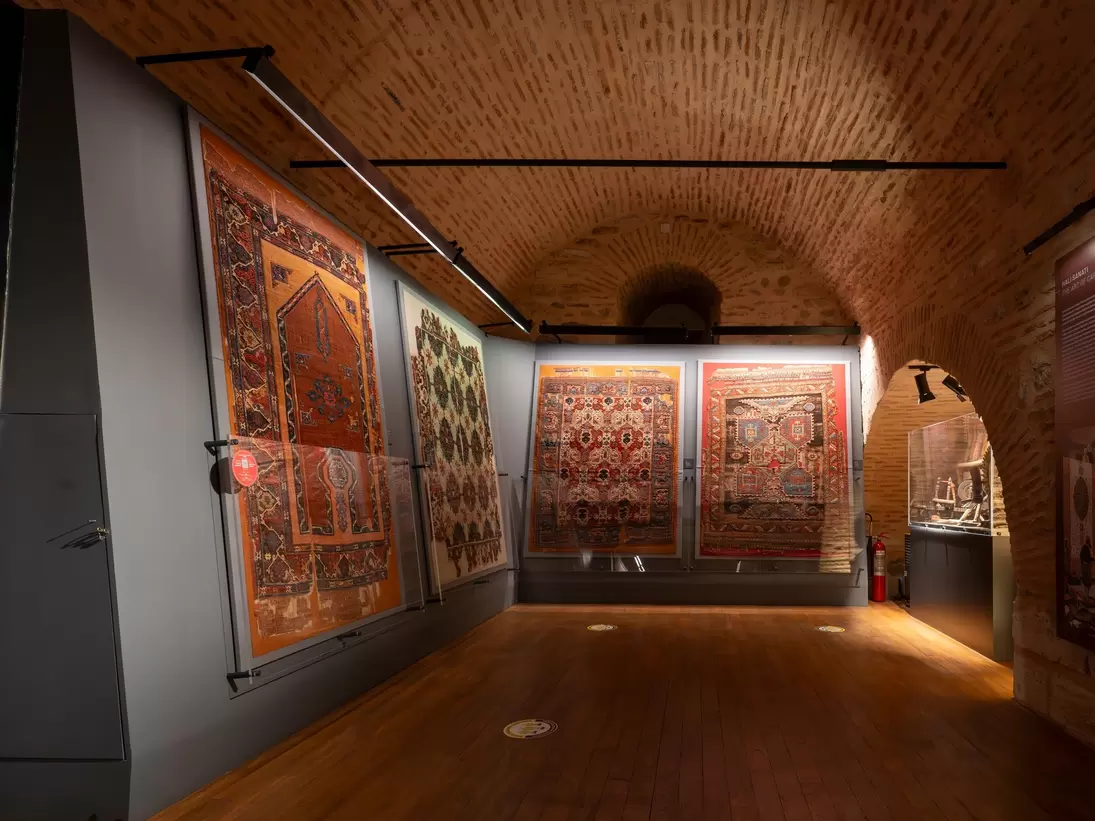
Housed in an Ottoman palace built in 1524 for grand vizier İbrahim Paşa, the Museum of Turkish & Islamic Arts (muze.gen.tr; €17) has a small but select array of exhibits. Chief among these is its stellar collection of antique carpets, displayed in a dedicated hall. Spending an hour or so here gives an excellent grounding in the history and art of the Turkish carpet, which will be of great benefit to anyone who is considering purchasing a carpet to take home. Interesting interpretative panels and displays explain that certain types of Turkish carpets have become known by the names of painters who portrayed them in their works (Holbein, Lotto, Crivelli, Memling, Bellini) while others took the names of the places where they they were produced (Uşhak, Konya and Bergama). The art is generally said to have reached its apogee in the 16th century, and a number of Uşhak and Konya examples from this period prove the point.
Other exhibits include Ottoman müknames (scrolls outlining an imperial decree) featuring the sultans' tuğra (calligraphic signature). The museum's pleasant coffee shop has courtyard seating overlooking the Hippodrome.