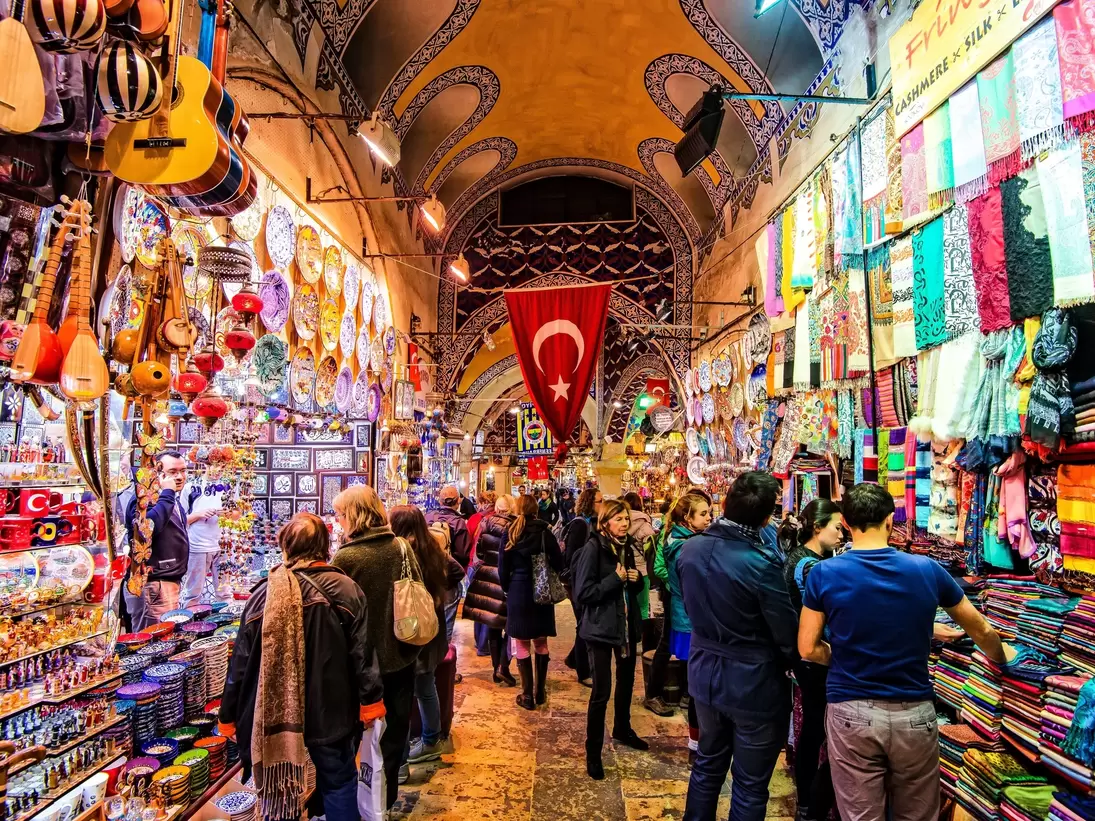
When Mehmet the Conqueror ordered a warehouse be built in the heart of Istanbul back in 1461, he could never have imagined that it would one day become the Grand Bazaar. Touristy? At times. Chaotic? You bet. Nevertheless, this enthralling bazaar is a surefire way to feel the pulse of Istanbul’s Old City, as well as fill your suitcase with one-of-a-kind treasures.
And shopping is only part of the fun. You’ll also get much joy in ducking through the maze of alleys and passageways, pausing to watch craftspeople at work. You'll eventually emerge from the dusky depths to find a hidden han (courtyard), where you can momentarily escape the madness over obligatory çay (tea).
When Should I Go to Istanbul’s Grand Bazaar?

When the sun rises in a blaze of gold over the Bosphorus Strait and the first raspy call of an imam drifts from the minaret of one of the district’s mosques, skip a leisurely breakfast and grab a strong Turkish coffee instead. Make your way straight to the Old City, between Beyazıt and Nuruosmaniye, to get there as the bazaar opens at 8:30am. That way, you’ll experience the bazaar at its least frenetic. Take note of which gate you enter so you can navigate your way back out.
The bazaar is open from 8:30am to 7pm Monday to Saturday (closed on Sundays and public holidays). Crowds swell by midday, when the bazaar throngs with pushy hawkers and jostling shoppers. For a calmer experience, visit during winter, spring or autumn. Summer is peak holiday time and mega busy.
How Much Time Should I Spend in the Grand Bazaar?
That’s entirely up to you and your shopping stamina. Most people devote 2–3 hours for a spin around Istanbul’s Grand Bazaar, but they are really only scratching the surface. The bazaar is so huge, you could easily spend a day or more getting lost in its depths.
As a general rule, set aside half a day – after that you might start flagging and lose enthusiasm for the haggle. You can always return. Bring flat, comfy shoes, as it’s surprising how much ground you cover without realizing it, and factor in plenty of time for breaks to rest your feet, revive and compare purchases.
Want to make a full day of it? Hit Istanbul’s Grand Bazaar in the morning, go for lunch, then swing over to the Spice Bazaar in the afternoon.
How Do I Get to the Grand Bazaar?
The tram and metro are cheaper and faster than a taxi. If you’re going by tram, look for the T1 line and get off at Çemberlitaş or Beyazıt-Kapalı Çarşı stop for the Grand Bazaar. Coming by metro, take the M2 service (direction Yenikapı) and get off at Vezneciler, a few minutes’ walk from the Grand Bazaar. For timetables and journey planners, visit the Metro Istanbul website.
What Should I Buy at the Grand Bazaar?

At first glance, it seems as if all the vendors are selling much the same thing. But the deeper you dive, the more treasures you find: twinkly lanterns casting kaleidoscope patterns; hand-painted ceramic bowls embellished with traditional İznik floral motifs; tear-drop-shaped blue-glass nazar boncuk amulets (charms resembling eyes); ornate nargile (water pipes) for smoking fruit-flavored shisha; pointed leather slippers; vibrantly hued silk scarves; and pure cotton peştemals(bath wraps). Many distinct and affordable gifts are crammed into these alleyways, much of which will fit in your hand luggage.
If you have something special in mind, browsing aimlessly might not cut it. You’ll want to have a plan. For top-quality, sensibly priced rugs and beautiful wool kilims (pileless woven rugs) bringing together traditional techniques with modern designs, go to Dhoku, where carpets are priced by the square meter. Elegant and authentic gold and silver jewelry? Head to Kafkas. Epoque (Sandalbedestani Sokak 38) is an Aladdin’s cave of antique paintings (notably from the Ottoman period and all at a high price point), silverware, jewelry and icons. And for exquisite fabrics in all the colors of the rainbow, try Murat Danış. For bigger items, worldwide shipping can be arranged.
How Does Haggling Work at the Grand Bazaar?
“Welcome! Where are you from? Give me your best price! Come, let’s drink tea.” Istanbul’s Grand Bazaar is more than just a place to shop, it’s pure theater. To get the best deals as your eyes alight on that copper pot or kilim, put on a big smile, stay calm and tune into the spirit of haggling. Flattery, sob stories, witticisms, pearls of wisdom – the vendors will give you the lot, and it is your job to play them at their own game. Here’s how.
First up, express a casual interest in something, but don’t seem overly eager. Then let them name their price. (Don’t be fooled into telling them yours.)
Next, it’s your turn to look shocked. Rather than haggling immediately, you could just politely say “no, thanks” and make a slow retreat. They will come after you: your cue to barter.
There’s no golden rule, but as a benchmark, offer around 40–50% of the price and steadily work your way up. Bear in mind that the best price is the price you are willing to pay (usually between 50–70% of the asking price).
If you walk away and they don’t come after you, you’ve probably overstepped the magic last-best-price mark.
Can you bargain on fixed-priced items like gold and silver? Absolutely. Everything is negotiable.
Know the exchange rate from Turkish lira into your currency, as many vendors will first tote up the price with a calculator and do the conversion.
Be patient. Embrace the moment. Linger at the back of the shop for black or apple tea served in a tinkling glass. This is all part and parcel of the haggling experience.
A little Turkish goes far, especially a heartfelt teşekkürler (thank you).
How Do I Find My Way Around the Grand Bazaar?

The great domes and minarets of the Ottoman Beyazıt Mosque force you to look up in wide-eyed wonder as the tram pulls in at Beyazıt Kapalıçarşı, near one of the Grand Bazaar’s four main gates. Launch your marathon shopping over Turkish coffee (if you didn't already grab one) or a refreshing rose lemonade or pomegranate juice at Çinili Cafe, which shimmers with jewelry, antiques and textiles.
It’s a 2-minute walk south to brightly lit Kalpakçılar Caddesi, so called because the kalpakçılars (fur hat makers) once did a brisk trade here. Now you’ll be dazzled by jewelry. Turning right onto Sandal Bedestenı Sokağı, then left onto Ağa Sokak, you’ll reach the beating heart of the bazaar, the İç (Inner) Bedesten and its antique stores. (Enslaved people were traded here until the 19th century.)
Leave via the north door and make for Halıcılar Sokak, one of the bazaar’s most charismatic streets. Amble east to reach jeweler-lined Kuyumcular Caddesi and the ornately tiled 19th-century Oriental Kiosk, originally a famous muhallebici (milk pudding shop). Slightly further down, on the right, stop at the two-floor, 18th-century Zincirli Han, one of the bazaar’s loveliest hidden courtyards. Originally a caravanserai, it now harbors traditional workshops where people smoke and play backgammon and a cafe where you can sip çay and take a breather. Here is one of Istanbul’s best-regarded carpet and kilim shops, Şişko Osman. You’ll find more fabulous rugs on display at Dhoku, just steps away on Takkeçiler Sokak (Street of the Skullcap Makers), which is notable for its marble sebils (public drinking fountains).
Round out over a lunch of freshly grilled, nicely spiced kebabs at Kebapcı Durmuş Usta near Beyazıt Gate.
What’s the Difference Between the Grand Bazaar and the Spice Bazaar?

Right next to Istanbul’s eye-catching Ottoman imperial New Mosque in the Eminönü quarter, the deliriously fragrant, color-charged Spice Bazaar (otherwise known as the Egyptian Bazaar) is unmissable. As it’s just a 10-minute downhill walk via the busy thoroughfare of Mahmutpaşa Yokuşu, you can easily visit it after a morning at the Grand Bazaar.
The clue is in the name: you come here first and foremost for spices, piled prettily into domes – from cinnamon, paprika and citrusy sumac to pul biber (dried red pepper flakes) to pep up homemade kebabs, safflower (not the same thing as saffron) and nar ekşisi (pomegranate sauce).
But that’s not all. The stalls are also piled high with Turkish teas (hibiscus, jasmine, rosebud, orange); pistachio-studded and rosewater-laced lokum (Turkish delight); baklava; and honey, dried herbs, nuts and fruits. Vendors are many and varied, but Arifoğlu has justifiably carved out a reputation as one of the best.
Is It Safe in the Grand Bazaar?
The Grand Bazaar can be madly busy and chaotically crowded, so the usual common sense precautions apply: keep your valuables out of sight, avoid carrying huge sums of cash, beware of unsolicited guides and keep money in your front pockets.
Can I Pay by Credit Card?
The vast majority of vendors will accept cards for larger purchases, but carry cash for small, inexpensive items.
Are There Toilets Close to the Grand Bazaar?
The easiest toilets to find are near the Nuruosmaniye Mosque. Go easy on the tea!
What Should I Wear?
There is no dress code per se, but sensible, comfortable clothing that covers the chest, shoulders and legs (past the knee) is recommended, as are flat walking shoes. If you’re a woman planning to visit mosques, carry a headscarf.