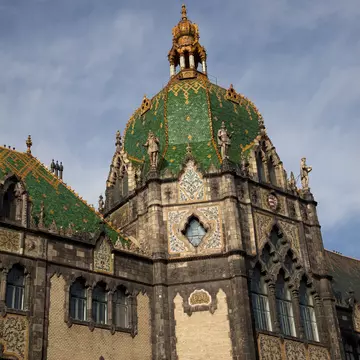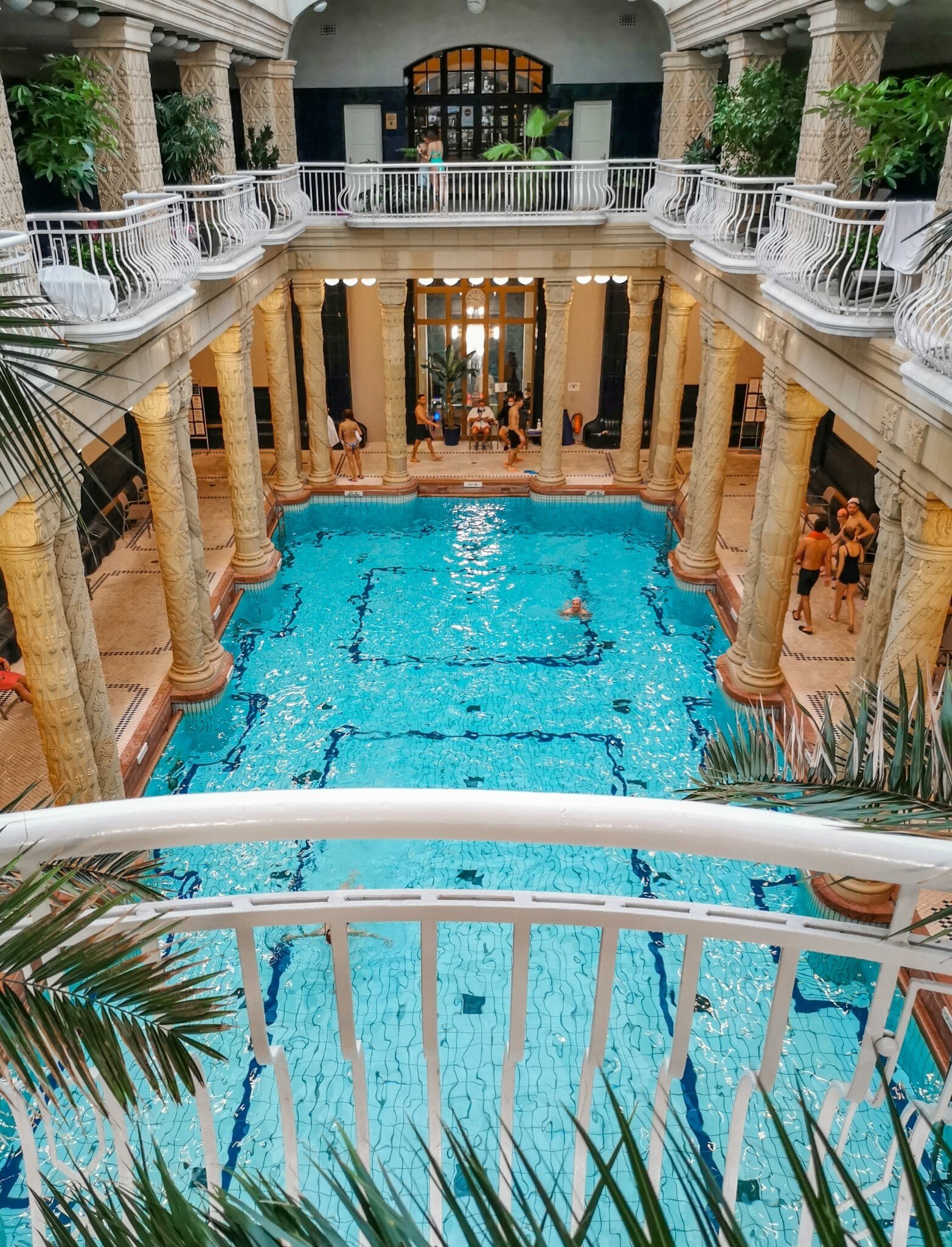
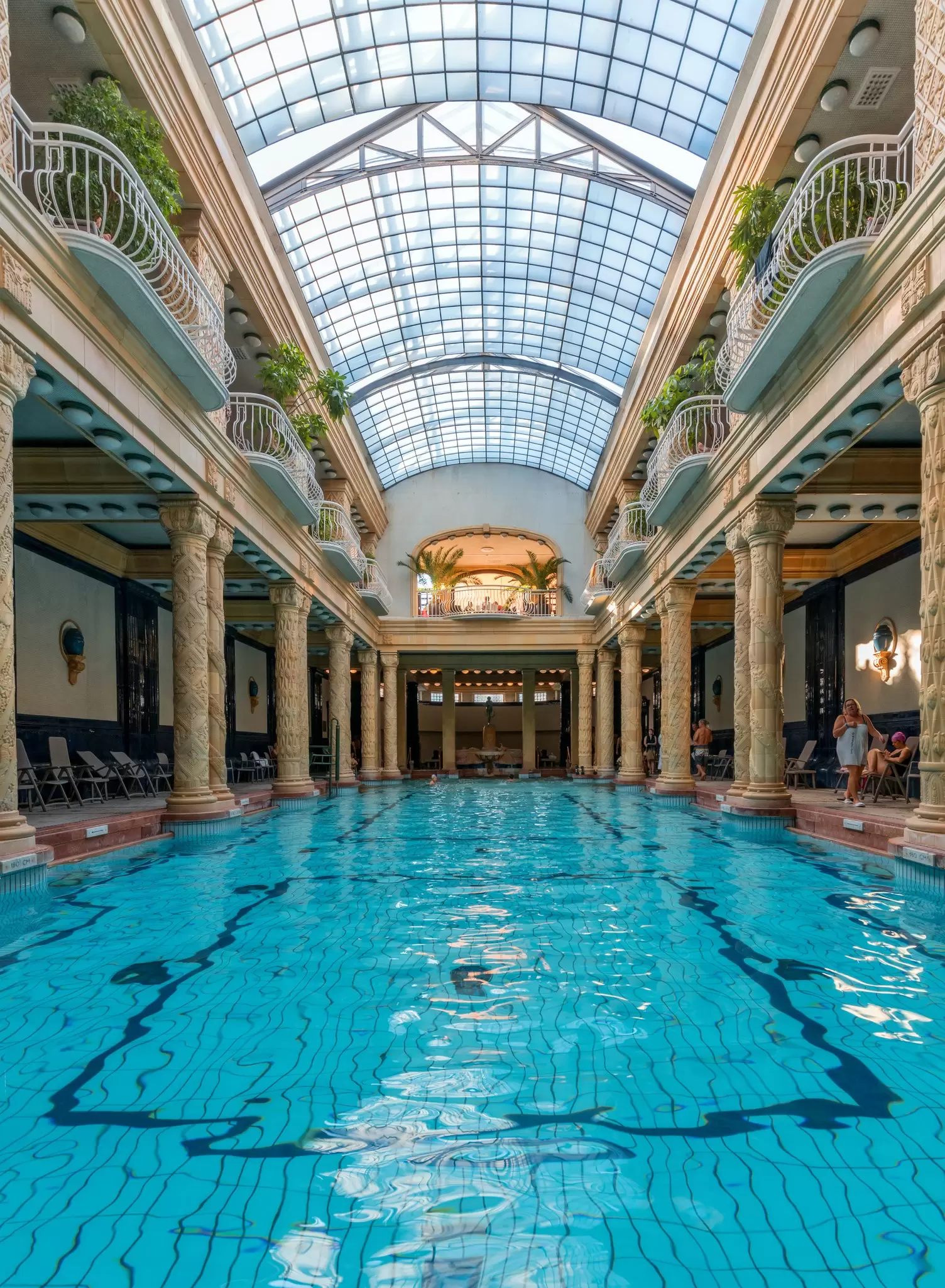
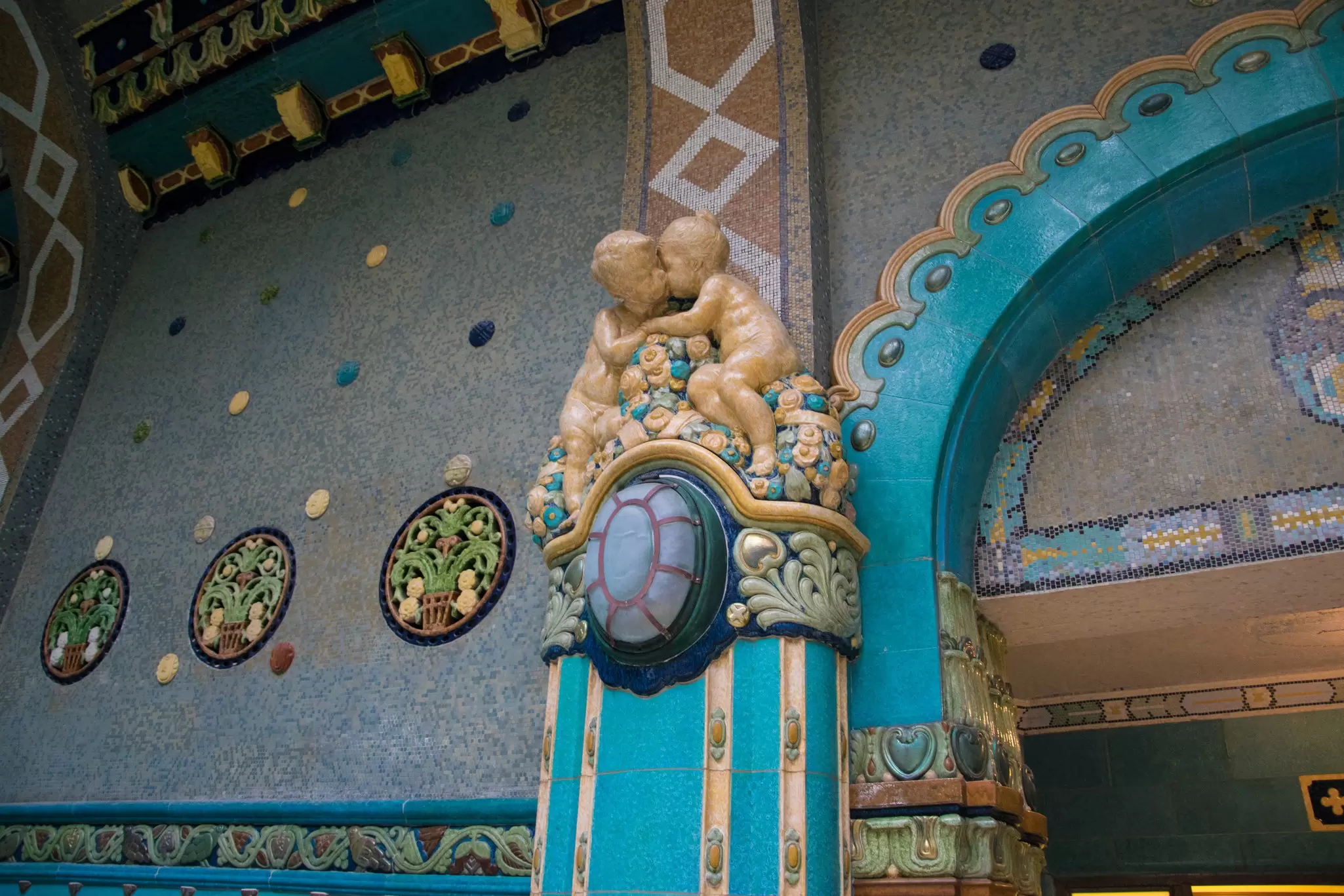
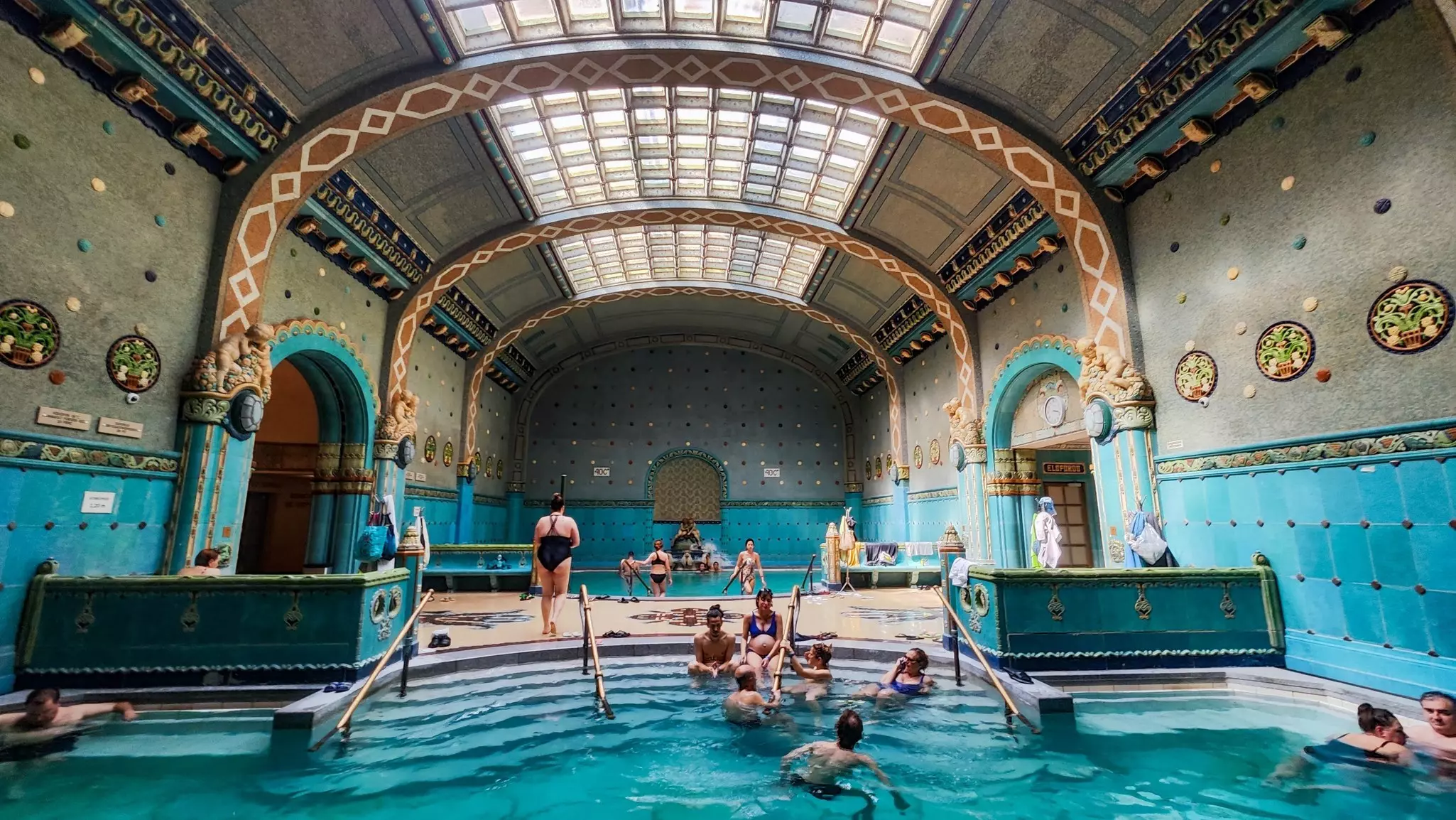
A true masterpiece of Art Nouveau architecture, the Gellért Baths at the foot of Gellért Hill are unquestionably one of the most stunning historic spas in Budapest. Inside, shades of blue and turquoise overlap and intermingle – not only in the pools of water, but also on the walls, which are adorned with stained-glass windows, colorful mosaics, Zsolnay porcelain tiles and elegant sculptures.
From Humble Beginnings to a Grandiose Spa
The origins of the bath can be traced back to ancient times – the first written chronicle about it dates back to the 10th century. As the hot waters were already believed to possess special medicinal properties in early times, King András II established a hospital here to treat patients with leprosy together with his daughter, but some sources say that a hospital had already stood here in 1178, treating the patients of the Great Plague. It became a beloved bathing spot during the Turkish occupation in the 15th century, and later in the 17th century, locals referred to it as the "Mud Baths" due to the presence of fine mud that settled at the pool's bottom and mixed with the spring water.
Another nickname for it was the "Baths of Virgins" due to various legends involving everyone from harems to prostitutes and innocent young girls. The "Mud Baths" had to be demolished when the predecessor of today’s Liberty Bridge was being built, and Gellért Baths opened at 7am on 26 September 1918 as one of Budapest's first luxurious establishments, setting a new standard of opulence in the city. Later on, it underwent expansions, adding fun features like a wave pool in 1927 and, later, a whirlpool.
What's Inside?
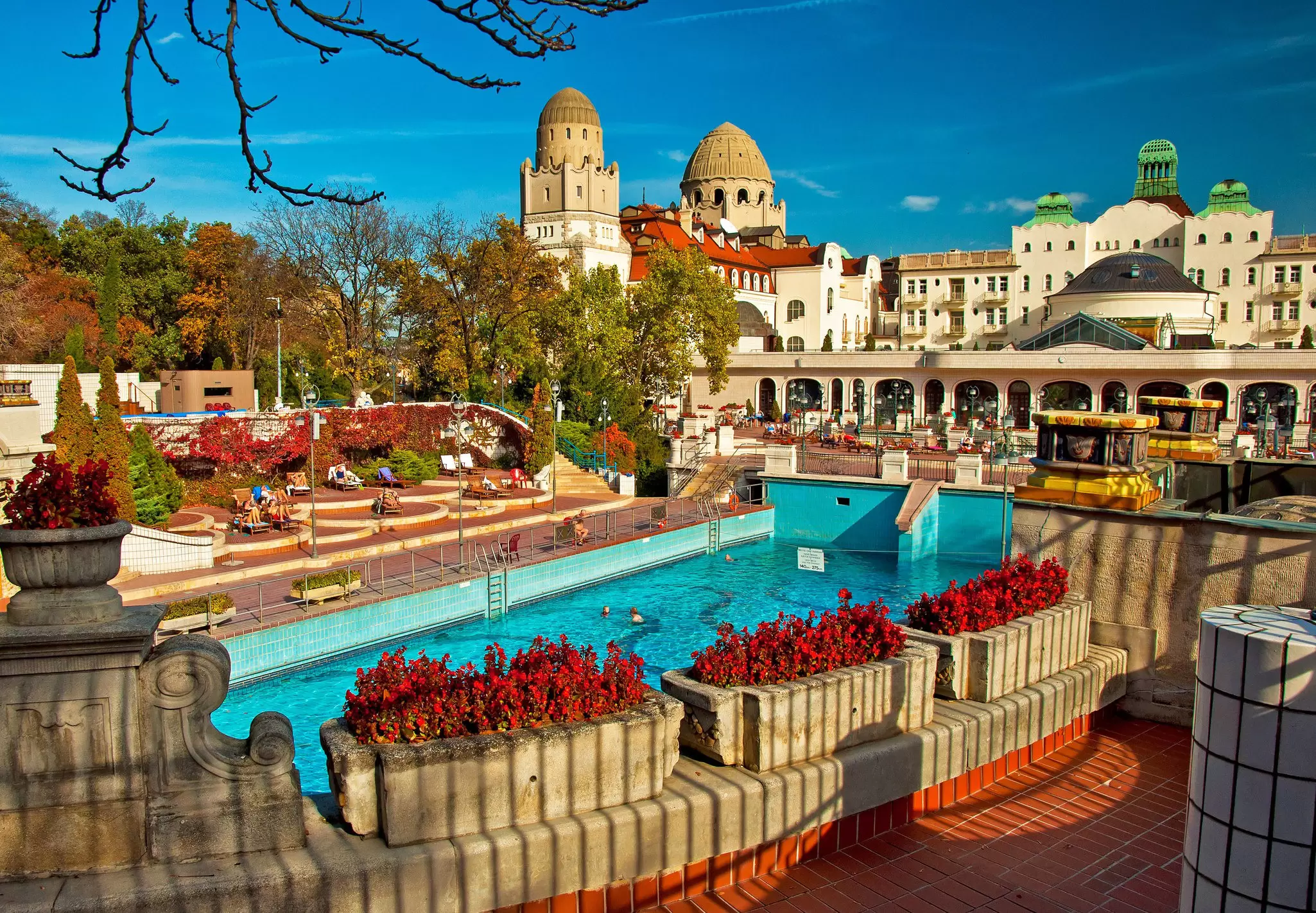
Stepping inside, you’ll be welcomed by stunning hand-painted stained-glass windows. In the alcoves on the walls below, you’ll see four sculptures of ladies symbolizing the four seasons and implying that the baths await visitors all year round, while a statue of Venus stands elegantly at the far back. Inside the baths, the richly embellished interior makes bathing in the hot waters feel like a royal ritual. The thermal pools range in temperature from 35°C to 40°C, and there’s also a cooler swimming pool for doing laps. Outside, a thermal pool overlooks the Buda Hills, and a wave pool entertains crowds of all ages in summer. Other amenities include medical massages, a sauna, a steam cabin and drinking fountains.
What's Below?
The mineral-rich healing hot waters emanate from deep within Gellért Hill and are rich in sodium, calcium and magnesium, among other minerals. They are fortifying against a number of ailments ranging from circulation-related disorders and spine and vertebrae injuries to degenerative illnesses and joint problems. Except for the cold plunge pools, all pools contain thermal water either in full or diluted in different ratios.
Below Gellért Baths, a vast underground cave system connects three of Budapest’s baths – Gellért, Rudas and the long-closed Rácz Baths. The cave system also leads to an aragonite cave within Gellért Hill under the Cave Church, where alien-looking, cauliflower-shaped mineral formations adorn the walls. The cave system is closed to the public, but Imagine Budapest (imagine.hu) organizes tours there in Hungarian. Outside the baths, looking towards the Cave Church, you can spot a blue ad board that has a vent within that blows out used air from the cave system – a fun sight during winter.