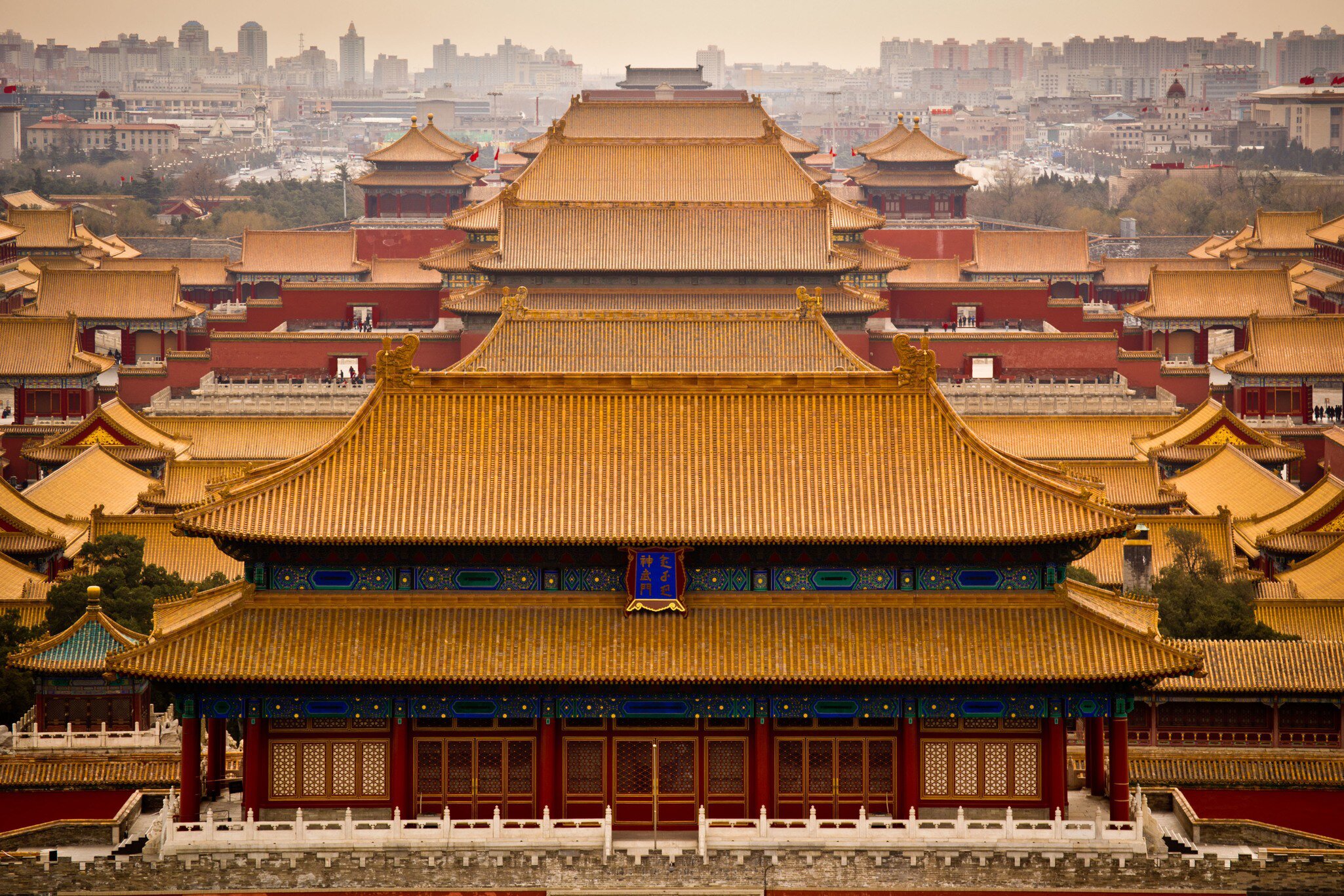
Enclosed by 3.5km of citadel walls at the heart of Beijing, the Forbidden City (紫禁城, Zǐjìn Chéng) is China’s largest collection of ancient buildings. Steeped in stultifying ritual, this was the reclusive home to two dynasties of imperial rule, sharing 900-plus buildings with a retinue of consorts, eunuchs and palace maids. Not so long ago, entering through these main gates meant instant death.
Introduction
Although you can explore the Forbidden City in a few hours, a full day will keep you occupied – it is a truly colossal place. Much like the Louvre, you can't see it all at once, so focus on the parts that grab your attention. Many visitors get caught up with the vast ceremonial halls and parade grounds of the Outer Court (southern half), but remember that the real thrill comes from exploring the Inner Court: the labyrinth of courtyards and halls north of the Outer Court, laid out on a more human scale. Be prepared to walk long distances.
The Forbidden City was renamed the Palace Museum (故宫博物馆, Gùgōng Bówùguǎn) in 1925, just one year after Puyi, the abdicated last emperor, departed the Inner Court. It celebrated its 600th anniversary in 2020, and its 100th anniversary as a museum in 2025.
The Outer Court
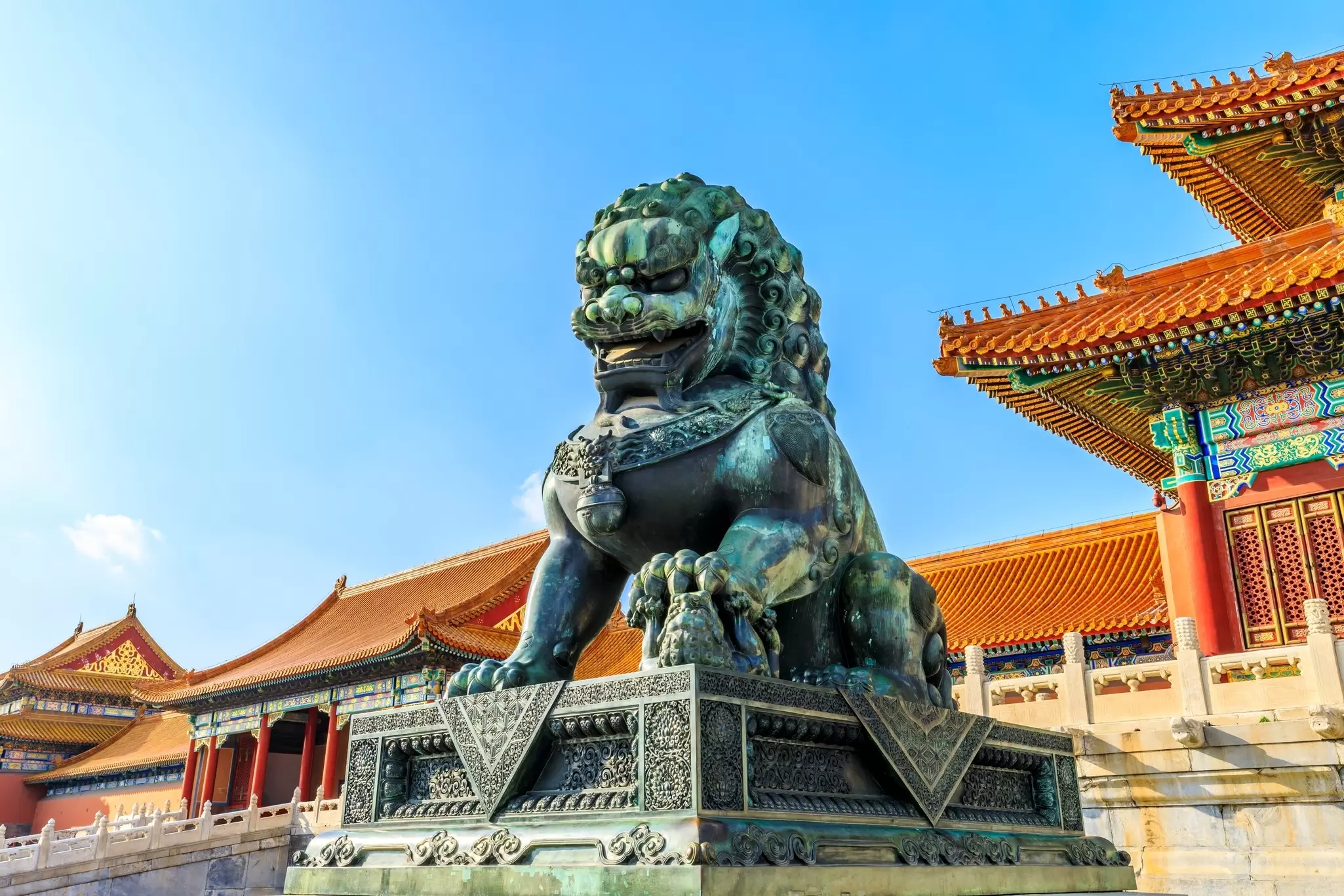
The Outer Court is dominated by the Three Great Halls set in vast cobbled courtyards, which could hold thousands of dignitaries and their sedan-chair bearers, guards and servants.
The Hall of Supreme Harmony is the most important and largest structure in the Forbidden City. It was used for state occasions, such as the emperor’s birthday, coronations and the nomination of military leaders. Inside the Hall of Supreme Harmony is a richly decorated Dragon Throne, from which the emperor would preside over trembling officials.
Behind the Hall of Supreme Harmony is the square Hall of Central Harmony, which was used as the emperor’s transit lounge. Here he would make last-minute preparations, rehearse speeches and receive ministers.
The third of the Great Halls is the Hall of Preserving Harmony, used for banquets and later for the palace examinations.
The Inner Court
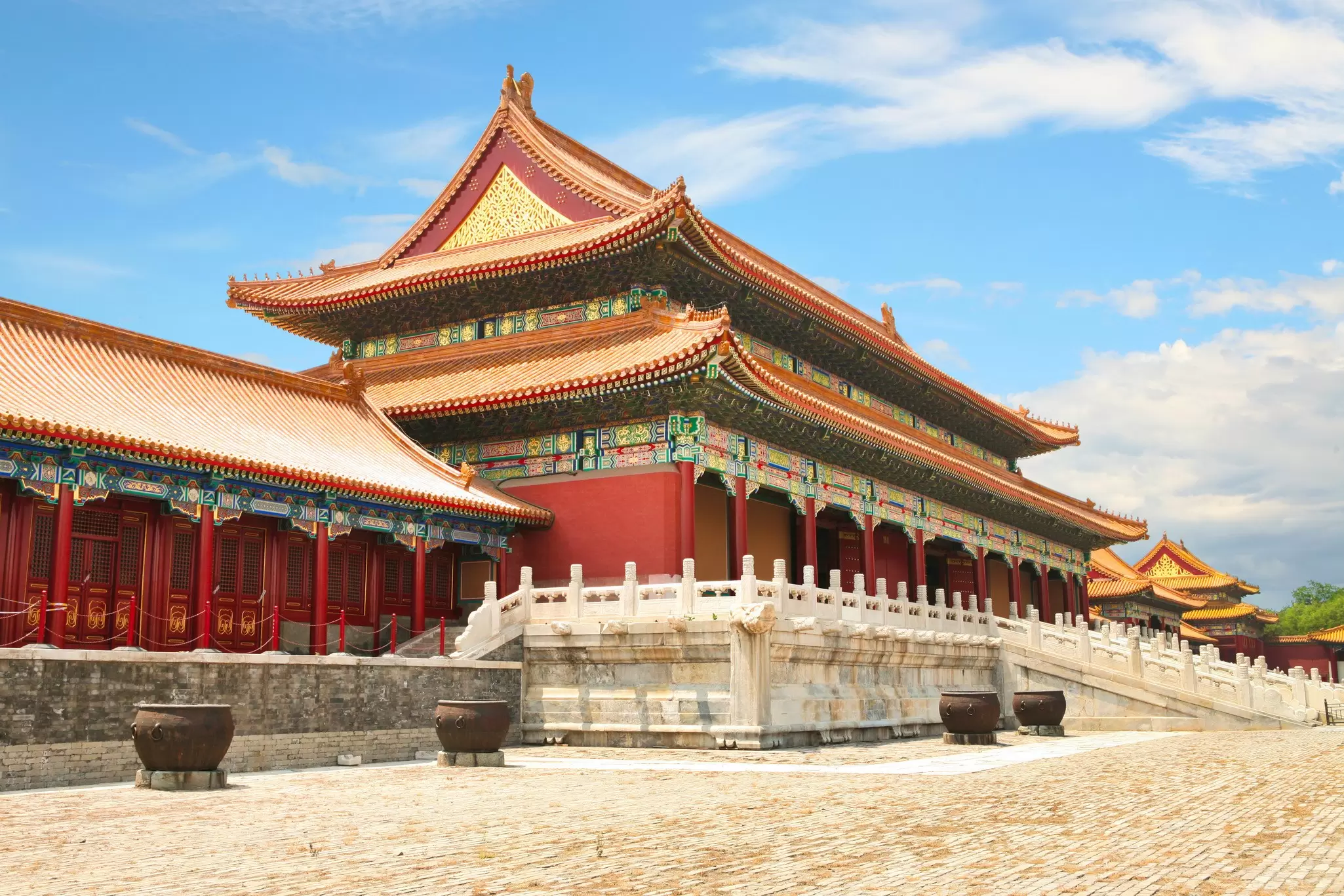
Unless you have all day, it's best to focus on just one or two sections within the Inner Court. All are fascinating.
Palace of Compassion & Tranquility
West of the main complex is the Palace of Compassion and Tranquility (1536), where the empresses and consorts of deceased emperors resided, not being permitted to serve the new emperor. The main hall has an excellent exhibit of Buddhist statuary, while the adjacent Palace of Longevity and Health unveils the period furnishings of the Empress Dowager Chongqing (1736–77). Directly south is the Garden of the Palace of Compassion and Tranquility.
Treasure Gallery
East of the Hall of Preserving Harmony is the extensive Palace of Tranquil Longevity, also known as the Treasure Gallery (separate ¥10 admission), which the Qianlong Emperor built for his retirement (which he never took) in 1771. Today it comprises a number of atmospheric halls, gardens and courtyard buildings that hold a number of fine exhibits from the Palace Museum collection.
Highlights include the beautiful glazed Nine Dragon Screen, one of only three of its type left in China, and the Belvedere of Cheerful Melodies, a 3-story wooden opera house.
Before a visit to the Treasure Gallery, be sure to visit the Hall of Clocks and the Hall of Abstinence, where the emperor would purify himself before important rituals.
Central Halls
The basic configuration of the Outer Court is echoed by the next group of buildings along the Central Axis, reached through the Gate of Heavenly Purity. Though smaller in scale, these buildings were more important in terms of real power, which in China traditionally lies at the back door.
The first structure is the Palace of Heavenly Purity, a residence of Ming and early Qing emperors, and later an audience hall for receiving foreign envoys and high officials.
Immediately behind it is the Hall of Union, which contains a clepsydra – a water clock made in 1745 with five bronze vessels and a calibrated scale. The Palace of Earthly Tranquility was the imperial couple’s bridal chamber and where the empress ruled the Inner Court.
Eastern & Western Palaces
A dozen smaller palace courtyards lie to the east and west of the three lesser central halls. It was in these self-contained abodes where most emperors actually lived. Many of the buildings, particularly those to the west, are decked out in imperial furniture.
The six eastern palaces were the living quarters of imperial consorts and their sons during Qing times. Exhibitions here display a variety of cultural relics, from ceramics and jade to musical instruments and ceremonial bronze vessels. The most unusual is the Palace of Prolonging Happiness (aka Yanxi Palace), which features an unfinished 20th-century western-style building with an intricately carved white marble facade.
The six western palaces include the Palace of Gathered Elegance, which contains photographs and artifacts relating to the last emperor, Puyi, who lived here as a child ruler. The Palace of Earthly Honour, with its period interiors, was where Empress Dowager Cixi received courtiers on her 50th birthday. As a young consort, she lived in the Palace of Gathered Elegance to the north. At the head of the western palaces is the Hall of Mental Cultivation, often the emperor's residence and office.