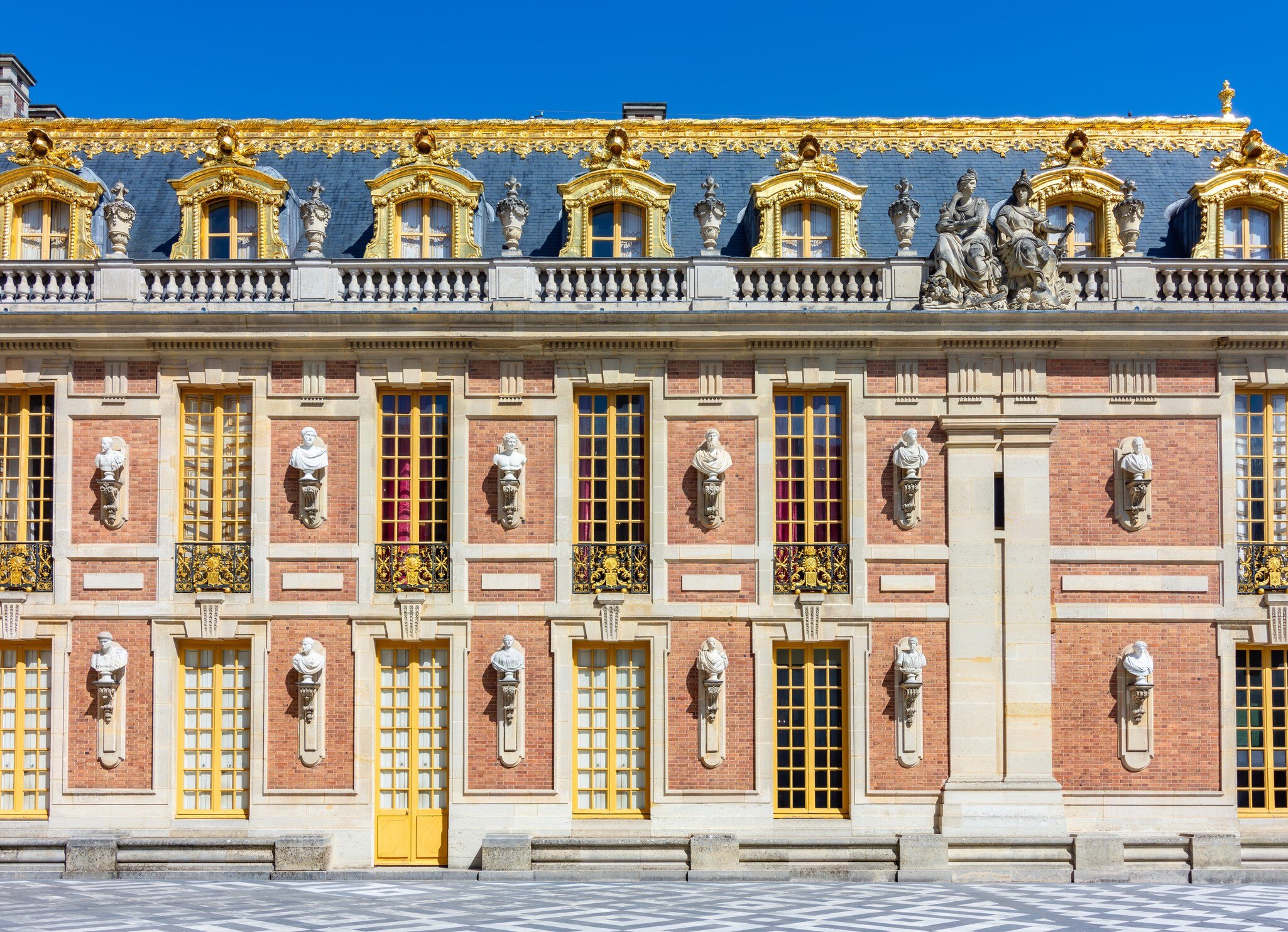
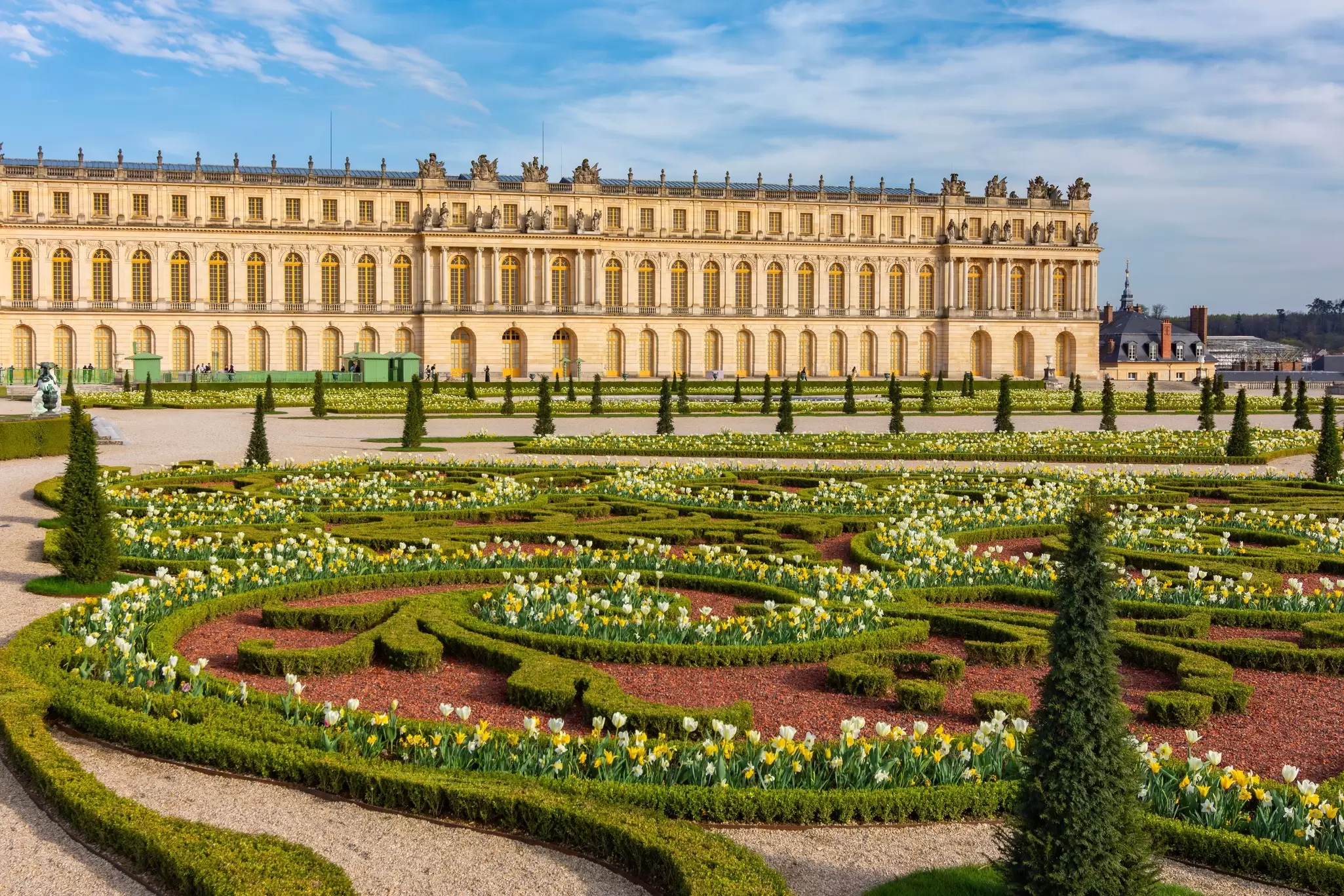
Sprawling over 900 hectares, the monumental, 400-year-old Château de Versailles is France’s most famous and grand palace. It's situated in the leafy, bourgeois suburb of Versailles, 22km southwest of central Paris. The estate is divided into three main sections: the 580m-long palace; the gardens, canals and pools to the west of the palace; and the Trianon Estate to the northwest.
History
The estate began in 1623 as a hunting lodge for Louis XIII. Subsequently, Louis XIV transformed it into a vast, baroque château. Some 30,000 workers and soldiers toiled on the property, the bills for which all but emptied the kingdom’s coffers.
The Château de Versailles was the kingdom’s political capital and the seat of the royal court from 1682 up until the fateful events of 1789 when revolutionaries massacred the palace guard. Louis XVI and Marie Antoinette were ultimately dragged back to Paris, where they were ingloriously guillotined. In the 19th century, Napoléon and Josephine lived on the estate, as did Charles de Gaulle in the 1940s.
The Palace
Work on the palace began in 1661 under the guidance of architect Louis Le Vau (Jules Hardouin-Mansart took over from Le Vau in the mid-1670s); painter and interior designer Charles Le Brun; and landscape artist André Le Nôtre, whose workers flattened hills, drained marshes and relocated forests as they laid out the seemingly endless gardens, ponds and fountains.
Le Brun and his hundreds of artisans decorated every moulding, cornice, ceiling and door of the interior with the most luxurious and ostentatious of appointments: frescoes, marble, gilt and woodcarvings, many with themes and symbols drawn from Greek and Roman mythology.
Few alterations have been made to the château since its construction, apart from most of the interior furnishings disappearing during the Revolution and many of the rooms being redecorated by Louis-Philippe (r 1830–48), who opened part of the château to the public in 1837. The château is in the final stages of a lavish €400 million restoration.
Hall of Mirrors
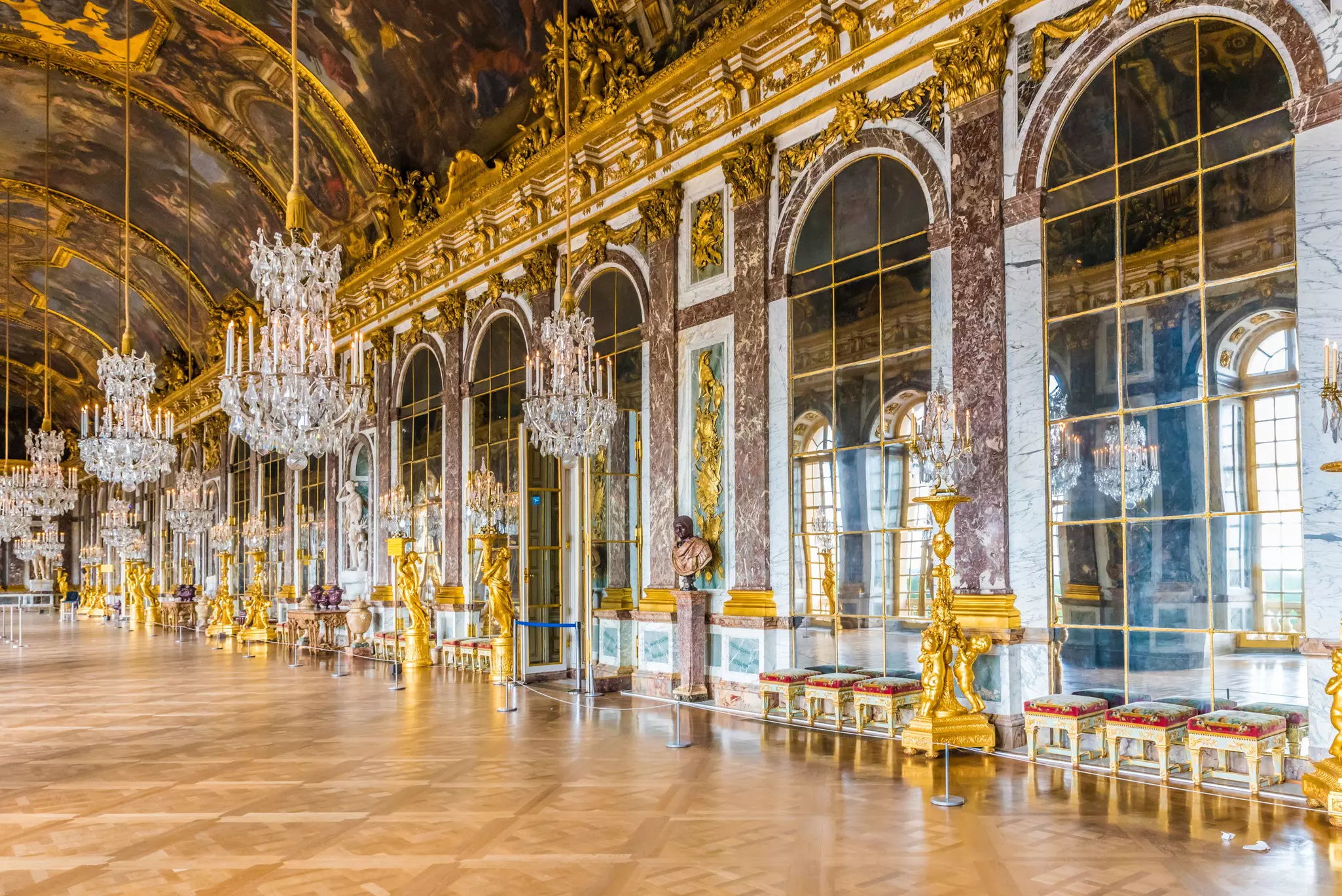
The palace’s opulence peaks in its shimmering Galerie des Glaces (Hall of Mirrors). This 75m-long ballroom shines with 17 sparkling mirrored features comprising 357 individual mirrors on one side and an equal number of windows overlooking the gardens and the setting sun on the other.
King’s & Queen’s State Apartments
Luxurious, ostentatious appointments adorn every feature of the palace’s Grands Appartements du Roi et de la Reine (the King’s and Queen’s State Apartments). Rooms are dedicated to Hercules, Venus, Diana, Mars and Mercury.
Other Notable Rooms
The opulent excess is punctuated by various highlights worth seeking out. The Galerie des Batailles (Battle Gallery) is longer than the Hall of Mirrors and features 33 huge paintings that recall mostly forgotten French military victories. Take time to savor the thematic decor in the Salon de la Guerre (War Room) and the Salon de la Paix (Peace Room), which bookend the Hall of Mirrors.
Gardens, Estate & Equestrian Academy
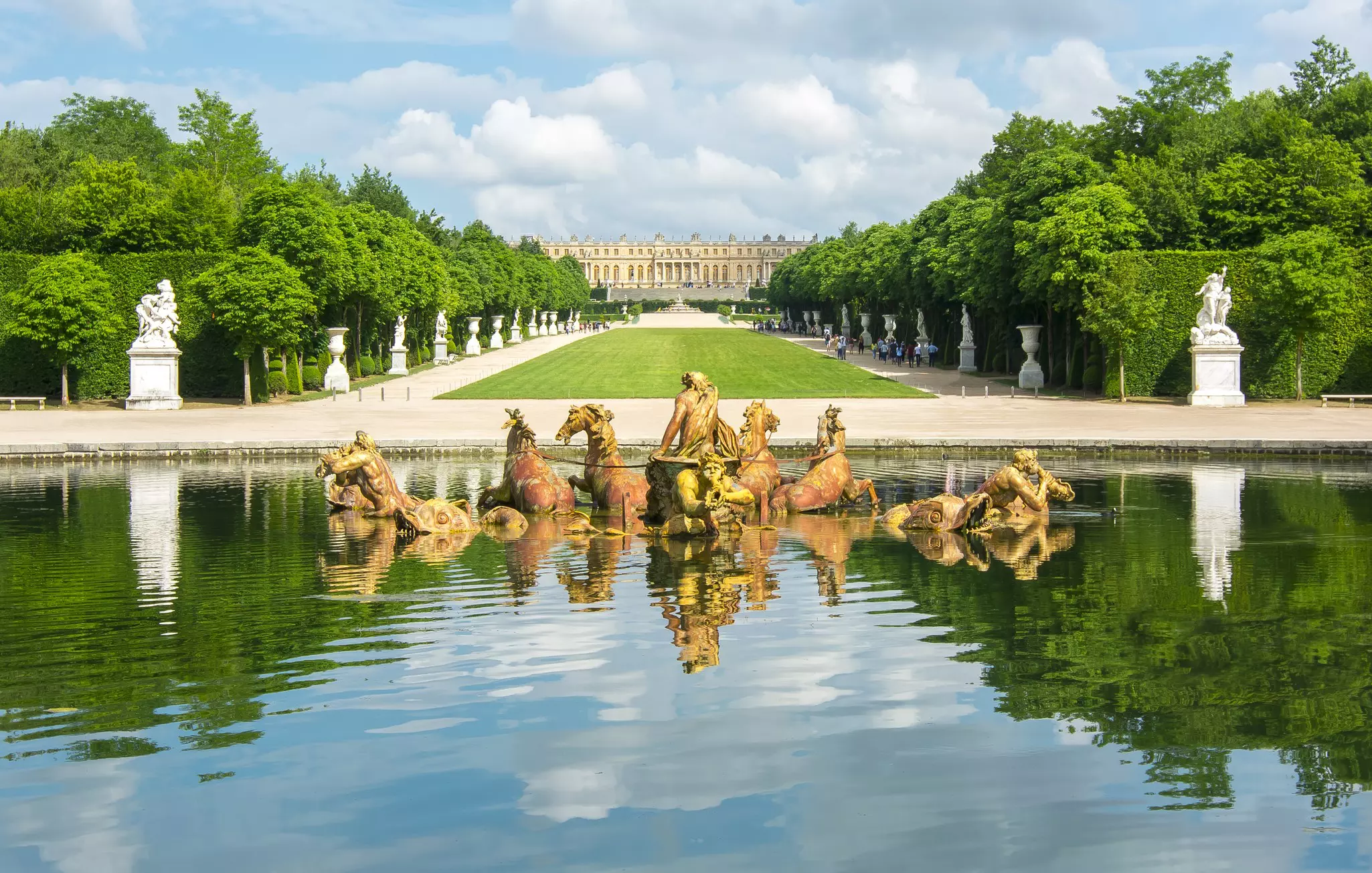
A walk through the sprawling and artful formal gardens, natural areas, huge Grand Canal and the Trianon palaces is a highlight for many visitors. Or take in a horse show at the National Equestrian Academy of Versailles.
Getting There & Away
Versailles is best reached by the RER C line, which ends at Versailles Château Rive Gauche (some trains go elsewhere). Other stations with Versailles in their names are a much longer walk from the château and town centre. You can walk everywhere within Versailles, the palace and the estate.