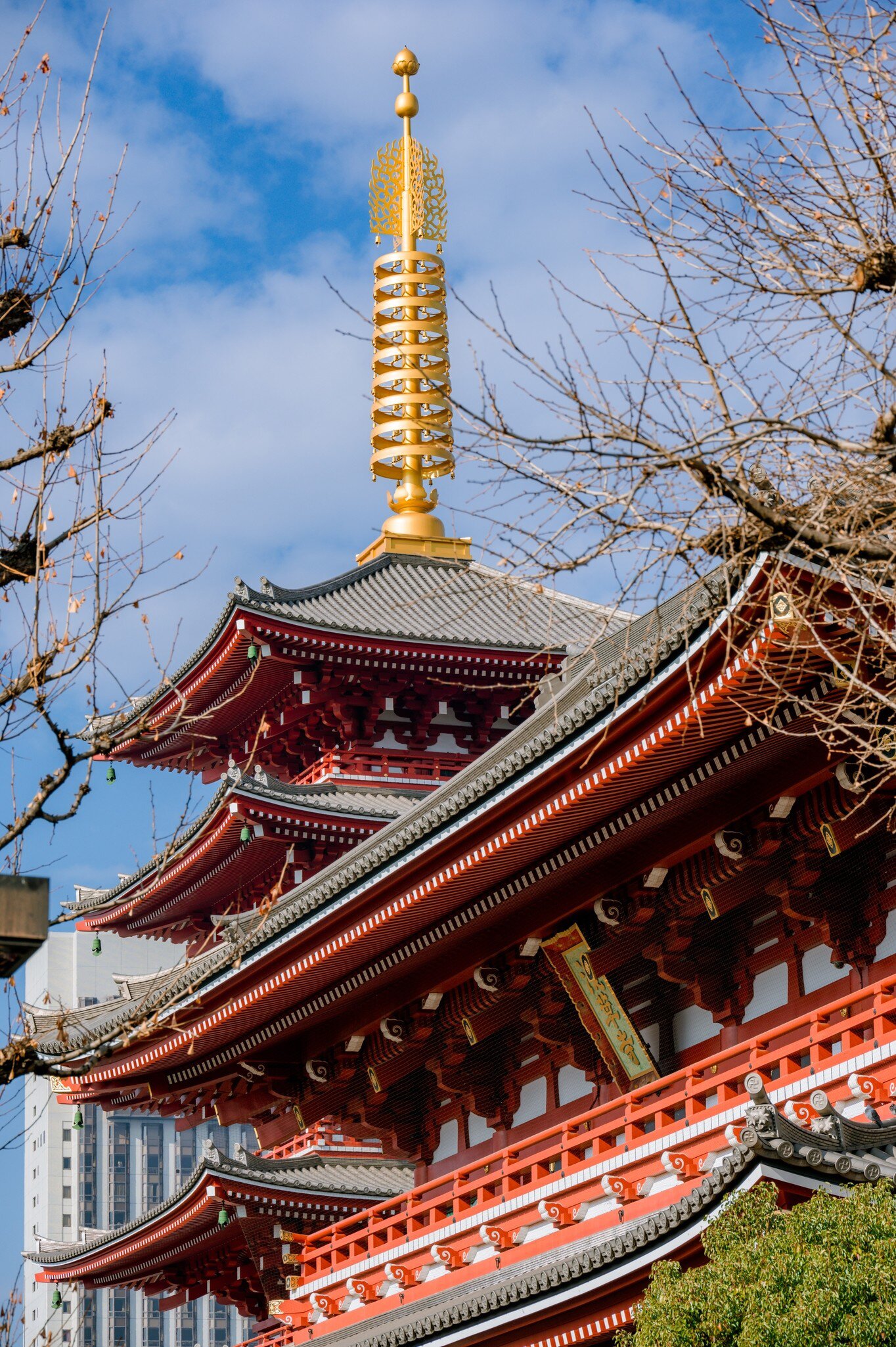
Tokyo’s oldest temple, Sensō-ji (浅草寺) is to Tokyo as the Colosseum is to Rome – you simply have to see it. First constructed in the 7th century, the Buddhist temple enshrines Kannon, the Goddess of Mercy (hence why it’s also known as Asakusa Kannon-dō).
Step Through the Gates
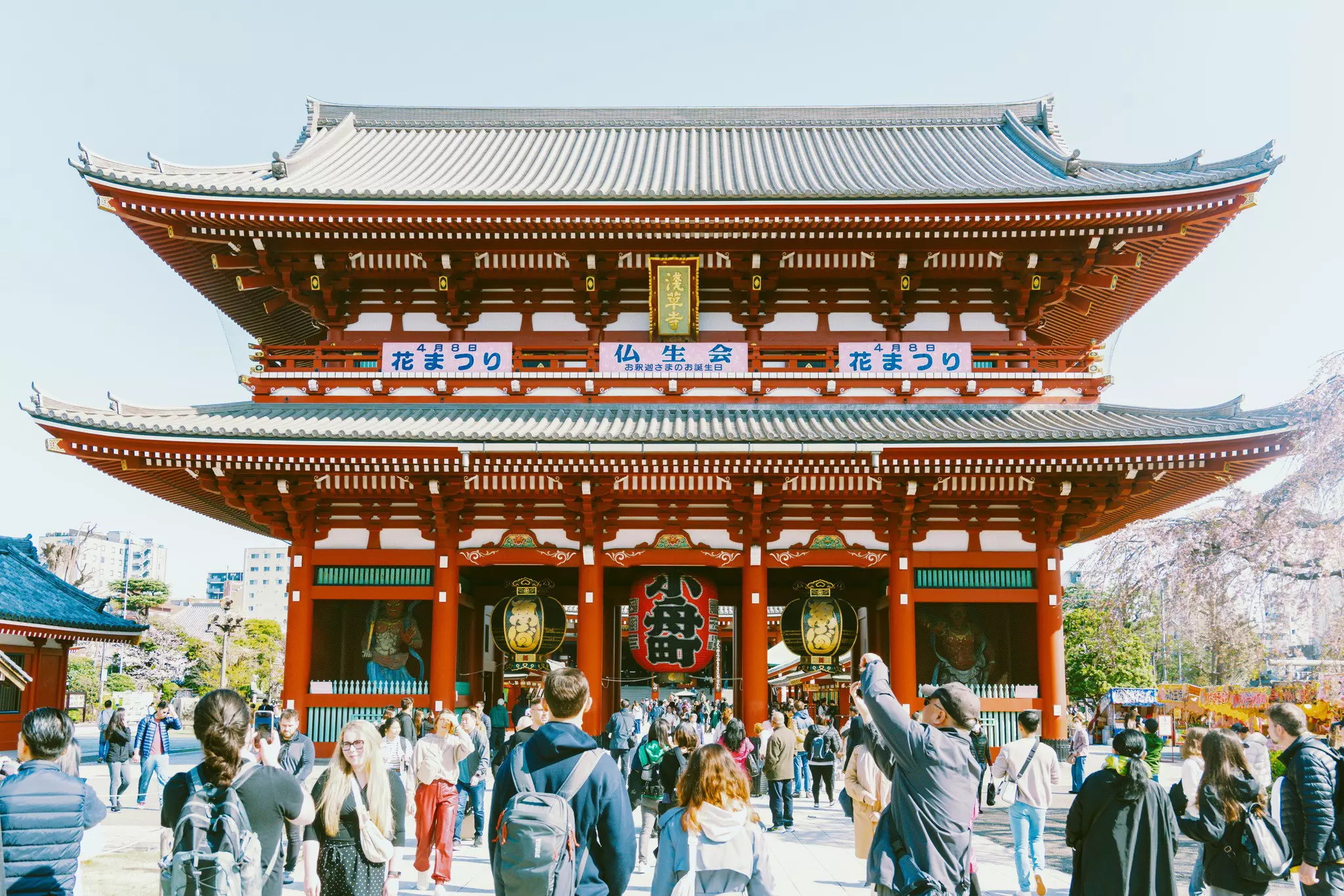
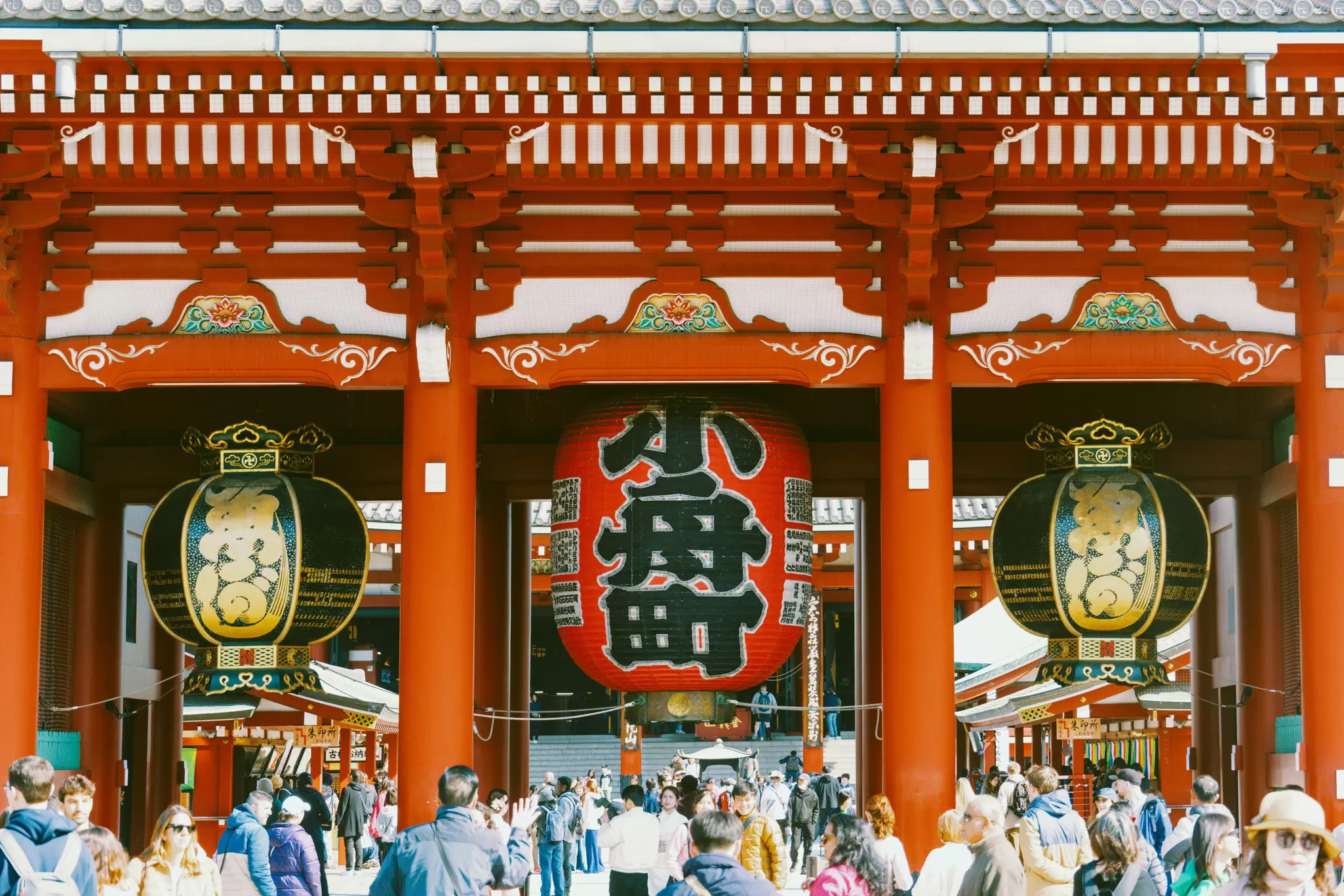
Kaminari-mon is your gateway to the temple, and the first thing you’ll see as you approach Sensō-ji. At its center hangs a gigantic red chōchin (paper lantern), almost close enough to touch. Step right up to it to see an intricately carved dragon on its underside.
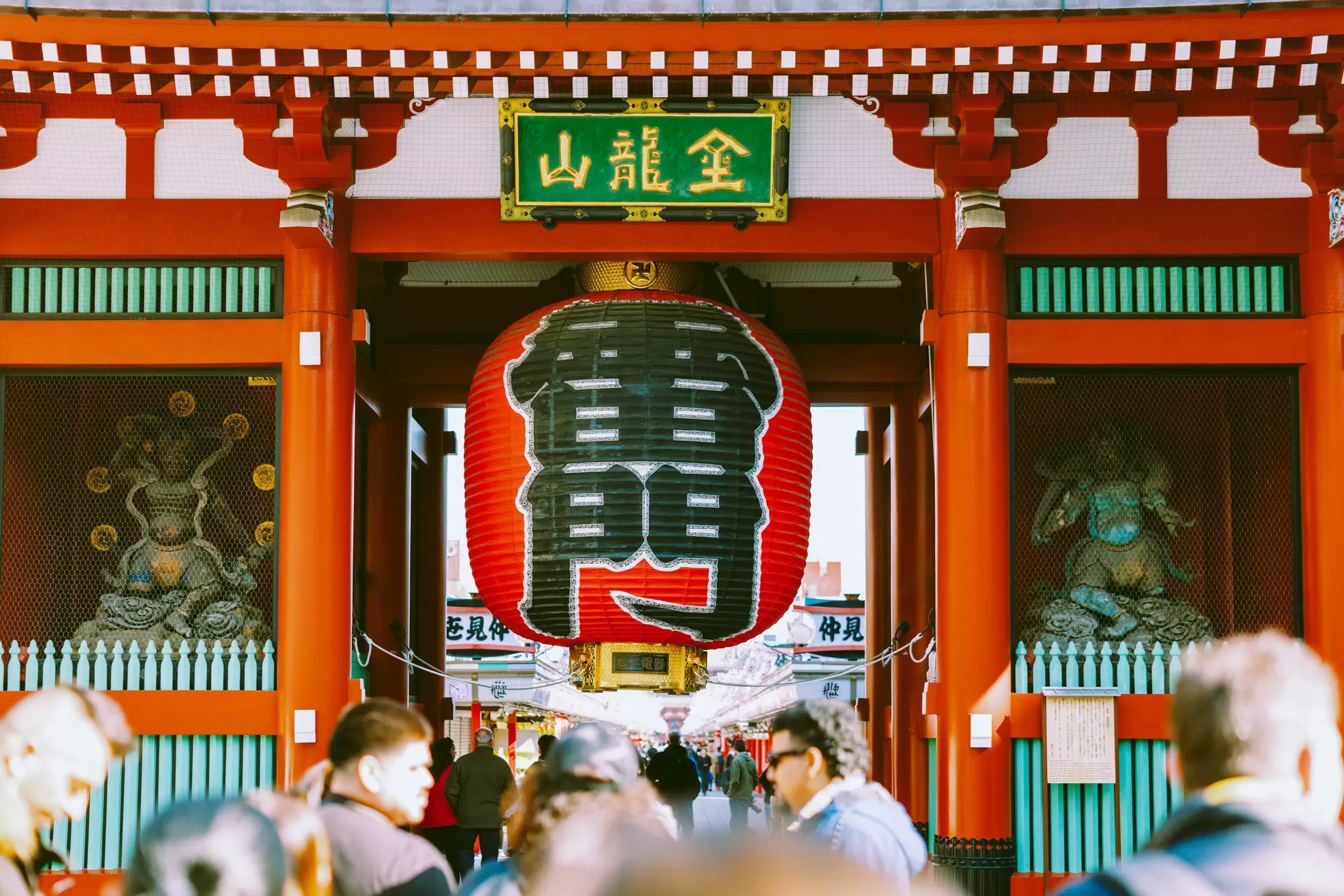
Flanking the doorway are statues of two deities: Fūjin, the God of Wind, and Raijin, the God of Thunder. Both are enshrined as protectors of the gate (against natural disasters). The original gate was built in 942 CE and has been rebuilt several times – the current gate dates back to 1960.
The Market Street
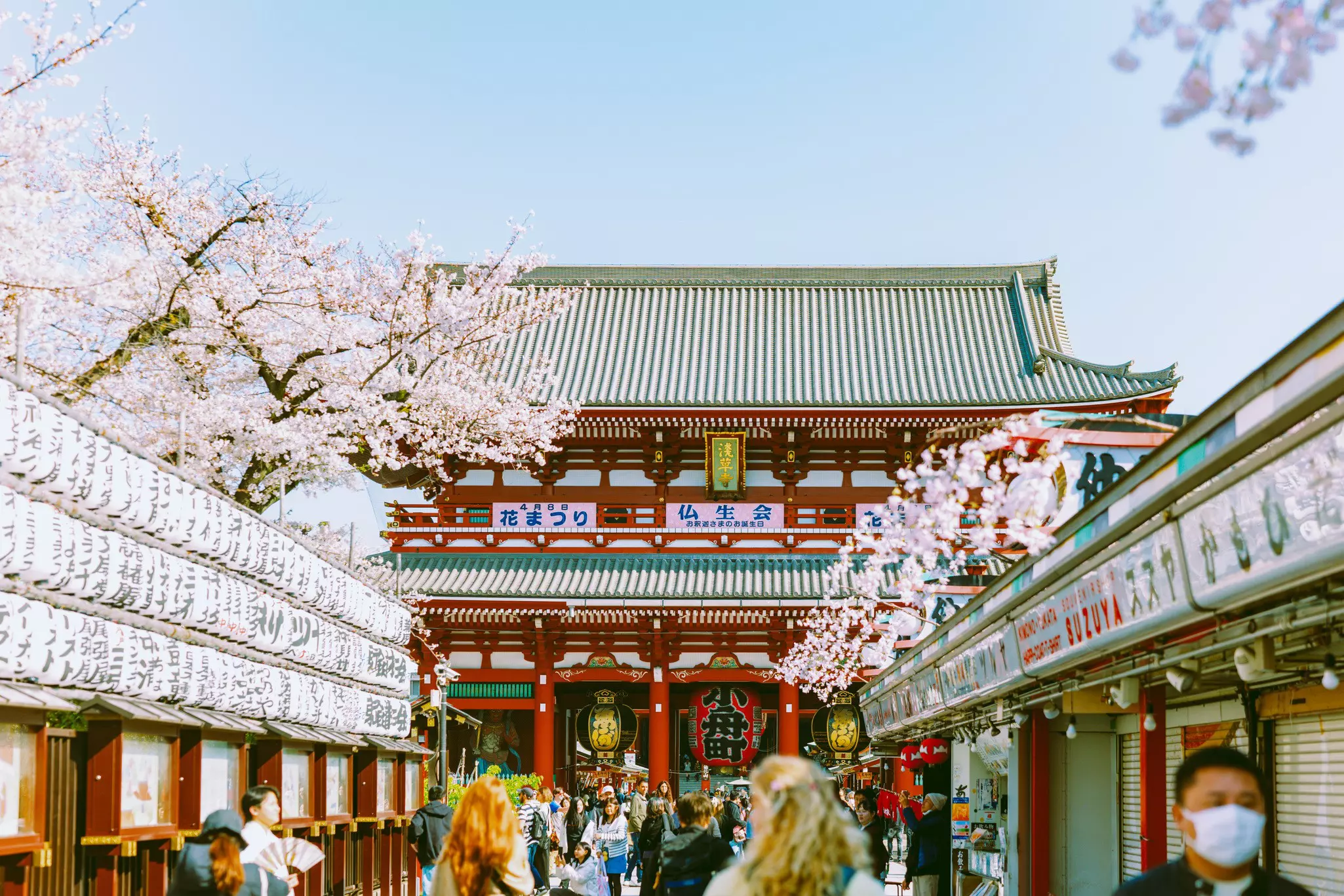
Lining the way to the temple is Nakamise-dōri, comprised of shops and stalls selling fresh food and plenty of souvenirs and trinkets. The street is undeniably touristy, but it retains a long, proud history as one of Japan’s oldest shopping streets, dating back to the late 1600s.
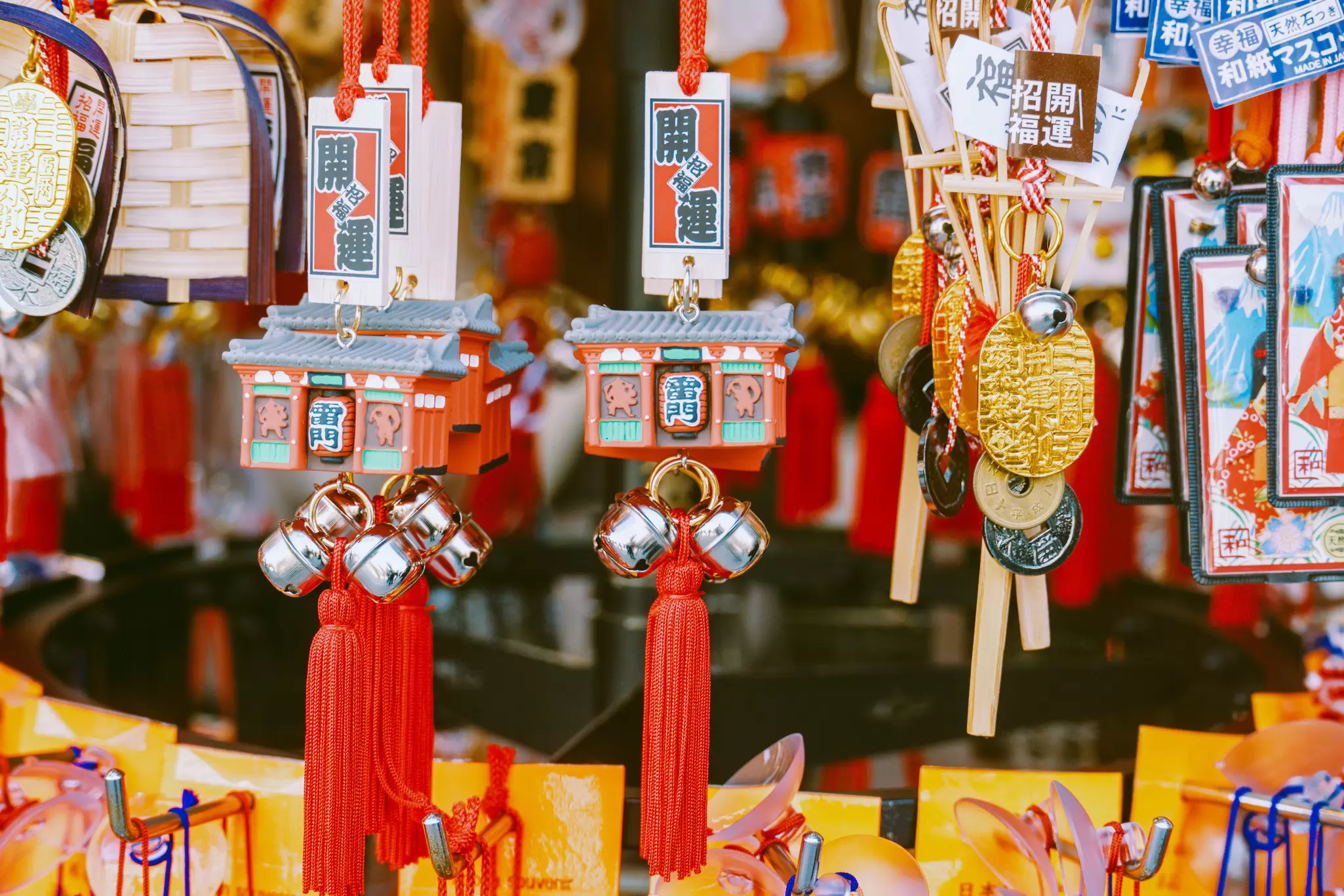
Grabbing a senbei (rice cracker) or ningyō-yaki (pastries filled with sweet bean paste) freshly made on the spot is a quintessential part of a visit to Sensō-ji. However, you may want to save the souvenir shopping for when you’re on your way out, as many for sale here are quite similar.
The Main Hall
Breathe in the incense as you approach Kannon-dō, the main hall, then climb the steps and enter the worship area. If you’d like to make an offering, drop a coin into the wooden box at the top of the steps, put your hands together and bow once. Kannon-dō was originally built by the third shogun (former military ruler of Japan), Tokugawa Iemitsu, and was a designated National Treasure before it was destroyed during WWII air raids – the structure that stands today was rebuilt in 1958.
There is an altar in the temple’s outer sanctum, while the temple’s namesake, the Goddess Kannon, is enshrined within its inner sanctum (though the existence of her image within the temple is sometimes disputed).
Get Your Fortune Told
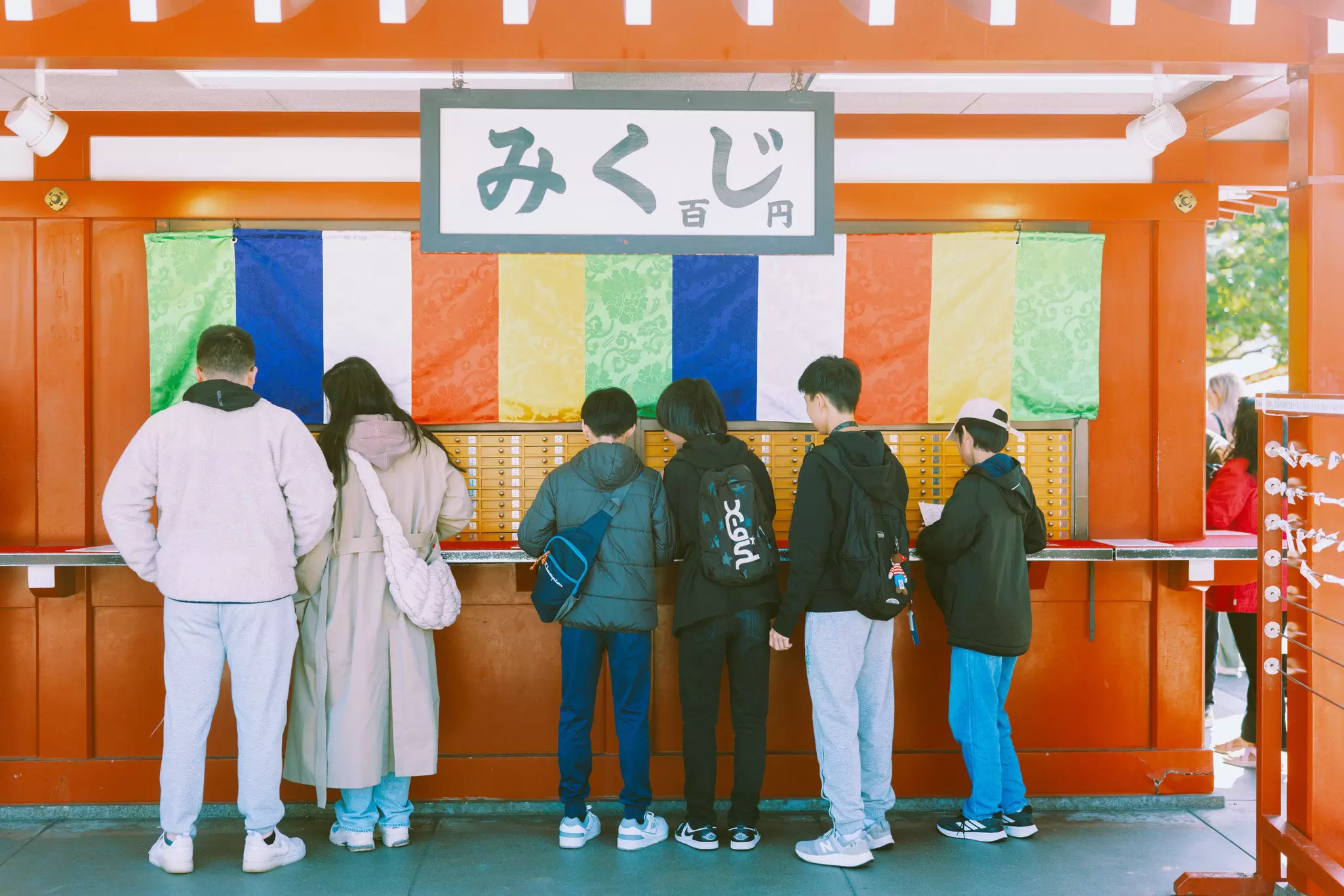
On New Year’s Day, drawing an omikuji – a written form of fortune telling – from the temple or shrine is a Japanese custom, though any time of year is a good time to find out what your fortune may be.
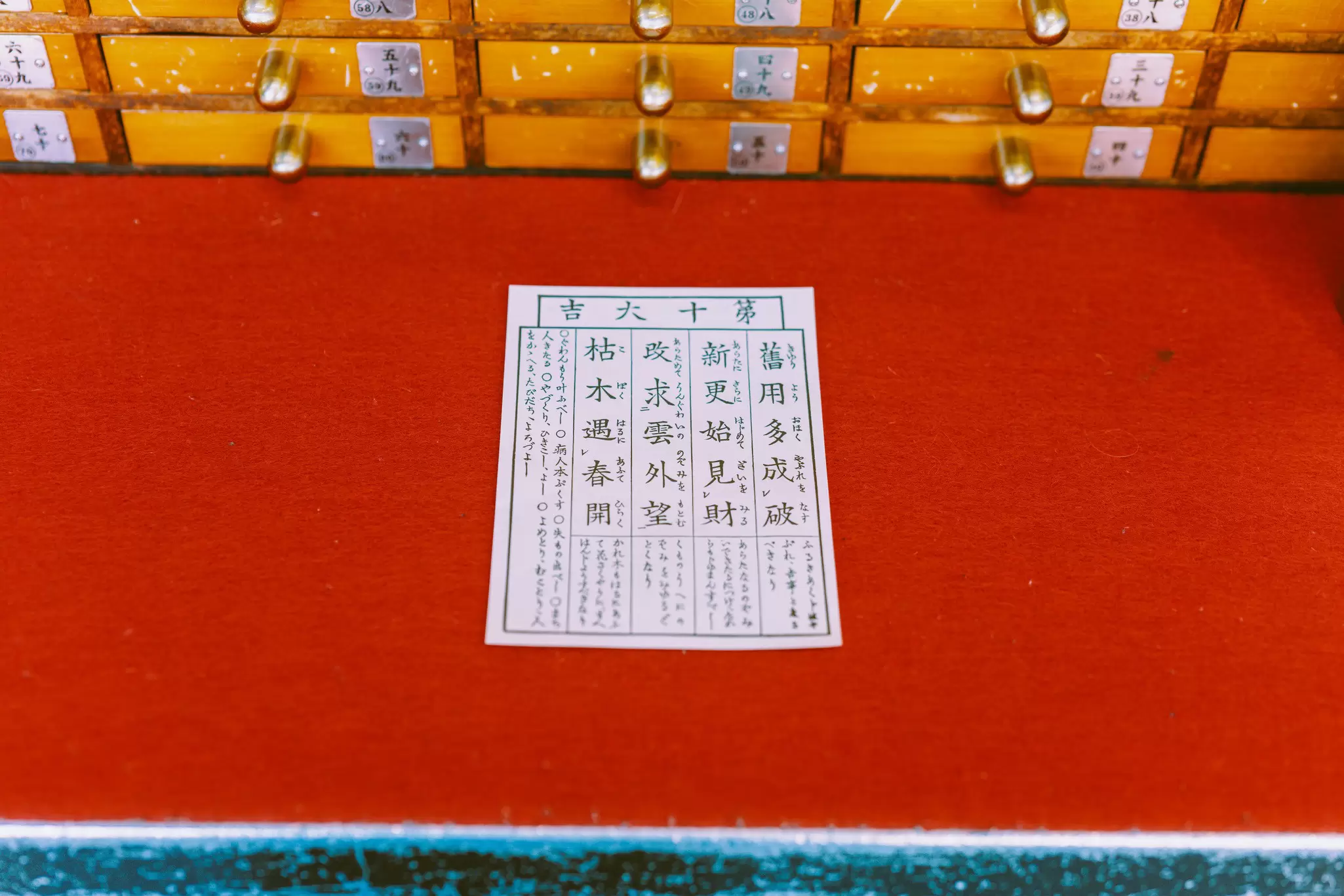
Just outside Kannon-dō and within the main hall, you’ll see silver canisters placed before shelves laden with tiny drawers. Drop ¥100 into the collection box, then give the silver canister a shake and flip it upside down so that a stick juts out of a hole at the bottom.
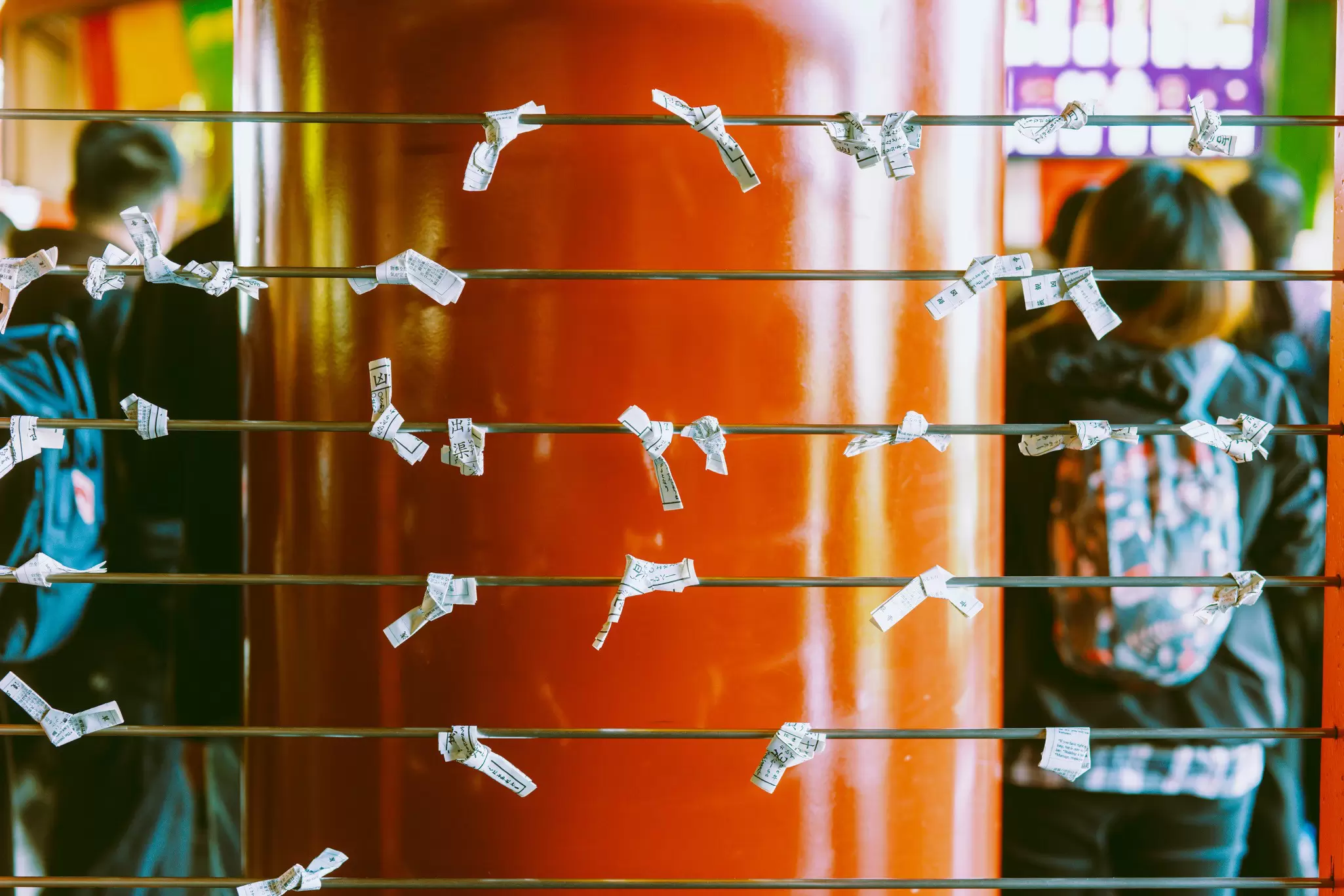
Note the character written on the stick, insert it back into the canister, and find the drawer with the corresponding character and open it – your fortune lies within. If your fortune is good, you may keep it. Otherwise, tie the slip of paper in a knot on a nearby rack to ward off the misfortune.
More Shrines & Temples
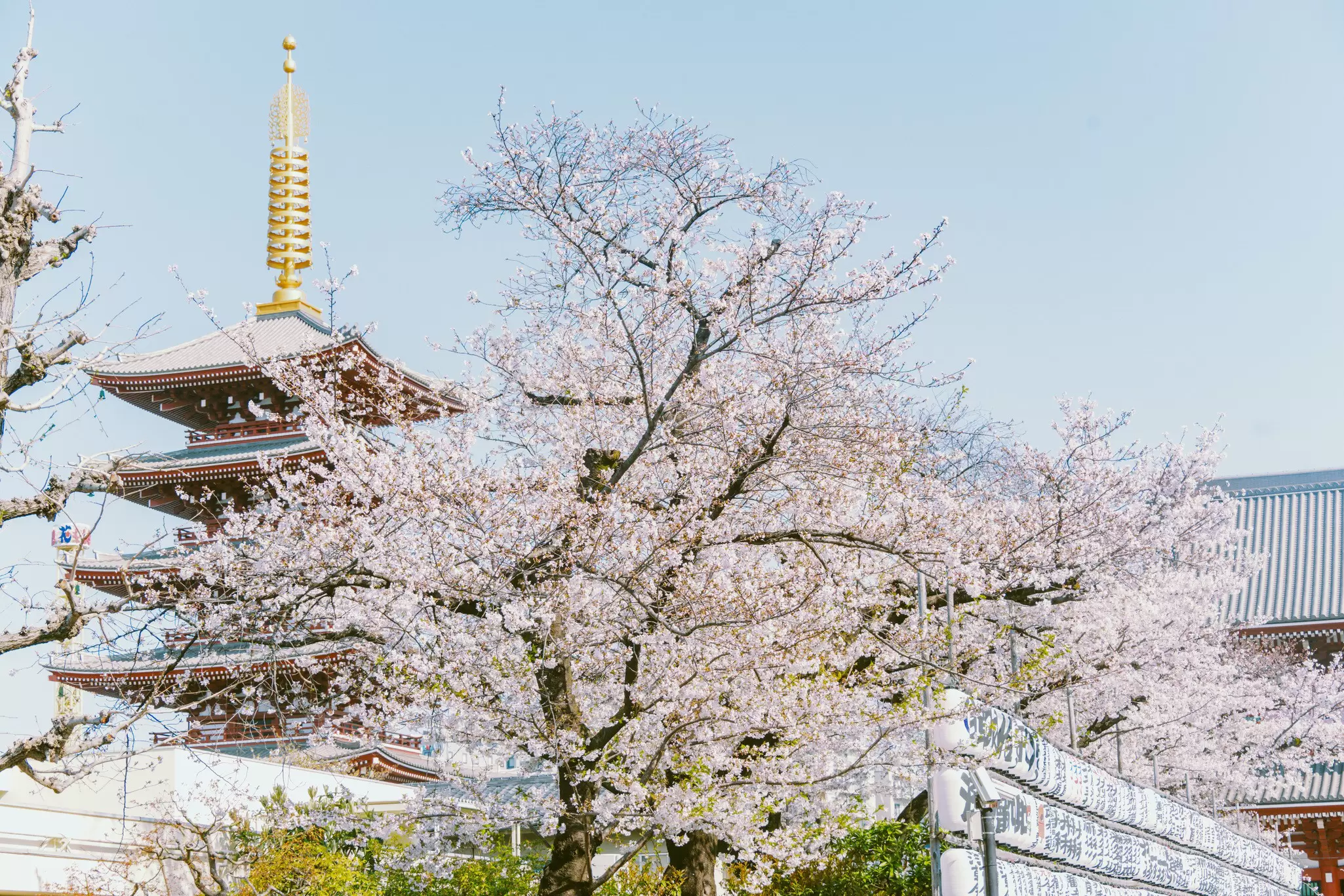
Outside the temple’s main hall is a Five-Storey Pagoda; the original structure was built in 942 CE along with the original Kaminari-mon, though the one that stands here now is a recreation following destruction during WWII. Once considered to be one of the city’s finest pagodas during the Edo period, it was an important landmark of Asakusa and appeared often in art at the time. The top story of the tower houses a Śarīra – a relic of the Buddha’s remains.
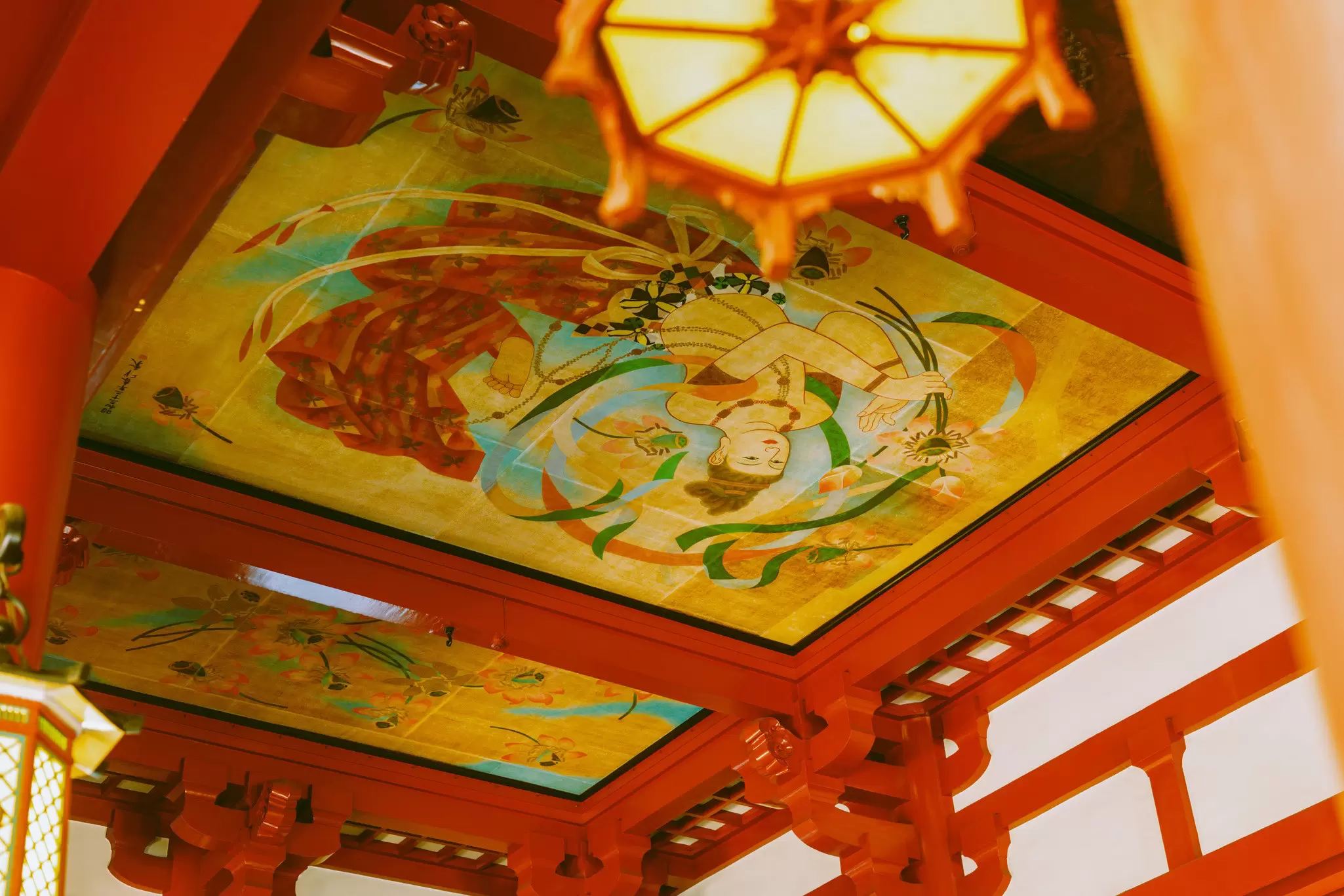
Also within the compounds of Sensō-ji are smaller temples and shrines. Some, like the modest Yakushi-dō which sits across a small bridge, are original structures dating from the 17th century.