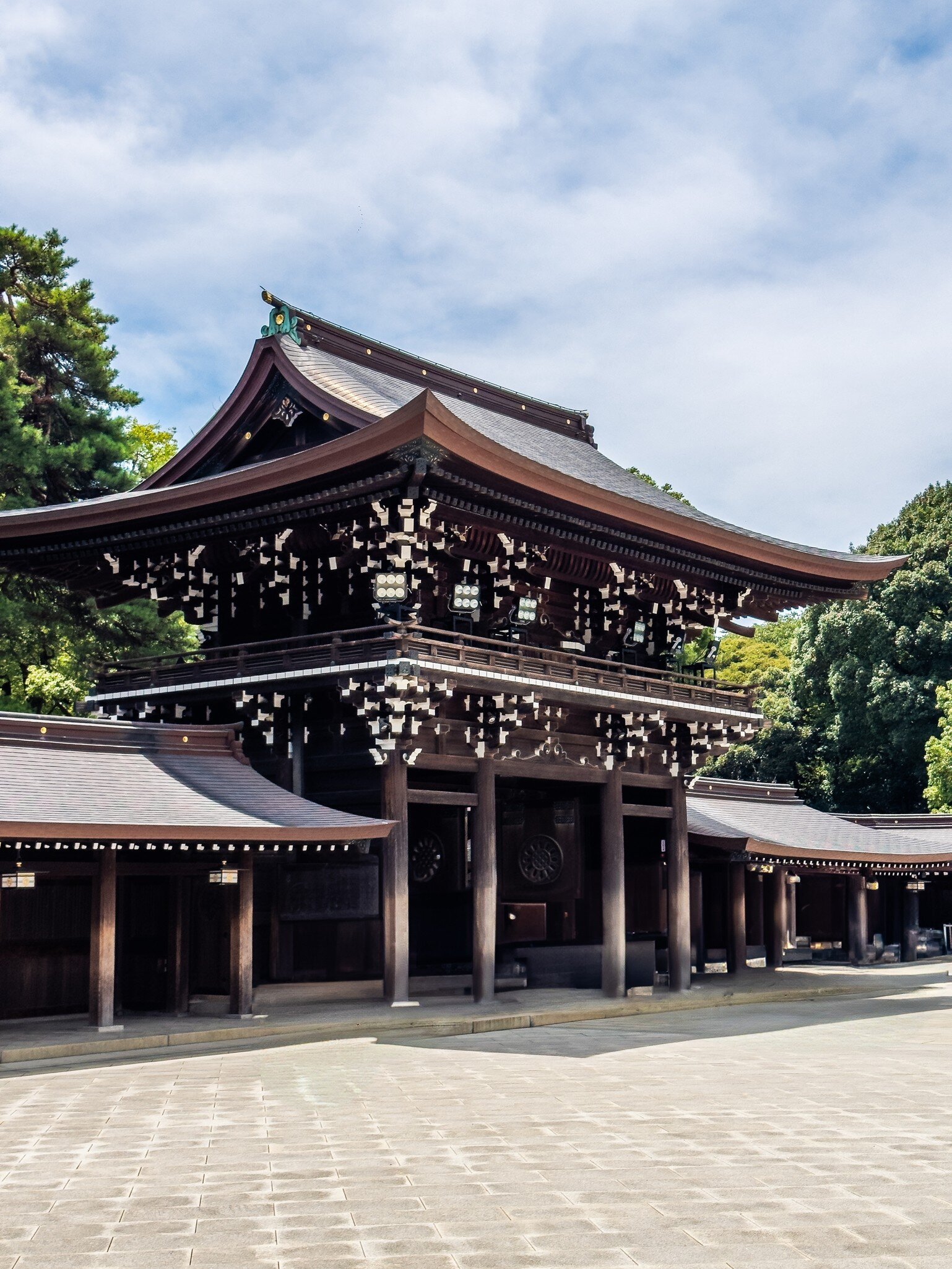
Meiji-jingū (明治神宮; Meiji Shrine) is considered a must-see – and it rarely disappoints. This monumental Shintō shrine made of unvarnished timber is ensconced in a 170-acre forest (bigger than Yoyogi-kōen). Popular with locals too, it’s a great place to see, and take part in, traditional Japanese culture.
Shrine in an Urban Forest
The entrance to Meiji-jingū is marked by the first of three towering torii, the elegant, somewhat pi-shaped gates that indicate the entrance to sacred Shintō ground.
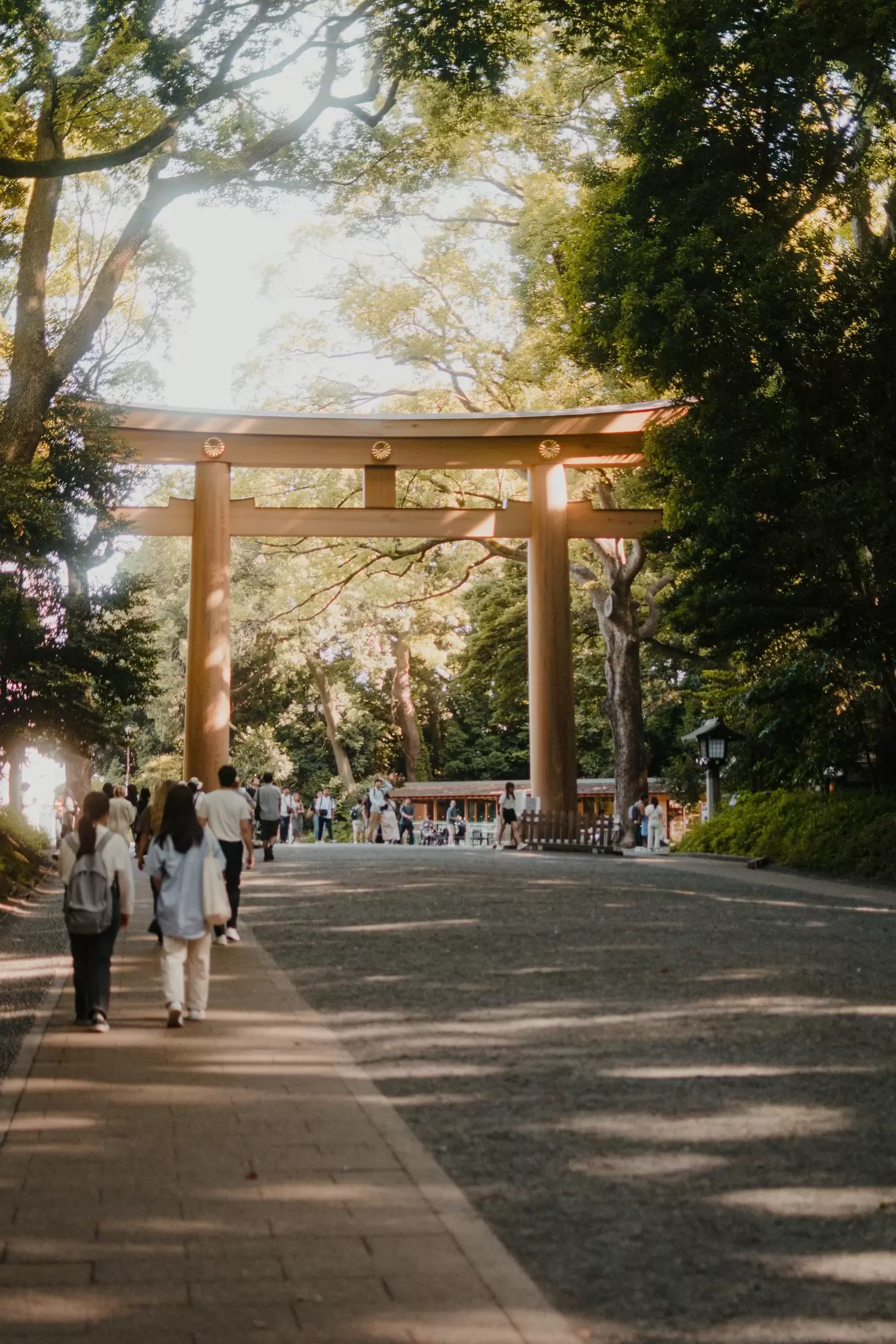
From here, a wide gravel path winds through a dense thicket of trees, taking about 15 minutes to reach the main sanctuary, a lantern-lit hall with a dramatic, copper roof that occupies a clearing beyond the final, monumental gate.
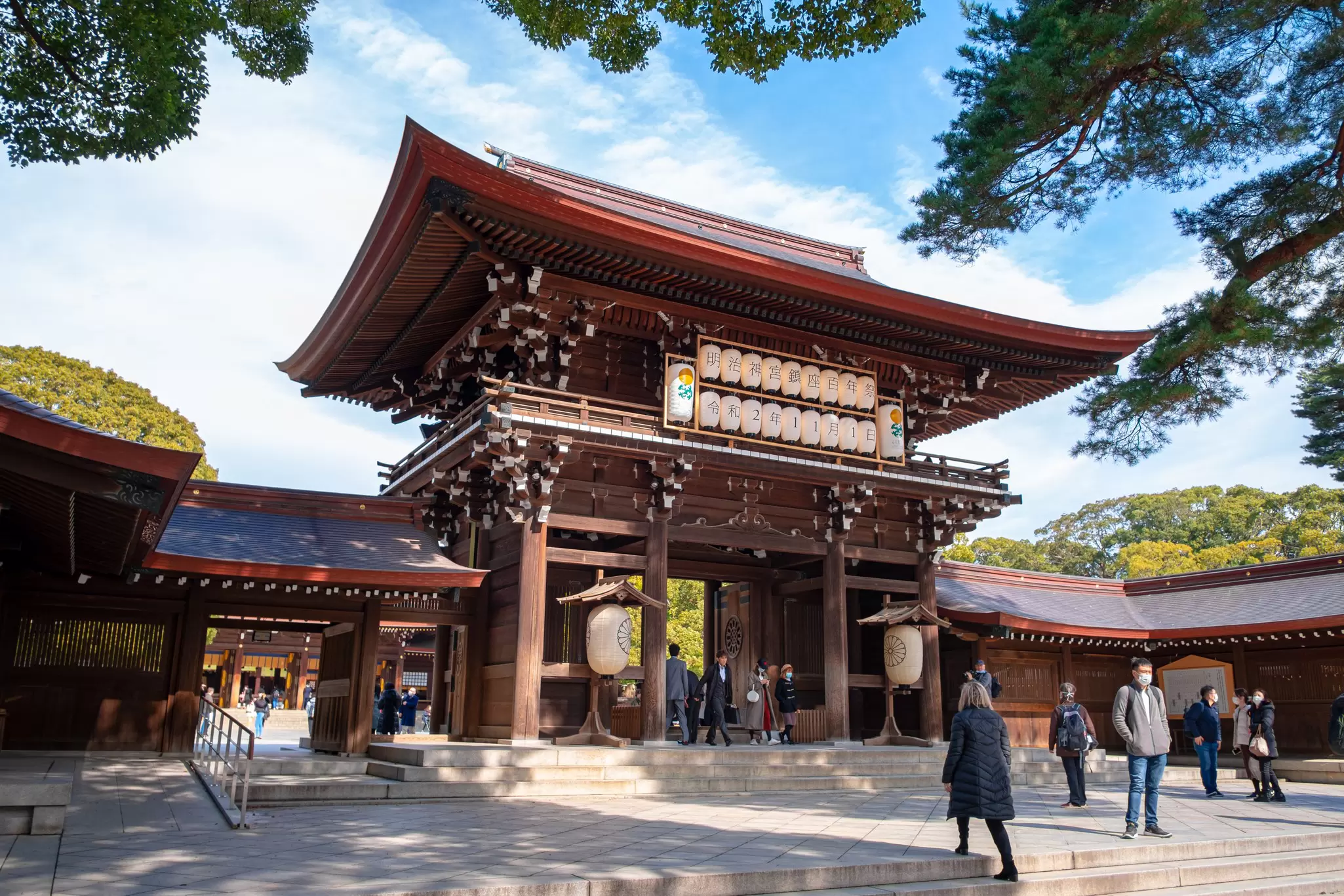
While the whole scene appears timeless (or like something out of rural Japan), Meiji-jingū is actually a modern creation. Founded in 1920, it's dedicated to Emperor Meiji and Empress Shōken, whose reign (1868–1912) coincided with Japan's transformation from isolationist, feudal state to imperialist nation.
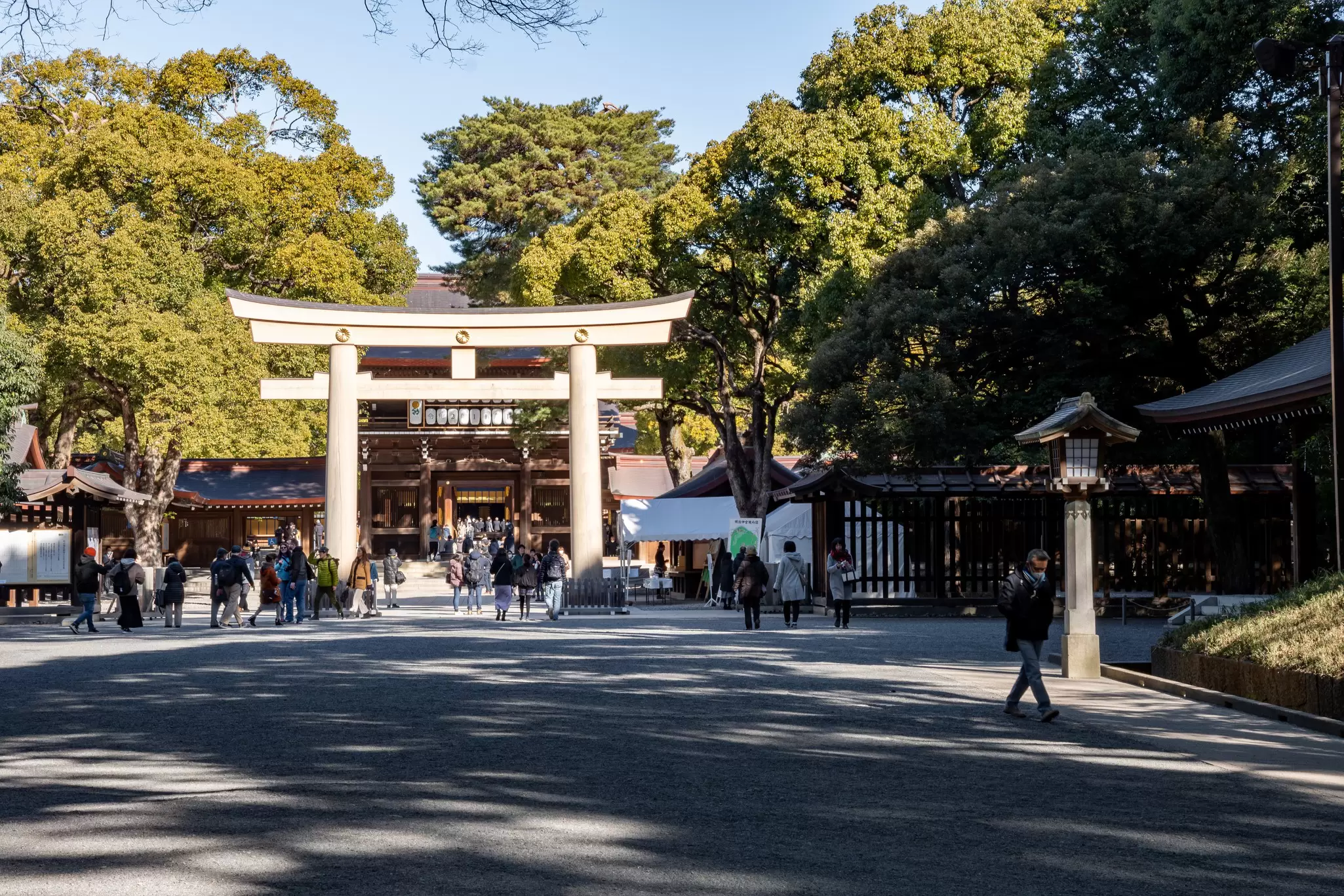
The forest is of similar vintage, created from hundreds of trees donated from all over Japan and planted by volunteers. Considered sacred and designed to flourish over generations, the forest has been left untouched ever since. For this reason, you can't stray from the path; you can, however, enjoy the literal breath of fresh air this rare urban forest provides (and, ideally, shake off some of that urban stress).
Secret Garden
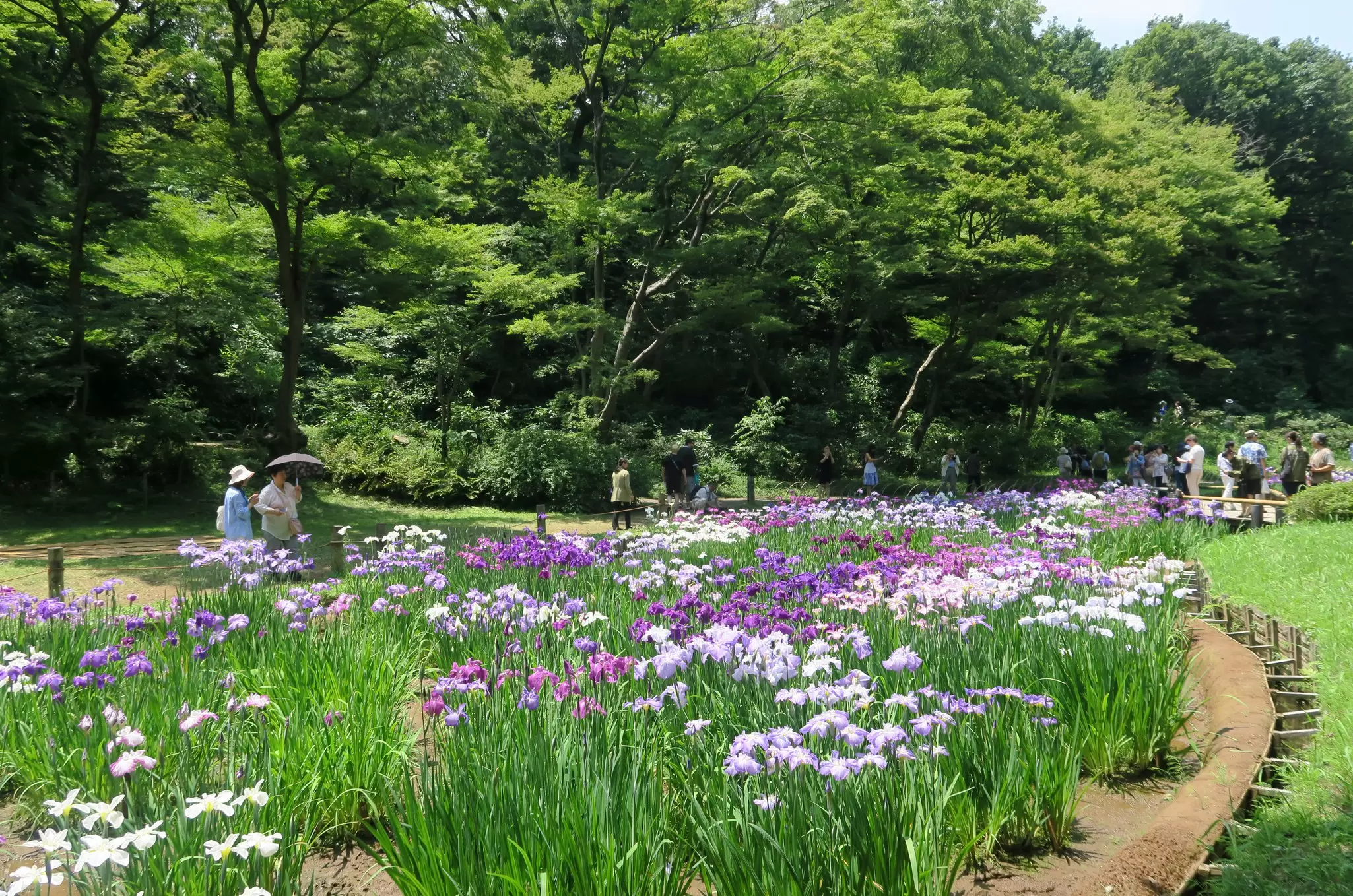
The grounds have an oft-overlooked garden, Meiji-jingū Gyoen (明治神宮御苑), which predates the founding of the shrine. Once part of a feudal estate, and later an imperial property, it has strolling paths, benches for contemplative breaks and a pond with colorful koi and sunning turtles. A highlight is the iris garden; it's one of the personal touches added by Emperor Meiji, who designed it to please the empress. The couple often frequented the garden, which is cited as a reason for this location having been chosen for the shrine.
Admission to the garden is ¥500, which is why it is usually uncrowded – except in June when the irises bloom. Look for the entrance midway along the gravel path.
Visiting a Shintō Shrine
Shrines are part of the Shintō tradition, but are non-exclusive. There are no prohibitions on visiting, just an imperative to be respectful; this means refraining from behaviors that might be considered disruptive (like eating, drinking, smoking or talking loudly). Photos are allowed, but not around the main hall or the kiosks, or of people praying.
There are a number of customs associated with visiting shrines; nothing is obligatory, but they can add to the experience and serve as a sign of respect. For example, right before the final torii (shrine gate), there's a font, where its customary to rinse your hands before entering the inner sanctuary. At the main hall, you can join visitors in greeting the kami (Shintō gods) with bows, hand claps and a small offering.
Votive Tablets & Amulets
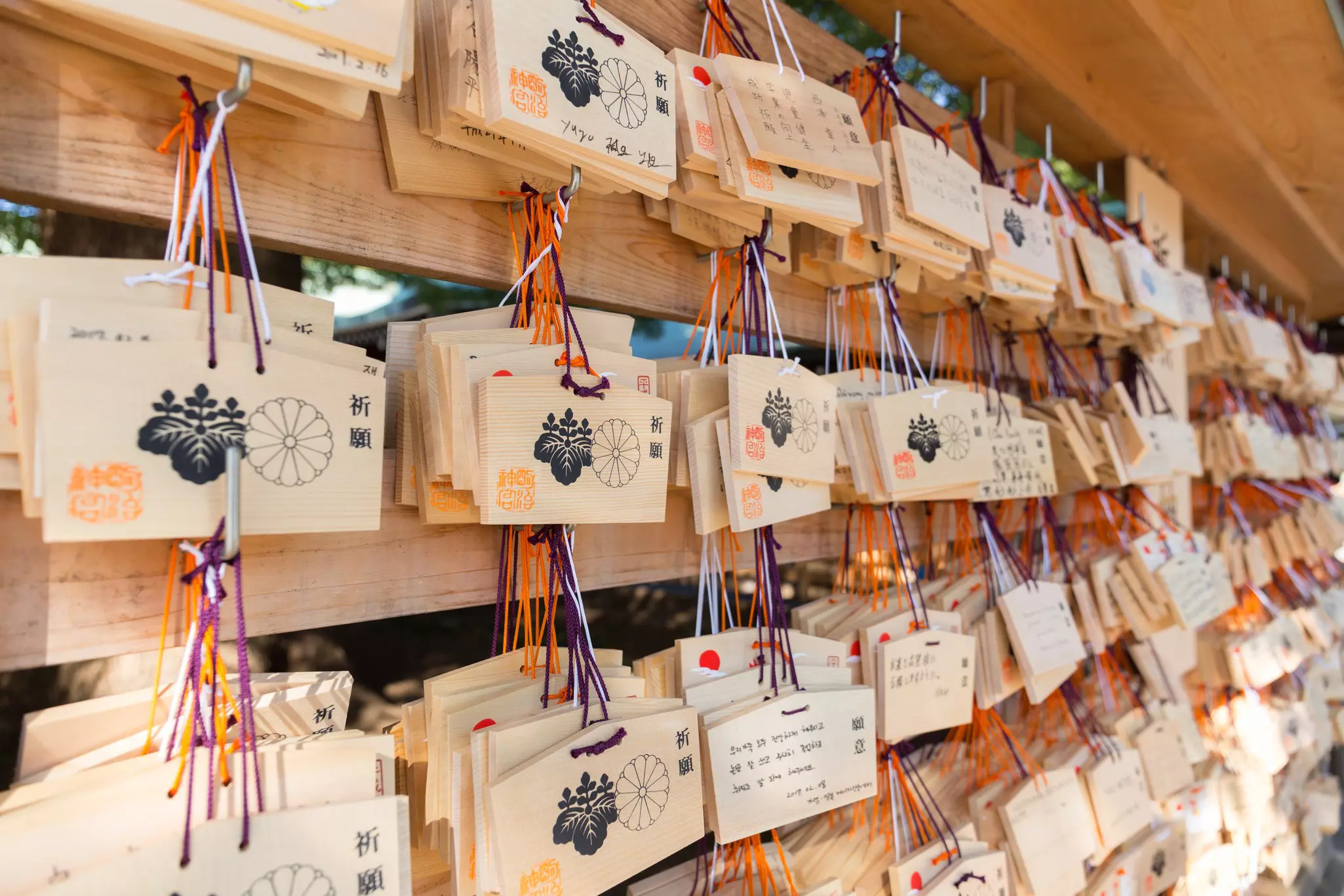
To the right of the main sanctuary, you'll see racks of votive tablets – surrounding a magnificent camphor tree – on which messages are written. These are called ema and you can purchase them from the kiosks on the perimeter of the courtyard. Use one of the pens provided, then add yours to the chorus of prayers, wishes and notes of gratitude in multiple languages.
The kiosks also sell omamori (amulets), silken pouches holding prayers for luck or protection. These might be for success in school entrance exams, safe childbirth, a happy union or safe travel. As Meiji-jingū is popular with international tourists, the amulets are labeled in English. Note that shrine (and temple) kiosks only accept cash.