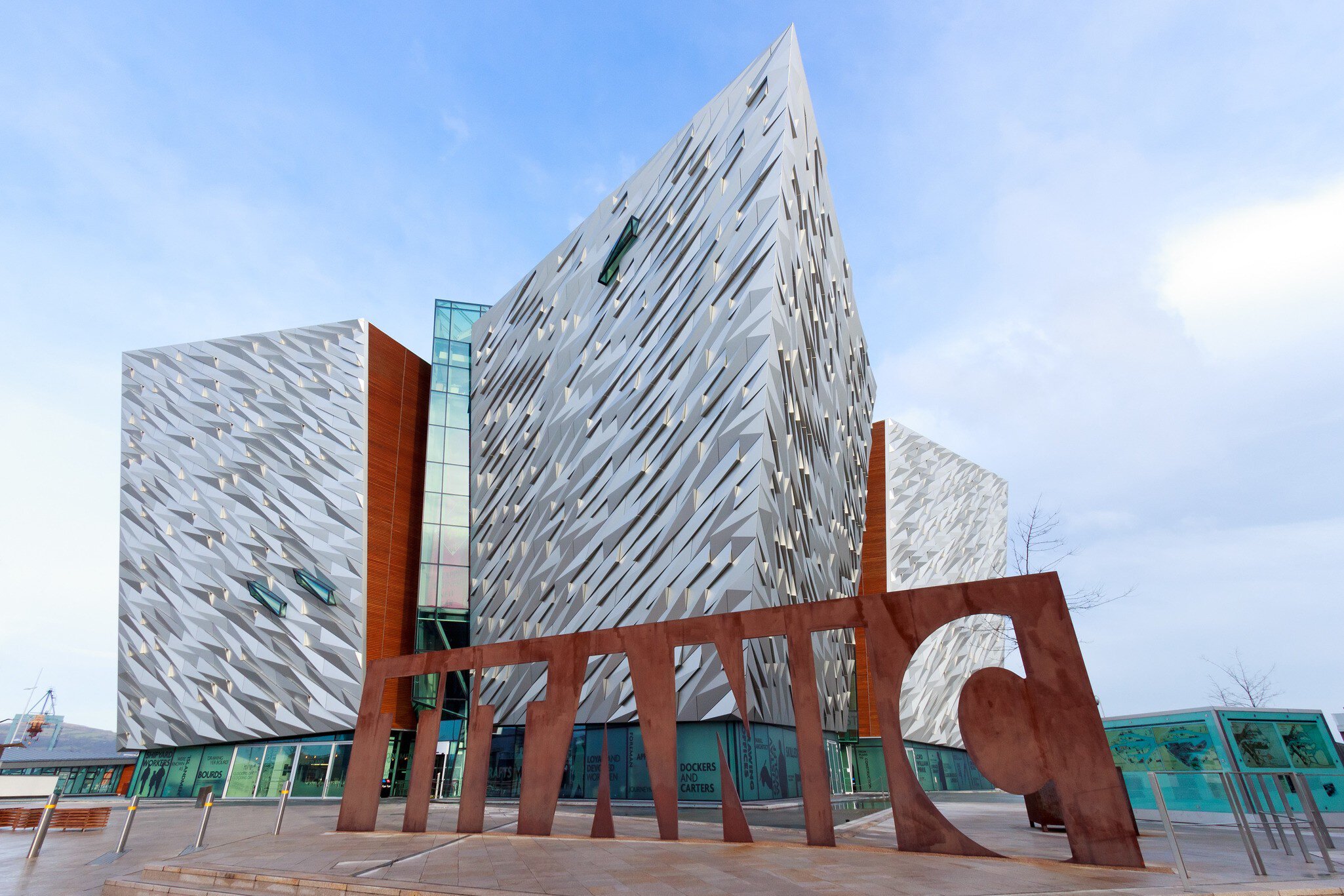
Standing at the head of the slipway where the Titanic was built is the gleaming, angular edifice of Titanic Belfast, a multimedia exhibition that charts the history of the world's most famous ocean liner, from its construction through to its launch, fit-out, and ill-fated maiden voyage. The highlight is a high-tech ride through a noisy, smells-and-all recreation of the city's shipyard.
The Story of the Ship
The story starts in Boomtown Belfast. Here, cleverly designed exhibits enlivened by historical images, animated projections and soundtracks, chart Belfast’s rise to turn-of-the-20th-century industrial powerhouse.
Walk through a simulation of a 1911 Belfast street to reach the gates of Harland & Wolff shipyard. From here, a shipyard ride descends from the gantry, with a soundtrack of workers' chatter and the heating and hammering of rivets. Continue through the exhibition to experience the excitement of the Titanic's 1911 launch. The gallery's windows are shaped like a ship's bow and overlook the Titanic slipway behind the museum.
Next, exhibits explore every detail of the Titanic’s fit-out. The highlights are the audio-visual "fly-through" from keel to bridge and the replica cabins of Titanic's first-, second-, and third-class passenger accommodation. Life aboard the ship is recreated with a walk on deck; look for touching family letters dispatched before the ship got into trouble, and a first-class dinner menu.
Tragedy Strikes
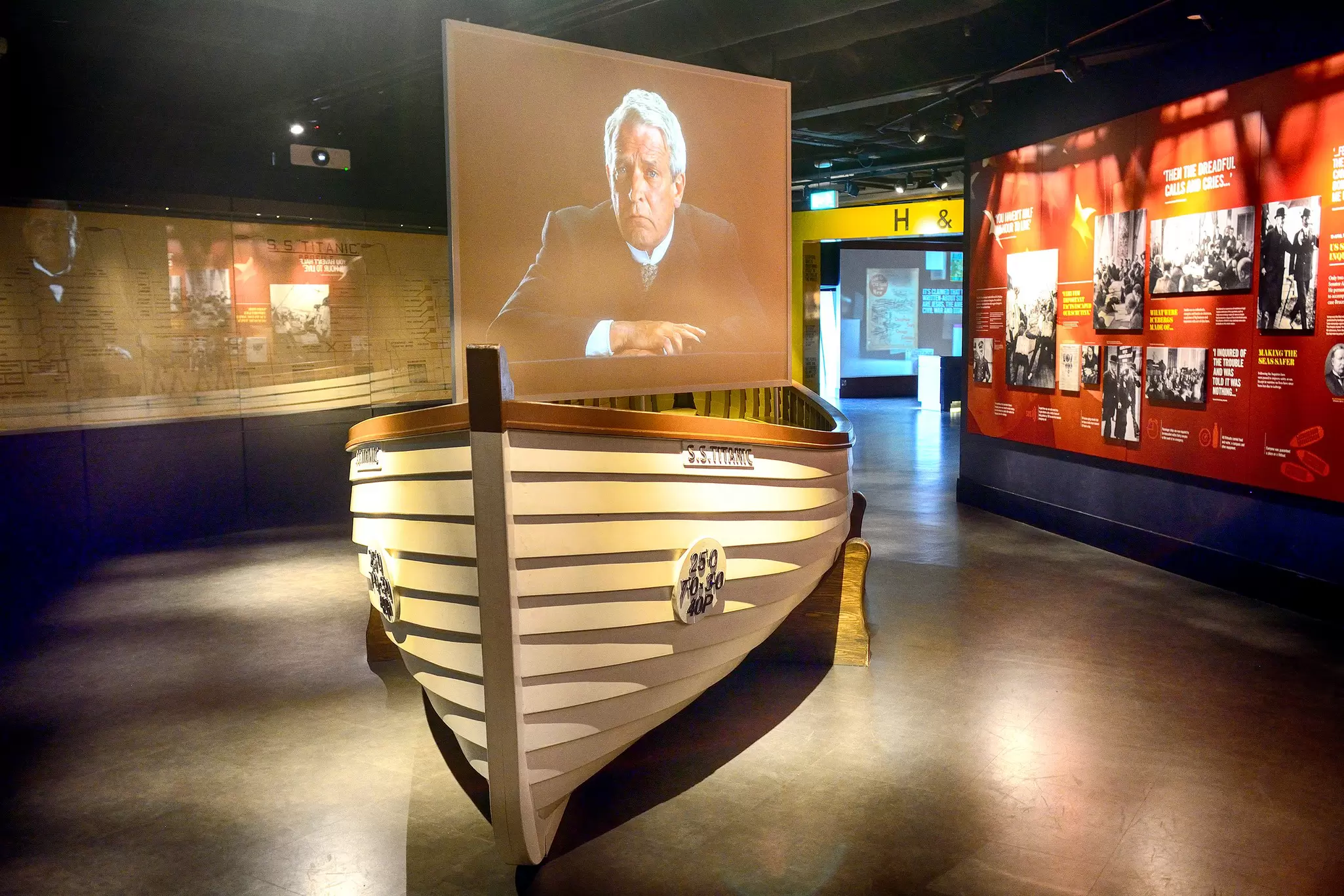
In a darkened corridor, the sinking of the Titanic is represented by the sounds of Morse code, the final messages sent to nearby ships and the stories of survivors. Exhibits include an original lifejacket from the ship.
The aftermath of the disaster is examined through witness testimonies given at the numerous enquiries. The "Domino Effect" exhibit shows how a series of factors interacted to cause the disaster.
Finally, the Ship of Dreams gallery has a suspended scale model of the ship and a number of artifacts, including a violin belonging to the musician Wallace Hartley and a Titanic deckchair, recovered from the surface by a ship chartered to search for bodies after the sinking by the White Star Line. Titanic Belfast's policy is not to include artifacts recovered from the wreck, for ethical reasons.
SS Nomadic
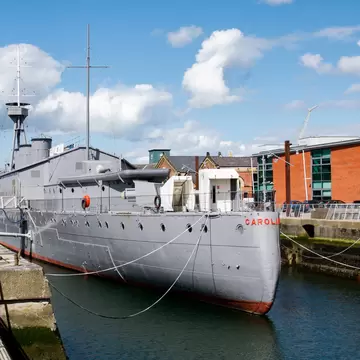
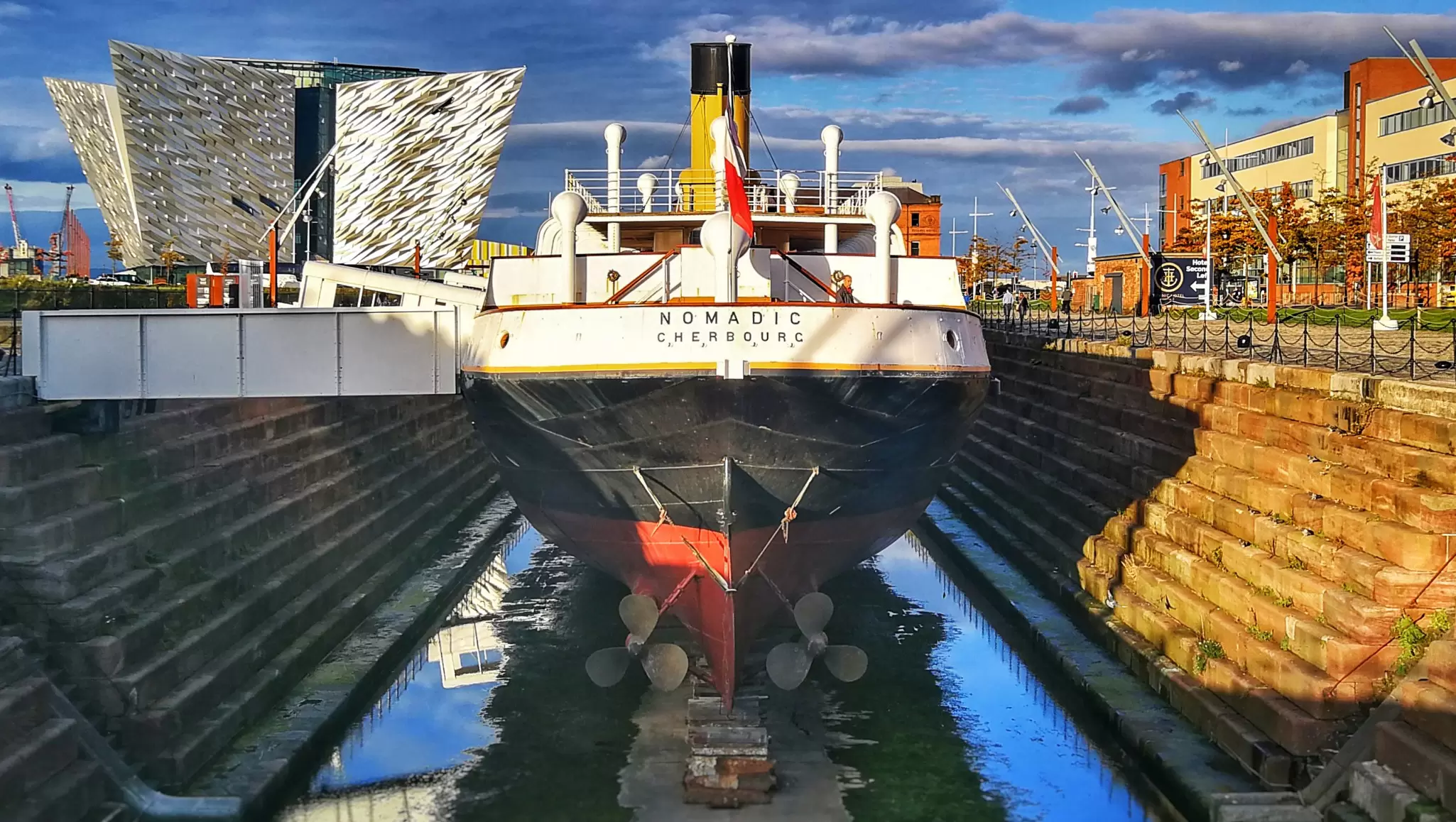
Next to Titanic Belfast is the SS Nomadic, the last remaining vessel of the White Star Line. Built in Belfast in 1911, the little steamship ferried 1st- and 2nd-class passengers between Cherbourg Harbour and ocean liners that were too big to dock at the French port. On 10 April 1912, it delivered 172 passengers to the Titanic.
Nomadic was requisitioned during both world wars and ended up as a floating restaurant in Paris. In 2006, it was rescued from a breaker's yard and brought to Belfast for restoration.
The Slipways
Allow time to explore the massive slipways where the Titanic and her sister ship Olympic were built and launched, located behind the Titanic Belfast building. The size and location of each ship are indicated with blue lines, illuminated at night. Within the outline of Titanic, the promenade deck is inlaid in white stone, which indicates the position of the liner's lifeboats and funnels. Benches are positioned exactly where they were located on deck.
Within the outline of the Olympic, strips of lawn and decking of differing widths correspond to the numbers of people who died and survived. Divided into passenger class and crew, these offer a visual representation of how the proportion of survivors differed according to economic standing.